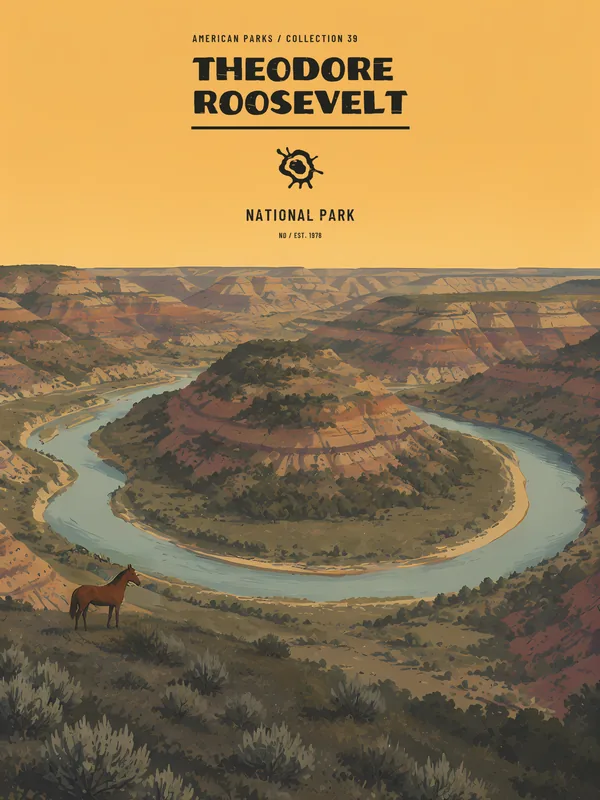
Theodore Roosevelt National Park: The Complete Visitor Guide
Theodore Roosevelt National Park is the Wild West as we picture it, and as we've nearly forgotten it: rugged Badlands, herds of bison, wild horses, and a kind of silence that few American parks still offer. It's in western North Dakota, far from the main tourist routes, and that's exactly what makes it special. Plan on one or two full days to take in the essentials, and longer if you want to explore its two main sections. Here's what you need to plan your visit: where the park is, how to get in, what to see, and how much time to allow.
Theodore Roosevelt at a Glance: Where the Park Is and How to Get There
The park stretches across the Badlands of western North Dakota, the eroded landscape Theodore Roosevelt himself traveled through as a rancher in the 1880s. One important detail affects any visit: the park is divided into three separate units, with about 60 miles of open prairie between them.
- The South Unit is the most visited. Its entrance is in the small town of Medora, accessible from Interstate 94 (Exits 24 and 27). This is where you'll find the main visitor center, the scenic loop road, and most of the park's visitor services.
- The North Unit is reached via Highway 85, about a 1.5-hour drive north. It's wilder and less crowded, with more dramatic landscapes above the Little Missouri River.
- The Elkhorn Ranch Unit, between the other two, marks the site of Roosevelt's former ranch. You reach it on gravel roads, and very little remains to see on site. It's a place for historical reflection, not a spectacular sightseeing stop.
The most convenient airport is in Dickinson, east of Medora. Bismarck is larger and about a two-hour drive away. No public transportation serves the park, so you'll need a car. For driving directions, flights, and distances, see our guide to getting to Theodore Roosevelt.
Entrance Fees, Passes, and Reservations
Admission costs $30 per private vehicle, valid for 7 days and covering everyone inside. The other rates are $25 per motorcycle and $15 per person arriving on foot or by bicycle. If you're staying in the area or planning multiple visits, the park's $55 annual pass pays for itself on the second visit.
Good news if you're planning on the fly: Theodore Roosevelt doesn't require a timed entry reservation, unlike parks such as Arches and Zion. You arrive, pay, and enter. If you already have an America the Beautiful pass, the $80 annual pass that covers all federal recreation sites, it's accepted here at no extra charge. The National Parks Fees & Passes page explains entrance fees and passes, including exceptions such as free admission and fee-free days.
Reservations, Permits, and Rules to Follow
Entering the park: No advance reservation is required. You can pay at the entrance station or online through Recreation.gov, which can help you avoid a line during the busy season.
Camping: Cottonwood Campground (South Unit, with electric hookups) and Juniper Campground (North Unit, tent and RV sites without hookups) can be reserved through Recreation.gov. For July and August, book at least three weeks ahead. Our Camping page covers all the options and current fees.
Backcountry hiking: A free backcountry permit is required for any night spent outside developed campgrounds. Get it at the visitor center before setting out; you can't obtain it online.
Rules to follow, no exceptions:
- Keep at least 100 feet from wildlife, including bison, wild horses, and elk. Bison can charge without warning and may weigh 2,000 pounds. Stay in your vehicle or keep your distance. That's not excessive caution; it's common sense.
- Drones are prohibited throughout the park.
- Pets are allowed in the park on roads, at campgrounds, and in parking areas, but not on any trails. They must be leashed, with a maximum leash length of 6 feet.
- Campfires are allowed only in designated sites at campgrounds, never outside those areas.
- Collecting anything is prohibited. Rocks, fossils, plants, and everything else that belongs to the park must stay in the park.
Getting Around the Park
There is no required shuttle here. You visit Theodore Roosevelt by car, plain and simple. Each unit has its own scenic road.
The South Unit centers on a scenic loop that leads to most overlooks, trailheads, and prairie dog towns. Part of the loop may close depending on road conditions, so check current conditions at the entrance. In the North Unit, a scenic out-and-back road climbs to overlooks above the river.
Travel between the units takes place entirely on public roads outside the park. Fill up in Medora or Watford City because gas stations are few once you're on the road. For speed limits, seasonal road closures, and rules for driving inside the park, see our Getting Around page.
How Much Time Do You Need to Visit Theodore Roosevelt?
One full day is enough to explore the South Unit without rushing: drive the scenic loop, stop for two or three short walks, and watch the sunset over the Badlands. If you also want to see the North Unit, plan on two days and spend one night in the park or in Medora.
Three days gives you a comfortable schedule for combining hikes, early-morning wildlife viewing, and both units. Beyond that, the park is best for nature lovers who enjoy taking their time and driving the same roads at different hours. The light changes everything in the Badlands. Our Itinerary & Length of Stay guide offers ready-made plans for a half-day visit or a long weekend.
Plan your visit
What to See and Do in Theodore Roosevelt
Explore the park one unit at a time. Each has its own character, and recognizing the differences makes planning easier.
Road trip journal · 3 areas
South Unit: The Park's Showcase
This is the heart of the visit. The scenic loop strings together Badlands overlooks, prairie dog towns that are noisy and easy to watch from the road, and grasslands where bison graze. This is also where you'll most often see wild horses, descendants of released ranch horses that have become a symbol of the park. Painted Canyon, accessible directly from I-94 and served by its own visitor center, offers a striking first view without even entering the main unit. It's ideal if you're short on time.
North Unit: The Wilder Section
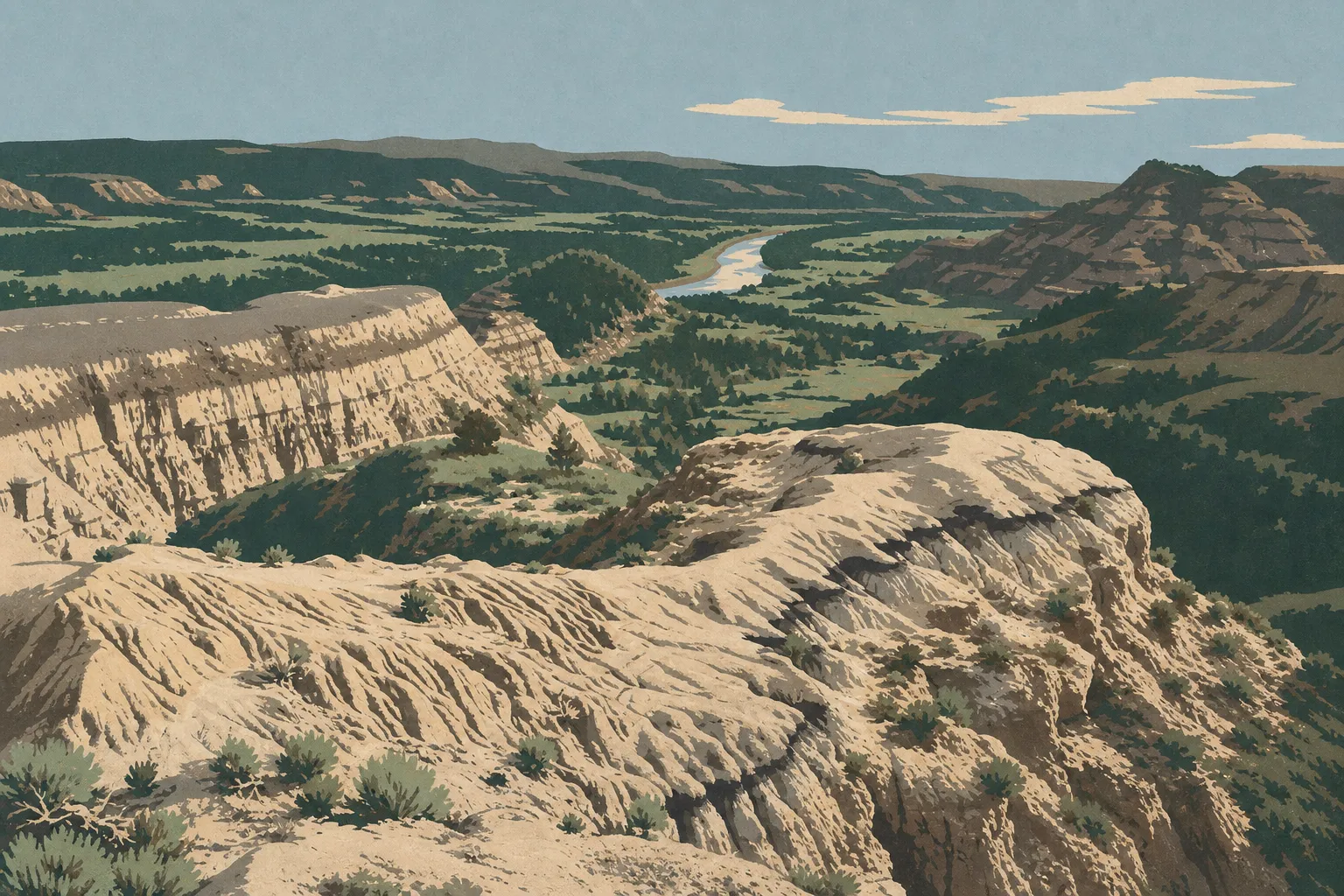
Farther north and less visited, the North Unit offers a greater sense of isolation. The rock formations are more dramatic, the Little Missouri River winds below, and the overlooks at the end of the road look out over a raw landscape. You'll also find unusual rounded rock formations called cannonball concretions and a small herd of longhorns that recalls the area's ranching past. If you're looking for quiet and solitude, this is the place.
Elkhorn Ranch Unit: A Historic Pilgrimage
This third unit is for history enthusiasts. Only the foundations remain of the ranch where Roosevelt lived and, it's said, developed his conservation ethic. Gravel roads lead to the site, whose appeal is primarily commemorative. Save it for a second visit or for especially motivated history buffs.
Explore the park
The Best Hikes in Theodore Roosevelt
You can hike here without crowds, often alone with the Badlands. The South Unit has short, accessible trails around the scenic loop that are perfect for a first introduction, along with more demanding routes that head into the eroded landscape. The North Unit offers longer, more strenuous trails with substantial climbs to the overlooks.
Be careful: after rain, the Badlands turn into a sticky clay skating rink, and there's almost no shade. Start early, carry plenty of water, and keep an eye on the weather. Our Hiking page has trail details, distances, elevation gains, and difficulty ratings, and lists the must-do hikes in each unit.
The detailed guide Theodore Roosevelt Hiking Guide: The Best Trails for Every Ability The best hikes in Theodore Roosevelt National Park, organized by unit and… Read the guide →Wildlife and Plants to Watch For
Theodore Roosevelt is first and foremost a wildlife park. Bison roam freely, sometimes right on the road. Keep your distance because these one-ton animals are unpredictable. Prairie dogs form entire towns that are easy to spot, wild horses roam the South Unit, and you may also see elk, pronghorns, coyotes, and, if you're lucky, bighorn sheep in the North Unit.
The best time for wildlife viewing is early morning and late afternoon, when animals are active and the light is low. Plant life includes grasslands, junipers, and cottonwoods along the river, creating a landscape typical of the Great Plains. Our Wildlife page covers the species, where to find them, and the safety rules to follow, including minimum distances and behaviors to avoid.
The detailed guide Theodore Roosevelt Wildlife: What Animals to See and Where to Find Them Bison, wild horses, prairie dogs, elk, and more Read the guide →When to Visit Theodore Roosevelt
The best season runs from late May to early October, with the most comfortable conditions in June and September: pleasant temperatures, active wildlife, and all roads open. Summer can be hot and dry, while winter is severe, with snow closing some or all of the park roads. The park remains open 24 hours a day year-round, but access then depends on conditions.
Our When to Visit page breaks down temperatures, crowds, and the best windows month by month. You can also find seasonal forecasts on our Weather page.
The detailed guide When to Visit Theodore Roosevelt: Best Seasons, Weather, and Timing The best times to visit Theodore Roosevelt are May-June and September-October Read the guide →Where to Stay in Theodore Roosevelt
There are no hotels inside the park. For a comfortable bed, stay in Medora, the gateway to the South Unit, or Watford City, near the North Unit. If you want to sleep closer to nature, each main unit has a simple, well-located campground.
- Hotels and lodges: see our Hotels & Lodges page.
- Tent sites and services: see our Camping page.
- RV sites and hookups: see our RV Camping page.
Our Where to Stay guide compares all the options so you can choose based on your budget and which unit you're visiting.
Stay in the park
Around Theodore Roosevelt: Things to Do Nearby
Medora is worth an evening on its own. This recreated Western town offers outdoor shows and a deliberately frontier-style atmosphere. More broadly, the park fits into a Great West and Great Plains road trip. Many travelers combine it with neighboring South Dakota, including Badlands National Park and Mount Rushmore, or continue north into Montana. For meals, the options are concentrated in Medora and Watford City. Our Where to Eat page lists restaurants by area.
To build a coherent road trip around the park, use our road trip itineraries and our regional guides.
Our Take: Is Theodore Roosevelt Worth the Detour?
Yes, as long as you know what you're coming for. This isn't a park of waterfalls or towering peaks. It's a park of silence, open space, and wildlife, where you drive with the windows down and pass bison. Its remote location keeps it away from the crowds, something that's increasingly rare in American parks. When we visited, seeing a herd of wild horses early one morning with no one for miles was reason enough to make the detour. If you're crossing North Dakota or planning a grand tour of the Plains, don't skip it. As a remote park visited in a single day from far away, it will appeal most to people who love nature and wide-open spaces.
Frequently Asked Questions
What is the best month to visit Theodore Roosevelt National Park?
The best months to visit Theodore Roosevelt are June and September, with mild temperatures, active wildlife, and all roads open. May and October are still pleasant in the shoulder season. Summer is hot and dry, while snowy winter weather can close the roads. More details are available on our When to Visit page.
How much time do you need to visit Theodore Roosevelt?
Plan on one full day for the South Unit alone, and two days if you want to add the North Unit. Three days lets you combine hikes, wildlife viewing, and both units without rushing.
Where is the Theodore Roosevelt museum?
The main Roosevelt site in the park is the Elkhorn Ranch Unit, where his former ranch and cabin once stood. Only the foundations remain, presented on site as a historic place. The Maltese Cross Cabin, near the South Unit visitor center in Medora, is open to visitors and tells the story of his life as a rancher.
What is the connection between Theodore Roosevelt and Franklin Roosevelt?
Theodore Roosevelt, the 26th president, and Franklin Delano Roosevelt, the 32nd president, were distant cousins. Their closest connection was through Eleanor Roosevelt, Franklin's wife and Theodore's niece. Her uncle, who was also a president, walked her down the aisle.
The American Parks shop
Bring Theodore Roosevelt home
Our park-inspired creations, made to order and shipped to your door.