
Saguaro Wildlife: Which Animals to See and Where to Find Them
Behind its forests of giant cacti, Saguaro National Park shelters a surprisingly rich variety of wildlife. Five species capture its character: the Gila woodpecker, which carves out nesting holes in saguaros; the elf owl, which takes over abandoned cavities; the collared peccary, which you may see in groups at first light; the Gila monster, a venomous lizard with a stately stride; and the coyote, a familiar resident of the Sonoran Desert. For an overview before getting into the details, our complete Saguaro guide covers the park's essentials.
Saguaro's iconic animals
The Gila woodpecker
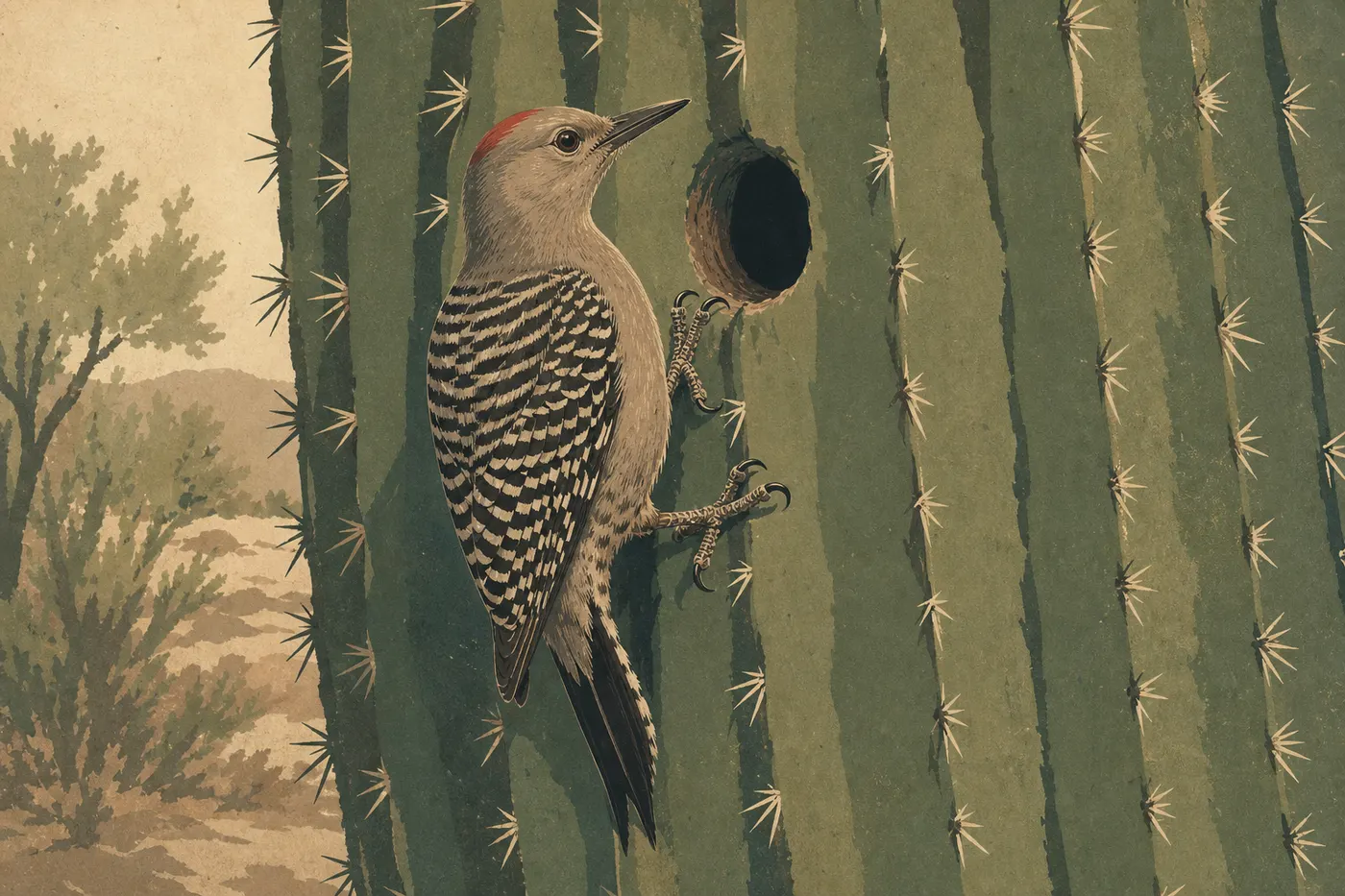
The Gila woodpecker (Melanerpes uropygialis) is the architect of the entire saguaro ecosystem. It drills cavities into the fibrous flesh of giant cacti for its nest, then moves out the following year. Those abandoned homes become refuges for the species that come after it, including owls, nuthatches, snakes, and pollinating bats. You can recognize it by its black-and-white barred back and the male's red crown. It lives in both districts year-round. You'll hear it before you see it: its harsh, repetitive call carries through the desert's stillness from the first light of morning.
The elf owl
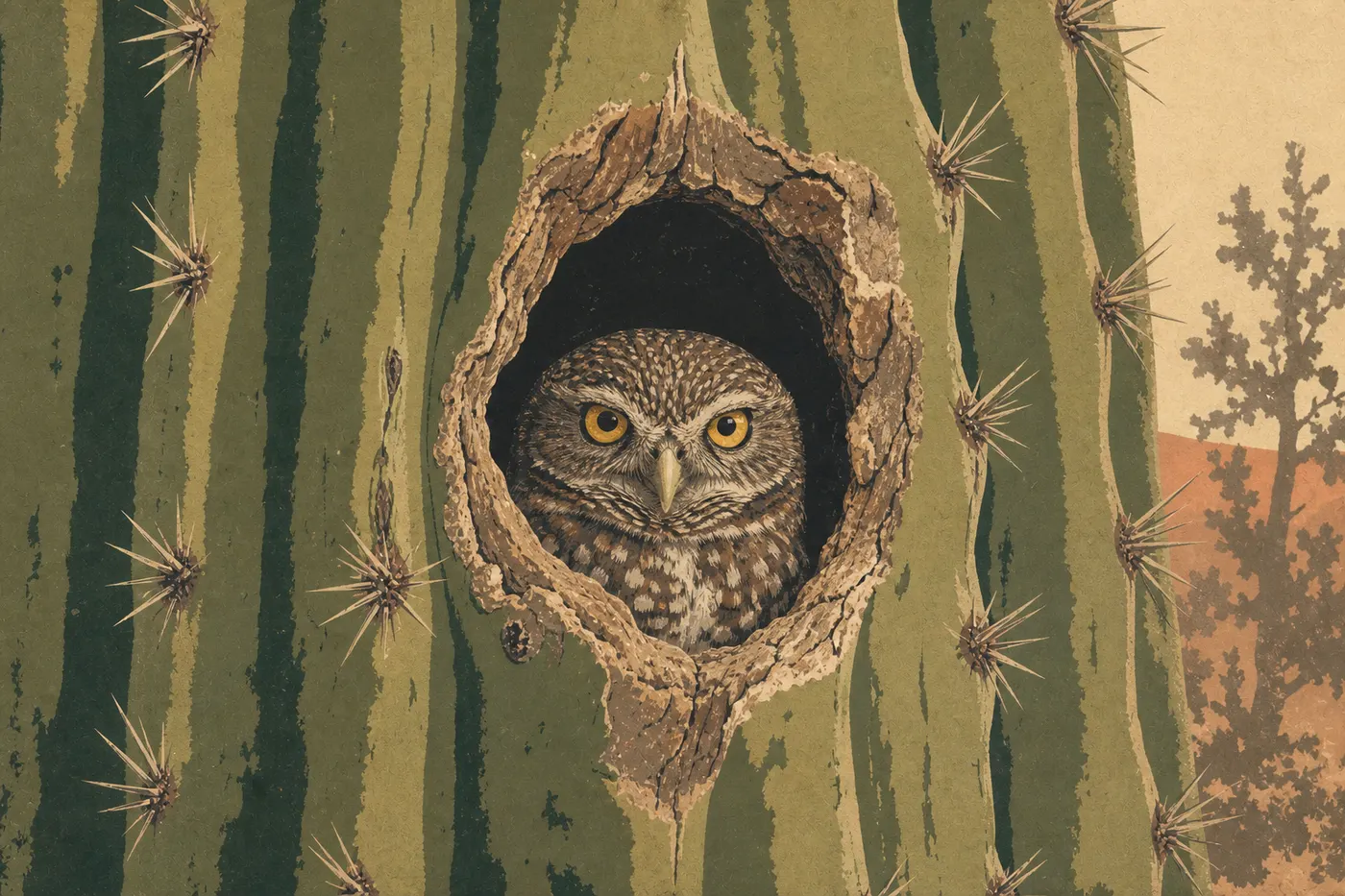
The elf owl (Micrathene whitneyi) is the world's smallest owl, barely 5.5 inches long and weighing about 1.4 ounces. Unlike its cousins, it doesn't specialize in rodents. It hunts insects and scorpions, catching them in flight after dark. A migratory species, it arrives in Arizona in March and April and heads back to Mexico in September. During the day, it sleeps deep inside a cavity excavated by a Gila woodpecker or a gilded flicker. To spot one, take up a position near a large, hollow saguaro at dusk and listen for its brief, staccato song. It sounds more like a little laugh than a classic hoot.
The collared peccary
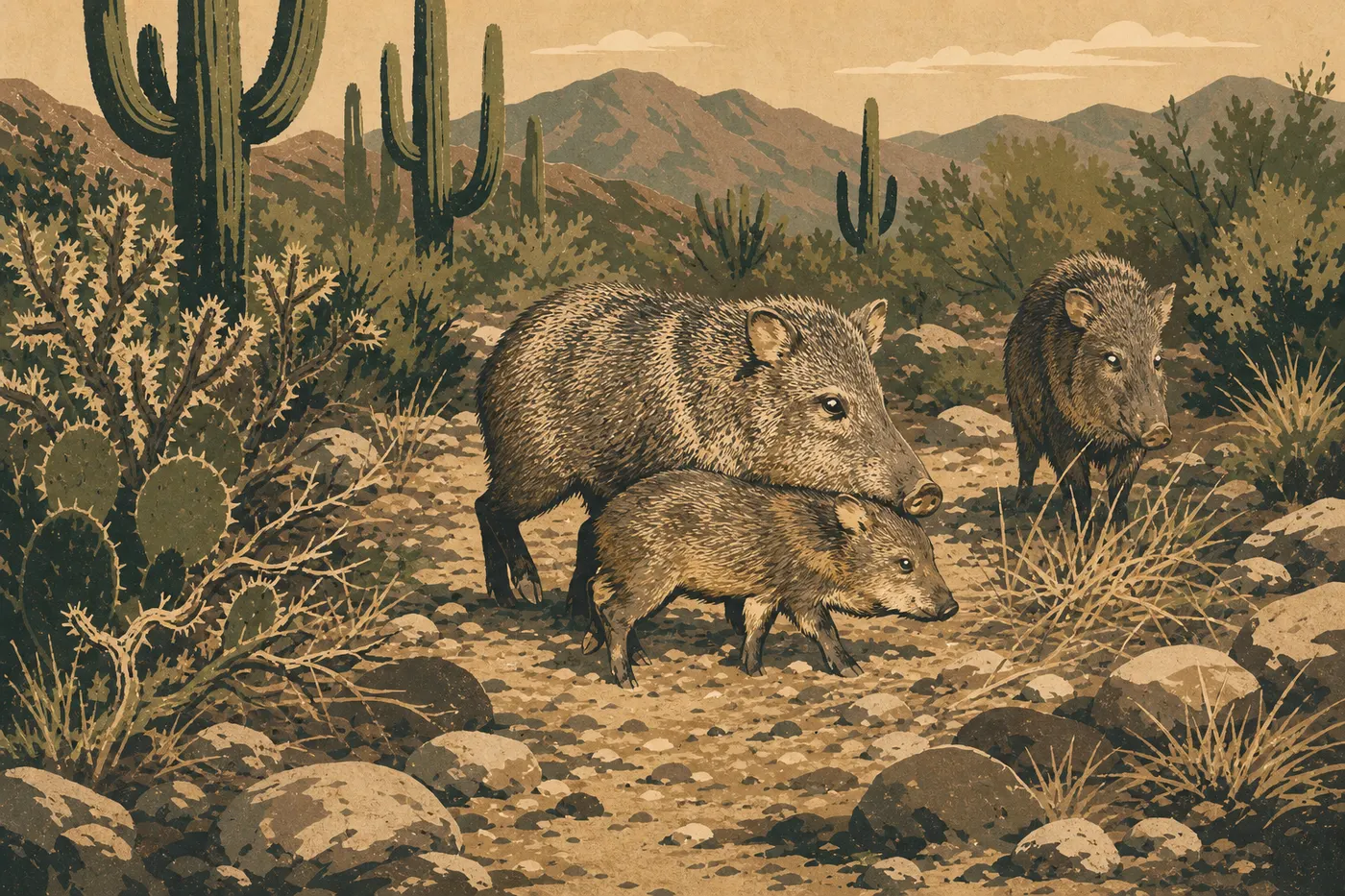
The collared peccary (Pecari tajacu), also called a javelina, looks like a wild pig but belongs to a completely different family. It lives in groups of 6 to 20 and roams the park in search of prickly-pear fruit, tubers, and insects. Its eyesight is poor, but its sense of smell is remarkable. If you're downwind, it'll detect you from 100 feet away and come over to investigate. I almost hit one on Bajada Loop one morning. It burst out of a thicket, looked at me with complete indifference, and went on its way as if I didn't exist. Don't underestimate javelinas, though. They defend their young with their canine teeth, and adults can weigh up to 66 pounds.
The Gila monster
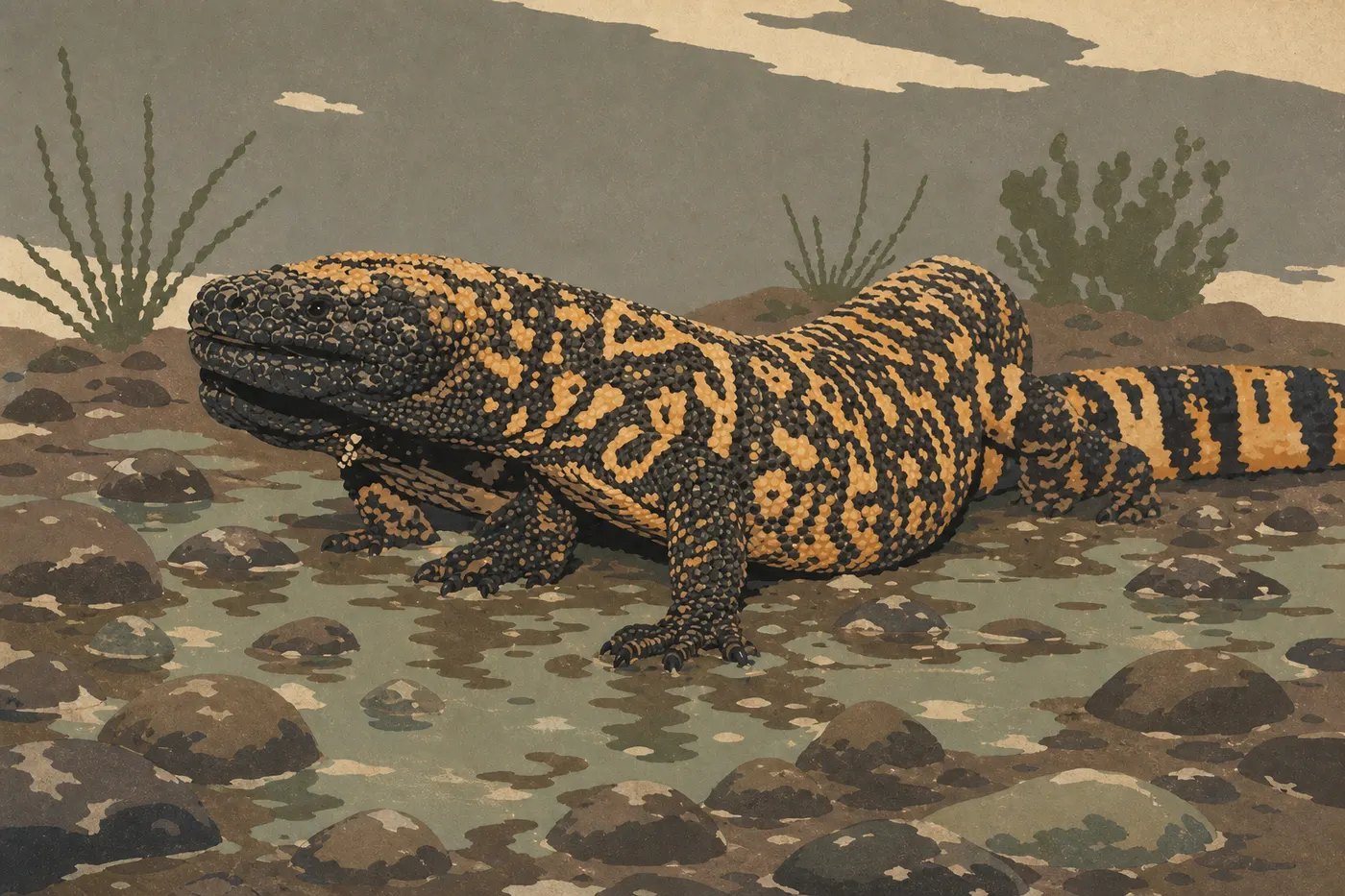
The Gila monster (Heloderma suspectum) is one of only two venomous lizards in North America. Measuring 16 to 22 inches, with a stocky body covered in orange-and-black beaded scales, it moves in slow motion and seems to ignore the entire world. That apparent calm is deceptive. Its venom enters through a bite, not through fangs like a snake's, and causes intense pain and swelling. Bites are rare and happen almost exclusively when someone tries to handle one. Watch it from at least 3 feet away, never touch it, and settle for a photograph. You'll see it mostly from March through November, after rain showers, on the rocky trails of the West District.
The coyote
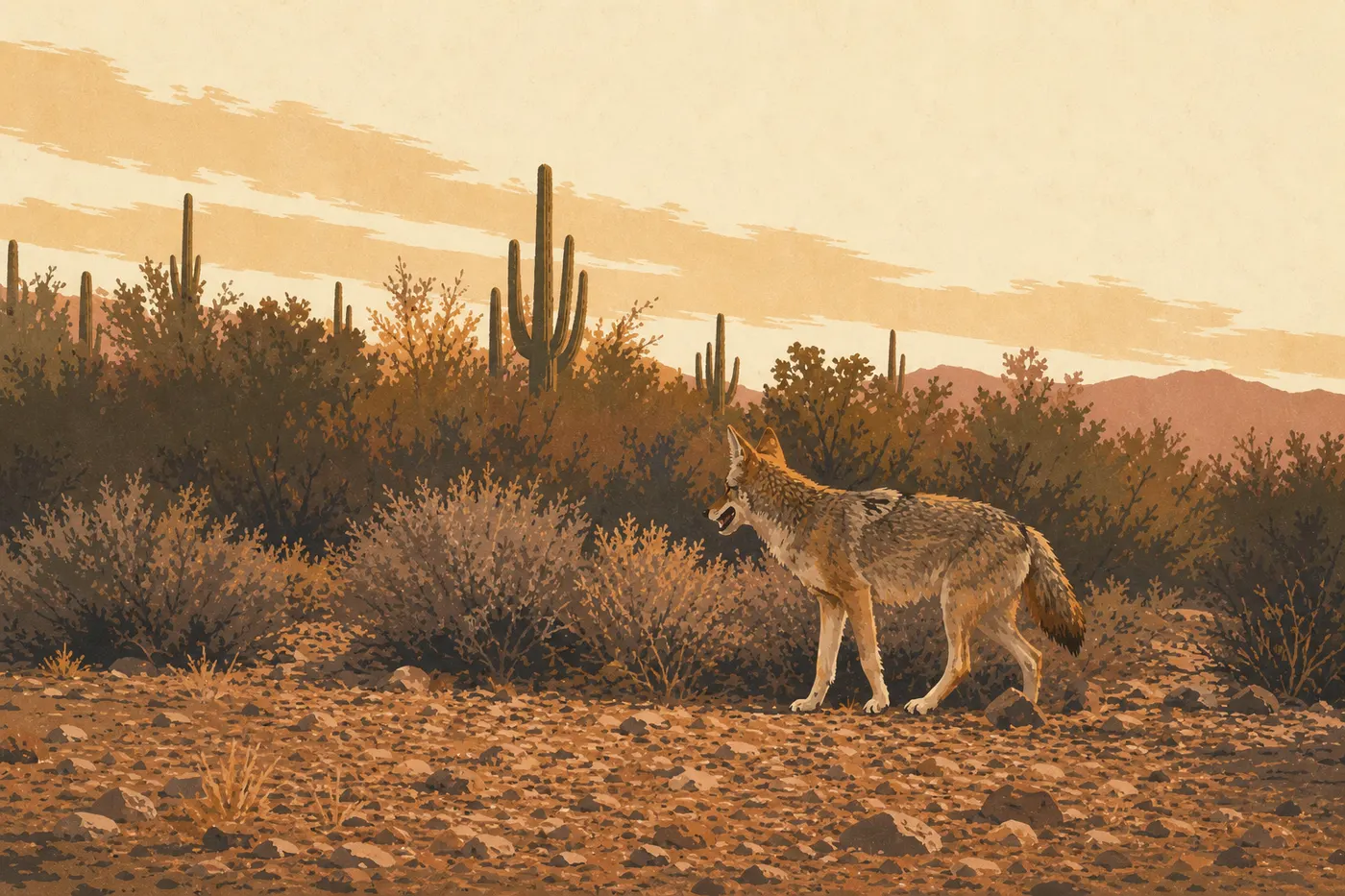
The coyote (Canis latrans) is the Sonoran Desert's generalist: opportunistic, rarely intimidated by people, and able to adapt to almost any conditions. Its grayish-tan coat, pointed ears, and slim build make it easy to spot. It's active at any hour, but clearly prefers dawn and dusk. Its long howl, followed by high-pitched yips, carries far through the desert's silence and can startle campers at 3 a.m. It eats just about anything: fruit, rodents, reptiles, and eggs. Never feed one. A coyote that gets used to human food quickly loses its natural wariness and becomes aggressive.
Gila woodpecker or gilded flicker: how can you tell them apart?
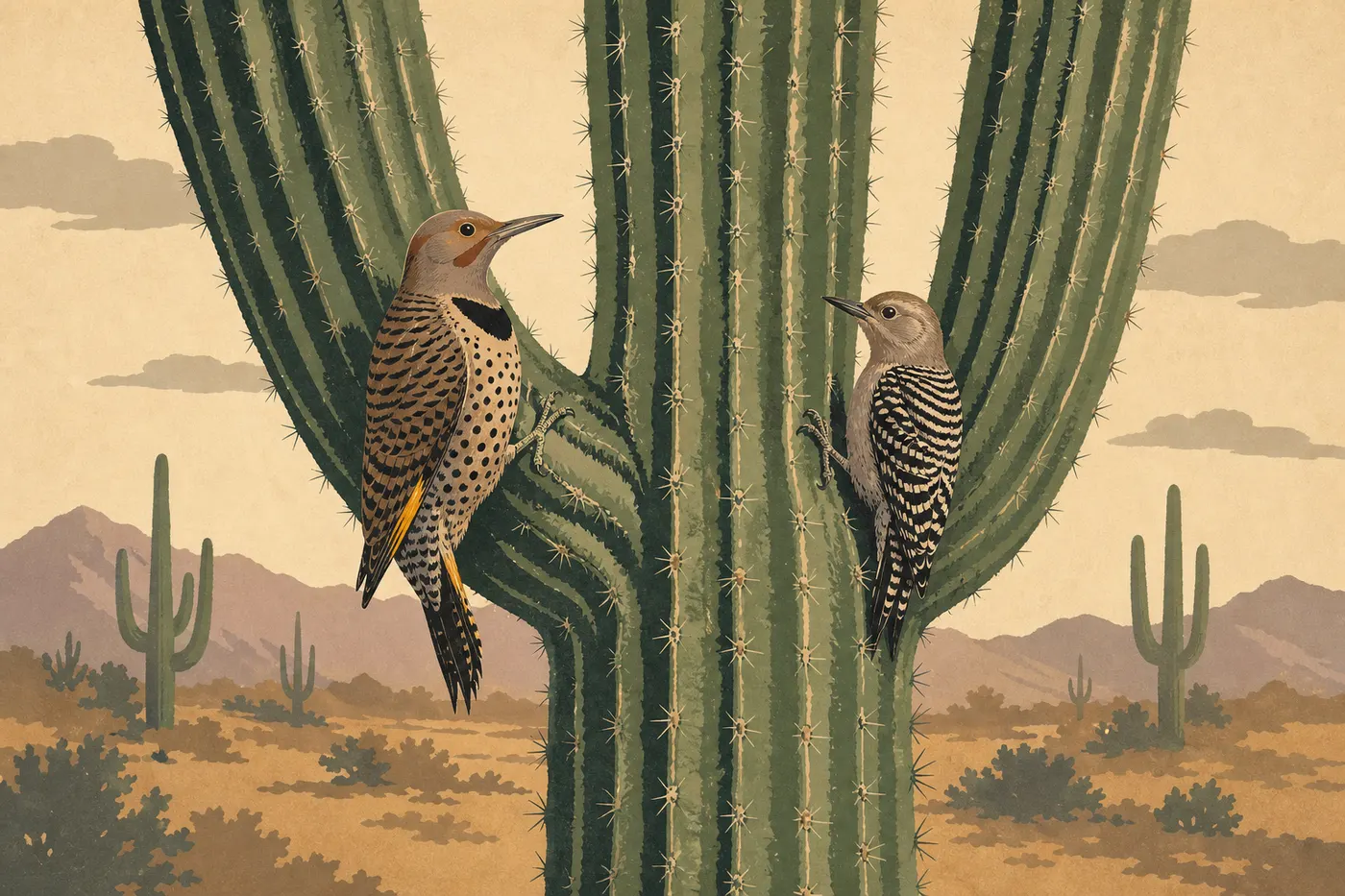
The gilded flicker (Colaptes chrysoides) shares the Gila woodpecker's habit of excavating saguaros and lives alongside it in the park. You may occasionally see both species on the same cactus. Here's how to tell them apart: the gilded flicker has bright yellow underwings, a red nape, and cinnamon-colored cheeks. The Gila woodpecker has a distinctive orange-beige belly, a plain facial mask, and much less warm color on its head. If yellow dominates beneath the wings, it's a gilded flicker. If the belly's orange is what catches your eye, it's a Gila woodpecker.
Where to see wildlife in Saguaro
The park stretches across two districts separated by Tucson, and the wildlife differs between them.
West District (Tucson Mountain District). This is where the saguaro forest is densest and wildlife is easiest to spot. Bajada Loop Drive (5.6 miles on a paved road) is ideal by car at dawn. Javelinas, coyotes, and birds often appear in the open. Valley View Overlook Trail (1 mile round-trip) offers views of the giant cacti and good chances of seeing a Gila woodpecker or Gambel's quail. The area around Signal Hill draws reptiles to its rocks, warmed by the morning sun.
East District (Rincon Mountain District). The elevation rises to 8,665 feet, and the vegetation changes gradually. Mule deer, black bears in the higher wooded areas, and mountain lions are all found here, with tracks regularly spotted on the trails. Cactus Forest Loop Drive (10 miles on an unpaved road) makes a good late-afternoon drive.
In both districts, look for tinajas, natural rock basins, after a monsoon storm. They concentrate wildlife like water holes on the savanna. The locations of the main trails and access areas in both districts appear on Saguaro's official map.
When to watch wildlife
At dawn and dusk, without exception. In summer, when temperatures climb above 104°F at midday, most animals take shelter. The best viewing window shrinks to the first two hours after sunrise and the two hours before sunset.
In winter (November through February), reptiles enter a state of semi-dormancy and almost completely disappear. Javelinas, on the other hand, move around all day, mule deer appear frequently, and migratory birds swell the resident populations. Daytime temperatures range from 50°F to 77°F.
During monsoon season (July through September), nocturnal wildlife becomes active. The Sonoran Desert toad (Anaxyrus alvarius), which can grow beyond 7 inches, takes over temporary wetlands to breed. Rattlesnakes and Gila monsters also come out after rain. The kangaroo rat, a desert-adapted rodent with long hind legs, darts along trails and through parking lots after dark. For a complete month-by-month overview of visiting conditions, our Saguaro seasons guide has all the details.
Predators and large animals in Saguaro
The mountain lion (Puma concolor) is the park's largest predator and can grow more than 6.5 feet long. Nocturnal and elusive, it covers territories spanning hundreds of square miles. Your chances of seeing one on a daytime hike are very low, but tracks in mud or sand reveal its presence in both districts. If you do encounter one, don't run. Speak loudly, make yourself look larger, and back away slowly.
The bobcat (Lynx rufus) is much more common than the mountain lion and may occasionally be visible at dawn on the trails. Its pointed ears, tipped with short black tufts, immediately distinguish it from any other cat. It mainly hunts desert cottontails and rodents.
The Harris's hawk (Parabuteo unicinctus) is one of the park's most remarkable birds of prey. It hunts in coordinated groups, a rare strategy among raptors. Its reddish-brown shoulders, visible in flight, distinguish it from all other hawks. You can often spot one perched atop a saguaro along Bajada Loop.
The black bear (Ursus americanus) visits the higher wooded areas of the East District, above about 4,900 feet. Encounters at lower elevations are rare. Always stay at least 165 feet away, make noise on isolated trails, and never run if you encounter one.
Watching wildlife safely
Keep your distance. Stay at least 100 feet from all large mammals, including javelinas, deer, coyotes, and bobcats. For mountain lions and bears, increase that distance to 165 feet. If an animal changes its behavior after noticing you, such as freezing, turning toward you, or approaching, you're too close. Back away without running.
Snakes and venomous reptiles. The Western diamondback rattlesnake (Crotalus atrox) is the park's main venomous species. Active from March through October, especially at dusk and at night, it bites only when surprised or threatened. Follow four practical rules: wear closed-toe, high-top shoes on the trails, not sandals; never put your hands into a crevice without looking first; check the other side of a rock before stepping over it; and shine a light on the ground ahead of you if you're walking after sunset. If you're bitten, immobilize the affected limb, stay calm, and get to a medical facility immediately.
Scorpions. The Arizona bark scorpion (Centruroides sculpturatus), found in both districts, is venomous and becomes active as soon as the sun goes down. Shake out your shoes before putting them on in the morning, and never sleep without a closed tent.
Never feed wildlife. Federal law prohibits it in all U.S. national parks. An animal that gets used to human food loses its natural wariness, develops aggressive behavior, and often ends up euthanized. Store your food in airtight bags or in your vehicle, even when you're stopped.
For the park's general rules, including emergency numbers, recommended gear, and camping regulations, see the general Saguaro guide. The trails best suited to wildlife watching are detailed in our selection of Saguaro hikes.
In brief: species not to miss and where to find them
| Species | Best area | Best time |
|---|---|---|
| Gila woodpecker | Bajada Loop, Valley View Overlook Trail (West) | Morning, year-round |
| Elf owl | Large hollow saguaros (West) | Night, March through September |
| Collared peccary | Both districts | Dawn and dusk |
| Gila monster | Rocky trails (West) | Morning after rain, March through November |
| Coyote | Both districts | Dawn and dusk |
| Harris's hawk | Bajada Loop (West) | Morning |
| Mountain lion / bobcat | East District | Nocturnal, tracks mostly |
| Black bear | Rincon Mountains, above 4,900 feet (East) | Very elusive, high elevations only |
| Sonoran Desert toad | Temporary wetlands | Night, July through September |
Saguaro is as much a place to listen as it is to hike. Turn off your engine beside Bajada Loop at 7 a.m. and give the silence ten minutes. Javelinas arrive first, followed by the woodpeckers. It's one of the most accessible and reliable wildlife experiences the park has to offer.
Frequently asked questions
What are the iconic animals of Saguaro National Park?
Saguaro's iconic animals are the Gila woodpecker, elf owl, collared peccary, Gila monster, and coyote. These five species embody the wildlife of the Sonoran Desert. The first four can be seen year-round, while elf owls are present from March through September.
What is the most common animal in Saguaro National Park?
The most common animal in Saguaro National Park is the collared peccary, or javelina, which appears in groups in both districts year-round. Coyotes and Gila woodpeckers are its closest competitors in wildlife sightings.
What is the largest animal in Saguaro?
The largest animal in Saguaro is the mountain lion, which can grow more than 6.5 feet long and weigh up to 175 pounds. The black bear, found in the higher elevations of the East District, is comparable in size. Both species are elusive and rarely seen during the day.
What predators live in Saguaro National Park?
Saguaro National Park's predators include the mountain lion, bobcat, coyote, and Harris's hawk. The black bear, an omnivore that can also prey on animals, is also found in the higher elevations of the East District.
What animals are out at night in Saguaro?
At night in Saguaro, active species include the elf owl, Western diamondback rattlesnake, Arizona bark scorpion, kangaroo rat, Sonoran Desert toad during monsoon season, and mountain lion. Bring a headlamp on the trails after sunset.
What animals live in saguaro cacti?
Saguaro cacti shelter several species at different stages of their lives. Gila woodpeckers and gilded flickers excavate their nests there. Once abandoned, those cavities shelter elf owls, pygmy nuthatches, and cactus wrens. Saguaro fruit, which ripens in June and July, attracts pollinating bats, hummingbirds, and javelinas.
Is the diamondback rattlesnake dangerous on Saguaro's trails?
The Western diamondback rattlesnake is venomous but not naturally aggressive. It bites when surprised or directly threatened. On Saguaro's trails, wear closed-toe shoes, watch where you place your feet and hands, and stay at least 5 feet away if you encounter one. Nearly all recorded bites result from an attempt to handle the snake.