
When to Visit Saguaro. Best Seasons and Month-by-Month Guide
The best time to visit Saguaro National Park is October through April, when temperatures make hiking possible without the risk of heatstroke. For the best hiking conditions, plan your visit from November through February, when days range from 45 to 72°F, trails stay accessible all day, and wildlife is especially active. If you're coming for the blooms, add May to your calendar. Saguaros produce white flowers at the tip of every arm, a sight found throughout the Sonoran Desert and nowhere else in the United States.
Saguaro Weather Month by Month
The park spans two districts separated by Tucson in the Sonoran Desert. The climate is arid, with mild winters, scorching summers, and a summer monsoon concentrated from July through September. The table below shows climate normals at the elevation of the main trails, around 2,300 to 3,000 feet.
| Month | High (°F) | Low (°F) | Precip. (mm) | What to expect |
|---|---|---|---|---|
| January | 64 | 39 | 20 | Ideal for hiking |
| February | 68 | 41 | 18 | Low-angle light, active wildlife |
| March | 75 | 46 | 18 | Prickly pear blooms |
| April | 82 | 54 | 8 | Pleasant warmth, spring break crowds |
| May | 91 | 63 | 5 | White saguaro flowers |
| June | 100 | 72 | 8 | Extreme heat, dawn or dusk outings only |
| July | 100 | 77 | 50 | Monsoon storms in the afternoon |
| August | 99 | 75 | 55 | Monsoon, lush landscape |
| September | 93 | 72 | 35 | Transition, storms tapering off |
| October | 84 | 59 | 20 | Excellent, deep post-monsoon skies |
| November | 72 | 45 | 18 | Quiet, fall light |
| December | 64 | 39 | 22 | Cool, some mornings near 32°F |
For real-time forecasts and hourly data, check the Saguaro weather forecast.
Saguaro in January
Temperatures range from 39 to 64°F. Mornings are cool, while afternoons are comfortable for hiking without restrictions. January is one of the busiest months, with snowbirds having settled in Tucson for several weeks. Arrive before 8 a.m. on weekends to find a parking spot. Both visitor centers and all the main trails are open. Wildlife is easy to spot, including javelinas, coyotes, and Gambel's quail along the roadsides.
Saguaro in February
Winter's low-angle light is especially beautiful for photographing the giant cacti, and temperatures from 41 to 68°F remain ideal for walking all day. Tucson's Gem & Mineral Show, usually held in early February, puts heavy pressure on lodging availability, so book several weeks ahead. February weekends are the busiest of the year in the park, with parking lots filling by 9 a.m.
Saguaro in March
The first blooms arrive. Prickly pears and ocotillos cover the desert in yellow and orange. With highs around 75°F, long hikes remain comfortable even in the middle of the day. American spring break brings a surge in visitors from mid-March through early April. Arrive early or choose trails in the East District, which are often less crowded than those in the West District.
Saguaro in April
The heat builds, reaching 82°F, but mornings remain mild and ideal for hiking. Crowds drop sharply after spring break, and the second half of the month is much quieter than the first. Nights are still cool, and camping remains comfortable.
Saguaro in May
May is saguaro bloom season. Large white flowers appear at the top of every arm, pollinated at night by bats and during the day by bees. The window lasts only a few weeks, so if that's your goal, plan your timing carefully. With highs near 91°F, schedule long hikes before 9 a.m. or after 5 p.m.
Saguaro in June
June is the driest and hottest month of the year, with temperatures regularly topping 100°F. Outings are possible only during the first two hours after sunrise, and you should carry at least 3 liters of water per person. The park is practically empty after 8 a.m., which is ideal for dawn photography but difficult for everything else.
Saguaro in July
The North American monsoon arrives in mid-July. Severe thunderstorms break out almost every afternoon, sometimes within minutes. The desert turns dramatically green, and post-storm light is among the best of the year for photography. Stay out of arroyos whenever there's a flash flood warning. Floodwaters can appear even when no rain is falling where you are.
Saguaro in August
The monsoon continues, with often-clear mornings and stormy afternoons. August is one of the most photogenic months, with the greenest desert of the year and intensely colorful sunsets. Trails remain lightly used despite the scenery. Temperatures from 73 to 97°F and the risk of flooding call for the same precautions as in July.
Saguaro in September
Storms become less frequent as the month goes on, and temperatures begin to fall, ranging from 68 to 93°F during the day. September is a transition period. Mornings are already pleasant, while afternoons are still hot. The light remains beautiful for photography, and crowds are light.
Saguaro in October
The post-monsoon sky takes on its characteristic deep blue. Saguaro silhouettes stand out with unusual photographic clarity. Temperatures from 55 to 84°F work well for every activity, morning through evening. Crowds are moderate early in the month, before snowbirds gradually return toward the end. This is our favorite month in the park.
Saguaro in November
Conditions are almost identical to January, with far fewer visitors. Fall's low-angle light, quiet trails even on weekends, and both districts operating at full capacity make November one of the best months for a long hike without logistical complications.
Saguaro in December
Mornings at higher elevations sometimes drop close to 32°F, but afternoons remain mild, reaching 64°F. All the main trails and both visitor centers are open. Crowds stay manageable before the holidays, making December a good month for anyone seeking quiet and an uncrowded introduction to the park.
Saguaro Season by Season
Winter (December through February)
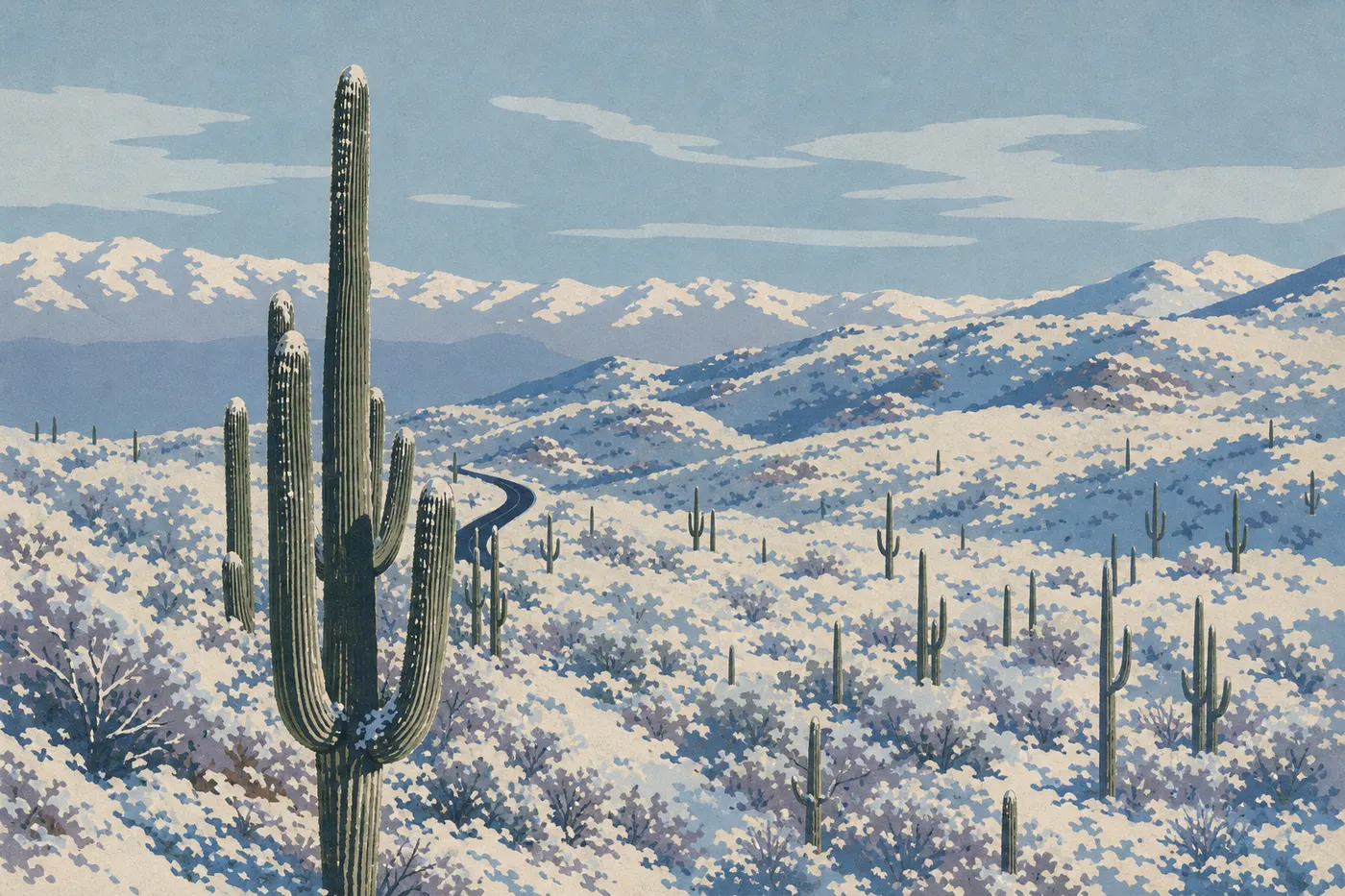
According to the NPS, daytime temperatures range from 50 to 79°F. Mornings are cool, but midday is mild. There is no thermal stress and no need to carry heavy technical clothing. Both visitor centers open at 9 a.m., with winter hours continuing through May 31. The park itself remains accessible on foot or by bicycle 24 hours a day, with no closures.
Wildlife is active. Javelinas, coyotes, and Gambel's quail frequent the areas around the trails. Wintering raptors, including American kestrels and Swainson's hawks, add real birding interest. Our Saguaro wildlife guide covers the species found in each season.
Spring (March through May)
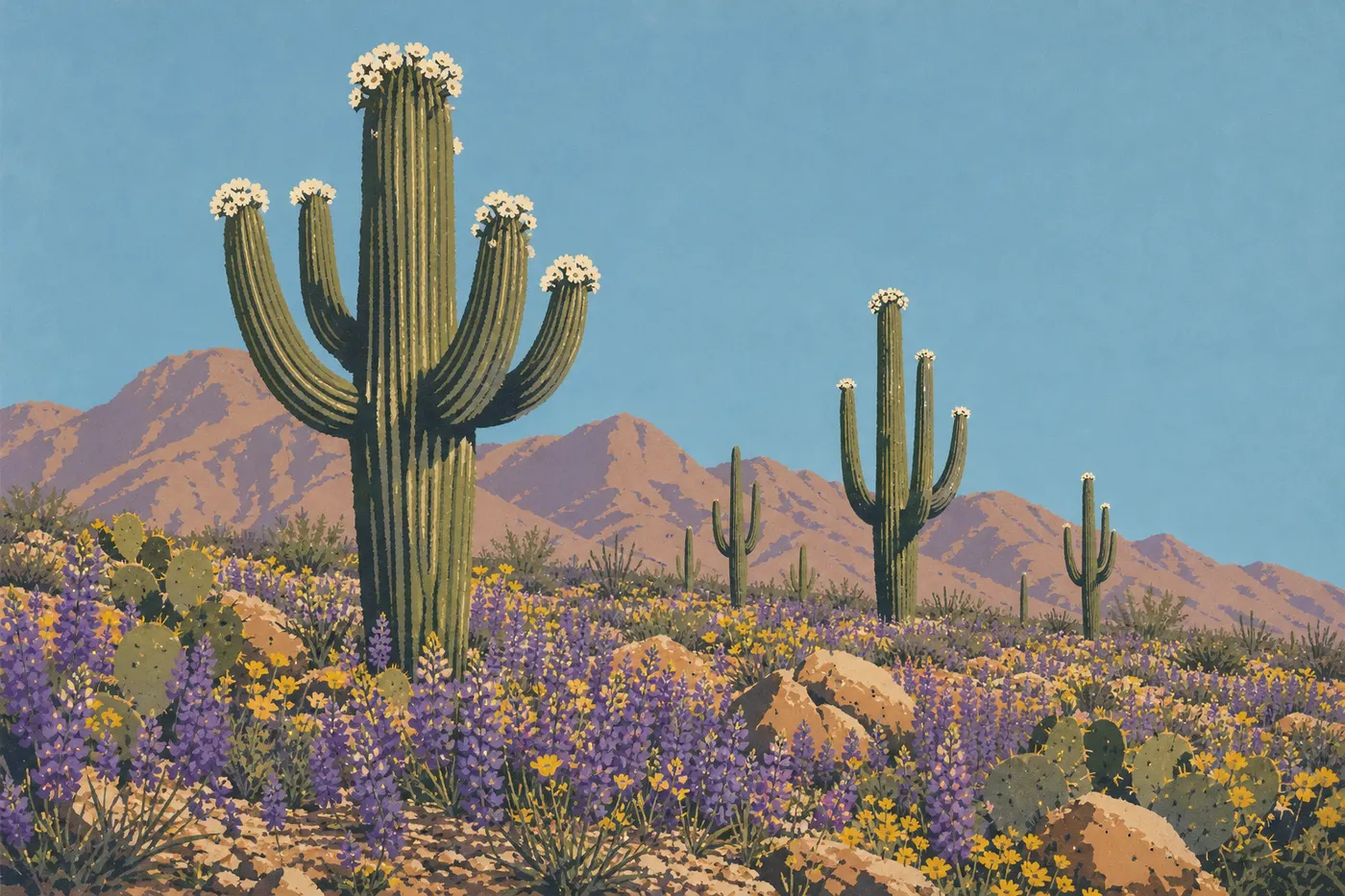
Prickly pears and ocotillos bloom in March and April, coloring the ground orange and yellow. In May, the saguaros themselves bloom. Large white flowers emerge at the top of every arm, pollinated at night by bats and during the day by bees. The display lasts only a few weeks, so plan around it carefully.
The heat rises quickly. March remains comfortable, with highs up to 75°F, but from April onward, schedule long hikes before 9 a.m. or after 5 p.m. Crowds peak in March and early April, driven by American school spring break.
Summer (June through September)
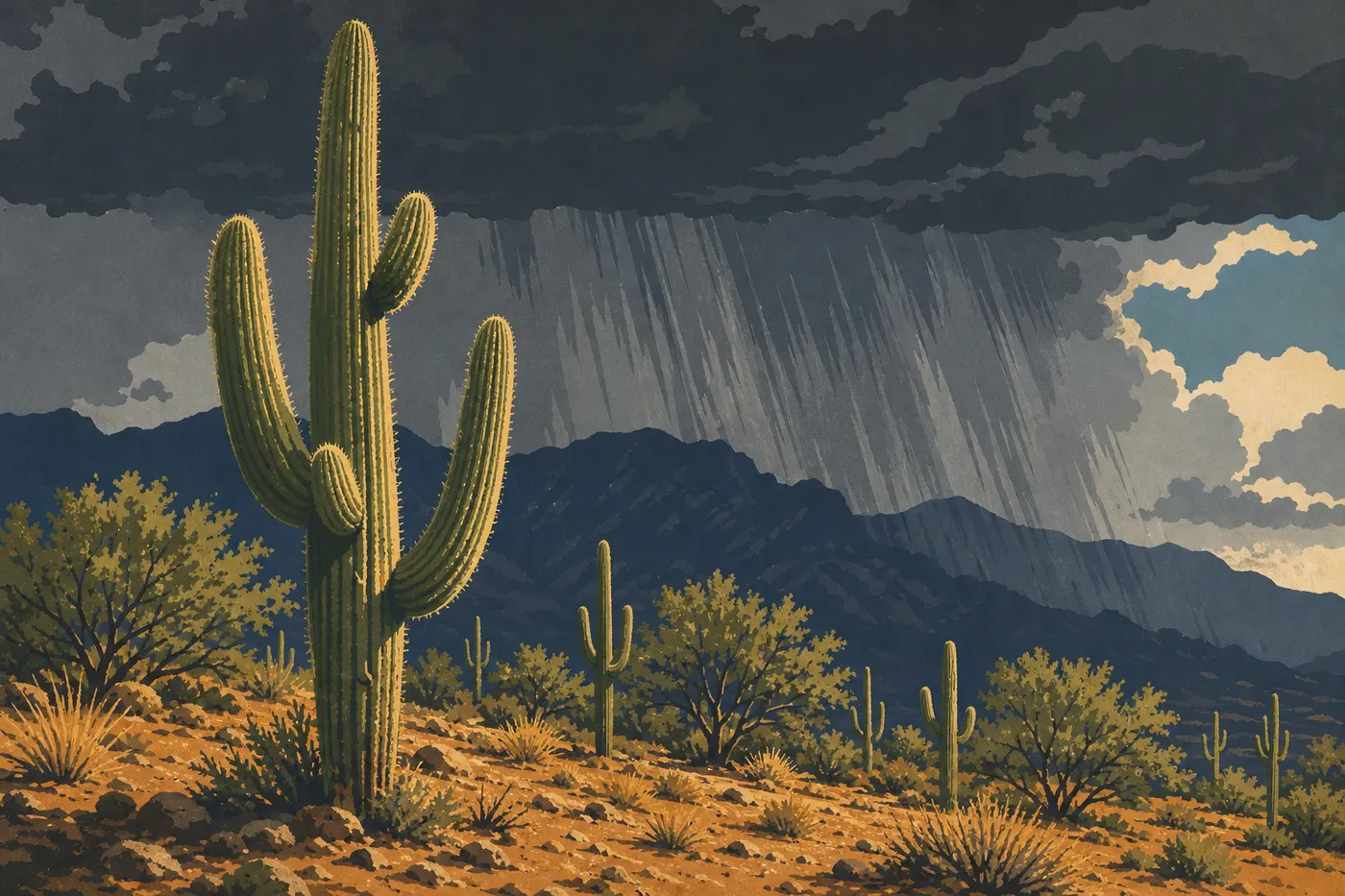
June is the driest and hottest month. Temperatures regularly exceed 100°F and can approach 109°F on the low desert floor. The NPS scales back its interpretive programs during this period. Outings are still possible if you limit them to the first two hours after sunrise and carry at least 3 liters of water per person.
The North American monsoon arrives in mid-July. Severe thunderstorms break out almost every afternoon, dropping 1.6 to 2.2 inches in a few hours. The desert turns dramatically green. Saguaros can absorb hundreds of liters in a single downpour and visibly swell. Post-storm light is exceptional for photography. For safety, stay out of arroyos, or dry washes, whenever there's a flash flood warning. Floodwaters can appear even when no rain is falling where you are.
Fall (October through November)
October is our favorite time in the park. Temperatures fall back to 68 to 84°F, the sky takes on the characteristic deep blue of the post-monsoon season, and saguaro silhouettes stand out with unusual photographic clarity. Crowds remain moderate early in the month, before snowbirds, or retirees who spend the winter in Arizona, return.
November builds on those advantages. Expect low-angle light, daytime temperatures around 72°F, and quiet trails even on weekends. For hiking, conditions are comparable to January, with fewer visitors.
Crowds. When to Avoid the Rush
The park receives about one million visits a year, spread unevenly across the calendar.
Heavy crowds. Arrive before 8 a.m. January, February, and March are the busiest months. Snowbirds and spring break families fill the parking lots along Bajada Loop Drive in the West District and Cactus Forest Loop Drive in the East District by 9 a.m. February weekends are the busiest.
Moderate crowds. October, November, and April offer manageable mornings. Weekday afternoons are quiet.
Light crowds. June, July, and August see fewer visitors because of the heat. Trails are nearly empty, but the weather leaves no room for improvisation.
Saguaro doesn't use a timed-entry system. Access is open year-round with no advance reservation. Admission is $25 per vehicle, valid for seven days in both districts.
Best Time to Visit on a Budget
Hotels in Tucson, the natural base for visiting both districts, follow a pronounced seasonal pattern.
Peak hotel season. January through March. Rates run 30 to 50% above the annual average. Tucson's Gem & Mineral Show in February puts even more pressure on available rooms.
Shoulder season. October through November and April through May. This is a good balance of weather and cost. Flights from major international hubs via Phoenix or Dallas remain reasonably priced, and Tucson lodging rates are generally manageable.
Low season. June through September. Rates drop sharply, while the park's admission fee stays the same. If you're visiting in July or August, plan outings for 6 a.m. and spend the rest of the day in Tucson, visiting museums or the Arizona-Sonora Desert Museum in the evening. For a complete lodging overview, see our Saguaro lodging guide and our Saguaro camping guide.
The Best Time for Your Trip
Hiking. November through February, without question. East District trails such as Tanque Verde Ridge and Rincon Valley are dangerous in the summer heat. Our Saguaro hiking guide covers difficulty levels and durations.
Wildlife. November through March for mammals and raptors. May through September for reptiles such as gila monsters and rattlesnakes. Stay on marked trails and look before placing your foot on a rock.
Photography. There are two distinct windows. May brings white saguaro flowers and golden evening light. October brings deep-blue post-monsoon skies that contrast with the giant cacti.
Families. December through February. Short West District trails such as Valley View Overlook Trail, 1 mile round-trip, work for kids as young as 5. Our guide to visiting Saguaro with kids lists family-friendly trails and activities.
Budget travel. July or August, provided you prepare carefully for every outing with water, sun protection, and strict timing. Lodging savings help, but they don't offset the risks of underestimating the heat.
In Summary. The Best Time for Your Trip
| Traveler | Best time |
|---|---|
| Hiking for all ability levels | November through February |
| Saguaro blooms | May |
| Photography | May or October |
| Families | December through February |
| Budget travel | July through August, with precautions |
| Avoiding crowds | October through November |
For detailed trip planning, including itineraries, ideal length of stay, and how to travel between the two districts, see our complete Saguaro guide and our Itinerary and Length of Stay page.
The Worst Time to Visit Saguaro
June is the toughest month. It's the hottest and driest time of year, with temperatures regularly above 100°F and reaching 109°F on the low desert floor. NPS interpretive programs are reduced, long hikes become impossible after 8 a.m., and the heat leaves no room for improvisation. If you arrive in June, your visit comes down to a dawn outing and the rest of the day in Tucson.
July and August are more nuanced. The monsoon brings severe afternoon thunderstorms and a real risk of flash flooding in arroyos. These months aren't off-limits if you accept the constraints. Mornings are often clear, the desert is visually spectacular, and trails are lightly used. But July and August aren't a good fit for beginners, families with young children, or anyone who can't start at dawn.
Frequently Asked Questions
When is the best time to visit Saguaro National Park?
The best time to visit Saguaro is October through April, with November through February best for hikers and May ideal for the spectacular saguaro blooms.
Is Saguaro worth visiting?
Saguaro is worth the trip if you've never seen a forest of giant cacti in their natural setting. Saguaros more than 200 years old, sunsets over the Rincon Mountains, and abundant desert wildlife make it a destination in its own right, not just a roadside stop.
Is the park open year-round?
Yes. Both Saguaro districts are accessible year-round, including December and the summer months. Scenic drives and main trails don't have scheduled seasonal closures. Visitor centers keep shorter hours during the low season. Only occasional temporary closures, caused by flash floods or maintenance, may occur.
What's the weather like in Saguaro?
Saguaro has an arid subtropical climate, with mild winters, when daytime temperatures range from 50 to 79°F, very hot summers from 95 to 109°F, and a summer monsoon from July through September that brings most of the year's rainfall in afternoon storms.
How much time do you need to visit Saguaro?
Plan on half a day per district for the scenic drive and a short trail, or two full days to explore both districts in depth. Our Itinerary and Length of Stay page lays out options for different schedules.
How much does a trip to Saguaro cost?
Park admission costs $25 per vehicle, valid for seven days in both districts, $15 per person on foot or by bicycle, and $20 for a motorcycle. The annual park pass costs $45. For lodging and your overall budget, see our Where to Stay guide.
What's the best season to visit the American West?
Spring, from March through May, and fall, from September through November, work well for most parks in the American West. For desert parks such as Saguaro, fall and winter have the edge because of the early heat. Our guides to the American Southwest offer useful comparisons among the desert parks.
When is the best time to visit Arizona?
Arizona is best visited from October through April. The southern deserts are manageable, the Grand Canyon is open and accessible, and temperatures remain moderate across the state.