
Saguaro Weather: Forecasts, Climate, and Current Conditions
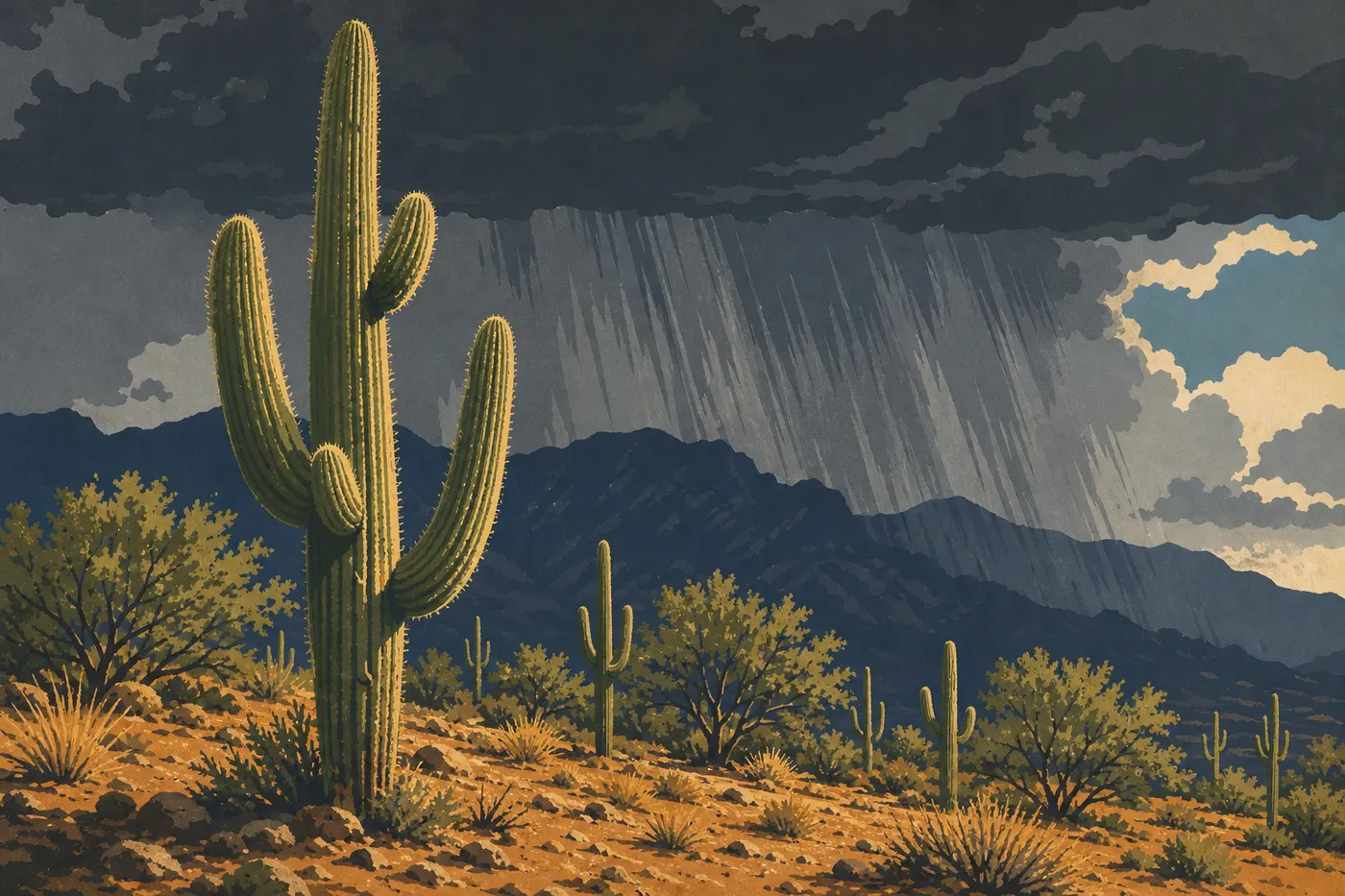
Saguaro stretches across the Sonoran Desert, framing the city of Tucson, Arizona, with its two districts. The climate is arid and highly variable, with mild, sunny winters, summers that regularly top 104°F, and a summer monsoon that reshapes the rules every year between July and September. The short version is this: from October through April, the weather is on your side; from June through mid-September, the heat sets your schedule.
Current readings are unavailable. See the seasonal averages farther down this page.
Open-Meteo readings · updating… · park time zone
Current Conditions at Saguaro
Check the current temperature before heading out on a trail. At Saguaro, the difference between a 59°F morning and a 104°F afternoon high is common in summer, and a monsoon storm can form in just a few dozen minutes.
Saguaro Forecasts (7 to 14 Days)
The weekly forecast helps you schedule your most strenuous hike, such as Rincon Peak or Tanque Verde Ridge, before the heat or monsoon moves in without warning.
Saguaro Climate Month by Month
The table below shows normal temperatures and precipitation for the low-elevation areas of both districts, at approximately 2,395 feet. In the Rincon Mountains, in the East District, the summit reaches 8,665 feet, where temperatures are 41 to 46°F cooler year-round.
| Month | Low | High | Precipitation |
|---|---|---|---|
| January | 37°F | 64°F | 1.0 in |
| February | 41°F | 70°F | 0.8 in |
| March | 45°F | 75°F | 0.8 in |
| April | 52°F | 84°F | 0.3 in |
| May | 59°F | 93°F | 0.2 in |
| June | 66°F | 102°F | 0.2 in |
| July | 75°F | 99°F | 2.2 in |
| August | 73°F | 97°F | 2.0 in |
| September | 68°F | 93°F | 1.4 in |
| October | 55°F | 82°F | 0.8 in |
| November | 45°F | 70°F | 0.8 in |
| December | 39°F | 64°F | 1.0 in |
Two wet periods shape the year: the monsoon from July through September, which brings about half of the annual precipitation, and brief, mild winter rains from December through February. Spring through early June is exceptionally dry.
Is Saguaro Cold or Hot? Records and Extremes
Hot, clearly. Tucson records approach 117°F, and excessive heat warnings are issued during some summers. Cold is more nuanced. At lower elevations, freezes are rare and brief, lasting only a few nights in December and January. At the summit of Rincon Peak, at 8,665 feet, nighttime temperatures can plunge well below freezing, and wind makes it feel even colder. Don't skip the layers if you're heading high, whatever temperature is displayed at the park entrance.
What to Wear by Season
Winter and spring (October through May): Layer up. Wear a fleece or windbreaker in the morning and a breathable T-shirt during the day. A wide-brimmed hat and sunglasses are essential even when temperatures stay below 68°F. Arizona's sun is intense. Supportive trail shoes are recommended on rocky trails, especially for the routes described in the Saguaro hikes.
Summer (June through September): Wear light-colored, lightweight clothing and at least SPF 50, and cover your head. Starting in July, pack a lightweight rain jacket or poncho. Monsoon storms hit quickly and hard. Avoid exposed hikes between 10 a.m. and 4 p.m. in June, July, and August. Carry at least 0.5 liters of water per hour of hiking.
At higher elevations (Rincon Peak and areas above 4,920 feet): Bring an extra warm layer even in summer, and check the forecast for the specific elevation, not just Tucson.
Warnings and Conditions to Watch
Extreme heat: The National Weather Service regularly issues heat warnings in June and July. The park may restrict access to some exposed trails during the day. Check the entrance signs and announcements on the NPS website.
Flash floods: During the monsoon, an arroyo can go from completely dry to a torrent in just a few minutes, even when the sky above you is still clear. Rain can fall 6 miles away, and the water can arrive without any warning. Never cross a flooded arroyo on foot or by vehicle.
Road closures: Bajada Loop Drive in the West District and some access roads in the East District temporarily close after heavy rain. Before you leave, check conditions on the park's Practical Information, Rules & Safety page.
Frequently Asked Questions
What's the weather like at Saguaro right now?
Weather at Saguaro varies widely by season. It's mild and sunny from November through April, with afternoon temperatures of 64 to 77°F, while June is scorching, reaching 102°F and higher. July and August bring occasional monsoon storms. Real-time conditions appear in the forecast section higher up on this page.
What's the current temperature at Saguaro?
The temperature at Saguaro depends on the district, elevation, and season. Normal temperatures range from 37 to 64°F in January to 75 to 99°F in July and August. The current-conditions section at the top of the page shows the temperature right now.
Does it get cold at Saguaro?
At lower elevations in the West District and the low country of the East District, winters are mild. Temperatures rarely fall below 37°F at night and never feel bitterly cold during the day. The summit of Rincon Peak, at 8,665 feet, can reach below-freezing temperatures in December and January, with possible snowfall.
What should I wear to visit Saguaro?
In winter and spring, dress in layers: a jacket in the morning, a T-shirt in the afternoon, plus a hat and sunscreen year-round. In summer, wear light-colored clothing, use at least SPF 50, and bring a lightweight rain jacket for monsoon storms starting in July. Closed-toe trail shoes are recommended on every trail.
What is Saguaro's climate like?
Saguaro has a Sonoran Desert climate: arid and very sunny, with two distinct wet seasons. The monsoon from July through September brings about half of the annual precipitation, roughly 11.8 inches, while brief, mild rains fall in winter. Summers are hot to extremely hot at lower elevations. Winters are mild and very pleasant.