
What to Do in Saguaro: Must-See Sights and Activities
In a nutshell. At Saguaro National Park, the highlights are split between two districts separated by Tucson. In the West District, you'll find Bajada Loop Drive through a forest of giant cacti and the petroglyphs at Signal Hill. In the East District, there's Cactus Forest Loop Drive and trails in the Rincon Mountains. Add in surprising wildlife such as javelinas, roadrunners, and Gila woodpeckers, plus sunsets that turn the saguaros into striking silhouettes. One day is enough for the essentials. Two days give you time to slow down and take it all in.
Saguaro at a Glance: Two Districts, Two Faces
Saguaro National Park consists of two geographically separate units on either side of Tucson, Arizona. This isn't just a logistical detail. Each district has its own character and strengths.
The West District (Tucson Mountain District) lies west of Tucson and is accessible via North Kinney Road. The terrain is gentle, the vegetation is dense with saguaros, and the visitor facilities are easy to combine. This is the best area for a first introduction to the Sonoran Desert and for visitors short on time.
The East District (Rincon Mountain District) stretches east of the city at the foot of the Rincon Mountains, whose peaks rise above 8,500 feet. The vegetation ranges from typical lowland desert to oak and pine forests at higher elevations. This is the place for hikers who want to go farther and higher.
Each district has its own visitor center, trail network, and scenic drive. You can't travel from one to the other through the park. You have to cross Tucson, which takes about 30 minutes by car. Trying to do both in the same morning isn't realistic.
Entrance fees are $25 per vehicle, $15 per pedestrian, and $20 per motorcycle. For entrance fees and annual passes, see the National Parks Fees & Passes page.
How Much Time Do You Need to Visit Saguaro?
The honest answer is half a day per district, or a full day if you want to see both. Some travelers passing through Tucson spend two or three hours in one area and leave satisfied. Others come back for several days in a row.
With two days, you can explore each district at an easy pace, fit in a few hikes in the East District, and enjoy a sunset on both sides of the park. This is the format we recommend if you really want to experience what the park has to offer.
If you're combining Saguaro with other sites in the area, one well-planned day is enough to cover the highlights. Our Itinerary & Length page offers structured plans based on how much time you have.
The Highlights, District by District
West District (Tucson Mountain District)

Bajada Loop Drive is the natural first stop when you arrive in this district. The loop combines a paved section, Hohokam Road, with a gravel section, Golden Gate Road, through one of the park's densest concentrations of saguaros. Drive slowly with the windows down, stopping at the marked overlooks. Allow about an hour, or longer if you get out of the car often. In dry weather, any vehicle can make it through without a problem. After rain, the gravel road can become slippery and temporary washouts may appear, so check conditions at the park entrance before setting out.
Signal Hill is the other must-see in the West District. A short trail, less than 0.6 miles from the parking area, climbs to an outcrop of black basalt covered with Hohokam petroglyphs, carved by people who lived in the region before the colonial era. The site is remarkably well preserved. The rule is strict: don't touch the rocks, since skin oils accelerate the deterioration of the carvings, and don't place anything on the stones. Arrive just after sunrise to see the carvings in the best light and before the groups arrive.
Red Hills Visitor Center is worth 30 to 45 minutes. Its permanent exhibit on the Sonoran Desert is well researched and thoughtfully presented. Rangers give precise answers about trail conditions and recent wildlife sightings. This is also where you can pick up the park's paper maps, which are useful even if you have a smartphone.
Valley View Overlook Trail offers an unobstructed view of the saguaro forest and distant ridges from an overlook that's accessible to everyone. The climb is short and gradual. In late afternoon, the low light gives the cacti a coppery hue that photographers especially appreciate.
East District (Rincon Mountain District)

Cactus Forest Loop Drive is a one-way paved loop that runs along a dense saguaro forest and has several pullouts with open views of the plain and the foothills of the Rincon Mountains. You can bike it in the morning, before motor traffic picks up, and drive it all day. Half an hour is enough by car without stopping. Allow twice that if you take time to get out at the overlooks.
Rincon Mountain Visitor Center has exhibits on the geology and biodiversity of the East District, along with a terrace overlooking the cactus forest. It's the ideal place to check high-elevation trail conditions before heading out.
Freeman Homestead Nature Trail is a short, interpretive trail of less than 1.2 miles that passes the remains of an early-20th-century ranch abandoned in the 1930s. Short, flat, and packed with cacti close to the trail, it's ideal for families or for the end of the day when a long hike is no longer in the cards.
Mica View Picnic Area is a peaceful picnic spot on the edge of the saguaro forest, with views of the Rincon ridges. Birds are especially active in the morning. This is often where you'll spot javelinas quietly crossing the area.
Saguaro's Best Hikes
The park has trails for every level, from a flat 30-minute loop to several-hour climbs toward the wooded peaks of the Rincon Mountains. Without going into detail, which is the focus of our Hiking page, here's what you need to know to choose.
On the west side, the trails are generally short and nontechnical: Desert Discovery Nature Trail, which is wheelchair accessible, Signal Hill Trail, and Valley View Overlook Trail. They're a good fit for families, beginners, or visitors who aren't looking for much elevation gain.
On the east side, the experience changes noticeably. Tanque Verde Ridge Trail climbs gradually along the Rincon ridges, with spectacular views of the Tucson Valley and the surrounding plain. Cactus Forest Trail offers a good balance of distance and varied scenery. To reach the peaks, including Rincon Peak at more than 8,500 feet, plan on a full day round-trip or an overnight in the backcountry. A wilderness permit is required for camping and must be obtained in advance.
Desert safety rules are nonnegotiable. Carry at least 1 liter of water for every hour you expect to hike. Avoid exposed trails between 10 a.m. and 4 p.m. from May through September, when temperatures regularly top 104°F. Tell someone your route and estimated return time before you leave.
Other Activities, Depending on Your Interests
Wildlife Watching

The Sonoran Desert is so rich in wildlife that it surprises visitors who expected an empty landscape. Javelinas travel the trails in family groups. Watch them without approaching or feeding them, and never put yourself between a female and her young.
Birds provide plenty of entertainment. Gila woodpeckers nest in cavities carved into saguaros and are easy to identify by their striped plumage and call. Gambel's quail run single file along the trails. Spotting a greater roadrunner is always a treat. In the evening, bats take over from the birds as pollinators around cactus flowers.
As for reptiles, rattlesnakes live throughout the park. Watch where you step, don't put your hand under rocks or logs, and don't try to get close to them. Gila monsters, venomous black-and-orange lizards, are rare but present. Our Wildlife page covers the species and the right way to behave around each one.
Photography and Stargazing

Saguaro is a photographer-friendly park. The silhouettes of saguaros at sunset from the overlooks along Bajada Loop Drive or at Valley View Overlook are Arizona landscape photography classics. The light is especially beautiful in winter, from October through February, when skies are often clear and temperatures are mild.
Tucson's proximity means nighttime viewing conditions aren't as good as they are in more isolated parks, but moonless winter nights offer decent skies for visual astronomy and long-exposure photography.
Biking

Cactus Forest Loop Drive in the East District is open to bicycles when the park opens, before motor traffic picks up. Some gravel trails in the West District are open to mountain bikes. Restrictions vary by trail, so check at the park entrance. Bicycles aren't allowed on the standard hiking trails in either district.
Visiting with Kids
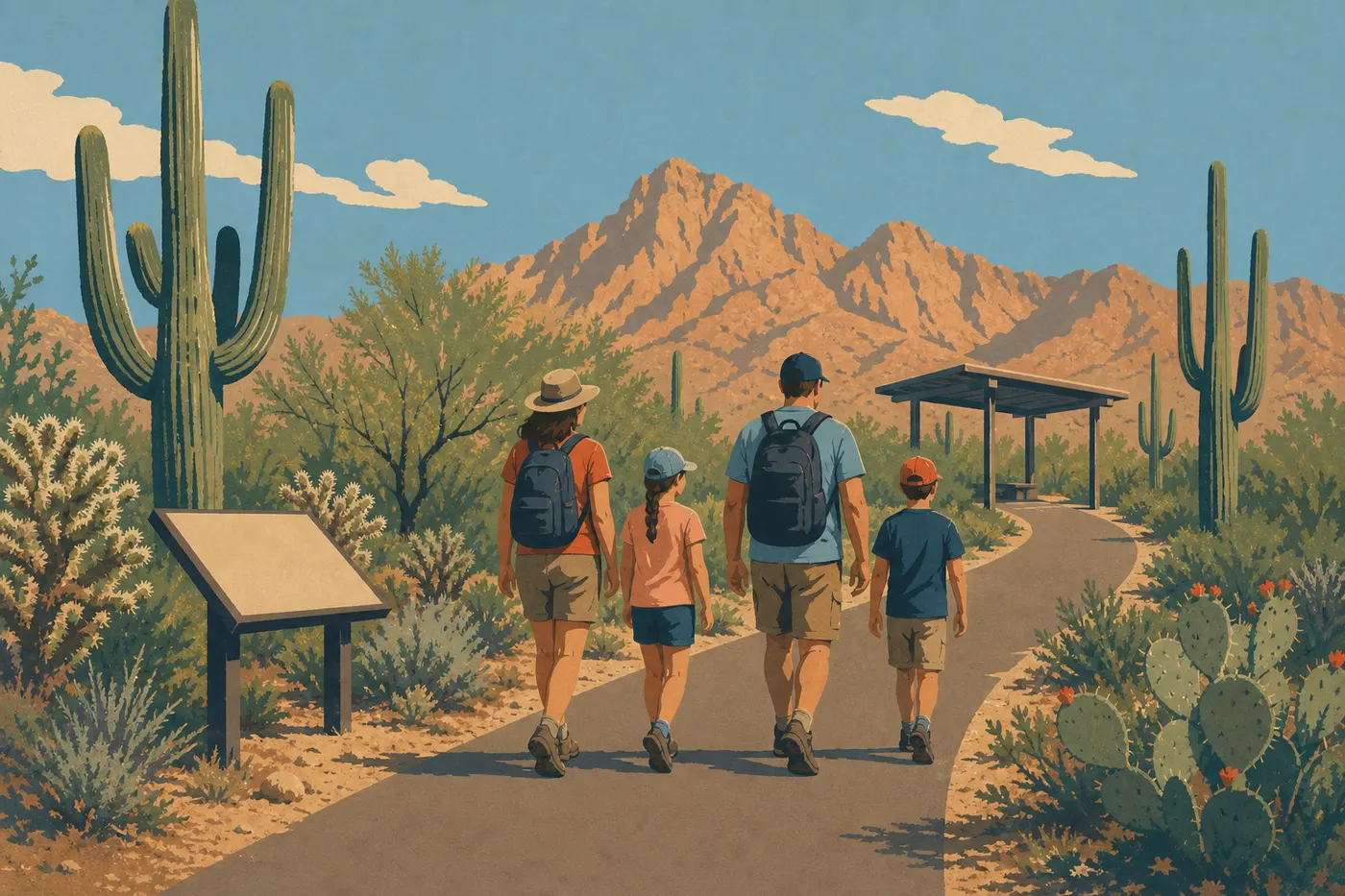
Both visitor centers offer Junior Ranger programs. Kids complete a booklet during their visit and earn a badge. The short, flat trails in the West District work well for children as young as 4. The main rule is to plan outings for early morning to avoid the hottest hours and bring more water than you think you'll need. A child can become dehydrated faster than an adult in this kind of environment. Our Family page offers itineraries and advice for visiting with kids.
Things to Do Around Saguaro
Arizona-Sonora Desert Museum
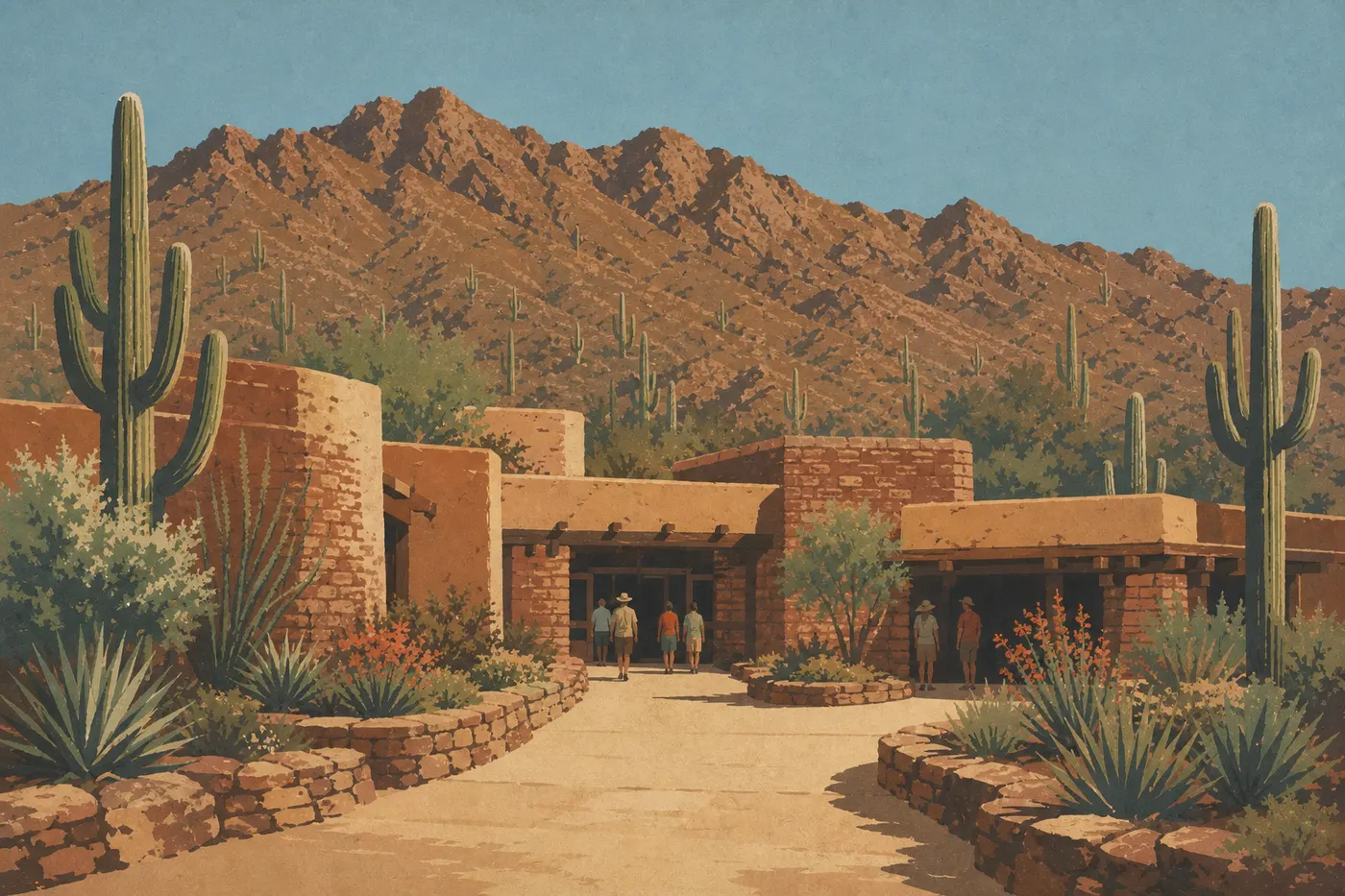
Just minutes from the West District entrance, this attraction combines a zoo, botanical garden, and natural history museum, all focused on the Sonoran Desert ecosystem. Here you'll reliably see animals that can be elusive in the park, including bobcats, river otters, and ocelots, as well as hundreds of bird and reptile species in spacious, thoughtfully designed enclosures. Plan on at least half a day, ideally in the morning for the free-flight raptor demonstrations.
Tucson and the Surrounding Area

Tucson is a college town with lively neighborhoods and a serious food scene shaped by Sonoran and Mexican cuisine. Historic Barrio Viejo and San Xavier del Bac, about 12 miles south, are worth a visit if you're staying in the area for several days.
Other Parks Nearby

Saguaro fits naturally into a southern Arizona road trip. Chiricahua National Monument, east of Tucson, features basalt columns and unusually strange rock formations. Kartchner Caverns State Park, less than 56 miles east, is home to living caves with stalactites and stalagmites that are still growing. Organ Pipe Cactus National Monument, to the south, offers another side of the Sonoran Desert. It's wilder and less visited than Saguaro. Our Region guide and Road Trip pages place these stops in coherent routes from Tucson.
The Bottom Line: What to See First in Saguaro
For half a day, choose one district. West side: Bajada Loop Drive followed by Signal Hill, in that order, then Valley View Overlook in late afternoon if time allows. East side: Cactus Forest Loop Drive and Freeman Homestead Nature Trail, or a longer trail if you have sturdy footwear and are well hydrated.
For a full day, you can visit both districts without a problem if you start early. Spend the morning in the West District, when the low light is best on the petroglyphs and the crowds haven't arrived yet. Cross Tucson around midday, then spend the afternoon in the East District with Cactus Forest Loop Drive and a picnic at Mica View.
Is Saguaro worth a stop if you're passing through Tucson? Yes, absolutely. This isn't a park of towering vertical spectacles like Zion or the Grand Canyon. It's a park of texture, atmosphere, and desert biodiversity. You don't really understand what a saguaro looks like until you've seen hundreds of them silhouetted against an Arizona sky. That's exactly what this park offers, and it does it well.
The best time to visit is from November through April, with daytime temperatures between 50°F and 79°F. Summer, from May through September, is possible but physically demanding. Daytime temperatures regularly top 104°F. Our When to Visit page and Weather page cover seasonal conditions month by month.
Frequently Asked Questions
Which part of Saguaro National Park is best?
The "best" part depends on what you're looking for. The West District, or Tucson Mountain District, is more accessible and better suited to quick visits, families, and first-time visitors. The East District, or Rincon Mountain District, is a better fit for hikers who want more elevation and fewer crowds. Both are worth seeing.
How long should you spend at Saguaro National Park?
Plan on half a day per district for a solid visit, or a full day for both. Two days allow you to explore at a more comfortable pace and fit in some serious hiking in the East District.
Where can you see cacti in Arizona?
Saguaro National Park is the go-to place to see huge numbers of saguaros in a protected setting. The Arizona-Sonora Desert Museum, right next to the West District, makes a good addition to your visit. Farther south, Organ Pipe Cactus National Monument offers a wilder setting with other complementary cactus species.
Is Saguaro National Park worth visiting?
Saguaro National Park is worth visiting, especially if you're passing through Tucson. This isn't a park of dramatic vistas in the style of the Grand Canyon. It's a park with a unique desert atmosphere and biodiversity, with wildlife and plant life you won't find anywhere else outside the Sonoran Desert.