
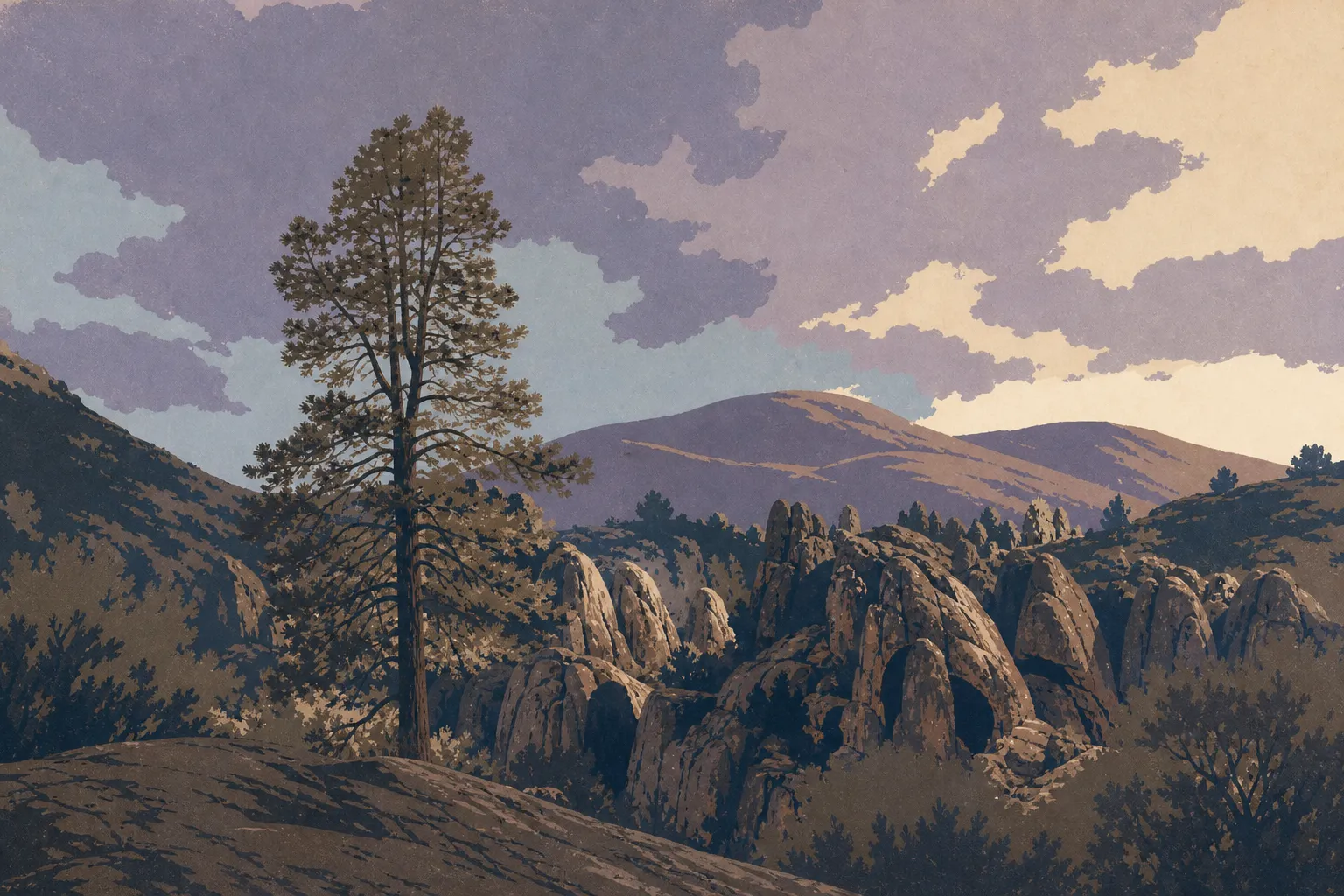
Pinnacles National Park: The Complete Visitor Guide
Pinnacles is the little national park that plays in the big leagues. Two hours south of the San Francisco Bay Area, it packs in rocky spires, talus caves where you walk by flashlight, and one of North America's largest birds soaring overhead: the California condor. You come for a day and leave wishing you'd stayed for two.
The short answer: Pinnacles sits in central California, between the Salinas Valley and the Central Valley. You can see the park well in one full day, or spend two if you want to combine the caves, the high country, and condor watching. Three things define the experience: dramatic volcanic formations, walk-in talus caves, and its population of reintroduced condors.
Here's the key thing to know before you go. The park's east and west entrances are not connected by a road inside the park. Choosing your side is the first step in planning your visit.
Pinnacles at a Glance: Location and Access
Pinnacles is in California, inland and a few dozen miles from the Pacific Ocean. That location explains the climate. It's noticeably hotter and drier than the nearby coast.
The park has two entrances, and this is the most important thing to understand.
- The west entrance is reached from Highway 101 via the town of Soledad, then Highway 146 to the park. The final access road is narrow, winding, and one lane. It provides access to the Prewett Point, Balconies, and Juniper Canyon trails.
- The east entrance is reached via Highway 25. It's the more developed side, with the visitor center, campground, and store.
No road crosses the park from one end to the other. To drive from one entrance to the other, you have to leave the park and take a long detour of about 1.5 hours. Hikers can connect the two sides on foot via the High Peaks trails. If you're driving a long or oversized vehicle, use the east entrance. The west entrance road isn't suitable.
For complete route, driving-time, and parking information, see our Pinnacles access guide.
Entrance Fees, Passes, and Reservations
You pay the Pinnacles entrance fee by vehicle or by person, and the ticket is valid for several days.
- Private vehicle: $30
- Motorcycle: $25
- Per person, on foot or by bicycle: $15
The park's annual pass costs $55. It's worth considering if you plan to return during the year. If you're visiting several U.S. national parks on the same trip, the America the Beautiful pass will often be a better value. Our National Park Fees & Passes page explains entrance fees and passes, including when each option makes sense.
Here's a helpful planning detail. Pinnacles doesn't use a timed entry reservation system. You show up, pay, and enter. Only the campground requires an advance reservation, as explained below.
Want a stamp in your national parks passport? The park has a passport stamp location. Our NPS Passport & Stamps page tells you which one and where to find it.
Reservations, Permits, and Rules to Follow
Reservations
You don't need a reservation for a day visit, whether you're arriving by car or on foot. Spring weekends and U.S. holidays are different. The Bear Gulch and Chaparral parking areas often fill by 9 or 10 a.m. Your best bet is to arrive early.
The Pinnacles Campground on the east side requires reservations through recreation.gov. Sites fill several weeks ahead from March through May, so book at least two to three weeks out.
Permits
You don't need a special permit for day hikes, including high-country trails such as the High Peaks Trail.
Rules to Follow
These essential rules are too often overlooked by first-time visitors:
Pets: allowed on paved roads and in parking areas, but strictly prohibited on trails and in caves. This rule is enforced. It's not a suggestion.
Drones: prohibited throughout the park, with no exceptions.
Fires: allowed only in designated campground grills. No open fires.
Rock formations: don't climb outside designated areas. Plant collecting, moving rocks, and removing anything from the park are prohibited.
Caves: Bear Gulch Cave and Balconies Cave close temporarily depending on weather conditions and bat breeding seasons. Check NPS alerts on the official website before you go.
How to Get Around Pinnacles
Pinnacles is a walking park. There's no scenic road crossing it and no Yellowstone-style driving loop. Park at the lot for your entrance, then do the rest on the trails.
On the east side, a free shuttle connects the visitor center with the Bear Gulch parking area during the high season, when the lot often fills on weekends. Taking the shuttle saves you from circling for a parking spot. On the west side, park near the Chaparral entrance and start hiking right away.
The park is easy to picture in two levels: the lower area with the parking lots, cave entrances, and trailheads, and the upper area with the High Peaks, the rocky spires you reach on uphill trails. Our Getting Around page explains the connections between areas and tells you which parking lot to use for your plans.
How Much Time Do You Need at Pinnacles?
One day is enough for the essentials. With a well-planned visit, you can go through a cave, climb into the High Peaks, and look for condors. It's a compact park, so you won't spend hours driving.
Two days change the experience. You'll have time for both caves, Bear Gulch and Balconies, a leisurely climb to the summit, and a real wildlife-watching window at sunrise or sunset. If you camp, a night under central California's stars is worth the trip by itself.
To plan it hour by hour, whether you're coming from San Francisco, Monterey, or in the middle of a California road trip, see our Itinerary & Timing page.
Plan your visit
What to See and Do at Pinnacles
This is the heart of the visit. Pinnacles is organized around a few distinct areas.
Road trip journal · 4 areas
The Talus Caves: Bear Gulch and Balconies
Forget classic limestone caves. Here, caves are passageways formed by giant fallen boulders between canyon walls, and you explore them from below. Bear Gulch Cave on the east side is the most popular. You walk through it toward a reservoir perched above. Balconies Cave on the west side is darker and more playful.
Two practical tips matter. First, a flashlight or headlamp is essential. It's dark, and the floor is uneven. Second, these caves close for part of the year to protect a bat colony or after heavy rain. Check their status before you come. We track closures on our Practical Information, Rules & Safety page.
The High Peaks
The High Peaks area is the park's postcard view: a maze of rocky spires and pinnacles left behind by an ancient volcano, with trails cut into the rock and narrow steps and handrails. The climb is strenuous and exposed in places. The payoff is 360-degree views and, often, condors circling overhead.
Condor Watching
Pinnacles is a California condor reintroduction site. This species was saved from extinction. Seeing a bird with a wingspan of nearly 10 feet makes an impression. The High Peaks and Bear Gulch areas are among the better viewing spots, especially late in the day. We cover the park's wildlife just below.
Rock Climbing
Pinnacles' cliffs are a well-known playground for climbers. The volcanic rock has its own quirks and its own following. This isn't a beginner activity to tackle on your own. Check the routes and seasonal closures, including raptor nesting closures, before you bring out the ropes.
Each activity has its own detailed guide. Follow the links throughout the page for complete practical information.
Explore the park
Pinnacles' Best Hikes
At Pinnacles, hiking isn't optional. It's how you experience the park. The essentials are the loop through Bear Gulch and the reservoir, an accessible and rewarding hike; Balconies Cave on the west side; and the demanding climb to the High Peaks for experienced hikers.
The park offers everything from very easy walks to genuinely strenuous hikes, with significant elevation gain as soon as you head for the high country. Our Hiking guide covers distances, elevation gain, water sources, and difficulty. One tip applies everywhere: start early and carry plenty of water. We'll come back to that below.
The detailed guide Pinnacles Hiking: The Best Trails for Every Skill Level The best hikes in Pinnacles National Park, with trail options by area,… Read the guide →Wildlife and Plants to Look For
The California condor is the star, but Pinnacles is home to abundant, less conspicuous wildlife. The park protects one of the highest known densities of native bees in North America. Bats use the caves, which is why they close seasonally. Depending on the season, you may also see raptors, western fence lizards, and Mediterranean vegetation that turns green in spring before going golden in summer.
The basic rule is simple: watch from a distance, don't feed wildlife, and don't touch. Our Wildlife page explains what to see, when, and where without disturbing the animals.
The detailed guide Pinnacles Wildlife: What Animals You'll See and Where to Find Them Learn where to spot California condors, mountain lions, black bears, falcons,… Read the guide →When to Visit Pinnacles
In two sentences, spring and fall are the best seasons. Spring brings wildflowers, while fall offers mild temperatures and fewer visitors.
Summer is hot, very hot. Daytime temperatures regularly top 100°F, which makes climbs tiring and sometimes risky in the heat. Winter stays mild, with highs around 59 to 68°F, but nights are chilly and rain is moderate. One detail matters year-round: the difference between daytime and nighttime temperatures is significant.
We cover the ideal windows for each activity month by month on our When to Visit page, and provide average temperatures on our Weather page.
The detailed guide When to Visit Pinnacles: Best Season and Month-by-Month Guide April is the best month to visit Pinnacles for wildflowers, condors, and open… Read the guide →Where to Stay at Pinnacles
There's only one lodging option inside the park: camping on the east side, with tent sites, RV sites, and a few pools open seasonally. Reservations are required, and spring weekends fill quickly.
Outside the park, stay in Soledad on the west side along Highway 101, or around Hollister on the east side, at standard hotels and motels. Choose lodging on the same side as the entrance you plan to use. Remember, you can't drive across the park.
The complete comparison is in our Where to Stay guide, with lodging-type pages for Hotels & Lodges, Camping, and RV Camping.
Stay in the park
Things to Do Around Pinnacles
Pinnacles fits beautifully into a larger California trip. To the west are the Salinas Valley and its wine country, followed by the Monterey coast and Carmel. To the north is the San Francisco Bay Area. The park makes a great stop between better-known destinations, a rocky interlude between the ocean and the vineyards.
To build a complete itinerary, Pinnacles fits easily into the major California road trips and nearby regions.
Our Take: Is Pinnacles Worth the Trip?
Yes, as long as you know what you're coming for. Don't come for a scenic drive or roadside viewpoints. There aren't any. Come to hike, walk through a cave by headlamp, and look up at a condor. This is a park of physical experiences and small details, not sweeping views from a parking lot.
When we visited on a spring morning, the cool climb into the High Peaks, open caves, and two condors above the ridge were enough to put Pinnacles on the list of places we'd gladly visit again. Its small size is a strength. You can experience the park without rushing.
Our recommendation is one day if you're passing through, or two if you want the full experience. Enter from the side that fits your route, start early, bring water and a light. The rest will follow.
Frequently Asked Questions
Can You Visit Pinnacles in One Day?
You can see Pinnacles very well in one day. With an organized visit, you can go through a cave, climb into the High Peaks, and look for condors. Two days give you time for both caves and a slower wildlife-watching experience.
Is Pinnacles Difficult to Hike?
The park has trails for every level, from easy to genuinely demanding. The Bear Gulch loop is accessible, while the climb to the High Peaks is strenuous, with elevation gain, narrow steps, and exposed sections. Our Hiking guide has trail-by-trail details.
Is Pinnacles Worth Visiting?
Pinnacles is worth the trip if you like hiking, exploring caves, and watching wildlife, especially California condors. It isn't a park you see from overlooks by car. You earn the experience on foot.
How Much Time Do You Need to See Pinnacles?
Plan on one full day for the essentials, or two days for a complete visit with both caves and condor watching. Our Itinerary & Timing page lays out a detailed plan based on your starting point.
The American Parks shop
Bring Pinnacles home
Our park-inspired creations, made to order and shipped to your door.
Latest park news
- Heat at Pinnacles: Why It's Hotter Than the Forecast SaysAt Pinnacles, it's often hotter than the forecast, especially on the rock. Here's how to visit without getting cooked.