
Pinnacles by RV: Campgrounds, Rules & Tips
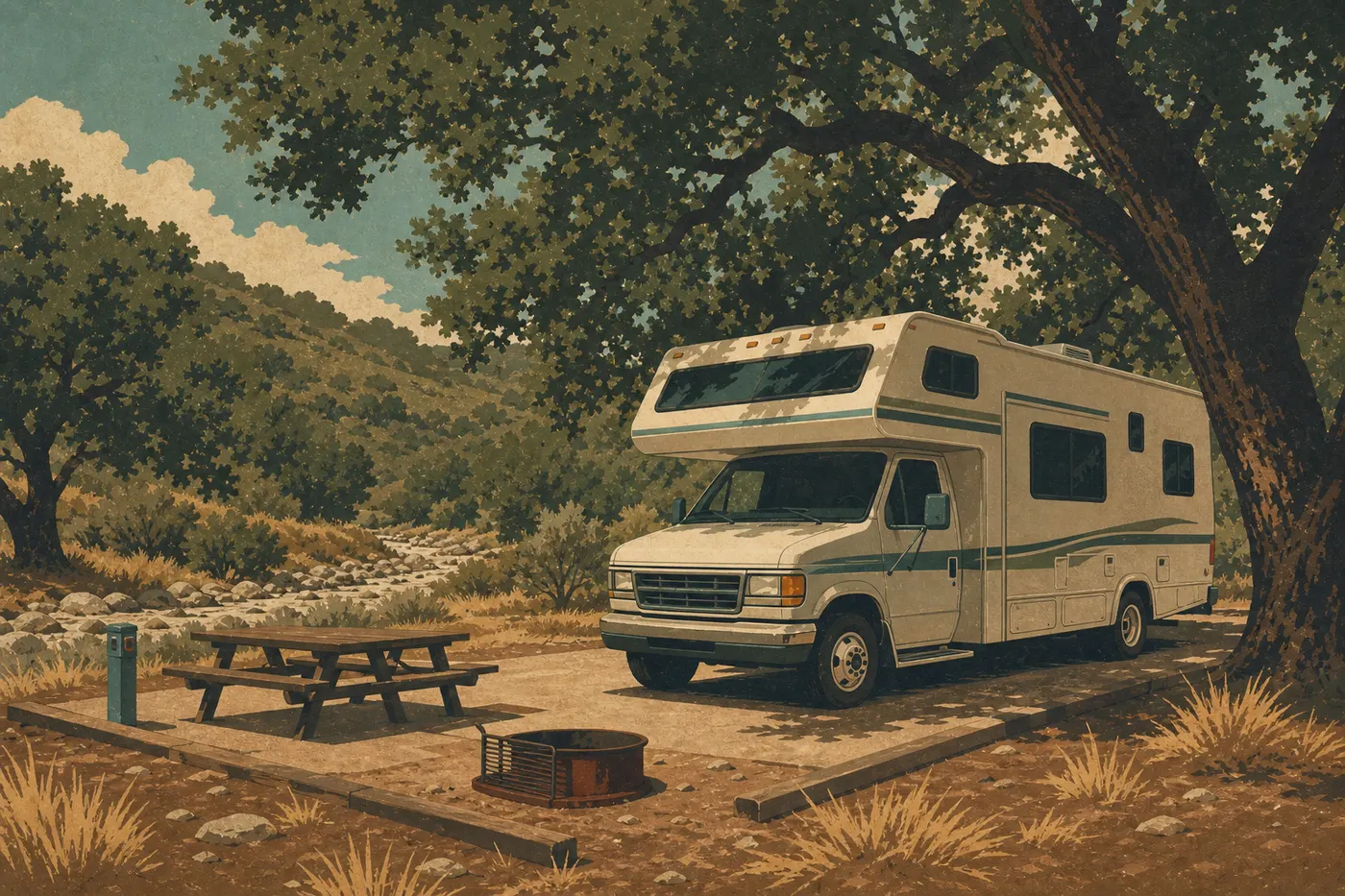
Pinnacles National Park is easy to visit by RV, and the logistics are simpler than at most major American parks. The short version is this: there's one official campground in the park, on the east side, with electrical hookups and a dump station. The key restriction to know before anything else is that the West Entrance is off-limits to large vehicles. Book early, use the right entrance, and everything else falls into place.
Can You Drive and Camp at Pinnacles in an RV?
Yes, with no major restrictions. Here's what makes Pinnacles different: the park is split into two sides separated by a volcanic ridge, with no connecting road. The two entrances are therefore independent, and they don't offer the same access conditions.
East side, via Highway 25: the road is wide, clear, and open 24 hours a day year-round. This is the entrance to use for any RV, trailer, or camper van. The official campground is just a few minutes away.
West side, via Highway 101, then Soledad and Highway 146: this is a narrow, winding one-lane road, with hairpin turns that leave no room to turn around a long vehicle. The park itself explicitly advises oversized vehicles not to use it. Avoid it without exception if you're driving an RV.
There are no clearance-restricted tunnels or low bridges. The rule is simple: use the East Entrance for RVs.
RV Restrictions and Regulated Roads
Pinnacles doesn't have an equivalent of Zion's Mount Carmel Tunnel. The main restriction is still the West Entrance, covered above. There are a few other things to keep in mind.
- Vehicle size at the campground: each site has a stated maximum length. Check your vehicle's dimensions against the detailed site information on recreation.gov before confirming your reservation. Sites with hookups tend to be longer than standard sites.
- Trail access: trailhead parking areas are designed for regular cars. If you want to hike on the west side, including Balconies Cave and Juniper Canyon, there's no road between the two sides, so you can't get there by RV from the campground. From the east, the Bear Gulch and High Peaks Loop trails are accessible on foot directly from the campground or the East Entrance parking areas.
- Speed: there are no special speed limits for RVs, but watch for pedestrians, cyclists, and animals crossing the internal roads.
The Park's Official Campgrounds
Pinnacles has just one campground within its boundaries. The choice is simple: either you have a reservation, or you sleep outside the park.
Pinnacles Campground
The Pinnacles Campground sits on the east side, a few minutes from the entrance via Highway 25. The park runs this campground directly, and it offers more amenities than the average NPS campground: pay showers, a seasonal swimming pool, which is unusual in an American national park, and a small on-site convenience store.
RV sites with electrical hookups, including 30-amp hookups, are available. Sites without hookups also accept RVs, subject to the length limits for each site. Check recreation.gov for site-by-site details before booking.
Reservations: book through recreation.gov, sometimes several months ahead for spring. In spring, hookup sites can sell out within minutes of becoming available.
Rates: NPS prices are revised each season, so check recreation.gov for the exact amount. The park entrance fee of $30 per private vehicle is added to the campsite fee.
Season: the campground is open year-round. Winter nights are cool because the park has a Mediterranean climate and sits several miles from the ocean, but days remain pleasant. Starting in July, temperatures regularly top 100°F. Without air conditioning in your RV, the stay can be difficult. Plan around your setup.
Boondocking and Areas Around Pinnacles
Dispersed camping isn't allowed inside the park. Boondockers need to leave the NPS boundary and look toward nearby BLM (Bureau of Land Management) lands. The area around Pinnacles is primarily agricultural, with vineyards, orchards, and large farms, so free camping spots are scarce and require planning. The iOverlander and freecampsites.net apps list areas other travelers have verified for dispersed vehicle camping.
For an off-site night with hookups, the closest private campgrounds are around King City, west via Highway 101, or Hollister, to the north. Our lodging guide lists nearby alternatives for nights outside the official campground.
Dump Stations, Water, and Services
The dump station at Pinnacles Campground is available to registered campers. It's the only official dump station within the park.
For the rest of the practical logistics:
- Drinking water: available at the campground. Fill your tanks when you arrive if you're coming off a long driving day.
- Propane: there's no propane service in the park. Fill up in King City or Hollister before entering.
- Fuel: there are no gas stations in the park. Check your gauge before taking Highway 25 or leaving Soledad.
- Groceries: the campground store covers basic needs. For a full grocery run, plan to stop in Hollister or Salinas before you arrive.
Which Camping Option Fits Your Needs?
The question of which campground to choose doesn't really apply at Pinnacles: there's only one. Within Pinnacles Campground, though, your choice of site matters.
- Families with kids: choose a site near the seasonal pool. In July and August, with temperatures reaching 100°F in the shade, the pool will be your main ally between noon and 4 p.m.
- Early-morning hikers: a site near the Bear Gulch Area trailheads lets you hit the trails early, before the heat sets in. It's nice to have your feet in the dust by 7 a.m. instead of walking across the entire campground in the cool morning air.
- Wildlife watching: during a March visit, I counted several California condors circling above the campground in the late afternoon. An open site without tree cover gives you a much better viewing angle.
To plan your visit around weather and activities, check the Pinnacles seasons guide, which lays out conditions and peak visitation month by month.
Renting an RV for a Pinnacles Trip
Pinnacles is about two hours south of San Jose and three hours south of San Francisco, making both cities convenient hubs for picking up a rental vehicle. Outdoorsy and RVshare offer peer-to-peer RV rentals in these areas. Traditional agencies, including Cruise America and El Monte RV, have locations in San Jose and Fresno.
For a trip to Pinnacles alone or as a couple, a Class B camper van is ideal. It's easy to handle on Highway 25, simple to park at the campground, and roomy enough for two people. For a family, a Class C measuring 20 to 26 feet offers the necessary comfort while still fitting most campground sites.
Book the vehicle and the campground site at the same time. Both fill up quickly in spring.
RVs, Pets, Budget, and Reservations: What to Know
Pets: dogs are allowed at the campground but excluded from most of the park's trails. Keep them leashed at all times on the grounds. In hot weather, never leave them alone in a vehicle parked in the sun. Temperatures rise very quickly.
Budget: admission costs $30 per private vehicle, $25 for a motorcycle, or $15 for pedestrians and cyclists. The park's annual pass is available for $55 and pays for itself after two visits in the same season. The America the Beautiful interagency pass, which covers the entire U.S. federal recreation system for one year, is also accepted at the entrance.
Reservations: log in to recreation.gov early in the morning on the date reservations open if you're aiming for spring. Walk-up sites without reservations are available, but they're never guaranteed during the busy season.
When to come: avoid July and August if your RV isn't air-conditioned. Spring, from March through May, offers the best conditions, with mild daytime temperatures of 59 to 77°F, wildflowers, and active condors. Fall is pleasant and less crowded.
Our Pinnacles RV Plan at a Glance
Enter from the east via Highway 25. Reserve a site at Pinnacles Campground through recreation.gov as soon as reservations open, and check your site's size limit before confirming. Fill up on fuel and propane before you arrive. Aim for March through May for mild temperatures, wildflowers, and condors. Avoid July and August without air conditioning. The logistics are among the simplest in the NPS system: one well-equipped campground and one reliable entrance. Our complete Pinnacles guide gives you the full park overview as you plan your trip from start to finish.
Frequently Asked Questions
Can you camp at Pinnacles National Park?
You can camp at Pinnacles National Park at Pinnacles Campground, the park's only official campground, on the east side. Dispersed camping and backcountry camping aren't allowed within the NPS boundary. Reservations are made through recreation.gov.
Can you swim at Pinnacles National Park?
Swimming in the park's streams or natural areas isn't allowed. Pinnacles Campground does have a seasonal pool reserved for registered campers, an unusual amenity at an American national park campground.
Does Pinnacles National Park have showers?
Yes. Pinnacles Campground offers pay showers on-site. That's a welcome and uncommon amenity at NPS campgrounds, making multiday RV stays easier.
When should you visit Pinnacles National Park?
Spring, from March through May, is the best time to visit Pinnacles, with mild temperatures, wildflowers in full bloom, and active California condors. Summer temperatures regularly top 100°F, making hikes and nights in a non-air-conditioned RV difficult. The Pinnacles weather guide details conditions month by month.