
Pinnacles Itinerary: What to See in 1, 2, or 3 Days
Pinnacles isn't California's most talked-about park, and that's exactly what we like about it. Tucked between San Francisco Bay and Los Angeles, this 66-square-mile volcanic park packs in striking rhyolite formations, two networks of talus caves you can explore, and one of the best chances to see California condors flying free. Designated a national park only in 2013, it remains surprisingly quiet.
Ideal length: 2 days. The park is divided between two independent entrances, east and west, and you can't connect them by car from inside the park. A weekend is enough to explore both sides and enjoy the signature hikes. One day works if you're passing through the region. Three days give you time to slow down, watch wildlife at dawn, and complete each trail without pushing yourself.
How Long Do You Need to Visit Pinnacles?
One day works for a focused first visit. Choose the east side, combine Bear Gulch Cave with the Condor Gulch Trail, and leave with a clear sense of the park. You won't see everything, but you'll see the essentials.
Two days make the most complete itinerary for an independent visitor. Spend the first day on the east side and the second on the west, with the Balconies caves as the highlight. This is the format we recommend without hesitation.
Three days are best for experienced hikers or birders. California condors are much easier to spot early in the morning, when the first thermals form above the cliffs. With three days, you can get up before dawn without giving up half a day on the trail.
Access, Entrances, and Getting Around the Park
Pinnacles has two entrances with no road connection between them. Entering from the east is a different visit from entering through the west, and no road connects the two inside the park.
East Entrance is reached from Highway 25, about 31 miles south of Hollister. This is the main entrance, open 24 hours a day, 7 days a week, with no vehicle-size restrictions. It provides access to the Visitor Center, campground, Bear Gulch caves, and all the major trails, including High Peaks.
West Entrance is reached from Soledad, off Highway 101, via Highway 146, about 13 miles from town. Be careful: this one-lane road is narrow and winding. RVs and large vehicles can't get through, so they must use the east entrance. The vehicle-size restrictions for visiting Pinnacles by RV are explained in the dedicated section.
There is no official shuttle between the two sides. To visit both areas during the same trip, plan on two drives, about 1.5 hours each way, going around outside the park via Soledad. Most visitors base themselves on the east side and make a west-side excursion on the second day.
Entrance fees (check before you go): $30 per vehicle, $25 per motorcycle, and $15 per person entering on foot or by bicycle. The Pinnacles annual pass costs $55. The America the Beautiful pass ($80 per year) covers all federal recreation sites and pays for itself after visiting two parks in a year.
The Pinnacles access guide covers routes from San Francisco, Los Angeles, and Monterey.
Pinnacles Areas
East Side: Bear Gulch, High Peaks, and Condors
The east side has most of the park's visitor facilities. You'll find the Visitor Center, the park campground, the Bear Gulch caves, and trailheads for the main routes to High Peaks. Choose this side first if you only have one day.
Bear Gulch Cave is a talus cave system formed when volcanic boulders collapsed on top of one another millions of years ago. You enter with a headlamp, winding through the darkness between rock walls that meet just inches above your head, then emerge on the other side onto the trail climbing toward the reservoir. It's an experience in its own right and works for kids as young as 7 or 8, as long as they're comfortable in tight spaces. One practical note: the cave closes every year from mid-May to mid-July for bat nesting. Check the NPS website to make sure it's open before you go.
Bear Gulch Reservoir overlooks the caves and makes a pleasant break in a rocky amphitheater. It's one of the most reliable spots for seeing California condors gliding above the cliffs.
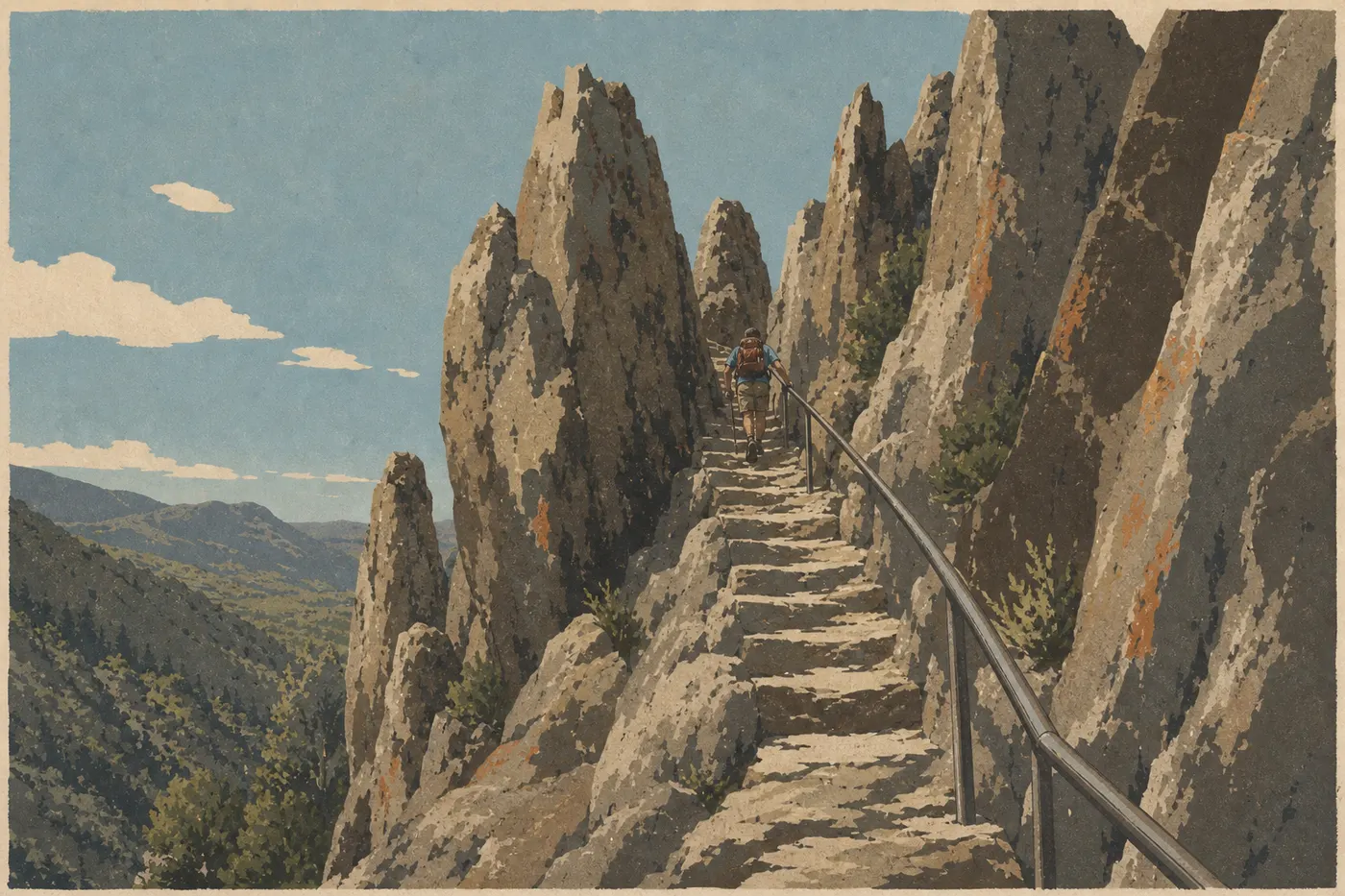
High Peaks are where experienced hikers come to play. The trail climbing into the heart of the volcanic formation opens onto 360-degree views of the Salinas Valley and chaparral-covered ridges. The High Peaks loop is demanding, with significant elevation gain and exposed sections fitted with metal handrails bolted into the rock. Your legs will remember it, but the views and photos more than make up for the effort.
West Side: Balconies Caves and Juniper Canyon
The west side is wilder and considerably less busy. Access via Highway 146 from Soledad makes it more of a half-day outing than a base for a longer stay.
Balconies Caves work on the same principle as Bear Gulch. Collapsed rhyolite boulders create an underground maze to cross with a headlamp. The Balconies loop, entering through the caves and returning on the outside trail, has moderate elevation gain and makes an excellent introduction to the park's unusual geology. Check the status before you come here too. The caves sometimes close after heavy rain for safety reasons.
Juniper Canyon Trail climbs toward High Peaks from the west. It's a more direct alternative to the east-side route for reaching the summits and is often less crowded on spring weekends.
Prewett Point Trail, shorter and less technical, offers a good panorama without committing to the steep ridgeline. It's a solid choice for families with young children visiting from the west side.
Day-by-Day Itinerary
Day 1: Bear Gulch, High Peaks, and Condors
Arrive early, before 9 a.m., to avoid the heat and maximize your chances of seeing condors when they start gliding. In summer, temperatures can easily top 100°F in the valleys. Hit the trail before 8 a.m. or wait until after 5 p.m. for longer outings.
Start with the Bear Gulch Cave Loop, about 2.2 miles. Bring a headlamp because some sections are completely dark. Stop at the reservoir, look up toward the ridges, and listen. If bats are still hunting, you've had a lucky break.
Then continue on the Condor Gulch Trail to the first overlooks. If you're up for it, extend the hike with the full High Peaks Loop, about 8.1 miles with substantial elevation gain. This is the park's signature hike. Allow 4 to 5 hours for the entire loop. Bring plenty of water and snacks. Keep one hand on the railing along the exposed sections.
At the end of the day, settle in at the campground or head down to Hollister for dinner. The best places to eat in nearby towns are listed in the Pinnacles dining guide.
Day 2: Balconies Caves and Juniper Canyon
On the morning of day two, drive to the West Entrance. Allow about 1.5 hours from the east-side campground via Hollister, Highway 25, and Highway 101 to Soledad. Leave early. The small west-side parking area fills up by 10 a.m. on some spring weekends.
Take the Balconies Cave Loop, entering through the caves. In places, the darkness is deeper than at Bear Gulch. The experience is still spectacular, even if you've already explored the caves on the east side. Return on the outside trail for different views of the volcanic formations.
If you still have energy, climb the Juniper Canyon Trail toward the High Peaks ridge as seen from the west. You can connect on foot with the east-side trail. The full traverse is an advanced hike.
End with some quiet time at one of the chaparral overlooks. In the late afternoon, condors come down from the thermals and sometimes fly low over the rock walls.
Day 3 (Optional): Sunrise and a Slow Exploration
The third day is for visitors who want to slow down. Get up before dawn and find a high spot on the east side. Condors take off as the sun warms the dark rocks and the first rising columns of air form. This is often when you'll see them closest, sometimes within a few dozen yards.
Spend the morning on a quieter secondary trail. In the afternoon, read, watch wildlife in the chaparral, and enjoy the rare calm of a national park without crowds. The Pinnacles wildlife guide describes the species you can see by season, beyond the condors.
Itinerary Options by Trip Length
One-day express: Focus entirely on the east side. Arrive when the gates open, visit Bear Gulch Cave, and climb to the first Condor Gulch overlooks. Leave in the early afternoon, before the midday heat. You'll come away with a clear, concrete sense of what Pinnacles has to offer.
Classic 2 days: This is the format we recommend to most visitors. Spend one day on each side, with the freedom to choose trails that match your level. Stay in Hollister on the east side or Soledad on the west, depending on your entrance. The Pinnacles lodging guide lists options in both towns, with seasonal price ranges.
Regional road trip: Pinnacles fits easily into a central California itinerary. To the northwest, Carmel-by-the-Sea and the Monterey coast are less than 1.5 hours from the West Entrance. San Francisco is about 2.5 hours north via Highway 101. To the south, the road to Los Angeles passes within reach of San Luis Obispo and Paso Robles wine country. Our Road Trips section offers itineraries that include Pinnacles in a 7- to 14-day trip along the Pacific coast and through inland California.
Itinerary Map
The official NPS Unigrid map is available for free at the park entrance and as a download from the National Park Service website. It shows the two entrances, parking areas, numbered trails, and cave zones. We recommend printing it before you go. Cell service is almost nonexistent in most areas of the park.
Our Map page provides a visual version of the itinerary with the areas and key points labeled. Pay particular attention to the central geographic break between the two entrances. It makes the reason no road crosses the park from one side to the other clearer than any explanation could.
Where to Stay Along the Itinerary
The only option inside the park is Pinnacles Campground on the east side, with tent sites and cabin-style accommodations. Reservations are strongly recommended between February and May, the busiest time of year. Our Camping page explains how to book and what amenities are available on-site.
Outside the park, Hollister on the east side and Soledad on the west offer standard lodging at reasonable prices. Salinas and Monterey are farther away but let you combine Pinnacles with other regional attractions. Our Where to Stay guide covers all these options.
Extend Your Trip: What to See Around Pinnacles
To the west, Carmel-by-the-Sea and Point Lobos State Park are worth a stop for an extra day. To the north, the Monterey Peninsula and its renowned aquarium are less than 1.5 hours from the West Entrance.
South of the park, Highway 1 follows the Pacific to Morro Bay and San Luis Obispo. This detour adds at least two days to your itinerary, but every turn along the Big Sur cliffs makes the extra miles worthwhile. Our Regions section covers central California and its connections between natural parks and the coast.
The Ideal Itinerary for Your Time
Two days remain the most balanced way to experience Pinnacles: one day per side, without rushing, with time for the caves and a high-country trail in each area. If you only have one day, choose the east side without hesitation. If you have three, take your time. Pinnacles is one of the few California parks where low visitation is a quality in itself, not a drawback.
One final, practical safety point: always carry more water than you think you'll need. The park has only a few places to refill, and summer heat can become dangerous by 10 a.m. in the valleys. Our Practical Information, Rules & Safety page lists the required gear and the guidelines to know before any trail outing.
Frequently Asked Questions
Is the Pinnacles route difficult?
Difficulty varies by trail. Bear Gulch Cave Loop, about 2.2 miles, is accessible to most visitors, including families with kids as young as 7 or 8. The High Peaks Trail, about 8.1 miles round-trip, is rated difficult, with significant elevation gain, exposed sections with handrails, and intense summer heat. Each trail is marked and rated by difficulty at the park entrance.
How difficult is Mount Pinnacle?
High Peaks in Pinnacles National Park are rated difficult by the NPS. The most exposed sections, equipped with metal railings bolted into the rock, require a basic comfort with heights. Visitors prone to vertigo and children under 10 can stop at the intermediate Condor Gulch overlook, which already offers a fine view without committing to the ridgeline.
What is the difficulty of the Pinnacle walk, Balconies or Bear Gulch?
The cave loops, Balconies Cave Loop and Bear Gulch Cave Loop, are rated moderate. They require a headlamp, some flexibility to get through low sections, and comfort in tight spaces. There is no particular technical difficulty. These are 2- to 3-mile hikes suited to a wide range of visitors, except those with claustrophobia.
Can you drive across Pinnacles from east to west?
No. The park's two entrances aren't connected by an interior road. To get from the East Entrance to the West Entrance, you have to take the outside roads via Hollister and Soledad, which takes about 1.5 hours of driving. Allow for this detour if you want to explore both areas during the same trip.
When is the best time to visit Pinnacles?
Spring, from March through April, and fall, from October through November, offer the most comfortable hiking temperatures. Summer temperatures often exceed 100°F in the valleys, so plan trails for early morning or evening. Winter is mild, but the caves may close temporarily after heavy rain. Our When to Visit page covers temperatures and conditions month by month.
Is Pinnacles worth the trip?
Pinnacles is worth the trip for three practical reasons. Its talus caves are unique in the United States, California condors can be seen regularly as part of an active reintroduction program, and the low visitation offers an experience that's hard to find in California's better-known parks. If you're traveling along the central coast, it's worth a stop.