
New River Gorge Wildlife: Which Animals to See and Where
New River Gorge supports remarkably diverse wildlife for an Eastern US national park. Five species capture the area's richness particularly well: the black bear, bald eagle, eastern box turtle, hellbender, and Virginia big-eared bat. You'll also see white-tailed deer on almost every outing, red foxes along the edges of open areas, and an array of forest birds that even experienced birders appreciate. The park protects a wooded Appalachian corridor where species from deciduous forests mingle with those of the ancient river.
New River Gorge's Signature Animals
Black Bear (Ursus americanus)
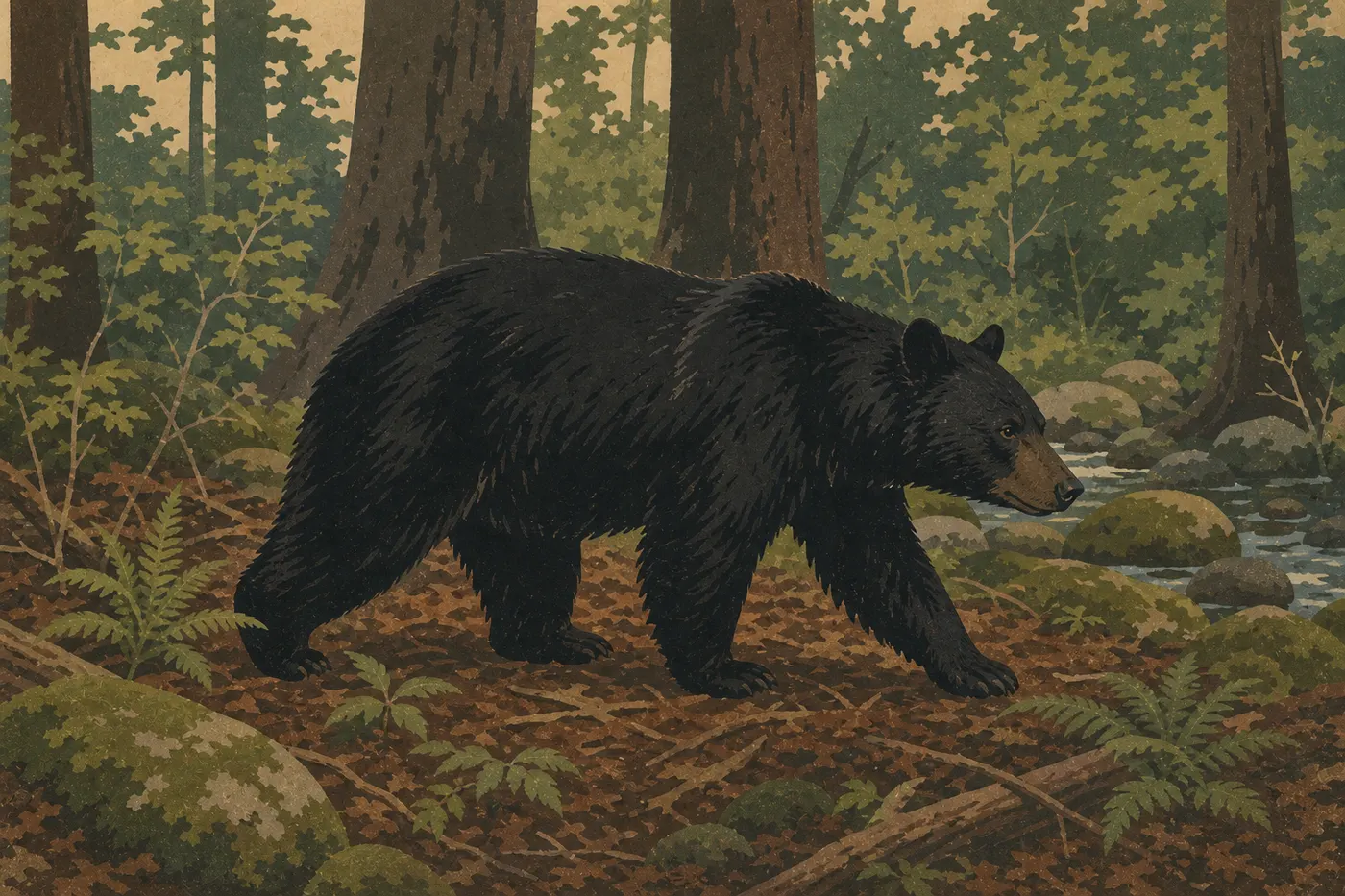
The black bear is the park's largest land mammal. Standing on its hind legs, it usually measures 4.5 to 5.9 feet and weighs 130 to 330 pounds, depending on its sex and the season. Its coat ranges from solid black to very dark brown, which makes it easy to distinguish from the brown bear, a species absent from New River Gorge. An omnivore, it eats different foods throughout the year, including berries, acorns, insects, and carrion. You're most likely to see one at dawn or dusk along the edge of wooded areas near clearings. In fall, just before hibernation, daytime sightings become more common because bears need to build up their reserves. Keep in mind that black bears can run 30 mph over short distances, climb, and swim, despite the common misconception.
Bald Eagle (Haliaeetus leucocephalus)
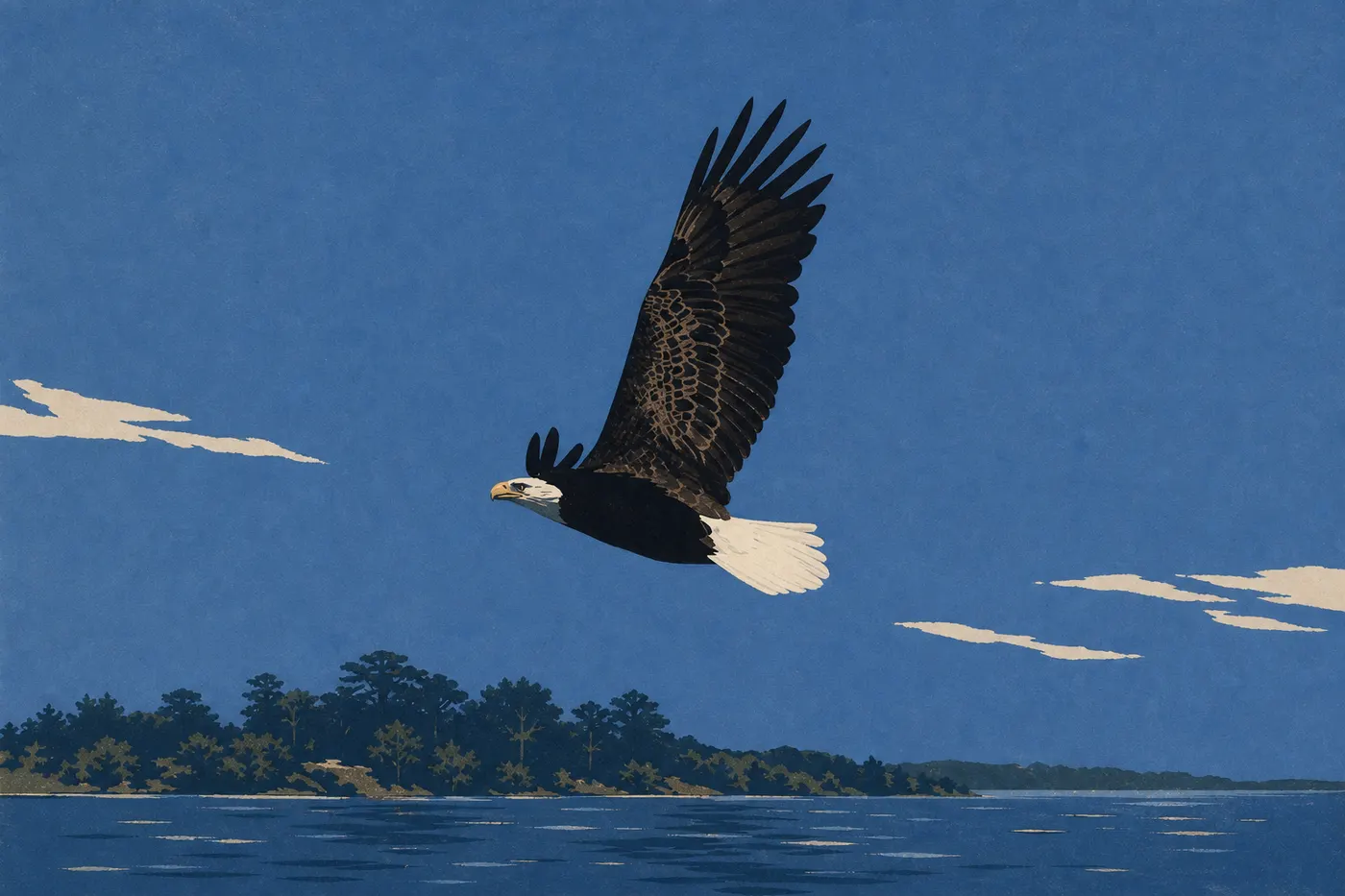
Seeing a bald eagle rise above the New River is a memorable experience. Its wingspan reaches 5.9 to 7.5 feet, and adults are instantly recognizable by their white heads and tails against their dark brown bodies. Juveniles are mottled brown and white for their first four years, so people sometimes mistake them for the much smaller red-tailed hawk. Bald eagles hunt by diving for fish at the water's surface, but they'll gladly steal a catch from an osprey when the opportunity arises. With its clear, fish-filled water, the New River makes ideal hunting grounds. Eagles nest in the area and can be seen year-round. Activity above the water peaks in winter, when other frozen bodies of water concentrate them on the river.
Eastern Box Turtle (Terrapene carolina carolina)
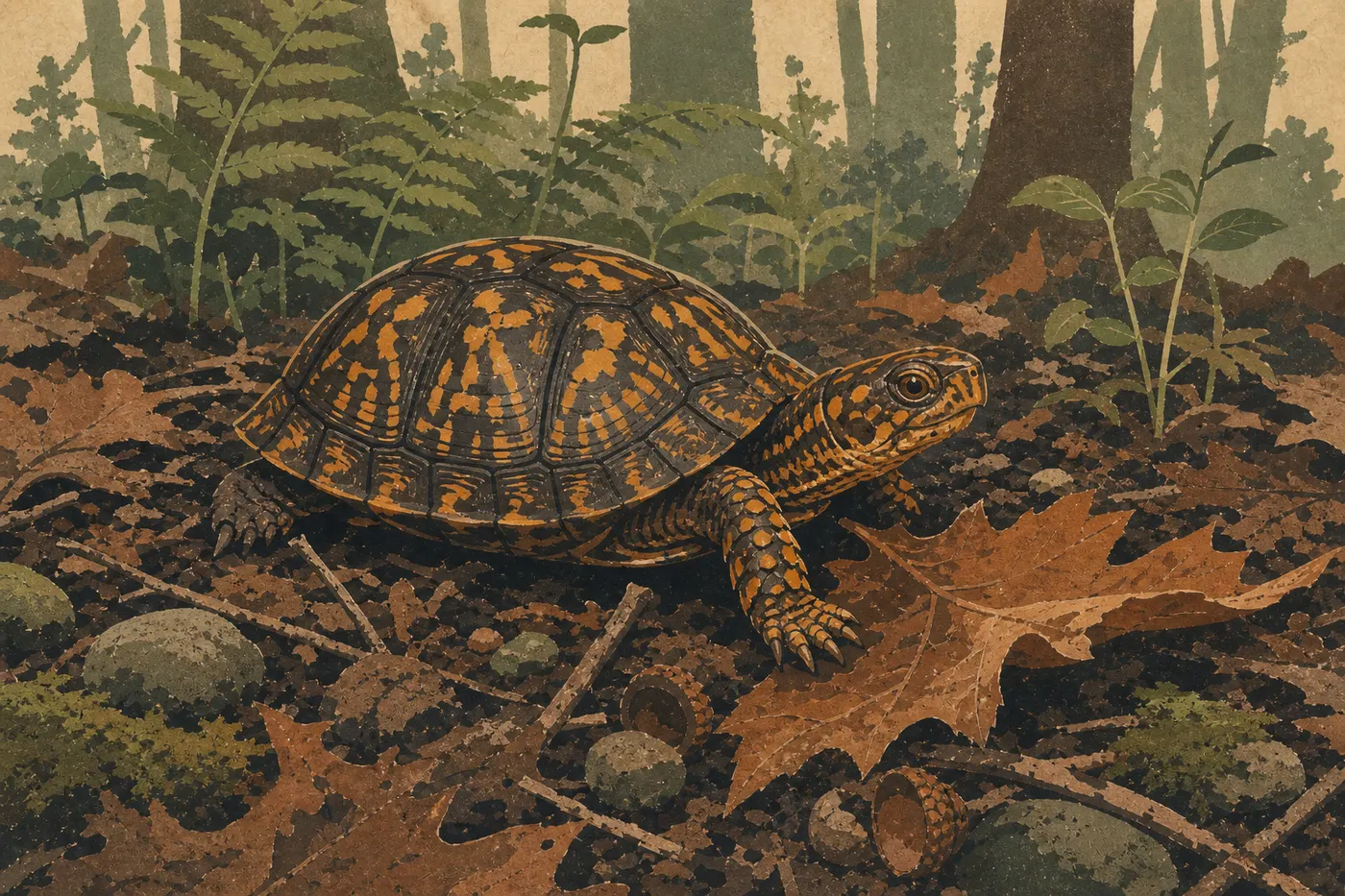
The eastern box turtle is one of the reptiles you'll encounter most often on the park's trails, especially after rain. Its domed shell, patterned in yellow and orange over a brown background, is its trademark. Unlike most turtles, it can seal its shell tightly with a hinge on its plastron, which gives the species its name. Slow-moving and solitary, it eats mushrooms, berries, and invertebrates. In the wild, it often lives more than 50 years. You'll frequently find it on damp forest trails, never far from the leaf litter where it looks for shelter and food. If you find one on the trail, walk around it or let it cross on its own. Don't move it to another habitat.
Virginia Big-Eared Bat (Corynorhinus townsendii virginianus)
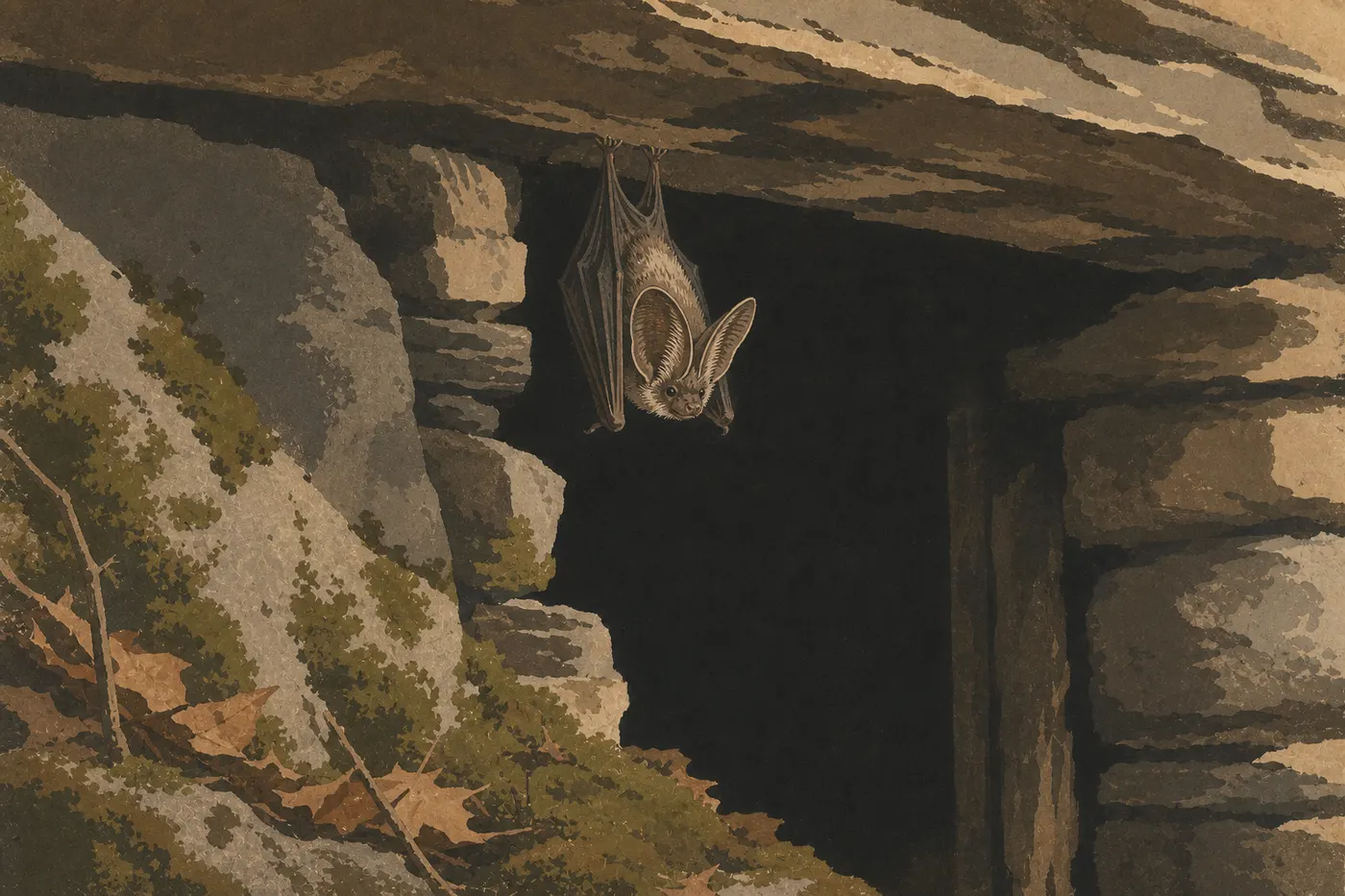
This subspecies native to West Virginia is one of the rarest bats on the East Coast. Its enormous ears, almost as long as its body, give it its name and help it detect the faintest echo during hunting flights. At New River Gorge, it hibernates in old mines and caves in the area, which provide essential thermal refuges. The species is listed as threatened. White-nose syndrome, a fungal disease introduced to North America around 2006, has wiped out entire colonies along the East Coast. The park takes part in an active hibernation-site monitoring program. You may see one flying at dusk, especially along the edge of the forest or above the water.
Hellbender (Cryptobranchus alleganiensis alleganiensis)
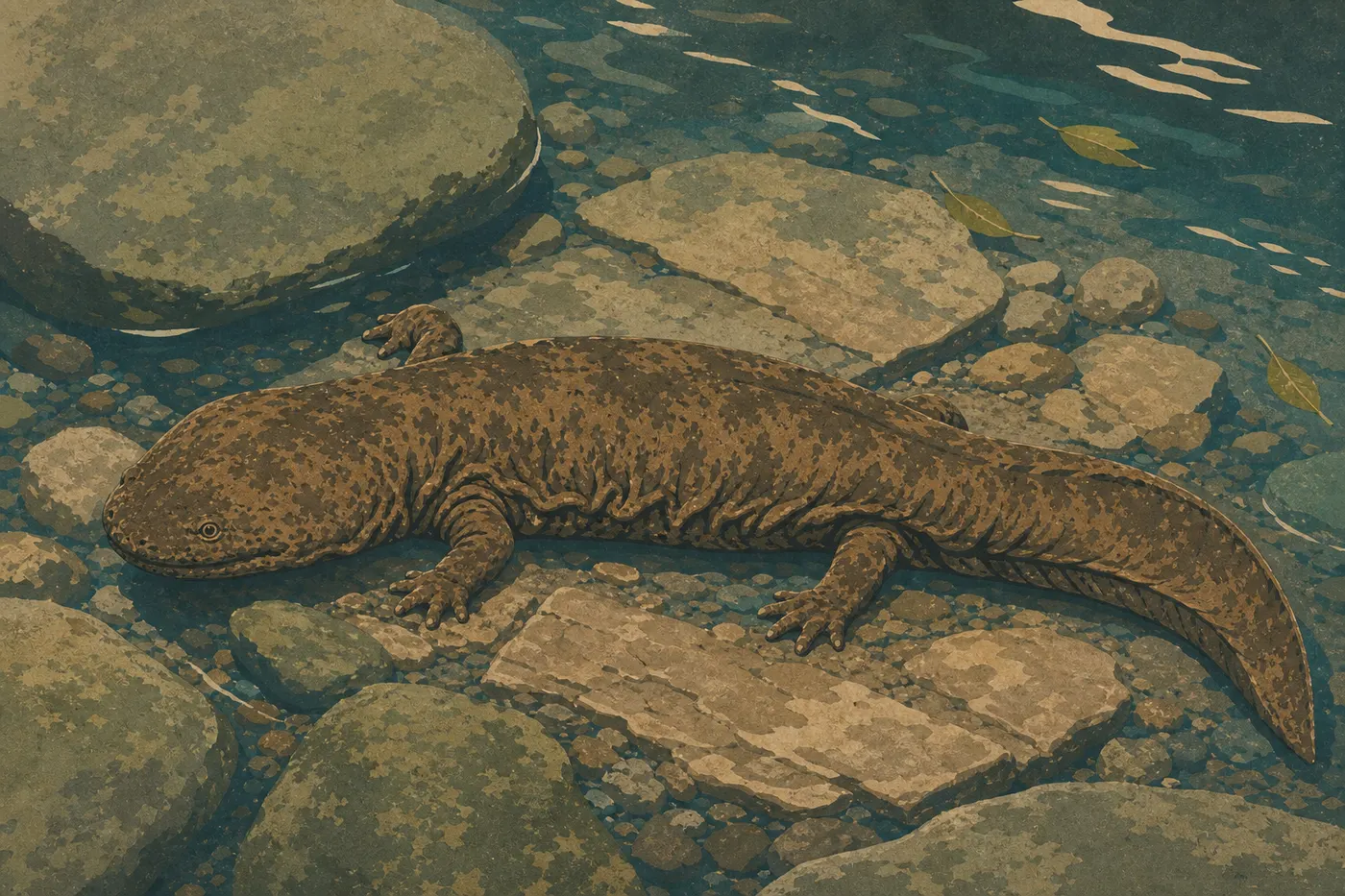
The hellbender is North America's largest salamander and one of the world's largest. Some individuals reach 28 inches or more. Fully aquatic, it spends its life beneath flat rocks on the bottom of clean, well-oxygenated streams. Its wrinkled skin and distinctive lateral folds help it absorb oxygen directly from the water. Few animals show the health of a stream more clearly. Hellbenders in the New River are evidence of an ecosystem that remains healthy. Nocturnal and elusive, the hellbender is rarely visible from the bank with the naked eye. Divers and naturalists who inspect the rocks on the riverbed see more of them. Don't turn over rocks looking for one. You could destroy its eggs or disrupt its hunting.
White-Tailed Deer (Odocoileus virginianus)
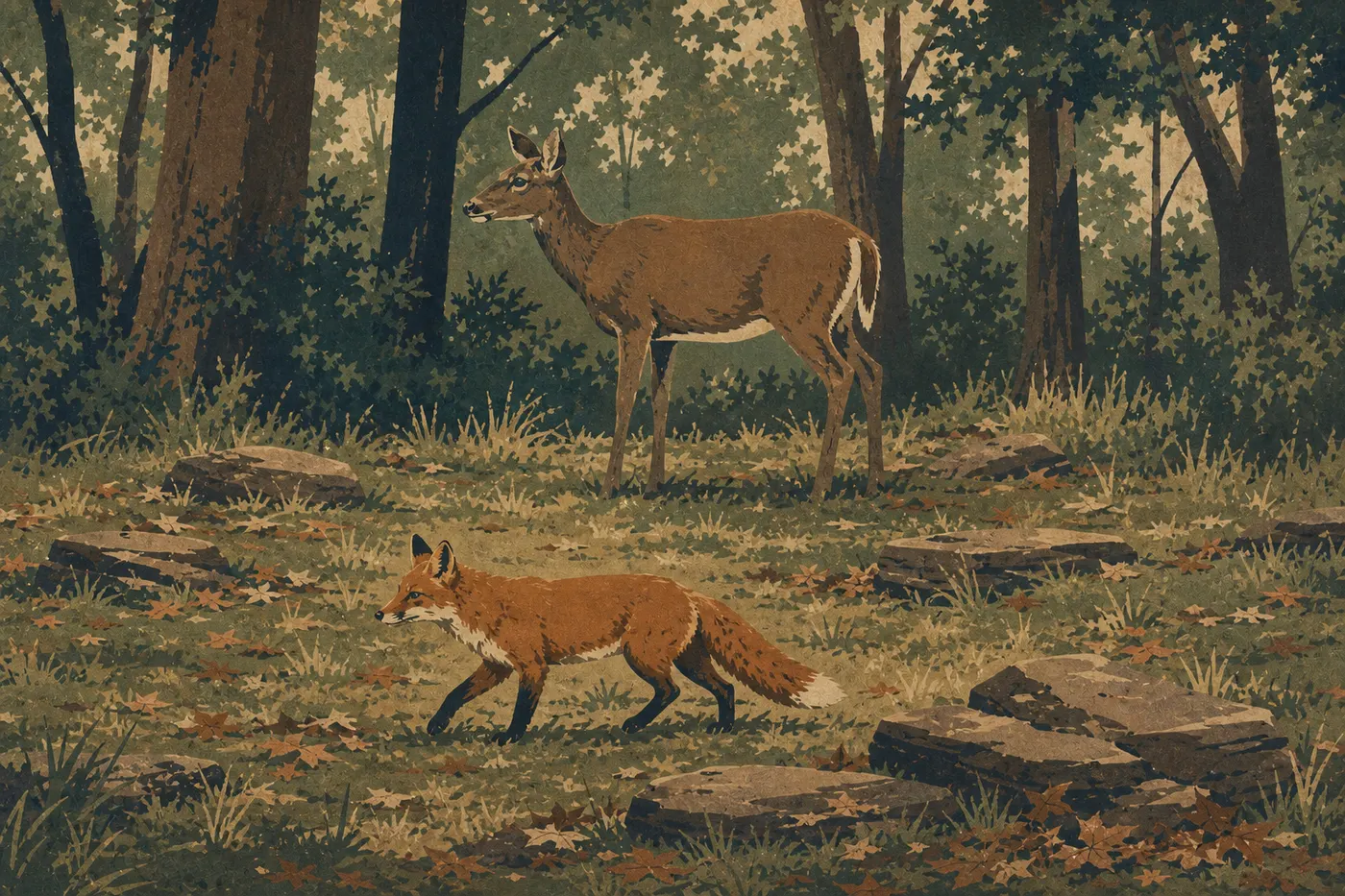
By far the park's most frequently encountered animal. White-tailed deer come out in numbers at dawn and dusk along the edges of grassy areas and at the forest's edge. Bucks usually carry their antlers from about July through February, and velvet-covered growing antlers are visible in summer. Don't approach does when fawns are nearby. They may charge if they feel threatened.
Red Fox (Vulpes vulpes)
Red foxes live in the transition zones between forest and open areas. Most active at dawn and dusk, they can seem surprisingly unafraid near picnic areas. Don't feed one. A fox that becomes accustomed to human food loses its natural wariness and becomes vulnerable.
Pileated Woodpecker (Dryocopus pileatus)
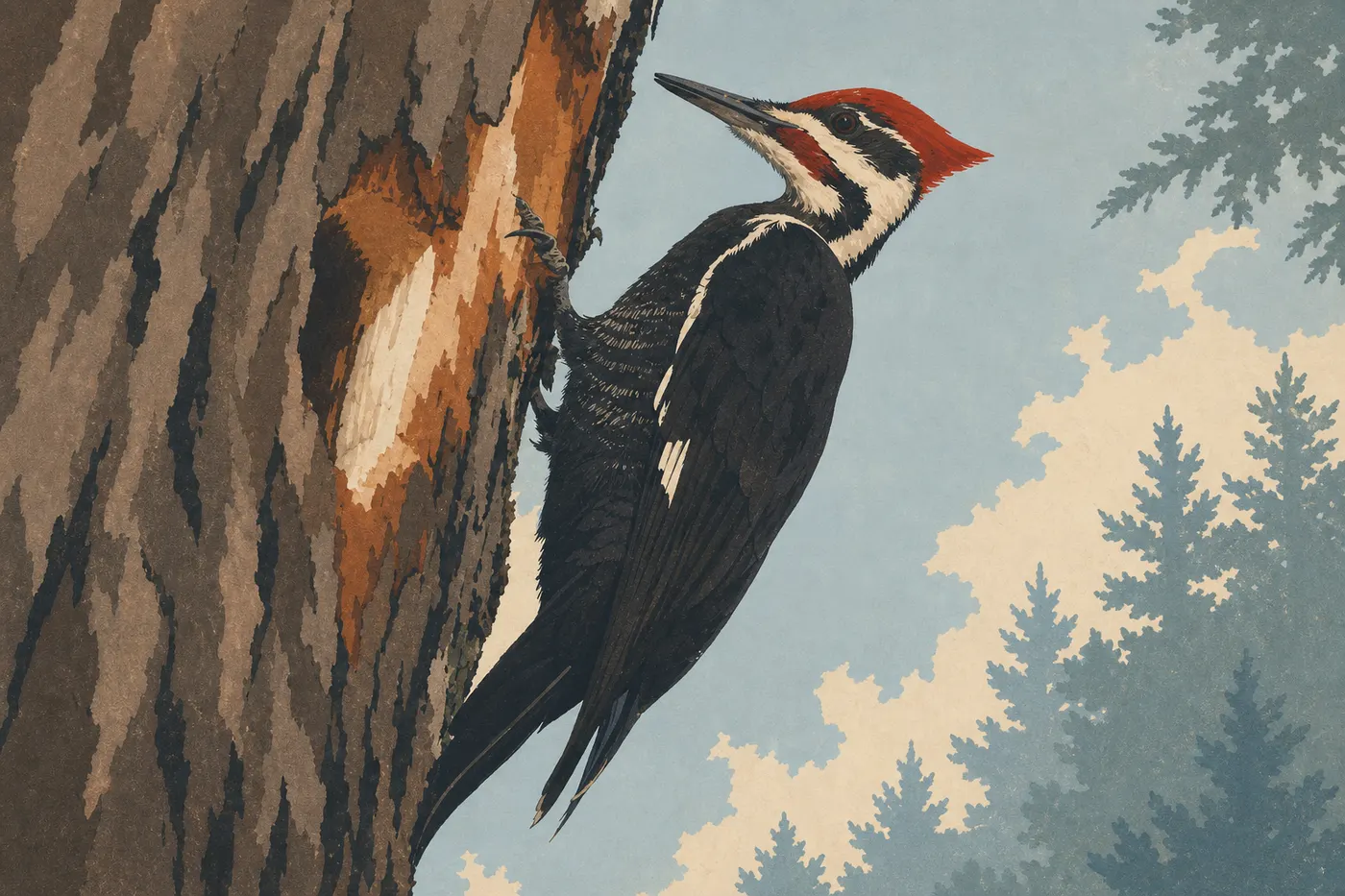
The pileated woodpecker is North America's largest woodpecker, nearly the size of a crow. Its scarlet crest and resounding blows on dead tree trunks give it away from a distance. It excavates distinctive rectangular cavities in dead trees, which eventually provide shelter for other species. New River Gorge's mature deciduous forests suit it perfectly.
Scarlet Tanager (Piranga olivacea)
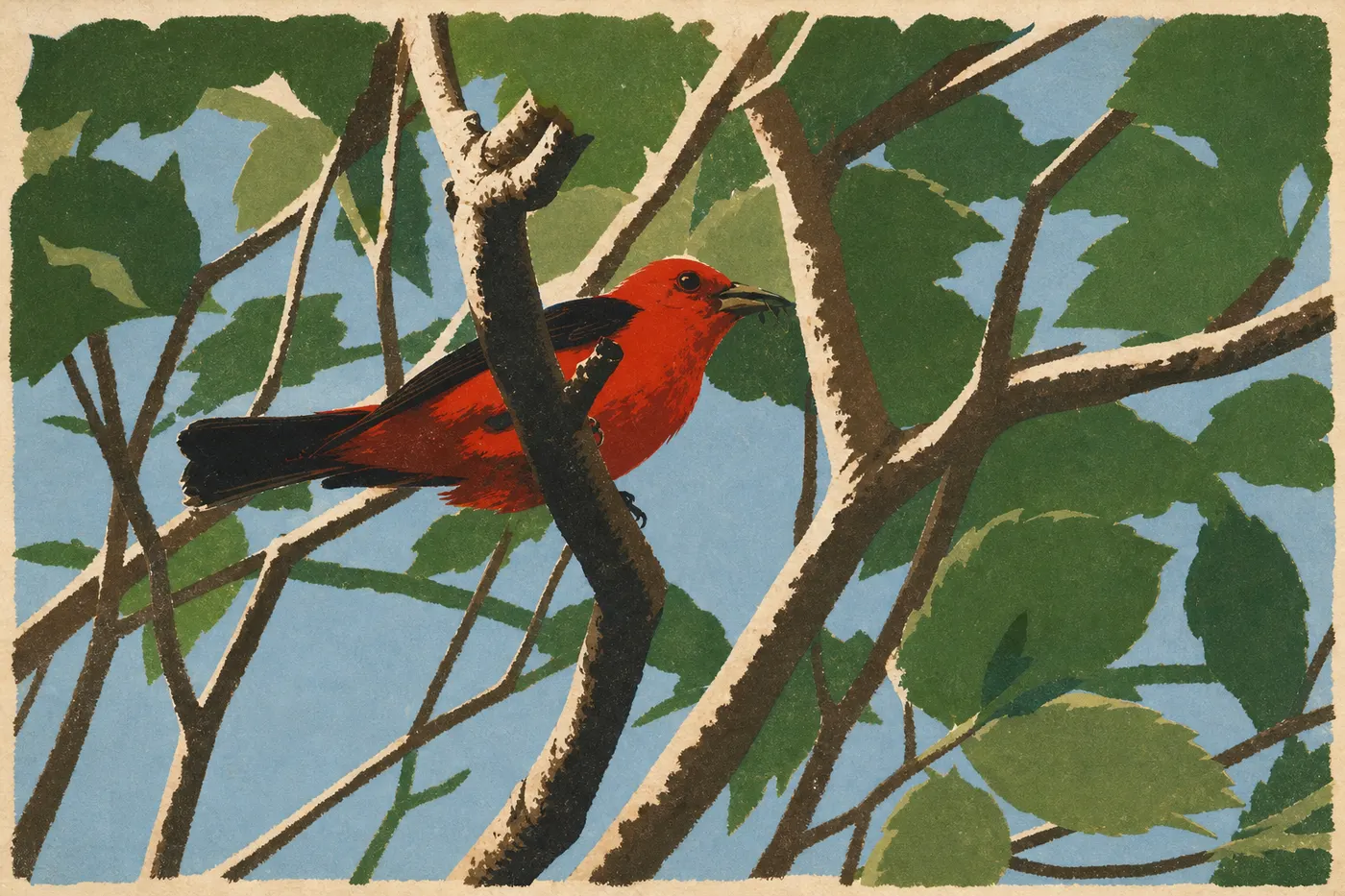
In summer, the male scarlet tanager is the most striking songbird in the Appalachian forest, with a bright red body and black wings. The greenish-yellow female is much easier to miss. This migratory bird spends winter in South America and returns to nest in New River Gorge's oak forests from April through September.
Where to See Wildlife in the Park
The New River itself is the best place to start. Its banks attract bald eagles, great blue herons, and river otters, which are less often seen but do live here. From the Canyon Rim overlook, you look down into the gorge from more than 1,000 feet above it. Bald eagles and soaring hawks regularly pass by at eye level from this vantage point. Around Grandview, the meadows along the forest edge are the most productive areas for deer and, at dawn, foxes. Forest trails through dense understory, such as those around Long Point Trail, are eastern box turtles' and salamanders' favorite areas after rain. To see bats, settle near a stream or along the edge of a clearing in the evening, about 30 minutes before full dark. Our Hiking page points out the trails best suited to wildlife viewing.
When to Watch Wildlife
The best window is spring, from April through May, and fall, from September through October. Spring brings returning migratory birds, newborn animals, and vegetation that has not yet grown dense, making wildlife easier to spot. In fall, bears are highly active before hibernation, and deer enter the rut, making them less cautious. In summer, the leafy canopy makes sightings harder, so look toward the water's edge, where wildlife gathers. Year-round, dawn and dusk are by far the best times. Most mammals reduce their activity in broad daylight. For bats and owls, night falls on the gorges relatively early because of the steep terrain. Night outings start earlier than they would in the lowlands. Check our When to Go guide to plan your stay around the season.
Predators and Large Animals of New River Gorge
The black bear is the park's top land predator. Coyotes are present but elusive. They hunt alone, and their nighttime calls, a chorus of yips and short howls, often surprise campers. The great horned owl (Bubo virginianus) is the most powerful aerial predator at night. With talons capable of exerting considerable pressure, it hunts rabbits, skunks, and sometimes small daytime raptors. The snake to watch for is the copperhead (Agkistrodon contortrix), with reddish-brown coloring and beige hourglass bands. Venomous but generally passive, it bites only when accidentally disturbed, such as when someone places a hand or foot nearby without looking. The timber rattlesnake (Crotalus horridus) is also present, especially in rocky areas exposed to the sun.
Watching Wildlife Safely
Minimum distance from bears: 165 feet. If a bear approaches, don't run. Make yourself look big, speak in a firm voice, and back away slowly. When hiking, make noise with your voice or a whistle so you don't surprise an animal.
Minimum distance from bald eagles and all nesting birds: 330 feet from the nest, so you don't cause the adults to abandon their eggs.
Snakes. Always watch where you put your feet and hands, especially on flat rocks and beneath stones. Never try to handle a snake, even one that appears to be dead. If you're bitten, immobilize the limb, stay calm, and reach emergency help without running.
Never feed wildlife, including squirrels and deer. An animal conditioned to human food loses its natural behavior and usually ends up being euthanized by rangers. Store your food in airtight containers, such as a bear canister or car trunk. This is required in camping areas.
Hellbenders and salamanders. Don't turn over rocks in streams. Searching for them destroys the breeding habitat of an already vulnerable species.
For general safety guidance on camping, thunderstorms, and falls, the New River Gorge guide covers the essentials.
In Brief: Species You Shouldn't Miss and Where to Find Them
| Species | Where to Look | Best Window |
|---|---|---|
| Black bear | Forest edges, berry patches | Dawn, dusk, fall |
| Bald eagle | Above the New River, Canyon Rim overlook | Year-round, especially winter |
| Eastern box turtle | Damp forest trails | After rain, spring and summer |
| Hellbender | Bottom of clear streams | At night, moving water |
| Virginia big-eared bat | Forest edges, above the water | Dusk, summer |
| White-tailed deer | Grassy edges, Grandview | Dawn, dusk |
| Pileated woodpecker | Mature forests, dead trees | Year-round |
| Scarlet tanager | Oak-forest canopy | April through September |
Frequently Asked Questions
What animals live in the New River Gorge?
Animals living in the New River Gorge include black bears, white-tailed deer, bald eagles, hellbenders, eastern box turtles, coyotes, red foxes, great horned owls, and a wide variety of forest birds such as scarlet tanagers and pileated woodpeckers.
Are there bears in the New River Gorge?
Yes. Black bears (Ursus americanus) live at New River Gorge. They're the park's largest land predator. The required safety distance is at least 165 feet, and you must not feed them or leave food accessible in backcountry areas.
What is the most common animal in the park?
The white-tailed deer is by far the animal most often seen at New River Gorge. You'll encounter them on almost every outing, especially at dawn and dusk along the forest edge.
What is the largest animal at New River Gorge?
On land, it's the black bear, which can weigh up to 330 pounds. In the water, the hellbender (Cryptobranchus alleganiensis) is North America's largest salamander and can exceed 28 inches.
What predators live at New River Gorge?
Predators at New River Gorge include black bears, coyotes, great horned owls, copperheads, and timber rattlesnakes, along with several daytime raptors, including bald eagles and red-tailed hawks.
What animals are out at night at New River Gorge?
At night, New River Gorge is home mainly to bats, including the Virginia big-eared bat, great horned owls, coyotes, raccoons, hellbenders in the streams, and opossums. Bears and deer may also be active at night, especially in summer when the days are hot.