
New River Gorge by RV: Campgrounds, Rules, and Tips
New River Gorge is one of the East Coast's lesser-known national parks. It became a national park in December 2020 after four decades as a National River. The result is a park with light tourist infrastructure, spectacular West Virginia gorges, and a true immersion in the wild Appalachian landscape for RV travelers.
The short answer: yes, you can visit New River Gorge by RV and spend the night there. The main thing to know from the start is that most sites inside the park are primitive, with no electric hookups or running water. A converted van or compact Class C will do just fine. A large Class A with a generator should plan to use private campgrounds around Fayetteville to recharge its batteries.
Can you drive and camp by RV in New River Gorge?
Yes, as long as you adjust your expectations and itinerary. This isn't a Western park with wide scenic roads and full-hookup campgrounds. It's a steep-sided gorge park with winding roads that descend toward the New River. The main routes, including Route 19 and US-60, are perfectly manageable for all types of vehicles. Your vehicle's size starts to matter when you leave those roads and head deeper into the gorge.
The park is open 24 hours a day, 365 days a year, so you have plenty of flexibility for late arrivals after a long drive. The Canyon Rim Visitor Center and Sandstone Visitor Center are open daily from 9 a.m. to 5 p.m. They close on Thanksgiving, Christmas, and New Year's Day. Stop in when you arrive to get updated road conditions and a map of available campgrounds.
RV restrictions and regulated roads
Unlike Zion and its famous Mount Carmel Tunnel, New River Gorge doesn't require a special permit for large vehicles. Still, several secondary roads deserve your attention before you head onto them.
Fayette Station Road, the historic descent beneath New River Gorge Bridge, is narrow, steep, and has two tight switchbacks. The NPS specifically advises against taking it in a long RV. The same warning applies to some primitive campground access roads, where dirt surfaces can become slippery after the region's frequent rains.
Here are the main things to check before you leave:
- Parking lots at the main overlooks are sized for cars. Look for designated parking areas for long vehicles, especially at Canyon Rim Visitor Center.
- Forest roads in the Grandview area are not recommended for vehicles towing trailers or Class A RVs longer than 26 feet.
- Check the “Alerts” section of the NPS website before each day. Conditions change quickly in the Appalachians.
For approach routes from your starting point and seasonal restrictions, see getting to New River Gorge.
The park's official campgrounds
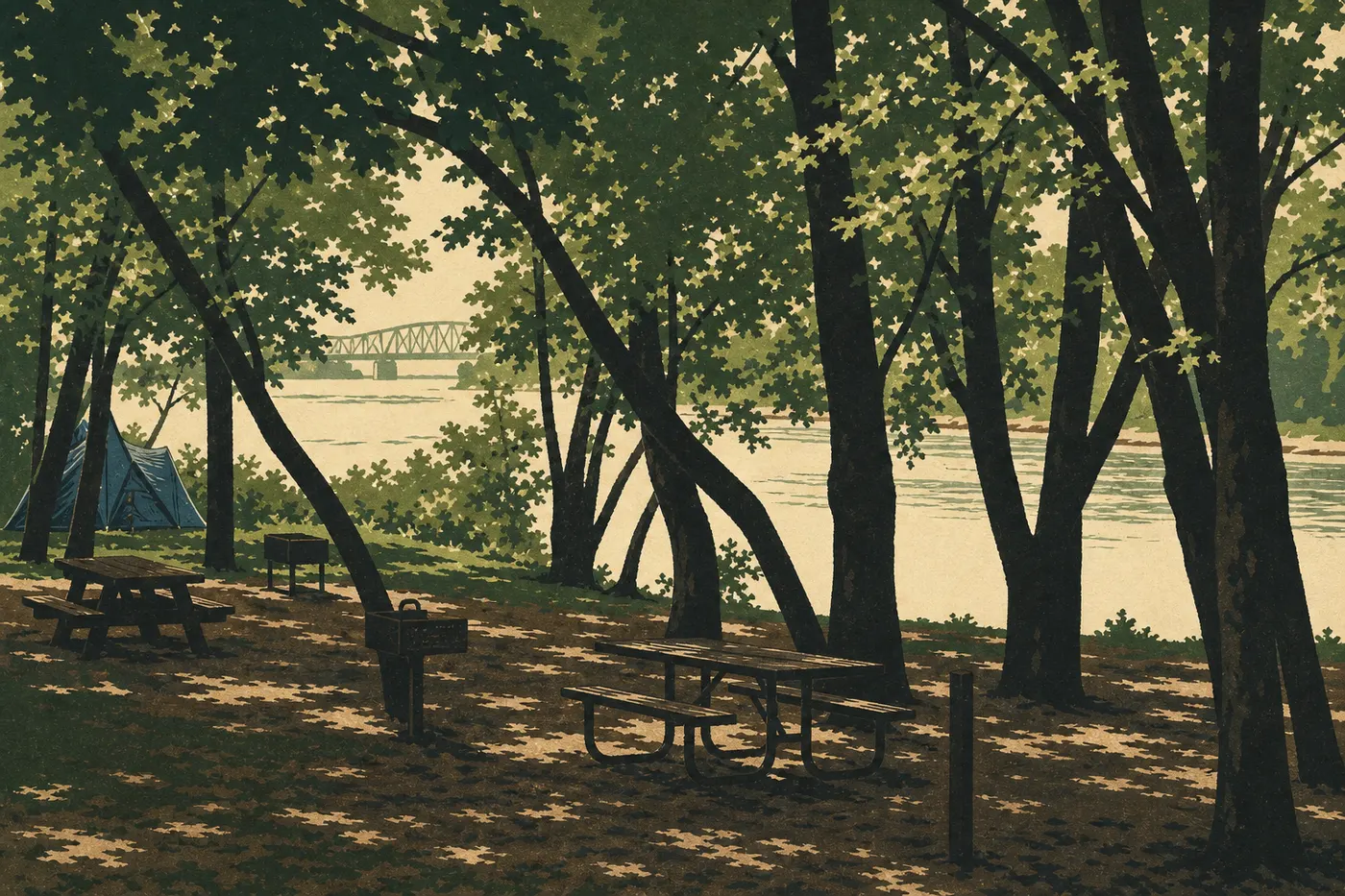
Inside the park, campgrounds are almost exclusively primitive sites managed by the NPS. There are no electrical hookups or showers, and some sites only have pit toilets. It's Leave No Trace camping taken all the way, and that's exactly what gives the park its character.
Army Camp Campground
Army Camp is the most accessible primitive campground for smaller RVs. Located on the north bank of the New River, it offers drive-in sites on relatively level ground. Camping is free and first come, first served, with a 14-consecutive-day maximum stay. There are no hookups and no dump station on site.
Dispersed sites in the gorges
The NPS allows dispersed camping, also known as backcountry camping, in several areas of the park. You need a free permit, which you can get online through recreation.gov or directly at the visitor centers. These spots work for converted vans and compact Class B RVs. Access roads are often unpaved and unsuitable for vehicles longer than 20 to 23 feet.
Cost: the vast majority of NPS sites at New River Gorge are free. Check the official website for any reservation fees before you leave, since conditions change regularly.
To explore all the overnight options beyond RV camping, including tents, lodges, and hostels, the New River Gorge camping guide and the lodging page cover each option in detail.
Boondocking and campgrounds around New River Gorge
Boondocking, or spending the night off-grid outside a designated campground, is possible on public lands bordering the park, particularly in areas managed by the National Forest Service east of the park. These areas are often quiet and let you stay several nights for free, as long as you follow the dispersed-camping rules for the national forest in question.
Around Fayetteville and Beckley, several private campgrounds offer full hookups for water, electricity, and sewer. They're essential for large Class A RVs or vehicles with demanding air-conditioning systems. The Regions section points you toward the best-positioned public areas for exploring the park from nearby BLM lands and national forests.
Dump stations, water, and services
This is the key issue for any self-contained RV trip. Service infrastructure inside the park is minimal, and none of the New River Gorge NPS campgrounds has a dump station.
Here's the strategy we recommend:
- Fill your fresh-water tank and dump your holding tanks before entering the park. You can do this in Beckley, about 19 miles south via Route 19, or at private campgrounds in Fayetteville.
- Some private campgrounds and gas stations in the area offer paid dump stations. The iOverlander and Campendium apps list spots that the RV community has checked.
- Bring at least 3 to 4 days of water if you're staying at primitive sites without access to potable water.
Which campground is right for you?
Are you traveling in a self-contained van or Class B and looking for a wilderness experience? Army Camp Campground or the backcountry sites in the gorges should suit you. Camping is free, the forest is dense, and the river is within hiking distance.
Do you have a Class A or a trailer longer than 26 feet? Set up at a private campground in Fayetteville or Beckley, then visit the park on day trips. It's more comfortable and much easier logistically than tackling the narrow roads at the bottom of the gorge.
Are you traveling with young children? Army Camp, with its direct access and restrooms, is more convenient than dispersed sites without facilities. The New River Gorge family travel guide covers kid-friendly activities and the safety precautions to take in the gorges.
Looking for an open view? The Grandview area sits more than 1,300 feet above the gorge and offers impressive views of the New River meander. You can reach camping sites in this area by light vehicle.
Renting an RV to visit New River Gorge
If you're flying from abroad, renting a converted vehicle in the United States is often more practical than shipping your own. Freight costs can quickly exceed the cost of a rental. Major platforms such as Outdoorsy, RVshare, and Cruise America have locations in Charleston, West Virginia's capital, about 56 miles northwest of the park via I-77.
What type of vehicle should you choose? For New River Gorge, we recommend a Class B, or converted van, or a mid-size Class C shorter than 23 feet. These vehicles can go almost anywhere, fit easily in park parking lots, and reach primitive campgrounds without a struggle.
Avoid Class A RVs longer than 30 feet if you want to explore secondary roads at the bottom of the gorge. Limited parking and tight turns will seriously restrict your options.
RVs, pets, budget, and reservations: what to know
Pets. Dogs are allowed in the park on a leash no longer than 6 feet at all times, both on trails and in campgrounds. They aren't allowed inside NPS buildings. Bring extra water for your pet. Primitive campgrounds don't have potable-water stations.
Site costs. NPS campgrounds inside the park are free or charge only a small fee. A full-hookup site at a private campground around Fayetteville generally costs between $30 and $60 per night, depending on the season.
Reservations. NPS primitive campgrounds are first come, first served, with no advance reservations. If you're targeting a private campground with hookups during the busy season from June through August, reserve several weeks ahead. The area is very popular with climbers, rafters, and hikers from the start of summer.
Weather and seasons. Appalachian weather is unpredictable and can change quickly. Be ready for sudden thunderstorms even in midsummer. July is both the hottest and wettest month. Spring, from April to May, and fall, from September to October, offer much more stable conditions for sleeping in an RV in the gorges. The best times to visit New River Gorge calendar lays out the ideal windows for each activity.
Our New River Gorge RV plan at a glance
New River Gorge isn't the most RV-friendly park in terms of amenities, and that's ultimately its main strength. You come here for the wild Appalachian gorges, not electrical hookups. Bring a converted van or compact Class C, 3 to 4 days of water, and a decent solar setup, and you'll have everything you need.
Our practical recommendation is to arrive via Route 19, fill your tank and dump your waste in Beckley before entering the park, set up at Army Camp or a dispersed site based on your vehicle's size, and explore the gorges, trails, and iconic bridge from there. The complete New River Gorge guide brings all our articles together to help you plan the rest of your trip.
Frequently asked questions
Can you camp at New River Gorge in an RV?
Yes. You can camp at New River Gorge in a free primitive site without a reservation, with a 14-day maximum stay. Sites with electrical hookups are at private campgrounds around Fayetteville, outside the park.
Can you visit New River Gorge by RV?
Yes, you can visit the park by RV without any major difficulty. The main routes, including Route 19 and US-60, can accommodate vehicles of all sizes. Some secondary roads at the bottom of the gorge aren't recommended for long vehicles.
Can you park an RV anywhere at New River Gorge?
No. You can't park an RV just anywhere in the park. Overlook parking lots are often too short for large vehicles. Use areas designated for long vehicles, especially at Canyon Rim Visitor Center, and stay within marked zones.
Where are RVs prohibited at New River Gorge?
Long RVs aren't recommended on Fayette Station Road, on the Grandview area's dirt roads, or in overlook parking lots that aren't sized for them. Check current NPS alerts before taking secondary roads.
Which campground should you choose at New River Gorge if you're traveling by RV?
For a van or Class B, Army Camp Campground is the most accessible and suitable choice. For vehicles longer than 26 feet or RVs that need hookups, private campgrounds around Fayetteville are the best option.
How can you spend the night in the park in an RV?
You can spend the night in the park in an RV at NPS primitive campgrounds, most of which don't require advance reservations. A free permit is sometimes required for dispersed camping. Get one through recreation.gov or directly at the park's visitor centers.
How much does an RV site cost at New River Gorge?
An NPS campground site inside the park is free or costs very little. Private campgrounds with hookups around Fayetteville charge between $30 and $60 per night, depending on the season.
What's the best time to visit New River Gorge by RV?
The best times to visit New River Gorge by RV are spring, from April to May, or fall, from September to October, when you can avoid July's muggy heat and frequent thunderstorms. Our When to Visit page details conditions month by month.