
New River Gorge Itinerary: What to See in 1, 2, or 3 Days
New River Gorge makes an immediate impression: a 985-foot-deep canyon carved through the West Virginia Appalachians, overlooked by one of the world's largest steel bridges. The park is compact, easy to reach by car from the East Coast, and packed with enough to justify two full days. The classic itinerary starts in the north at Canyon Rim, the main gateway, heads down to Grandview and Thurmond on day two, then continues to Sandstone Falls if you've got a third day.
In short: two days cover the essentials. One day is enough for the viewpoints and one hike. Three days let you get on the river and spend time climbing.
How Much Time Do You Need to Visit New River Gorge?
This question comes up with every trip plan, and the honest answer is two full days for a first visit without rushing. The park stretches for about 48 miles along the New River, but you can reach its four main areas via Route 19 without ever driving more than 31 miles within the park. If you organize your visit from north to south, or the other way around, there's no need to backtrack.
One day: realistic if you're coming from the north and focusing on Canyon Rim. You'll leave with bridge views and a hike under your belt, but Grandview, Thurmond, and Sandstone will have to wait.
Two days: the format we recommend. Spend the morning of day one at Canyon Rim, then visit Grandview and Thurmond on day two, finishing at Sandstone Falls. Distances are short, and the pace stays comfortable.
Three days or more: the luxury of spending time on the water. Rafting the New River deserves a full half-day, and climbers could easily spend a whole week here because the park has so many routes.
The park is open 24 hours a day, 365 days a year. The two main visitor centers, Canyon Rim and Sandstone, are open from 9 a.m. to 5 p.m. every day except Thanksgiving, Christmas, and New Year's Day. Two seasonal visitor centers at Thurmond and Grandview operate from Memorial Day through Labor Day, from late May to early September. Plan your questions for the rangers accordingly.
Getting There, Park Entrances, and Getting Around
New River Gorge is in West Virginia, about 43 miles southeast of Charleston, the state capital, and a five-hour drive from Washington, D.C. There is no public transportation from the major cities, so you'll need a car.
You can reach the park via US-19 from the north or through Beckley from the south. The New River Gorge access guide covers the roads and parking options in detail.
The town of Fayetteville, on the north side, is the main base for visitors, with lodging, restaurants, and outdoor gear outfitters. It's a small town of fewer than 3,000 people, but it's set up for outdoor tourism. Beckley, on the south side, offers more commercial and hotel options.
Inside the park, there is no official shuttle between areas. You'll be driving, so allow about 30 minutes from Fayetteville to Grandview and 50 to 60 minutes to get down to Sandstone. Route 19 crosses the park over New River Gorge Bridge, making for a spectacular, completely free drive across the gorge. The New River Gorge access guide covers parking options and seasonal driving restrictions.
New River Gorge's Main Areas
The park is divided into four main areas, which naturally lend themselves to a north-to-south visit.
Canyon Rim and the North Area
This is the signature area, the first one you'll see when you arrive from Fayetteville. Canyon Rim Visitor Center sits just minutes from town, right on the edge of the gorge. The developed overlooks offer direct views of the bridge's steel span and the carpet of forest below.
Two trails get most of the traffic. Long Point Trail is about 3.1 miles round-trip with moderate elevation gain. It ends at an unfenced sandstone ledge with a clear view of the bridge at the same elevation as its upper span. Anyone unaccustomed to cliff edges will feel the exposure. Endless Wall Trail runs for more than 5 miles round-trip, depending on the route you choose, along the rim of the sandstone cliffs, with several open overlooks into the gorge. Deciduous forest frames the trail and changes color dramatically from season to season.
This area also contains most of the park's climbing sites. Hundreds of routes are open on the gorge's sandstone walls, at every difficulty level.
Grandview and the Central Area
About 12 miles south of Canyon Rim, the Grandview area occupies a rocky spur overlooking a tight bend in the river. Grandview Overlook is one of the park's most photographed views: the New River makes an almost complete curve, 985 feet below, surrounded by dense forest.
Grandview Rim Trail follows the plateau edge for about 3.1 miles in a loop, passing several successive overlooks. If you want to descend to the river, Grandview Staircase provides access to the bottom of the gorge on foot, with a roughly one-hour round trip. A seasonal visitor center operates here from late May to early September.
Sandstone and the South Area
The Sandstone area marks the park's southern boundary. Sandstone Visitor Center is the first point of contact for visitors arriving from Beckley. Nearby, Sandstone Falls are the New River's widest falls. They stretch more than 1,500 feet across but drop only a few feet, giving them a broad, horizontal look rather than a vertical one. A developed footbridge along the bank makes it easy to get close, even with young children or lightweight gear.
This area is also the starting point for rafting and kayaking trips on the river's calmest section, with Class I and II rapids suited to beginners.
Thurmond, the Ghost Town
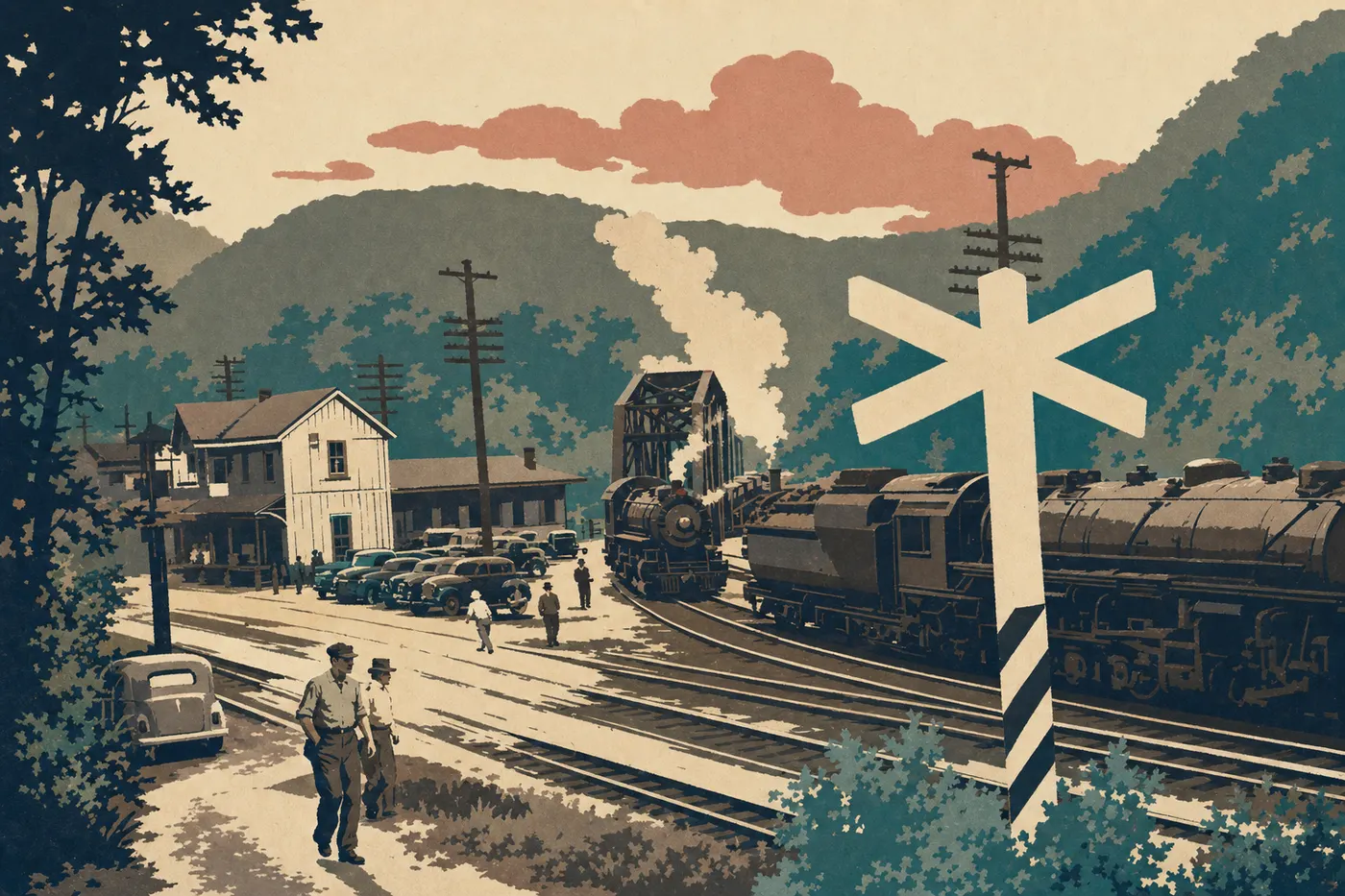
Halfway between Canyon Rim and Sandstone, Thurmond is one of the park's curiosities. This former mining and railroad town had several thousand residents at the start of the 20th century. Today, only a handful remain, along with a few restored buildings and a station where an Amtrak train still stops (yes, really). The seasonal visitor center is open from Memorial Day through Labor Day. The visit takes 30 minutes to an hour and offers an unexpected look at the history of the Appalachian coal region.
Day-by-Day Itinerary
Day 1: The Bridge, Cliffs, and Canyon Rim Area
Arrive from the north and settle in around Fayetteville. Start your morning at Canyon Rim Visitor Center to pick up a park map, talk with the rangers, and get an overview of the day's plan. Keep in mind that Appalachian weather can be fickle. July is the hottest month, and thunderstorms can roll in late in the afternoon with little warning. A light rain layer in your daypack is always worth carrying, even under blue skies.
Midmorning, head out on Long Point Trail. Allow 1.5 to 2 hours for the round trip, including photo stops at the final ledge. The bridge view is direct, with nothing blocking the frame. In the early afternoon, follow the developed overlooks along the gorge rim if Endless Wall Trail feels too ambitious for your first day, or take on the trail if you've still got energy.
In the evening, Fayetteville has several good restaurants and an unfussy outdoor-town atmosphere. The town runs on climbers' and rafters' schedules: eat well, turn in early, and do it all again tomorrow.
Day 2: Grandview, Thurmond, and Sandstone Falls
Head to Grandview in the morning, about 30 minutes from Fayetteville. Spend two hours on Grandview Rim Trail and at the plateau's various overlooks. Every turn reveals a different angle on the river bend. If you want to descend to the river, Grandview Staircase adds an hour round-trip and a solid extra workout.
In the early afternoon, make your way to Thurmond. Allow 30 to 60 minutes for the station, historic buildings, and interpretive panels. It's a short but memorable stop. It changes how you see the park, which isn't just a natural sanctuary but also a living record of a deep industrial history.
Late in the afternoon, continue to Sandstone Falls. The walk along the riverside footbridge takes less than an hour, and the falls are impressive at any time of day. Late-day light softens the reflections on the water and makes the setting especially pleasant for photos.
Day 3: The River, Rafting, and Additional Trails
Build your third day around activities on the water. Fayetteville and Oak Hill have plenty of rafting outfitters, and several offer half-day or full-day trips on the New River, from Class I rapids for beginners to Class IV technical water. A half-day trip is enough to get a serious taste of the river.
Spend the afternoon going deeper on the trails you enjoyed most over the previous two days, or explore the climbing routes if you have the experience. New River Gorge is one of North America's premier sandstone climbing destinations and draws climbers from every continent. The New River Gorge activities guide lists trails and activities by area, along with required skill levels and local outfitters.
Options for Different Trip Lengths
For a quick one-day visit: focus entirely on Canyon Rim. Start at the bridge overlooks when the visitor center opens at 9 a.m., hike Long Point Trail, have lunch in Fayetteville, then continue to Grandview in the early afternoon for the river-bend panorama. It's a packed schedule, but manageable if you're in good shape.
For a weekend (2 days): follow the day-by-day plan above. It's the format we recommend for a complete, stress-free first visit.
For a regional road trip: New River Gorge fits naturally into an Appalachian itinerary. Seneca Rocks, two hours north, Blackwater Falls State Park, and the Blue Ridge Parkway, three to four hours southeast, make good additions. Our Appalachian road trips and regional guides cover these multi-park extensions.
Itinerary Map
The NPS gives out its official Unigrid map free of charge at the two main visitor centers, Canyon Rim and Sandstone. It shows all marked trails, overlooks, campgrounds, and river access points with enough detail to get around the park without GPS.
To plan your route before you leave, our official New River Gorge map brings together the park's official mapping resources, including downloadable hiking routes.
Where to Stay Along the Itinerary
Fayetteville has most of the options in the north, including inns, bed and breakfasts, a few motels, and rentals nearby. Beckley offers a wider selection in the south, including standard hotel chains. Inside the park, several campgrounds let you sleep close to the forest.
Our New River Gorge lodging guide covers the options area by area, along with reservation requirements. The Hotels & Lodges and Camping pages go into detail about available properties and sites by season. For RV travelers, our New River Gorge RV camping guide explains access restrictions and developed facilities.
Extend Your Trip: What to See Around New River Gorge
Two hours north, Seneca Rocks offers spectacular rock formations and demanding hiking trails. Three hours away, Blackwater Falls State Park and its tea-colored falls are worth a stop, especially in fall when the surrounding forest turns red and orange.
Farther southeast, the Blue Ridge Parkway, in Virginia and North Carolina, is reachable in a half-day of driving. This scenic road follows the crest of the Appalachians for 466 miles, with developed stops every few miles. Our Appalachian regional guides cover these extensions in detail.
The Ideal Itinerary for Your Time
With 1 day, do Canyon Rim and the bridge. With 2 days, visit all four areas, Canyon Rim, Grandview, Thurmond, and Sandstone Falls, at a comfortable pace. With 3 days, add the river and spend more time on the trails you enjoyed most.
The park is compact and the internal roads are easy to navigate. There's no wrong way to organize your visit, only different levels of immersion. To choose the best season, our New River Gorge seasons guide covers changes in weather, crowds, and water levels throughout the year. For details on hikes and activities, visit our Things to Do page. The starting point for any trip plan is still our complete New River Gorge guide.
Frequently Asked Questions
What is the most scenic trail in New River Gorge?
The trail most often mentioned for its views is Long Point Trail. It's about 3.1 miles round-trip from Canyon Rim and ends at a sandstone ledge with a direct, unobstructed view of the bridge. Endless Wall Trail offers a longer walk through the forest, with several successive overlooks into the gorge.
What is the closest town to New River Gorge?
The closest town, and the best equipped for visitors, is Fayetteville on the north side of the park, less than 10 minutes from Canyon Rim Visitor Center. Beckley, which is larger, lies about 16 miles south of the Sandstone area and offers more commercial and hotel options.
Can you drive across New River Gorge?
Yes. Route 19 crosses the park over New River Gorge Bridge, a steel bridge that stands 876 feet above the river. The crossing is open to all vehicles, free, and accessible year-round.
Did Trump make New River Gorge a national park?
Yes. The law establishing New River Gorge National Park and Preserve was signed by Donald Trump on December 27, 2020. The site had previously been designated a National River since 1978. Its reclassification as a national park gave it much greater visibility, with a notable increase in visitation in the months that followed.
How much does it cost to enter New River Gorge?
There is no entrance fee for the park. For entrance fees and annual passes, see the National Parks fees and passes page.
When is the best time to visit New River Gorge?
The best time to visit New River Gorge depends on what you're looking for. Fall brings spectacular forest colors, spring brings favorable water levels for rafting, and summer brings pleasant temperatures but frequent afternoon thunderstorms. Our When to Go page covers the question in detail, season by season.