
New River Gorge National Park: The Complete Visitor Guide
New River Gorge is a deep gorge carved by an ancient river through the Appalachian Mountains of West Virginia, dominated by a steel bridge that has become an emblem of the entire state. The site protects nearly 56 miles of river, sandstone cliffs prized by climbers, and rapids that rank among the best rafting waters in the eastern United States. Designated America's 63rd national park in late 2020, it remains little known to the general public, which is part of its appeal: you'll find wide-open scenery without the crowds of Zion or Yellowstone.
The quick answer: Plan on 2 to 3 days to visit New River Gorge. Spend your first day around the bridge and the northern section, including Fayetteville and Canyon Rim, and your second at Grandview's overlooks and Sandstone Falls in the south. Park entry is free. The best time to go is late September through mid-October, when the Appalachians burst into color and Gauley water releases supercharge the rafting.
New River Gorge at a Glance: Where the Park Is and How to Get There
The park stretches across southern West Virginia along the New River, between Fayetteville to the north and Hinton to the south. The most convenient gateway town is Fayetteville, a small outdoor town full of cafés and adventure outfitters just minutes from the bridge. Beckley, a larger town with interstate access, serves as a practical base in the south.
You get around the park by road. The main route is Route 19, which crosses the New River Gorge Bridge and connects Interstate 64 to the south with Interstate 79 to the north. To reach park headquarters and the Glen Jean area, take Route 19 north from Beckley to the Glen Jean exit, then follow the signs. The park has no single entrance gate. Instead, it consists of several areas connected by country roads, so you'll need to plan a little.
The most convenient airports are Charleston (CRW), about an hour away by car, and Beckley for regional flights. From Europe, the usual route involves a connection in Washington or Charlotte. For flight details, distances, and car rentals, see our Getting There & Transportation page.
Entrance Fees, Passes, and Reservations
The good news for your budget is that access to New River Gorge is free. There are no entrance booths or fees, unlike at most of the major parks in the West. You can drive to the overlooks and hit the trails without spending a cent.
What costs money are guided activities and lodging. A rafting trip on the New or the Gauley River, a guided climbing session, a night at a developed campground or lodge: those are the real expenses. If your road trip includes other national parks that charge admission, the annual America the Beautiful pass can still pay for itself, even though you don't need it here. Our Fees & Passes page explains entrance fees and annual passes. And if you collect stamps from visitor centers, our Passport & Stamps page tells you where to find them in the park.
Reservations, Permits, and Rules to Follow
Do You Need a Reservation?
You don't need a reservation to enter the park. Developed campgrounds such as Grandview and Army Camp operate through Recreation.gov, especially from April through October. Sites fill up several weeks ahead in July and August, so book early.
Guided rafting trips are run by NPS-approved operators. Book directly with them well ahead of the busy season.
Permits
You don't need a permit for day hikes. For backcountry camping, you must register in advance at a visitor center. It's free and quick.
Rules to Follow
Campfires: Allowed only in designated areas. Collecting deadwood is prohibited in sensitive areas. Check restrictions when you visit, especially during dry periods.
Pets: Dogs are allowed in the park, but they must stay on a leash no longer than 6 feet. Some buildings and protected natural areas are off-limits to them.
Trash: The park follows a full Leave No Trace policy. There are no trash cans along the trails, so pack out everything you bring in.
Drones: Their use requires advance authorization from the NPS. Don't launch one without contacting the park first.
Climbing: Climbing is legal on most cliffs. Some areas close temporarily during nesting season for red-shouldered vultures and peregrine falcons. Check the alerts on the NPS website before you leave.
Bridge Day: On the third Saturday of October, the bridge closes to traffic for a festival where visitors can walk across the deck, watch BASE jumps, or rappel from the bridge, 876 feet above the river. Tens of thousands of people converge here that day. Book your lodging several months ahead if you're aiming for this date.
Getting Around New River Gorge
You'll explore the park by car, and a car is essential. No shuttle connects the different areas, which can be dozens of minutes apart. The bridge spans the gorge in a single leap, but to reach the bottom, you'll need to take Fayette Station Road, a narrow, slow loop that is almost one-way and offers the best view of the bridge from below.
Allow realistic drive times between the north, including Canyon Rim and Fayetteville, the central area at Grandview, and Sandstone in the south. The gorge's terrain forces you to take the long way around, and GPS often underestimates travel times on these mountain roads. The secondary roads down into the canyon, including Thurmond and Cunard, are scenic but slow and sometimes gravel. To plan your connections from one area to the next, see our Getting Around page.
How Long Do You Need to Visit New River Gorge?
Two to three days are enough to see the highlights without rushing. In one full day, you can see the bridge, the Canyon Rim overlook, and a short hike such as the Endless Wall Trail. It's doable, but you'll leave wanting more.
Over two days, add the southern section: Grandview and its horseshoe-shaped view of the river, followed by Sandstone Falls. With three days, fit in a half-day of rafting or climbing and a visit to the ghost town of Thurmond. Outdoor enthusiasts can easily spend a week here. To build your day-by-day plan, we've outlined several options in our Itinerary & Trip Length guide, along with possible activities on our Things to Do page.
Plan your visit
What to See and Do in New River Gorge
The park is divided into distinct areas running north to south along the river. Here's how we break down a visit.
Road trip journal · 4 areas
The Northern Section: The Bridge and Canyon Rim
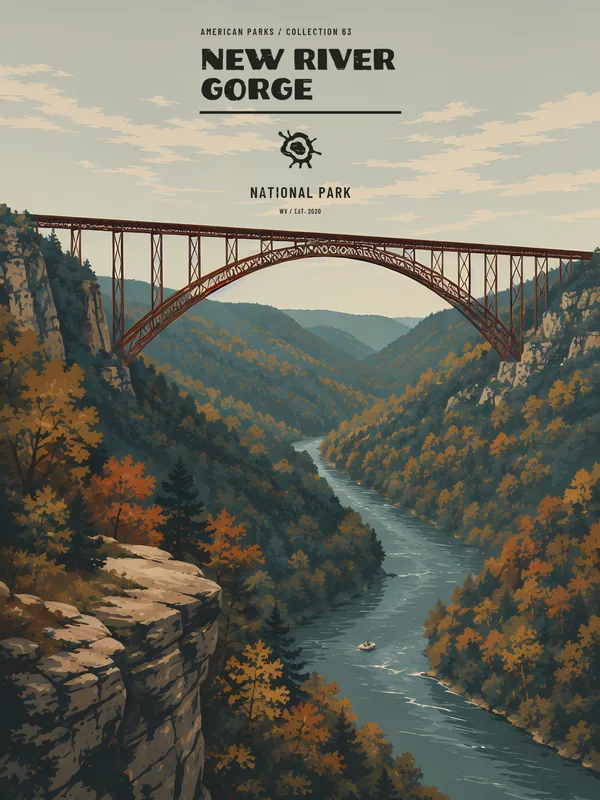
This is the park's tourist hub and its postcard view. The New River Gorge Bridge, opened in 1977, spans more than 2,950 feet across the gorge, with its deck nearly 885 feet above the water. For many years, it was one of the world's longest steel arches. Right next door, the Canyon Rim Visitor Center leads to a scenic platform via a wooden staircase, with the bridge as a backdrop.
On the third Saturday of October, Bridge Day closes the bridge to traffic. BASE jumpers leap into the void and climbers rappel down, watched by tens of thousands of spectators. When we visited, simply seeing the deck from the platform was enough to make us dizzy. Below, Fayette Station Road winds down to the bottom of the gorge and the original bridge site.
The Central Section: Grandview
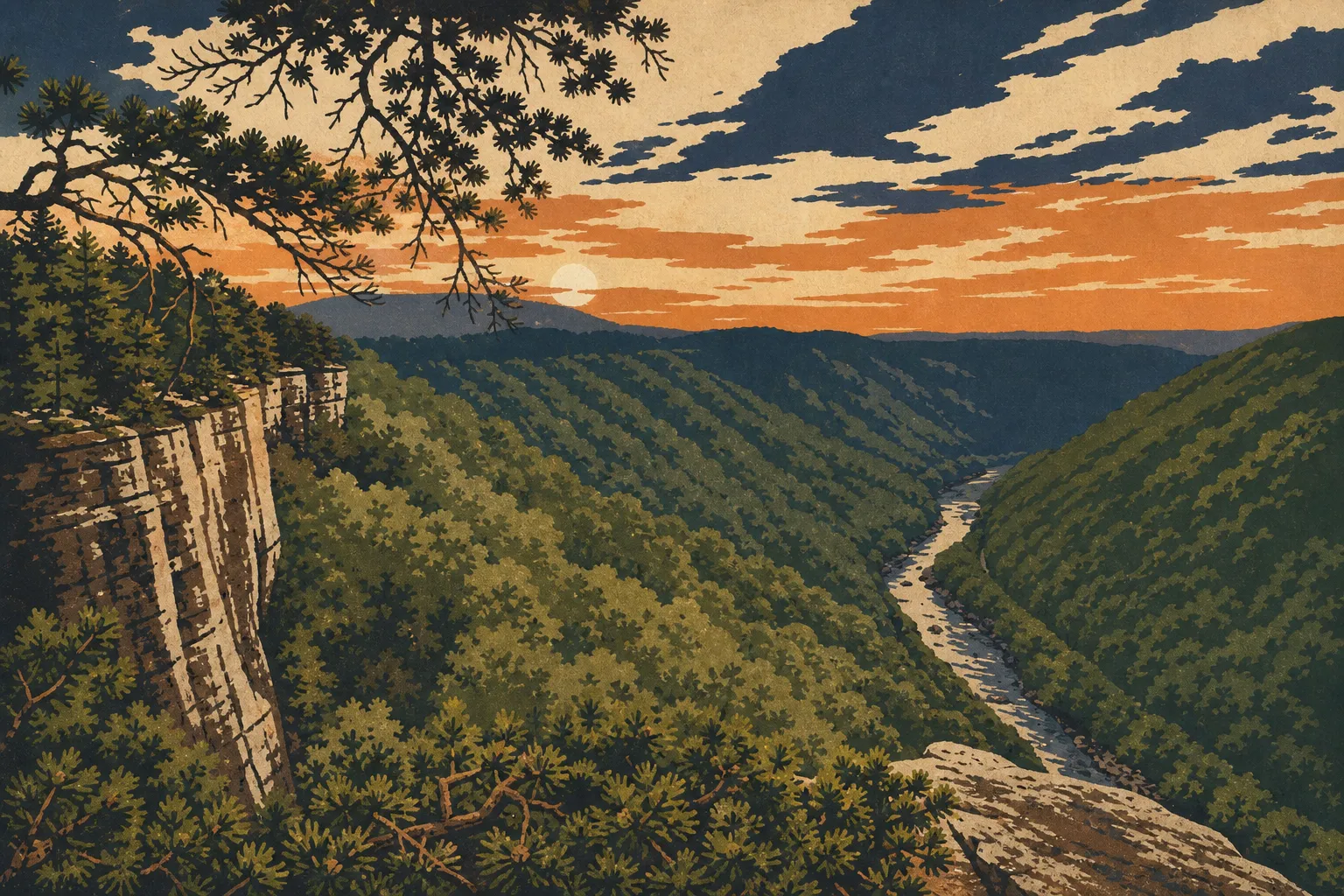
As its name suggests, Grandview offers the park's broadest vistas. Perched on the cliff, it overlooks a huge bend in the New River, the famous horseshoe. Main Overlook and Turkey Spur offer different views of the loop. In spring, rhododendrons cover the slopes. Quieter than the bridge area, this section is well suited to family walks along the cliff edge.
The Southern Section: Sandstone
In the south, the river widens and slows. Sandstone Falls, the widest waterfall along the route, stretches across the full width of the New River, broken up by islands that you can reach via footbridges. Sandstone Visitor Center, along Interstate 64, serves as the southern gateway and does a good job explaining the gorge's ecology.
Thurmond, the Railroad Ghost Town
At the bottom of the canyon, Thurmond brings the heyday of coal and railroading to life. This former railroad town, now nearly deserted, still has its station, occasionally served by Amtrak, and a few period buildings. A narrow, slow road leads there, but the timeless atmosphere makes the trip worthwhile.
Explore the park
New River Gorge's Best Hikes
The park has trails for every level, from a ten-minute overlook walk to a strenuous loop along the cliffs. The standouts include Endless Wall Trail, which follows the tops of the sandstone cliffs with dizzying openings onto the gorge; Long Point Trail, which leads to a promontory facing the bridge; and Grandview Rim Trail, an easier route filled with vistas. Climbers have more than 1,000 bolted routes on Nuttall sandstone, making New River Gorge one of the eastern United States' premier climbing destinations.
You'll find distances, elevation gains, difficulty ratings, and maps for every route in our New River Gorge Hiking guide. Check it before you hit the trail.
The detailed guide Best Hikes in New River Gorge for Every Ability The best New River Gorge hikes by area, with trail details, practical tips,… Read the guide →Wildlife and Plants to Look For
The gorge is a biodiversity corridor at the heart of the Appalachian forest. Wildlife sightings may include white-tailed deer and wild turkeys, as well as black bears, which are common in the park if you keep your distance. Raptors rule the skies, and in summer, fireflies fill the air. Fish and turtles live in the river.
The mixed hardwood forest bursts into color in fall, while rhododendrons and mountain laurels bloom in early summer. Our Wildlife page covers the species to look for and the best times to see them.
The detailed guide New River Gorge Wildlife: Which Animals to See and Where Black bears, bald eagles, hellbenders, and more Read the guide →When to Visit New River Gorge
Fall is the standout season. From late September through mid-October, the hardwoods turn red and gold, while releases from the Gauley River dam give rafters some of the country's most challenging rapids. Spring is green and full of blooms, making it a favorite with hikers. Summer stays hot and humid, with frequent mountain thunderstorms. Winter is quieter. Some seasonal services close, but the views open up.
One rule of the Appalachians is that weather changes quickly, and the gorge is often cooler and damper than the surrounding area. We cover the climate month by month on our When to Go page, along with detailed temperatures and precipitation on our Weather page.
The detailed guide When to Visit New River Gorge: Best Seasons, Weather, and Crowds The best times to visit New River Gorge are May-June and September-October Read the guide →Where to Stay in New River Gorge
There is no grand historic lodge in the heart of the park, but you'll find plenty of options nearby. Fayetteville and Beckley have the largest selection of hotels, motels, and vacation rentals. Around the park, several adventure properties offer cabins, yurts, and lodges geared toward rafting and climbing. Campgrounds range from developed sites to more rustic riverside backcountry camps.
Each option has its own detailed guide: our Where to Stay guide for the big picture, our Hotels & Lodges page for comfortable stays, our Camping page for campgrounds, and our RV Camping page if you're traveling by van or RV.
For meals, Fayetteville leads the way with its cafés and outdoor-oriented restaurants. Options become scarce in the more isolated areas, where it's best to bring a picnic. You'll find our favorite spots on the Where to Eat page.
Stay in the park
Around New River Gorge: Things to Do Nearby
The park sits in a West Virginia rich in natural attractions. Nearby, the Gauley River rolls out its legendary rapids in fall, while Babcock State Park is home to the famous Glade Creek Grist Mill, one of the state's most photographed settings. Farther away, Appalachian mountain resorts and area caves can easily round out a road trip.
To broaden your trip, our Regions and Road Trips sections connect New River Gorge with nearby stops in the Appalachians.
Our Take: Is New River Gorge Worth a Visit?
Yes, as long as you know what you're coming for. New River Gorge isn't a park of sweeping Western vistas. It's an adventure and immersion park, where the experience comes as much from being in the gorge as from looking out over it. Rafting, climbing, cliff-edge hikes, and the bridge that stops you in your tracks every time: that's its signature.
If you're traveling through the region or building an Appalachian road trip, New River Gorge deserves a full 2 to 3 days. You'll get wide-open spaces without the crowds, plus a side of the United States that has little to do with the usual clichés. Our advice is to come in fall and set aside a half-day to descend into the canyon.
Frequently Asked Questions
Is Visiting New River Gorge Free?
Visiting New River Gorge is free. The park has no entrance fee or entrance booth. You pay only for guided activities such as rafting and guided climbing, nights at a campground or lodge, and certain services. Fee details are on our Fees & Passes page.
What Is the Best Time to Visit New River Gorge?
The best time to visit New River Gorge is from late September through mid-October, when the Appalachians turn colorful and Gauley River releases bring the rafting to life. Spring is also excellent for hiking. See our When to Go page for a month-by-month overview.
How Many Days Do I Need in New River Gorge?
Plan on 2 to 3 days in New River Gorge to see the bridge, Grandview's overlooks, Sandstone Falls, and take one or two hikes. One day is enough for the highlights around the bridge, but three days gives you time to add an adventure activity. Our Itinerary & Trip Length guide offers detailed plans.
What Is the Closest Town to New River Gorge?
The closest town to New River Gorge is Fayetteville, an outdoor town just minutes from the bridge on the park's north side. Farther south, Beckley is larger and connected to the interstate, making it a convenient base. Our Getting There & Transportation page has the details.
The American Parks shop
Bring New River Gorge home
Our park-inspired creations, made to order and shipped to your door.
Latest park news
- New River Gorge: Prescribed Burns in Two Park Areas This FallStarting October 1, 2026, New River Gorge is running prescribed burns in two areas, and here's what it means for your visit.
- New River Gorge: Paving Work Disrupts Access to the Canyon Rim Visitor CenterA paving project on Route 19 periodically closes the entrance to the Canyon Rim Visitor Center. Here's the detour to take when it does.