
What to Do in New River Gorge: Top Sights and Activities
New River Gorge joined the list of U.S. national parks in December 2020, becoming the 63rd, after flying under European travelers' radar for years. That's a gap worth filling. West Virginia hides a canyon here carved nearly 1,000 feet deep into the Appalachians, crossed by one of the world's largest steel arch bridges and cut by rapids that whitewater enthusiasts travel thousands of miles to run.
For those in a hurry, here's the short version in two or three sentences: the highlights are New River Gorge Bridge from the overlooks at Canyon Rim, whitewater rafting on the lower New River (Class IV to V rapids), hikes along Endless Wall above the sandstone cliffs, the wide-open views around Grandview, and Sandstone Falls, which is accessible to everyone. The park is free and open year-round, and fall is genuinely beautiful here.
New River Gorge at a Glance: Areas, Access, and Getting Around
The park stretches for about 71 miles along the New River, a river with a misleading name. It's actually one of the oldest rivers on the North American continent, and it flows north, making it geologically remarkable. Route 19, from Beckley in the south (take the Glen Jean exit for park headquarters), is the main access route. There is no park shuttle, so you'll need a car to get from one area to another.
Four areas shape the visit:
- Canyon Rim (north, near Fayetteville): the bridge, sandstone cliffs, signature trails, and the main visitor center.
- Grandview (southeast): the big overlooks, an outdoor theater, and trails along the canyon rim.
- Sandstone (south): the falls, a second visitor center, and a quiet, family-friendly atmosphere.
- Thurmond (central): the former coal town, historic train station, and a glimpse into the industrial history of the Appalachians.
Canyon Rim and Sandstone visitor centers are open daily from 9 a.m. to 5 p.m. They are closed on Thanksgiving, Christmas Day, and New Year's Day. Thurmond and Grandview facilities operate only from Memorial Day through Labor Day. For roads, parking, and connections from nearby towns, see the New River Gorge Access Guide.
How Much Time Do You Need to Visit New River Gorge?
Two days are enough to cover Canyon Rim and Grandview without rushing. Add a third day for Sandstone and Thurmond, or to spend half a day rafting. If you're combining hiking, climbing, and whitewater, plan on at least four days. For day-by-day itineraries tailored to your pace and the season, the New River Gorge Itinerary Guide lays out every option.
New River Gorge Highlights, Area by Area
Canyon Rim: The Bridge, Cliffs, and Signature Trails
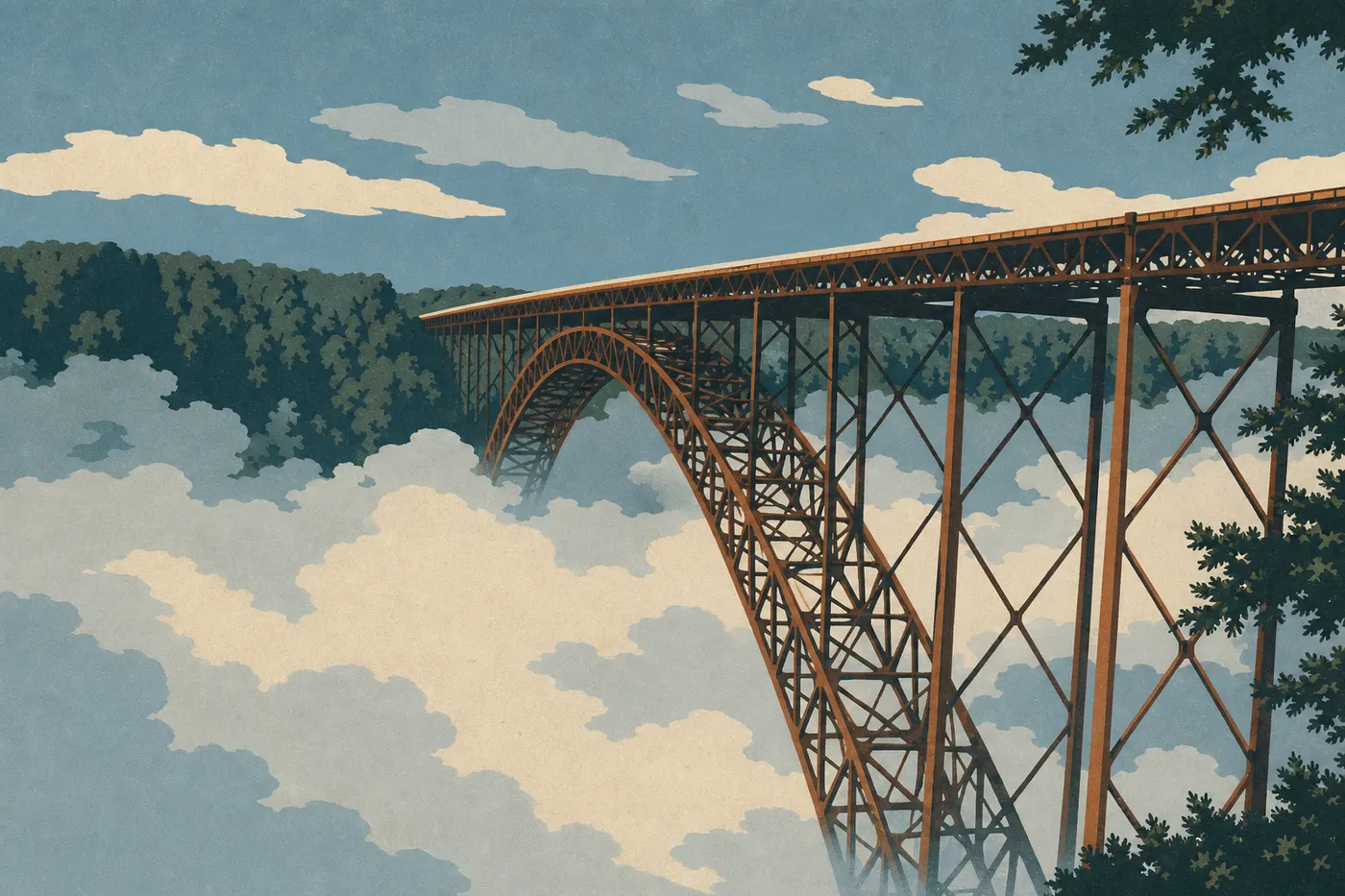
Canyon Rim is the heart of the visit for most people, and for good reason. New River Gorge Bridge towers 876 feet above the river and stretches about 3,031 feet from end to end. Its steel arch is instantly recognizable. The best view that requires no effort is just a few steps from the Canyon Rim Visitor Center parking lot, where the entire bridge comes into view, framed by Appalachian forest. It's free, immediate, and consistently impressive.
One detail comes up often in conversation: on the third Saturday in October, Bridge Day turns the bridge into an official playground. Thousands of spectators come to watch BASE jumps and rappels from the span. It's the only day of the year when pedestrians can walk on the roadway. Outside the event, pedestrian access is prohibited.
Two trails from Canyon Rim deserve special attention. Long Point Trail (about 3.1 miles round-trip, moderate) offers a straight-on view of the bridge from the opposite side of the canyon. It's the classic photo, the one featured in nearly every publication about the park. Endless Wall Trail follows the canyon rim for several miles, overlooking the sandstone cliffs where climbers come from across North America. The New River Gorge Hiking Guide covers both trails and the rest of the park's trail network.
Grandview: Overlooks and Big-Picture Views
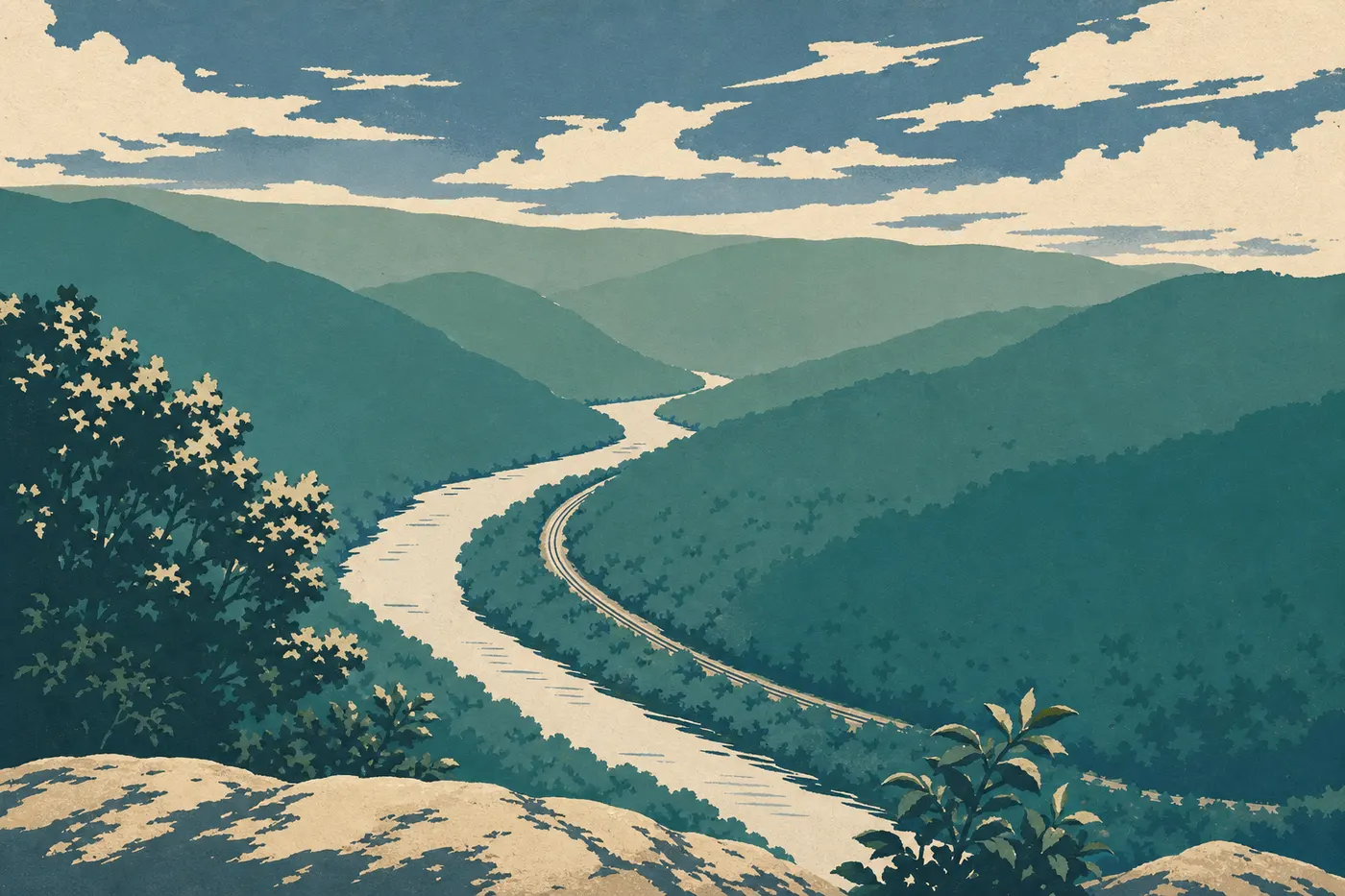
Grandview, in the park's southeast corner, is the place for expansive views. From the Grand Overlook, the New River's bend spreads out below in a green amphitheater, or in red and orange in the fall when the canyon catches fire with color. Several overlooks line Grandview Rim Trail, which is family-friendly for much of its length.
The atmosphere is quieter than at Canyon Rim, with fewer people, roomy parking lots, and late-afternoon light falling across the opposite cliffs with an unusually photogenic quality. If you can make only one stop in this area, plan it for the end of the day.
Keep in mind that Grandview Visitor Center is seasonal, open from Memorial Day through Labor Day. Outside that period, check road conditions before making the drive, since some access roads may be snow-covered in winter.
Sandstone: Falls and River Access
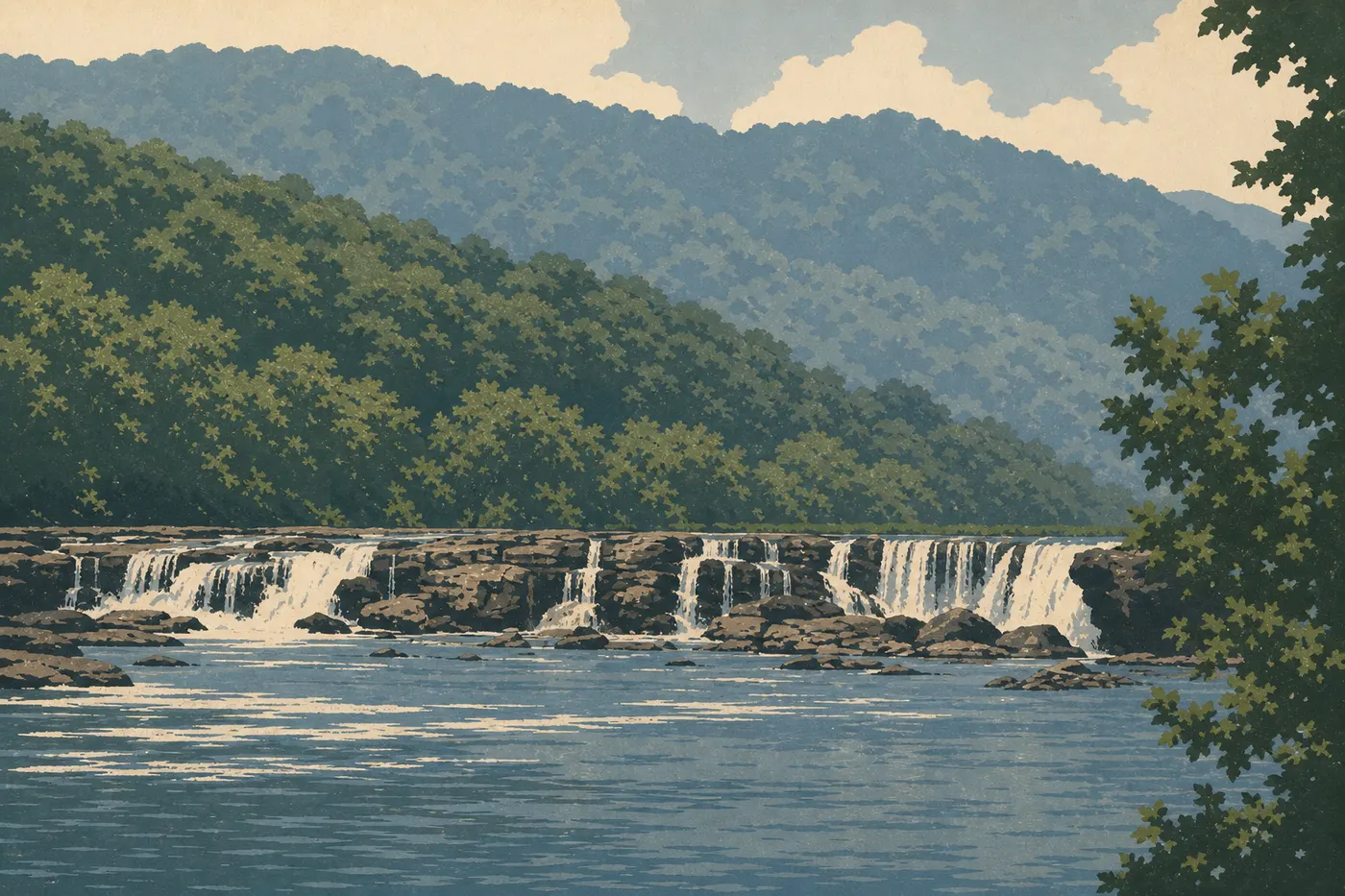
Sandstone Falls is the New River's widest waterfall. Depending on the river's flow, water spreads across the rock shelf for dozens of yards. A boardwalk lets you get close with very little effort, making it an ideal stop with kids or for visitors with limited mobility. Great blue herons, river otters, and belted kingfishers frequent the rocks along the edge.
Beyond the falls, Sandstone is a good area for trout fishing and launching kayaks. The water is much calmer here than on the lower New River. The powerful rapids are concentrated farther north, toward Canyon Rim. For a family-friendly introduction to the river without an adrenaline rush, this is the place to go.
Thurmond: A Window into Coal Country
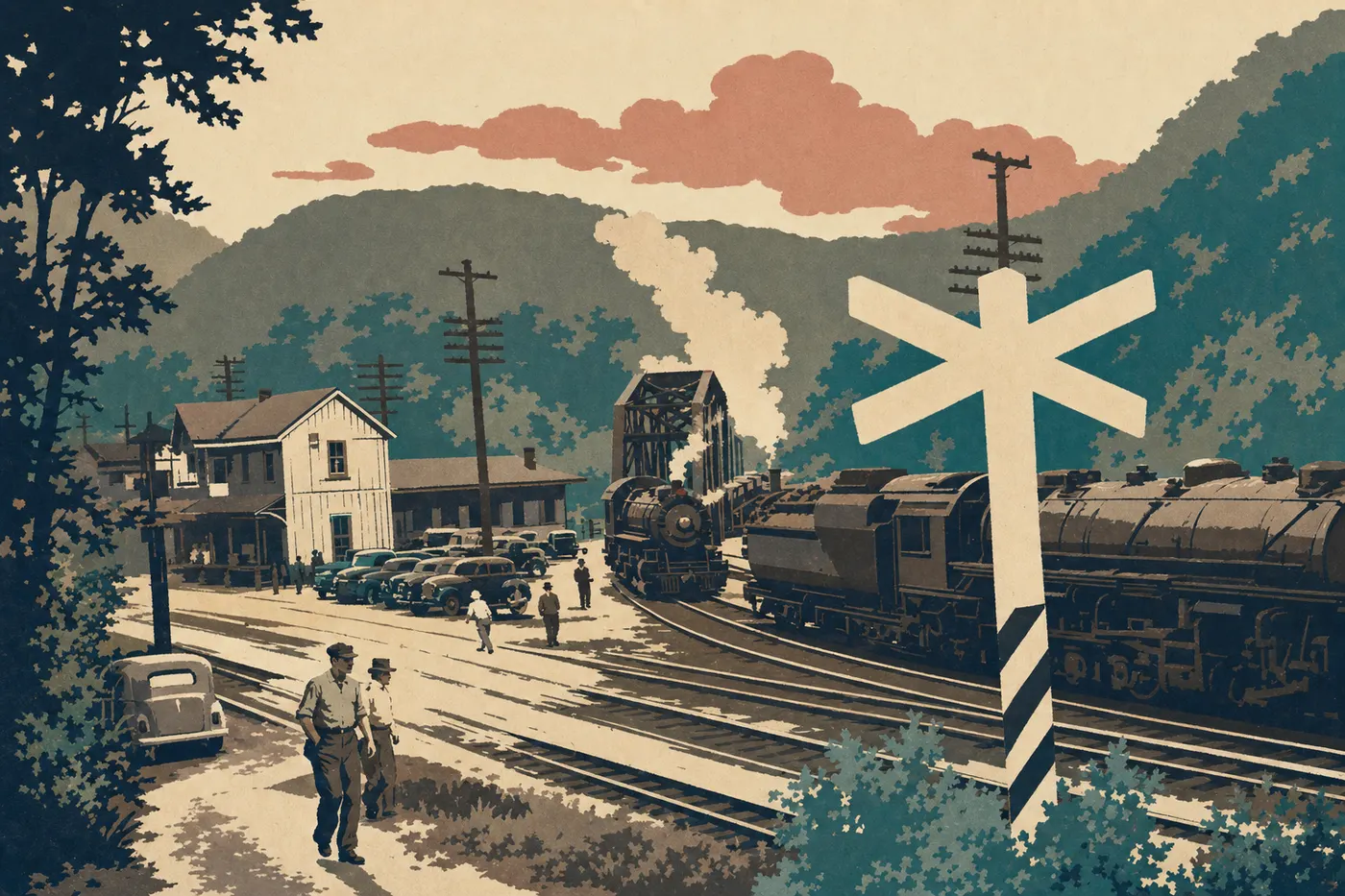
Thurmond is a ghost town in almost every sense of the word. Prosperous around the turn of the 20th century thanks to the coal industry, it once had hotels, banks, gambling halls, and a busy Chesapeake & Ohio Railway station. Today, only a handful of people live here, but the restored station is still standing and open to visitors. Freight trains still pass through regularly, adding a surreal element to the visit.
Thurmond-Minden Trail connects the remains of two former mining towns over about 3.7 miles round-trip. It's as much a history walk as a nature hike, and we recommend it to anyone interested in the industrial history of the Appalachians.
The Best Hikes in New River Gorge
The park has roughly 40 marked trails, from the flat boardwalk at Sandstone Falls to technical loops on the sandstone cliffs. The park hiking guide covers every route, including distance, elevation gain, difficulty, and access tips. Here are the three we recommend first:
- Long Point Trail (3.1 miles round-trip, moderate): a straight-on view of the bridge from the opposite canyon rim. Start here.
- Endless Wall Trail (3.7 to 5 miles depending on the route, moderate to difficult): the climbers' trail, with dramatic views down to the river and cliffs.
- Grandview Rim Trail (about 3.1 miles, easy to moderate): a series of views over the bend, accessible to most visitors.
You don't need a permit for day hiking. Appalachian mountain weather can turn quickly, so a lightweight rain jacket is nonnegotiable, even in summer. July is both the park's hottest and wettest month.
Other Activities for Every Kind of Traveler
Rafting and Whitewater
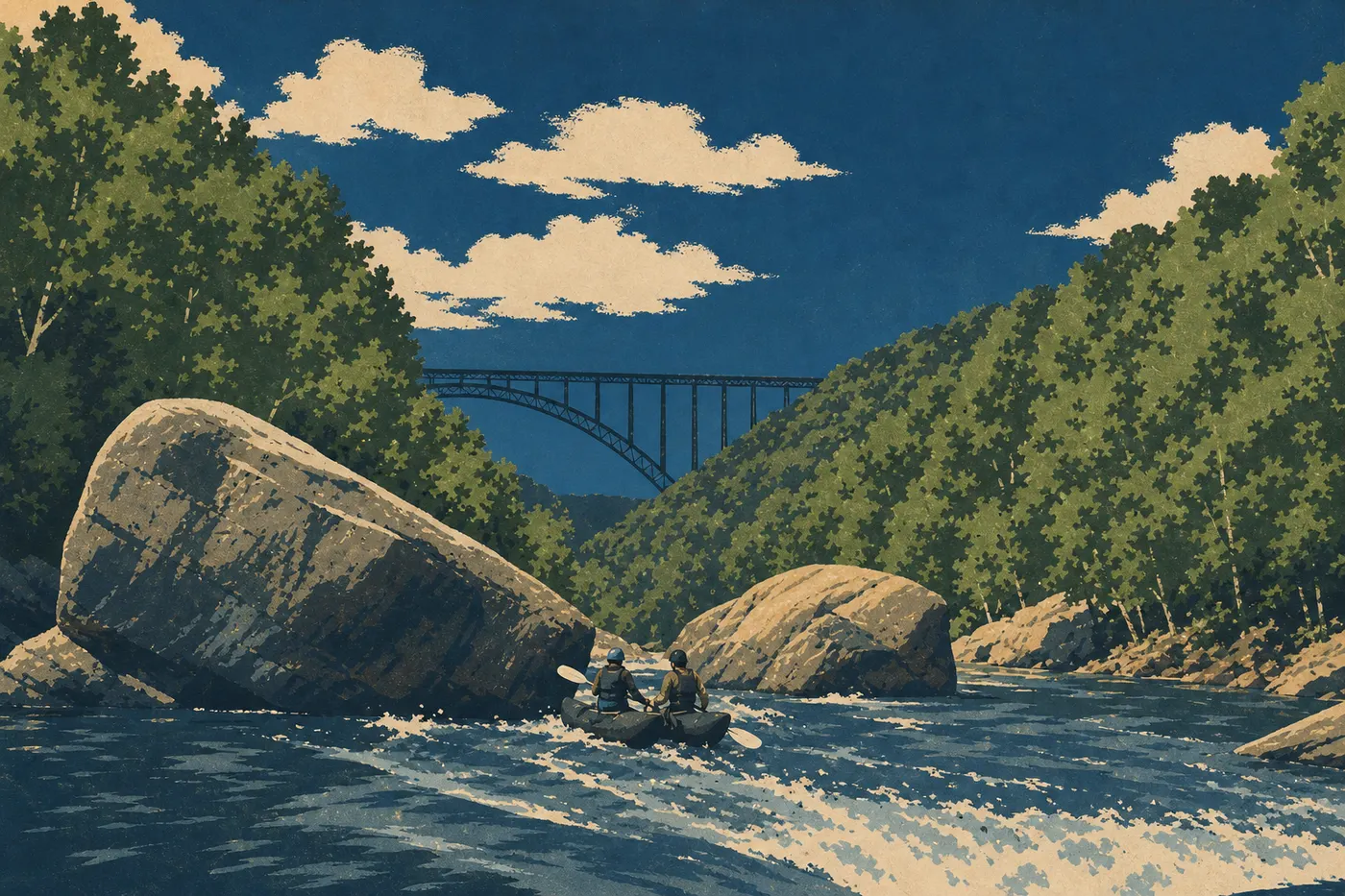
New River Gorge built its worldwide reputation on its rapids. The lower New River, between Cunard and Fayetteville, packs in Class IV and V rapids with names that leave little to the imagination, including “Greyhound Bus Stopper” and “Upper Keeney.” The best season runs from April through October, depending on river levels.
Several licensed outfitters operate in and around Fayetteville. They offer half-day, full-day, and multi-day trips with riverside camping. For families and beginners, the upper New River above Thurmond has Class I and II rapids that you can run by canoe or inflatable kayak without prior experience.
Climbing
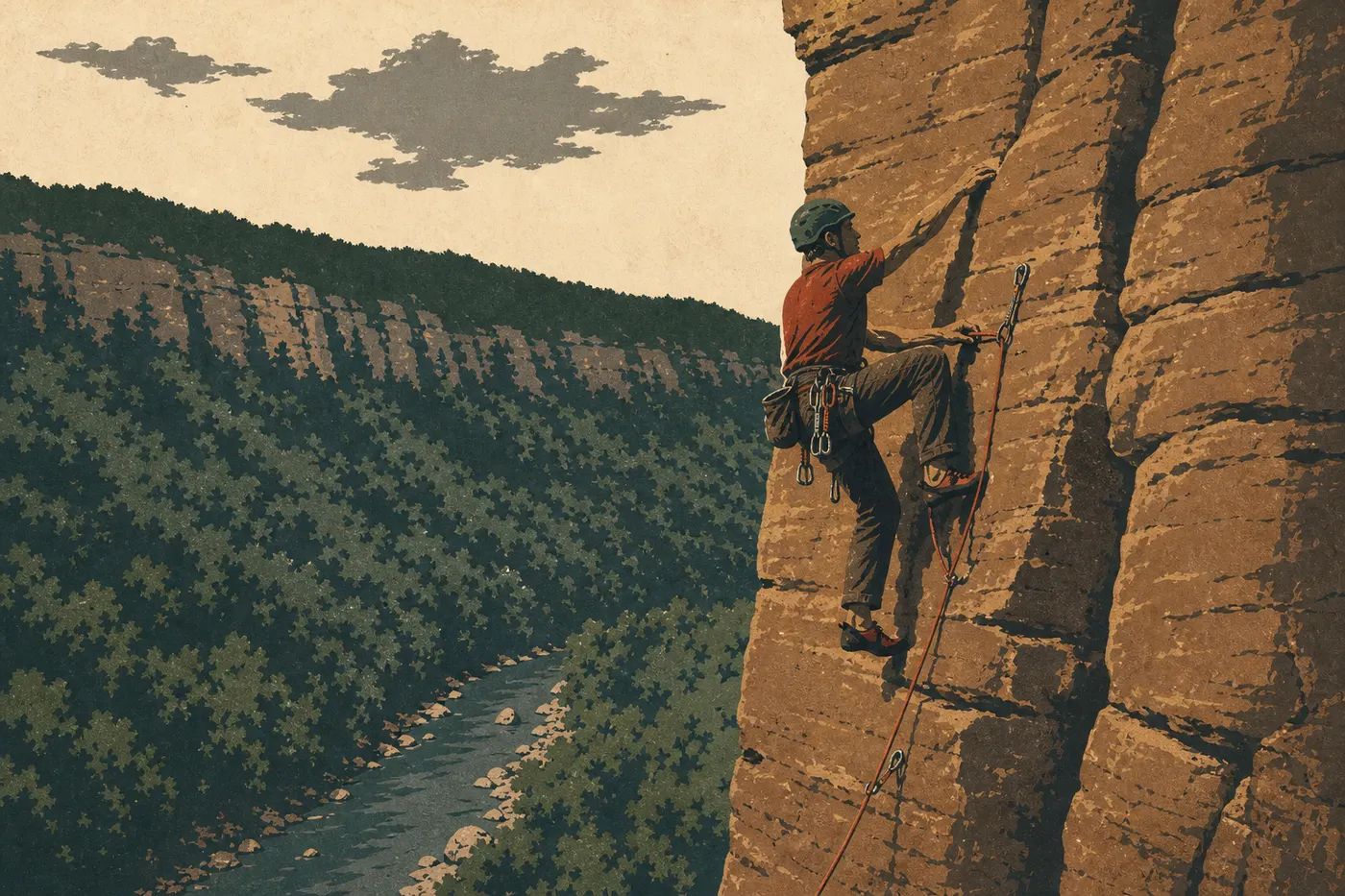
The park has several hundred routes on local sandstone, which is known for its excellent friction. The most popular areas are Endless Wall, Bubba City, and Beauty Mountain, with routes at every level, from 5.4 to 5.13 on the Yosemite Decimal System. Several Fayetteville-based climbing schools offer introductory sessions and guided trips, with all equipment provided.
Wildlife Viewing
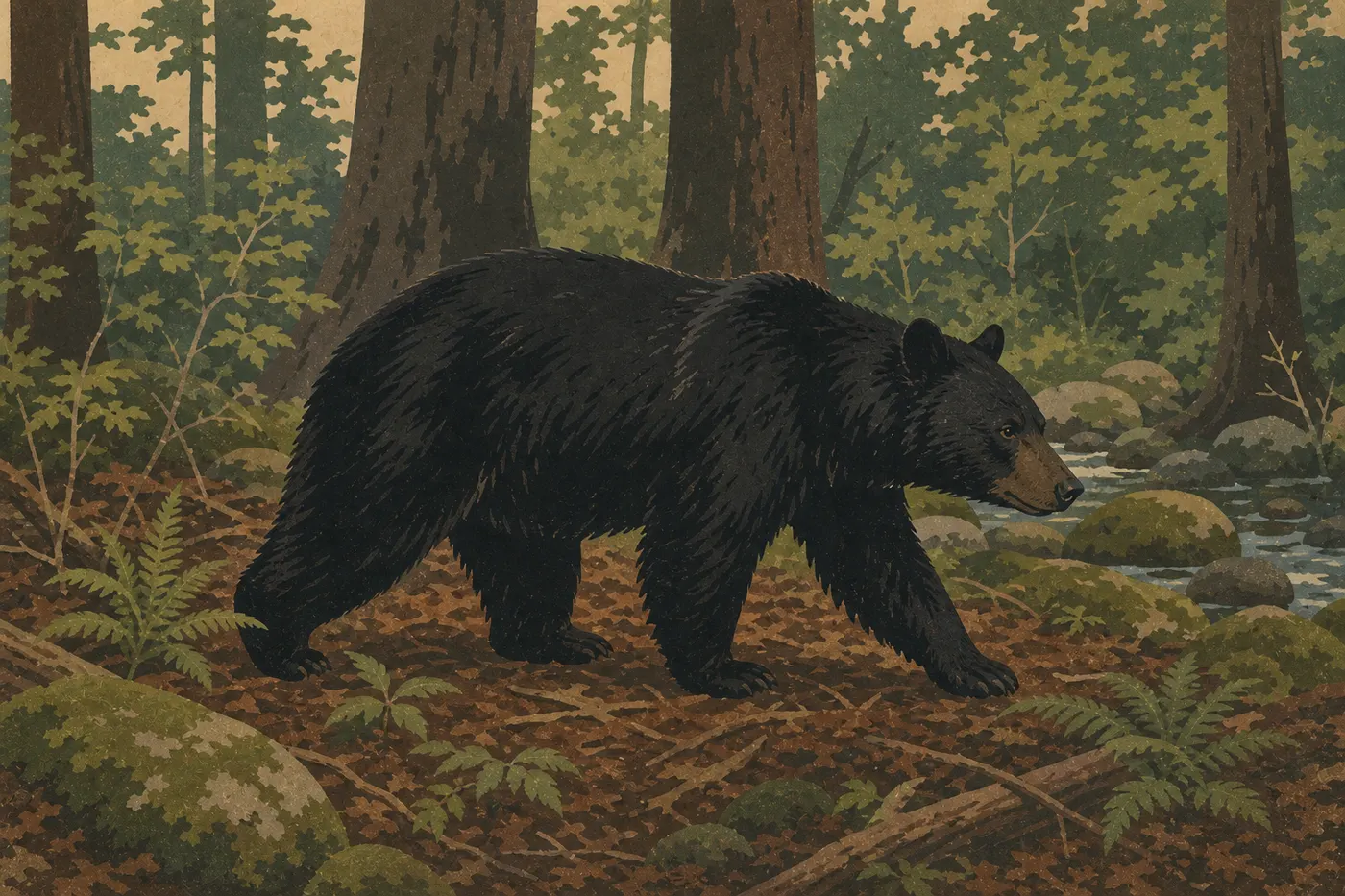
Black bears, white-tailed deer, wild turkeys, and bald eagles are all part of the Appalachian wildlife found in the park. Your best chances of seeing animals come at dawn and dusk, from the overlooks at Grandview or along quieter forest trails. The New River Gorge Wildlife Guide explains which species to look for and the best seasons for spotting them.
Mountain Biking

A network of singletrack trails borders parts of the park and nearby national forests, with routes suited to intermediate riders. In winter, some trails are open to fat biking on snow, an option that's still relatively under the radar but gaining popularity in the region.
Fall Scenery and Photography
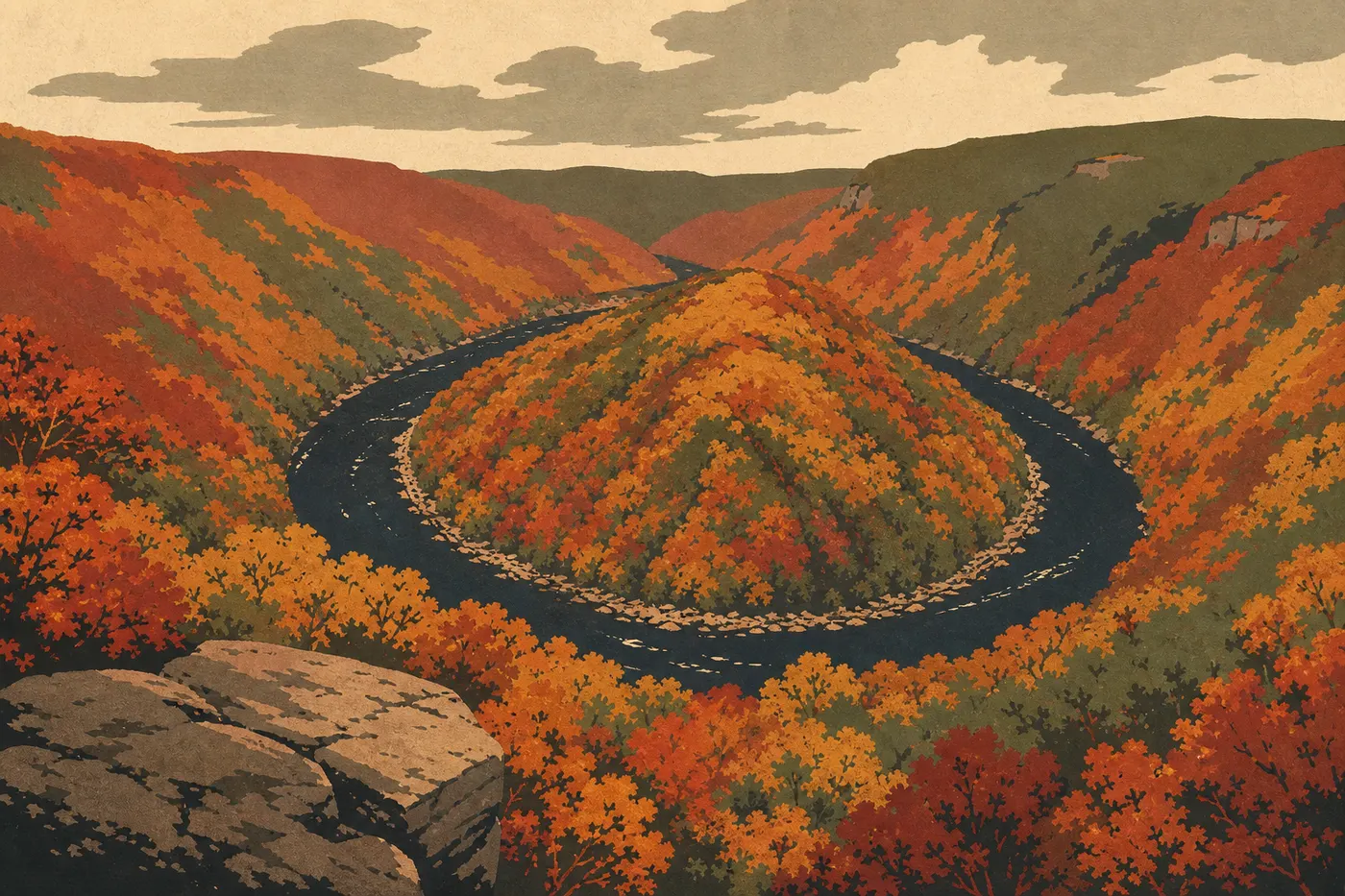
The park is especially photogenic from late September through mid-October, when maples, oaks, and tulip trees cover the canyon walls in shades ranging from bright yellow to burgundy. Long Point Trail and the Grandview overlooks are the two most popular spots for landscape photography. October weekends fill the parking lots, so arrive before 9 a.m. to find a space.
Visiting with Kids
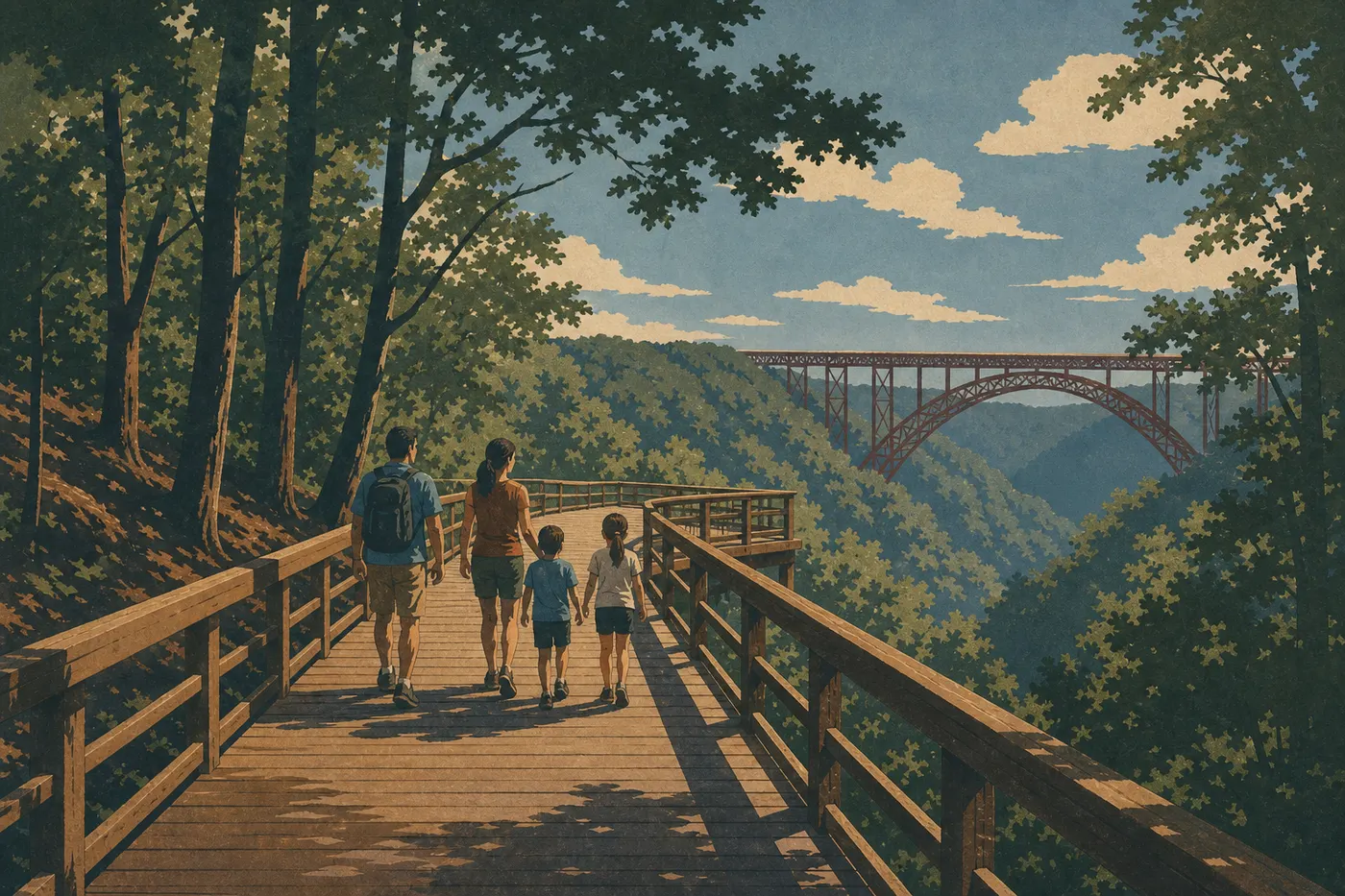
Several activities are easy with children: the Sandstone Falls boardwalk, a visit to the Thurmond train station, Grandview's easy trails, and the calm sections of the river for kayaking. The New River Gorge Family Guide lists activities by age group, along with practical advice for handling the logistics.
Things to Do Around New River Gorge
The Gauley River National Recreation Area borders the park to the north and is worth a detour if you came for whitewater. The Gauley River is known for some of the country's most demanding Class V rapids, which you can run with a guided rafting trip through much of the fall.
Fayetteville, the small town closest to the bridge, is worth half a day on its own. Downtown has solid restaurants, outdoor gear shops, and rafting outfitters that have operated in the region for decades. It's the natural base for organizing your stay in the park.
An hour southeast by car, Lewisburg is a designated historic Victorian town with a beautifully preserved main street and a few good lunch spots. Charleston, West Virginia's capital, is about 1.5 hours west, offering a night in town between two days in the park.
As part of a larger Appalachian loop, New River Gorge pairs naturally with Shenandoah National Park to the north and the Blue Ridge Parkway to the south. These routes are covered in our Road Trip Guides and Regional Guides.
The Bottom Line: What to See First in New River Gorge
New River Gorge is as much an action park as a place for quiet observation. If you've got only a weekend, focus on Canyon Rim in the morning, with Long Point Trail for the bridge and the visitor center for context, then head to Grandview in the late afternoon for the low-angle light. A third day earns you a detour to Sandstone for the falls and Thurmond for the history, or a morning on the water with a local outfitter.
Admission is free, but guided activities such as rafting or climbing require a separate budget. For lodging, our New River Gorge Lodging Guide rounds up options in the park and in Fayetteville. To choose the best season for your priorities, whether that's fall color, ideal spring rafting levels, or lighter weekday crowds, our When to Visit New River Gorge Guide compares the advantages of each season.
One last word about Appalachian weather: it can change within hours, no matter the month. Always bring a rain jacket, closed-toe shoes, and an extra layer in your pack. In winter, temperatures at the bottom of the canyon drop much lower than those recorded on the plains, so plan accordingly.
Frequently Asked Questions
What is there to do in New River Gorge?
New River Gorge offers a rare combination of outdoor activities: whitewater rafting on Class IV and V rapids, sandstone climbing with several hundred routes, hikes along the canyon rims, views of New River Gorge Bridge from the Canyon Rim overlooks, and a visit to the former coal town of Thurmond. It's all in a park that's open year-round with no entrance fee.
How many days do you need to visit New River Gorge?
How many days should you spend in New River Gorge? Two days are enough to cover Canyon Rim and Grandview. Three to four days let you add Sandstone, Thurmond, and a day on the water or cliffs. The New River Gorge Itinerary Guide offers plans for every length of stay.
Is New River Gorge worth visiting?
New River Gorge is especially worth visiting if you enjoy active parks. The outdoor options are unusually varied for a park of this size, admission is free, and the canyon's fall scenery ranks among the finest in the Appalachians. Crowds remain manageable outside Bridge Day weekends.
What are the must-do activities in New River Gorge?
The essential things to do in New River Gorge are hiking Long Point Trail for a straight-on view of the bridge, spending at least half a day on the water rafting or kayaking, stopping at Grandview's Grand Overlook in the late afternoon, and visiting Sandstone Falls, the New River's widest waterfall.
Which hike should you do in New River Gorge?
The top priority is Long Point Trail (3.1 miles round-trip, moderate) for its straight-on view of the bridge. For a full day, Endless Wall Trail offers a longer route along the sandstone cliffs. The park hiking guide covers every trail and current access conditions.
Can you swim in New River Gorge?
You can swim in the New River in some places, but the NPS discourages swimming along most of its course. Currents are strong, the water stays cold even in summer, and the rocky bottom is uneven. Ask at Canyon Rim Visitor Center about river access areas considered safe.
What should you wear to visit New River Gorge?
Wear closed-toe hiking shoes, since trails can be wet and slippery, dress in layers, and pack a lightweight rain jacket. Appalachian weather is unpredictable. A thunderstorm can appear within hours even on a clear day. In winter, bring insulating layers because temperatures at the bottom of the canyon are noticeably lower than in the surrounding valleys.