
Visiting Mammoth Cave by RV: Campgrounds, Rules, and Tips
The short answer. Yes, you can stay in an RV at Mammoth Cave National Park. The park has two official campgrounds open to RVs, including one with electric hookups. The main challenge isn't the size of your rig. It's navigation. The NPS says it plainly on its official page: don't follow your GPS. Commercial map databases are still inaccurate for park roads and may send a 23-foot vehicle down a road that's clearly not recommended.
Can you drive and camp at Mammoth Cave in an RV?
Mammoth Cave is a gently rolling park with no mountain pass or spectacularly narrow canyon. Standard RVs can travel the Mammoth Cave Parkway and main roads without difficulty. There is no single length limit across the entire road network, but some secondary parking areas around the Visitor Center are sized for reasonably small vehicles. If your rig is longer than 23 to 26 feet, plan for turnarounds and choose spaces marked for RVs.
Camping is tightly regulated. The NPS only allows overnight vehicle stays in official campgrounds or at designated backcountry sites, with a valid reservation or permit. Parking your RV in the Visitor Center lot overnight? That's explicitly prohibited.
RV restrictions and regulated roads
There is no special-permit tunnel like the ones at Zion and no steep, winding mountain road. Mammoth Cave is generally easy to navigate in a large vehicle. Still, remember the GPS rule before you enter the park. The NPS warns against all commercial navigation systems because their park maps can be inaccurate or flat-out wrong.
From the north, take Interstate 65 to Exit 53, the Cave City Exit. Follow KY-70, which becomes Mammoth Cave Parkway once you enter the park, then continue to the Visitor Center. From the south, follow the same route in reverse from Cave City. Don't improvise a detour.
For tall RVs, over 11.5 feet: the dense tree canopy on some secondary roads may be a problem. Ask at the Visitor Center when you arrive if you're driving a tall coach or towing a large trailer. You can also consult the Mammoth Cave access guide for a complete overview of the park's road network.
The roads to Houchin Ferry Campground are narrow and winding. Check the maximum permitted length on recreation.gov before heading in with a long vehicle.
The park's official campgrounds
Headquarters Campground
This is the main campground, just a few minutes' walk from the Visitor Center and the cave tour departures. It accommodates tents and RVs on separate sites, several of them with electric hookups. It's the only campground in the park truly suited to large vehicles, with clear access, a dump station, and well-maintained restrooms.
Reservations are made through recreation.gov and are essential between May and September. On weekdays in the off-season, you can often find a site without booking ahead. Planning a July weekend? Open your booking window as soon as possible, ideally six months ahead. See the Mammoth Cave lodging guide for an overview of availability by season.
Houchin Ferry Campground
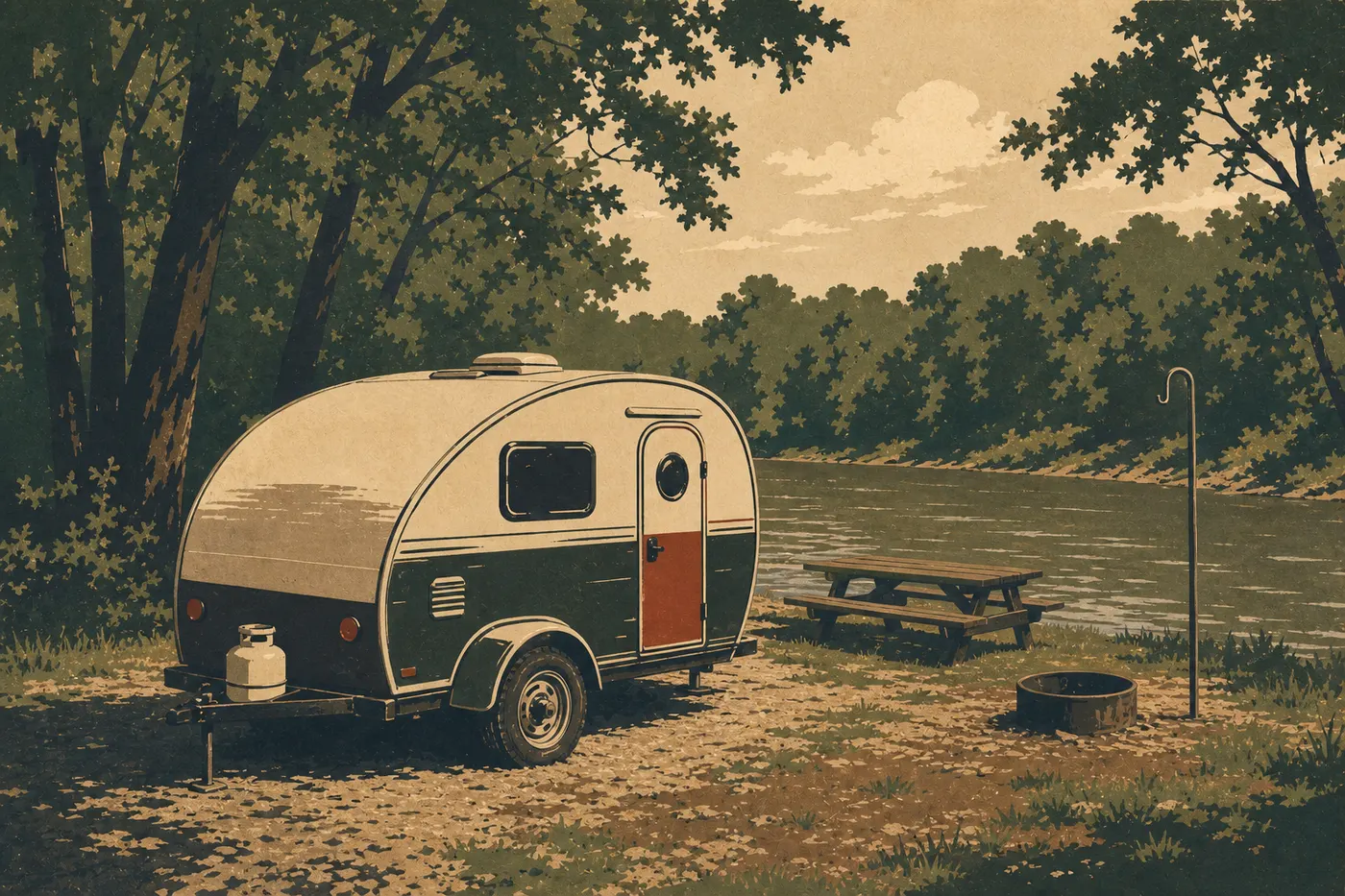
This wilder campground follows the banks of the Green River in the northern part of the park. The atmosphere is completely different, with few people, dense forest, and the steady sound of the river in the background. It's best suited to tent camping, but small camper vans can stay here.
You reach it by a country road from the northern part of the park, crossing the Green River at Houchin Ferry. The crossing may close during the spring floods that are common in southern Kentucky from March through May. Check conditions on the NPS website before planning your route. This campground isn't suitable for long vehicles or large trailers.
Backcountry sites
The park offers backcountry sites accessible only on foot, with no motor vehicles. If the idea of spending a night in the forest around the Mammoth Cave cave system appeals to you, the Mammoth Cave hiking guide covers the trails and access requirements for primitive camping areas.
Dispersed camping and RV parks around Mammoth Cave
Bureau of Land Management-style boondocking isn't a realistic option around Mammoth Cave. Kentucky isn't the American West. Federal land open to dispersed camping is nearly nonexistent in this region, and the area around the park is mostly farmland or private property.
Cave City, a few miles north on I-65 at Exit 53, has several private campgrounds and RV parks with full hookups for water, electricity, and sewer. They're open to vehicles of all sizes. It's a solid backup if the park campgrounds are full or if you'd rather stay hooked up at night and visit the park during the day.
Dump stations, water, and services
Headquarters Campground has a dump station for gray and black water. Outside the park, Cave City and the surrounding area offer several RV services, including gas stations with dump stations, potable water, and propane.
Good practice before entering the park: fill your fresh-water tank and empty your holding tanks in Cave City if you're planning several nights at Houchin Ferry, which has far fewer amenities. The Visitor Center can point you toward available services depending on the season.
Which campground fits your trip?
Traveling with your family in a large RV? Headquarters Campground is your best bet. It's easy to access, has electric hookups and restrooms, and sits within walking distance of the Visitor Center, where you can arrange cave tours for the next morning.
Looking for peace and quiet in a short vehicle? Houchin Ferry Campground rewards you with a spot along the Green River and noticeably lighter crowds. Bring extra water containers and check access conditions before you leave.
Visiting in the fall or winter? Headquarters Campground operates year-round. Winter nighttime temperatures drop to around 39 to 43°F, so you'll need a propane or electric heater. The upside is that lines for cave tours almost completely disappear. The best time to visit Mammoth Cave guide compares seasons by crowds and weather.
For broader lodging decisions, including lodges, motels, and tents, our Where to Stay guide lists all the options inside and around the park.
Renting an RV to visit Mammoth Cave
Don't have an RV? Renting one to explore Kentucky can make sense, especially if you're combining Mammoth Cave with other stops, the Bluegrass Country, or the Kentucky Bourbon Trail.
The closest major departure cities are Louisville, about 1.5 hours north, and Nashville, about 2 hours south. Several rental agencies and peer-to-peer platforms, including Outdoorsy and RVshare, offer everything from camper vans to full-size coaches.
For Mammoth Cave specifically, we recommend a midsize vehicle, ideally under 20 feet. It's easier to handle on the park's secondary roads and accepted at every campground, including Houchin Ferry. Large Class A motorhomes are manageable at Headquarters, but daily travel gets harder as soon as you leave the main roads.
If you're planning a larger Kentucky or Tennessee road trip, the Region and Road Trip sections offer ideas for the main stops.
RVs, pets, budget, and reservations: what to know
Pets. Dogs are allowed in the campgrounds as long as they're leashed and not left alone at the site. They're not allowed in the cave or on most underground trails. If you're traveling with a pet, take turns visiting or arrange care during cave tours.
Site costs. NPS rates remain among the most affordable in the national park system. Expect to pay about $20 to $30 per night, depending on the site type and season. Check recreation.gov for current rates. For park entrance fees and annual passes, see the National Parks Fees & Passes page.
When to reserve. Open your recreation.gov booking window six months ahead for July and August weekends. For weekday stays from May through September, two to three weeks is usually enough. For spring weekends, don't wait too long. The park is a three-hour drive from Nashville and Louisville, two major population centers.
Temperature and comfort. Summer is hot and humid, with daytime highs around 86 to 88°F. Spring thunderstorms can be severe. The cave stays at a constant 54°F year-round, so bring an extra layer even during a heat wave for underground tours.
Our RV camping plan for Mammoth Cave
Mammoth Cave is an RV-friendly park without the extreme constraints found in the American West. The essentials are simple: ignore your GPS and follow Mammoth Cave Parkway from Cave City; reserve Headquarters Campground for comfort and convenience; choose Houchin Ferry if you're driving a short vehicle and value quiet over amenities.
One night is enough for the essential cave tours. Two nights let you add surface trails and, if the season is right, an outing on the Green River. To build your complete itinerary, our complete Mammoth Cave guide is the place to start.
Frequently asked questions
Can you park an RV at Mammoth Cave National Park?
Yes, you can park an RV at Mammoth Cave National Park. The Visitor Center parking lot has spaces for standard-size vehicles. For large rigs, Headquarters Campground offers the most comfortable sites, with clear access and electric hookups.
Can you tent camp at Mammoth Cave?
Yes, tent camping is available at Mammoth Cave's official campgrounds, Headquarters and Houchin Ferry, as well as at designated backcountry sites, with a valid reservation or permit. The Mammoth Cave camping guide covers tent options, prices, and seasonal conditions.
Are there fish in Mammoth Cave?
Yes, the underground river running through Mammoth Cave is home to several species of cave fish adapted to total darkness. Some have lost their pigment and eyesight. Our Wildlife page explores the unique biodiversity of this karst ecosystem.
Are there spiders in Mammoth Cave?
Yes, spiders and other invertebrates live in the entrance areas and semidark galleries of Mammoth Cave. They're part of the cave's natural ecosystem and pose no danger to visitors on guided tours.