
Things to Do in Mammoth Cave: Top Sights and Activities
With more than 420 miles of mapped passages, five stacked levels, and a constant underground temperature of 54°F, Mammoth Cave is officially the world's longest known cave system. It has also been a UNESCO World Heritage Site since 1981. But reducing this Kentucky national park to its cave means missing half the picture. Above ground, the park offers more than 84 miles of forest trails, a river you can paddle, and a landscape of sinkholes and springs that tells the same geological story from the surface.
There are three must-dos: a guided cave tour (the tour you choose shapes the entire visit), a kayak or canoe outing on the Green River, and at least one surface trail to understand how karst shapes both the ground beneath your feet and the passages 100 feet below. Here's the one rule you can't bend: book your cave tour before you arrive. Tour times are limited, tickets go early, and showing up without a reservation on an April Saturday could leave you looking at the cave from the parking lot.
Mammoth Cave at a Glance: Areas, Access, and Getting Around
Mammoth Cave National Park lies in Edmonson County, Kentucky (KY), about 81 miles north of Nashville and 109 miles south of Louisville. Two different worlds coexist within its 83 square miles: the underground cave, accessible only on a ranger-led tour, and the park's wooded surface, crossed by the Green River and its tributaries.
Getting there by road: Watch out for GPS. It sometimes directs drivers onto roads that aren't suitable for passenger cars. From the north, take I-65 to Exit 53 (Cave City Exit), then KY-70, which becomes Mammoth Cave Parkway at the park entrance. From the south, take KY-70 from Bowling Green. Follow NPS signs as soon as you see them.
Getting around the park: The Visitor Center is the starting point for all cave tours. Two cable ferries cross the Green River to reach trails in the northern part of the park: Green River Ferry in the central area and Houchins Ferry to the northwest. Both operate seasonally. Check their status before you go.
Access and fees: The park has no entrance gate and stays open 24 hours a day, year-round. Cave tours and the Visitor Center keep their own hours, which vary by season. The detailed directions to Mammoth Cave (roads, highway exits, and park entrances), along with current reservations, fees, and rules, appear in the park overview.
Weather: Kentucky has a moderate climate. Summers are hot and humid, around 86°F, while winters are mild, averaging 39 to 45°F, with occasional light snow. Southern Kentucky gets the state's heaviest rainfall, about 50 inches a year, mostly in spring. Underground, the season doesn't matter: it's 54°F year-round. The park weather forecast and climate guide and the guide to the best times to visit Mammoth Cave explain the best windows for different priorities.
How Much Time Do You Need to Visit Mammoth Cave?
Plan on two full days to combine an in-depth cave tour, a few surface trails, and a morning on the Green River. One day can be enough if you focus on a single cave tour and a short trail, but you'll miss much of the park's variety.
Build one detail into your planning from the start: the longest tours, Grand Avenue Tour at 4.5 hours and Wild Cave Tour at 6 hours, take up nearly the entire day. If you choose one, leave the rest of the day for a low-key surface activity. A three-day weekend lets you combine two different tours, trails, and the river without rushing. The Mammoth Cave itinerary guide offers ready-made plans for 1, 2, and 3 days.
Mammoth Cave's Must-Sees, Area by Area
Your visit unfolds on two levels: underground, with guided tours, and above ground, with trails, the river, and historic entrances. Here's what to see in each area.
Underground: Choosing Your Tour
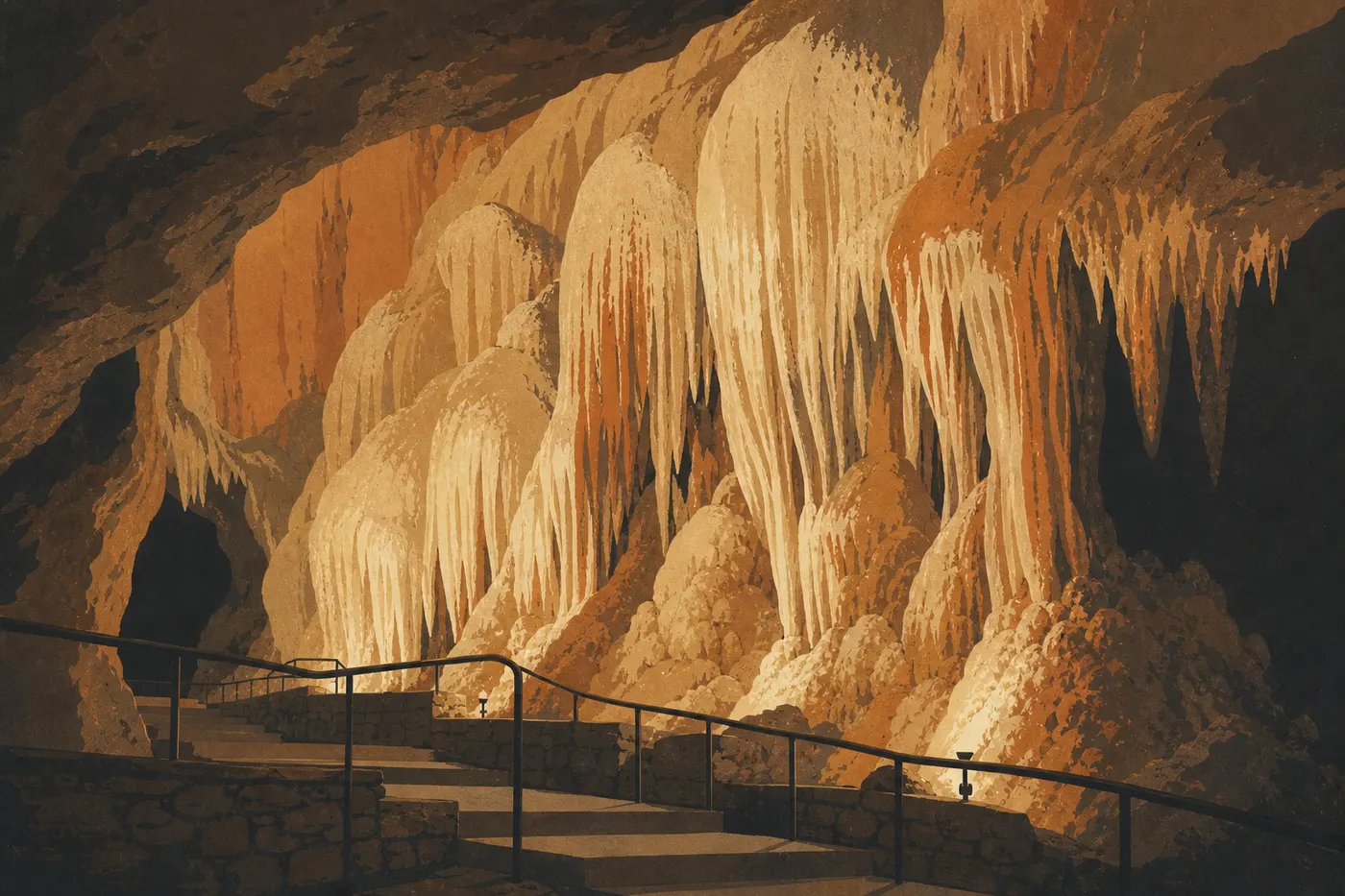
You can't explore Mammoth Cave on your own. Rangers guide every visitor along designated routes. That's a good thing. The guides know every passage's geological, historical, and biological story, turning the experience into far more than a simple walk underground.
Historic Tour (2 hours, moderate): This is the classic tour and the one to choose if you can only do one. It descends through the Historic Entrance, passes through the Rotunda (a 131-foot-wide chamber where saltpeter was mined for gunpowder during the War of 1812; wooden remains of the winches and buckets are still there), and climbs back along Broadway, a straight corridor that shows the scale of the cave system. This tour makes it clear why the cave is called “Mammoth.” The name has nothing to do with woolly mammoths. It refers to the sheer scale of the passages. It works for families with kids as young as about 6.
Frozen Niagara Tour (1 hour 15 minutes, easy): This is the most accessible tour, a good fit for young children and visitors with limited mobility because it involves few stairs. The tour focuses on cave formations: stalactites, stalagmites, columns, and calcite draperies. The namesake chamber, with flowstone frozen across several yards of wall, is worth the trip on its own. It's short but visually rich.
Domes and Dripstones Tour (1 hour 45 minutes, moderate): This is a good alternative to or complement for the Historic Tour. You'll pass through natural vertical shafts, the famous domes, which rise 65 to 100 feet before opening into galleries covered in cave formations. It connects geology with a real sense of wonder.
Violet City Lantern Tour (3 hours, moderate): This is our pick for an experience outside the ordinary. There is no electric lighting. Each group carries a propane lantern, just as visitors did in the 19th century. The shadows move differently across the walls, sounds travel differently, and the atmosphere is striking. This tour also enters passages that other tours don't visit. Space is very limited, so book as early as possible.
Wild Cave Tour (6 hours, strenuous): This is a true caving tour. You get a coverall and helmet, then crawl through tight passages. It's raw exploration. Participants must be at least 16, in good physical condition, and comfortable in confined spaces. You'll come back dirty and exhausted, with memories that last. Book several weeks ahead during peak season.
Grand Avenue Tour (4.5 hours, moderate to strenuous): This is the longest of the standard guided tours. It crosses several distinct areas of the cave system and offers the best overall view of its geological variety. It's ideal for visitors making a once-in-a-lifetime trip who want to cover as much ground as possible.
One thing visitors often underestimate is the wildlife underground. More than 130 animal species live in the passages. You may spot cave crickets clinging to the walls, blind spiders, and depigmented fish in underground streams that have never seen daylight. Rangers regularly point them out during tours. This is a complete ecosystem, not just a geological curiosity.
Basic advice for every tour: Wear closed-toe shoes and bring an extra layer because the cave stays at 54°F. A flashlight is also recommended, even though the route is lit.
The Visitor Center and Historic Entrance
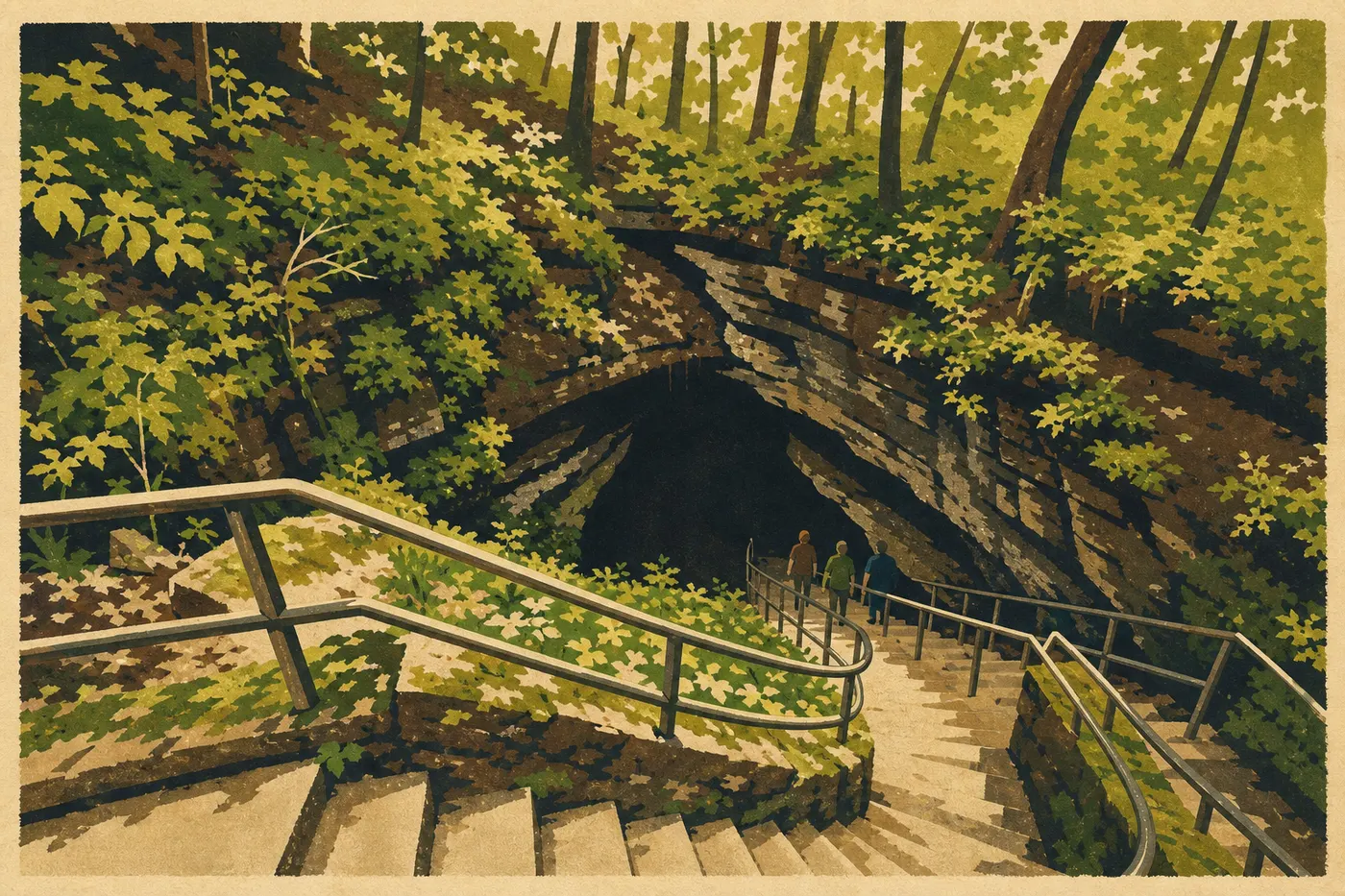
Arrive 30 to 45 minutes before your tour to pick up your tickets. The Visitor Center's permanent exhibit covers karst geology and, above all, the cave's human history. One essential chapter concerns the African American slaves who explored and guided visitors through Mammoth Cave in the 19th century. Stephen Bishop arrived as an enslaved man in 1838 and became one of the cave system's most important explorers. He mapped dozens of miles of passages and trained other guides. His 1842 map, drawn from memory, proved remarkably accurate for its time. It's a story you won't find presented this way in any other American national park.
The Historic Entrance, a short walk from the Visitor Center, serves as the starting point for several tours. The descent into darkness, down stairs cut into the rock, sets the tone before the ranger even begins to speak.
The Green River Area
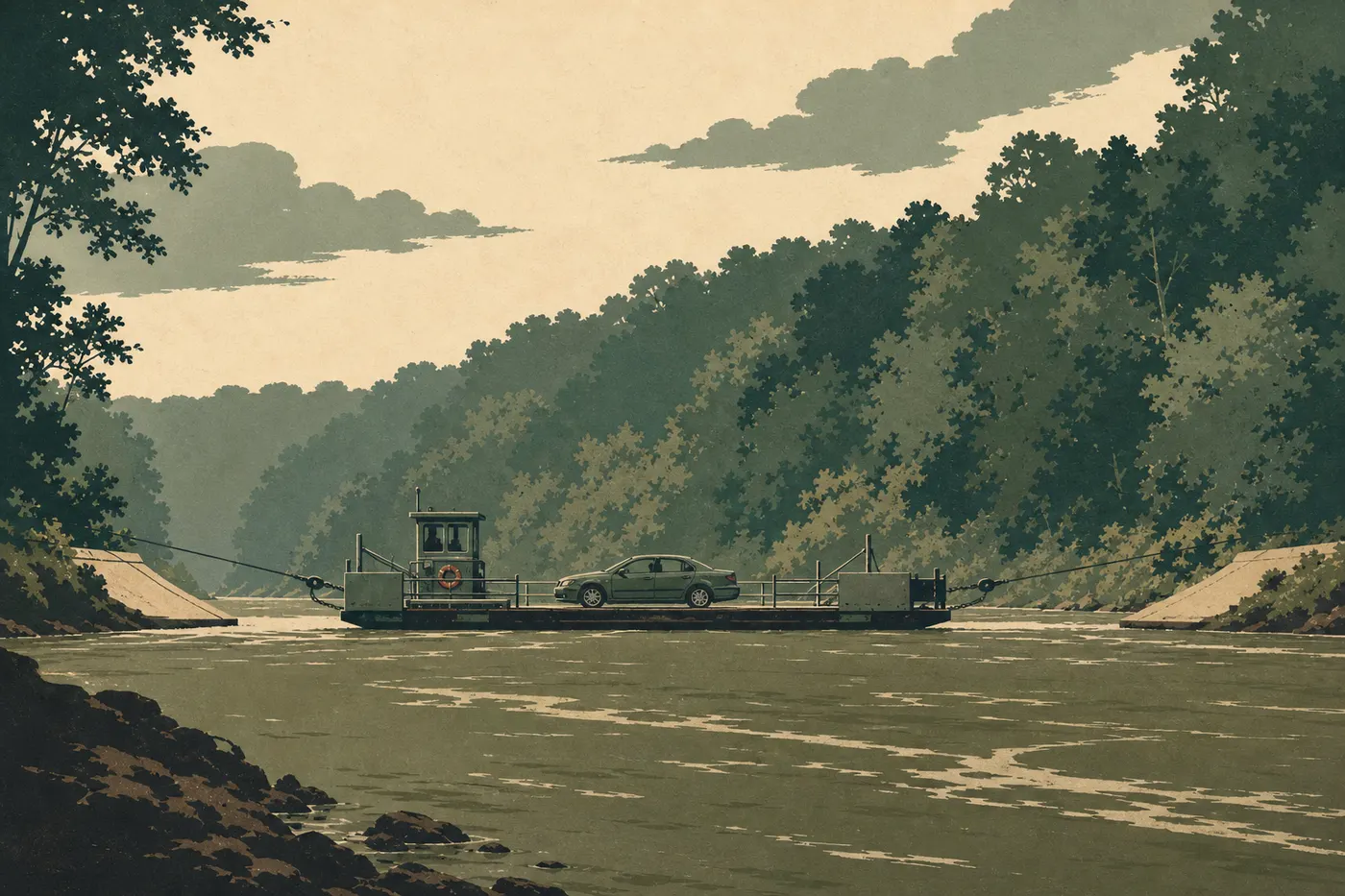
The Green River cuts across the park from northeast to southwest. It's the park's wild backbone and its least-visited area. Seasonal cable ferries let you cross by car to reach the northern trailheads. You can reach the banks from several access points, and they offer a genuinely quiet stretch of nature away from the tourist flow around the Visitor Center.
The river supports remarkable wildlife, including several endemic freshwater fish and mollusk species found only in this river and its tributaries. For naturalists, that's another reason to stop here.
The Best Hikes in Mammoth Cave
The park has more than 84 miles of marked surface trails. That's often a surprise for visitors who imagined only the cave. The trails wind through a mixed forest of oaks, beech, and hickories, follow the Green River, and cross a karst landscape dotted with sinkholes. These surface collapses reveal the underground system below.
Here are a few trails to keep in mind:
Echo River Spring Trail (about 3.1 miles round-trip, easy): This trail descends from the Visitor Center to a karst spring where groundwater from the Mammoth Cave cave system rises back to the surface. The contrast between the green forest and the blue-green spring is striking. Almost anyone can manage it.
Sand Cave Trail (about 1.9 miles round-trip, easy): This trail leads to the remains of a collapsed cave associated with one of the most publicized tragedies in American caving history. In 1925, Floyd Collins became trapped in a fissure in Sand Cave for 18 days while reporters from across the country watched. The accident directly helped build support for creating the national park several years later. It's a short trail with a lot of history.
Green River Bluffs Trail (about 5 miles, moderate): Take this trail for the views. It follows limestone bluffs above the river and offers remarkable perspectives of the Green River's bends through the forest. It's quiet and lightly traveled, making early morning a good time for wildlife.
Mammoth Cave Railroad Bike & Hike Trail (about 10 miles, easy): A former railroad converted into a multiuse path. Flat and bike-friendly, it offers a linear look at the park and connects the lodging areas with Park City. It's a good choice for families or for unwinding after a day underground.
The Mammoth Cave trail guide covers every trail, with precise distances, elevation gains, and difficulty ratings.
Other Activities by Interest
Kayaking and Canoeing on the Green River
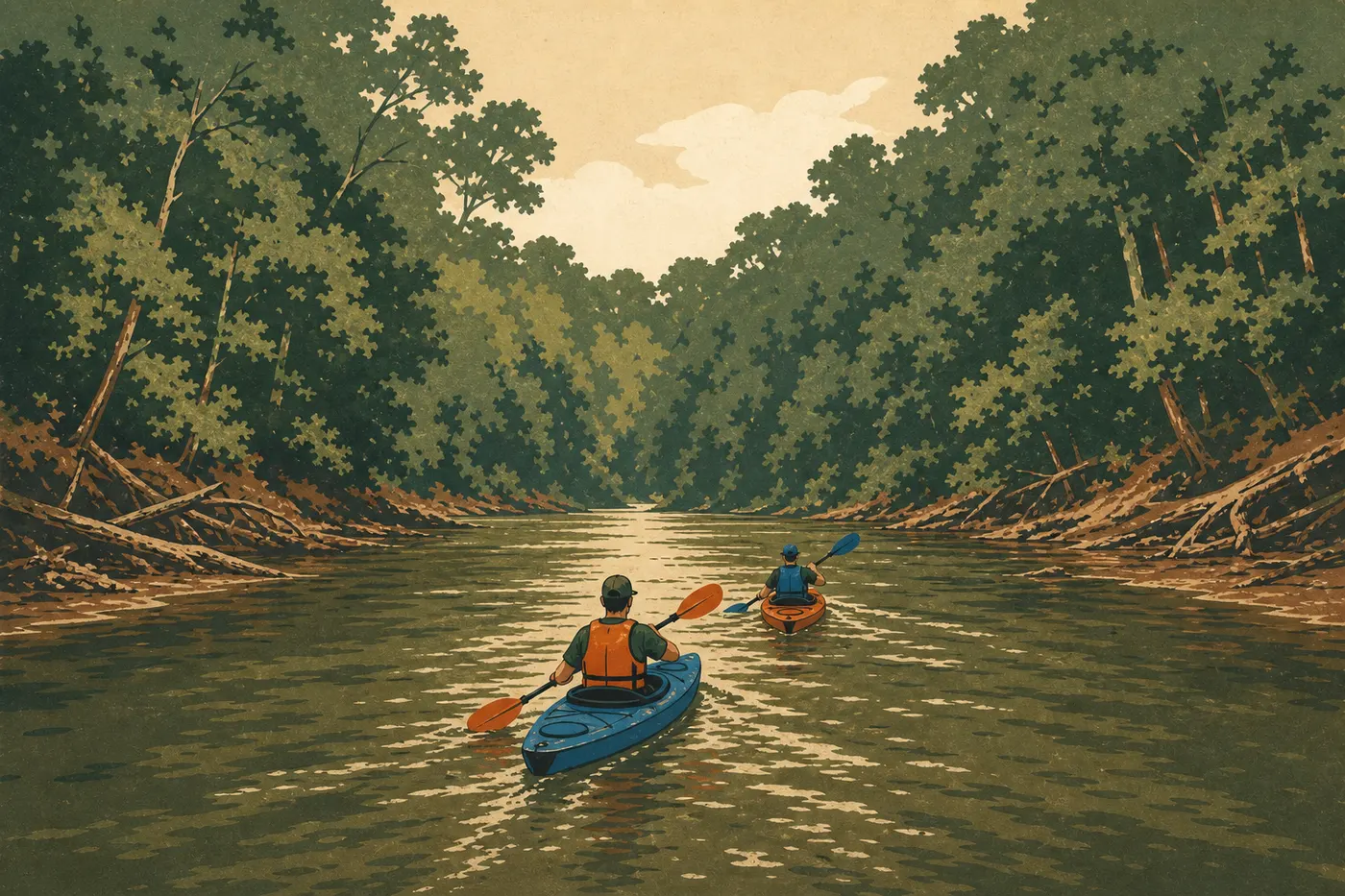
The Green River is navigable along several stretches inside the park. You can rent kayaks and canoes outside the park, in Cave City or Brownsville. The most popular float runs from the Dennison Ferry launch to Green River Ferry, covering about 6.8 miles of calm water through nearly untouched scenery. The current is usually gentle and suitable for beginners. Allow half a day for this stretch.
Bat Watching
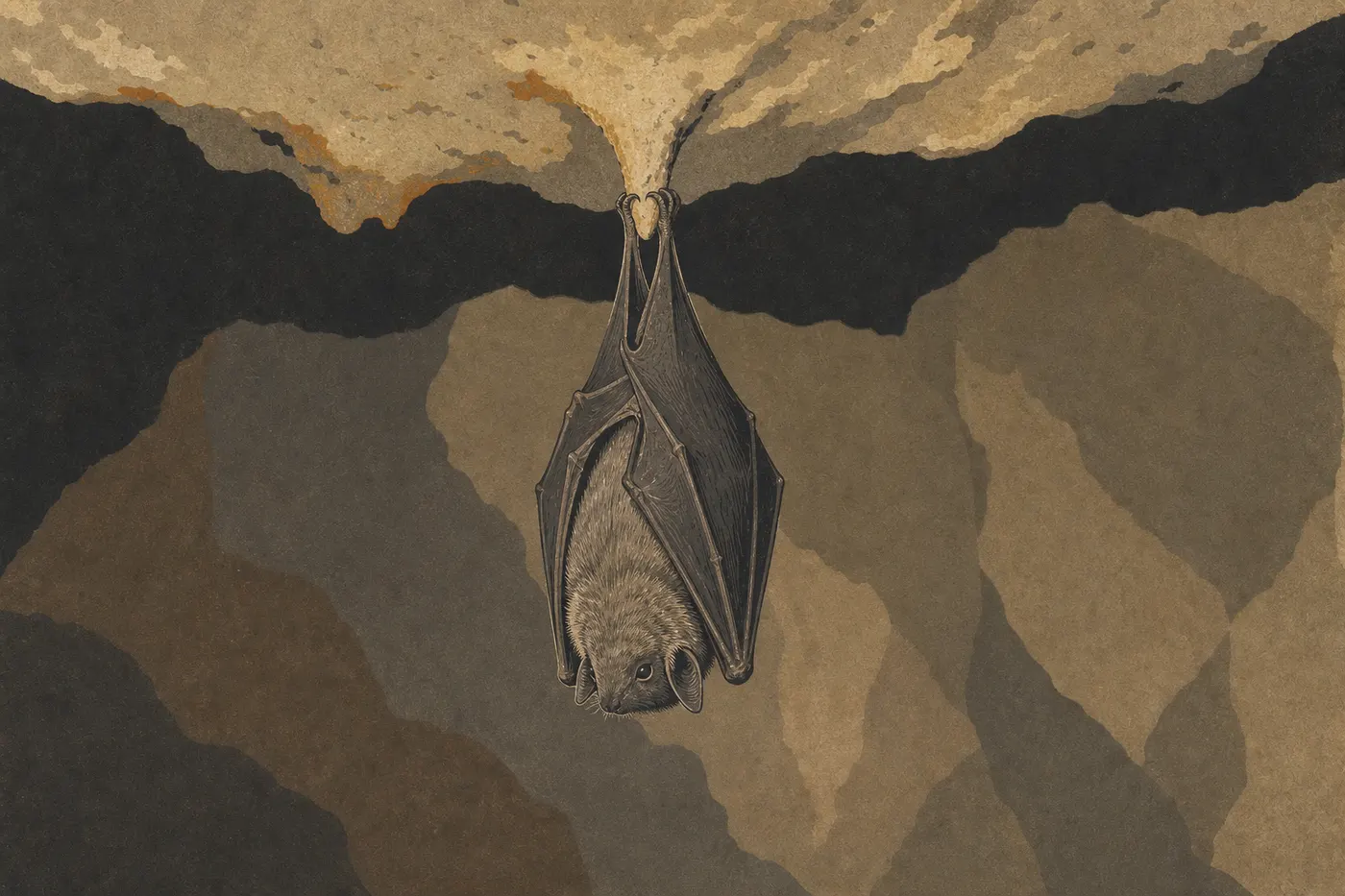
Mammoth Cave is home to notable bat colonies, including the Indiana bat (Myotis sodalis), a federally endangered species. The best time to see them is at dusk, near the Historic Entrance. The colonies emerge to hunt after dark, and on some summer evenings, the sight is impressive. Arrive a little before sunset and settle in quietly. The Mammoth Cave wildlife guide goes deeper into the subject and lists other notable park species.
Deer, raccoons, and wild turkeys regularly cross the surface trails, especially early and late in the day. Keep your eyes open as you walk.
Fishing
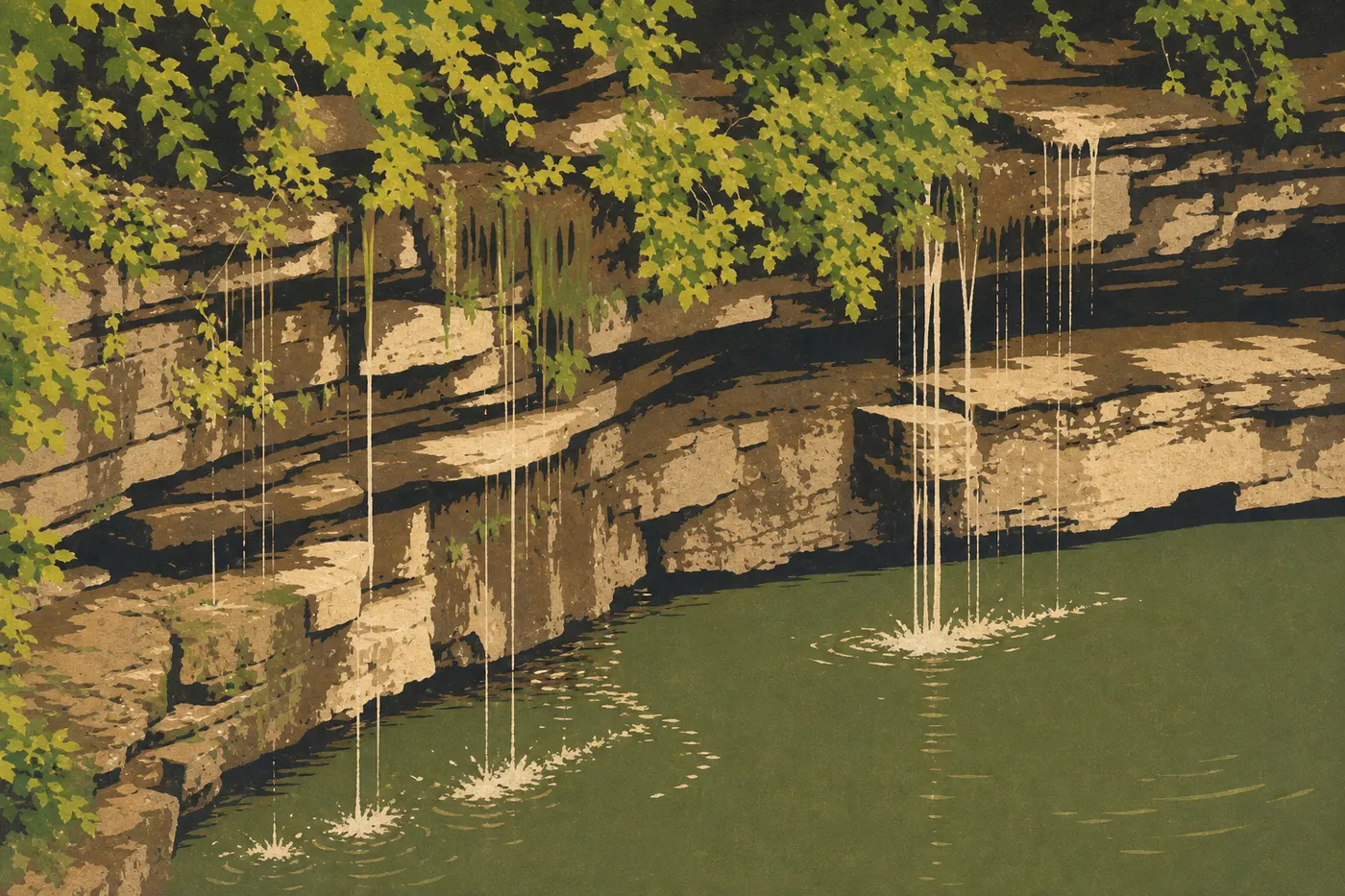
The Green River is open to fishing with a valid Kentucky fishing license. You'll find largemouth bass, sunfish, and other species depending on the season. Ask about park-specific regulations when you arrive. Some areas may be restricted to protect endemic species.
Photography and Light
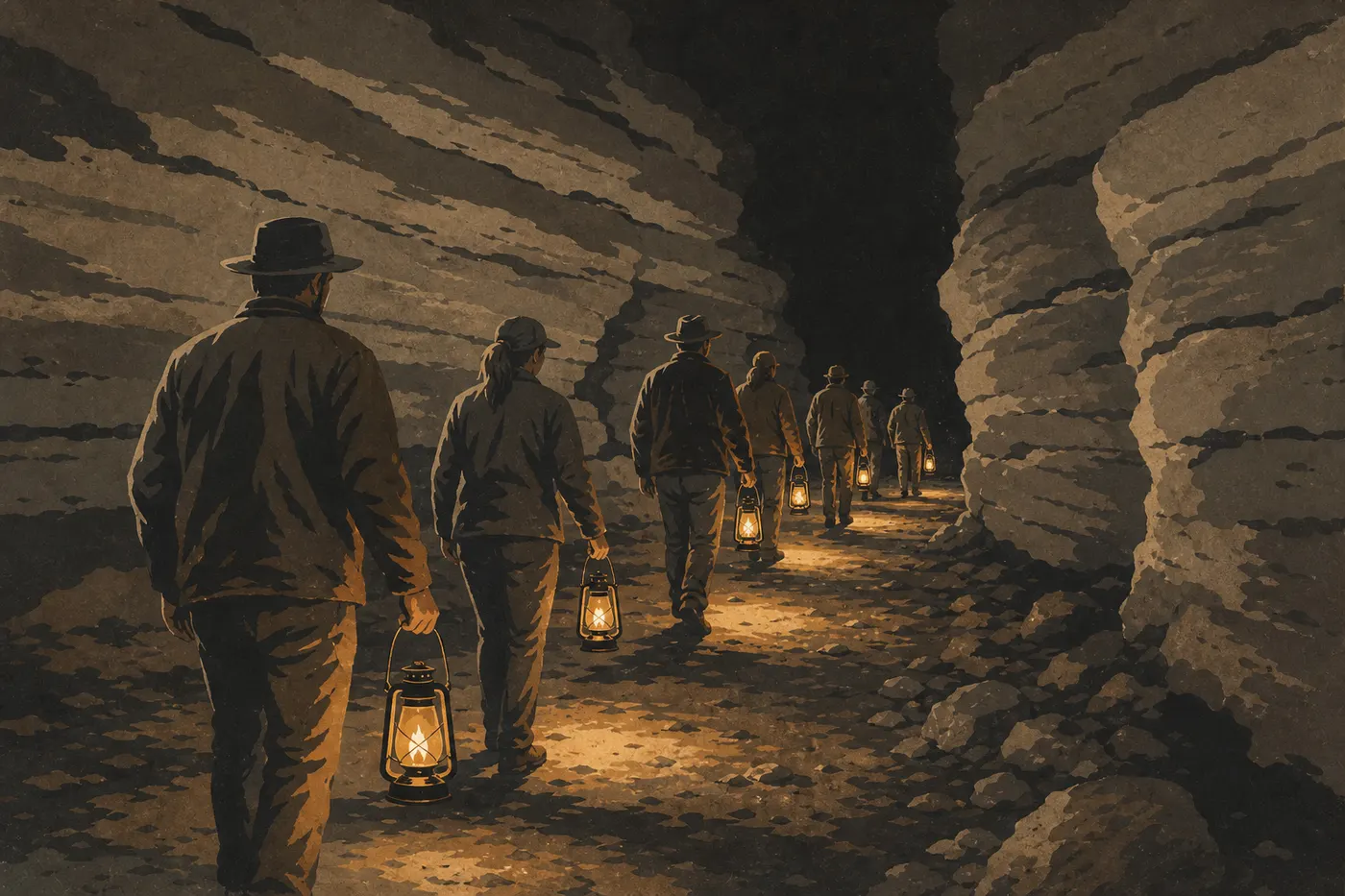
For underground photography, the Violet City Lantern Tour offers unique conditions. The lanterns' warm light, deep shadows, and lack of ambient artificial lighting create atmospheres you can't reproduce on standard tours. Check with the ranger before bringing a tripod to make sure they're allowed.
Above ground, fall is the most photogenic season. From mid-October on, maples and hickories turn vivid colors, and the low late-afternoon light in the karst valleys produces remarkable results.
Families
For families with young children, the Historic Tour, for ages 6 and up, and the Frozen Niagara Tour, for ages 4 and up, are the two best options. Short, accessible, and visually impressive, Frozen Niagara is our pick for kids under 8. The longer tours, Domes and Dripstones and Grand Avenue, work for kids around 8 to 10 and up, depending on how well they handle the walking. The Wild Cave Tour is for ages 16 and up. Our Family Guide brings together practical advice and a selection of activities suited to different age groups.
Things to Do Around Mammoth Cave
Cave City, 5 miles east, is the closest service hub, with restaurants, grocery stores, gas stations, and motels. The town has lived off its cave tourism history for more than a century, and a few retro attractions from the 1950s and '60s remain, including a giant dinosaur-shaped miniature golf course that still looks fresh. It's a kitschy, friendly stop, especially with kids.
In Bowling Green, 28 miles southeast, you'll find a lively college town. The National Corvette Museum is here, an unusual stop for fans of American cars. The Chevrolet assembly plant is next door and offers tours.
An hour north, Louisville is worth a stop. The Bourbon Trail starts or ends in the city, the Kentucky Derby Museum tells the story of America's most famous race, and the NuLu neighborhood, short for New Louisville, has a serious food and culture scene. An hour south, Nashville is the natural gateway for anyone connecting the Midwest with the Deep South on a road trip.
Nearby, the Abraham Lincoln Birthplace National Historical Site, 34 miles northeast, marks the birthplace of the 16th president of the United States in 1809. It makes a natural historical pairing for a weekend in central Kentucky. These destinations fit easily into a road trip through Kentucky and the American Southeast.
The Essentials: What to See First at Mammoth Cave
Mammoth Cave belongs to a category of experiences with no equal. Nowhere else in the world can you explore the longest known cave system with rangers who know every layer of its history and geology, while enjoying underground temperatures of 54°F even in the middle of August. The UNESCO-listed cave, endangered bat colonies, blind fish in underground streams, and the history of enslaved 19th-century explorers all add depth to the visit.
If you only have half a day: Take the Historic Tour. It offers the best overall introduction in two hours.
If you have one day: Take the Historic Tour in the morning, then hike Echo River Spring Trail and relax along the Green River in the afternoon.
If you have two days or more: Add the Violet City Lantern Tour, an ideal second-evening activity, the trails in the northern part of the park, and a morning of kayaking on the Green River.
The park is far less crowded than the famous parks of the American West. That's one of the good reasons to go. Our Mammoth Cave Complete Guide gives you the big picture, and our When to Go page helps you choose the best time to visit for your schedule.
Frequently Asked Questions
How many days do you need to visit Mammoth Cave?
Two days let you comfortably combine one or two cave tours with surface activities, including trails and the river. One day may be enough if you focus on a single underground tour and a short trail. For a relaxed stay with several tours, plan on three days. Our Itinerary & Length page offers detailed plans.
How do you explore Mammoth Cave?
You can explore the cave only on a ranger-led tour, starting at the Visitor Center. Tours range from 1 hour 15 minutes, for Frozen Niagara Tour, to 6 hours, for Wild Cave Tour. Online reservations are strongly recommended, especially from March through October. Without one, you may arrive to find every time slot full for the day. Wear closed-toe shoes and bring a warm layer. It's a constant 54°F underground, whatever the season.
Is Mammoth Cave worth visiting?
Mammoth Cave is worth visiting for anyone interested in geology, history, or wilderness. The park contains the world's longest known cave system, with 420 mapped miles, and has been a UNESCO World Heritage Site since 1981. It remains accessible to a wide range of visitors, from families with young children to experienced cavers. Above ground, the trails and Green River offer a quiet nature experience in a little-visited corner of Kentucky. Our Complete Guide lays out the case in detail.
What do visitors say about Mammoth Cave?
Visitors consistently praise the ranger-guides and the unique underground experience. The recurring complaints are lines at the ticket windows during peak season and the need to book ahead. That's the only real friction point. The solution is simple and predictable: reserve online several days, or even several weeks, before your visit during the busy spring and fall seasons.