
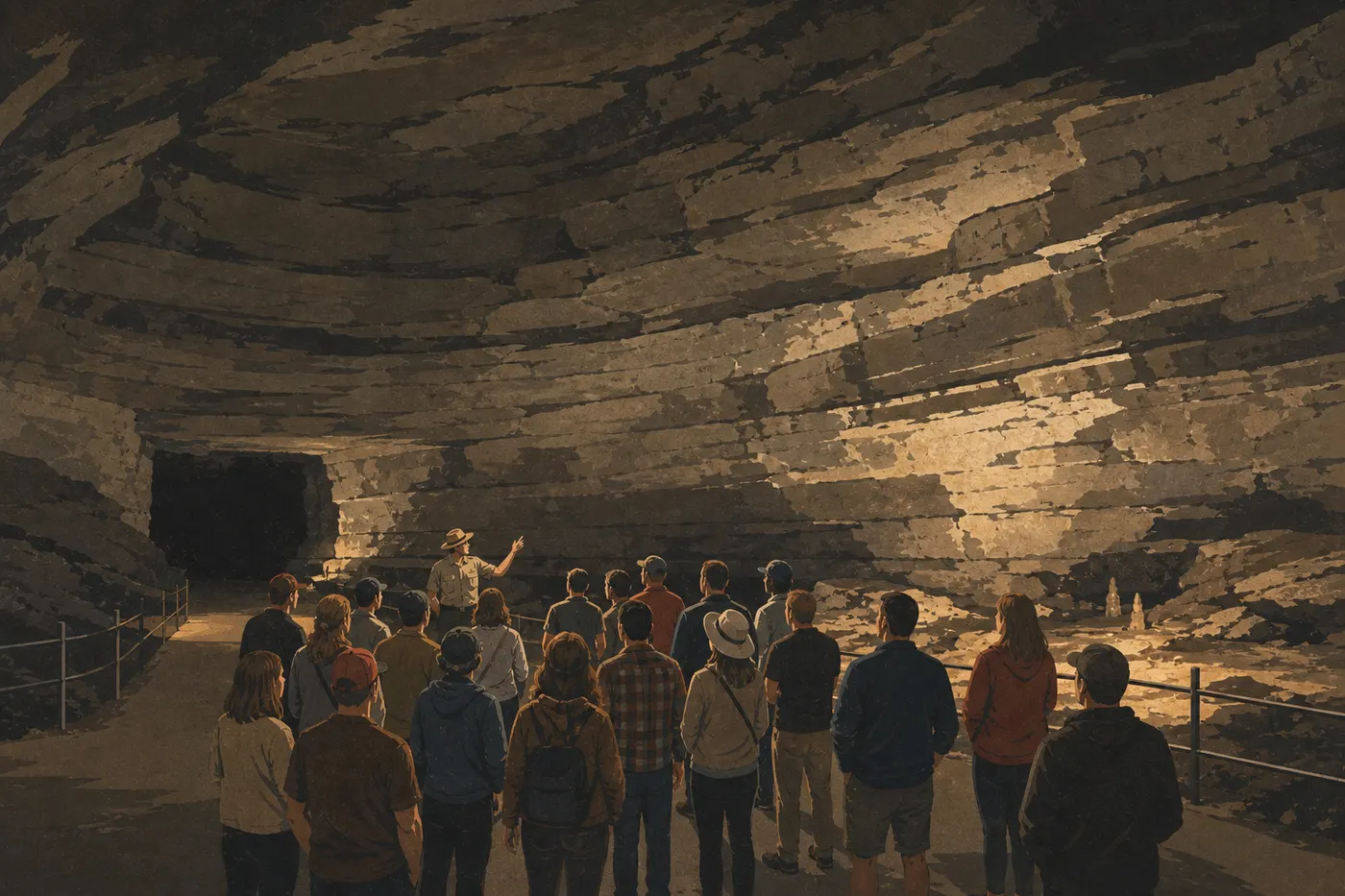
Mammoth Cave Itinerary: What to See in 1, 2, or 3 Days
Mammoth Cave starts with a dizzying number: more than 423 miles of mapped passageways, making it the longest known karst cave system in the world. But the park isn't limited to what's underground. Aboveground, 85 miles of trails cross a wooded plateau carved by the Green River. For a well-rounded visit with one cave tour, a few trails, and a night in the park, plan on two full days. Three days let you fit in several different cave tours and explore the park's more remote areas.
How Long Do You Need to Visit Mammoth Cave?
One day is enough for a solid first look: one guided cave tour lasting 1.5 to 2 hours, depending on the route, and one surface trail in the late afternoon. It's a short visit, but it works well as a stop on a road trip.
Two days strike the right balance. Take two different cave tours, one focused on the historic sections and the other on the formations, then spend a half-day aboveground. You'll leave without feeling like you missed anything essential.
Three days open up the full itinerary: the Wild Cave Tour, a 5- to 6-hour wild caving experience; kayaking on the Green River; and the park's remote northern trails. This is the option for anyone who wants to really understand the place.
For a road trip, the park is about 90 miles from Louisville to the north and Nashville to the south. A one-day stop fits easily into a drive along this route without a major detour.
Access, Entrances, and Getting Around the Park
Getting to Mammoth Cave
From Louisville or Nashville, about 90 miles away and 1.5 hours by car in either direction, take I-65 to Exit 53, then follow Mammoth Cave Parkway to the Visitor Center. Ignore your GPS, which sometimes sends drivers onto rough secondary roads, and follow the NPS's brown signs instead. Glasgow, Kentucky, 19 miles to the east, is another lodging option. The Mammoth Cave Access guide has complete driving directions and all the park's entry points.
No entrance gate
The park has no entrance barrier. You can reach the Visitor Center and trailheads freely around the clock. Cave tours, however, cost extra and should be booked in advance, especially in summer and during American school vacations.
Getting around
Mammoth Cave Parkway connects the park's main points of interest. Each trailhead has its own parking area. There is no shuttle between areas, so you'll need a car to reach Cedar Sink, Green River Ferry, or the northern trails.
Mammoth Cave Areas
The Underground World
This is the heart of the park. The cave has several separate entrances, including Historic Entrance, Frozen Niagara Entrance, and New Entrance, each leading to a specific tour route. It's entirely possible to take two tours in one day without going through the same passageways twice.
The highlights include Rotunda, a 130-foot-wide chamber once mined for saltpeter in the 19th century; Gothic Avenue, covered with graffiti left by guides from that era; and the broad horizontal avenues that gave the cave system its name. Domes and Dripstones features stalactites and stalagmites, which are unusual in a cave system dominated by dry formations.
The temperature inside stays at 54°F year-round. In the middle of summer, when it's 86°F aboveground, the contrast is striking. Always bring a light jacket, even in August.
Aboveground: Forests, Rivers, and Karst Areas
Visitors in a hurry often overlook the surface, but it deserves at least a half-day. Here are a few trails worth remembering:
- Cedar Sink: a collapsed valley where a stream literally disappears into the ground. The 3.6-mile loop has moderate elevation gain and dramatic scenery.
- River Styx Spring: where an underground river emerges aboveground, reached by a 1,300-foot trail starting at the Visitor Center.
- Green River: the river divides the park in two. Green River Ferry, which is free and operates from spring through fall, connects the two banks and opens access to the northern trails.
This is the park's least-known area. Visitors often leave after their cave tour without setting foot in the woods. That's a mistake. The trails are well marked and offer another way to experience the park.
Day-by-Day Itinerary
Day 1: Head Underground
Morning. Arrive at the Visitor Center when it opens, around 8:30 a.m. in peak season, to confirm your tickets. For a first visit, the Historic Tour is the classic choice. It's a 2-mile, 2-hour tour with moderate difficulty that passes through Rotunda, Historic Entrance, and the broad avenues. It offers the best overview of the cave system's geology and human history.
Afternoon. Have lunch at the Visitor Center snack bar or enjoy a picnic at one of the park's tables. Then take the River Styx Spring trail, a flat 1,300-foot walk that takes about 30 minutes, to see where the underground water resurfaces. Afterward, head to the Green River Bluffs Trail, about 2.5 miles, for an elevated view of the river late in the day.
Evening. Spend the night at Mammoth Cave Campground, 5 minutes from the Visitor Center, or stay in Cave City.
Day 2: Cave Formations and Surface Trails
Morning. Book the Domes and Dripstones Tour, a 0.7-mile, 1.5-hour tour. Less crowded than the Historic Tour, it reveals the cave system's most decorated section, with petrified cascades, limestone draperies, and dome-shaped formations. The tour starts on the south side through Frozen Niagara Entrance.
Afternoon. Drive to Cedar Sink, about 30 minutes away. The 3.6-mile loop descends into a karst valley set in an oak and hickory forest. When we visited in May, the area was almost deserted, and mockingbird calls drowned out every other sound. On the way back, stop at Sloan's Crossing Pond, a permanent pond formed when the limestone below collapsed, reached by a 20-minute walk from the parking area.
Late afternoon. Take the ferry across the Green River if it's running, then follow the north-bank trails before heading back.
Day 3: Go Farther
Option A: Wild Cave Tour. This is the park's wild caving program. It lasts 5 to 6 hours, and the park provides helmets and coveralls. You'll crawl, squeeze through narrow passages, and reach areas that have never been developed for the general public. Book well in advance. Participants must be at least 16, be in good physical condition, and meet height and weight limits for some passages.
Option B: Northern park hikes. The trails reached from Houchin Ferry Road remain lightly visited. Good Spring Loop, about 7.5 miles and rated moderate, crosses limestone ridges with open views of the Green River valley.
Option C: Kayaking on the Green River. Outfitters in the area offer full-day trips. The Green River is known for its aquatic biodiversity, with more than 100 recorded fish species and rare endemic freshwater mussels. The water is calm and suitable for beginners.
Options for Different Lengths of Stay
Quick stop, less than 4 hours. Choose one short, accessible tour: the Frozen Niagara Tour, a 0.7-mile, 1-hour tour, or the Mammoth Passage Tour, a 1.2-mile, 1-hour-15-minute tour. Stay near the Visitor Center and book your time slot before you arrive.
Classic weekend, 2 days. Take the Historic Tour on day 1 and Domes and Dripstones on day 2, with a half-day at Cedar Sink in between. This is the format we recommend for a first visit without rushing: two different sides of the cave and a solid introduction to the surface.
Regional road trip, 3 days or more. Mammoth Cave fits naturally into a Kentucky circuit between Louisville to the north, with the Bourbon Trail and the Kentucky Derby Museum, and Nashville to the south, with live music and great food. For multi-park itineraries and regional extensions, visit the Road Trips and Regions sections.
Itinerary Map
The NPS publishes an official Unigrid map, available free at the Visitor Center and as a PDF on the park website. It shows the park roads, trailheads, campgrounds, and cave entrances. Print it or download it before you leave. Cell service is spotty in the park, and as we've already seen, your GPS isn't your best ally here.
Our Map page shows the itinerary's key points visually, along with the distances between areas.
Where to Stay Along the Itinerary
For a 2- or 3-day visit, camping in the park at Mammoth Cave Campground is the most convenient option. It's 5 minutes from the Visitor Center and saves you from driving back and forth to nearby towns. Cave City and Horse Cave, 9 miles away, have the area's motels and B&Bs for travelers who prefer a traditional room.
The Lodge at Mammoth Cave, operated directly by the NPS, offers overnight rooms inside the park. In summer, rooms book up early.
You'll find all the details, including price ranges, RV sites, and accessibility, in our Where to Stay guide and our Camping page.
Extend Your Trip: Things to See Around Mammoth Cave
Ninety miles north, Louisville combines two Kentucky highlights: the Bourbon Trail, with distilleries open for tours, and the Kentucky Derby Museum. Ninety miles south, Nashville makes a natural stop for country music and food lovers. In eastern Kentucky, Red River Gorge offers climbing and hiking amid a landscape of sandstone arches.
To turn these extensions into a coherent itinerary, visit the Road Trips and Regions sections.
The Best Itinerary for Your Time
You have 1 day. Choose one cave tour, either Historic Tour or Domes and Dripstones, add a short surface trail, and leave with a concrete sense of what the world's longest known karst cave system is like.
You have 2 days. Take two different cave tours and spend a half-day at Cedar Sink. It's the ideal way to experience both sides of the park, underground and aboveground, without rushing.
You have 3 days or more. Add the Wild Cave Tour or a day of kayaking on the Green River, then explore the northern trails. Mammoth Cave isn't a place to check off quickly. It's a complete park that rewards visitors who take their time.
Whatever your schedule, book your cave tours ahead of time. In peak season, the best time slots fill several weeks before the date. Our complete Mammoth Cave guide brings all the planning information together.
Frequently Asked Questions
How long does a Mammoth Cave tour take?
The length depends on the tour you choose: about 1 hour for the Frozen Niagara Tour, a 0.7-mile route; 2 hours for the Historic Tour, a 2-mile route; and up to 5 or 6 hours for the Wild Cave Tour, a wild caving experience. Allow at least a half-day for the underground portion, or a full day if you also want to explore the surface trails.
What is the world's largest underground cave system?
The longest known karst cave system to date is Mammoth Cave National Park, with more than 423 miles of mapped passageways. The figure continues to grow as cavers carry out active exploration in the park.
How do you visit Mammoth Cave?
You can enter the cave only through guided tours operated by the NPS. Self-guided visits aren't allowed. Tours can be booked through recreation.gov, which is strongly recommended, or at the Visitor Center if spots remain. Entry to the park itself is free, with no entrance fee.
Is there an elevator in Mammoth Cave?
No, the cave has no elevator. Some tours are nevertheless accessible to visitors with limited mobility, including the Mammoth Passage Tour, which has an improved floor and a moderate slope. Contact the Visitor Center directly before booking. The NPS provides detailed accessibility information for each tour.
When is the best time to visit Mammoth Cave?
Spring, from April through May, and fall, from September through October, offer the most pleasant conditions, with mild aboveground temperatures and fewer visitors than in summer. The cave remains a good option year-round at 54°F. Our When to Go page covers the advantages of each season.
Is Mammoth Cave worth the trip?
Mammoth Cave is worth the trip if you're looking for an unusual experience. Nowhere else in the United States will you see an underground system on this scale, with such a deep record of human history, from saltpeter mining to documented tourist visits as early as 1816. The park is less visually dramatic aboveground than Zion or Yellowstone, but it offers an underground experience with no equal.