
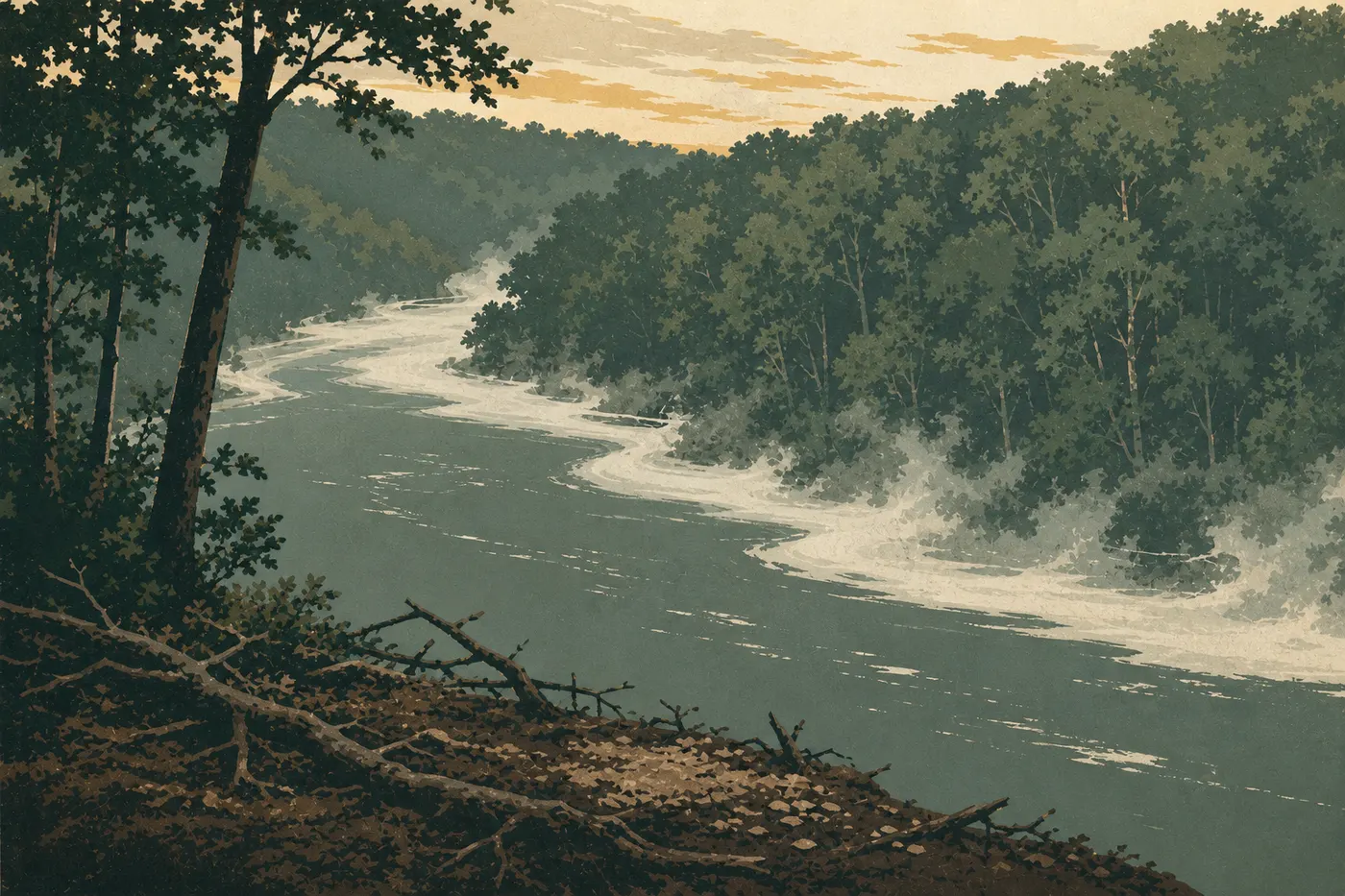
Mammoth Cave Weather: Forecasts, Climate, and Current Conditions
Kentucky has a temperate climate, with hot, humid summers and cool to cold winters. At Mammoth Cave, summer highs approach 90°F in July, while winter lows fall to around 30°F in January. The park receives about 50 inches of precipitation each year, with a pronounced peak in spring. One major feature of the site is that the underground passageways stay at a steady 54°F year-round. That makes a big difference when deciding what to wear. To decide when to plan your trip, the guide to the best times to visit Mammoth Cave walks you through the year month by month.
Current readings are unavailable. See the seasonal averages farther down this page.
Open-Meteo readings · updating… · park time zone
Mammoth Cave Climate Month by Month
The table below shows indicative climate normals for south-central Kentucky. Annual precipitation comes to about 50 inches, making this one of the wettest parts of the state.
| Month | Low | High | Precip. |
|---|---|---|---|
| January | 30°F | 45°F | ~3.9 in |
| February | 32°F | 48°F | ~3.5 in |
| March | 41°F | 59°F | ~4.7 in |
| April | 50°F | 68°F | ~4.7 in |
| May | 57°F | 77°F | ~4.9 in |
| June | 66°F | 86°F | ~4.1 in |
| July | 70°F | 90°F | ~4.3 in |
| August | 68°F | 88°F | ~3.5 in |
| September | 59°F | 81°F | ~3.5 in |
| October | 48°F | 70°F | ~3.5 in |
| November | 37°F | 55°F | ~4.1 in |
| December | 32°F | 46°F | ~3.9 in |
The main thing to watch is the rainy stretch from March through May. That's when surface trails and areas along the Green River are most likely to become waterlogged or cut off by flooding.
Is Mammoth Cave Hot or Cold? Records and Extremes
On the surface, extremes do occur. Heat waves topping 100°F in summer and polar outbreaks below 5°F in winter have been recorded in the region, even though they remain rare around Mammoth Cave. Severe thunderstorms, including hail and tornadoes, are possible, mainly in spring.
Inside the cave, the answer is almost bewilderingly consistent: 54°F all year, with no variation. The depth of the passageways and the thermal inertia of the surrounding limestone act as a perfect regulator. In summer, the cave feels refreshing. In winter, it feels mild. Either way, bring a jacket.
What to Wear in Every Season
Summer: Lightweight, breathable clothing for the surface. A light jacket, such as a thin fleece or windbreaker, is essential in the cave. The temperature change can be surprising after a long walk in the sun.
Winter: A warm coat, hat, and gloves for outside. Inside the cave, mid-layers are enough. Plan to take them off when you return to the surface if the cold is dry.
Spring: Dress in layers. Mornings are cool, from 50°F to 59°F, afternoons are pleasant, and rain can arrive at any time. A lightweight rain jacket takes up little room and can make all the difference.
Fall: Similar to spring through September. Starting in October, a warm outer layer comes in handy in the evening and inside the cool cave.
For every cave tour, the NPS requires closed-toe shoes with nonslip soles. Wet limestone can be treacherous. This is a rule, not a suggestion.
Weather Alerts and Conditions to Watch
South-central Kentucky faces a risk of tornadoes, mainly between March and May. Severe weather remains uncommon around Mammoth Cave, but the park has designated shelters at the Visitor Center. If an active weather alert is in effect, head to the areas identified by staff right away.
Flooding is the most recurring weather risk. The Green River can rise quickly after heavy rain, cutting off some trails along the lower bank. Check operating conditions at nps.gov/maca before setting out on a valley-bottom trail.
Lightning storms can lead to the temporary suspension of some cave tours, particularly those with outdoor sections. If you're driving a long way, call the Visitor Center or check NPS alerts that morning.
Frequently Asked Questions
Is it hot inside Mammoth Cave?
Mammoth Cave isn't hot. Its temperature stays at a steady 54°F year-round. In summer, it feels pleasantly cool after the heat outside. In winter, it's less cold than the surface, but it isn't warm. Always bring a jacket, no matter the season.
What is the temperature inside Mammoth Cave?
The temperature inside Mammoth Cave stays at 54°F year-round, with no seasonal variation. This consistency comes from the depth of the passageways and the thermal inertia of the limestone surrounding them.
Can weather conditions affect Mammoth Cave tours?
Yes. Weather can affect Mammoth Cave tours in two specific ways. Lightning storms can temporarily suspend some tours because of their outdoor sections, and flooding on the Green River can close surface trails. The cave interior isn't directly affected by the weather, but access routes can be.