
What to Do in Lassen Volcanic: Must-See Spots and Activities
Bumpass Hell and its boiling mud pots, Lassen Peak and its crater at 10,456 feet, and Cinder Cone surrounded by colorful ash dunes: Lassen Volcanic National Park is the only U.S. park that brings together all four types of volcanoes found on Earth, in a compact area you can drive from one entrance to the other. Visitation also remains light for a California park, which is excellent news in itself.
Three sites should top your list: Bumpass Hell, the park's largest hydrothermal area; Lassen Peak, the still-active volcano; and Manzanita Lake at sunrise, when the mountain's reflection lies perfectly still on the water.
Lassen Volcanic at a Glance: Areas, Access, and Getting Around
The Lassen Volcanic Highway (Highway 89) crosses the park from northwest to southwest for about 32 miles. It's the backbone of any visit, with nearly all of the major sites along or just off the route.
The park has four entrances. The two main entrances, northwest from Redding and southwest from Red Bluff, follow Highway 89 and each have a visitor center. Butte Lake and the southern areas are accessible only by unpaved roads.
The main road closes from about November through May because of snow. The park doesn't have an internal shuttle, so you'll get around in your own vehicle. For current access conditions, check the Lassen Volcanic access guide.
The entrance fee is $30 per private vehicle, valid for 7 days. The park overview covers the rules, hours, and available passes.
How Much Time Do You Need to Visit Lassen Volcanic?
Two days cover the highlights along the north-south corridor: Manzanita Lake, Bumpass Hell, Summit Lake, Sulphur Works, and one or two moderate hikes. Plan on 3 to 4 days if you want to add the Butte Lake area, including Cinder Cone, or the remote southern areas, including Warner Valley and Juniper Lake.
The detailed itineraries by trip length will help you plan your stay.
Must-See Spots by Area
Northwest Entrance: Manzanita Lake and the Lava Domes
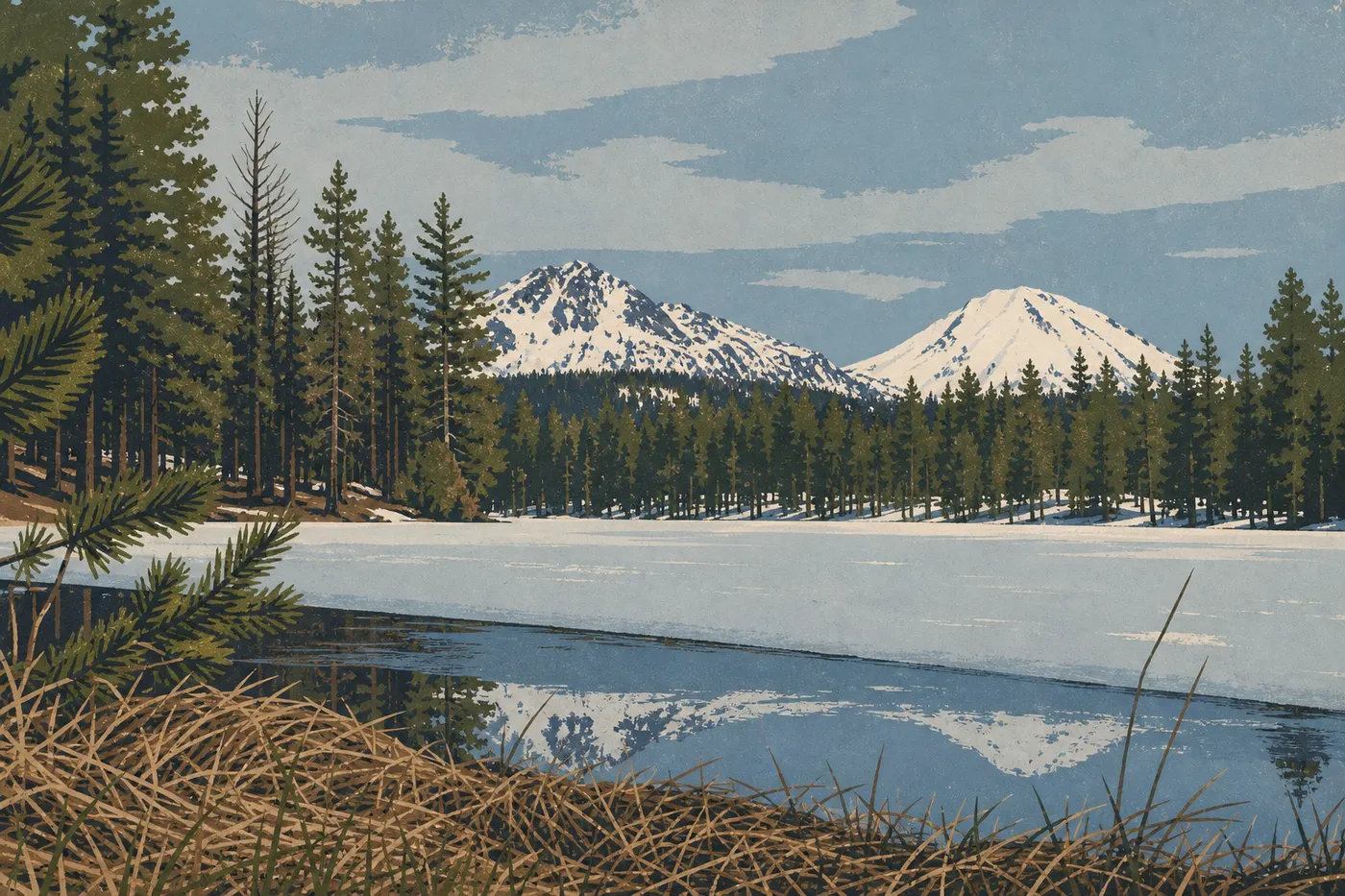
The northwest entrance opens directly onto Manzanita Lake, an alpine lake at about 5,740 feet whose surface reflects Lassen Peak when the weather is calm. The 1.6-mile loop around the lake is easy and takes less than an hour, making it an ideal warm-up for your visit. You can also rent a canoe or kayak in season from the campground concession, or simply settle on the shore at dawn to watch for beavers and waterfowl. It's one of the park's best photo spots, as long as you arrive before the wind ruffles the water.
Heading south on Highway 89, you'll pass Chaos Jumbles, a volcanic debris flow that covered the valley about 350 years ago, leaving a jumble of gray boulders frozen in place. In the background, the Chaos Crags reach toward the sky. These four lava domes formed only a few centuries ago and can be approached on a side trail from the campground.
The Manzanita Lake Visitor Center is where you can pick up a detailed park map, check trail conditions, and learn about the area's volcanic geology before heading deeper into the park.
Central Corridor: Bumpass Hell, Lassen Peak, and Summit Lake
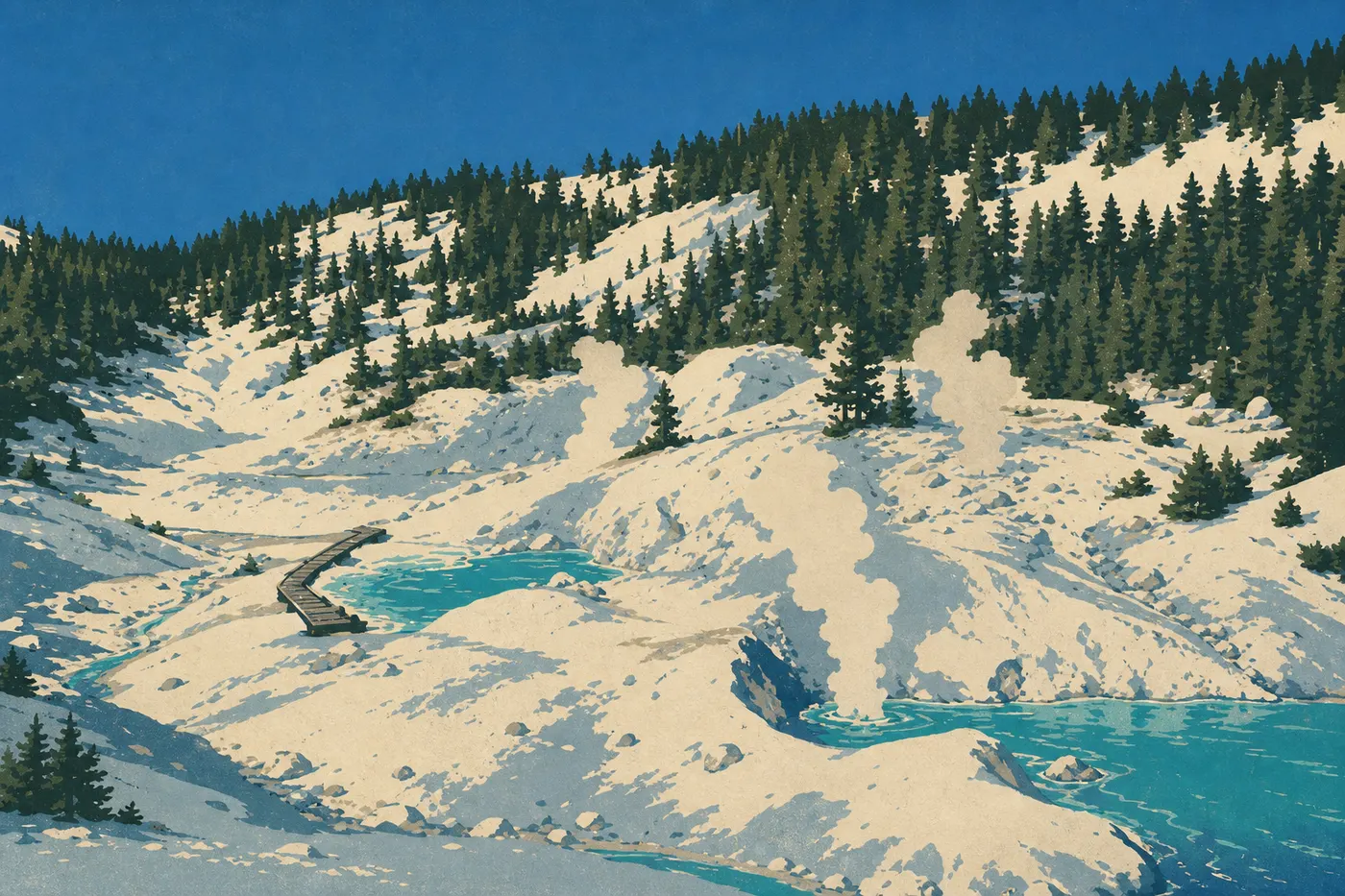
This is the active heart of the park, quite literally.
Bumpass Hell is Lassen Volcanic's largest hydrothermal area, covering nearly 10 acres of acidic springs, sulfur fumaroles, bubbling pools, and constantly boiling mud pots. You reach it on a well-marked, well-maintained 3.1-mile round-trip trail. The wooden boardwalks clearly define where you can walk. Stay on them without exception, because the ground crust can give way under an adult's weight within inches. Some springs exceed 320°F. The site is named for Kendall Bumpass, a local 19th-century guide who broke through the fragile crust and badly burned his leg. The story makes the safety rule clear.
Lassen Peak (10,456 feet) is the park's highest point and one of the world's largest lava dome volcanoes. Its most recent series of eruptions took place between 1914 and 1917, making it one of the most recently active volcanoes in the continental United States. The trail starts at a dedicated parking area on Highway 89 and climbs about 5 miles round-trip, with roughly 1,970 feet of elevation gain. There's no technical difficulty, but the grade is steep over ash and compacted lava. On a clear day, the summit views reach Mount Shasta to the north and the Sierra Nevada to the south. A practical tip: start before 9 a.m. in summer to avoid the frequent early-afternoon thunderstorms, and bring a warm layer whatever the weather is like in the valley.
Summit Lake marks the park's geographic center along Highway 89. It's a mountain lake suited to picnicking, cold-water swimming, and a well-situated campground. Trails from Summit Lake lead to a network of wilder lakes, including Twin Lakes and Feather Lake, for anyone who wants to get farther from the main road.
Kings Creek Falls is worth the 3.1-mile round trip. The waterfall plunges into a wooded canyon whose atmosphere contrasts sharply with the moonlike landscapes of the surrounding volcanic areas. The trail is rated easy and works for families with children who can walk.
Southwest Entrance: Sulphur Works and Brokeoff Mountain
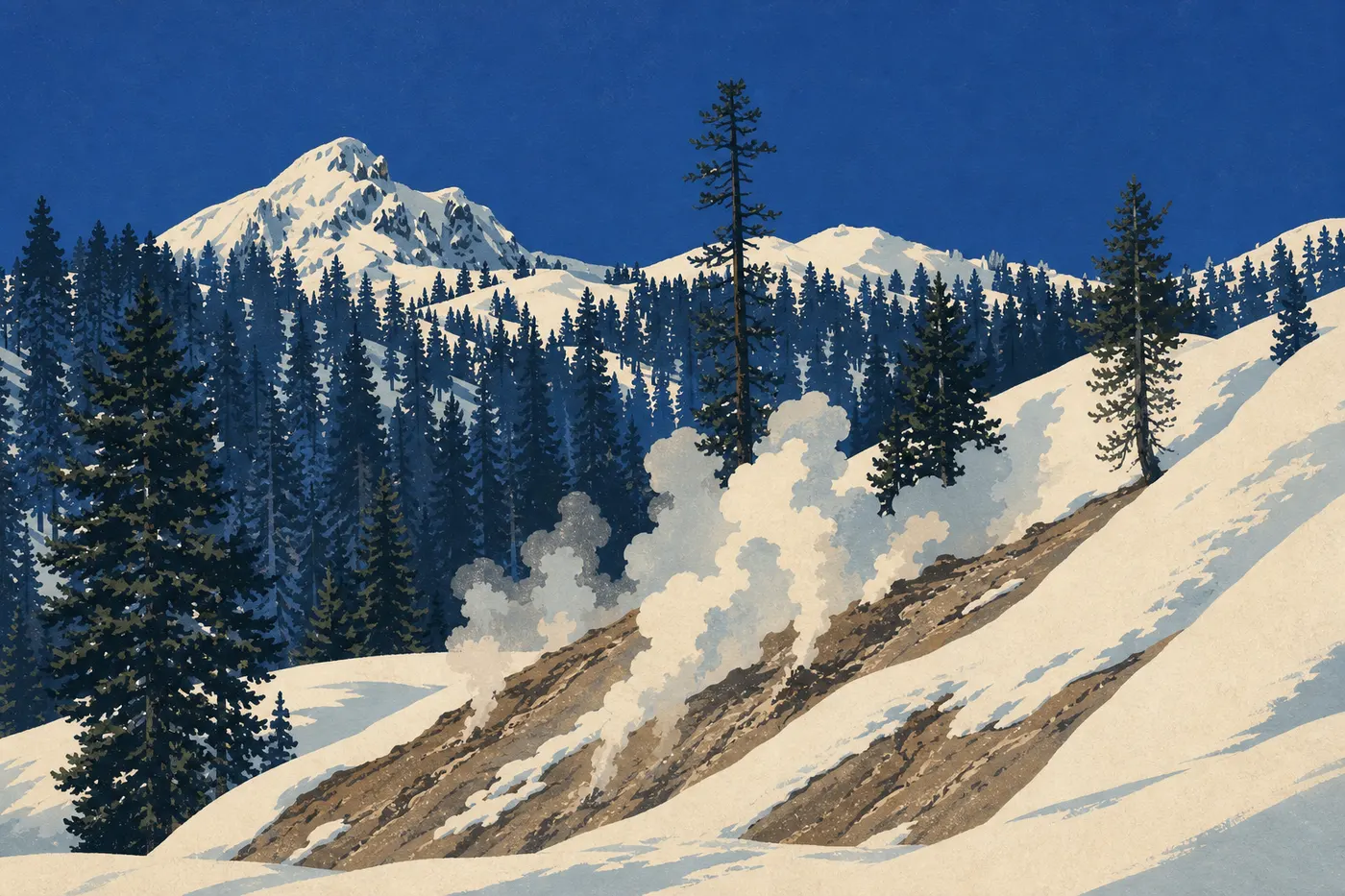
Sulphur Works is the park's most accessible site. Sulfur fumaroles and boiling mud pots sit just steps from the parking lot, so no hike is required. It's a direct remnant of the former Brokeoff stratovolcano, eroded over hundreds of thousands of years, whose geological heir is Lassen Peak. The sulfur smell is strong and persistent, so warn anyone in your group who might be sensitive to it.
Brokeoff Mountain (9,200 feet) is the less crowded choice for anyone looking for a big hike with views comparable to those from Lassen Peak. The 7.5-mile round-trip trail is rated difficult, with significant elevation gain and terrain that can be exposed to the wind. In season, wildflowers cover the slopes of the former volcano.
The Kohm Yah-mah-nee Visitor Center, open year-round unlike the Manzanita Lake Visitor Center, which closes in winter, is the main welcome point for visitors entering from the south.
Butte Lake: Cinder Cone and the Painted Dunes
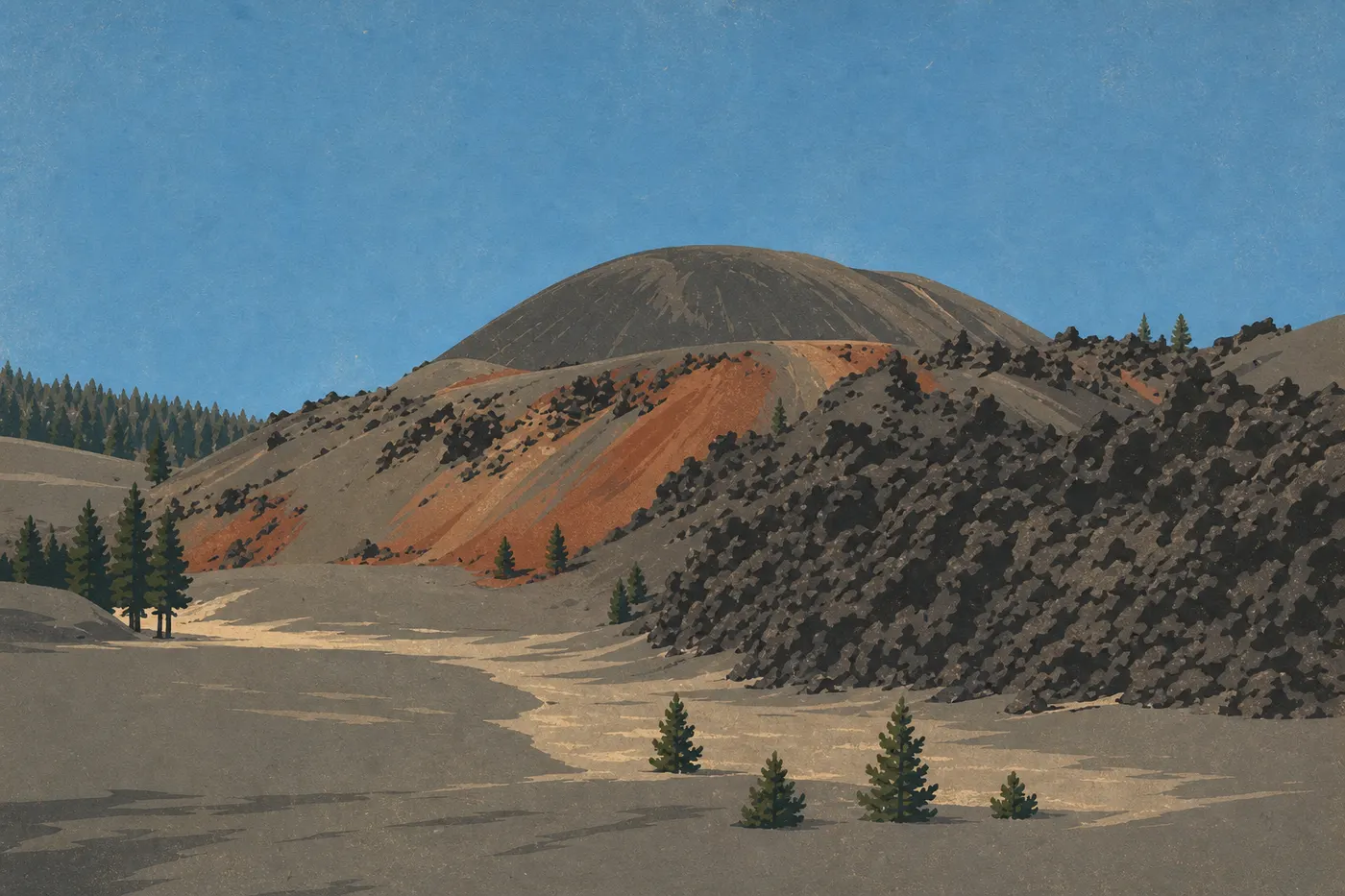
The Butte Lake area, reached from Highway 44 in the northeast by several miles of unpaved road, offers one of the park's most unusual landscapes.
Cinder Cone is a perfectly symmetrical volcanic cinder cone formed by eruptions only a few centuries ago. The 4-mile round-trip hike is rated difficult and climbs loose black ash that slides beneath your feet, so bring trekking poles. From the crater rim, the views over the Painted Dunes, with their red, ocher, and orange oxidized-ash colors, and the Fantastic Lava Beds, a stretch of frozen basaltic lava extending to the lake, are striking. It's one of the park's most photographed sites for a simple reason: it's hard to believe it's real.
Butte Lake itself is clear and cold. You can fish for trout or swim, and the Butte Lake Campground is one of the quietest in the park.
Warner Valley and Juniper Lake: The Wild Southern Areas
Neither area connects to Highway 89 by a paved road. You'll have to reach the valley from outside the park and then continue on unpaved roads. The detour is well worth it if you're looking for solitude.
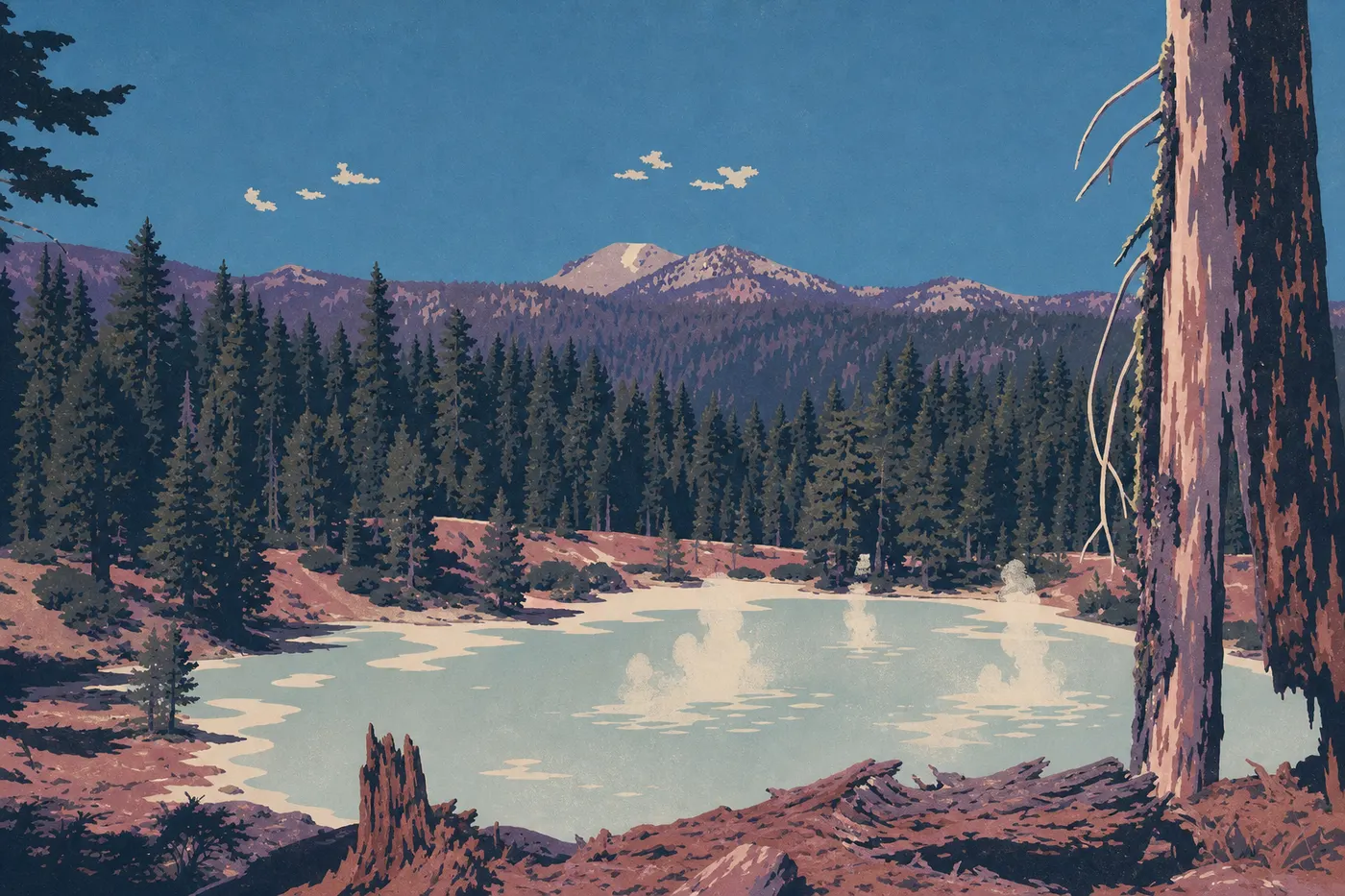
Warner Valley contains three geothermal sites you can explore without the crowds found along the central corridor. Boiling Springs Lake is a gray mud lake with a surface temperature of about 126°F, surrounded by fumaroles and charred conifers. Devils Kitchen is an active caldera with acidic pools and columns of steam. Terminal Geyser, a fissure that continuously vents steam rather than a true water geyser, completes the picture. The atmosphere resembles Bumpass Hell, but you'll often have the place nearly to yourself.
Juniper Lake in the southeast is a high-elevation lake surrounded by dense forest. It mainly attracts campers and hikers looking for a true wilderness experience far from the marked routes.
The Best Hikes in Lassen Volcanic
The park has dozens of trails, from an easy lakeside loop to a long hike up a volcano. The essentials are Bumpass Hell (3.1 miles, easy), Lassen Peak (about 5 miles, strenuous), Cinder Cone (4 miles, difficult on loose ground), Brokeoff Mountain (7.5 miles, difficult), and the Manzanita Lake loop (1.6 miles, easy).
The Lassen Volcanic hiking guide has complete details on distances, elevation gain, and difficulty levels.
Other Activities by Interest
Wildlife viewing. Lassen Volcanic is home to black bears, mule deer, coyotes, pine martens, and a wide variety of waterfowl. The area around Manzanita Lake is especially good at dawn. The Lassen Volcanic wildlife guide lists the species found here and the best viewing areas.
Fishing. Several bodies of water are open for trout fishing, including Manzanita Lake, Summit Lake, Butte Lake, and Juniper Lake. Visitors 16 and older must have a California fishing license.
Swimming. Swimming is allowed in several lakes, including Summit Lake, Manzanita Lake, Butte Lake, and Juniper Lake. The water stays cool even in midsummer, ranging from 59°F to 68°F depending on the lake and season. There are no lifeguarded areas, so swim at your own risk.
Canoeing and kayaking. Manzanita Lake is the only lake in the park where boat rentals are available in season. Paddling toward the reflection of Lassen Peak early in the morning is hard to beat.
Stargazing. Far from any urban center, the park has almost no light pollution. Summer nights above Manzanita Lake or Summit Lake offer a dense starry sky, ideal for stargazing with the naked eye or a telescope.
With kids. The Manzanita Lake loop, the Sulphur Works area from the parking lot, and the Bumpass Hell boardwalks work well for kids as young as 7 or 8 who are in good shape. The Lassen Volcanic family guide offers age-specific recommendations.
Things to Do Around Lassen Volcanic
The park lies within a larger volcanic region. Lava Beds National Monument, about 2.5 hours to the northeast, offers lava tubes to explore by headlamp in a geological setting that is both complementary and very different. Shasta-Trinity National Forest surrounds the park and offers dispersed camping and hiking outside the fee area.
Redding, to the west and about 1.5 hours from the northwest entrance, is the main base for supplies. Red Bluff serves the same role for the southern entrance.
The Region and Road Trip guides will give you the information you need to include Lassen Volcanic in a broader Northern California itinerary.
The Bottom Line: What to See First in Lassen Volcanic
If you've got only one day, stay along the Highway 89 corridor: Manzanita Lake in the morning, Bumpass Hell in midmorning, a picnic at Summit Lake, and then Sulphur Works in the late afternoon as you head back down toward the south entrance. The route makes geographic sense, offers varied scenery, and represents what makes the park unique: an active volcano you can explore by car.
With two days, add Lassen Peak on the second morning. Start before 9 a.m. because summer thunderstorms are common in the afternoon, then visit Kings Creek Falls on the way down. With three days or more, Cinder Cone from Butte Lake and Warner Valley each deserve an additional half-day.
Is Lassen Volcanic worth the trip? It's one of the few places outside Yellowstone where you can walk across active volcanic terrain and see four different types of volcanic features within easy driving distance, in a park that remains lightly visited. The answer is yes.
Frequently Asked Questions
What is there to do in Lassen Volcanic?
Lassen Volcanic offers hydrothermal areas to explore on foot, including Bumpass Hell, Sulphur Works, and Warner Valley; a climb to the summit of Lassen Peak at 10,456 feet; forest and volcanic-cone hikes; lake fishing and swimming; canoeing; stargazing; and wildlife viewing. Most areas of the park connect via the Lassen Volcanic Highway.
How many days should you spend in Lassen Volcanic National Park?
Two days let you cover the main sites along the north-south corridor. Plan on 3 to 4 days to add Cinder Cone in the Butte Lake area and the remote southern areas, including Warner Valley and Juniper Lake. Our Itinerary & Trip Length page offers plans for different amounts of time.
Can you drive through Lassen Volcanic National Park?
Yes. The Lassen Volcanic Highway, or Highway 89, connects the northwest and southwest entrances for about 32 miles. The drive takes less than an hour without stops, but sites line the entire route. The road closes from about November through May because of snow.
Is Lassen Volcanic worth the trip?
Lassen Volcanic is worth visiting for its active volcanic geology, relatively light visitation compared with Southern California's parks, and varied landscapes in a compact area. It's a park that rewards visitors who linger rather than those who rush through.
Which hike should you do in Lassen Volcanic?
Bumpass Hell, a 3.1-mile round trip rated easy, is the signature hike for seeing the hydrothermal areas. Lassen Peak, about 5 miles round trip and strenuous, leads to the volcano's summit and the park's best panorama. Experienced hikers can tackle Brokeoff Mountain (7.5 miles, difficult) or Cinder Cone (4 miles, difficult). Our Hiking page covers every trail, including distances and elevation gain.
{ "@context": "https://schema.org", "@type": "FAQPage", "mainEntity": [ { "@type": "Question", "name": "What is there to do in Lassen Volcanic?", "acceptedAnswer": { "@type": "Answer", "text": "Lassen Volcanic offers hydrothermal areas including Bumpass Hell and Sulphur Works, a climb to Lassen Peak at 10,456 feet, hiking, fishing, lake swimming, canoeing, and wildlife viewing in several areas connected by the Lassen Volcanic Highway." } }, { "@type": "Question", "name": "How many days should you spend in Lassen Volcanic National Park?", "acceptedAnswer": { "@type": "Answer", "text": "Two days cover the main sites along the north-south corridor. Plan on 3 to 4 days to add Cinder Cone and the remote southern areas, including Warner Valley and Juniper Lake." } }, { "@type": "Question", "name": "Can you drive through Lassen Volcanic National Park?", "acceptedAnswer": { "@type": "Answer", "text": "Yes. The Lassen Volcanic Highway, or Highway 89, connects the northwest and southwest entrances for about 32 miles. The road closes from about November through May because of snow." } }, { "@type": "Question", "name": "Is Lassen Volcanic worth the trip?", "acceptedAnswer": { "@type": "Answer", "text": "Yes. Lassen Volcanic brings together all four types of volcanoes, active hydrothermal areas, and numerous hikes in a lightly visited park compared with Southern California's parks." } }, { "@type": "Question", "name": "Which hike should you do in Lassen Volcanic?", "acceptedAnswer": { "@type": "Answer", "text": "Bumpass Hell (3.1 miles, easy) for the hydrothermal areas, Lassen Peak (about 5 miles, strenuous) for the volcano's summit, and Brokeoff Mountain (7.5 miles, difficult) or Cinder Cone (4 miles, difficult) for experienced hikers." } } ] }