
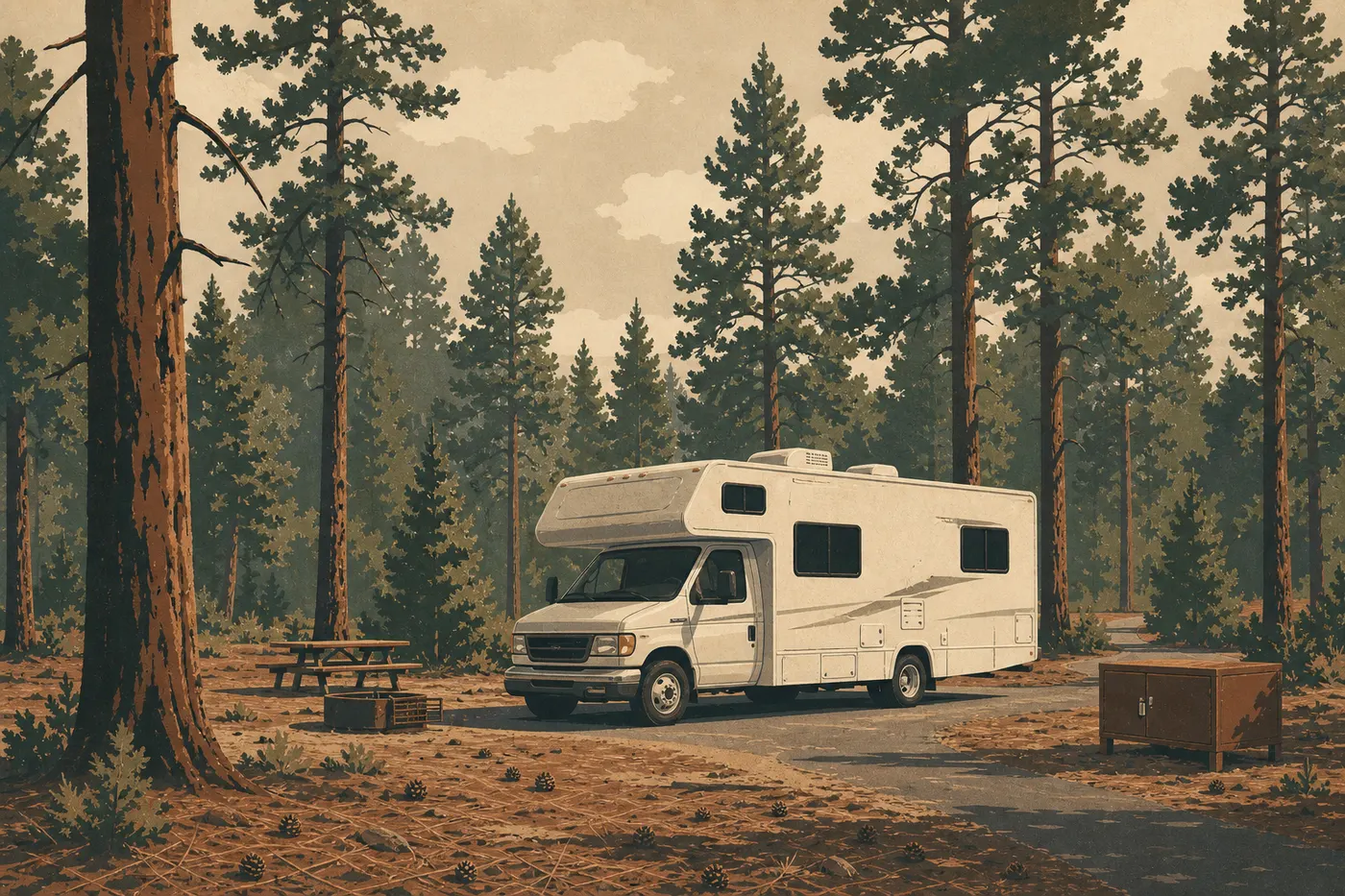
Lassen Volcanic by RV: Campgrounds, Rules and Tips
The short answer is yes. Lassen Volcanic is easy to visit by RV. California State Route 89 runs through the park on paved roads, with no low-clearance tunnels. The main limitation to keep in mind is that the road to Warner Valley is unpaved and not recommended for RVs. Otherwise, standard-size RVs can use the road, and the season runs from June through October.
Can You Drive and Camp at Lassen Volcanic by RV?
Highway 89, also known as the Lassen Scenic Byway, connects the north entrance at Manzanita Lake with the south entrance at the Kohm Yah-mah-nee Visitor Center. There are no impossible turns or height restrictions on this paved stretch. Class B and Class C motorhomes, as well as standard-length travel trailers, can use it without difficulty.
You can camp in an RV at the park's official NPS campgrounds. None of them offer electrical hookups, so you'll be dry camping. Bring water, battery power, and enough supplies for at least two or three nights.
One important calendar detail is that Highway 89 closes from around November through May because of snowfall. The practical season for an RV road trip therefore runs from June through October. The Lassen Volcanic trip-planning guide covers the best time to visit based on your priorities, including weather, crowds, and trail access.
RV Restrictions and Regulated Roads
Lassen doesn't require a tunnel permit like Zion, and there are no entrance height restrictions like those at Yosemite. The main restriction concerns Warner Valley in the southeast part of the park. The access road is unpaved, sometimes rough, and unsuitable for RVs or vehicles towing trailers. If you want to visit the geothermal features in this area, plan to use a lightweight rental vehicle from a nearby town or from a base farther north.
The second point to check before booking is the maximum length per site, which varies from one site to another within the same campground. Limits generally range from 25 to 35 feet. On Recreation.gov, each campsite listing specifies its limit. Check carefully if you're driving a Class A motorhome or towing a trailer.
The trailhead parking lots at Bumpass Hell and Devastated Area can accommodate long vehicles, but the designated spaces are limited. In July and August, arrive before 9 a.m. or have a backup plan.
The Park's Official Campgrounds
Manzanita Lake
This is the top campground for RV travelers. Located right by the north entrance, it accommodates RVs up to about 35 feet on some sites. Access from Highway 89 is direct.
Here's the key logistical detail: Manzanita Lake is the only campground in the park with a dump station. Potable water, a small grocery store, and a ranger station round out the facilities. Sites are reservable on Recreation.gov, and they go quickly. See the booking section below.
North Summit Lake and South Summit Lake
These two campgrounds sit on opposite sides of Summit Lake, at more than 6,560 feet in elevation. The setting feels more remote. Some sites accommodate moderately sized RVs, around 25 feet. The lake offers wide-open views of the volcanic landscape, and several trails start right from the campground.
To reach the Bumpass Hell trailhead from Summit Lake, you'll need to drive several miles south on Highway 89. It's not within walking distance, but this is the best-positioned campground for this signature hike.
Southwest
This small campground sits at the park's south entrance along Highway 89. It operates on a first-come, first-served basis and remains accessible even when Highway 89 is closed to the north. In that case, access is only from Highway 36 and the south. It's best suited to compact vehicles.
Butte Lake
You can reach it from the east side of the park via an unpaved road that runs for several miles. This isolated and scenic area is best for vans or small off-road-capable RVs. A Class A motorhome or travel trailer shouldn't attempt it.
Warner Valley
As noted above, the road is unpaved and RVs aren't recommended. Leave it to hikers and four-wheel-drive vehicles.
Dispersed Camping and Areas Around Lassen (Boondocking)
Boondocking isn't allowed within the national park's boundaries. However, the surrounding national forests, Lassen National Forest to the north and east and Plumas National Forest to the southeast, offer free dispersed camping on USFS land.
The area around Chester, along Highway 36 at the park's east entrance, has several authorized USFS sites. Standard rules apply: keep the required distance from waterways, limit your stay to 14 consecutive nights, and don't have a fire during fire restrictions. Check the Lassen National Forest website before you leave.
Dump Stations, Water, and Services
The Manzanita Lake dump station is your main option inside the park. Plan to stop there when you arrive or leave, especially if you're continuing to Summit Lake or Southwest, which don't have dump stations.
Outside the park:
- Redding to the west, about 1.5 hours away: a wide range of RV services, propane, and big-box stores.
- Chester to the east, via Highway 36: basic services, a gas station, and a few stores.
- Susanville farther east: a midsize town with more options for supplies.
Potable water is available at Manzanita Lake and at campgrounds with water facilities. If water isn't available at your campground, which can happen seasonally at Summit Lake or Butte Lake, fill your tanks before you arrive.
Which Campground Is Right for You?
For families with kids: Manzanita Lake, without a doubt. The lake is just steps from the sites, and wildlife such as beavers, ducks, and mule deer delights kids from the first evening. The grocery store also helps if you forgot something.
For views and elevation: North Summit Lake or South Summit Lake. Sunsets over the lake, at more than 6,560 feet, will be among your best memories of a stay at Lassen. This area is also less crowded than Manzanita.
For easy access to geothermal sites: Summit Lake puts you in the middle of the park, a few miles by road from the Bumpass Hell trailhead and Hot Rock.
For solitude: Butte Lake, provided your vehicle can handle the road.
For campers without motor vehicles, the Lassen Volcanic camping guide also lists tent sites and group camping options.
Renting an RV to Visit Lassen Volcanic
If you're arriving without an RV, the most practical starting points are San Francisco, about 4.5 hours southwest, and Sacramento, less than 3 hours south. Several camper van and Class B rental companies operate from both cities.
For Lassen, a camper van or Class B under 25 feet is often more convenient than a Class A. It parks easily at trailheads, fits more sites in the park, and can handle some well-maintained secondary roads. If you need more room for a family, a Class C is a good compromise between living space and maneuverability.
Plan on renting for 5 to 7 days if you want to combine Lassen with nearby attractions such as Burney Falls, Mount Shasta, and the Trinity Alps. Burney Falls, Mount Shasta, and the Trinity Alps pair naturally with Lassen from San Francisco or Sacramento.
RVs, Pets, Budget, and Reservations: What to Know
Pets: Dogs are allowed in campgrounds as long as they're leashed, with a maximum leash length of 6.5 feet. They can't go on hiking trails or into geothermal areas. If you want to hike to Bumpass Hell or Lassen Peak, make a plan for your pets.
Site fees: As a general guide, expect to pay $20 to $30 per night for a non-electric site at Manzanita Lake. The private-vehicle entrance fee is $30 and is valid for 7 days. If you're visiting several national parks in one year, the America the Beautiful Pass, which costs $80, covers admission to federal recreation sites. Our fees and passes page explains entrance fees and pass options.
When to book: Reservable sites at Manzanita Lake fill on the day they become available on Recreation.gov, often 6 months before the stay date. For a July weekend, check Recreation.gov in January as soon as reservations open. Outside weekends, from Tuesday through Thursday, first-come, first-served campgrounds are easier to get without a reservation.
In Summary: Our Lassen Volcanic RV Plan
Book Manzanita Lake at least 6 months ahead for two nights. Use the on-site dump station when you arrive. Drive to the Bumpass Hell trailhead early in the morning, before 9 a.m., then spend a night at Summit Lake for the high-elevation setting. Avoid Warner Valley and Butte Lake if you're driving a Class A or towing a travel trailer. For nights between official campgrounds, the Highway 89/36 corridor around Chester offers free USFS sites. Keep an eye on our Lassen Volcanic park guide for the rest of your itinerary.
Frequently Asked Questions
Can you drive an RV through Lassen Volcanic National Park?
Yes. You can drive through Lassen Volcanic by RV on California State Route 89, with no height or weight restrictions for standard-size vehicles. The road closes from around November through May because of snowfall.
What is the best campground in Lassen Volcanic National Park?
For RV travelers, the best campground at Lassen Volcanic is Manzanita Lake. It has large sites up to 35 feet, a dump station, potable water, and direct access to the lake. For a high-elevation setting and views, North Summit Lake or South Summit Lake is an excellent alternative in the heart of the park.
What campground is closest to Lassen Volcanic National Park?
The closest campground to the park is Southwest, located at the south entrance along Highway 36. It operates on a first-come, first-served basis and remains accessible even when Highway 89 is closed.
Are there grizzly bears in Lassen Volcanic National Park?
No, there are no grizzly bears in Lassen Volcanic. Grizzlies disappeared from California in the early 20th century. Local wildlife includes mule deer, coyotes, raccoons, and, at higher elevations, pikas and marmots. The Lassen Volcanic wildlife guide explains which species you can see during each season.