
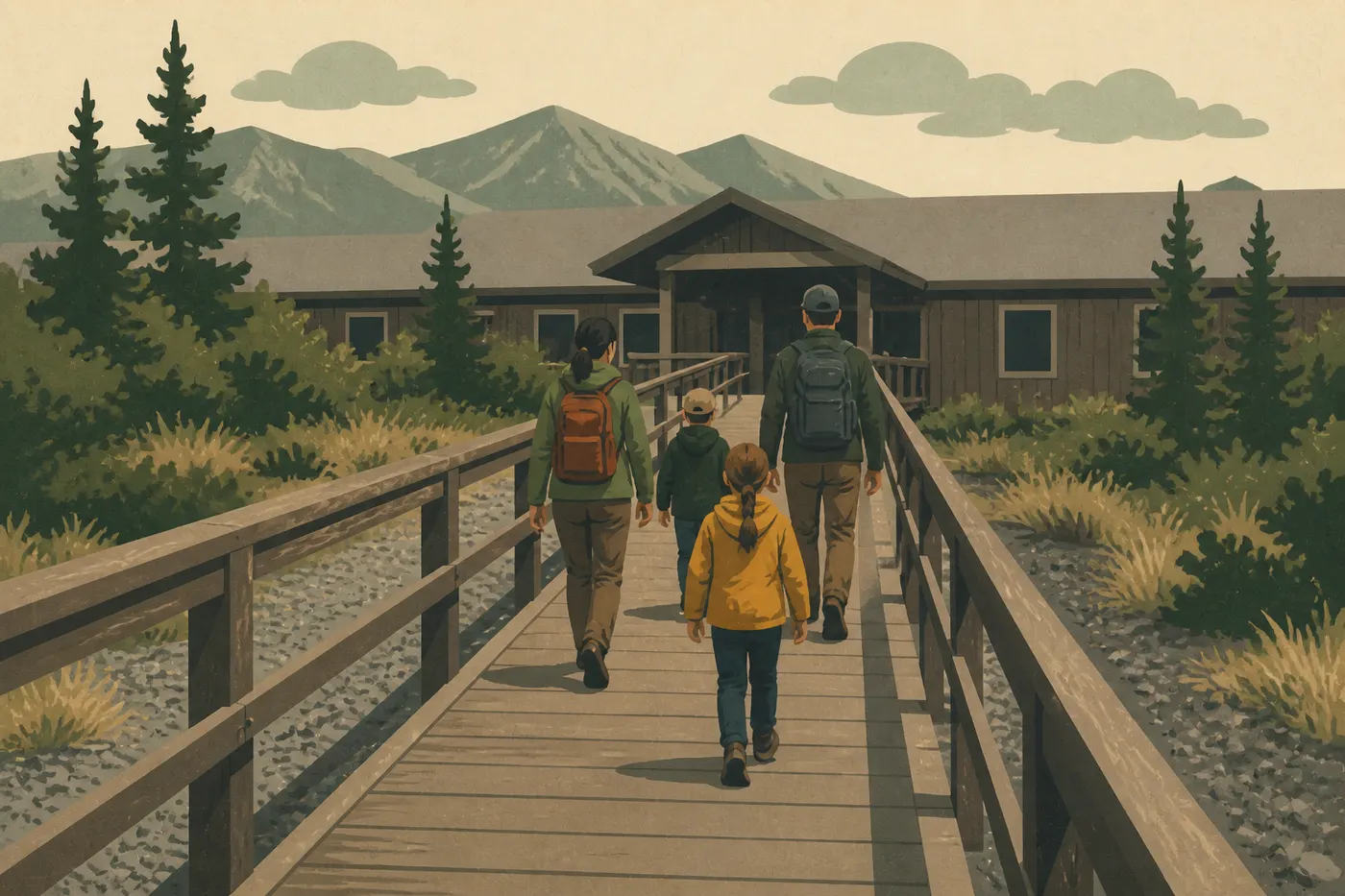
Lake Clark with Kids: What to Do and How to Plan Your Trip
You don't come to Lake Clark by accident. The park sits on the Alaska Peninsula, a one-and-a-half-hour flight from Anchorage, and no road reaches it. You get there by floatplane or boat, period. This natural filter keeps out rushed visitors, which is exactly what makes it exceptional for families looking for something beyond crowded parking lots and trails marked every few minutes. Here, you'll find tundra, glaciers, and brown bears fishing in the river a few dozen yards away.
Is Lake Clark a good fit for kids? Yes, as long as you choose the right setup. The park works well for kids ages 8 to 10 and up who can walk over unmarked terrain and follow bear-safety rules. Families with kids ages 4 to 7 will do best at a lodge with a full-time guide who leads outings and handles the logistics. With children under 4, it's possible, but you'll need everything organized down to the last detail.
Why Visit Lake Clark with Your Family
Lake Clark offers something very few national parks can: a first, genuine encounter with untamed nature. There are no audio guides, tourist trains, or souvenir concession stands at the entrance. What kids remember from a stay here is the tangible feeling of having truly been outdoors.
Wildlife is the main draw. This is one of the few places in the world where you can watch brown bears fish for salmon a few dozen yards away, with no barrier or raised platform, accompanied only by a local guide. Moose cross the clearings at dawn. Bald eagles perch on branches above the water. Kids don't forget a sight like that.
The park covers two distinct climate zones: the coast, which is wetter with mild temperatures, bears, and beluga whales along Cook Inlet, and the interior, which gets less precipitation and has warmer summers, mountains, and glaciers. The contrast creates two very different experiences. In one week, a family can combine both.
Is Lake Clark a Good Fit for Kids? What Age Is Best
Here's the honest answer: Lake Clark isn't Yosemite. There are almost no marked trails, airstrips are made of grass or gravel, and weather conditions change fast. Freezing temperatures and snow can occur at any time of year.
Here's how we see it by age group.
Under 4. This is only realistic at an all-inclusive lodge with a full-time guide. Carrying a child over varied terrain and managing meals and sleep are more demanding, although some properties are used to hosting very young children.
Ages 4 to 7. A good fit for family lodges with a structured activity program, including bear viewing from an improved shoreline, a boat trip on the lake, and an introduction to fishing. Backcountry camping isn't recommended at this age.
Ages 8 to 10 and up. This is the sweet spot. At this age, kids can walk several miles over varied terrain, follow bear-safety rules, and get the most out of the Junior Ranger program. It's when Lake Clark starts to leave a lasting impression.
One logistical detail is easy to overlook: landing on the lake in a floatplane is an experience in itself. For a child, landing on water in Alaska is the kind of memory that lasts for decades.
When to Visit Lake Clark with Your Family
The useful travel window runs from June through September. Outside that period, visitor services are very limited, and the lakes remain frozen through April.
July is the ideal month for families. The days are long, with midnight sun, brown bears are active along the waterways as sockeye salmon migrate upstream, and coastal temperatures range from 54 to 64°F. It's also the busiest month, so book charter flights and lodges 6 to 12 months ahead.
June is less crowded and often beautiful, but mosquitoes are at their peak. Kids will need effective repellent and clothing that covers their arms and legs.
August and September work well for families who want to see salmon in the rivers and bears feeding intensively before winter. Evenings turn cooler and the light changes. September brings a different atmosphere, with a beautiful range of fall colors.
The Lake Clark weather guide breaks down precipitation, temperatures, and conditions by zone, coast versus interior, month by month.
How Many Days Do You Need in Lake Clark with Kids?
Plan on at least 4 nights, and ideally 5 to 7. Getting there takes time. You'll need to reach Anchorage, arrange a charter flight, and leave a buffer day at each end of the trip in case bad weather delays your departure or return.
With 5 nights in the park, a family can reasonably fit in a bear-viewing outing, a day on the lake by boat, one or two hikes, the Junior Ranger program, and some downtime by the water. Don't try to cover everything in two days. This park rewards a slow pace, and pushing too hard with kids would defeat the purpose.
The Lake Clark itinerary guide offers a sample weeklong plan for families.
What to Do in Lake Clark with Kids: Our Picks
Watch Brown Bears
This is the park's main activity. Along the Cook Inlet coast, brown bears gather in July and August to fish for salmon in shallow rivers. Local guides offer boat trips or walks from developed viewing areas. It's supervised, safe, and absolutely unforgettable for kids. The rule on site is simple: stay together, don't run, and talk in a normal voice so bears know you're there.
Paddle on the Lake
Lake Clark is about 34 miles long. Crossing it with inexperienced kids is out of the question, but short kayak or canoe outings along the shoreline near a lodge are accessible to kids as young as 6 or 7 when they're in a tandem boat with an adult. The water is cold. A life jacket is mandatory, no exceptions.
Fish for Salmon
Fishing is an activity kids quickly make their own. Sockeye and king salmon run up the rivers in summer. Most lodges offer guided trips with equipment provided. Good to know: adults need an Alaska fishing license, but fishing is free for anyone under 16.
See Volcanoes from the Air
On your arrival or return charter flight, ask the pilot to fly over Mount Redoubt or Mount Iliamna if weather conditions allow. This short detour offers a real-life geology lesson that no encyclopedia can match.
The Lake Clark activities guide lists all the activities available in the park.
Family Hikes and Walks in Lake Clark
Lake Clark doesn't have a conventional trail network. It's a wilderness park. You walk where the tundra allows, reading the terrain as you go. No route works with a stroller. Still, two options stand out for families.
Tanalian Falls from Port Alsworth. This is the park's best-maintained trail. It starts in the village of Port Alsworth and reaches the falls through a forest of birch and spruce. Plan on about 5 to 6 miles round-trip, depending on your starting point, with moderate elevation gain. It's a good fit for kids 8 and up who are comfortable walking. The contrast between forest and waterfall is striking, and you're likely to spot bald eagles along the way.
The shoreline around Port Alsworth. For younger kids ages 4 to 7, flat walks along the shores of Lake Clark are enough to fill a morning. There are views of the Chigmit Mountains in the distance, moose in the clearings, and absolute quiet. The terrain is accessible, with no significant elevation gain.
Tundra plateaus with a guide. Families with teenagers can take guided off-trail outings across flat tundra to see Arctic plants and, with some luck, caribou or Dall sheep. Waterproof shoes and trekking poles are strongly recommended.
The Lake Clark hiking guide details the options by difficulty and area.
The Lake Clark Junior Ranger Program
Like almost all U.S. national parks, Lake Clark offers a Junior Ranger program. Booklets are available at the visitor center in Port Alsworth.
The idea is simple: kids complete a series of observation and discovery activities, such as recording the species they see and answering questions about wildlife, geology, or park history, then present their completed booklet to a ranger. In return, they receive an official NPS badge and, depending on their age, take a ranger pledge.
For families, it's a valuable tool. It gives kids a framework for understanding what they're seeing, turns a day outdoors into an active quest, and creates a memorable closing ritual. Older kids ages 10 to 14 find real natural-history depth in it. Pick up the booklet as soon as you arrive in Port Alsworth. Some activities take several days to complete.
Staying Safe with Kids in Lake Clark
Lake Clark is an Alaska wilderness park. Safety precautions aren't optional; they're part of the trip.
Brown bears. The park has a dense brown bear population. Always travel as a group, make noise as you walk by talking or clapping in a steady rhythm, and never let a child wander off alone. Carry bear spray and know how to use it. Lodges and local guides routinely provide a demonstration when you arrive. The absolute rule if you encounter a bear is never to run.
Rivers. Waterways are cold, close to 32°F at the surface even in midsummer, and currents can be deceptive. Don't let kids approach the banks unsupervised. During guided off-trail hikes that involve fording, children must be held or carried.
Mosquitoes. Mosquitoes are intense in June and July, especially in wet areas. Repellent with 20 to 30% DEET, with a child-appropriate concentration for the child's age, and clothing that covers the skin will reduce the discomfort. Bring lightweight mosquito nets for young children during breaks.
Weather. Fog, rain, and wind can appear within minutes, even in July. Dress kids in layers they can add or remove, and always keep a waterproof windbreaker within easy reach in the pack. Leave a buffer day at each end of the trip to absorb weather-related flight delays.
Communication. Cell service is unavailable across most of the park. If you're heading out on a hike or backcountry camping trip, a satellite phone or personal locator beacon (PLB) is strongly recommended. Lodges generally have their own emergency communication systems.
Where to Stay in Lake Clark with Kids
There aren't many options, but the ones that exist are often excellent. The Lake Clark lodging guide covers all available options, along with contact information and rates.
All-inclusive lodges. This is the best option for families with young children. Several properties on the lake's shores or along the coast offer rooms, meals, and guided activities in one package. Everything is handled, including floatplane transfers, wildlife outings, and meals. Rates are high, but they cover almost everything. Book 6 to 12 months ahead for summer stays.
Backcountry camping. This is an option for experienced families with kids ages 10 and up. There is no infrastructure in the park. You'll need to bring all your food, filter water on site, pack your cooking and bear-safety gear, and use approved bear-resistant food containers. The NPS doesn't charge an entrance fee at Lake Clark, but the logistics of wilderness camping are demanding.
Meals and Breaks with Kids
At lodges, meals are included in the rate and are generally hearty, made with local products, with freshly caught fish often the centerpiece. Tell the lodge about allergies and dietary requirements when you book.
Outside the lodges, there are no restaurants or grocery stores in the park. Port Alsworth has very limited resources. Bring all your food from Anchorage, including energy bars, dried fruit, freeze-dried camping meals, and, above all, snacks that are easy to reach at any time. Kids get hungry fast outdoors.
Here's the absolute rule: all food must be stored in bear-resistant containers or a secure building, even during a ten-minute break. Bears have an extraordinary sense of smell and remember exactly where they've found food before.
Family Budget for Lake Clark
Lake Clark has no entrance fee. It's one of the few NPS parks with free admission, which makes the America the Beautiful pass less useful for the park itself. It can still help with ancillary fees at other parks on an Alaska itinerary.
The biggest expense on a family trip is the charter flight from Anchorage. Prices vary by operator, destination within the park, and aircraft type. Several families can share a charter to reduce the per-person cost. Then come lodge nights, with a high daily all-inclusive rate that usually covers meals and activities, or the cost of camping gear if you're traveling independently.
The Alaska fishing license is free for anyone under 16, which can make a real difference if fishing is on your itinerary.
The National Parks Fees and Passes page provides background on entrance fees and passes.
What to Combine with Lake Clark When Traveling with Kids
Lake Clark's location puts it close to two other must-see destinations for families.
Katmai National Park. Just to the south, Katmai is famous worldwide for brown bear viewing at Brooks Falls in July. Some Lake Clark lodges offer day trips to Brooks Camp by floatplane. For families, it's an almost perfect combination: two complementary bear experiences, a coastal setting at Lake Clark and a river waterfall at Katmai.
Kenai Fjords National Park. Accessible by car from Anchorage in 2 to 3 hours, this park offers fjord cruises with views of glaciers, orcas, sea otters, and puffins. It's an ideal stop at the beginning or end of a trip. The contrast with Lake Clark's wilderness is striking and lets kids see two very different sides of Alaska in one trip.
Our Alaska Region guide provides background on routes and combinations to consider for an Alaska trip.
Is Lake Clark Worth It for Families?
Yes, without question, for families ready to embrace the experience. This isn't a plug-and-play park where you arrive by car, stand in line, and leave having checked a box. Lake Clark requires serious preparation, a substantial budget, and genuine enthusiasm for wild places. It isn't the right choice for a first outing with very young children.
What kids get in return is hard to find elsewhere: the realization that the world exists beyond screens, that nature is powerful and beautiful, and that they can be part of it with respect and care. Watching a bear plunge its paw into the river 100 feet away feels like a documentary, except it's happening right in front of you. That kind of experience can't be bought with a standard entrance ticket, and no other American park offers it with the same intensity.
The complete Lake Clark guide covers the park from every angle for every kind of traveler.
Frequently Asked Questions
Can you stay in Lake Clark National Park?
Yes. Several family lodges sit on the shores of the lake or along the coast, and backcountry camping is allowed throughout the park as long as you follow Leave No Trace principles and use approved bear-resistant food containers.
Can you drive to Lake Clark?
No. Lake Clark isn't connected to the U.S. road network. You can only get there by air, either by floatplane on the lakes or by small wheeled aircraft to Port Alsworth, or by boat from certain points along the coast. From Anchorage, plan on a 1- to 2-hour charter flight, depending on your destination in the park.
What are the best Alaska landscapes to see with kids?
Lake Clark combines snow-covered volcanoes, Mount Redoubt and Mount Iliamna, glacial lakes, tundra, and the Cook Inlet coast in one trip. Families often add Kenai Fjords, for fjords and glaciers viewed from a boat, and Katmai, for bears at Brooks Falls, to see three very different sides of Alaska.
What can you do in Alaska in summer with kids?
Top family activities include watching brown bears at Lake Clark and Katmai, cruising the fjords at Kenai Fjords, fishing for salmon, hiking across tundra, and taking part in the national parks' Junior Ranger programs. July days are extremely long, with up to 20 hours of daylight, so you can plan evening activities without worrying about darkness.
Is Lake Clark worth the trip for a family?
Lake Clark is worth the trip for families looking for an authentic adventure away from heavily visited parks. The logistics are more complicated and the budget higher than at most American parks, but the experience, with close wildlife encounters, untouched landscapes, and total immersion in the wilderness, is hard to match elsewhere.