
Things to Do in Lake Clark: Must-See Experiences and Activities
Lake Clark has no road access. That's the first useful thing to know about this Alaska national park: you'll arrive by seaplane or bush plane from Anchorage, after a one- to two-hour flight over Cook Inlet. The logistical hurdle naturally filters visitors, and those who make the effort are rewarded with remarkably untouched wilderness, no crowds, and no imposed tourist infrastructure. Brown bears fishing for salmon on the beach at low tide, two active volcanoes closing off the horizon, crystal-clear glacial lakes, and salmon-filled rivers so dense during the run that the water seems red: the list fits in a few lines, but each one takes a full day to experience.
Lake Clark's highlights fall into five distinct experiences. Brown bear viewing in Chinitna Bay is the main reason visitors come, especially from July through September when salmon run up the coastal rivers. Richard Proenneke's Cabin at Twin Lakes is a pilgrimage for anyone who loves wilderness and the history of the American frontier. The hike to Tanalian Falls from Port Alsworth is the park's only marked walk that visitors can do without a guide. A bush plane flight over the Chigmit Mountains can turn any day into a memorable experience. Salmon and rainbow trout fishing in the inland lakes and rivers is also an activity in its own right, practiced here at a level that's hard to match anywhere else in Alaska. The complete Lake Clark guide provides the park's overall context before getting into the details.
Lake Clark at a Glance: Areas, Access, and Getting Around
Lake Clark stretches across the Alaska Peninsula, southwest of Anchorage and north of Katmai National Park. Its territory covers two sharply different climate zones: a wet coast along Cook Inlet with mild temperatures, and a drier interior with warmer summers and seriously cold winters. The lakes freeze in November and don't thaw until April. Snow and freezing temperatures can occur in any month of the year.
The park has no internal road network. To get from one area to another, such as Port Alsworth to Twin Lakes or Chinitna Bay, you'll have to take another plane. Port Alsworth, on the south shore of Lake Clark, is the main hub. You'll find the visitor center, lodges, kayak outfitters, and fishing guides there. It's the natural starting point for most trips.
There are no shuttles or buses. Transfers between areas happen by bush plane or boat. For details on transportation options in the park, getting around Lake Clark covers the practical basics.
To plan your arrival and find flight operators, getting to Lake Clark brings together the concrete options.
How Much Time Do You Need to Visit Lake Clark?
A first trip of three to four days around Port Alsworth lets you see the essentials, including the Tanalian hike, a scenic flight, and kayaking on Lake Clark, without rushing. Five to six days gives you time to add a bear-viewing trip to Chinitna Bay. A full week lets you fit in Twin Lakes and a self-guided fishing or kayaking outing lasting several hours.
Trips of 10 days to two weeks are for hikers who want to cross the park's interior while camping in the backcountry or paddle the Chilikadrotna River. The park is open year-round, 24 hours a day. Visitor services, however, are greatly reduced from September's Labor Day through May's Memorial Day. You can still reach the park by plane in the off-season, but the logistics are more demanding.
Lake Clark itineraries offers detailed plans based on how many days you have and the type of trip you're considering.
Lake Clark's Highlights, Area by Area
Chinitna Bay and the Cook Inlet Coast

Chinitna Bay has the highest concentration of brown bears accessible to visitors without specialized experience. The bears come down to the tidal flats to feed on bivalves and coastal grasses, then, starting in July, on sockeye salmon running up the tidal creeks. Low tide is the best time to watch them. The bears dig through the mudflats for clams, often just a few dozen yards away.
You can reach the bay only by seaplane or boat from Homer or Anchor Point, on the Kenai Peninsula. Local guides run day trips with a beach drop-off, a guided walk, and an evening return. Safety rules are strict: stay at least 165 feet from bears, keep the group together, and move slowly and quietly. Never get between a mother and her cubs. If a bear approaches, group up, make noise, and get your bear spray out. Guides know the individual animals in the area and can tell you when it's time to back away.
Cook Inlet itself is worth watching. Belugas frequent these waters and can be seen from shore when the weather is calm. Mount Redoubt and Mount Iliamna rise in the background on clear days, giving the coastal landscape an unusual visual intensity.
Port Alsworth and Lake Clark
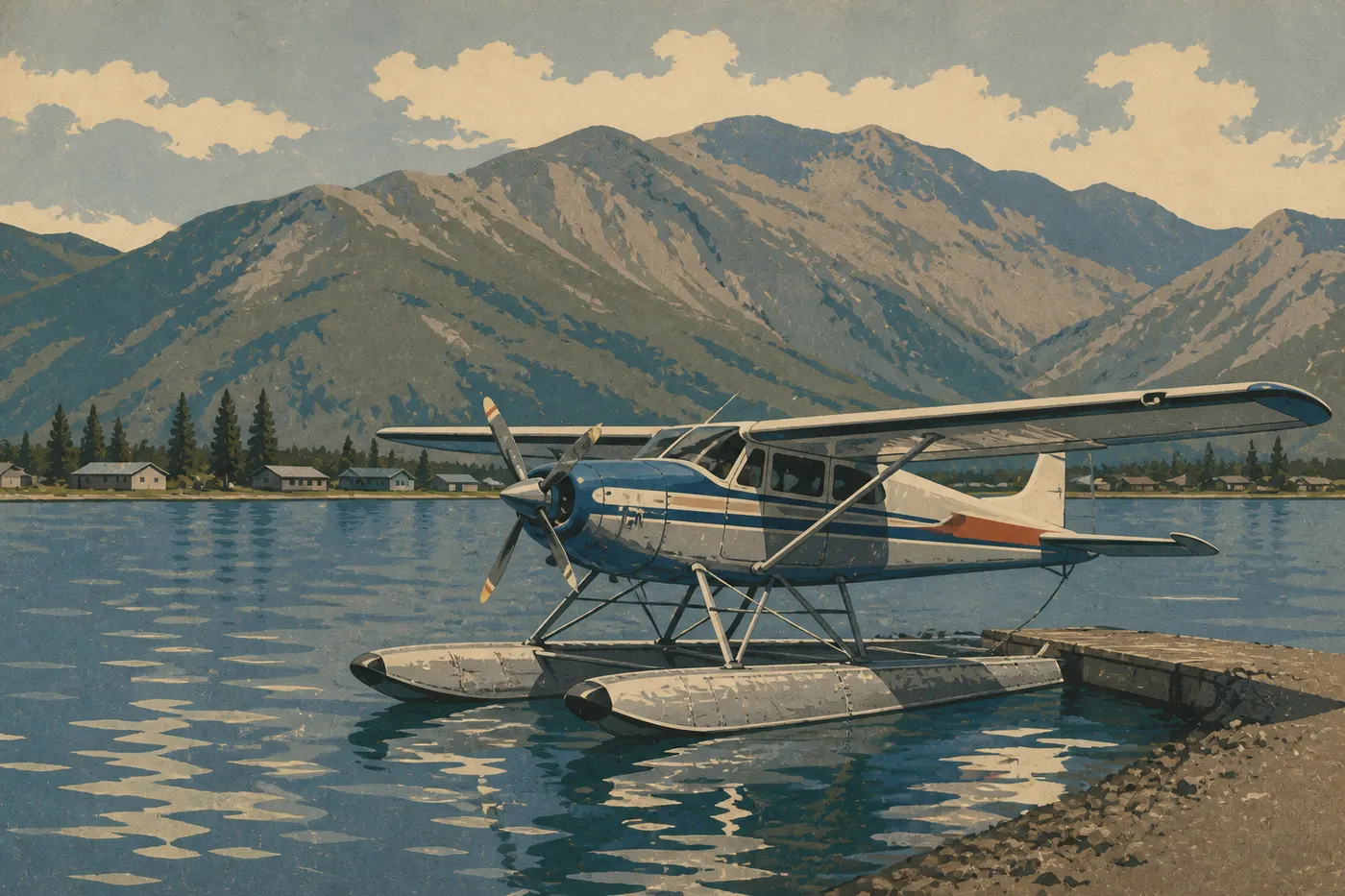
Port Alsworth is the only permanent community inside the park. The National Park Service visitor center is here, with rangers available to answer questions and share current conditions. The Tanalian Trail, lake kayaking trips, and flights to other areas all depart from here.
Lake Clark itself is a large body of water framed by the forested foothills of the Chigmit Mountains. Its cold, clear water has the blue-green color typical of glacial lakes. On a calm day, paddling across the lake is a contemplative experience: mountain reflections, silence broken only by a bald eagle or the distant hum of a Cessna, and the knowledge that you're one of very few visitors sharing this landscape that day.
Port Alsworth's lodges arrange guided outings for a range of experience levels. If you're exploring independently, the visitor center provides topographic maps and current trail information.
Twin Lakes and Richard Proenneke's Cabin
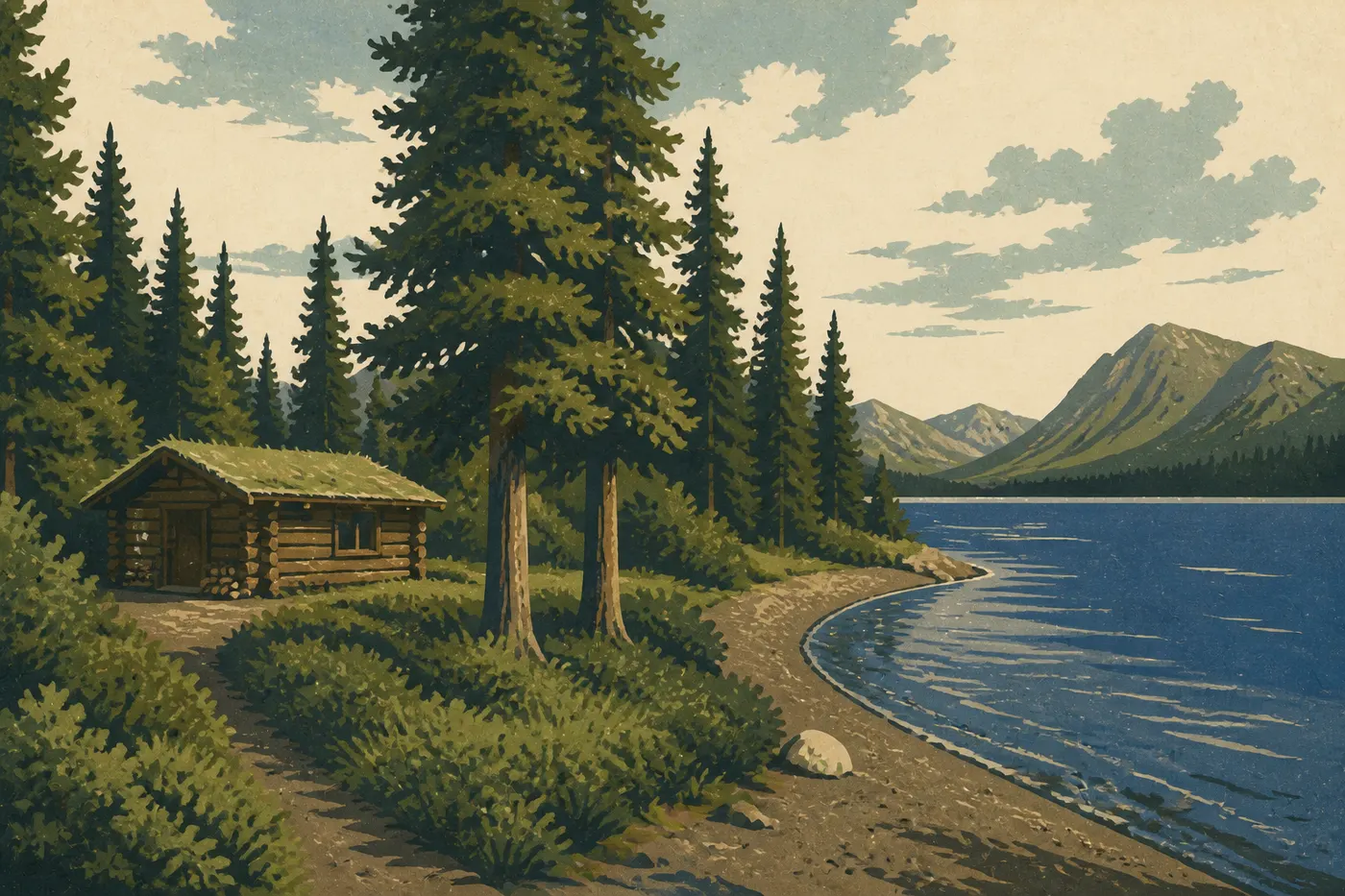
Twin Lakes, Upper Twin Lake and Lower Twin Lake, are two glacial lakes separated by a short portage and tucked beneath the Chigmit Mountains in the park's interior. Richard Proenneke settled here alone in 1968, at age 52, and built a log cabin by hand. He lived there for 30 years, documenting his daily activities on film and in his journals. The cabin and camp are now designated a National Historic Landmark and can be visited freely. The documentary made from his home movies, Alone in the Wilderness, introduced the site to the world.
Beyond the cabin, the area is especially well suited to backcountry camping and off-trail hiking. Evening light on the peaks surrounding the two lakes is exceptional from June through August, when the sun stays low on the horizon until midnight. Plan on at least two nights to enjoy the area without rushing.
The Chigmit Mountains and Volcanoes
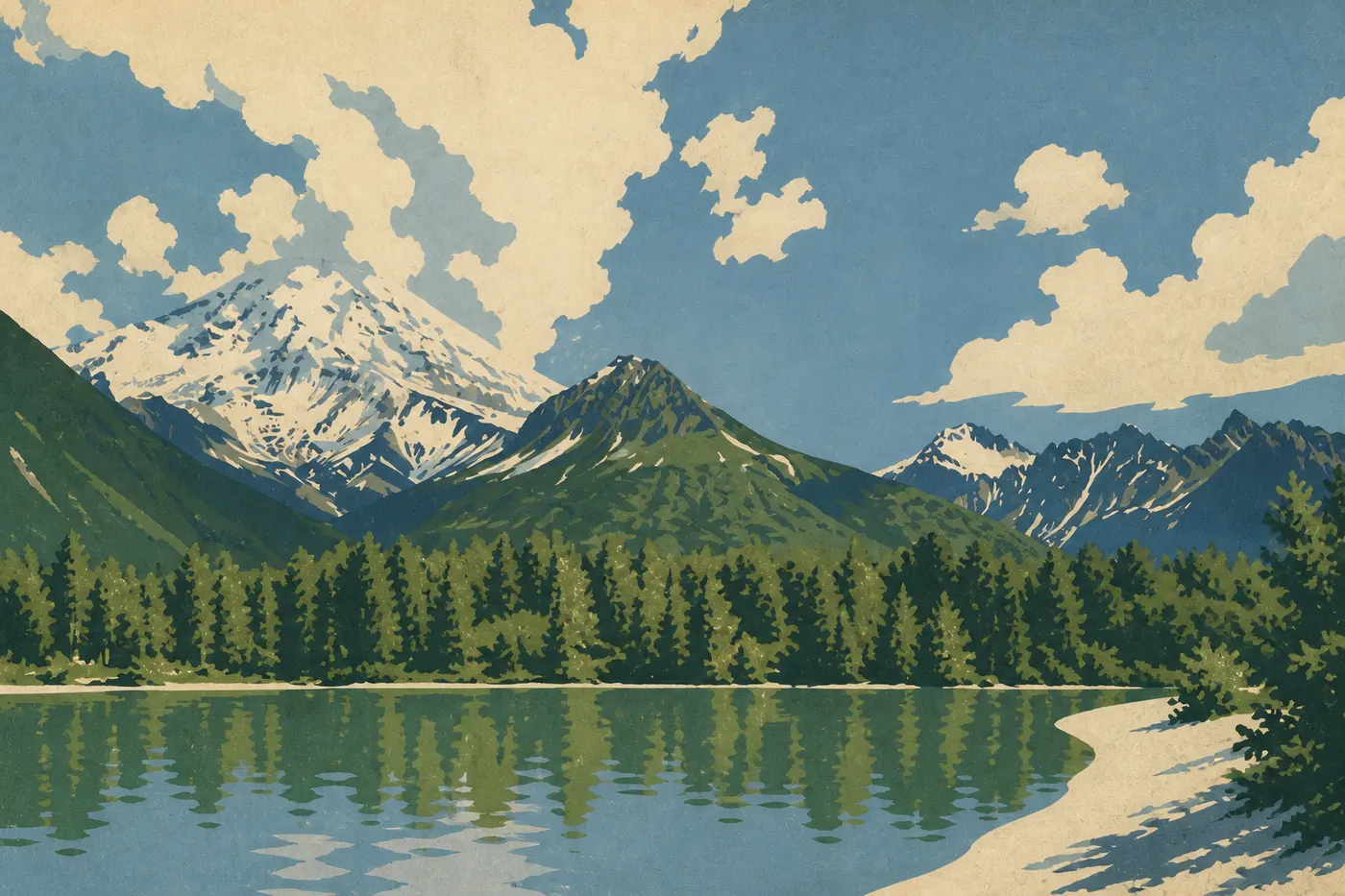
The Chigmit Mountains form the backbone of the park. They make up the northeastern end of the Aleutian Range and contain two active volcanoes, Mount Redoubt and Mount Iliamna. Mount Redoubt had a significant eruption in 2009, a reminder that this isn't static geology. Classic visitors don't hike these summits, but a bush plane flight over the range lets you see hanging glaciers between the ridges, cooled lava flows, and fumaroles without exposing yourself to the risks.
Experienced mountaineers can find routes on several peaks, but that goes beyond a standard visit and requires specific preparation and logistics.
The Interior: Turquoise, Telaquana, and Kontrashibuna Lakes

Beyond Port Alsworth and Twin Lakes, the park's interior opens onto a succession of wilderness lakes: Turquoise Lake, named for its color, Telaquana Lake, and Kontrashibuna Lake. These areas have no tourist infrastructure. You get there by plane, camp on the shore, and explore on foot or by kayak.
The Chilikadrotna River rises in this interior and joins the Mulchatna River. It's designated a National Wild and Scenic River. You can paddle it by kayak or packraft, generally from June through August depending on water levels. It's a multi-day adventure route that draws experienced paddlers from all over Alaska.
These areas aren't suitable for visitors without wilderness experience. Off-trail navigation, managing bears in camp, and food self-sufficiency are essential skills.
Hiking in Lake Clark
Lake Clark isn't a park of marked trails. Across its entire territory, you can count the established trails on one hand. Most hiking happens off-trail, through boreal forest or open terrain, with a topographic map as your guide.
The Tanalian Trail, which starts in Port Alsworth, is the accessible exception. It's marked and manageable for an average hiker in good shape, leading to Tanalian Falls after a few hours of climbing. You can continue to Kontrashibuna Lake for a full day. It's the only trail in the park that visitors without wilderness experience can reasonably tackle without a guide.
The other routes require genuine self-reliance: cross-lake traverses with portages, ridge climbs in the Chigmits, and multi-day routes through the interior. The lack of marked trails isn't a limitation. It's a defining feature of the park that protects its wild character.
Hiking in Lake Clark: trail-by-trail routes, difficulty levels, elevation gains, and preparation advice for Alaska.
Other Activities by Traveler Type
Wildlife Viewing
Wildlife viewing is one of the main reasons people visit Lake Clark. Brown bears, also called grizzlies, live throughout the park, with notable concentrations along the coast during the salmon run. Black bears occupy the wetter forested areas. Caribou, moose, and wolves roam the interior, while Dall sheep occupy the rocky heights.
Belugas frequent Cook Inlet and can be seen from shore or during a boat crossing. Bald eagles are everywhere in every season. On a morning trip to Chinitna Bay during peak salmon season, you can easily see a dozen bears in a few hours, some less than 100 feet away.
The basic bear rule is simple: never surprise or feed them, stay at least 165 feet away, cook away from your tent, and store food in approved bear canisters. Lake Clark wildlife explains how to behave around the different species you may encounter.
Sport Fishing
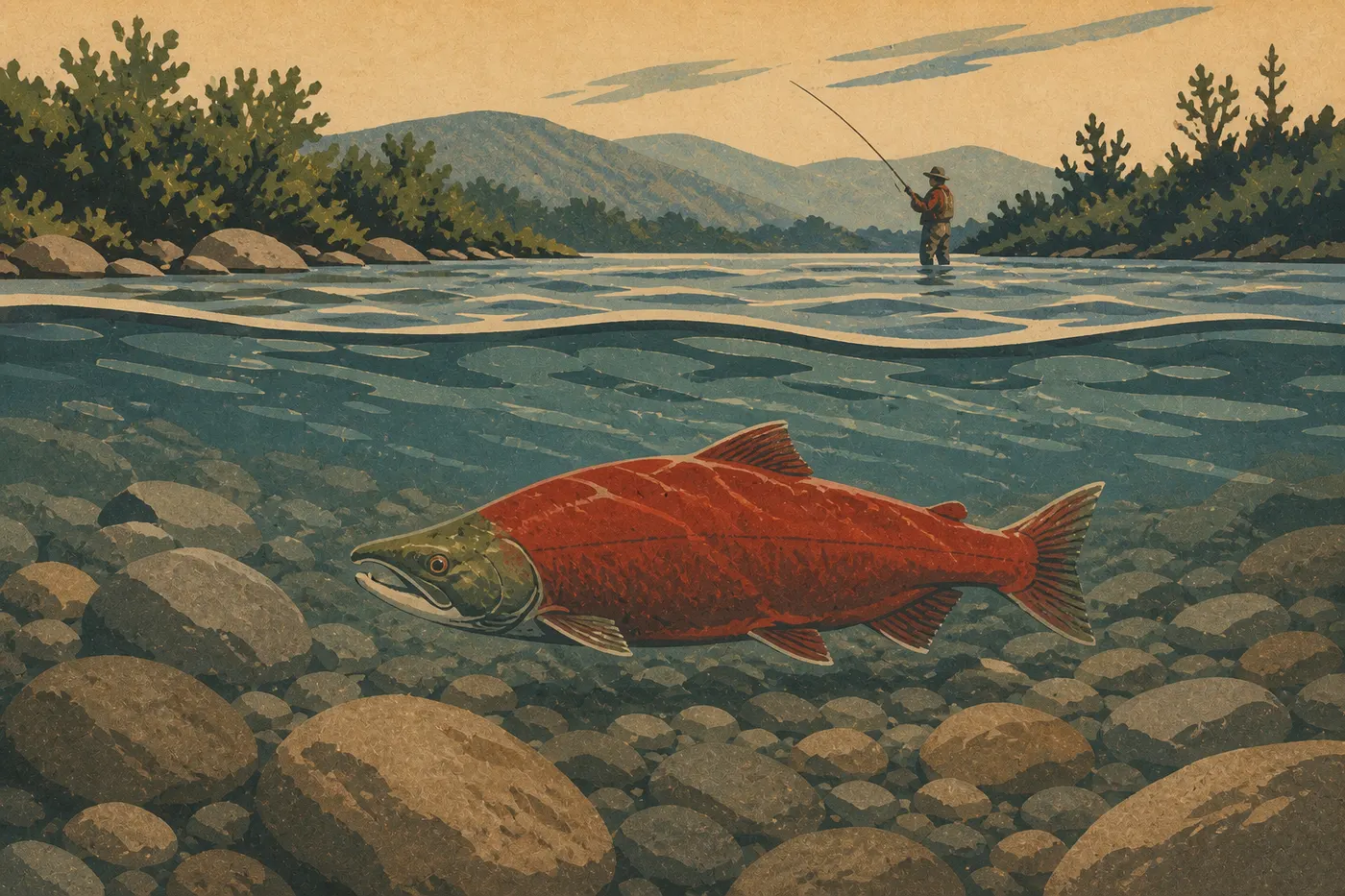
Fishing is a central part of this park, and it's often how visitors discover it in the first place. Five Pacific salmon species are present, mainly sockeye and king salmon, along with rainbow trout, brook trout, and Arctic grayling. The season runs from June through September depending on the species.
Most of the park's lodges specialize in guided fishing. You fly to an interior river, spend the day fishing with a guide, and return in the evening. Specific regulations on quotas and catch-and-release apply depending on the waterway. Check with the National Park Service or your guide before heading out.
Kayaking and Canoeing
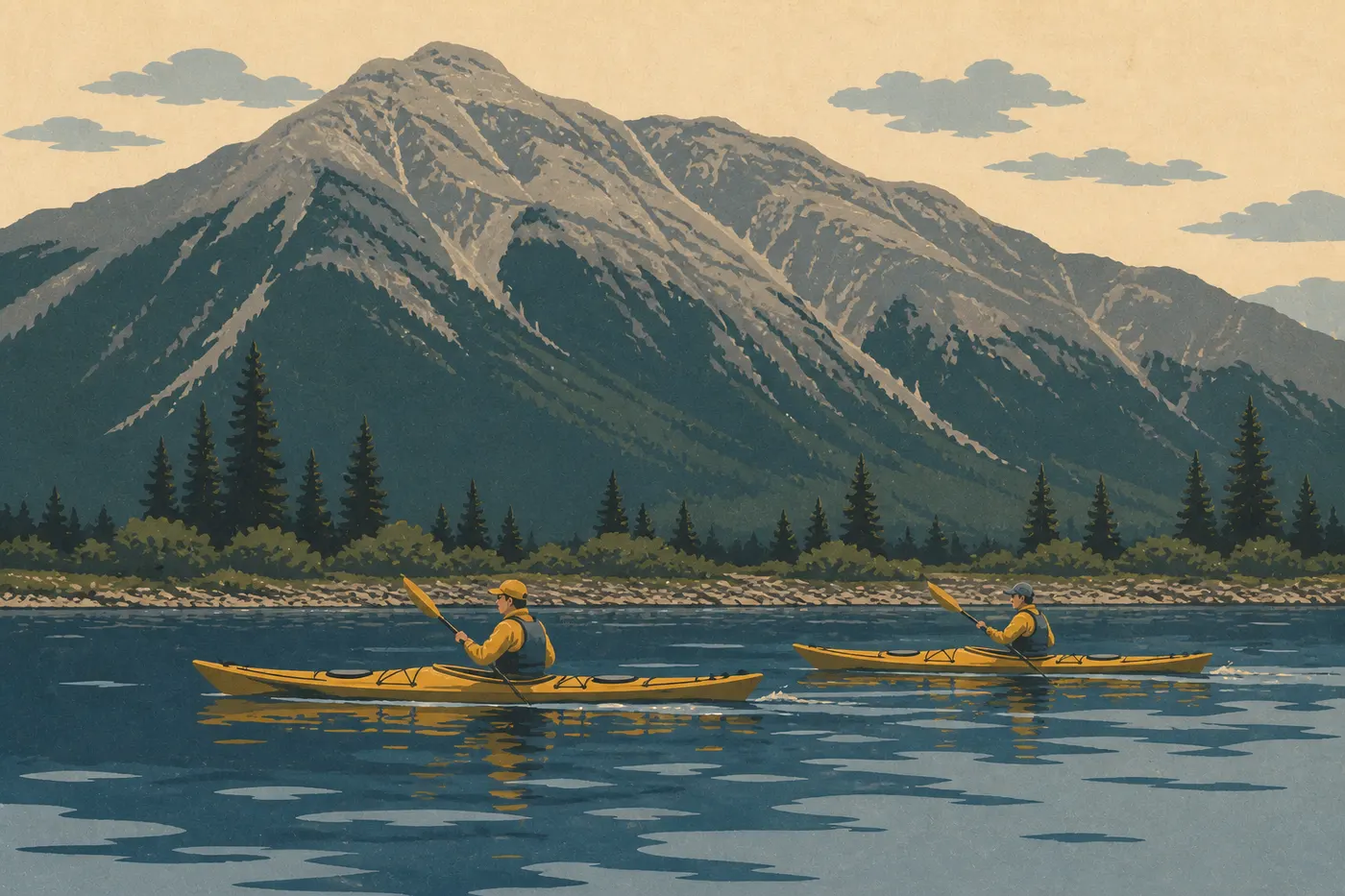
Lake Clark, Twin Lakes, and the inland lake network are ideal for kayaking. Port Alsworth outfitters rent equipment and organize multi-day trips, with a plane drop-off at the starting lake. Portaging between lakes, whose basins are often separated by a few hundred yards of flat ground or a short river, is part of the usual logistics.
Paddling the Chilikadrotna by kayak or packraft is a classic Alaska adventure: a lively river, wild scenery with no one else around, and several days without seeing another person. Water levels vary with the season and rainfall, so check conditions with a local outfitter before committing.
Bush Plane Flights
Even on a short trip, plan on at least one scenic flight. Float-equipped Cessnas and Piper Cubs are part of Alaska's visual heritage, and these planes are where you really understand the park's geography: the immense lake network, the interior's relative dryness compared with the wet coast, and the silhouettes of Mount Redoubt and Mount Iliamna rising above the clouds. Local pilots know the terrain and adjust their routes to the weather and visibility.
A simple sightseeing flight from Port Alsworth usually lasts 30 to 60 minutes. Some outfitters offer combination trips, with a scenic flight and a drop-off in a remote area, followed by a pickup the next day.
Photography and the Northern Lights

Lake Clark is exceptional territory for wildlife and landscape photography. Low visitor numbers mean uncluttered subjects: a bear on the beach without a line of photographers in the frame, or a mountain lake without a motorboat in the background. In summer, evening light stretches for hours, with the sun staying low on the horizon until midnight, creating ideal golden conditions for landscapes.
In September and October, the northern lights appear as soon as the night sky becomes truly dark again. The park's interior has no light pollution at all, making it one of the best places in Alaska to watch and photograph them.
Visiting with Kids
Lake Clark is an adventure park that requires a certain level of self-reliance. Kids as young as 10 to 12 can absolutely take part, as long as you choose guided activities: a bear-viewing trip to Chinitna Bay, kayaking on Lake Clark from a lodge, or the Tanalian hike. Avoid independent backcountry camping with young children. Managing bears in camp requires constant vigilance.
Visiting Lake Clark with kids covers age- and experience-appropriate options.
Things to Do Around Lake Clark
Katmai National Park
Katmai is the first destination to combine with Lake Clark. The two parks share the same Cook Inlet and peninsula ecosystem, with similar bear-rich wildlife, coastal scenery, and bush-plane economy. The big difference is that Katmai's Brooks Falls viewing platforms let you watch dozens of bears fish for salmon from a fixed, secure position. It's a more organized and accessible experience that complements Lake Clark's wilderness immersion. You can fly between the two parks with local operators from Homer or King Salmon.
Homer and the Kenai Peninsula
Homer is the natural logistical base for coastal trips to Lake Clark. You can reach the town by road from Anchorage in about 4.5 hours, and it has lodging, restaurants, and full services. Seaplane operators serving Chinitna Bay often depart from Homer's harbor. The Kenai Peninsula is worth a stay in its own right, with Kenai Fjords National Park and its glaciers plunging into the fjords, accessible by ferry from Seward.
Anchorage
Anchorage is the gateway to any Alaska trip. Bush plane operators serving Port Alsworth, Twin Lakes, and Chinitna Bay are mainly based here. Plan on spending a night in Anchorage when you arrive and before you leave. Flights to Lake Clark can be delayed or canceled because of fog or wind, and a buffer night prevents a lot of stress.
Ideas for road trips combining Lake Clark with nearby parks appear in our Alaska Road Trips.
The Bottom Line: What Should You See First in Lake Clark?
Lake Clark takes some effort to reach. The lack of roads calls for a different kind of planning than any American park you can reach by car. Once you accept the logistics, the rewards match the effort. On a first trip, focus on Port Alsworth and a Chinitna Bay excursion. You'll hike to Tanalian Falls, kayak on a glacial lake, and spend a morning with brown bears on the beach. That's already a thoroughly successful visit.
If you can stay for a week, add Twin Lakes and Proenneke's Cabin. The area is less spectacular for wildlife, but it offers something more intimate, a sense of quiet reflection in the silence of the Alaska interior. And no matter how long you stay, you should take at least one flight.
Is Lake Clark worth the trip? Absolutely, if you're willing to go without roads, Wi-Fi, and crowds. That very absence is what gives the park its value.
Frequently Asked Questions
Is Lake Clark worth the trip?
Lake Clark is well worth the trip for travelers looking for pristine nature, abundant wildlife, and an uncompromising wilderness adventure. The park is less accessible than Denali or Glacier Bay, but that's what protects the quality of the experience: few visitors, bears that aren't accustomed to crowds, and untouched landscapes. Budget for significant bush plane transportation costs in addition to your lodge stay.
What is there to do and see in Lake Clark?
Lake Clark offers five main types of activities: brown bear viewing at Chinitna Bay from July through September, visiting Richard Proenneke's historic cabin at Twin Lakes, hiking from Port Alsworth, including the Tanalian Trail to the falls, kayaking on Lake Clark and the inland lakes, and salmon and rainbow trout fishing. Scenic bush plane flights over the Chigmit Mountains and northern lights photography in the fall round out the options.
How do you get to Lake Clark National Park?
No road leads to Lake Clark. You can get there only by plane or boat. From Anchorage, a bush plane flight takes one to two hours depending on your destination in the park. Homer, on the Kenai Peninsula, is another departure base, closer to Cook Inlet's coast and the park's coastal areas. Flight operators and options for different budgets are listed in the Lake Clark Access & Transportation guide.
When is the best time to visit Lake Clark?
July and August see most of the visitors, with the best coastal weather, the salmon run, and bears at peak activity on the beaches. June is workable but colder. September brings fall colors and the first northern lights, with fewer visitors. For a month-by-month breakdown, the When to Visit Lake Clark guide covers the seasons.
What are the must-do activities in Lake Clark?
Lake Clark's five must-do experiences are watching bears on Chinitna Bay's beach, hiking to Tanalian Falls from Port Alsworth, visiting Richard Proenneke's Cabin at Twin Lakes, taking a scenic bush plane flight over the Chigmit Mountains, and kayaking on Lake Clark. If you can choose only two, prioritize the Chinitna Bay bears and the Tanalian hike.