
Lake Clark Itinerary: What to See in 1, 2, or 3 Days
Lake Clark isn't a park you drive through. There are no roads leading into it. Located on the Alaska Peninsula, a 1.5-hour flight from Anchorage, it can only be reached by charter plane or boat. This is true wilderness, with no road infrastructure, no marked trail connecting the different areas, and no signs out in the open country. That changes the logic of your itinerary completely. You'll plan your trip around flights and weather conditions, not a road network. For a first visit, allow 3 to 5 days to experience both sides of the park: the Cook Inlet coastline and its brown bears, and the wild interior around Lake Clark and Twin Lakes.
How Much Time Do You Need to Visit Lake Clark?
The answer depends on the kind of experience you're after.
One day: This is the minimum for a bear-viewing trip to Chinitna Bay or Tuxedni Bay from Anchorage or Homer. You'll take off in the morning, spend four to six hours on the tidal flats, and head back in the evening. It's intense and memorable, but you’ll only get one glimpse of the park.
3 to 5 days: This is the balanced option. Two days in Port Alsworth, the only village inside the park, let you combine independent hiking, fishing on Lake Clark, and a flight to Twin Lakes to see Dick Proenneke's historic cabin. A third day on the coast rounds out the trip with coastal wildlife and shoreline bears.
A week or more: This is the only format suited to fully self-sufficient wilderness backpacking. Some experienced hikers cross the park from east to west, from Turquoise Lake to Lake Clark, over about ten days without logistical support.
Always build one or two extra days into your itinerary. Charter flights depend on the weather, and disruptions are common, especially in June and August.
Access, Park Entrances, and Getting Around
Lake Clark isn't connected to Alaska's road network. You can only get there by charter plane or by boat from Cook Inlet. Charters from Anchorage, Kenai, and Homer reach the park in one to two hours. Port Alsworth is the only service hub inside the park, with an NPS visitor center, a few lodges, and the main airstrip. For operators and prices, see the Lake Clark access guide.
Once you're there, there's no shuttle and no permanent trail connecting the different areas. Every move between areas requires another charter flight. Build one or two extra days into your itinerary because weather disruptions are common. The park's transportation logistics are covered in detail in the guide to getting around the park.
The Areas of Lake Clark
The park covers two distinct climate zones. The coast is wetter, with mild temperatures. The interior gets two to four times less precipitation, with warm summers and harsh winters. Wildlife and activities differ enough to make combining both areas worthwhile on the same trip.
The Coast: Chinitna Bay and Tuxedni Bay
The coastal area opens onto Cook Inlet. Chinitna Bay is the classic destination for watching brown bears. Families gather on the tidal flats in spring to graze on coastal vegetation, then return in fall for the salmon. You can reach it by floatplane from Homer in about 45 minutes.
Tuxedni Bay, a little farther north, is even wilder. Almost deserted, it mainly attracts experienced kayakers and photographers looking to avoid crowds. Along this coast, beluga whales, harbor seals, and sea otters round out the wildlife. Coastal weather is unpredictable, so bring waterproof clothing and allow extra time in case your flight is delayed.
The Interior: Port Alsworth and Lake Clark
Port Alsworth sits on the southern shore of Lake Clark, a body of water about 40 miles long framed by the foothills of the Alaska Range. This is where you'll find the seasonal NPS visitor center, where you can pick up topographic maps and get an update on local conditions.
The lake offers Arctic char, sockeye salmon, and rainbow trout fishing. Several lodges offer guided trips. If you prefer hiking, the slopes behind Port Alsworth rise directly to ridges with 360-degree views of Mount Redoubt, Mount Iliamna, and the lake. There are no established trails or signs, so navigate with a topo map and GPS.
Twin Lakes and Proenneke's Cabin
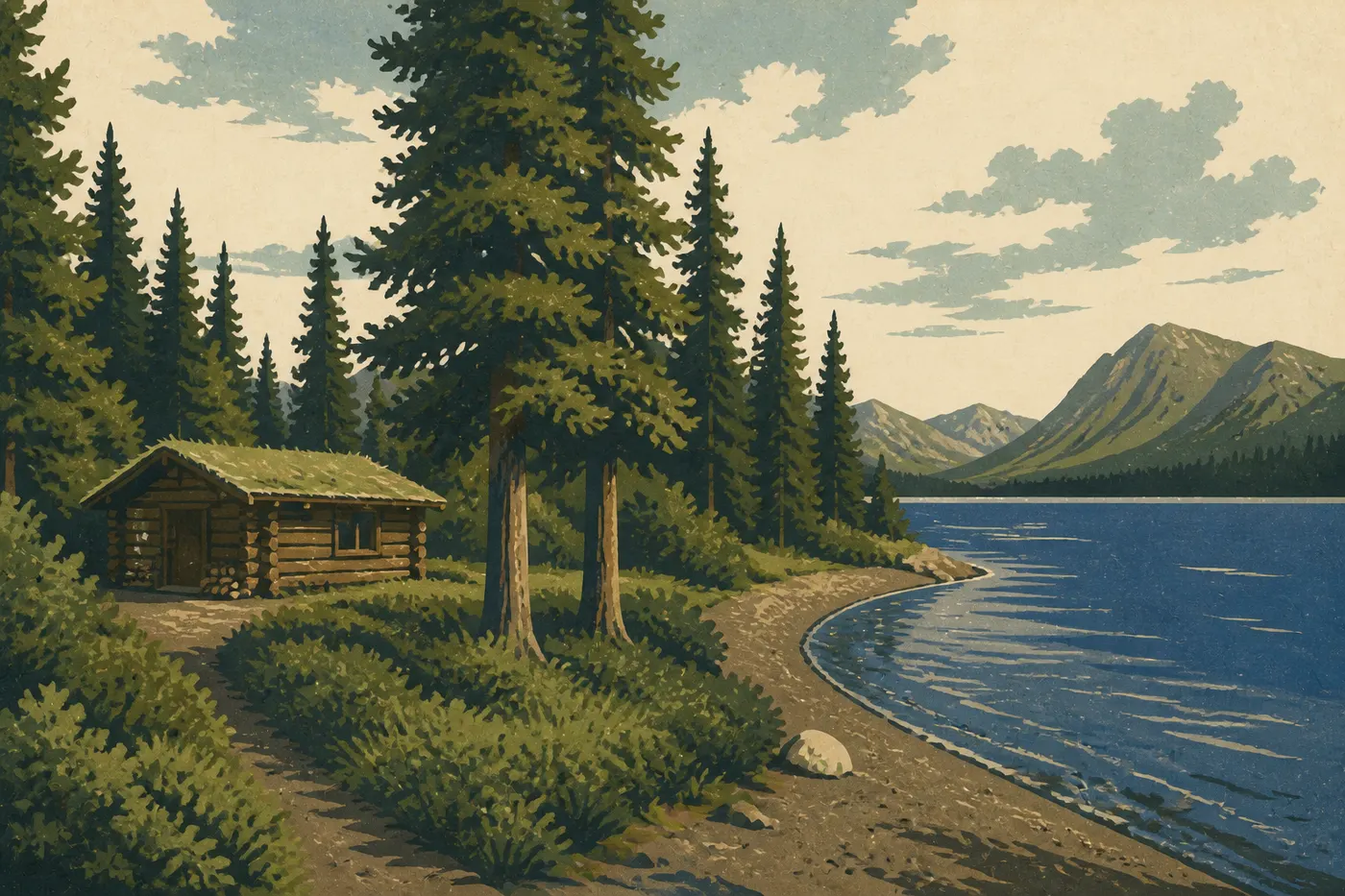
Twin Lakes, upper and lower, are home to the cabin Dick Proenneke built by himself in 1968, where he lived self-sufficiently for 30 years. The cabin is now listed on the U.S. National Register of Historic Places and can be visited during the season. An NPS ranger is sometimes there to provide context about the site.
To reach Twin Lakes from Port Alsworth, you'll need a second charter flight, which takes 20 to 30 minutes. Set in a mountain cirque surrounded by boreal forests, the two lakes offer a level of solitude few places in North America can match. They're also a good camping base for exploring the surrounding hills on foot.
Day-by-Day Itinerary
Day 1: Arrive and Settle In at Port Alsworth
Fly from Anchorage or Kenai in the morning. As soon as you arrive, spend an hour at the visitor center picking up topo maps, getting briefed on current weather conditions, and sharing your travel plan with the NPS. In the afternoon, hike freely onto the ridges above Lake Clark. There are no formal trails, just the slope, your GPS, and the view. Mount Redoubt and Mount Iliamna stand out clearly in good weather. Spend the night at a lodge or in a tent at one of the permitted dispersed camping areas.
Day 2: Fly to Twin Lakes, Visit Proenneke's Cabin, and Fish
Take an early flight in a small charter plane to Twin Lakes. Book the day before, depending on the weather. Spend the morning at Proenneke's Cabin. If a ranger is there, their stories add a tangible dimension to the site. In the afternoon, fish for rainbow trout or kayak on Upper Twin Lake. Spend the night in a tent on the shore. This is the kind of night that changes your definition of the word “quiet.”
Day 3: Return to Port Alsworth and Explore the Area
Fly back to Port Alsworth in the morning. With the afternoon free, you can fish on Lake Clark, hike the ridges again, or take a scenic flight over the volcanoes if you didn't have time on Day 1. Several operators offer this sightseeing flight from Port Alsworth.
Day 4 (Optional): Excursion to the Chinitna Bay Coast
Fly from Port Alsworth to Chinitna Bay, allowing about an hour for the flight. Four to five hours on site are enough to watch brown bears feeding on the tidal flats. Return in the late afternoon. You can also do this day trip directly from Homer if you're including Lake Clark in a broader Kenai Peninsula itinerary.
Variations Based on Your Time
Express (1 day): Bear-viewing trip to Chinitna Bay from Homer or Anchorage. No overnight stay. This works if Lake Clark is one stop on a longer Alaska trip.
Classic (3 to 5 days): The itinerary described above, using Port Alsworth as your base, with a flight to Twin Lakes and a coastal excursion. It's the ideal format for seeing both of the park's environments without overloading the logistics.
Wilderness (7 days or more): Self-sufficient backpacking between the interior lakes, a crossing from Turquoise Lake to Lake Clark, or a lodge-based fishing trip with daily flights to excursions. This is for experienced off-trail navigators with complete emergency gear and satellite communication, such as a phone or PLB beacon. Never head into a remote area without filing a travel plan with the NPS.
As part of an Alaska itinerary: Lake Clark combines naturally with Katmai National Park, for salmon-eating bears at Brooks Falls, and the Kenai Peninsula. This multi-park option is covered in our Alaska Road Trip guide.
Itinerary Map
The NPS publishes an official Unigrid map, available free of charge at the Port Alsworth visitor center and for download from nps.gov. It covers the entire park, including dispersed camping areas, elevations, and the main bodies of water.
For travel beyond the immediate Port Alsworth area, supplement it with USGS topographic maps at a scale of 1:63,360. A GPS loaded with offline maps is essential. There are no beacons or signs between the different areas. The Lake Clark map guide brings together the resources you can use to plan your trip.
Where to Stay Along the Itinerary
Options are limited and must be booked several months in advance. In Port Alsworth, a few lodges offer all-inclusive packages with lodging, meals, and flightseeing excursions. Dispersed camping is allowed throughout the park without a reservation, but there are no facilities: no restrooms, no running drinking water, and no designated sites. Water treatment is mandatory, either filtration or chemical purification.
Wilderness campsites are available near Twin Lakes and Chinitna Bay. The Lake Clark lodging guide covers the lodges currently operating, typical price ranges, and Alaska camping regulations.
Extend Your Trip: What to See Around Lake Clark
Lake Clark fits naturally into an Alaska Peninsula itinerary. Katmai National Park, to the south, is less than an hour away by air. Watching brown bears fish for salmon at Brooks Falls in July and September is one of North America's most striking wildlife scenes. More accessible by car from Anchorage, the Kenai Peninsula offers glaciers, fjords, and marine wildlife, with Seward and Kenai Fjords National Park as key stops.
These extensions go beyond the scope of this itinerary and are covered in dedicated guides: Alaska Road Trip and Alaska Region.
The Ideal Itinerary for Your Time Frame
Three days in Lake Clark give you access to both sides of the park: the wild interior around Port Alsworth and Twin Lakes, and the bear-filled coast at Chinitna Bay. Five days let you add another excursion and absorb a weather delay without cutting into your plans. With less than a day, focus on a single excursion from Homer or Anchorage. In every case, build extra days into your schedule. At Lake Clark, weather conditions have the final say over flight schedules.
Frequently Asked Questions
How many days do you need to visit Lake Clark?
Allow 3 to 5 days for a thorough visit to Lake Clark, combining the coastal and interior areas. One day is enough for a bear-viewing trip from Homer or Anchorage.
What's the best itinerary for visiting Lake Clark?
The classic trip starts in Anchorage with a charter flight, uses Port Alsworth as a base, includes a flight to Twin Lakes to visit Proenneke's Cabin, and ends with a day at Chinitna Bay watching brown bears.
Can you drive through Lake Clark?
No. Lake Clark isn't connected to Alaska's road network. You can only get there by charter plane, whether on wheels, floats, or skis depending on the season, or by boat from Cook Inlet.
What's the best time to visit Lake Clark?
June through August offers the best overall conditions, with flights available, lodges open, and active coastal wildlife. The best time to visit Lake Clark guide breaks down the calendar by activity and trip type.
How much is the entrance fee at Lake Clark?
Lake Clark doesn't charge an entrance fee. Transportation is the main expense. Expect to pay several hundred dollars per person for a round-trip charter flight from Anchorage, depending on the operator and your destination in the park.
Is Lake Clark worth visiting?
If you're looking for an American national park without crowds or roads, Lake Clark is one of the best choices. It's one of the least-visited parks in the national park system, which makes for an authentic wilderness experience far from lines and crowds.
What shouldn't you miss at Lake Clark?
Brown bears at Chinitna Bay, Dick Proenneke's historic cabin at Twin Lakes, salmon fishing on Lake Clark, and a scenic flight over Mount Redoubt and Mount Iliamna. Details on each activity are in the Lake Clark activities guide.