Lake Clark National Park: The Complete Visitor Guide
Lake Clark is an Alaska national park without a single road. You can reach it only by small plane or boat, one to two hours from Anchorage by air. Smoking volcanoes, turquoise lakes, sockeye salmon, and brown bears fishing along the tidal flats: this is postcard Alaska, except that hardly anyone goes there. Plan on at least three days in the park to make the trip worthwhile, or a week if you want to combine bear viewing, hiking, and wild rivers.
Here's how we'd plan the trip, area by area, including the real sticking points (air logistics, weather, and budget) and the places that make the effort worthwhile.
Lake Clark at a Glance: Where the Park Is and How to Get There
The park covers part of the Alaska Peninsula, southwest of Anchorage and north of Katmai National Park. Here's the key thing to understand right away: Lake Clark isn't connected to any road network. You can't get there by car, RV, or bus. There are only two options:
- Bush plane, which is the most common option. Charter flights from Anchorage take one to two hours, often in a floatplane. Depending on the season, the aircraft lands on floats in open water or on skis on a frozen lake. Air services focus mainly on Port Alsworth, the small community that serves as the gateway, and the lodges along the coast.
- Boat. This is possible from some points along Cook Inlet, but it's best left to travelers who are well organized and familiar with marine conditions.
Port Alsworth has most of the services: the park information center, airstrips, a few places to stay, and guides. Most visits start from here.
This air-based logistics shapes everything else about your trip: how long you stay, what you spend, and what you bring. Each point is covered in detail in its own guide.
Entrance Fees, Passes, and Reservations
Lake Clark doesn't charge an entrance fee. The park is open and free to enter, like most Alaska parks without roads or entrance stations. Your budget goes toward transportation and lodging instead, which are the real expenses here.
There are two important points to keep in mind. First, no entrance fee doesn't mean no advance planning. Some lodges, bear-viewing guides, and air services require reservations, sometimes a year ahead for the busy season. Second, rules can change. For entrance fees and annual passes for the park system, including America the Beautiful and exemptions, the National Park Fees & Passes page has the basics. If you collect national park stamps, the Port Alsworth information center offers them too. See the Passport & Stamps page.
Reservations, Permits, and Rules to Follow
Reservations
There is no daily quota or reservation required to enter the park. However, booking an air taxi is essential, and you should often do it several months ahead for the busy season (July and August). The outfitter lodges fill up quickly during the same period. Don't count on finding last-minute availability.
Permits
- Wilderness camping: No permit is required. We strongly recommend checking in with the rangers in Port Alsworth before any backcountry trip.
- Sport fishing: Every adult must have an Alaska fishing license. Buy one online from the Alaska Department of Fish and Game before you leave.
- Hunting: Hunting is allowed in the park's preserve areas, but not in the national park proper, and requires valid Alaska licenses.
- Drones: Drones are prohibited without special authorization from the park.
Rules to Follow
The park follows Leave No Trace principles. These rules are non-negotiable:
- Food storage: Bear canisters are required in the backcountry. A bear that becomes habituated to human food eventually gets euthanized, so this is your direct responsibility.
- Wildlife distances: Stay at least 100 feet from bears and 165 feet from other large mammals. Never get between a mother and her young.
- Fires: Fire use varies by area and conditions. Check the current alerts in Port Alsworth before you leave.
- Trash: Pack out everything you bring in. There are no trash cans in the backcountry.
Getting Around Lake Clark
Once you land, forget about scenic roads and shuttles. There aren't any. You get around here in four ways.
- On foot, from Port Alsworth, using the Tanalian area trail network toward the falls and Tanalian Lake.
- By bush plane, by chartering another short flight to reach the coast, Twin Lakes, or a remote lake. This is the park's internal transportation system.
- By boat or kayak on the larger lakes, including Lake Clark itself.
- By packraft or raft on the designated wild rivers. This is for experienced travelers or guided trips.
In other words, every area requires a small expedition to reach. That's what makes the park demanding, and it's also why you'll see so few people there.
How Long Should You Spend Visiting Lake Clark?
Given the effort required to get there, a day trip makes no sense. Here's our rule of thumb:
- 3 days: The realistic minimum. That gives you time for a bear-viewing trip on the coast and a day of hiking around Port Alsworth, with a weather buffer (essential, as explained below).
- 5 to 6 days: The right pace for combining the coast, Twin Lakes, and some time on the water without rushing.
- 7 days or more: Necessary if you want to run a river or travel independently through the backcountry.
Weather means you need to build in some slack. A flight can be delayed half a day by cloud cover. Our ready-to-use, day-by-day itineraries are on the Itineraries & Trip Length page.
Plan your visit
What to See and Do in Lake Clark
The heart of the park is best understood by geographic area. Each one has its own character and access requirements.
Road trip journal · 4 areas
Port Alsworth and the Tanalian Area
This is the home base. Trails from the village lead to Tanalian Falls and the lake of the same name, with views of Lake Clark. These half-day or full-day hikes don't require another charter flight, making them ideal for your first or last day, when the weather may keep you on the ground.
The Coast: Brown Bear Viewing
Along Cook Inlet, around areas such as Chinitna Bay and Silver Salmon Creek, brown bears dig for clams at low tide and fish for salmon in summer. This is the main reason most people visit. A guide leads you through the coastal meadows, where you watch the bears from the required distance. During our scouting trips, this is when we understood why people accept the cost of the flight: seeing a mother and her cubs graze 165 feet away, with no barriers or crowds, is something you don't forget.
Twin Lakes and Proenneke's Cabin
Twin Lakes is home to the hand-built cabin of Richard “Dick” Proenneke, who lived there as a hermit for decades starting in 1968. The site is listed on the National Register of Historic Places and is open to visitors. For many wilderness enthusiasts, it's a pilgrimage. Access is by floatplane.
Lakes and Wild Rivers
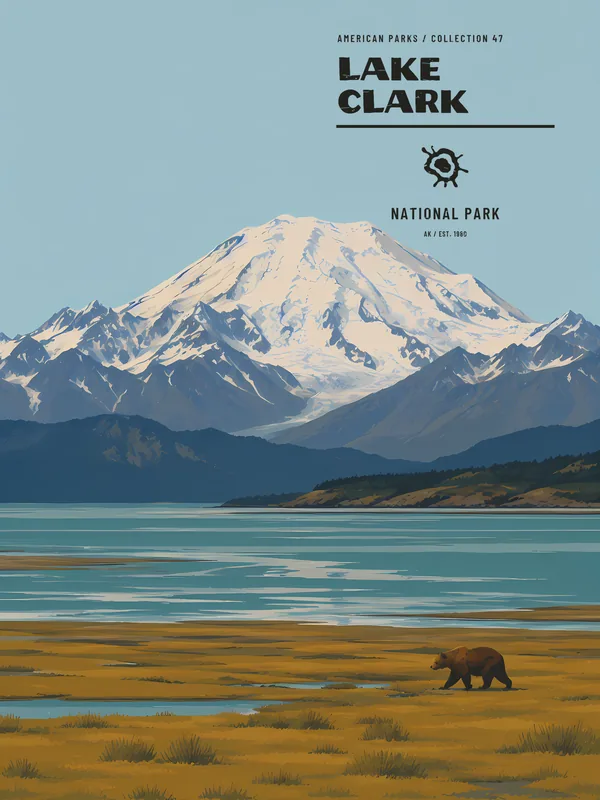
Lake Clark, a long glacial body of water, shapes the park. Farther on, the Chilikadrotna River, Mulchatna River, and Tlikakila River are designated Wild and Scenic Rivers, attracting experienced rafters and packrafters. Two active volcanoes, Mount Redoubt and Mount Iliamna, watch over the whole landscape.
The details, including activity profiles, guided trips, and difficulty levels, are covered in the guides below.
Explore the park
The Best Hikes in Lake Clark
Don't expect the marked trail networks found in Southwestern parks. Hiking in Lake Clark mostly means cross-country travel, with a few routes around Port Alsworth. The Tanalian Falls Trail is the most accessible introduction. Beyond that, you'll be traveling through wild country and need to follow bear-country precautions, including making noise, carrying bear spray, and keeping your distance. Our comparison of the routes, with distances converted to miles and elevation gains, is covered in detail on our Hiking page.
The detailed guide The Best Hikes in Lake Clark for Every Experience Level A practical guide to hiking in Lake Clark, organized by area and experience… Read the guide →Wildlife and Plants to See
Brown bears are the stars, but the park is also home to moose, caribou, wolves, Dall sheep at higher elevations, and especially runs of sockeye salmon that feed the entire ecosystem. Seals and seabirds live along the coast. Inland, look for eagles and loons. The golden rule is simple: watch without feeding or approaching, and store food properly. Our species-by-species wildlife calendar is on our Wildlife page.
The detailed guide Lake Clark Wildlife: What Animals to See and Where to Find Them Brown bears, caribou, orcas, and wolves Read the guide →When to Visit Lake Clark
The useful season is short. Summer, roughly June through September, brings easier access by floatplane, the sockeye runs, and peak bear activity. In the off-season, from Labor Day in early September through Memorial Day in late May, visitor services slow down and access depends heavily on ice. The lakes begin freezing in November and thaw in April, which means flights may use skis. Freezing temperatures and snow are possible year-round and common from September through early June.
Two climates coexist here, which changes what you pack. The coast is wetter and milder. The interior gets two to four times less precipitation, but reaches higher temperatures in summer and lower temperatures in winter. Our When to Visit and Weather pages cover the details month by month, with temperatures converted to Fahrenheit.
The detailed guide When to Visit Lake Clark: Best Times, Seasons, and Month-by-Month Guide Visit in July and August for bears and salmon, or June for midnight sun Read the guide →Where to Stay in Lake Clark
There are no large park hotels here. Lodging consists of lodges, often with all-inclusive packages that include flights and guided outings, a few places to stay in Port Alsworth, and self-sufficient camping for more experienced travelers. Booking ahead is the rule, especially for bear-viewing lodges during the busy season. RVs simply don't belong here. Remember, the park has no roads.
Stay in the park
Around Lake Clark: Things to Do Nearby
Since you arrive and leave through Anchorage, the park fits naturally into a larger Alaska trip. Its immediate neighbor to the south is Katmai National Park, famous for the bears at Brooks Falls, and many travelers combine the two. Anchorage is the logistical base for supplies, rentals, and flights. To build the full route, the Road Trips section will help connect your Alaska stops, while the Regions section places Lake Clark among the state's other parks.
Our Take: Is Lake Clark Worth the Trip?
Yes, as long as you're willing to deal with the logistics and the cost. Lake Clark isn't a park you pass through, because there are no roads to pass through it. You come here on purpose, charter a plane, work around the weather, and pay more than you would elsewhere. In return, you get something rare today: bears without crowds, lakes without docks, and nature that hasn't been staged for tourism. For a first, short, highly organized trip to Alaska, Katmai or Denali will be easier. If you're looking for quiet, genuine wilderness, and relaxed wildlife viewing, Lake Clark is a thoroughly defensible choice.
Frequently Asked Questions
Is Lake Clark Worth the Trip?
Lake Clark is worth the trip if you're comfortable with its access requirements and cost. You'll find brown bears without crowds, volcanoes, glacial lakes, and some of the lowest visitation in the national park system. In return, you have to charter a plane and build in a weather buffer. Our Our Take section explains who it's right for.
Can I Drive to Lake Clark?
No. You can't drive to Lake Clark because the park isn't connected to any road. You can reach it only by small plane, with a one- to two-hour flight from Anchorage, or by boat. That means leaving your RV in Anchorage. Everything is explained on our Getting There & Transportation page.
What Is the Most Beautiful Place in Alaska?
The most beautiful place in Alaska depends on what you're looking for, and Lake Clark is a serious contender for bear viewing and landscapes of lakes and volcanoes. To compare it with the state's other parks and build an itinerary, see the Regions section.
What Is the Most Beautiful City in Alaska?
The most beautiful city in Alaska is a matter of personal taste. For a trip to Lake Clark, though, Port Alsworth is the useful local community and gateway to the park, while Anchorage serves as the logistical base. Our Getting There & Transportation and Itineraries & Trip Length pages have the planning details.
The American Parks shop
Bring Lake Clark home
Our park-inspired creations, made to order and shipped to your door.