
Lake Clark by RV: Campgrounds, Rules, and Tips
Lake Clark is one of the least-visited national parks in the United States, and there's a very practical reason: no roads lead there. Unlike Yellowstone or Zion, you can't park your RV beside a glacial lake and head out hiking. You can only get in by charter plane or boat from Anchorage or Homer, after a one- to two-hour flight over the Alaskan wilderness.
The short answer: no, you can't drive an RV inside the park. The number-one constraint is the complete lack of a road network. You can camp, though, in a tent in the wilderness after landing on a gravel beach or an open-water lake.
The setup that works for RV travelers is to rent an RV in Anchorage, drive down the Sterling Highway to Homer, then fly to Lake Clark for three to seven days in the backcountry. The RV is your home base between expeditions, not your way to get around the park.
Can You Drive and Camp in an RV at Lake Clark?
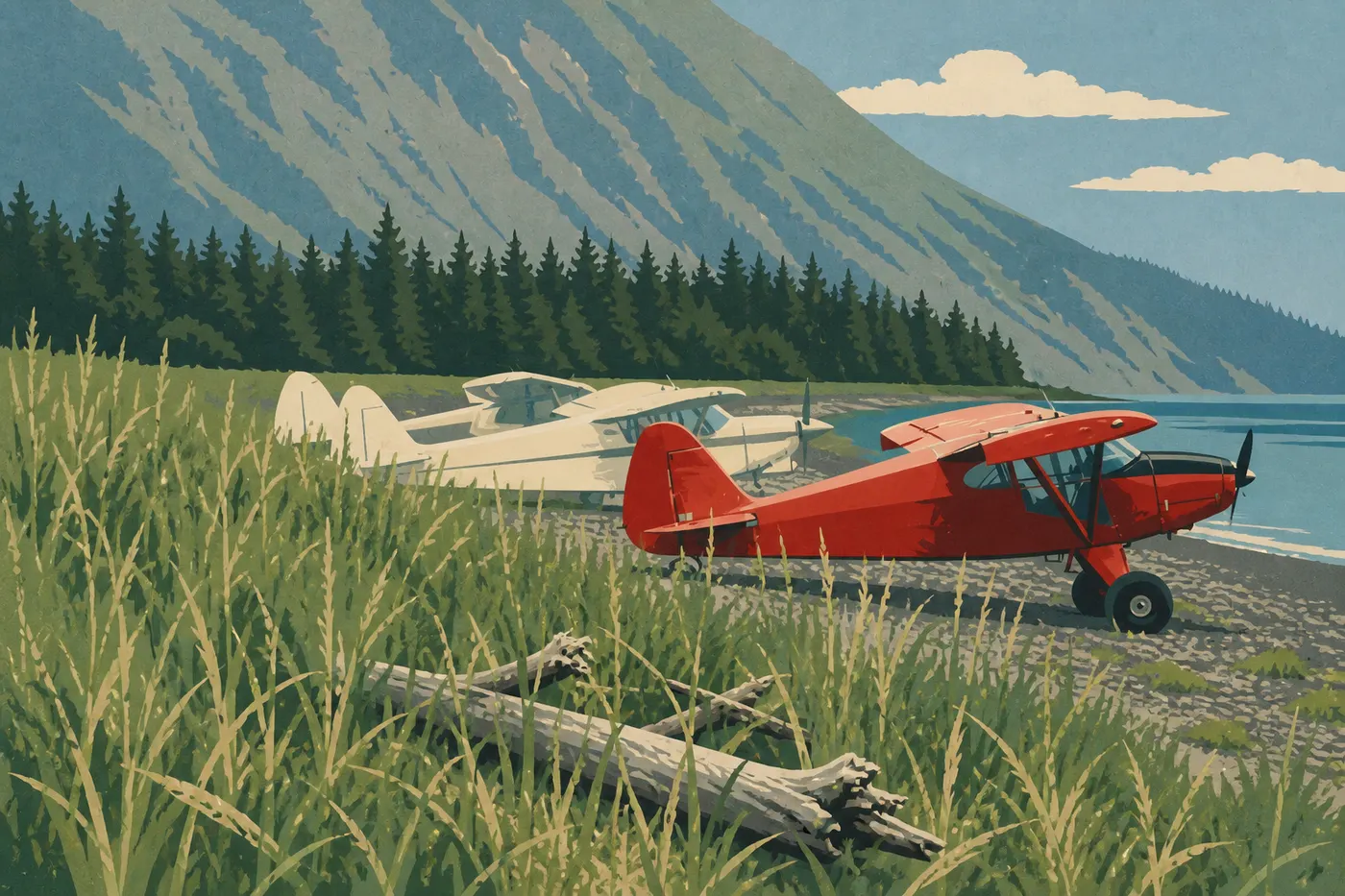
No, and there's no ambiguity about it: Lake Clark has no drivable roads. The park lies on the Alaska Peninsula, about 150 miles southwest of Anchorage, and the state's road network ends well before the park boundary. To get there, you'll need to charter a plane from Anchorage or Homer. You'll land on a sandy beach, on an open-water lake by floatplane, or on Port Alsworth's gravel airstrip. Port Alsworth is the park's only village.
Inside the park, camping is strictly wild camping. There are no developed campgrounds, numbered sites, or electrical hookups. You pitch your tent wherever the terrain allows, following NPS wilderness camping rules.
Restrictions and Access: What the Park Requires
Since there are no roads, the usual restrictions on vehicle length or low-clearance tunnels don't apply here. The environment has its own rules, and they're often more demanding.
The park is open 24/7 year-round. NPS services are very limited outside the season from Labor Day, in early September, through Memorial Day, in late May. Outside that window, don't expect to find a ranger on site or organized resupply services.
The park spans two distinct climate zones. The coast along Cook Inlet is wetter and has milder temperatures. The interior is drier, with warm summers and harsh winters. Frost and snow can arrive at any time of year, although they're simply more common from September through early June. The lakes begin to freeze in November and thaw in April. Ice conditions determine whether the plane needs floats or skis to land.
For wilderness camping, the NPS requires you to use a bear canister to store all food and scented items. Brown and black bears live throughout the park. This isn't a suggestion. It's a firm requirement, and you need to prepare for it before leaving Anchorage. You can get the full instructions from the NPS or at the Port Alsworth visitor center.
Campgrounds in the Park (Wilderness Only)
Lake Clark has no developed campgrounds in the usual sense. There are no numbered picnic tables, electrical hookups, or showers. Here's what you'll actually find.
Port Alsworth
Port Alsworth is the only village inside the park, accessible by air from Anchorage in about an hour. You'll find the NPS visitor center, a few private lodges, and a gravel airstrip. You can camp there, but it's undeveloped: there are no official sites or facilities. It's also the logical starting point for reaching other areas of the park by smaller plane.
Interior Wilderness: Lakes and Rivers
Twin Lakes, Turquoise Lake, and the banks of the Tlikakila River are the most popular wild-camping areas. You can only reach them by charter plane from Port Alsworth or Anchorage. The scenery is alpine, hikers are few and far between, and the nights are breathtakingly quiet.
The Cook Inlet Coast
The coastal area, especially around Chinitna Bay, is popular for brown bear viewing in summer, when bears fish for salmon in shallow rivers. You can get there by floatplane from Homer. A local guide is strongly recommended for this kind of camp.
Wild Camping and Boondocking Around Lake Clark
Boondocking inside the park is the norm: all camping is wild camping. RV travelers who want to camp before or after their flight will find plenty of alternatives along the Kenai Peninsula road network.
Homer Spit, at the end of the road that shares its name, has a municipal campground where RVs can park facing Kachemak Bay. It's one of the departure points for floatplanes to Lake Clark. Chugach National Forest, accessible from the Sterling Highway, also allows free dispersed camping on BLM and USFS lands. For boondocking spots and service areas in the region, our Alaska Region guide offers an overview of nearby options.
Dump Stations, Water, and Services
Inside Lake Clark, there are no services at all. No dump stations, developed drinking-water sources, or gas stations. You need to be completely self-sufficient for any stay in the park.
The following towns on the road network offer full RV services:
- Anchorage: plenty of campgrounds with full hookups for water, electricity, and dumping. This is where you'll get your vehicle ready before the flight.
- Homer: dump stations are available at campgrounds in town and on Homer Spit.
- Soldotna: several RV parks with full services along the Sterling Highway.
Fill up with fuel, top off your water tanks, and dump your gray water before leaving the road network. You won't find any of that in Port Alsworth or elsewhere in the park.
Which Camping Option Is Right for You?
You want to see bears up close: head for the Cook Inlet coast around Chinitna Bay. Brown bears fish for salmon there from July through September. A guided operator is the safest option for this kind of trip.
You're looking for total solitude: Twin Lakes and the area around Turquoise Lake offer spectacular alpine scenery and practically no other visitors. You can reach them by charter plane from Port Alsworth.
You're planning a family Alaska road trip: a day trip by floatplane from Homer is enough to experience the park without spending a night in the wilderness. You can sleep comfortably in your RV in Homer, then explore Lake Clark for the day. Our Lake Clark with Kids guide covers the options that work for children.
You fish: the salmon rivers in the interior, including the Mulchatna River and Chilikadrotna River, are among Alaska's most renowned. A self-sufficient five- to seven-day fishing camp is the classic format, with all your gear flown in.
Renting an RV to Visit Lake Clark
If you're visiting Alaska for Lake Clark, renting an RV in Anchorage still makes sense. It gives you a mobile base for exploring the Kenai Peninsula, Kenai Fjords, or Denali before or after your flight into the park. The major rental agencies are concentrated in Anchorage, a few miles from the international airport.
Book the RV and charter flight at the same time. During peak season, in July and August, floatplanes often fill up several weeks in advance. Set aside a separate budget for the flight, entirely apart from the RV rental cost.
For the vehicle, a camper van or a small Class B RV makes parking easier at campgrounds in Homer or Anchorage, which are often tighter than campgrounds in the southern states.
RVs and Pets, Budget, Reservations: What to Know
Pets: dogs are allowed in the park, but they must be leashed at all times. At a wild campsite, having a dog makes bear management more complicated. A bear canister is still mandatory, and you'll need to be extra vigilant at night.
Budget: admission to the park is free, with no NPS entrance fee. The main expense is the charter flight, which varies by distance and operator. Campgrounds in Kenai Peninsula towns run about $25 to $50 per night for a site with full hookups.
Reservations: you don't need a reservation for wild camping inside the park unless you're staying at a lodge or using a guided operator. Campgrounds in Homer and Anchorage, however, can be booked on Recreation.gov or directly through the operators. For July and August, book several months ahead.
When to go: the ideal window for visiting Lake Clark runs from mid-June through late August. For information on opening seasons and weather conditions, see when to visit Lake Clark and the park's weather conditions.
In Summary: Our Lake Clark RV Plan
Let's be direct: Lake Clark isn't an RV park in the usual sense. You can't drive there, dump your tanks there, or plug in your RV. It's pure wilderness, accessible only by air or boat.
Here's the plan that works: rent an RV in Anchorage, drive to Homer along the Sterling Highway, stopping at Kenai Fjords or on the Kenai Peninsula, then take a floatplane for three to seven days in the park. The RV is your home base between expeditions. To plan the whole trip, start with our complete Lake Clark guide.
Frequently Asked Questions
Can you stay in Lake Clark National Park?
You can absolutely stay in Lake Clark National Park, but only by wild camping or at a private lodge after reaching the park by air or boat from Anchorage or Homer. No roads lead there.
How do you get to Lake Clark National Park?
To reach Lake Clark National Park, take a charter plane or floatplane from Anchorage, about a one- to two-hour flight, or from Homer on the Kenai Peninsula. No road connects the park to Alaska's road network.
Can you visit Lake Clark by RV?
You can't enter Lake Clark by RV because the park has no access roads. RV travelers use their vehicle to explore the Kenai Peninsula, then fly to the park for a wild-camping trip.
Can you park an RV anywhere in Lake Clark?
There are no parking lots or road infrastructure in the park. Your RV stays in road-connected towns such as Anchorage, Homer, or Soldotna while you explore the park by air.
How much does a campsite at Lake Clark cost?
Wild camping inside the park is free and doesn't require advance reservations. Campgrounds with full services are in Anchorage and Homer and cost about $25 to $50 per night, depending on the site.
How large is Lake Clark National Park?
Lake Clark National Park & Preserve covers about 6,300 square miles, making it one of Alaska's larger national parks. The park includes coastline along Cook Inlet, mountains, active volcanoes, and an extensive network of inland lakes and rivers.