
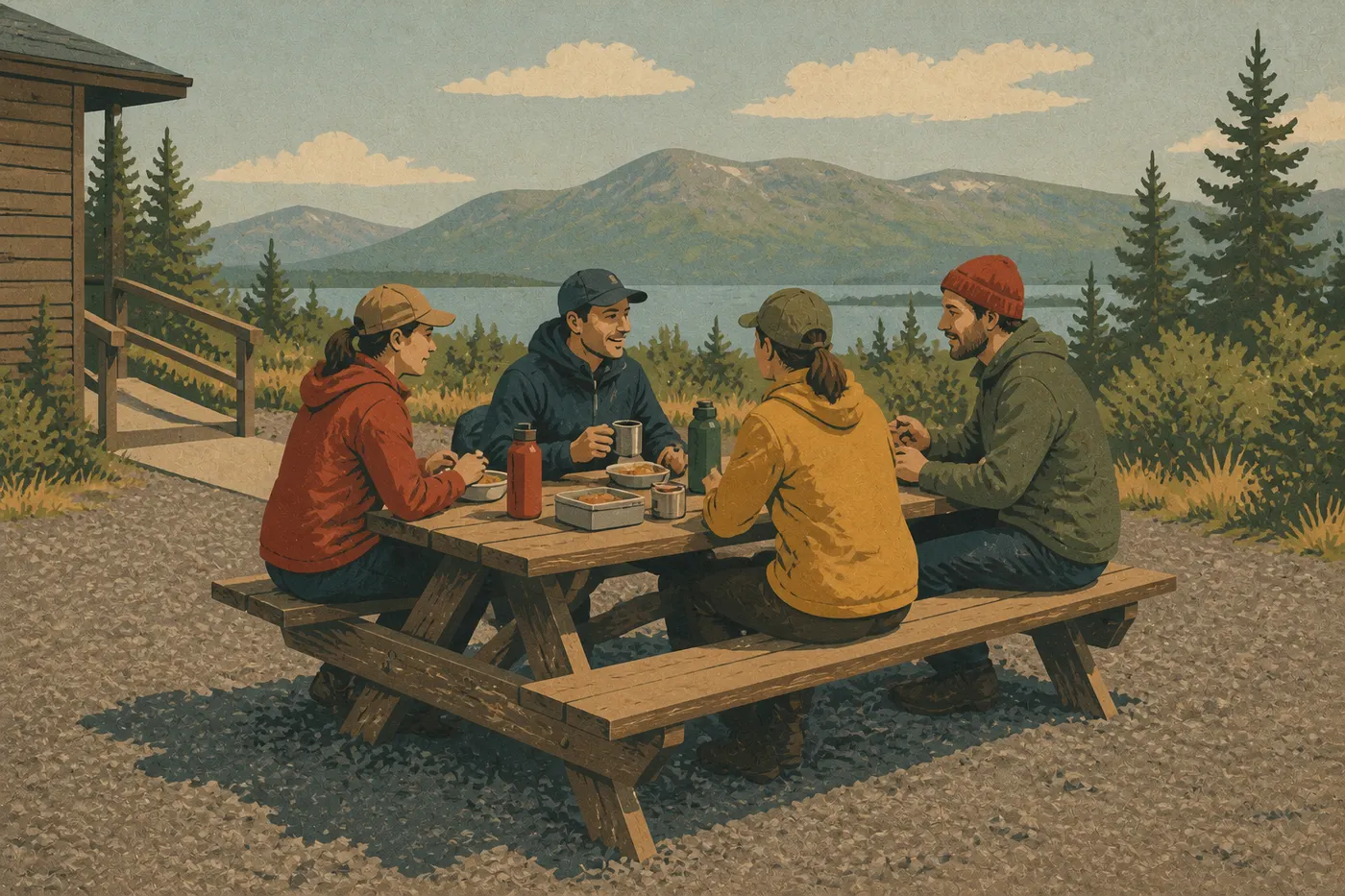
Where to Eat in Lake Clark: Restaurants in and Around the Park
Lake Clark isn't like any national park you know. No roads lead here, so there are no trail-side cafeterias, snack bars, or grocery stores. You have three options for eating well: stay at a wilderness lodge where meals are included in your package, bring all your supplies from Anchorage (a 1- to 2-hour flight), or combine the two. This logistical setup can surprise first-time visitors, but it's an essential part of the Lake Clark experience.
Eating in the Park: Wilderness Lodges
With no access road, private lodges are the only places to eat inside the park. Nearly all offer full board. Meals are included in the cost of your stay and prepared on-site by a dedicated cook. Supplies arrive by plane, which explains the high prices but also the consistently excellent quality.
Lake Clark Lodge
Located in Port Alsworth on the lakeshore, this lodge focuses on carefully prepared meals served in a communal dining room. Dinner brings guides, pilots, and travelers together around tables with panoramic views of the lake and, on clear days, the snow-covered peaks of the Alaska Range. Find the Lake Clark lodge packages in our lodging guide.
Redoubt Lodge
Located on the park's southern coast, this lodge highlights seasonal cooking based on local ingredients and the day's catch. Expect grilled Pacific salmon, steamed halibut, and garden vegetables in summer. Menus change with each delivery. I was lucky enough to try sockeye salmon caught in the Newhalen River that very morning. The difference from frozen fish was unmistakable.
Lake Clark Resort
Run by three generations of the same family, this lodge mainly hosts sport-fishing groups. The approach is straightforward: full board, a laid-back atmosphere, and daily catches that regularly make it onto the dinner menu.
Food and Picnics: Feeding Yourself in the Backcountry
If you're camping or traveling through the backcountry without staying at a lodge, the rule is simple: bring everything in from outside the park. There are no general stores, ATMs, or shops inside the park.
Stock up in Anchorage. The supermarkets and outdoor stores there are well supplied. Choose foods that pack plenty of calories without taking up much room, such as freeze-dried meals, energy bars, nuts, and hard cheeses. Always pack an extra one or two days of food. Weather can delay your return flight without warning.
Food storage requires special care. The park's black bears and grizzlies are drawn to even the faintest food odor. Bear canisters are required for all backcountry campsites. The Lake Clark camping guide explains the storage rules you need to follow.
For picnics, lakeshores and terraces above the Mulchatna Valley offer spectacular settings. Always pack out your trash. Leave No Trace principles apply strictly here.
Where to Eat Nearby: Anchorage and Port Alsworth
Anchorage, Your Logistics Base
Anchorage is the almost universal starting point for getting to Lake Clark. The city has a surprisingly diverse food scene, including restaurants serving local specialties such as salmon, halibut, and Aleutian king crab, along with craft breweries and open-air summer markets. Use your time in town to enjoy a proper dinner and stock up on supplies. The Lake Clark access guide covers the charter companies that serve the park from Ted Stevens Anchorage International Airport.
Port Alsworth, the Only Lakeside Community
Port Alsworth is home to the NPS visitor center and a few permanent residents, fewer than 200 people in all. Services are very limited. No restaurant is open to the public year-round. Some community lodges accept outside visitors for lunch or dinner, but only with advance reservations. Capacity is too limited to accommodate walk-ins.
Our Picks by the Occasion
For a quick bite on an easy hike: a granola bar in your pocket and a thermos of hot coffee. Simple, but reliable on a muddy trail in the coastal rain. The Lake Clark hiking guide will help you choose your route.
For families: full-board lodges take food logistics off your plate, which makes a stay with kids much easier. Ask when you book whether the menus can be adapted. The Lake Clark family guide covers other useful practical details.
For a table with a view: the panoramic dining room at Lake Clark Lodge faces the lake and the Alaska Range. It's one of the best-situated tables in the entire state.
For a catch-to-table experience: several lodges will cook the salmon you caught that day. Nothing matches the freshness or the satisfaction of eating your own catch.
The Specialty to Try in Lake Clark: Alaska Sockeye Salmon
Lake Clark is home to one of the largest sockeye salmon spawning habitats in North America. Every summer, millions of fish make their way up the park's rivers, including the Newhalen River and Tlikakila River, as well as the tributaries of Lake Kontrashibuna. The spectacle draws grizzlies to the banks and sport fishermen from around the world.
Sockeye is known for its bright red flesh, firm texture, and more pronounced flavor than farmed Atlantic salmon. Lodges serve it grilled, cold-smoked, or as tartare, depending on the cook's mood. The main run takes place from July through August. Outside that window, lodges supplied by plane offer high-quality frozen or smoked salmon, but nothing compares to fish caught that day.
Wildlife feeds on salmon, too, and watching it from the bank is an essential part of the experience. The Lake Clark wildlife guide gives the best times and areas for wildlife viewing.
Practical Tips: Hours, Reservations, Budget, and Season
Reservations are required. Lodges have very limited capacity. Plan to book your stay, and therefore your meals, several months ahead, especially for June through August. There is no such thing as a spontaneous meal in Lake Clark.
Budget. An all-inclusive lodge stay generally runs from $500 to $1,000 per person per night, including meals. For a fully self-sufficient trip, most of your budget goes toward the air charter and backcountry food and camping gear. Our complete Lake Clark guide offers more budget benchmarks by trip type.
Hours. The park is open 24 hours a day, 7 days a week, year-round. Lodges generally operate from June through September. Outside that window, most close or reduce capacity to a handful of individual reservations.
Season. Conditions vary sharply between the coast, where it's damp with moderate temperatures, and the park's interior, which is drier and has harsher winters. Freezing temperatures and snow can occur at any elevation, even in midsummer. An extra emergency ration in your pack is always a good idea. Our Weather page breaks down conditions month by month.
In Brief: Where to Eat Based on Your Trip
| Trip type | Meal option | What to do before you leave |
|---|---|---|
| Lodge (Lake Clark Lodge, Redoubt Lodge, Lake Clark Resort) | Full board included in the rate | Book several months ahead |
| Camping and backcountry | Complete self-sufficiency. Bring all your supplies | Shop and prepare in Anchorage |
| Short stay in Port Alsworth | Very limited options. Call ahead | Check availability with local lodges |
To plan your entire trip, see our complete Lake Clark guide.
Frequently Asked Questions
Where can I eat in Lake Clark?
Inside the park, the only places to eat are wilderness lodges such as Lake Clark Lodge, Redoubt Lodge, and Lake Clark Resort, along with a few similar properties. They serve full-board meals. No independent restaurant, cafeteria, or grocery store is open to the public. Outside the park, Anchorage is the main base for dining on your own.
What food specialty should I try in Lake Clark?
Lake Clark's must-try specialty is Alaska sockeye salmon. Every summer, millions of salmon make their way up the park's rivers. Lodges serve it grilled, smoked, or as tartare, ideally after it's been caught that same morning.
Can I stay in Lake Clark National Park?
Yes. Several wilderness lodges offer full-board accommodations, from standard comfort to upscale options. Our Where to Stay page and Hotels & Lodges guide introduce the available properties and booking requirements.
How do I get to Lake Clark, Alaska?
Lake Clark isn't accessible by road. You can get there only by air charter or floatplane from Anchorage, with flights taking 1 to 2 hours depending on your destination in the park, or by boat from some coastal communities. Our Access & Transportation page covers the companies and usual fares.