
Kenai Fjords Wildlife: What to See and Where to Look
Kenai Fjords is Alaska in its rawest form: fjords carved into volcanic rock, glaciers calving straight into the sea, and marine life so abundant it takes your breath away. The park's five signature species are the orca, humpback whale, sea otter, Steller sea lion, and tufted puffin. On land, black bears, brown bears, moose, and mountain goats round out the picture. Most wildlife sightings happen from a boat. The park's wild heart is coastal, and that's where you'll find it.
Kenai Fjords' Signature Wildlife
Orca (Orcinus orca)
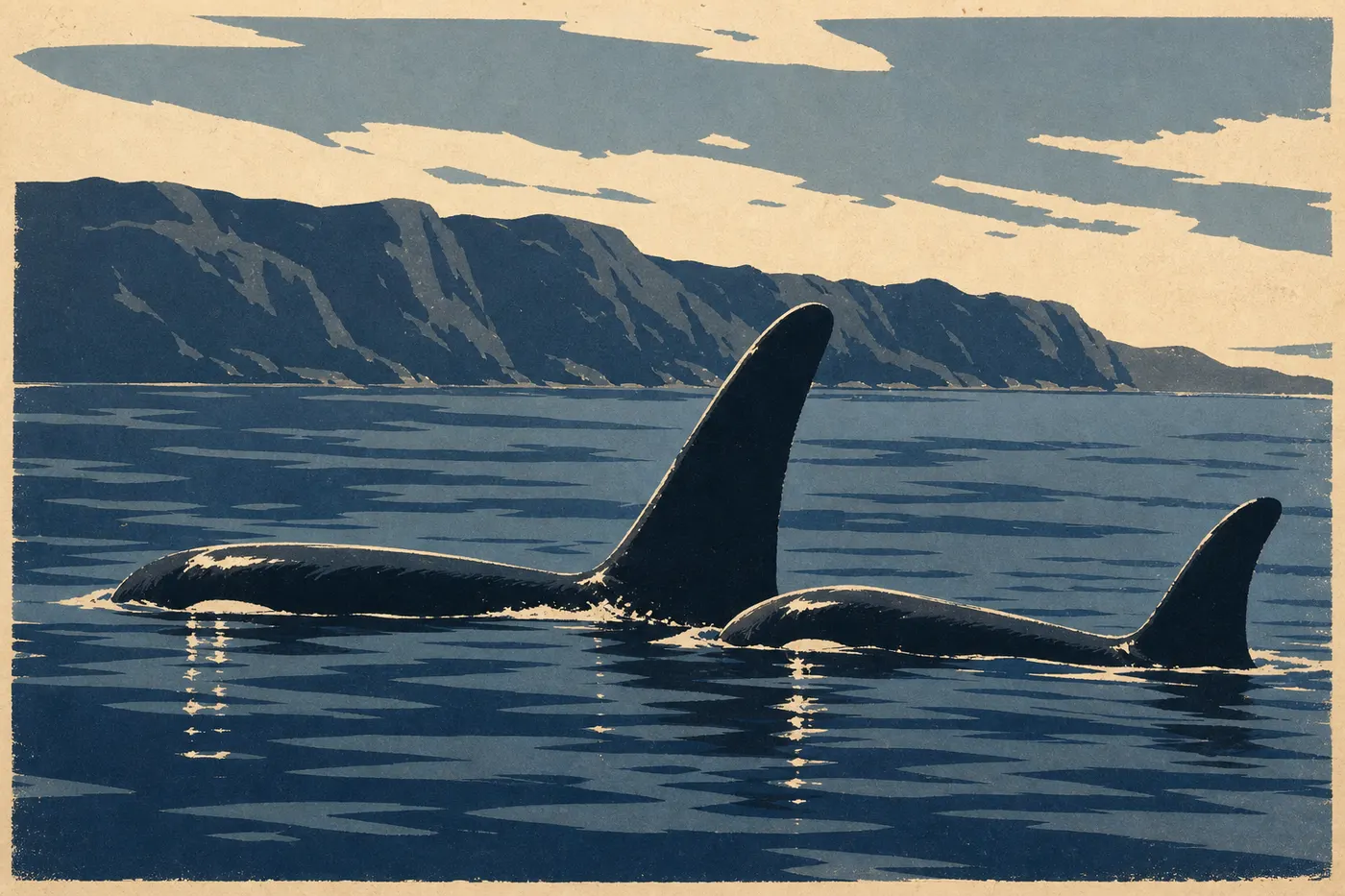
The orca is the fjords' top predator. Two types of groups frequent these waters. Resident orcas feed exclusively on salmon and other fish. They move around less and are often seen in deep bays. Transient orcas, on the other hand, hunt marine mammals, especially seals and sea otters, and cover much greater distances.
You can tell them apart by their dorsal fins. Resident males have straight, rigid fins that can reach 6 feet tall, while transient orcas have more curved fins. Transient groups often announce themselves with a sudden burst of activity at the surface. They hunt as a coordinated pack, a fascinating sight that can also be hard to watch.
Humpback Whale (Megaptera novaeangliae)
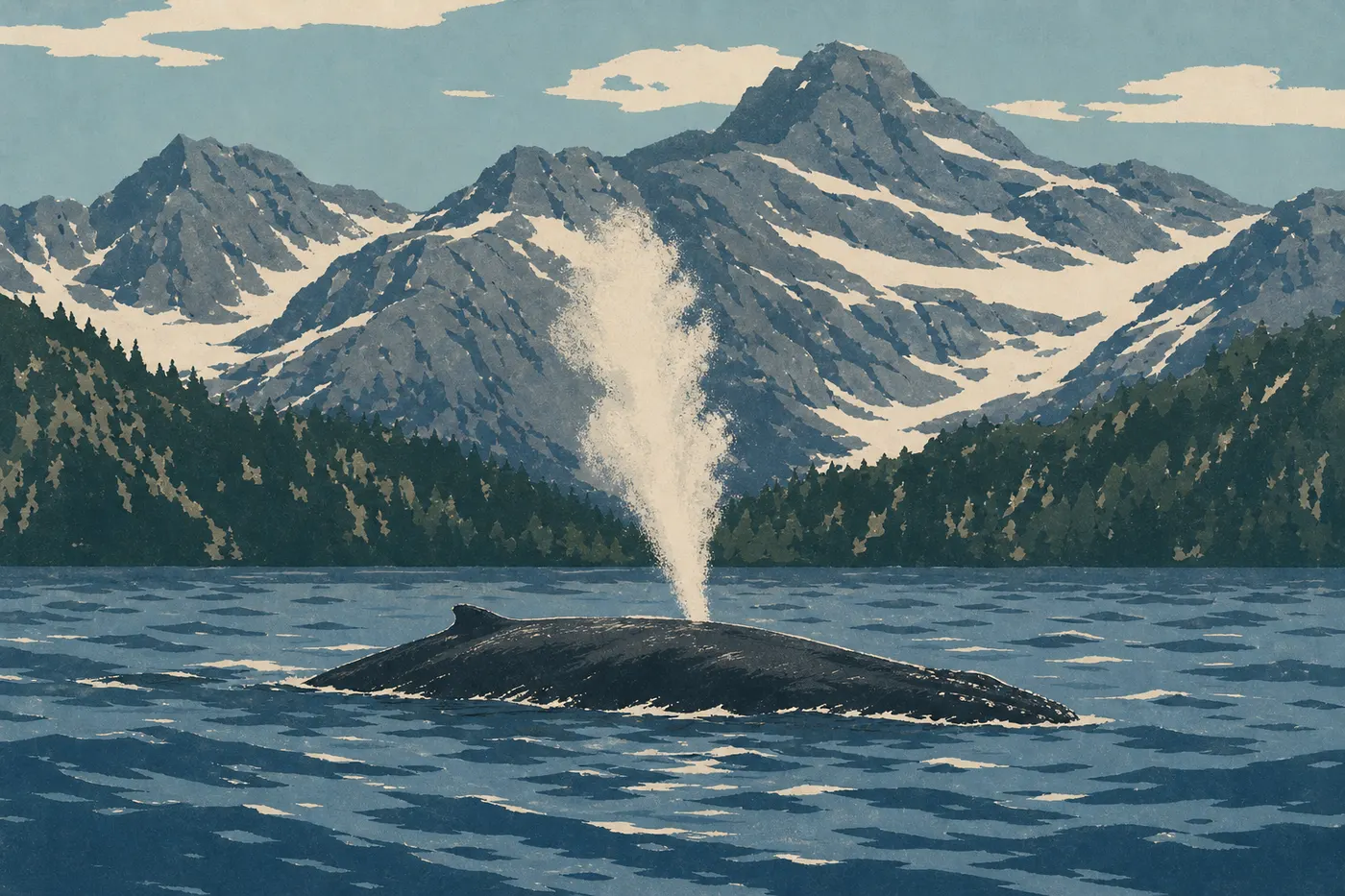
The humpback whale is the star of day trips from Seward. It measures 43 to 56 feet long and can weigh up to 40 tons. Identification is easy: its pectoral fins are the longest of any whale, reaching up to a third of its body length, and the underside of its tail is unique to each individual, like a fingerprint.
It arrives in the fjords in May to feed on herring and krill all summer. Spectacular behaviors are common: full breaches, tail slaps, and blows visible from several hundred yards away. Here's a practical tip: watch for clouds of gulls circling tightly. When the birds dive, a whale is gathering its prey just below the surface.
Sea Otter (Enhydra lutris)
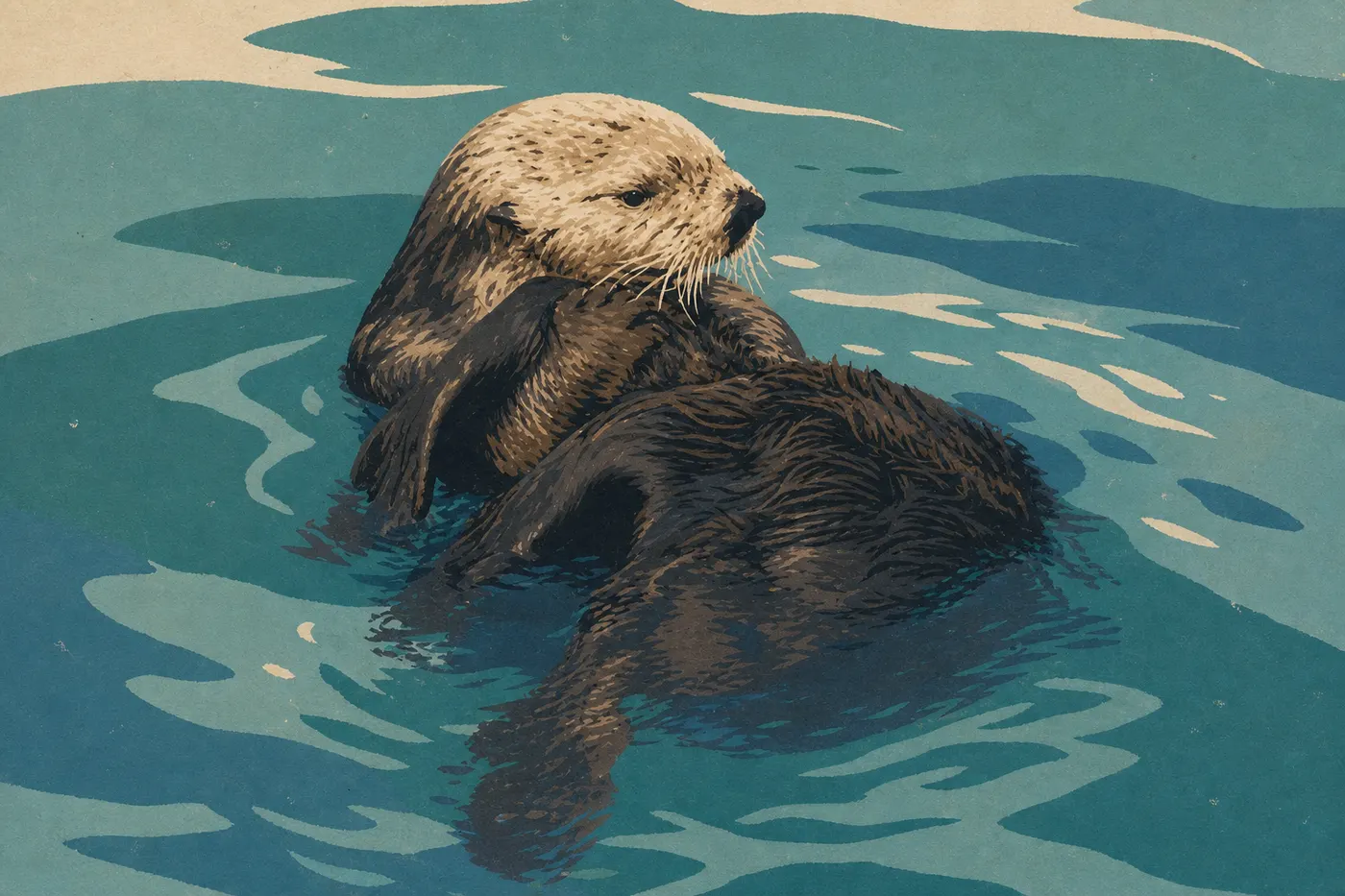
The sea otter spends nearly its entire life offshore, sleeps on its back while holding onto kelp, and uses pebbles as tools to crack open shellfish and sea urchins. Its fur is the densest in the animal kingdom, with about 150,000 hairs per square centimeter. That fur serves as a wetsuit in water as cold as 39°F.
At Kenai Fjords, you'll regularly see them in sheltered bays, often in floating groups called rafts. If you spot small round heads rubbing their faces intently, those are sea otters. They aren't being vain. They're trapping air in their fur to stay warm.
Steller Sea Lion (Eumetopias jubatus)
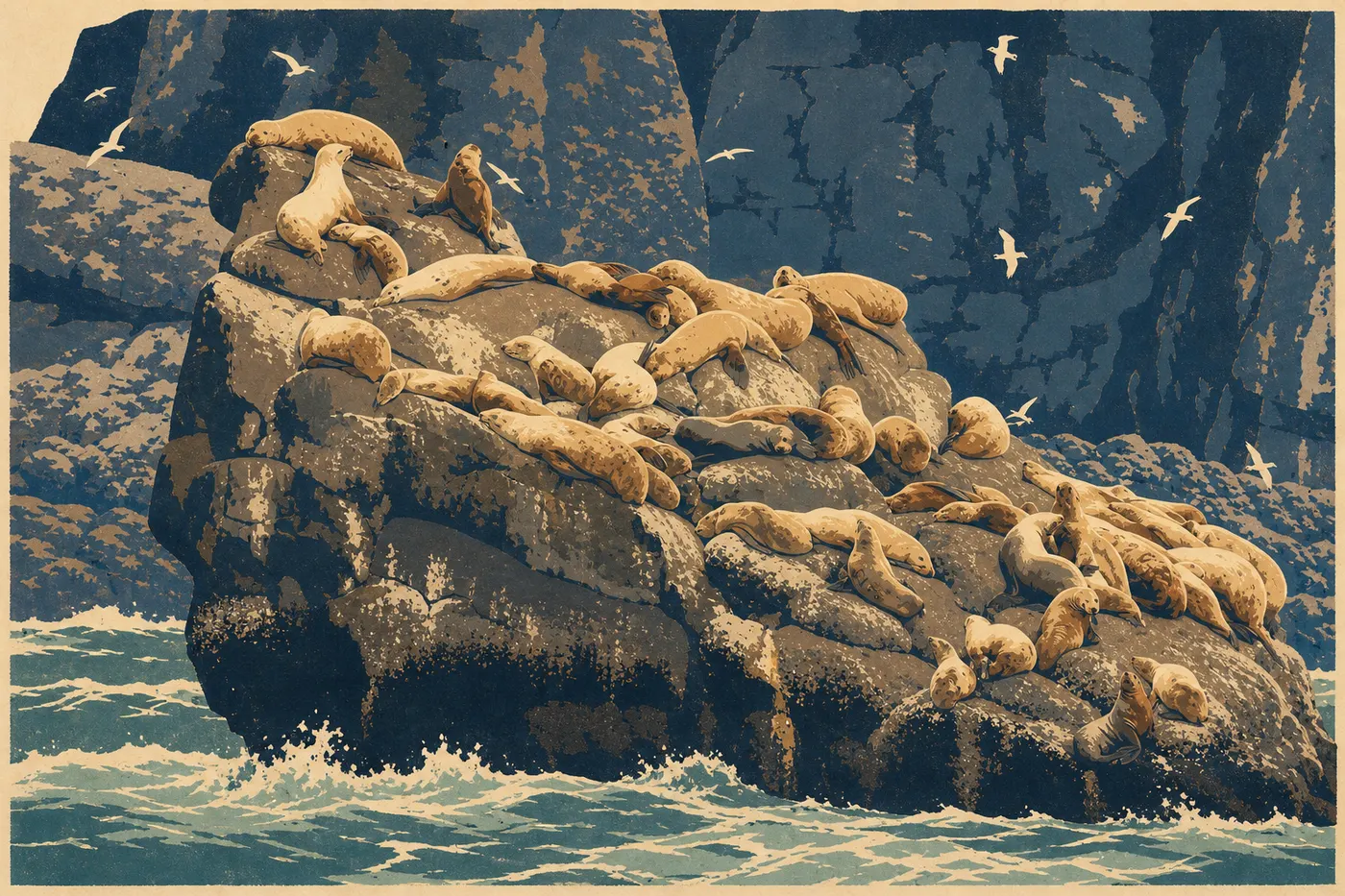
The Steller sea lion is the largest eared seal. Adult males reach 10 feet in length and commonly weigh more than 2,200 pounds. They're easy to identify: they have visible external ears, unlike seals, can lift themselves off the ground on their front flippers, and bellow with rarely matched enthusiasm for the animal kingdom.
Don't confuse them with harbor seals. Harbor seals are much smaller, can't stand up on their flippers, and move on land by wriggling across their bellies. Sea lions can walk. Breeding rookeries are visible on coastal rocks and the Chiswell Islands offshore, where dominant males defend their territory with plenty of noise.
Tufted Puffin (Fratercula cirrhata)
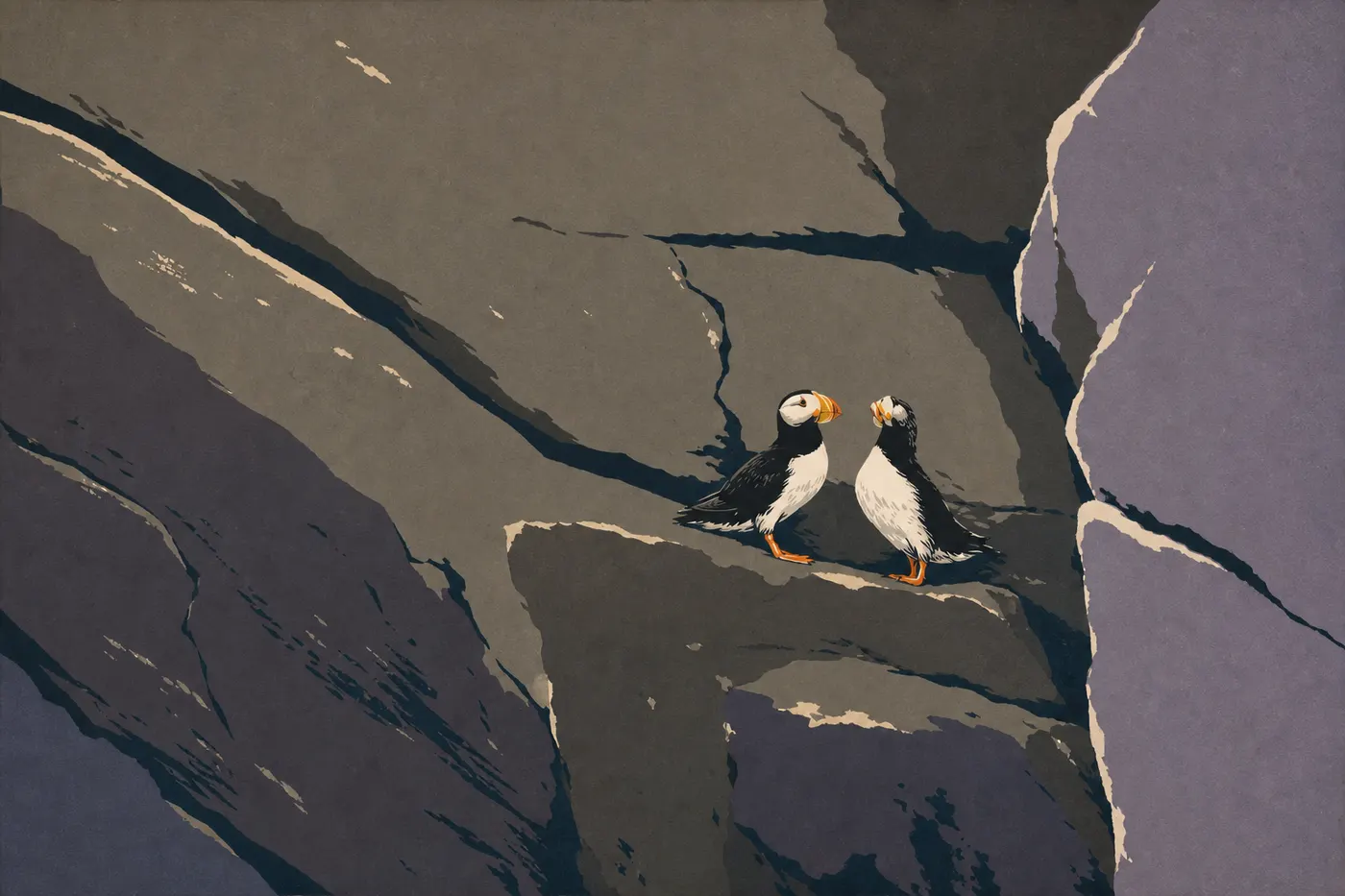
The tufted puffin is probably the park's most photographed bird. Bright orange bill, blond tufts streaming from its head during breeding season, and a world-weary owl-like stare: it checks every box. It grows to about 15 inches and nests in burrows dug into grassy cliffs or rocky islets.
Tufted or Horned Puffin: How to Tell Them Apart
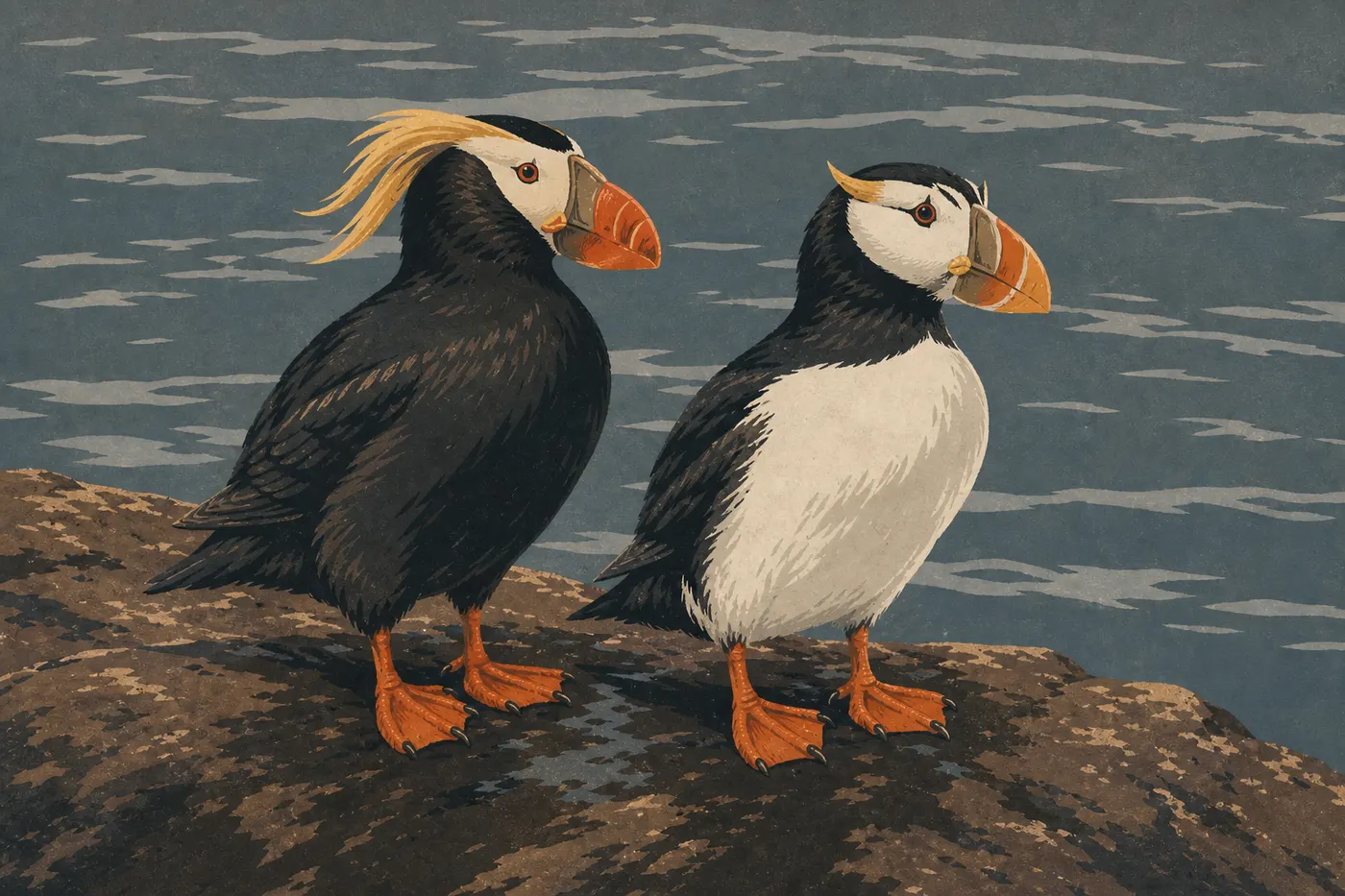
The horned puffin (Fratercula corniculata) shares the same cliffs in the Chiswell Islands with the tufted puffin, which makes for plenty of confusion in viewfinders. Here are the quick markers: the tufted puffin has long golden plumes falling down each side of its head, while the horned puffin has a white face during breeding season and a small black fleshy projection above its eye, the “horn” that gives it its name. Both species nest in colonies alongside murres, black-legged kittiwakes, and other alcids. The cliffs of the Chiswell Islands shelter tens of thousands of seabirds, making them a must-see stop on longer excursions.
Where to See Wildlife in Kenai Fjords
The park's golden rule is simple: take a boat. Most wildlife lives at sea or along coastlines you can't reach on foot from Seward.
From Seward Harbor. Day trips, which take about 8 hours for the full tours, reach the richest areas. Aialik Bay and Northwestern Fjord concentrate whales, orcas, and sea lions. The Chiswell Islands, a national wildlife refuge, offer the region's best seabird colony viewing. Shorter half-day trips cover the mouth of the fjord and still offer good chances of seeing sea otters and seals.
Exit Glacier area. This is the only part of the park you can reach by car from Seward. Exit Glacier Road closes in winter and isn't plowed. This is where you'll find most land-based wildlife sightings. Black bears frequent the forest edge, especially in the morning and evening. Moose gather in the low-lying wetlands. You can spot mountain goats on the heights above the glacier with the naked eye on clear days. Our hiking guide covers the trails that pass through these viewing areas.
By sea kayak. The sheltered bays near Seward, including Resurrection Bay, offer kayaking trips with a real chance of seeing sea otters and seals just a few yards away. Local operators offer guided routes for all skill levels.
When to Watch Wildlife
The park is open year-round, but June, July, and August account for nearly all wildlife sightings. That's when humpback whales, orcas, and sea lions are out in force in the fjords, and boat excursions are running at full capacity.
May and September are transition months. Services are limited, but migrating orcas can sometimes be seen. Starting in October, weather conditions keep tourist boats off the water, and Exit Glacier Road closes once the snow settles in.
For land mammals, dawn and dusk are the best times to look. Bears come out of the forest early in the morning, before visitors arrive in larger numbers. Our guide to the best times to visit Kenai Fjords breaks down conditions and wildlife month by month.
Tufted puffins, horned puffins, and most nesting seabirds are present from June through August. After early September, the colonies disperse.
Predators and Large Animals of Kenai Fjords
At sea, the transient orca is the undisputed apex predator. It regulates seal and otter populations and sometimes attacks small whales. Groups of orcas have been observed coordinating attacks on adult humpback whales in these waters, a rare and spectacular behavior.
On land, both the brown bear (Ursus arctos, commonly called a grizzly) and the black bear (Ursus americanus) are present. Black bears are more common in areas near visitors, especially around Exit Glacier. Brown bears are more often confined to the backcountry and remote coastal areas. From a distance, you can tell them apart by the characteristic muscular shoulder hump on a brown bear, which black bears lack, and by their muzzle profile. A black bear's is concave, while a brown bear's is straighter.
The park's largest animal is the humpback whale, which can reach 56 feet in length and weigh 40 tons.
Watching Wildlife Safely
At sea. The federal Marine Mammal Protection Act prohibits approaching any marine mammal closer than 300 feet. Licensed operators follow and enforce this distance. If an animal approaches the boat on its own, keep the engine at a steady speed and wait for it to leave. Never persistently follow a group of mammals.
By kayak, stay away from sea otters, which may bite if they feel trapped, and from seals on the rocks. A disturbed colony can trigger stampedes that are fatal for young animals.
On land. For bears, the NPS recommends a minimum distance of 300 feet, about the length of an American football field. Never get between a female and her cubs. When you're hiking, talk loudly, clap your hands, or use a trail bell to announce your presence and avoid a surprise encounter. If you're camping, store all food and trash in approved bear-resistant containers or in the metal boxes available in designated areas.
Never feed an animal. No exceptions. A bear that associates people with food quickly becomes a “problem bear.” It approaches camps, breaks into cars, and usually ends up being euthanized by rangers. The general Kenai Fjords guide explains the full protocols for an encounter.
In Brief: Wildlife You Shouldn't Miss and Where to Find It
| Species | Where to look | Season |
|---|---|---|
| Humpback whale | Boat excursion (Aialik Bay, Northwestern Fjord) | May through September |
| Orca | Boat excursion (the park's entire coast) | May through September |
| Sea otter | Sheltered bays, from a boat or kayak | Year-round |
| Steller sea lion | Coastal rookeries, Chiswell Islands | June through August (peak) |
| Tufted and horned puffins | Cliffs of the Chiswell Islands | June through August |
| Harbor seal | Coastal rocks, glacier excursions | Year-round |
| Black bear | Exit Glacier, forest edge (dawn/dusk) | Spring through fall |
| Moose | Wetlands, lower Exit Glacier | Spring through fall |
| Mountain goat | Heights above Exit Glacier | Summer |
Our complete Kenai Fjords guide brings together all the resources you need to plan your visit from Seward.
Frequently Asked Questions
What animals can you see in the Kenai Fjords?
Kenai Fjords is home to exceptionally rich marine life. Sea otters, harbor seals, and puffins are nearly guaranteed sightings. On a day trip, humpback whales and Steller sea lions are common. Orcas are less predictable, but they're regularly reported during the summer season.
Which animals are endangered in Kenai Fjords National Park?
Several species in the park have federal protection. The Steller sea lion is listed as endangered in its western Pacific population. The North Pacific sea otter has been closely monitored since the 1989 Exxon Valdez oil spill, which devastated the local population along Alaska's coast.
Are there orcas in Kenai Fjords?
Yes. Orcas are present in Kenai Fjords waters, mainly from May through September. There are two types: residents, which feed on fish, especially salmon, and transients, which hunt marine mammals. You can see both types on boat excursions from Seward.
What is Alaska's signature animal?
The moose (Alces alces gigas) is Alaska's official state animal and is found throughout the state. In Kenai Fjords specifically, marine life defines the park's identity. Orcas and humpback whales are the animals most closely associated with the area in visitors' minds.