
Kenai Fjords National Park: The Complete Visitor Guide
Kenai Fjords is maritime Alaska at its rawest: a vast ice cap, the Harding Icefield, spilling nearly forty glaciers toward a fjord-carved coast. You visit the park from Seward, in Southcentral Alaska, and reach most of its wonders by boat or on foot, not by car. Plan on one or two full days for the essentials: a boat trip among glaciers and wildlife, plus a morning around Exit Glacier. It's short, intense, and worth planning for, because the weather makes many of the decisions here.
We've explored the park and know its pitfalls, from boat trips canceled because of rough seas to the Exit Glacier Road closing in the off-season, as well as its real rewards. Here's how to plan your visit without wasting time or money.
Kenai Fjords at a Glance: Where the Park Is and How to Get There
The park occupies the southern tip of the Kenai Peninsula in Southcentral Alaska, just outside the small town of Seward. From Anchorage, it's about 126 miles south on the Seward Highway, a scenic drive that takes roughly two and a half to three hours depending on your stops. You will stop.
The Seward Highway serves Seward year-round. The Alaska Railroad also connects Anchorage and Seward seasonally, a comfortable option if you're not renting a car. Much of the park is inaccessible in winter, though. The road to Exit Glacier isn't plowed and closes once snow and ice settle in, while the coastal backcountry can only be reached by boat.
Keep the geography in mind because it controls everything else. Kenai Fjords has three distinct areas: Exit Glacier, the only area connected by road; the Harding Icefield, the vast ice field above it; and the fjord coast, which you explore from the water. To plan your route from Anchorage or elsewhere on the peninsula, our Getting There & Transportation page covers road, train, and shuttle options, and our park Map shows you where each area is.
Entrance Fees, Passes, and Reservations
Good news for your budget: Kenai Fjords doesn't charge an entrance fee. You don't need a ticket or pass to enter the park, which is unusual among major U.S. national parks. Our Fees & Passes page covers federal passes, including the America the Beautiful pass, which is valid throughout the system.
The main expense here isn't admission. It's the boat trip. Private companies operate fjord cruises out of Seward, and you need to reserve them. In July and August, spots fill quickly, so book several days ahead. The same goes for camping and lodging in Seward during peak season. We cover price ranges and the best times to book in our Practical Information, Rules & Safety and Where to Stay pages.
Reservations, Permits, and Rules to Follow
Reservations:
You don't need a reservation to access the land trails. Fjord cruises, however, require advance reservations, especially in July and August. Full-day trips to Northwestern Fjord often sell out several weeks ahead during peak season. Book directly with operators based in Seward, including Kenai Fjords Tours and Major Marine Tours. The NPS doesn't manage these reservations.
Permits:
Backcountry camping in the park requires a free permit issued at the Kenai Fjords Visitor Center in Seward. For some coastal areas, you can also get one through recreation.gov. If you're planning to camp on the Harding Icefield or in remote bays, get your permit before leaving Seward. The visitor center closes in the evening.
Rules to follow:
- Keep your distance from wildlife: 100 feet from most species and 300 feet from bears and wolves. These distances also apply when you're in a boat or kayak.
- Drones are prohibited in the park without prior written authorization from the NPS.
- Campfires are allowed only below the high-tide line on coastal beaches. Fires are strictly prohibited in the forest and above that line.
- Follow Leave No Trace principles. Outside the Exit Glacier area, there are no restroom facilities. Pack out everything you pack in.
Getting Around Kenai Fjords
Understand this from the start: you don't drive across Kenai Fjords. There isn't a scenic road winding through the park like there is at Yellowstone. Your vehicle gets you to two departure points, and that's it.
First, there's Exit Glacier Road, which leaves Seward and runs to the only area accessible by road. From there, you get around on foot. Then there's the Port of Seward, where boats depart to follow the coast and its tidewater glaciers. Between the two, it's either the sea or your legs. Some companies also offer guided sea kayaking, dropping you off as close as possible to the ice fronts.
For the practical details, including Exit Glacier shuttle schedules in summer, half-day and full-day boat-trip lengths, and kayaking, see our Getting Around page, which compares the options.
How Long Do You Need to Visit Kenai Fjords?
Two full days is the best format for covering the essentials without rushing. Spend one day on a boat trip through the fjords. Plan on 6 to 8 hours to reach the most spectacular glaciers. Use a half day to a full day around Exit Glacier, from the walk at the glacier's foot to the climb toward the Harding Icefield for serious hikers.
If you're short on time, one well-planned day is enough to get a feel for the park. Prioritize the boat trip because it gives you the fullest sense of the place. With three days, you can add a strenuous hike, some kayaking, and enough flexibility to let one bad-weather day pass without stress. On this coast, that isn't a luxury. Our Itinerary & Length of Stay page offers ready-made plans for 1, 2, and 3 days.
Plan your visit
What to See and Do in Kenai Fjords
The heart of the park falls into three areas. Here's the order in which you'll experience them.
Road trip journal · 3 areas
Exit Glacier, the Glacier You Can Reach on Foot
This is the park's land gateway, and its most accessible area. A network of short, well-maintained trails leads to the foot of Exit Glacier, one of the few Alaska glaciers you can approach without a boat or helicopter. Along the way, signs mark the glacier's terminus over the decades. You can see the ice retreating, and it's a quiet shock. The area opens around May and runs at full capacity in summer. The road closes in winter once snow covers it.
The Harding Icefield, the Ice Cap Above the Park
Above Exit Glacier stretches the Harding Icefield, an ice field covering several hundred square miles and feeding almost every glacier in the park. You reach it on a long, steep day hike that climbs from the valley to a viewpoint over an endless sea of ice, dotted with a few isolated peaks breaking through the surface. This is the most rewarding effort on the land side of the park, and it's for fit hikers with the right gear.
The Fjords and Coast, the Big Show from the Water
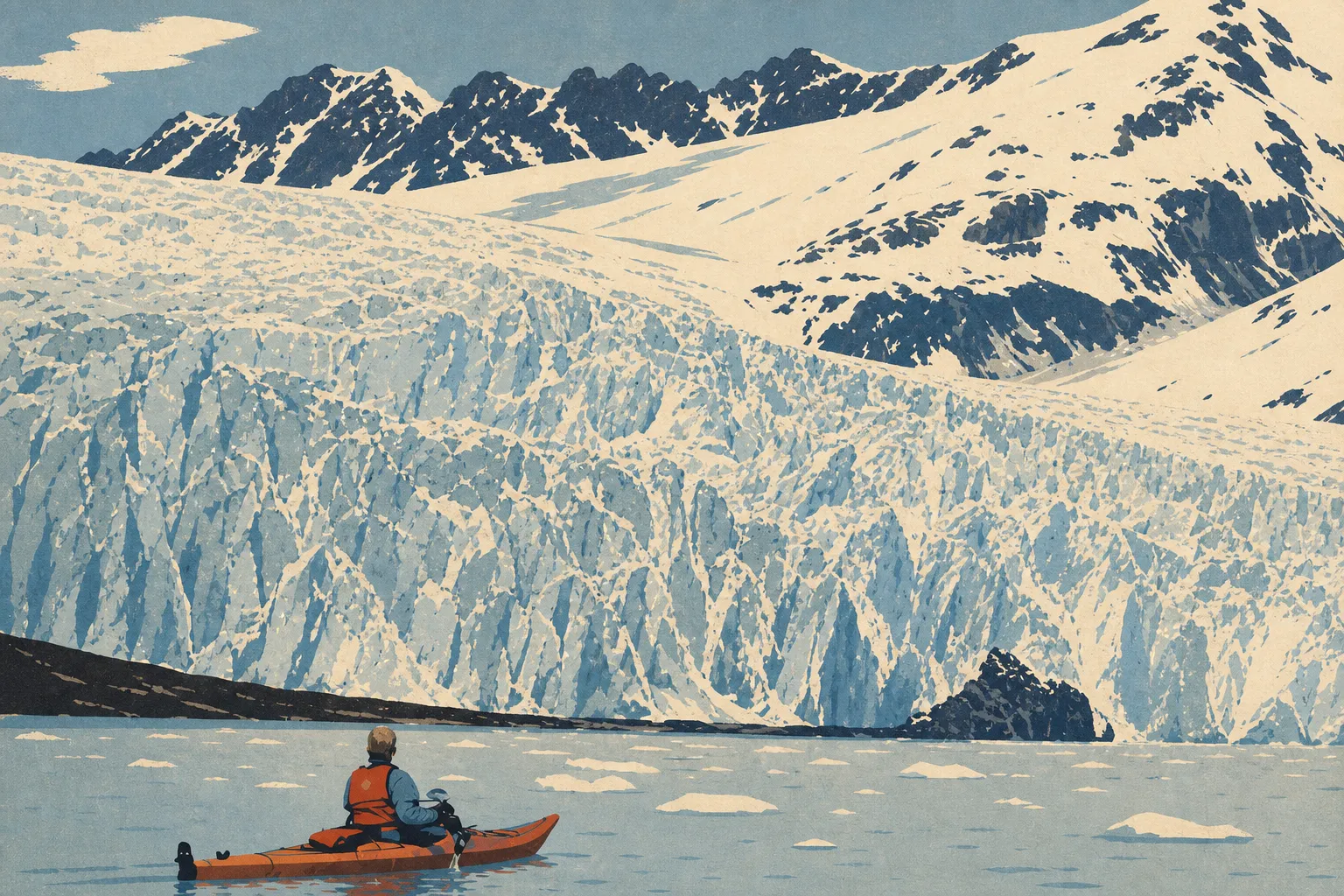
This is where Kenai Fjords gets its name. From Seward, boats follow a coast cut by deep fjords, where tidewater glaciers flow straight into the ocean. The most popular trips continue to Aialik Bay or Northwestern Fjord, facing blue ice fronts that calve into the water. Listen as much as you look. Along the way, you'll pass waterfalls, seabird colonies, and large marine mammals. When we visited in early July, we cut the engines in front of a group of humpback whales, and no one on board spoke for ten minutes.
Our What to Do page covers each area in detail, along with its specific activities.
Explore the park
The Best Hikes in Kenai Fjords
On land, hiking centers around Exit Glacier. Two very different kinds of hikes coexist here. Short loops at the back of the valley are easy and well marked, and take you close to the glacier in less than an hour. They're ideal for families or a first look. At the other extreme, the Harding Icefield Trail is a serious mountain hike, with substantial elevation gain, snow that can linger late in the season, and changing weather. Don't take it lightly.
On the coast, hiking often means a kayaking trip or a guided landing at the foot of a glacier from a boat. Our dedicated Hiking page breaks down distances, elevation gain, hiking times, and required experience. That's where you'll choose your day's route.
The detailed guide Kenai Fjords Hiking Guide: The Best Trails for Every Skill Level A guide to hiking in Kenai Fjords, from easy Exit Glacier trails to Harding… Read the guide →Wildlife and Plants to Look For
This is another reason to come. The park concentrates abundant marine wildlife, and a well-run boat trip gives you a close-up view. Humpback whales and orcas frequent park waters in summer. You may also see Steller sea lions on rocky haul-outs, harbor seals resting on floating ice at the foot of glaciers, sea otters on their backs, and seabird colonies where puffins steal the show. On land around Exit Glacier, the presence of black and brown bears means you need to know the basic rules: make noise, keep your distance, and secure your food.
Plant life ranges from dense temperate rainforest along the coast to low tundra dotted with summer flowers higher up, right to the edge of the ice. For what to look for, where, and in which season, head to our Wildlife page. For bear safety distances, see our Practical Information, Rules & Safety page.
The detailed guide Kenai Fjords Wildlife: What to See and Where to Look Orcas, humpback whales, sea otters, puffins, and more Read the guide →When to Visit Kenai Fjords
In short, summer is the time to go. June, July, and August bring long days, a full schedule of boat trips, and peak marine wildlife activity. May and September are still possible, but services in town and in the park are reduced, there are fewer boat departures, and the weather is less predictable. In winter, land access closes. Exit Glacier Road isn't plowed, and you can't visit the coast.
One word about the sky, because it matters: the climate is maritime and softened by warm currents in the Gulf of Alaska, but distinctly wet. In summer, daytime temperatures range from about 45°F to 72°F, and gray, rainy days are common even in the middle of July. Our When to Go page has the month-by-month details, including crowds, temperatures, and the chance of a canceled trip. See our Weather page for precise climate records.
The detailed guide When to Visit Kenai Fjords: The Best Time, Month by Month The best time to visit Kenai Fjords is July and August Read the guide →Where to Stay in Kenai Fjords
The park itself has no hotels. Stay in Seward, the park's gateway town, just minutes from both departure points. Options range from comfortable hotels to more secluded lodges, along with campgrounds and RV areas that are very popular in summer. The park also has a small, rustic campground near Exit Glacier. It doesn't take reservations, so it's worth knowing about if you're traveling light.
For more detail, our complete comparison covers neighborhoods, budgets, and useful tips in Where to Stay, Hotels & Lodges, Camping, and RVs. Book early for July and August. Demand far exceeds supply in Seward.
Stay in the park
Around Kenai Fjords: Things to Do Nearby
Kenai Fjords is rarely a standalone trip. It fits into a larger itinerary. Seward marks the end of one of Alaska's most beautiful road sections, the Seward Highway, lined with views of fjords and glaciers. Farther north, the Kenai Peninsula unfolds with salmon rivers, resort towns, and Portage Glacier. Many travelers continue to Anchorage, the state's gateway, or head toward other parks in the region.
To build this itinerary, use our Region guides for the Kenai Peninsula and Southcentral Alaska, along with Road Trip, which connects Anchorage, Seward, and points beyond. If you're collecting stamps, remember to get your passport stamped. We cover that on the Passport & Stamps page.
Our Take: Is Kenai Fjords Worth the Trip?
Yes, absolutely. Few parks offer such a direct introduction to the North in a single day: glaciers collapsing into the sea, whales just a few feet from the boat, and an ice field at the end of a trail. The park takes some effort. You need to reserve ahead, accept the wet weather, and hike for the best views. It gives back many times what you put in. Our only reservation is the weather. Keep your schedule flexible enough to absorb a blank day, and don't put your only boat trip on your last day. Under those conditions, Kenai Fjords becomes one of the highlights of an Alaska trip.
Frequently Asked Questions
How Many Days Should You Plan to Visit Kenai Fjords?
Plan on two full days to visit Kenai Fjords without rushing. Spend one day on a 6- to 8-hour boat trip to the glaciers and wildlife, then use a half day to a full day for Exit Glacier and, if you're in good shape, the climb to the Harding Icefield. One well-organized day covers the essentials if you prioritize the boat trip. Three days give you a buffer against bad weather.
Does It Cost Anything to Enter Kenai Fjords?
There is no entrance fee for Kenai Fjords. The park doesn't charge an admission fee, unlike many U.S. national parks. The real expense is the boat trip from Seward, operated by private companies and best reserved ahead of time in summer. Our Fees & Passes page has the full breakdown of federal passes.
What Is the Best Time of Year to Visit Kenai Fjords?
The best time to visit Kenai Fjords is June through August, with long days, a full boat schedule, and active marine wildlife. May and September are still possible, with reduced services and less predictable weather, while winter closes land access because Exit Glacier Road isn't plowed. See our When to Go page for details.
What Is the Most Beautiful Place in Alaska?
It's hard to name a single most beautiful place in Alaska, but Kenai Fjords ranks among the highlights of the state's south, alongside Denali, Glacier Bay, and the Kenai Peninsula itself. In Kenai Fjords, the peak experience is still a boat trip facing the tidewater glaciers of Aialik Bay or Northwestern Fjord. Our Region and Road Trip guides help you connect these stops.
The American Parks shop
Bring Kenai Fjords home
Our park-inspired creations, made to order and shipped to your door.
Latest park news
- Kenai Fjords: Aialik Glacier's terminus closed to visitors over falling iceAt Aialik Glacier, the ice-fall zone is now closed to visitors, and here's what that means for your trip to Kenai Fjords.