
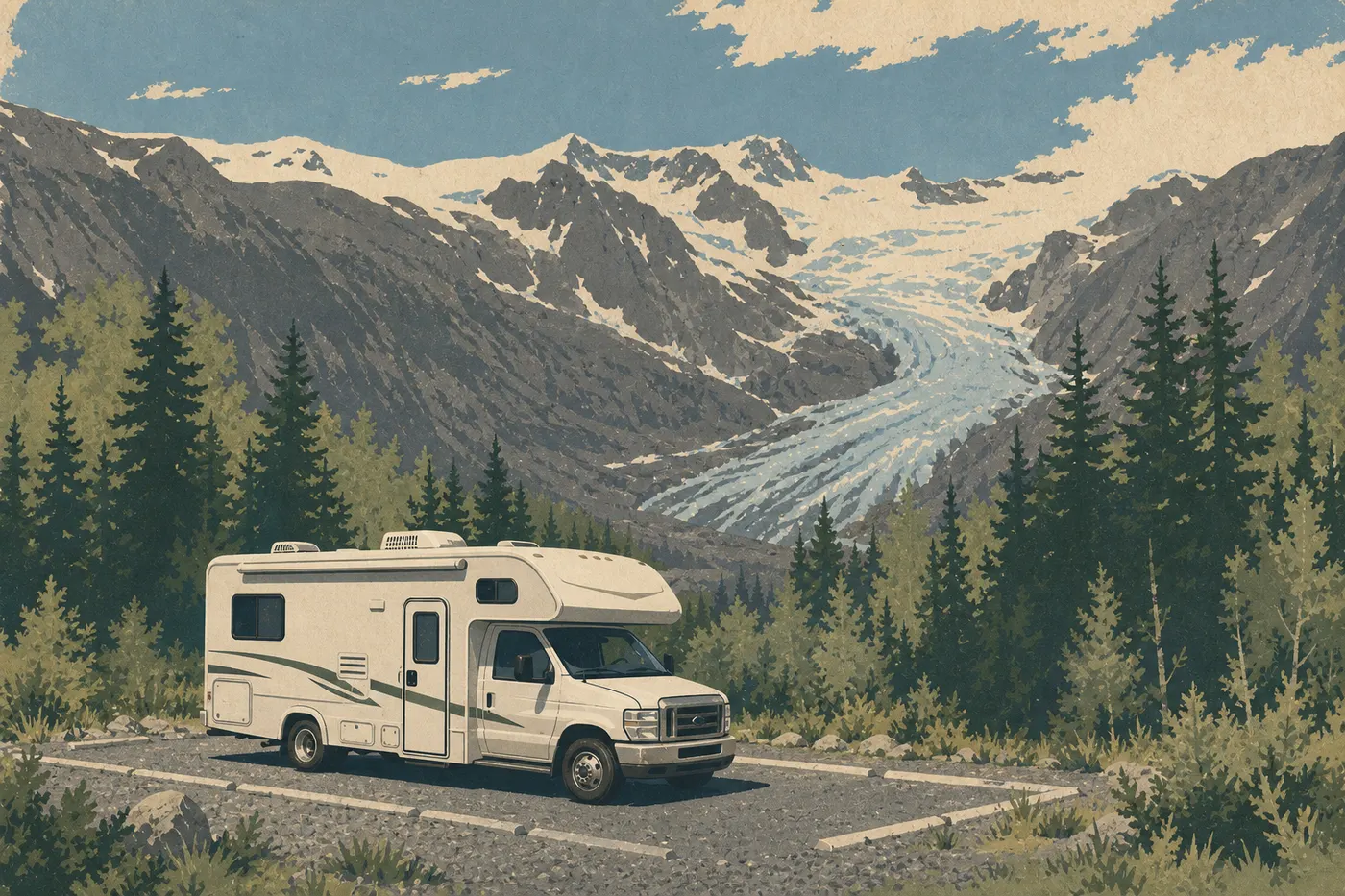
Kenai Fjords by RV: Campgrounds, Rules, and Tips
Yes, you can stay in an RV at Kenai Fjords. The main limitation is that only one area is accessible by road: Exit Glacier Valley. You can only visit the rest of the park, including the fjords and coastline, by boat. Your RV will be your base camp on land, while boat tours depart from Seward Harbor.
Can You Drive and Camp in an RV at Kenai Fjords?
Kenai Fjords is an unusual park. Most of its territory, including its glaciers and coastline, is accessible only by boat or plane. The only road into the park leads to Exit Glacier, about 8 miles from Seward via Exit Glacier Road.
Seward, the park's gateway town, lies about 124 miles south of Anchorage along the Seward Highway. This is your true logistical base, with water, dump stations, fuel, grocery stores, and boat tour departures.
The RV season runs from June through September. June, July, and August are the main months, while services start winding down in May and September. Exit Glacier Road isn't plowed in winter and closes as soon as snow and ice make it impassable.
RV Restrictions and Regulated Roads
Exit Glacier Road is a paved, two-lane road that can accommodate standard-size RVs. It has no low tunnel or height-restricted bridge, which makes things easier than in many parks in the American West.
The parking area at the Exit Glacier Visitor Center is small. Larger vehicles, especially those longer than 26 to 30 feet, may have trouble finding a spot during peak hours. Arriving early in the morning or after 3 p.m. usually solves the problem.
The speed limit on Exit Glacier Road is 25 mph. The park is prime black bear and grizzly country. Store all food and scented items in a bear box or in your vehicle's closed compartment, including inside your RV. Rangers emphasize this point as soon as you enter the campground.
The Park's Official Campgrounds
Exit Glacier Campground
This is the park's only campground accessible to motor vehicles, at the end of Exit Glacier Road, a few hundred yards from the visitor center.
The setting is intentionally rustic. There are no electrical hookups or running water at the sites, and there are no showers. Vault toilets and bear boxes are available on-site. You can get drinking water at the visitor center during its open hours.
The sites work for reasonably sized RVs. Very large rigs, especially those longer than 26 feet, may feel cramped depending on the available layout when you arrive. Check the reservation details on recreation.gov before you leave. The system changes from one season to the next. Rates remain on the low end for federal campgrounds in the United States.
The campground is open from June until the first significant snowfall, usually in September or October.
What really matters here is that you sleep at the foot of the glacier. Morning hikes, including the Edge of the Glacier Trail and Glacier View Loop, start right from the campground. In late June, daylight lasts until 11 p.m., so it is hard to get a more immersive experience.
Dispersed Camping and Areas Around the Park (Boondocking)
The park doesn't allow dispersed camping on the Exit Glacier side outside designated areas. The Chugach National Forest, which surrounds much of the park, does offer dispersed camping on federal land. Minimum distances from waterways, waste-disposal requirements, and bear rules apply, so check a Chugach map before you put down your stabilizers.
Around Seward, several RV parks and municipal campgrounds accept RVs, with or without hookups. Some sit along the bay and offer direct mountain views. From Seward, it takes 20 minutes to reach Exit Glacier. The harbor, where fjord tours depart, is within walking distance of most campgrounds in town.
If you want to alternate RV nights with nights indoors, our complete Kenai Fjords guide and the Where to Stay section will point you toward the right option.
Dump Stations, Water, and Services
Exit Glacier Campground doesn't have a dump station on-site. Your solution is Seward, where municipal campgrounds and RV parks offer dump stations and water. Fill your freshwater tank before heading up to Exit Glacier. The park's visitor center provides water too, but only during limited hours.
Fuel is available in Seward. There is no gas station on Exit Glacier Road, so fill up before you leave. Every time.
Which Campground Is Right for You?
You're traveling in a compact vehicle and want the full national-park experience: Exit Glacier Campground is the straightforward answer. Expect quiet nights, wildlife within hiking distance, and rangers available in the morning.
You're in a large rig or need everyday comforts such as showers, hookups, and a reliable connection: stay at an RV park in Seward. You'll make the day trip to Exit Glacier and be just steps from the docks for fjord excursions.
Your priority is marine wildlife such as orcas, sea otters, and puffins: you can only reach the park's coastline by boat. Staying in Seward before a daylong boat tour is the combination that works best.
To compare tent camping, coastal dispersed camping, and backcountry camping, the Kenai Fjords camping guide will help you narrow down your choice.
Renting an RV to Visit Kenai Fjords
Anchorage is Alaska's hub for RV rentals. Several specialized agencies, including national companies and local outfitters, operate there, less than two hours by road from the park.
Two vehicle types fit the park's particular conditions well:
- Class B camper van: compact and easy to park at Exit Glacier, with enough water capacity for self-contained travel. Ideal for two people.
- Mid-size Class C, under 23 feet: comfortable and suitable for Exit Glacier Road, with room for families.
Large Class A motorhomes are still possible on the road, but the park's campground and parking areas are tight. Think carefully before choosing this type of vehicle.
Book two to three months ahead for a departure between June and August. Alaska's rental fleets are limited, and demand is strong during peak season. If a rental doesn't fit your budget, you'll find other options in our selection of places to stay at Kenai Fjords.
RVs and Pets, Budget, Reservations: What to Know
Pets. Dogs are allowed at Exit Glacier Campground and in the parking area, but not on trails inside the park. Check the exact rules with the rangers when you arrive.
Budget. A campsite remains relatively inexpensive. Plan on a much larger expense for boat excursions from Seward. Half-day and full-day fjord tours are the most significant cost of the trip. The Fees & Passes section provides guidance on entrance fees and national-park passes.
Reservations. Check the details on recreation.gov before you leave. If the campground is first-come, first-served during your stay, arrive in the late morning in July to maximize your chances. For Seward RV parks with hookups, book as soon as your dates are set.
Best time to visit. July offers the mildest conditions, with temperatures from 50 to 72°F, almost endless daylight, and visible marine wildlife. June remains cool and rainy, with highs rarely above 59°F. September is quieter, but services start winding down. For a month-by-month look at these seasonal differences, our guide to the best times to visit Kenai Fjords goes into detail.
In Summary: Our Kenai Fjords RV Plan
A typical week by RV might look like this: arrive in Anchorage, drive to Seward via the Seward Highway (the Turnagain Arm fjord, which you'll follow for about an hour, is worth the trip on its own), spend two or three nights at Exit Glacier Campground for glacier hikes at sunrise, then return to Seward for a night at an RV park with hookups before taking a boat tour of the fjords.
The park is small in terms of the area accessible by road, but it delivers plenty of intensity: glaciers rumbling at dawn, sea otters seen from a boat deck, and midnight light over Resurrection Bay. Two hours from Anchorage, it is the most accessible part of Alaska by RV, and one of the most striking.
Frequently Asked Questions
Can you camp in the Kenai Fjords?
Yes, you can camp at Kenai Fjords. Exit Glacier Campground accommodates RVs and tents in the land-based part of the park, which is accessible by car. You can only reach the coastal areas and the fjords themselves by boat or plane. Coastal camping sites are available for hikers who reach those areas by water taxi from Seward.
How many days should you plan to visit the Kenai Fjords?
Three days is a reasonable minimum: one day for hikes at Exit Glacier, one full day for a fjord boat tour, and half a day for Seward's waterfront and aquarium, the Alaska SeaLife Center. Plan on four to five days if you want to combine several trails with a kayaking trip and more time in Resurrection Bay.
Can you park an RV anywhere at Kenai Fjords?
No. Overnight parking in the park is limited to the Exit Glacier Campground. Along the access road and in the park's parking areas, extended parking outside designated spaces is prohibited. Very large rigs will have more flexibility at RV parks in Seward.
Where are RVs prohibited in the park?
RVs can't reach the park's coastal areas, which are accessible only by boat or plane. Camping outside designated sites at Exit Glacier is prohibited. No dispersed camping is allowed in the land-based section accessible by road.
How much does a campsite cost at Kenai Fjords?
Exit Glacier Campground is on the low end of the range for federal campgrounds in the United States. Check the exact rate on recreation.gov or directly with the rangers, since the amount may change from one season to the next.