
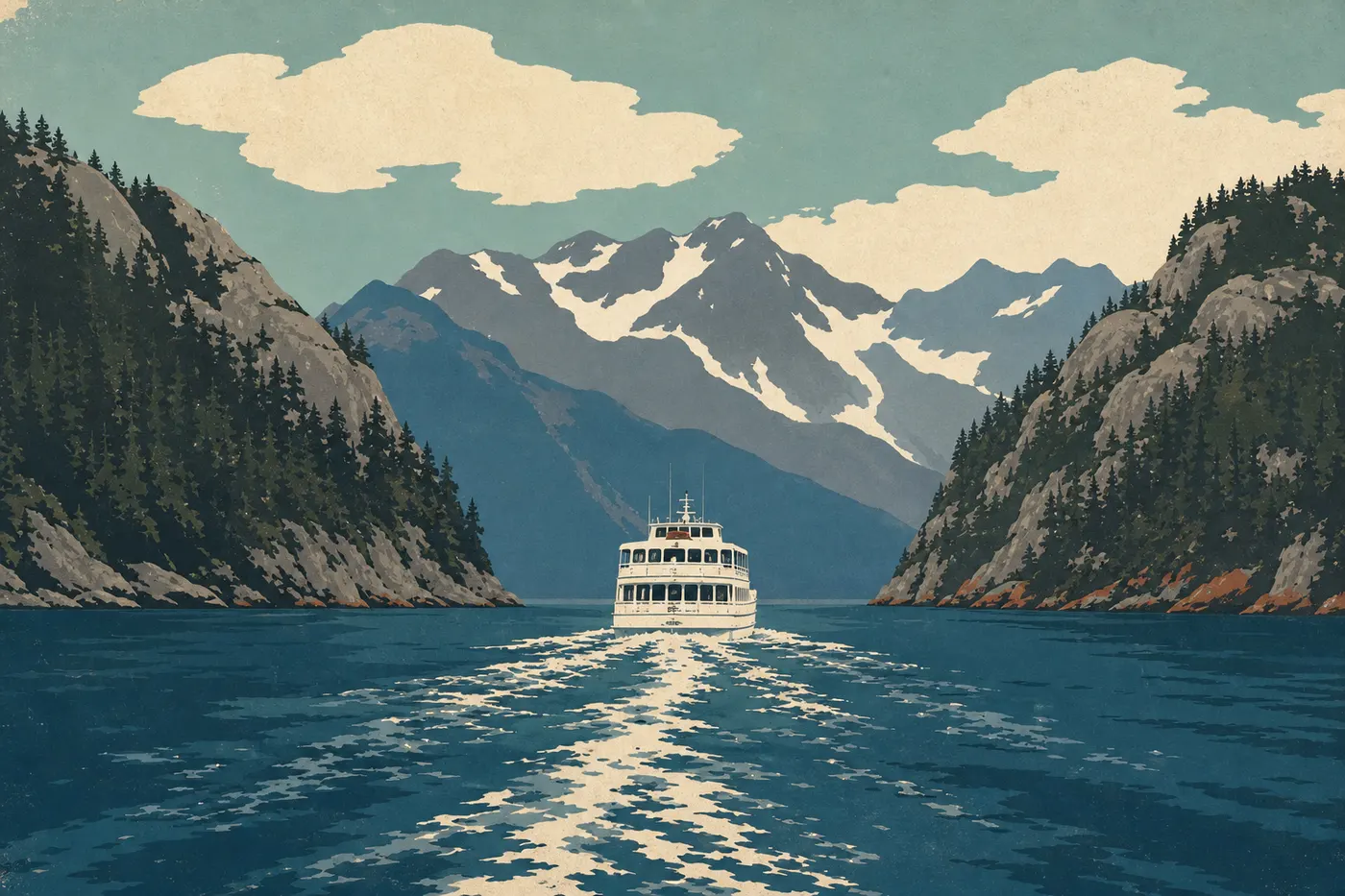
Kenai Fjords Itinerary: What to See in 1, 2, or 3 Days
Kenai Fjords is a park in two parts. One is a land area you can reach by car at Exit Glacier, while the other is a glacial fjord coastline you can see only by boat. That split shapes your whole visit. Two days is the bare minimum: one day at Exit Glacier and one day cruising the fjords. Three days give you time for a challenging hike or a night in a coastal cabin.
Everything starts in Seward, the park's gateway town about 124 miles south of Anchorage. Kenai Fjords overview gives you the big picture. Here's the practical plan, including the order to visit, how many days to allow, and the key decisions to make.
How Long Do You Need to Visit Kenai Fjords?
One day is enough if your schedule is tight. Choose a fjord cruise, since that's the heart of the park. You can see Exit Glacier on its own in about two hours, which works well as a stop along the way.
Two days is the plan we recommend to most travelers. Spend one day hiking around Exit Glacier and one day on a boat in the fjords. It's the best balance of time and sightseeing.
Three days or more let you tackle the Harding Icefield Trail, a long and demanding hike, spend a night in an NPS coastal cabin, or explore farther into the Kenai Peninsula.
Kenai Fjords is open year-round, but the main season runs from June through August. May and September bring fewer visitors and lower prices. Outside those months, the road to Exit Glacier isn't plowed, and almost all cruises are suspended.
Access, Gateways, and Getting Around the Park
Everything starts in Seward, 124 miles south of Anchorage, a 2.5- to 3-hour drive. It's the park's only gateway town.
Two access modes shape your day-by-day plans. Drive to Exit Glacier, then take a boat to see the glacial coastline. For all the practical details, see the getting around the park guide.
Kenai Fjords Areas
The park revolves around two worlds that are best considered separately when you plan your visit.
Exit Glacier and the Harding Icefield
This is the only part of the park you can reach by car. Exit Glacier is one of many glaciers that drain the Harding Icefield, one of the largest expanses of ice in North America outside Greenland and Antarctica.
You have three hiking options here:
- Outwash Plain Loop is short, flat, and takes 30 minutes. It follows the glacier's outwash plain and shows you how the landscape is changing without demanding much effort.
- Edge of the Glacier Loop is 1 mile and takes about 45 minutes. It climbs to a viewpoint facing the glacier's terminus. This is the classic walk.
- The Harding Icefield Trail is 10.6 miles round-trip with 3,600 feet of elevation gain. It climbs to the icefield plateau. Allow 6 to 8 hours, and bring warm gear and traction for icy sections. Snow can linger into July. This hike is for experienced, well-equipped hikers.
Signs along the trail mark the glacier's terminus at different dates, offering a striking, tangible illustration of its retreat. Kenai Fjords hikes describes each trail with elevation gain, difficulty, and recommended gear.
Coastal Fjords and Glacial Bays
This area accounts for most of the park's land and water and is accessible only by boat or seaplane. The two most visited areas are Aialik Bay and the Northwestern Fjord. Their tidewater glaciers, which calve directly into the sea, are the main attraction.
Marine wildlife is everywhere. Depending on the season, you may see sea otters, Steller sea lions, harbor porpoises, orcas, and humpback whales, along with colonies of tufted puffins on the cliffs. Kenai Fjords wildlife covers the species and the best times to see them.
Day cruises from Seward typically last 8 to 11 hours. Some cover Resurrection Bay, which is shorter and focuses on marine wildlife, while others go farther into the fjords for glaciers and wildlife. We recommend a full-day fjord cruise for a first visit.
Day-by-Day Itinerary
Day 1: Exit Glacier and Arrival in Seward
Leave Anchorage early. The Seward Highway follows Turnagain Arm, a tidal fjord where beluga whales are regularly spotted between June and August. Plan one or two scenic stops, but don't linger too long.
In Seward, drop off your bags and take Herman Leirer Road 8 miles from downtown to Exit Glacier. Kenai Fjords Visitor Center, by the main parking area, has maps, information that may be available in French, and an exhibit about the icefield. You'll also find restrooms and picnic tables there.
Start with Outwash Plain Loop to get your bearings, then head up to Edge of the Glacier Loop. If you've still got the energy and the right gear, begin the Harding Icefield Trail and hike to the intermediate viewpoint. You don't have to reach the summit on your first day.
Head back to Seward in the evening. The town has several restaurants specializing in local seafood, including salmon and halibut. Book your cruise for the next day if you haven't already. Departures often sell out in July and August.
Day 2: Fjord Cruise
Board early at the Small Boat Harbor. Departures generally run between 7 and 9 a.m. Most companies operate catamarans with outdoor decks, heated cabins, and food service on board.
Marine weather is unpredictable. Sunshine at departure can turn into drizzle two hours later. Bring warm layers and a waterproof jacket. If you're prone to seasickness, take an appropriate medication the day before.
A typical cruise to the Northwestern Fjord crosses Resurrection Bay, looks for wildlife on the rocks and in the water, and approaches glacier fronts close enough to hear the thunder of calving ice. On our July trip, we saw humpback whales less than 650 feet from the boat. It's a moment that's hard to forget.
You'll return to the harbor in the late afternoon or evening. If you're staying for only two days, this is your last night in Seward before you head back to Anchorage.
Day 3: Challenging Hike, Sea Kayaking, or Coastal Cabin
With a third day, your options depend on your fitness level and interests.
Option A: A full Harding Icefield Trail hike. Start at sunrise, around 6 or 7 a.m., to take advantage of the best conditions and get back before the weather turns. The view from the plateau is dramatic, with ice stretching to the horizon and a few nunataks, or rocky peaks poking through the ice. This hike is for experienced hikers who are well equipped and in good physical condition.
Option B: Sea kayaking. Local operators offer guided trips from Seward or Resurrection Bay. It's a slower, more intimate way to follow the cliffs and watch marine wildlife up close. Allow a half day or a full day.
Option C: A night in a coastal cabin. The NPS manages several wooden cabins along the coast, including Aialik, Holgate Arm, and North Arm. You can reach them by water taxi or seaplane from Seward. Book well in advance on recreation.gov, sometimes weeks or even months ahead during the high season. Being alone with the glaciers, without cell service or neighbors, is an experience in its own right.
Options for Different Trip Lengths
One day from Anchorage. Leave at dawn, spend the morning at Exit Glacier on the short loops only, and return in the late afternoon. You could also take a fjord cruise and return at night. Both options are doable, but neither is relaxing.
Two days (recommended). Visit Exit Glacier on day 1, take a fjord cruise on day 2, and spend the night in Seward between them. It's the most balanced plan.
Three days. Add the full Harding Icefield Trail or a night in a coastal cabin. This is the ideal length for really experiencing the park.
Four days or more. Combine Kenai Fjords with other sites on the peninsula, such as Homer and Kachemak Bay, 3 hours west of Seward, or head back toward Anchorage and Denali. For multi-park Alaska road trips, see our Region and Road Trip guides.
Itinerary Map
The NPS publishes an official PDF map of the park, known as the Unigrid map. You can pick one up at Kenai Fjords Visitor Center at Exit Glacier. It shows both areas, Exit Glacier and the coast, along with trails, anchorages, and cabins.
Cell service is almost nonexistent at Exit Glacier and completely absent offshore. Download your maps before you leave. Use an offline navigation app for hiking, where Harding Icefield Trail data is usually available, and nautical charts if you're kayaking independently. Kenai Fjords maps gathers the useful mapping resources.
Where to Stay Along the Itinerary
Seward is the obvious base. It's the only town with lodging close to the park. You'll find hotels, lodges, bed and breakfasts, and campgrounds. Other than the NPS coastal cabins, which you reserve through recreation.gov, there is no lodging inside the park.
During the high season in July and August, book several months ahead. Seward is popular with Alaskans themselves, and it's a small town. Where to stay in Kenai Fjords covers the options by type and budget, including campgrounds in the Exit Glacier area.
Extend Your Trip: What to See Around Kenai Fjords
Kenai Fjords fits naturally into a longer trip through the Kenai Peninsula.
- Anchorage is a natural starting or ending point, with museums, restaurants, and access to Chugach State Park for hikes from the city.
- Homer sits on Kachemak Bay and is known for its galleries, fisheries, and ferry access to Kachemak Bay State Park. Allow 3 hours from Seward.
- Denali National Park is about 6 hours north of Anchorage and is Alaska's other must-see park. A two-park trip combining Kenai Fjords and Denali is a classic.
For Alaska itineraries that cover multiple parks, see our Region and Road Trip guides.
The Ideal Itinerary for Your Available Time
| Length | Plan | What to Remember |
|---|---|---|
| 1 day | Full-day fjord cruise OR Exit Glacier (half day) | Choose the cruise if you can do only one |
| 2 days | Day 1: Exit Glacier and hikes · Day 2: fjord cruise | The balanced plan we recommend |
| 3 days | Day 1: Exit Glacier · Day 2: cruise · Day 3: Harding Icefield Trail or kayaking | The complete plan |
| 4+ days | Kenai Peninsula extension: Homer, Kachemak Bay | For travelers with extra time |
Kenai Fjords isn't just a checklist of places to see. It's a park you experience in motion, between mountains and sea. Two days are enough to take in its two sides. Three days let you come away truly changed.
Frequently Asked Questions
How many days should you allow to visit Kenai Fjords?
You need at least two days to visit Kenai Fjords comfortably. Spend one day at Exit Glacier and on its trails, then take a fjord cruise the next day. Three days let you add the Harding Icefield Trail, a long and demanding hike, or a night in a coastal cabin.
How do you get around Kenai Fjords?
You can reach the land area at Exit Glacier by car via Herman Leirer Road from Seward. You can reach the rest of the park only by boat or seaplane. Day cruises departing from Seward Harbor are the most common option. There is no public shuttle between Seward and Exit Glacier, and no road follows the park's coastline. Our Getting Around page lists local operators.
What's the best time of year to visit Kenai Fjords?
June, July, and August are the high season, with cruises running, the road to Exit Glacier open, and daytime temperatures ranging from 45 to 72°F. May and September are shoulder-season months with fewer visitors and reduced services. Outside those months, the road to Exit Glacier isn't plowed, and most cruises are suspended. For details on seasons and weather, see our When to Go and Weather pages.
Can you visit Kenai Fjords without a boat?
Yes. You can access the Exit Glacier area entirely on foot from the parking lot. But you'd miss most of what makes the park special. You can see the tidewater glaciers, the fjords themselves, and marine wildlife only from the water. We strongly recommend booking a cruise for your first visit.
Is Kenai Fjords worth the trip from Anchorage?
Absolutely. The 124-mile drive along the Seward Highway is spectacular in its own right, with Turnagain Arm, hanging glaciers, and wildlife along the road. The park offers a rare experience: seeing active glaciers descend to the sea from a boat. For travelers from Europe, it is often one of the most memorable days of an Alaska trip.
How much is admission to Kenai Fjords?
You don't need to pay an entrance fee to visit the Exit Glacier area. Private operators charge separately for fjord cruises. For entrance fees and annual passes, see the national parks fees and passes page.