
Katmai Wildlife: What Animals to See and Where to Find Them
Katmai is Alaska in all its wild, untamed force: 7,300 square miles of tundra, glacial rivers, and shores battered by North Pacific storms. Wildlife is abundant, varied, and often astonishingly close. Before you even set foot in the park, learn the five species that define the place: brown bear, moose, caribou, gray wolf, and sea otter. Everything else follows naturally.
Katmai's Iconic Wildlife
Brown Bear
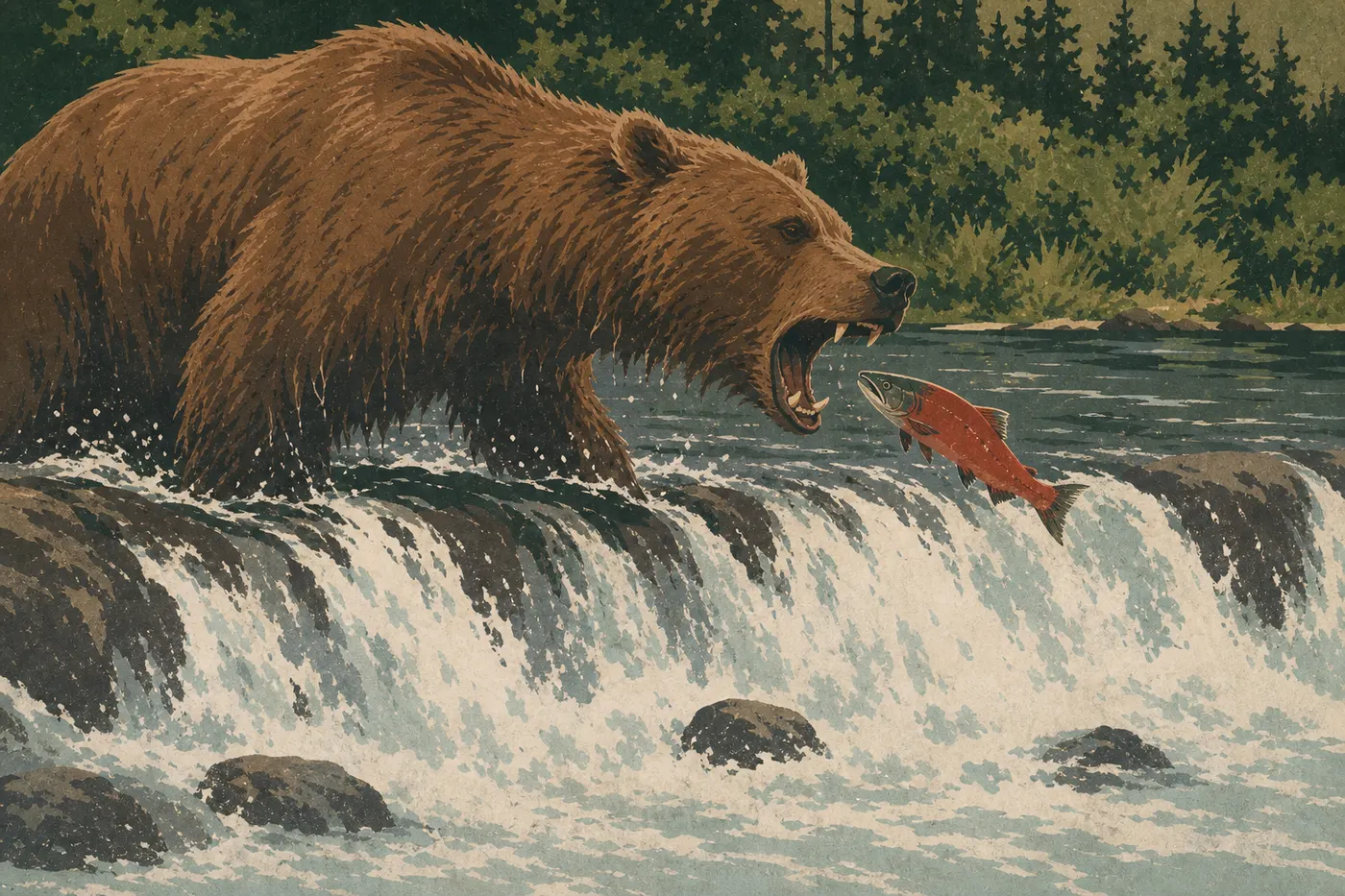
The brown bear (Ursus arctos) is Katmai's defining animal. The park is home to one of the world's highest concentrations of brown bears, with an estimated population of more than 2,200 across the park and preserve. Katmai's brown bears reach remarkable sizes thanks to an abundance of sockeye salmon. An adult male can weigh between 400 and 800 pounds in the fall, after eating dozens of fish a day.
Brown bears on the Alaska Peninsula are sometimes called "coastal grizzlies" in English-language guidebooks. They belong to the same species (Ursus arctos horribilis), but the term "grizzly" is generally used for inland populations, which are smaller because they have less food. In Katmai, you're seeing coastal brown bears, among the largest in the world.
Behavior: Brown bears are solitary except during fishing season, when they gather at Brooks Falls from July through September to catch salmon in midair. The rest of the time, they graze in wet meadows, search the understory for berries, or doze near waterways.
Gray Wolf
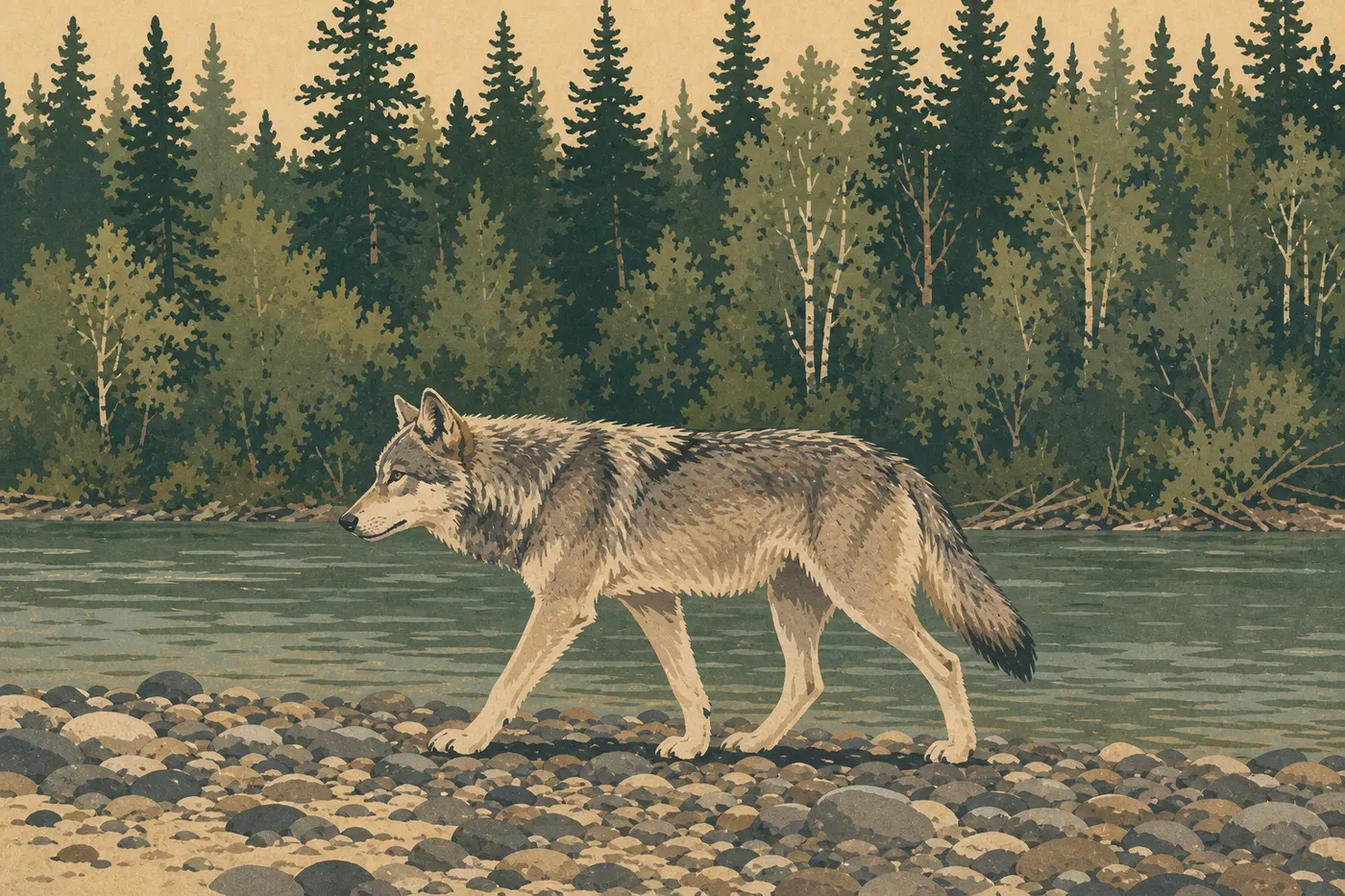
Yes, there are wolves in Katmai National Park. Packs of gray wolves (Canis lupus) roam the tundra and inland valleys, hunting mostly moose and caribou. Naturally elusive, they're rarely seen from the usual visitor areas. Spotting one from a plane or on a hike in a remote area is a lucky break, not something you can count on.
Moose
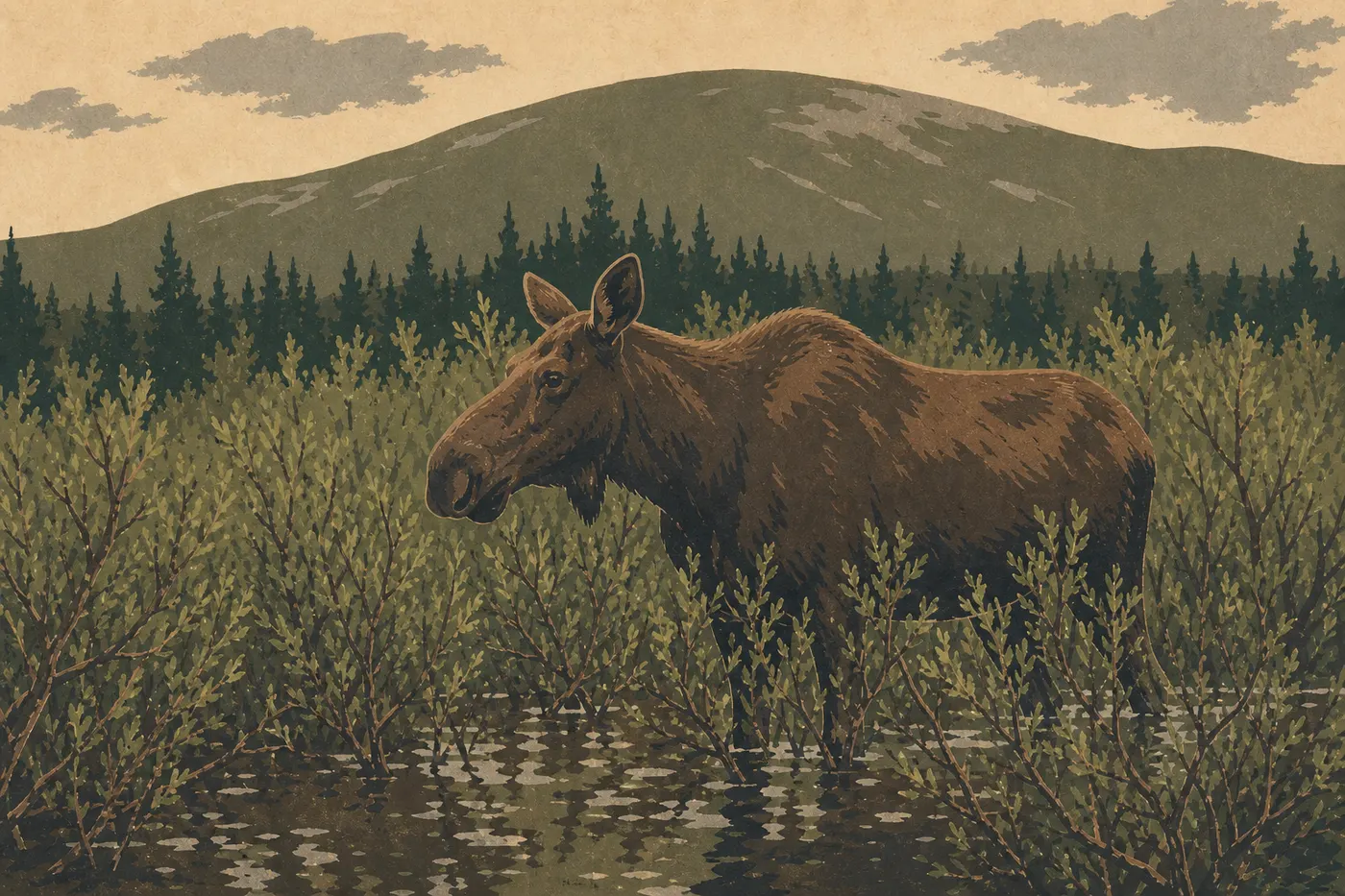
The Alaska moose (Alces alces gigas) is the largest subspecies of its genus. A male can weigh more than 1,300 pounds. You'll find them in the transition zone between spruce forest and wetlands, browsing on willows and aquatic vegetation. A bull's antlers can span 6.5 feet in the fall. Outside the rut in September and October, moose are relatively placid, but they're still unpredictable and powerful.
Caribou
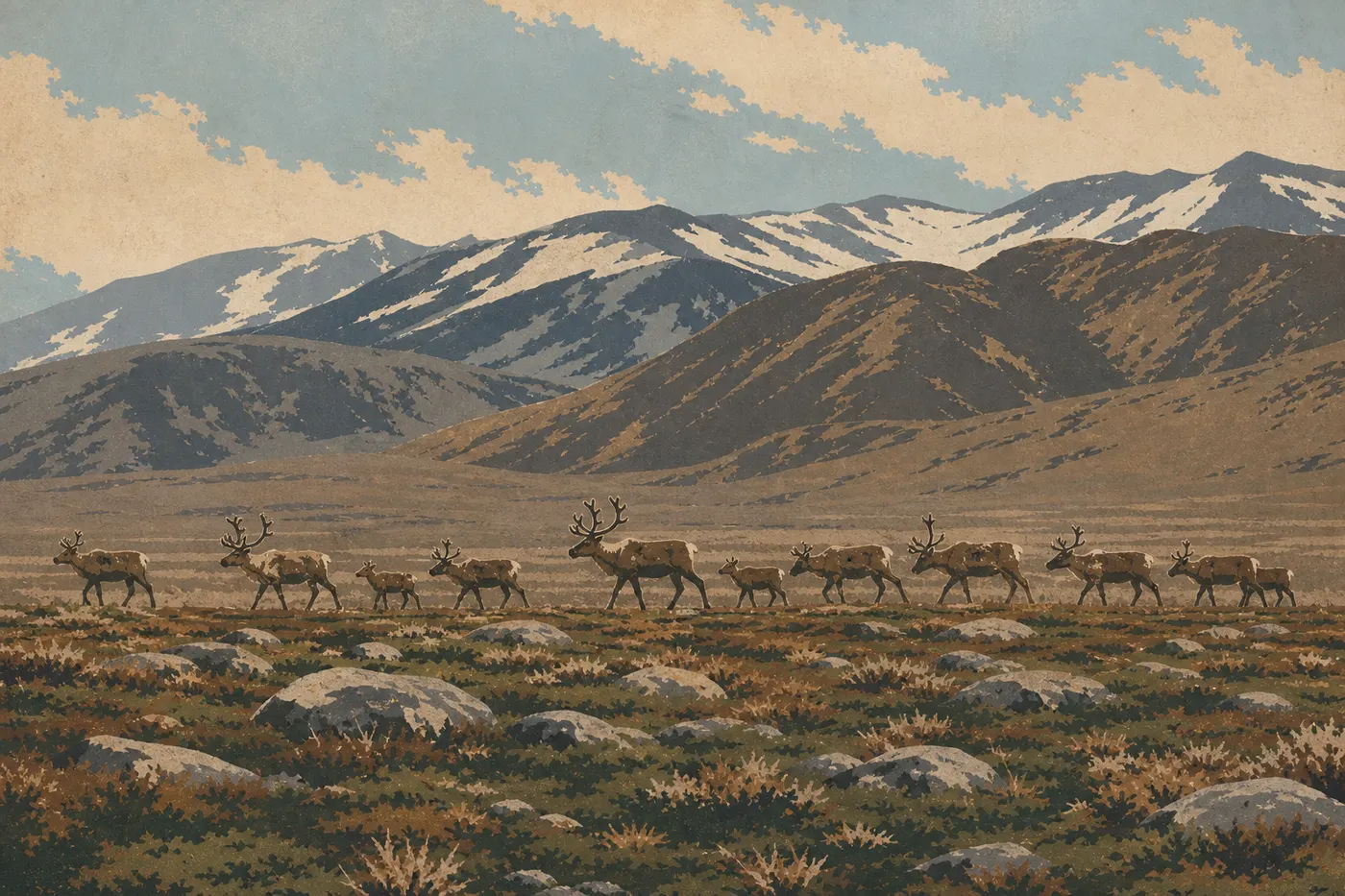
Caribou herds (Rangifer tarandus) cross the park along ancient migration routes. Unlike the sedentary moose, caribou are always on the move. You're most likely to see them in summer and early fall, in compact herds across open tundra in the eastern and northern parts of the park.
Sea Otter
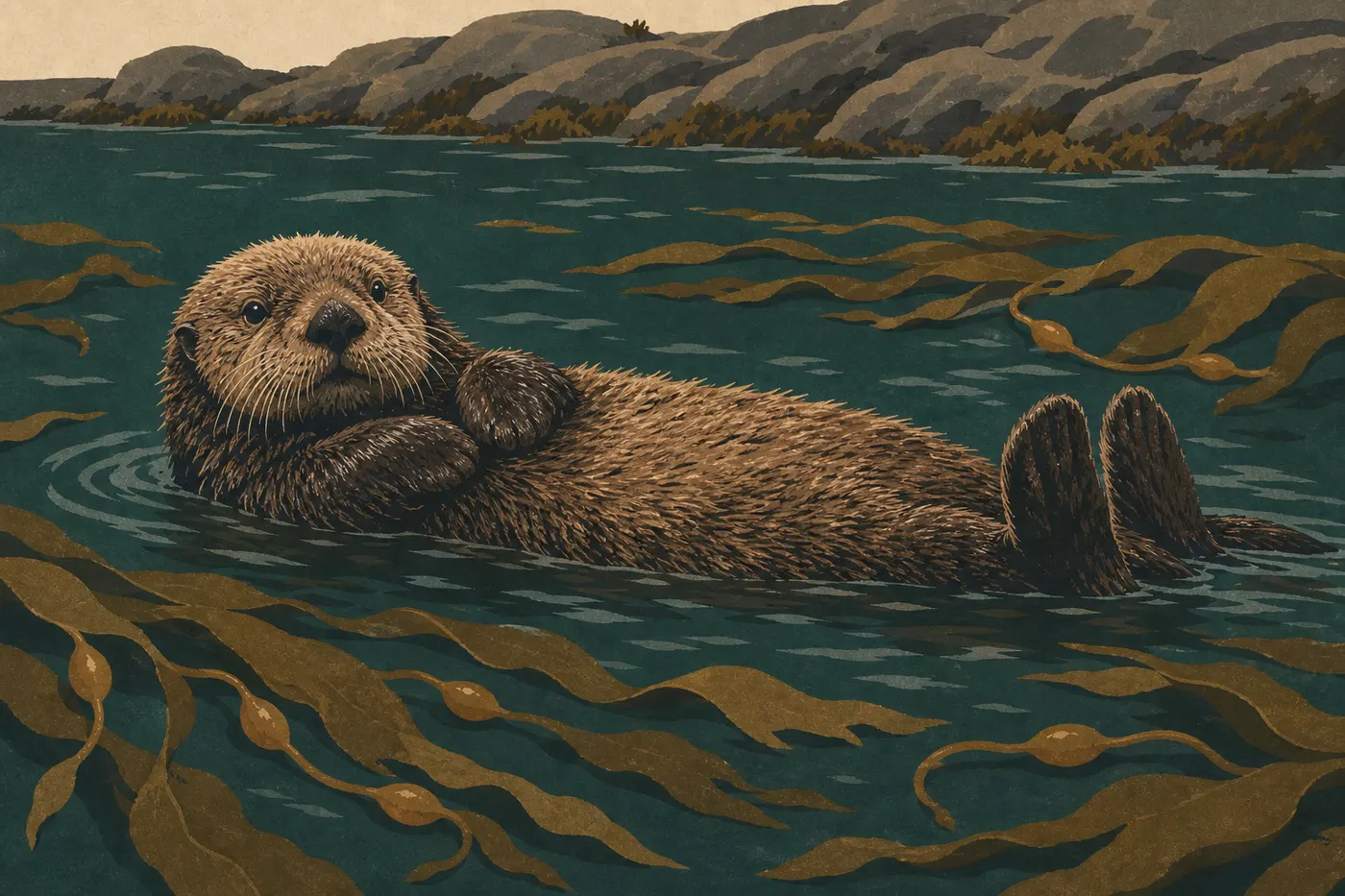
Sea otters (Enhydra lutris) frequent the Shelikof Coast on the Pacific side. You can recognize one immediately: it's the marine mammal that floats on its back with its paws out of the water, sometimes wrapped in kelp to keep from drifting. Once nearly driven to extinction by the fur trade, the species now benefits from strict protection. You can regularly see them from kayaks along the park's southeastern coast.
Sockeye Salmon
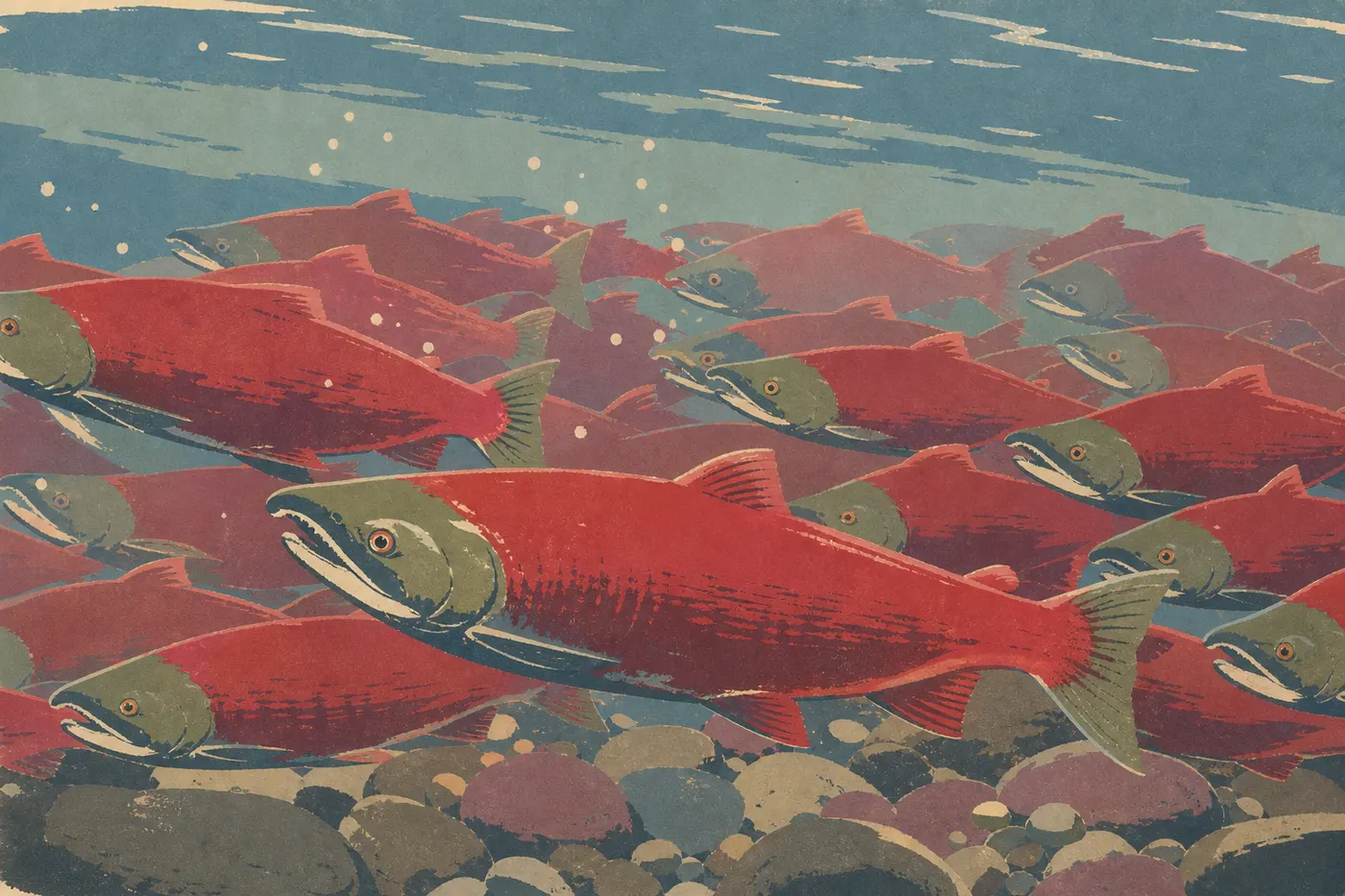
It's not a mammal, but sockeye salmon shape all of Katmai's wildlife. Every summer, millions of sockeye salmon (Oncorhynchus nerka) swim up Brooks River and nearby waterways to spawn. This abundant food source draws and concentrates bears, eagles, otters, and foxes along the same stretches of river. It's Katmai's great wildlife spectacle.
Where to See Wildlife in the Park
Brooks Camp is unquestionably the place to start if you want to see wildlife. Viewing platforms at Brooks Falls let you watch bears fishing just a few yards away. You can get there by bush plane from King Salmon, and the main platform has visitor-use limits.
Brooks River and Naknek Lake form a second wildlife corridor. Bears and red foxes often follow the shorelines early in the morning, before visitors arrive in force.
Valley of Ten Thousand Smokes, accessible by bus from Brooks Camp, offers an almost lunar landscape shaped by the 1912 eruption of Novarupta. Wildlife is less abundant here, but raptors, especially bald eagles and Steller's sea eagles, are easy to spot.
The Shelikof Coast, accessible only by plane or boat, is home to sea otters, harbor seals (Phoca vitulina), and Steller sea lions (Eumetopias jubatus). It takes some logistical planning, but sightings are spectacular and crowd-free.
The inland tundra around Kukaklek and Nonvianuk is explored by fly-in or boat. This is where you'll find caribou and wolves, far from the usual tourist routes.
When to See Them
The visiting season at Katmai is short. The park is fully accessible from June through October, with activity peaking from July to mid-September. For bears at Brooks Falls, the prime window runs from late June through early September. There's a second peak in October, when bears return to the waterways to feed on dead or dying salmon.
Moose and caribou are more visible at dawn and dusk, especially in open areas. Sea otters are active during the day and can be seen throughout the coastal season.
For a month-by-month breakdown and weather conditions, the park is often foggy and rainy, wedged between the North Pacific and the Bering Sea, check the Katmai seasonal guide and the park weather forecast.
Katmai's nocturnal animals include red foxes and Arctic hares (Lepus arcticus), which become active at dusk. In summer, nighttime lasts only a few hours. Katmai's "night" is often an extended twilight, ideal for crepuscular species.
Katmai's Predators and Large Animals
The brown bear is Katmai's top land predator. It has no natural predators in the park. Once fully grown, it sits at the top of the terrestrial food chain.
The gray wolf is the other major predator. Packs help regulate moose and caribou populations, playing a key ecological role in the tundra's balance.
Orcas (Orcinus orca) frequent the park's coastal waters. In the passages and bays near the Shelikof Coast, transient groups hunt otters, seals, and salmon. Seeing an orca from a kayak or sightseeing boat is an experience you'll remember.
The great white shark is absent. The North Pacific's waters are too cold for it. The Pacific sleeper shark (Somniosus pacificus), however, inhabits the coastal depths far below the surface.
Katmai's largest land animal is the Alaska moose. Males can stand more than 6.5 feet at the shoulder and weigh more than 1,300 pounds.
Staying Safe Around Wildlife
Katmai isn't a zoo. Rangers strictly enforce the park's safety rules, and the record of incidents linked to careless behavior is real.
The required minimum distance from bears is 165 feet. At Brooks Falls, rangers set a boundary around the viewing platforms. Respect it without argument. If a bear approaches you on its own, you're the one who needs to move away, not the bear.
Never feed an animal, no matter what it is. A bear that associates people with food becomes a "problem bear" and must be euthanized. That's not a figure of speech.
Keep your food in the provided or approved containers. At Brooks Camp, bear boxes are installed throughout the campground. Standard coolers aren't enough.
When hiking outside developed areas, carry bear spray and know how to use it. Bear spray, with a range of at least 23 to 30 feet, is more effective than a firearm in most close encounters, according to data compiled by the NPS. Keep it on your belt, not buried in your pack.
Make noise as you walk by talking, singing, or using a bell. Nearly all bear attacks happen when the animal is surprised. A bear that hears you usually has time to move away.
During the moose rut in September and October: A cow in heat is unpredictable and aggressive. Keep at least 100 feet away. A moose can charge faster than it looks.
For the park's complete safety rules, including emergency instructions and backcountry camping protocols, see the Katmai park guide.
In Brief: Species You Shouldn't Miss and Where to Find Them
| Species | Best time | Best spot |
|---|---|---|
| Brown bear | July to mid-September (fishing) | Brooks Falls |
| Sea otter | June-September | Shelikof Coast (kayak) |
| Moose | All season, dawn/dusk | Naknek Lake shorelines |
| Caribou | July-October | Inland tundra (fly-in) |
| Sockeye salmon | Mid-June to late September | Brooks River |
| Gray wolf | Unpredictable | Inland valleys (fly-in) |
| Orca | July-September | Coastal waters (boat) |
Brown bears remain the number one reason to visit Katmai. But if you take time to look beyond Brooks Falls, the park reveals coastal and island wildlife that's just as remarkable and far less crowded.
Frequently Asked Questions
What animals live in Katmai National Park?
The park is home to brown bears, with more than 2,200 estimated, moose, caribou, gray wolves, red foxes, Arctic hares, sea otters, harbor seals, Steller sea lions, orcas, and millions of sockeye salmon in summer.
What is Alaska's iconic animal?
The moose is Alaska's official state animal. In Katmai specifically, the brown bear embodies the park. Brooks Falls is known around the world for its bears fishing.
Are there wolves in Katmai National Park?
Yes. Packs of gray wolves live in the park, especially in remote areas of the tundra and inland valleys. They're elusive and rarely seen from visitor areas. A bush-plane flight or a self-sufficient backcountry trip will improve your chances.
How do you get to Katmai?
You can't reach the park by car or bus. Take a commercial flight to King Salmon from Anchorage, about a one-hour flight, then a bush plane to Brooks Camp. The Katmai access guide covers all your transportation options by season.