
Katmai Weather: Month-by-Month Climate & What to Pack
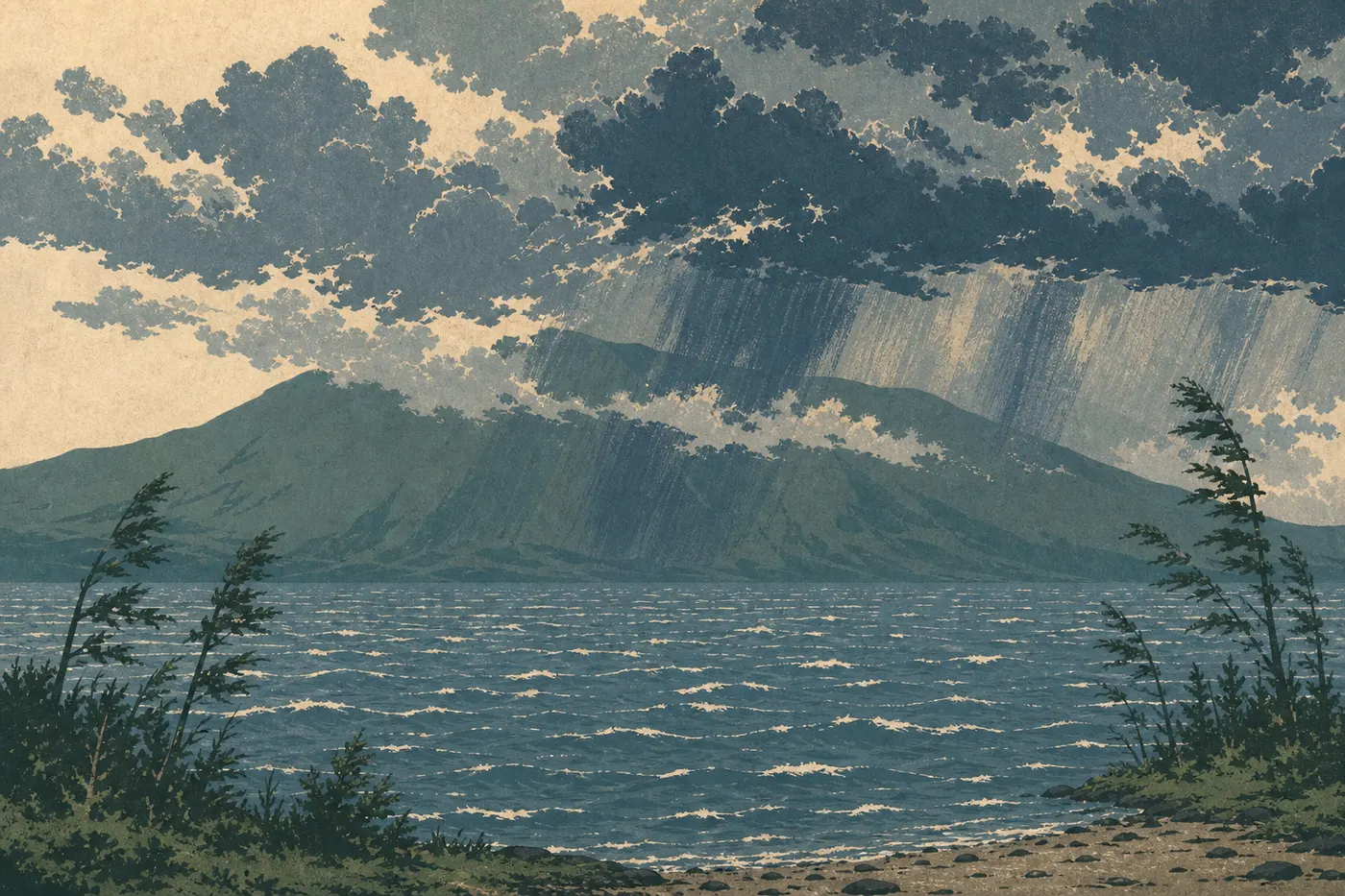
Katmai sits between the North Pacific Ocean and the Bering Sea, two of the planet's roughest bodies of water. The park regularly becomes a meeting ground for opposing weather systems, with changing skies, generous precipitation from April through October, and cold but relatively dry winters. If you're coming for the brown bears at Brooks Falls, know this up front. The ideal window, July and August, coincides with the wettest stretch of the year.
In brief: Katmai has a wet subarctic climate. Summers are cool, rarely rising above 68 °F, while winters are severe, averaging below 5 °F. The visiting season runs from June through early October.
Current readings are unavailable. See the seasonal averages farther down this page.
Open-Meteo readings · updating… · park time zone
Katmai Climate Month by Month
The figures below are indicative climate normals recorded at King Salmon, the park's administrative headquarters, about 292 miles southwest of Anchorage. Coastal areas around Brooks Lodge in Naknek Bay are slightly milder in winter and receive more summer precipitation.
| Month | Low | High | Precip. | What to expect |
|---|---|---|---|---|
| January | -2 °F | 19 °F | 25 mm | Dry cold, park nearly closed |
| February | 1 °F | 23 °F | 22 mm | Slight thaw, similar conditions |
| March | 9 °F | 32 °F | 20 mm | Freeze still in place, returning daylight |
| April | 23 °F | 45 °F | 25 mm | Thaw, roads impassable |
| May | 36 °F | 55 °F | 38 mm | Wet, new greenery |
| June | 43 °F | 64 °F | 52 mm | Lodges open, frequent showers |
| July | 46 °F | 68 °F | 68 mm | Warmest and wettest month |
| August | 45 °F | 66 °F | 63 mm | Salmon, bears, often overcast skies |
| September | 36 °F | 55 °F | 55 mm | Fall colors, marked chill |
| October | 25 °F | 43 °F | 38 mm | Closures begin |
| November | 10 °F | 28 °F | 30 mm | Wintry conditions, lodges closed |
| December | 1 °F | 19 °F | 26 mm | Deep cold, empty park |
The pattern is simple. As the season moves toward July, precipitation increases. The good news is that summer temperatures stay comfortable, so you won't swelter in Katmai.
Is Katmai Cold? Records and Extremes
Yes, definitely. Even in the middle of summer, a north wind can make it feel 9 to 14 °F colder within a few hours. Cold records around King Salmon fall below -31 °F during winter polar outbreaks. Summer heat stays limited, and temperatures above 77 °F are notable events in the park. Relative humidity is high from May through October, making the cold feel sharper than the thermometer alone suggests.
One thing to keep in mind is that Katmai lies in a volcanically active region. The Valley of Ten Thousand Smokes is the legacy of the 1912 Novarupta eruption, one of the most powerful of the twentieth century. It has no direct effect on daily weather, but it serves as a reminder that the region's geology contributes in its own way to the area's instability.
What to Wear in Katmai by Season
The basic rule in Katmai comes down to three words: layer, waterproof, adapt.
Summer (June to August): a lightweight thermal base layer, a midweight fleece, and a hooded waterproof jacket. Shorts work on sunny days, but keep long pants handy for foggy mornings and mosquitoes. Around Brooks Lodge, the ground is marshy, so bring rubber boots or sturdy waterproof hiking shoes with gaiters.
Spring and fall (May, September to October): use the same layering system, but make it heavier. Add a down jacket or insulated jacket under your rain shell. By September, a beanie and lightweight gloves belong in your daypack.
Winter: cold-weather gear rated for temperatures below -4 °F, including a fleece jacket, thermal underwear, insulated pants, and mittens. This isn't the time to improvise.
One often-overlooked detail is that Alaska's UV rays remain intense even under overcast skies, especially near snow or water. Use SPF 30 sunscreen at a minimum, year-round.
Warnings and Conditions to Watch
Katmai's main summer weather risk isn't deep cold. It's fog. Floatplanes connecting King Salmon and Brooks Lodge take off and land under visual flight rules. A dense fog bank can leave you stranded for a day or two without warning. Build that possibility into your schedule and budget. Extra nights at the lodge are always possible.
Convective thunderstorms are rare but not unheard of in July and August. If a cumulonimbus cloud approaches during a hike, descend to lower ground and return to solid structures. Stay off ridgelines and away from isolated trees.
In spring, river flooding can cut off some routes. Check with rangers before traveling beyond marked trails. Official alerts for the region come from the National Weather Service in Anchorage, which also publishes wind and visibility advisories that are useful before a floatplane flight.
For up-to-date access conditions, including delayed flights, canceled flights, and closed roads, our Access and Transportation Guide lists contacts for local air operators.
Frequently Asked Questions
What's the warmest month in Alaska, around Katmai?
July is the warmest month in Katmai, with highs around 64 to 68 °F at King Salmon. The park's coastal areas, more exposed to moisture from Naknek Bay, remain slightly cooler.
What is the average temperature in Alaska in May?
In May at Katmai, temperatures range from 36 °F at night to 55 °F during the day. The ground is still cold, precipitation increases quickly, and nighttime freezes remain possible early in the month.
What is the highest temperature ever recorded in Alaska?
Alaska's all-time heat record exceeds 99 °F, recorded inland in the early twentieth century. Summers in Katmai are much milder. Reaching 77 °F in the park is already a notable anomaly.
Is Katmai cold?
Yes. Katmai winters are severe, with lows that can drop below -13 °F during polar cold spells. Even in midsummer, a north wind can make it feel below 50 °F within minutes.
What should I wear to visit Katmai?
For a summer visit to Katmai, bring layers you can add or remove, including a thermal base layer, fleece, and waterproof jacket, along with sturdy waterproof shoes. In fall, add a down jacket and beanie. Never underestimate the fog and rain, which can appear even in July.