
Katmai National Park: The Complete Visitor Guide
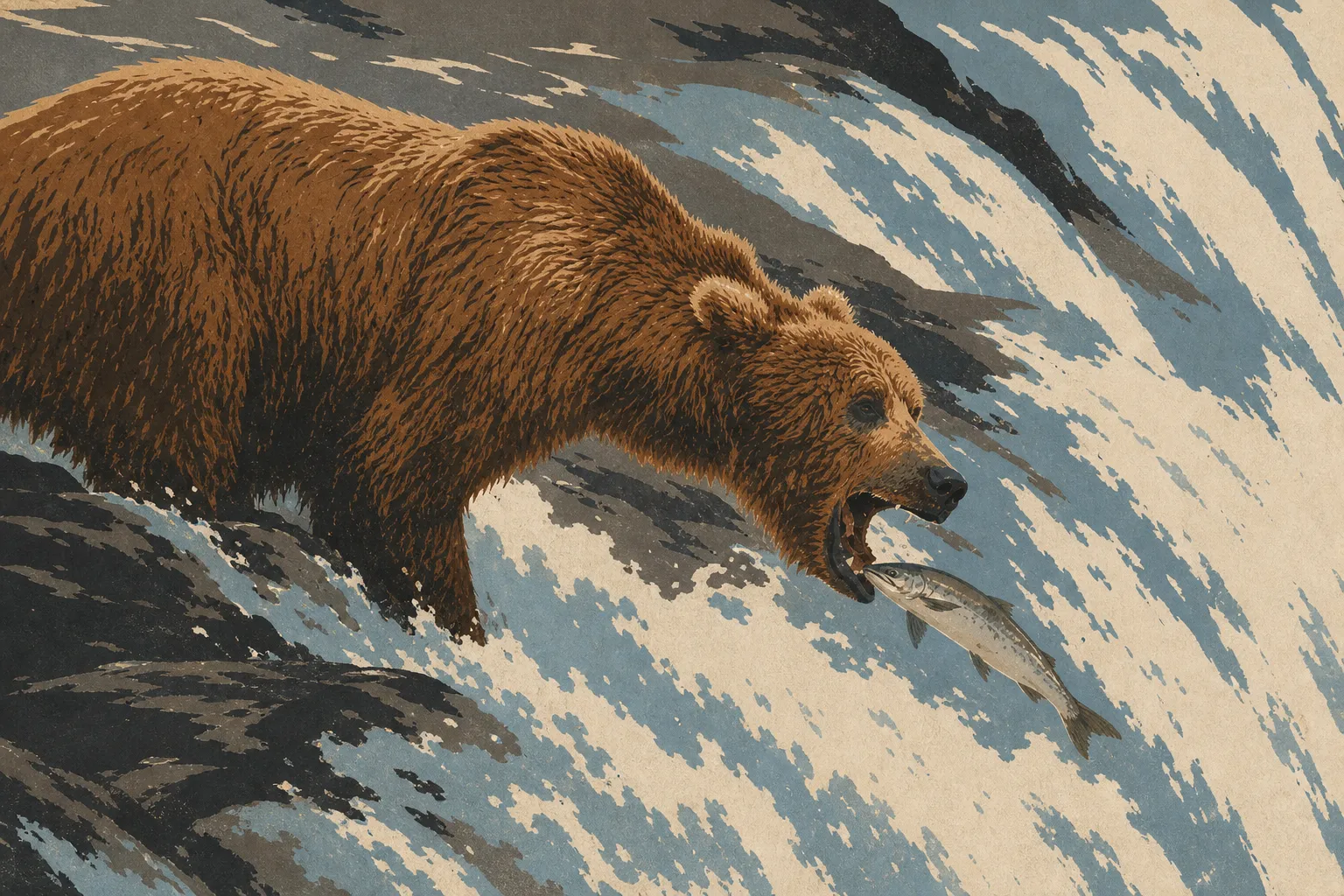
Katmai is the place to watch a brown bear catch a salmon in midair, just a few yards from a wooden boardwalk. This Alaska national park and preserve covers the northern tip of the Alaska Peninsula, southwest of Anchorage. No roads lead here. Floatplanes and boats are the only ways in. Most visitors spend one to three days in the Brooks Camp area between June and September. That's the short answer. The rest of this page will help you plan a realistic trip, because Katmai takes preparation.
Let's be clear from the start: this park requires much more logistical planning than physical stamina. Most people come for the wildlife and volcanic landscapes, not to rack up miles on the trails.
Katmai at a Glance: Where the Park Is and How to Get There
The park stretches across the Alaska Peninsula, northwest of Kodiak Island and southwest of Homer. Its administrative headquarters are in King Salmon, a village about 290 miles southwest of Anchorage. That distance gives you a sense of how remote Katmai is. No road connects Katmai to the state's road network. You first reach King Salmon on a regional flight from Anchorage, then take a floatplane or water taxi to Brooks Camp, the park's main visitor hub.
The lack of roads changes everything about trip planning. You'll need to book bush flights ahead of time, build in weather buffers because flights are often delayed or canceled, and accept that transportation will take a substantial bite out of your budget. We cover every link in the chain, from scheduled flights to air taxis, in our guide to getting to Katmai.
The park stays open 24 hours a day, seven days a week, year-round. In practice, the useful season is limited to the warmer months, when Brooks Camp services operate and the bears are around.
Entrance Fees, Passes, and Reservations
Katmai doesn't work like a typical drive-in park where you pay an entrance fee at a gate. The real expenses here are air transportation and lodging, not an admission ticket. Official fees and any available passes change from year to year. Our National Park Fees & Passes page provides an overview of entrance fees and passes.
One point deserves your immediate attention: Brooks Camp's campground requires advance reservations, and sites go quickly as soon as reservations open, usually several months before the season. Lodges in the area fill up even earlier. If you're traveling to Brooks Falls during peak season, booking isn't optional. It's the first thing to lock in. We explain the schedule and process in our Katmai lodging overview and our guide to camping at Brooks.
Passport stamp collectors should know that Katmai has its own stamps. Visit our NPS Passport & Stamps page to find out where to get them.
Reservations, Permits, and Rules to Follow
Essential reservations: Brooks Camp's campground is reserved through Recreation.gov. July sites disappear within minutes when reservations open. Plan to book at least six months ahead, and set up an alert on the site if no dates are available. Brooks Lodge is booked directly through Katmailand. July rooms often fill a year in advance.
Backcountry registration: You don't need a permit for short hikes from Brooks Camp. Any wilderness trip away from marked trails, including backcountry camping, kayak crossings, and self-guided expeditions, requires mandatory registration with the rangers before departure. Stop by the ranger station for a few minutes so the rescue teams know your itinerary.
Wildlife rules: Keep at least 165 feet from bears at all times, except on official viewing platforms. At the Brooks Falls platforms, rangers manage visitor rotations and keep track of how many people are present. They enforce the rule strictly. A violation can lead to removal from the park.
Food storage: Throughout the park, keep food, drinks, and anything with an odor in approved bear canisters or the food lockers provided at the campground. Storing food in a tent can result in a fine and immediate removal from the campground.
Fishing: Fishing is allowed in the park, but it follows Alaska Department of Fish and Game regulations. Nonresidents must have an Alaska fishing license. Check the requirements and get your license before you arrive.
Getting Around Katmai
Forget scenic roads and shuttles. At Katmai, you travel by plane, boat, and on foot. The usual route starts in King Salmon, then follows a roughly 20-mile floatplane trip over Naknek Lake to Brooks Camp, or a boat ride. Once you arrive at Brooks Camp, you get around on foot along a short network of trails and raised boardwalks designed to keep visitors and bears apart.
When you arrive, every visitor attends bear school, a mandatory safety briefing before moving around independently. You'll learn the practical rules: keep your distance, yield to bears, never leave food accessible, and store all food in the designated lockers. These instructions aren't just for show. During salmon season, Brooks Camp has one of the highest densities of brown bears anywhere in the world.
To explore farther, especially the Valley of Ten Thousand Smokes, a long-distance bus runs from Brooks Camp along the road during the day. We describe these internal connections, their schedules, and their limitations in our guide to getting around the park.
How Long Do You Need to Visit Katmai?
Plan on at least one full day at Brooks Camp for a good chance of seeing bears, and two to three days for a comfortable trip. A quick day trip is possible. Excursions leave from King Salmon, Homer, or Kodiak, and they make sense if your time in Alaska is limited. Weather remains the wildcard, though. One canceled flight and the whole outing is off.
Staying overnight at the campground or lodge gives you a major advantage: you'll reach the viewing platforms early in the morning and late in the day, when crowds thin out and the bears become active again. To build a day-by-day itinerary based on your starting point, see our Itinerary & Length of Stay page.
Plan your visit
What to See and Do in Katmai
The park breaks down into distinct areas. Here's an overview to help you choose. You'll find the full list of activities in our guide to things to do in Katmai.
Road trip journal · 3 areas
Brooks Falls and Brooks Camp
This is the park's iconic scene, and for good reason. In July, sockeye salmon swim up Brooks River and run into a waterfall about 6.5 feet high. Brown bears wait there with their mouths open, catching the fish as they leap. Three wooden viewing platforms let you watch safely. The falls have a second peak in September, when bears return to gorge on exhausted salmon before hibernation. That's also when Fat Bear Week takes place, the online contest that chooses the bear best prepared for winter.
The Valley of Ten Thousand Smokes
In 1912, the Novarupta eruption, the most powerful of the 20th century, buried an entire valley under hot ash. For years, thousands of fumaroles rose from it, giving the valley its name. The fumaroles have disappeared today, but the stark landscape of deeply eroded ash remains striking. You can reach it from Brooks Camp on a full-day bus excursion, with a short guided hike as an optional add-on. This is Katmai's other face: mineral and quiet, far removed from the bustle around the falls.
The Rest of the Park and Preserve
Beyond these two focal points, Katmai covers a vast landscape of coasts, lakes, volcanoes, and tundra that remains largely wild and undeveloped. You can explore this area by private plane, kayak, or organized expedition. It is best suited to independent travelers with solid backcountry skills and experienced guides.
Explore the park
Katmai's Best Hikes
Katmai isn't a park known for a large network of marked long-distance trails. Most of its trails cluster around Brooks Camp. Short walks lead to the falls platforms and viewpoints over the lake. The park's main walk is the descent into the Valley of Ten Thousand Smokes, available as a guided excursion from the Brooks area. Beyond that, you enter completely trackless country with no signs, a place for experienced hikers who know how to travel in bear country. We cover realistic routes, time requirements, and difficulty levels on our Hiking page.
The detailed guide Katmai Hiking: The Best Trails for Every Experience Level Brooks Camp, Dumpling Mountain, and Valley of Ten Thousand Smokes trails Read the guide →Wildlife and Plants to Look For
The brown bear is Katmai's undisputed star, and the park shelters one of the world's largest concentrations. During salmon season, you can see dozens along Brooks River alone. But the park supports a much broader ecosystem: millions of sockeye salmon, moose, wolves, foxes, sea otters, and beavers on land; seals, sea lions, and whales along the coast. Bald eagles and a rich wetland bird community fill the sky.
The golden rule is to keep your distance. Never approach a bear, get between a mother and her cubs, or run. These wild animals tolerate people because our behavior remains predictable and respectful. For help reading bear behavior, choosing the best viewing times, and following detailed guidance, see our Wildlife page.
The detailed guide Katmai Wildlife: What Animals to See and Where to Find Them Brown bears, moose, otters, wolves, and more Read the guide →When to Visit Katmai
The visiting season lasts just a few weeks. July is the best time to watch bears fish at Brooks Falls, during the first salmon run. September brings a second wave, with heavier bears and fall light. Outside that period, from late fall through spring, Brooks Camp services close and logistics become difficult.
As for climate, Katmai sits between the North Pacific and the Bering Sea and gets hit by unstable weather systems. Spring, summer, and fall are generally cool and wet. Winter is drier and genuinely cold. Bring rain gear and technical layers in every season. Our When to Visit page covers the month-by-month details, and our Weather page has the climate data.
The detailed guide When to Visit Katmai: Best Time, Seasons, and Park Access The best time to visit Katmai is July for bears at Brooks Falls or September… Read the guide →Where to Stay in Katmai
On-site lodging comes down to two options in the Brooks Camp area: the historic lodge, comfortable and expensive, and the campground, cheaper but basic and surrounded by electric bear fencing. Both require reservations months in advance. Many visitors avoid the constraint by staying in King Salmon and visiting for the day, or by choosing a remote fishing lodge elsewhere in the park.
Stay in the park
Around Katmai: Things to Do Nearby
King Salmon serves more as a logistical gateway than a destination in its own right. It has the regional airport, an information center, and a few basic services. More broadly, Katmai fits into a rich southwestern Alaska circuit focused on sport fishing, bear viewing, and Indigenous culture. Nearby Lake Clark National Park and Preserve and McNeil River are other major bear-viewing destinations. Kodiak Island, to the southeast, is a natural extension of a wildlife-focused trip. To add Katmai to a larger itinerary, explore our Road Trips guides and our Regions section on Alaska.
Our Take: Is Katmai Worth the Trip?
Yes, as long as you're willing to accept the cost and logistics. Katmai isn't a park you pass through on the way to somewhere else. It's a costly expedition that depends on the weather and requires booking well in advance. In return, it offers a wildlife spectacle few places in the world can match: wild brown bears just a few yards away, with no fence between you and them, surrounded by volcanoes and salmon. If watching bears fish is high on your travel wish list, Katmai is worth every bit of effort. If you're looking for a park you can visit by car between two stops, this isn't it.
Frequently Asked Questions
Is a Day Trip to Katmai Worth It?
A day trip to Katmai is worthwhile if your time in Alaska is limited and you're willing to take the weather risk. These trips leave from King Salmon, Homer, or Kodiak and drop you at Brooks Camp for a few hours of viewing, which is usually enough to see bears in July. The downside is that one canceled flight can wipe out the entire day. Staying overnight remains safer and gives you more time, as we explain on our Itinerary & Length of Stay page.
How Do You Get to Katmai?
Getting to Katmai requires air travel because no road reaches the park. First, take a regional flight from Anchorage to King Salmon, then continue to Brooks Camp by floatplane or water taxi. Book these connections ahead of time and leave room for weather delays. You'll find the details on our Access & Transportation page.
How Do You Enter Katmai?
Entering Katmai doesn't involve a gate or a traditional entrance fee. Instead, you arrange a series of air and boat connections yourself. When you arrive at Brooks Camp, every visitor attends a mandatory safety briefing, known as bear school, before moving around the area. Current fees and procedures are listed on our National Park Fees & Passes page.
What Is the Most Beautiful Place in Alaska?
It's hard to name a single most beautiful place in Alaska when the state has so many remarkable sites, but Katmai is unquestionably one of the top destinations for wildlife. Brown bears fishing at Brooks Falls offer a rare natural spectacle, complemented by the volcanic landscapes of the Valley of Ten Thousand Smokes. To place Katmai among the state's other parks, see our Regions section on Alaska.
The American Parks shop
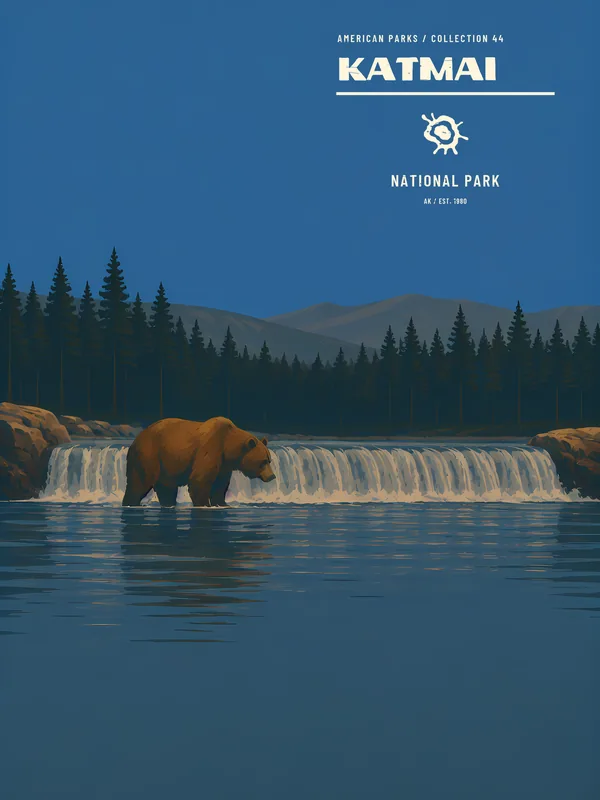
Bring Katmai home
Our park-inspired creations, made to order and shipped to your door.
Latest park news
- Fat Bear Week 2026: Vote for the Biggest Bear in Katmai, AlaskaVoting for Fat Bear Week 2026 runs through September 29, so watch Katmai's bears live and help crown this year's champion.
- Fat Bear Week 2026 at Katmai: Grizzly Season Is Almost HereThe 2026 Brooks Falls fattest-bear contest is almost here, and fall is still the best time to watch Katmai's grizzlies.