
What to Do in Katmai: Top Experiences and Activities
Three experiences sum up Katmai: watching a brown bear catch a salmon in midair at Brooks Falls, riding a bus across the ash plateau frozen in time since 1912, and fishing for sockeye in some of Alaska's most productive waters. It's one of the few American parks where people come not primarily for the scenery (although the Valley of Ten Thousand Smokes is spectacular), but for wildlife encounters of a density that's hard to find anywhere else on Earth.
In a nutshell. Brooks Falls for the bears (a must, in July or September depending on the salmon run), the Valley of Ten Thousand Smokes for its unique volcanic history, and Naknek Lake for fishing and kayaking. You can do all of this from Brooks Camp, the park's only inhabited hub.
Katmai at a Glance: Areas, Access, and Getting Around
Katmai National Park and Preserve stretches across the Alaska Peninsula, about 292 miles southwest of Anchorage as the crow flies. No road connects the park to Alaska's road network. You'll fly commercially to King Salmon, then take a seaplane or small plane to Brooks Camp.
The park revolves around two hubs.
- King Salmon: the logistical gateway, with its airport (regional flights from Anchorage) and the King Salmon Visitor Center, worth a visit while you wait for your connection to Brooks.
- Brooks Camp: the park's operational heart. This is where you'll find the Brooks Camp Visitor Center, the campground, Katmailand Lodge, and the two main activities: Brooks Falls and the bus to the Valley of Ten Thousand Smokes.
The Pacific coast and the inland lakes (Naknek, Coville, Grosvenor, and Kukaklek) are accessible only by chartered seaplane from Brooks Camp or King Salmon. For flight logistics and the companies serving the park, getting to Katmai step by step lays out every stage.
How Much Time Do You Need to Visit Katmai?
Two or three nights at Brooks Camp is the minimum for covering the two main activities without rushing. Plan on an extra night if you want to add a guided fishing trip or a scenic flight.
Regulars often stay five or six nights, especially to shift their timing at the falls (bear behavior changes between morning, afternoon, and evening) or wait for clear weather for the valley bus. Katmai day-by-day itineraries lay out combinations based on how much time you have.
Katmai's Must-See Areas
Brooks Camp and Brooks Falls
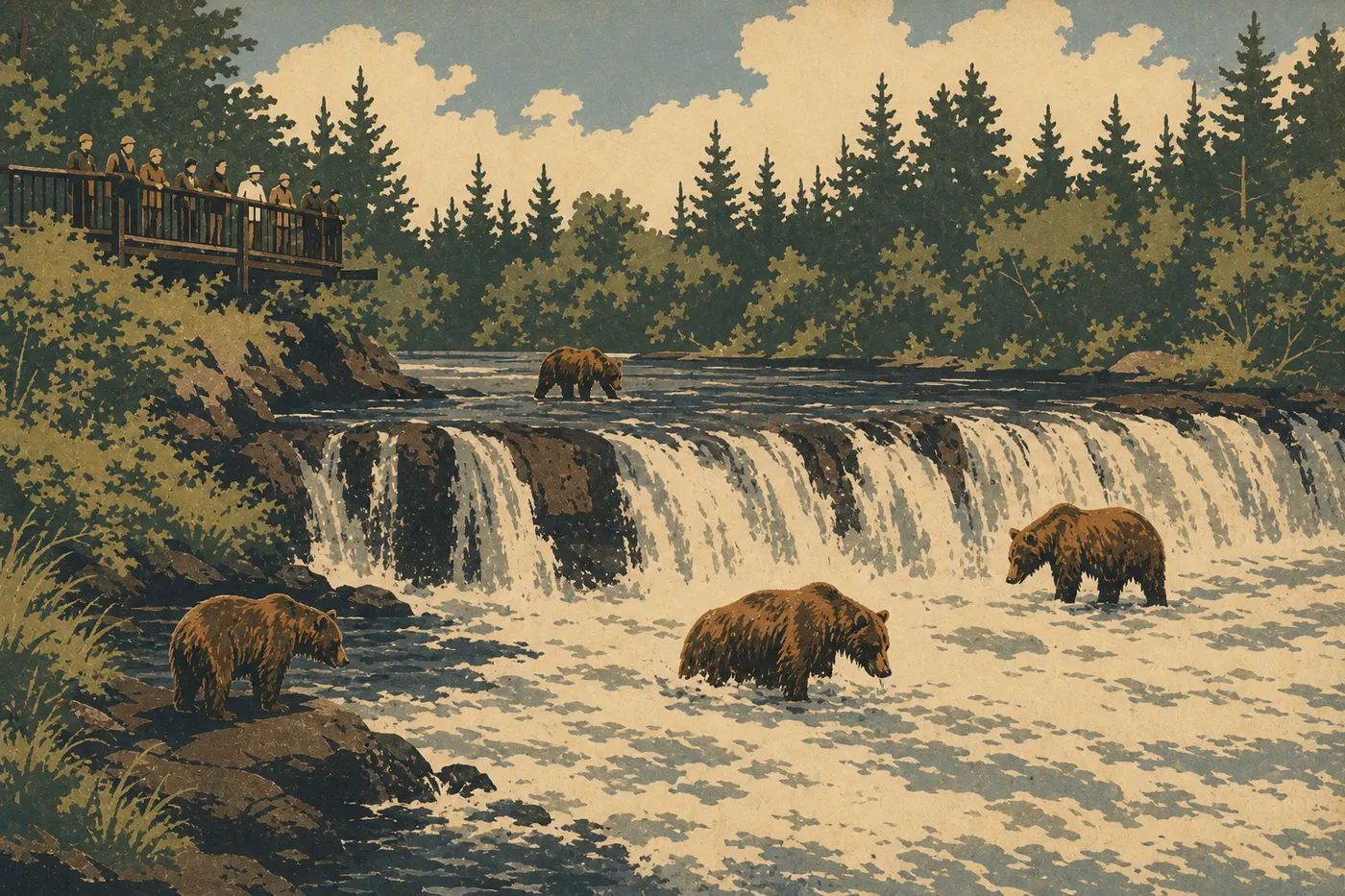
This is the main reason most visitors make the journey to Alaska, and the experience absolutely delivers. Brooks Falls is a roughly 5-foot waterfall on the Brooks River. Every summer, brown bears gather there to catch sockeye salmon heading upstream.
You can reach the viewing platforms (Lower Platform, Riffles Platform, and Falls Platform) on foot from camp in about 20 minutes along a well-marked forest trail. Falls Platform can hold around 40 people at once. During July's peak season, a rotation system gives every visitor a chance to get close. Arrive early in the morning to avoid the wait and catch the low light on the water.
The bears' two windows. July is the peak of the first sockeye run, when bears gather heavily at the falls and some catch dozens of salmon a day. September brings a smaller second wave, often with fewer visitors and more relaxed bears. For more, the Katmai wildlife guide covers seasonal behavior and the full list of species found in the park.
Brooks Camp itself is worth a leisurely hour outside viewing times. The Brooks Camp Visitor Center has exhibits on the park's volcanic history and Alutiit culture. A regulated bridge over the Brooks River connects the campground to the bear-fishing area. Keep the required distance: 50 yards, or about 150 feet, from bears outside the official platforms.
The Valley of Ten Thousand Smokes
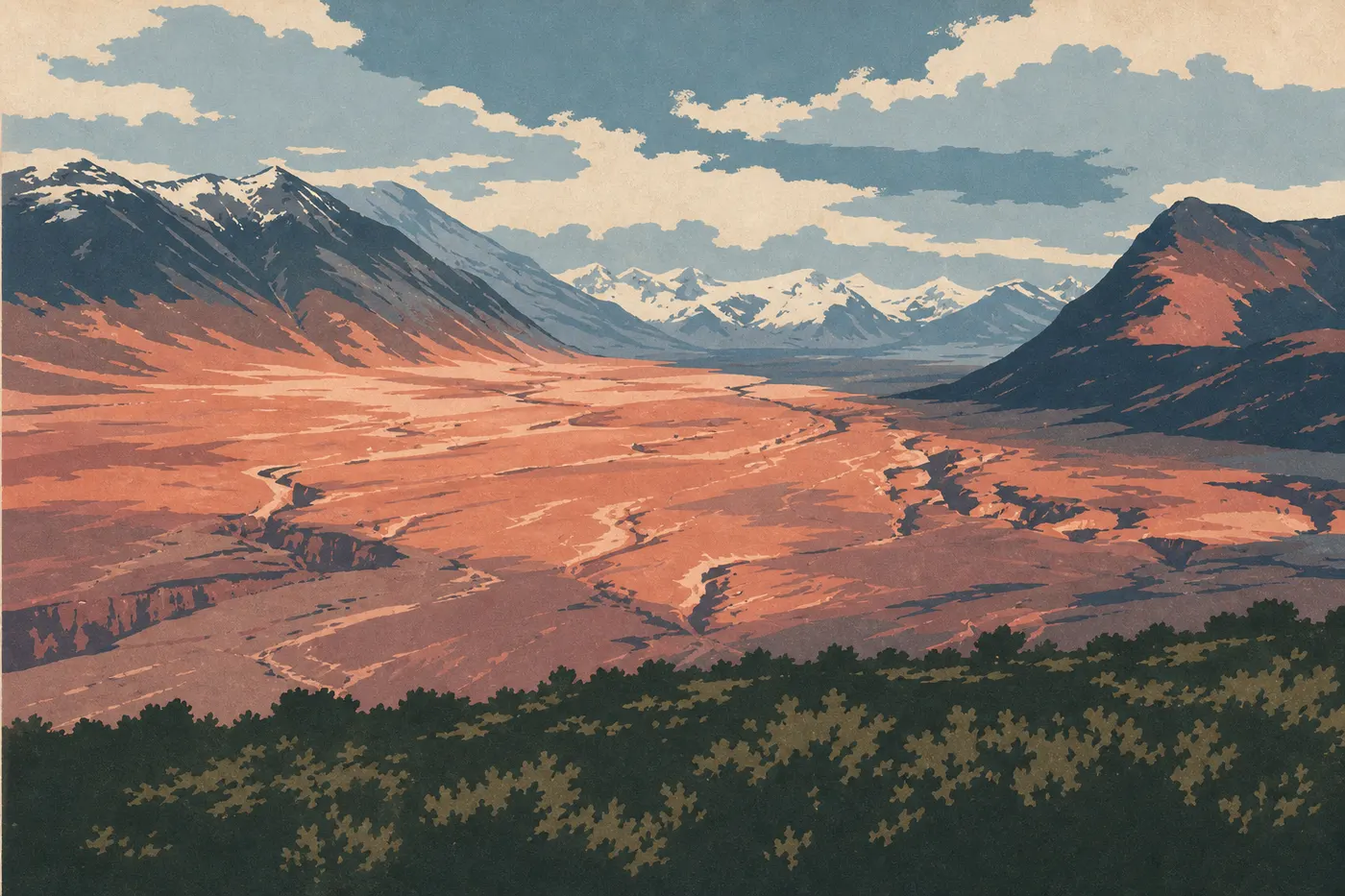
In June 1912, the eruption of Novarupta, the largest eruption of the 20th century by ash volume, buried an entire valley beneath a thick layer of volcanic tuff. What we now call the Valley of Ten Thousand Smokes is this frozen plateau, cut through by the Ukak River canyon, which has carved its way through the deposits over the decades.
A bus leaves Brooks Camp every morning for the round trip (about 25 miles each way on an unpaved road). The ride takes about an hour each way. Once there, you can walk along the canyon rim or down to the base of the Ukak Falls. Bring sturdy shoes with thick soles and a rain jacket. The tuff is unstable in places, and the wind can be fierce even in midsummer.
The view from the canyon rim (walls of compressed ash, wisps of steam still visible in cool weather, and snow-covered volcanic peaks in the background) is one of Alaska's most unexpected sights. Reserve your bus seat ahead of time directly through Katmailand. Departures are limited and fill quickly in July.
The Coastal Area
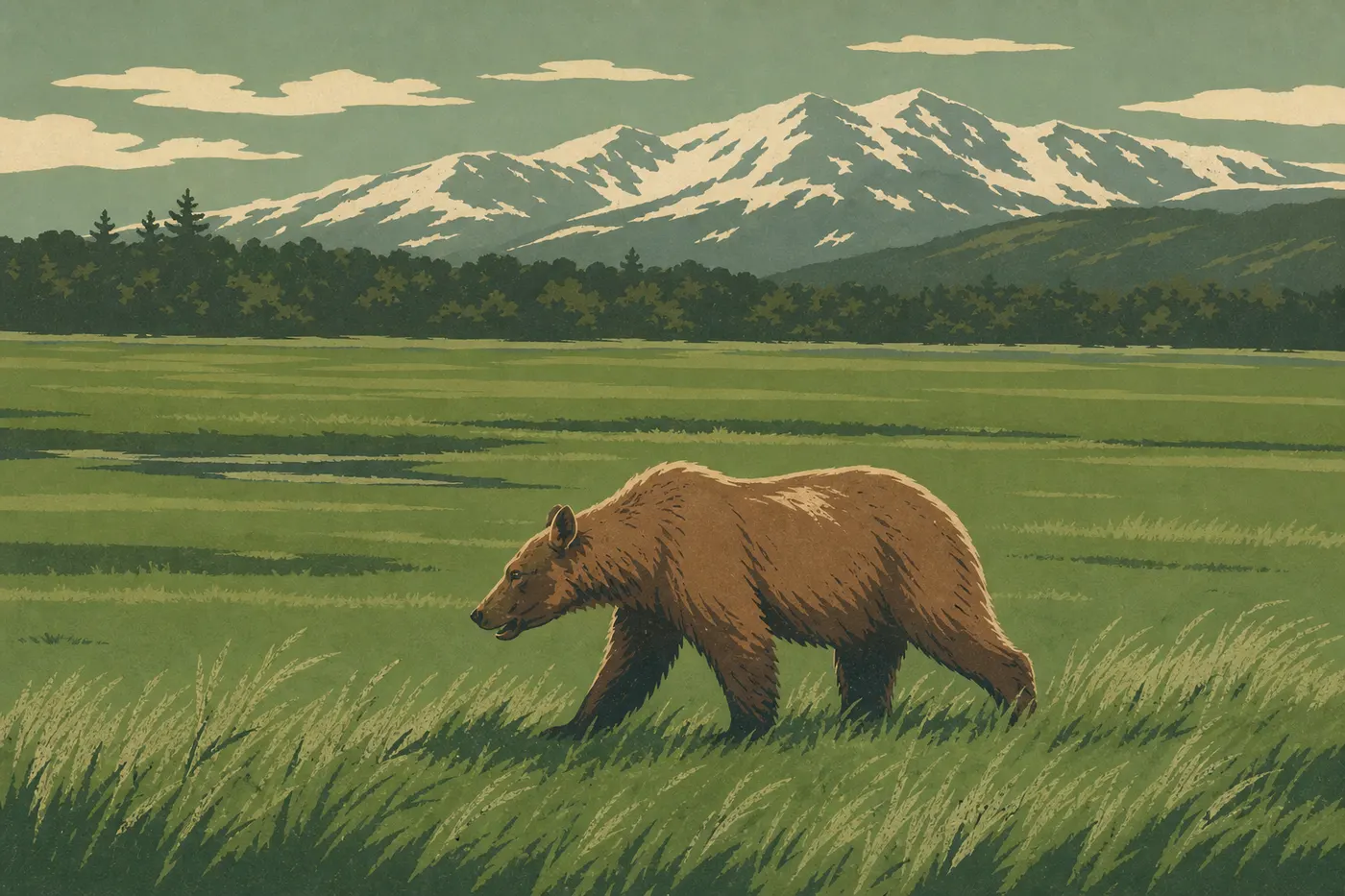
Katmai's Pacific coast, inaccessible by car but reachable by chartered seaplane, offers a radically different experience from the inland areas. You'll find deserted cobblestone beaches, coves carved into the cliffs, and abundant marine life: sea otters, Steller sea lions, tufted puffins, and harbor seals.
For a first look at the coast, a scenic seaplane flight from King Salmon or Brooks Camp is enough to take in its geography and spot seabird colonies on the rocks. Experienced kayakers can follow the Shelikof Strait, but the conditions (swells, cold currents, and unstable weather) make it suitable only for seasoned paddlers with cold-water experience. Read the Katmai safety guidelines before setting out on an independent coastal trip.
Naknek Lake and the Inland Lakes
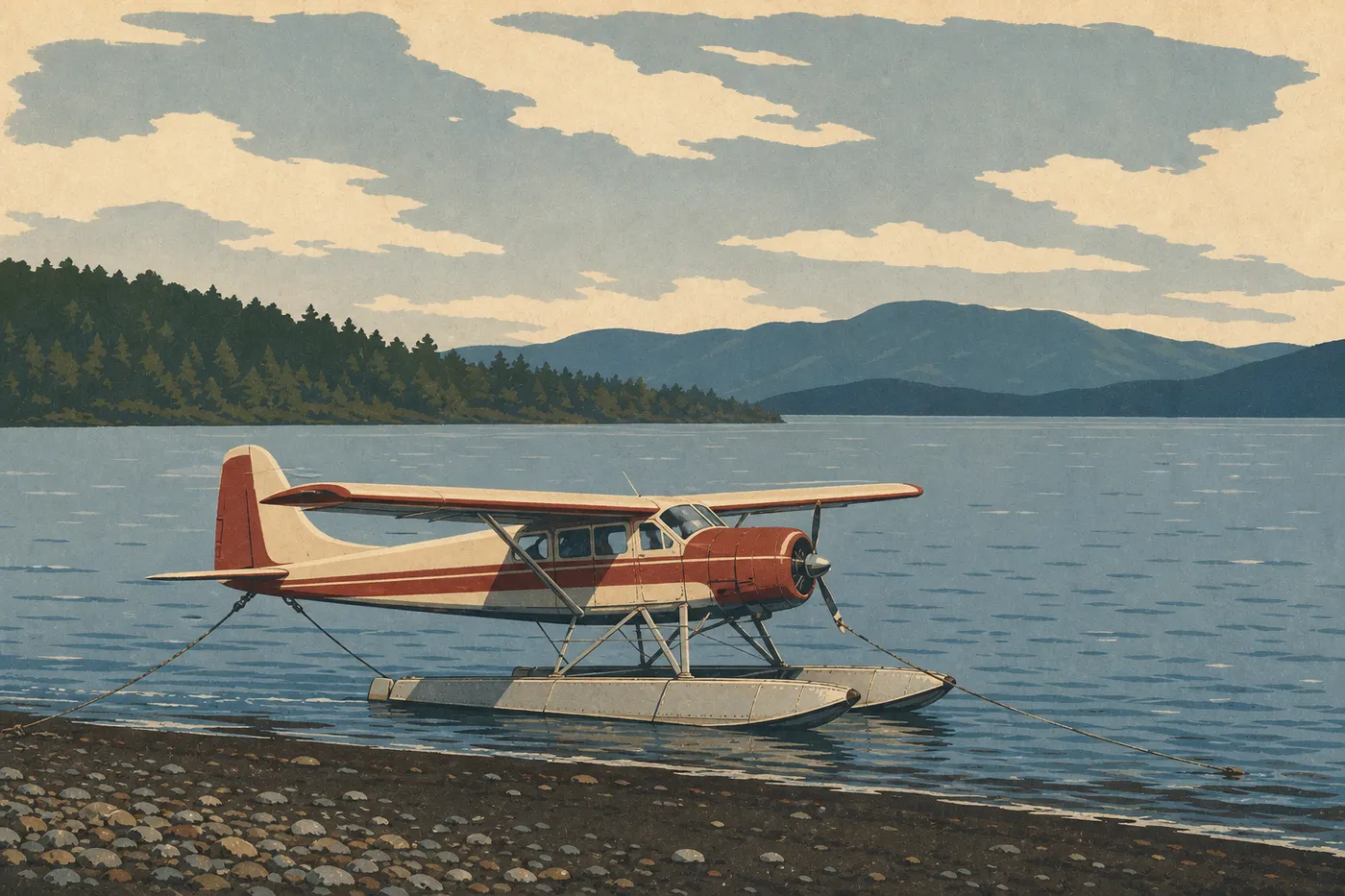
Naknek Lake is the park's largest lake, covering more than 230 square miles. From Brooks Camp, on its northeastern shore, you can easily launch a kayak or canoe to explore nearby bays. The water stays cold year-round (46 to 54°F in summer). A wetsuit is recommended even on sunny days, and you should know how to recover from a capsize before paddling far from shore.
Coville, Grosvenor, and Kukaklek lakes, deeper in the park, are accessible only by seaplane. Fly-fishers prize them for rainbow trout, Arctic char, and lake trout in complete solitude. For gear rentals and outfitters, getting around on the water in Katmai lists the available options.
Katmai's Best Hikes
Katmai isn't a park of big, well-marked trails. The official trail network is concentrated around Brooks Camp and the bus terminus in the valley. Elsewhere, you'll be hiking cross-country, which calls for serious preparation, an approved bear-resistant food container, and a solid understanding of bear behavior.
Three routes are accessible without specialized navigation skills:
- The Falls Platform Trail (about 1.2 miles round-trip, easy): the park's busiest route and the only one suitable without cross-country experience.
- The hike to the summit of Dumpling Mountain (about 3.1 miles round-trip, with roughly 820 feet of elevation gain): a 360-degree view of Naknek Lake and the volcanic range on the way back.
- The traverse of the Valley of Ten Thousand Smokes (several days, entirely cross-country): for self-sufficient, experienced hikers only, with backcountry camping and a bear canister required.
Katmai hikes in detail provides elevation profiles, skill requirements, and safety guidelines for each route.
Other Activities by Interest
Sport Fishing
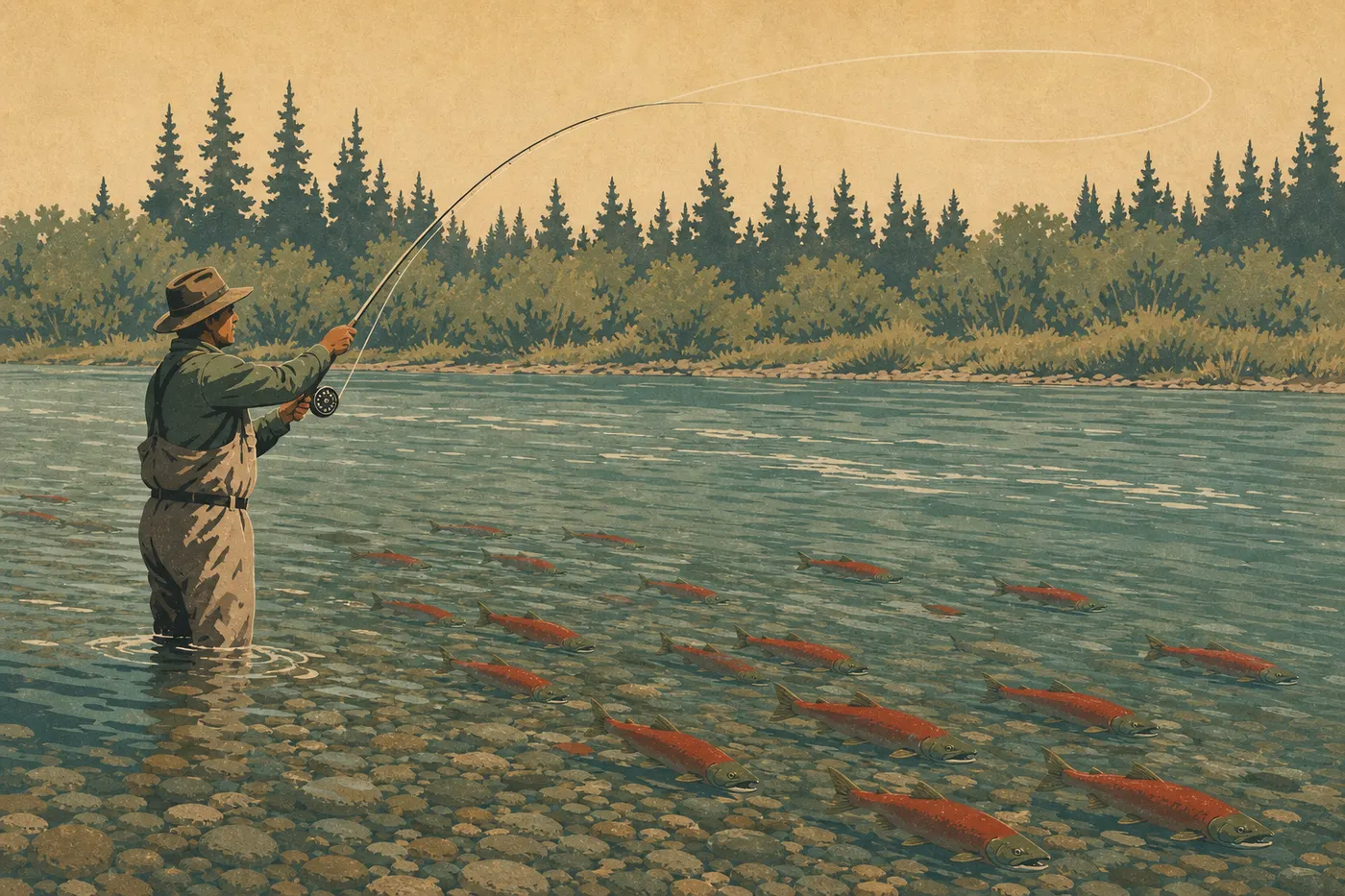
Katmai is one of North America's best-known fly-fishing destinations. Five species of Pacific salmon run through the park's rivers, with peaks spread from spring through fall (chinook in June, sockeye in July, and silver in August and September). An Alaska State Fishing License is required and must be obtained before you leave (online through the Alaska Department of Fish & Game website). Several lodges offer certified guides for wading or boat fishing on the lakes. Our Practical Information, Rules & Safety page lists open areas, minimum sizes, and current quotas.
Scenic Flights and Flightseeing
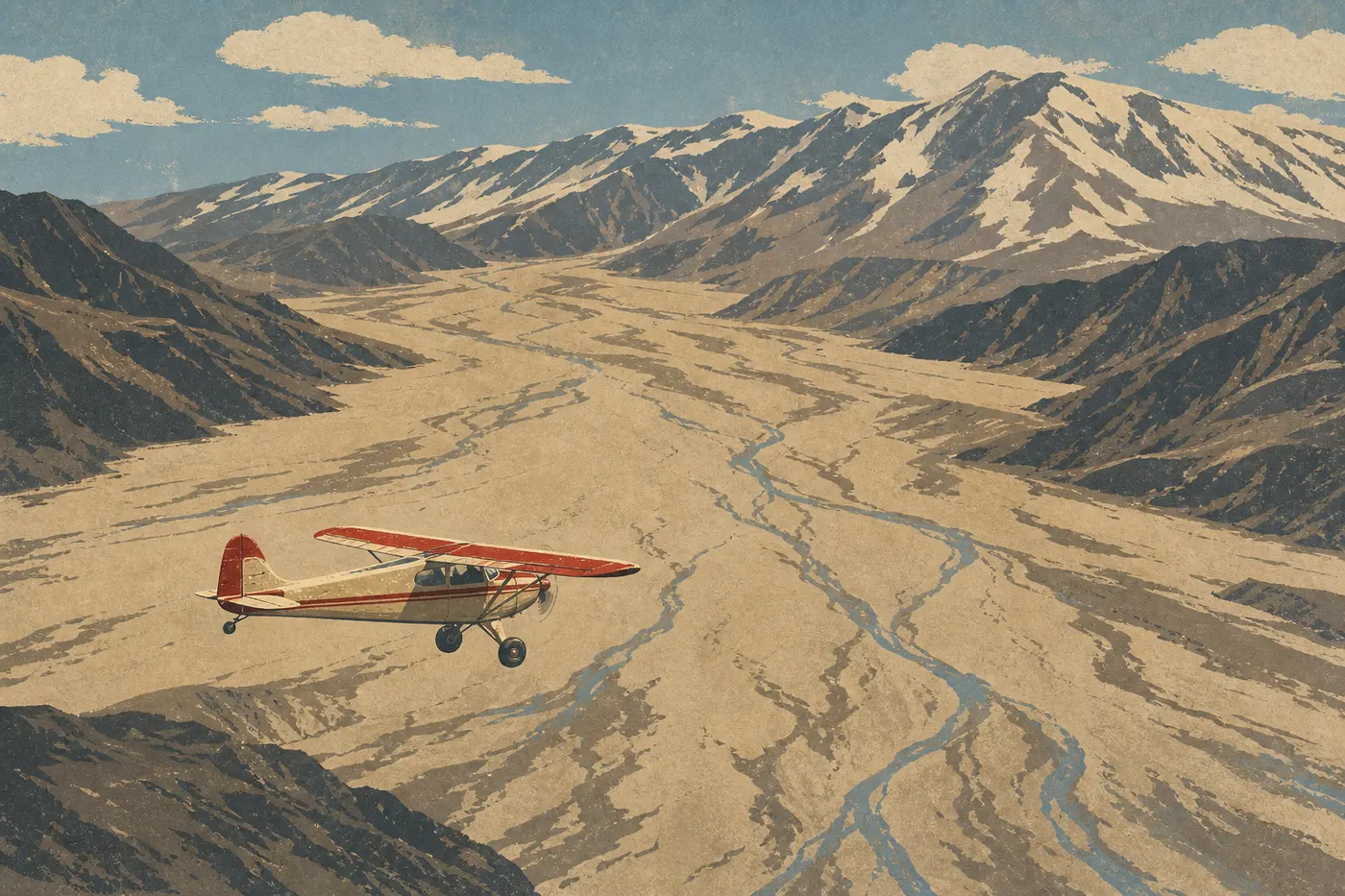
From King Salmon or Homer (and from Anchorage with some operators), seaplane and turboprop excursions let you fly over the park in two to three hours. A typical flight takes in Brooks Falls from above, the Novarupta caldera, and the glaciers around Kejulik. It's the only way to see the coast and inland lakes without spending several days on an independent trek. Book well ahead during the June-to-August season.
Wildlife Beyond Bears
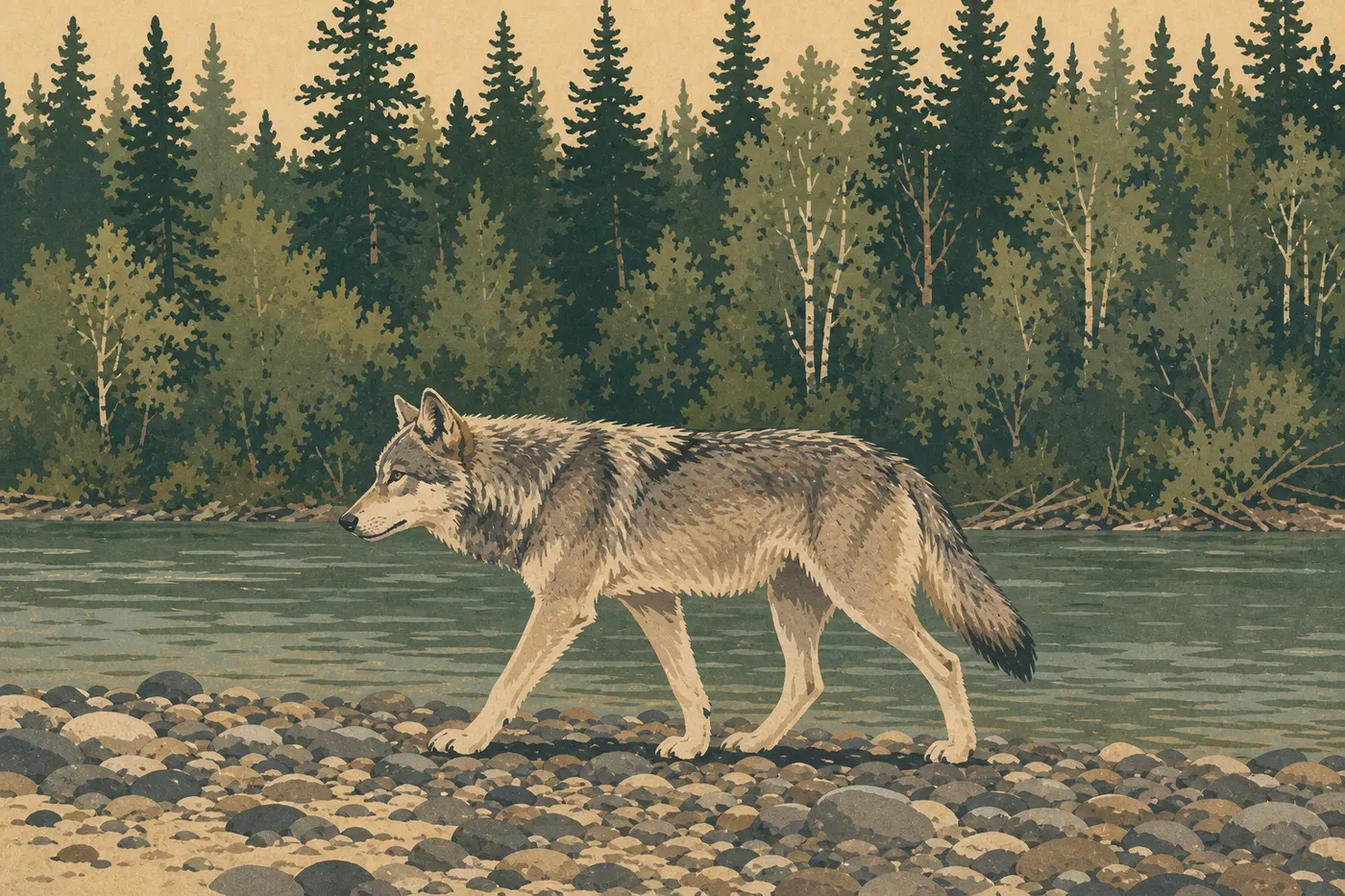
Brown bears get most of the attention, but the park's wildlife is far more diverse. Red foxes and wolves live in the valley area and are often spotted early in the morning along the bus road. Caribou and moose frequent the wetlands in the northern part of the park. On Naknek Lake, loons and grebes nest within binocular range from the camp shoreline. Our Wildlife page gives the best times and locations for each group of species.
Wildlife and Landscape Photography
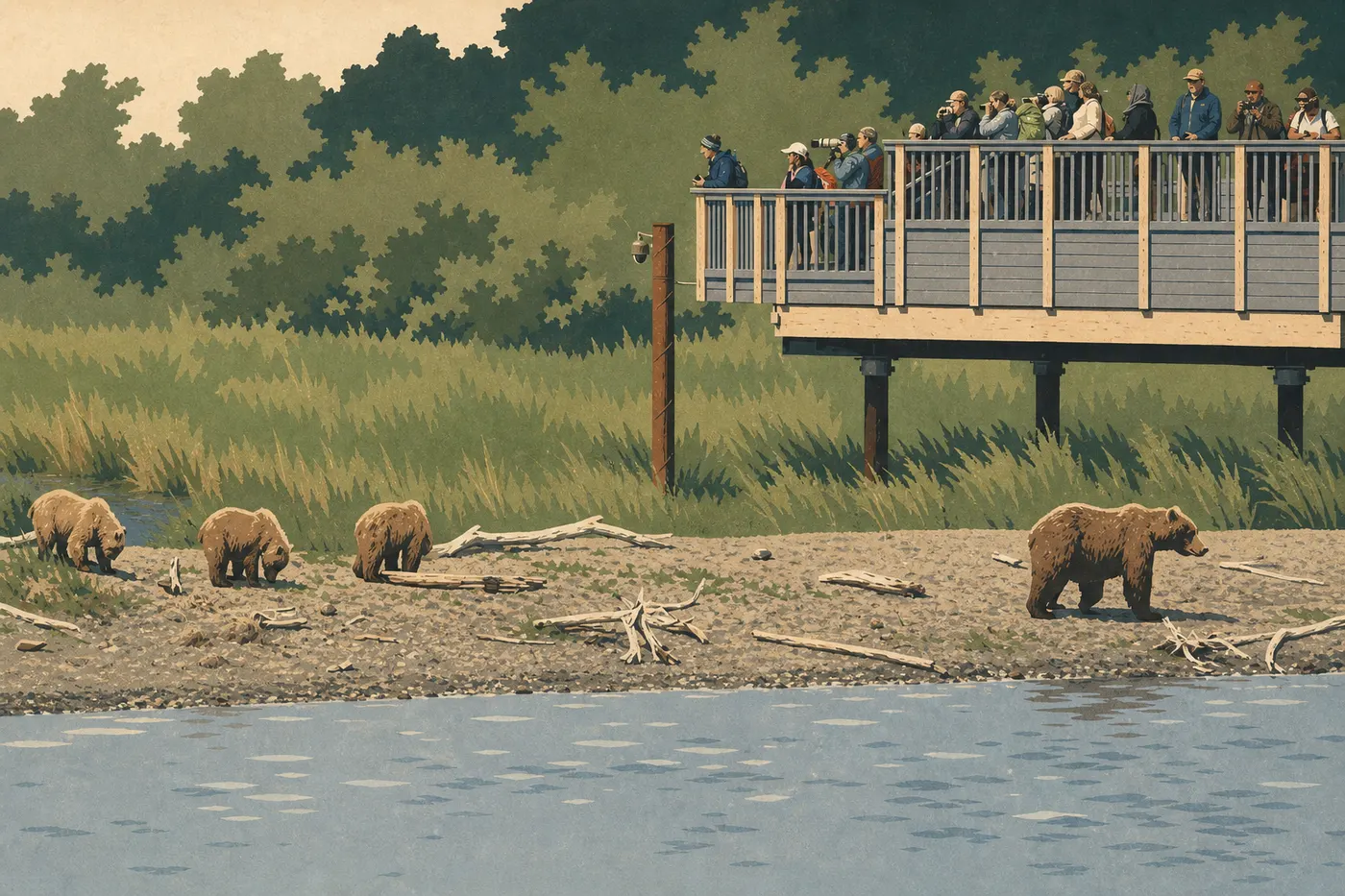
Brooks Falls is one of the continent's most renowned wildlife photography spots. Falls Platform allows low-angle images with bears in the foreground and whitewater behind them. Bring a telephoto lens of at least 400 mm for effective compression from the platform. In the valley, a 16-to-24 mm wide-angle lens better captures the scale of the ash plateau and the canyon's depth.
Family Visits
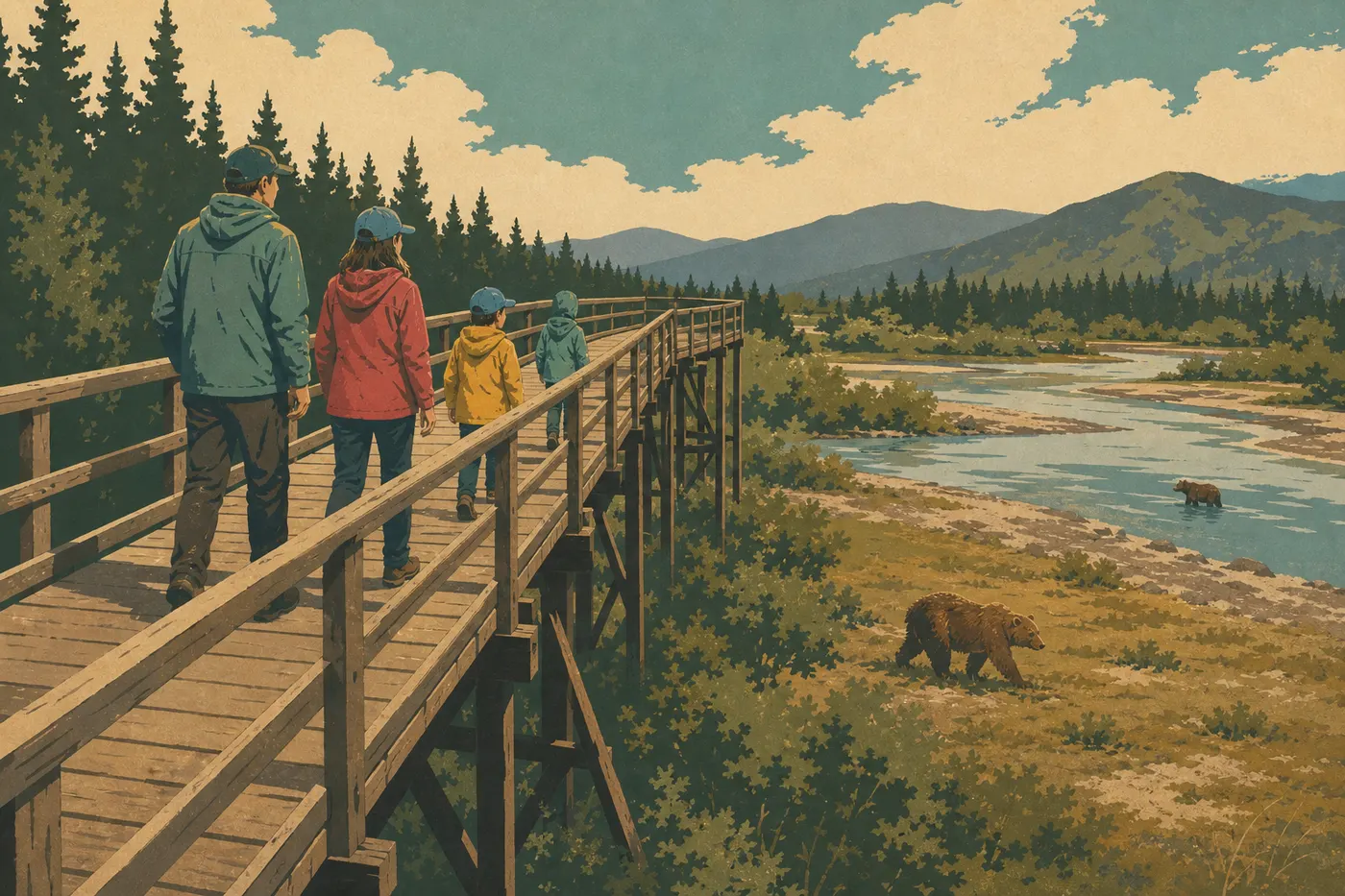
Katmai isn't the easiest park for families with very young children: access is by plane, internal distances are long, and the weather is unpredictable. From about ages 8 to 10, though, watching bears from the platforms can be a formative experience. Katmai with kids covers the facilities available at Brooks Camp, possible restrictions on certain excursions, and activities suited to children.
What to Do Around Katmai
Katmai is part of a remarkably rich region of southern Alaska, accessible from the same transportation hubs (Anchorage, King Salmon, and Homer).
Homer, about 180 miles northeast by air, is an alternative gateway to Katmai by seaplane. The town is also the departure point for Kenai Fjords National Park and Kachemak Bay State Park. Our South Alaska guide provides the context for combining Katmai with other destinations in the region.
Lake Clark National Park and Preserve, Katmai's direct neighbor to the north, is also accessible only by plane from King Salmon. It shares the same wildlife (coastal brown bears, salmon, and wolves) with even fewer visitors. People often visit both parks on a weeklong trip, as explained in our Alaska Road Trips guide, which includes ready-to-use itineraries.
The Bottom Line: What to See First in Katmai
Katmai is worth the journey for two hard-to-replace experiences. In July, Brooks Falls remains one of the most accessible and intense wildlife experiences in the national park system. The concentration of bears, their proximity from the platforms, and the consistency of the viewing are hard to match. The Valley of Ten Thousand Smokes, meanwhile, offers a post-volcanic landscape found nowhere else in the American park system.
If you have just one day there, spend the morning at Falls Platform, then the afternoon at the Visitor Center and walking along the Brooks River. With two or three days, add the valley bus (a must) and a kayaking trip on Naknek Lake. For an in-depth fishing or photography trip, five nights is the standard among regular visitors.
Our complete Katmai guide brings together all the park's practical information to help you plan your trip from A to Z. Also see our When to Visit page to choose the right month for your priorities, and our Weather page to prepare for conditions in the field.
Frequently Asked Questions
Is Katmai worth the trip?
Katmai is worth it if you're looking for a first-rate wildlife experience. It's one of the few places in the world where you can watch dozens of brown bears fish for salmon from a regulated, secure platform just a few yards away. Getting there is demanding (two flights from Anchorage) and expensive, but the park is unlike any other.
How do you visit Katmai National Park?
To visit Katmai, you'll first take a regional flight from Anchorage to King Salmon (about 1 hour 15 minutes), then a seaplane or small plane to Brooks Camp (about 20 minutes). There is no road access. Our Access & Transportation page lists airlines, schedules, and typical prices, along with the Homer alternative for visitors coming from the southern peninsula.
What shouldn't you miss in Katmai?
Brooks Falls is the one place you absolutely shouldn't miss. This is where brown bears gather in numbers to catch sockeye salmon swimming upstream, and Falls Platform offers a direct view from less than 165 feet away, with no barrier between you and the bears.
When is the best time to see bears in Katmai?
July is the peak of the first sockeye run and when the most bears gather at Brooks Falls. September brings the second run (silver salmon), with significantly fewer visitors and often calmer bears. Our When to Visit page compares both windows and also covers the weather conditions to expect.
Can you camp in Katmai?
Yes. Brooks Camp campground is the park's only official campground, with limited capacity. Reservations open several months ahead on recreation.gov and go quickly for July weeks. Our Camping page explains the lottery reservation system, strict food-storage rules, and alternatives (Katmailand Lodge and permitted backcountry camping).