
Hawaiʻi Volcanoes Wildlife: What Animals to See and Where to Find Them
Wildlife at Hawaiʻi Volcanoes reflects the park itself: unique in the world and fragile. Five species capture what the park has most precious to show you: the nēnē (the Hawaiian goose and state bird), the ʻapapane (the bright red forest bird), the pueo (the native owl), the ʻīo (the Hawaiian hawk), and the ʻōpeʻapeʻa (the Hawaiian hoary bat, the only native land mammal in the entire archipelago). There are no bears, cougars, or snakes. Hawaiian wildlife evolved in isolation for millions of years, which is exactly what makes it so extraordinary and so vulnerable.
Hawaiʻi Volcanoes' Iconic Animals
The nēnē, the Hawaiian Goose
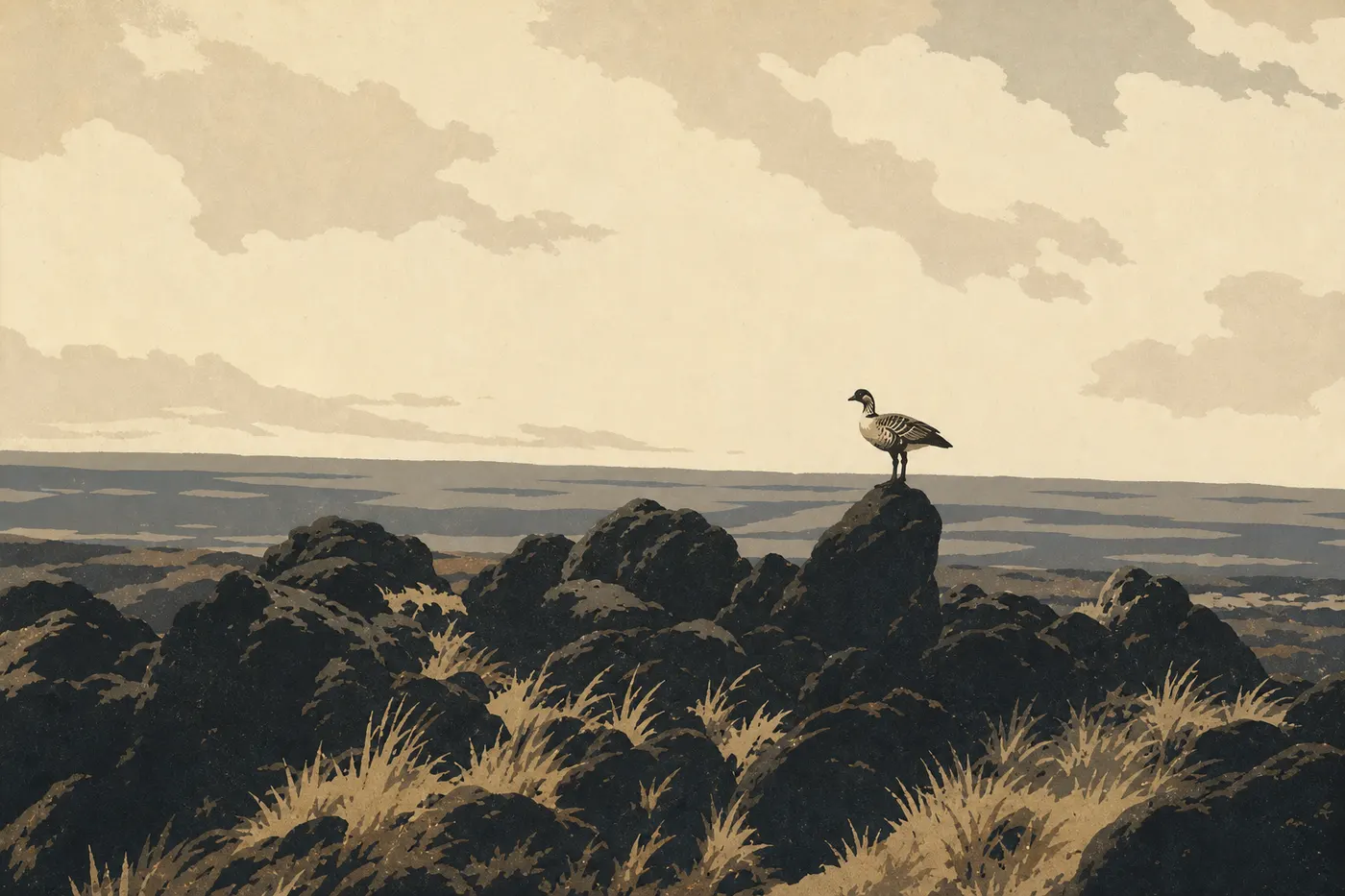
The nēnē (Branta sandvicensis) is Hawaii's official state bird. It descended from a Canada goose that reached the islands several hundred thousand years ago and adapted to life on lava. Its feet are partially webbed, helping it walk across volcanic terrain.
Until recently, the nēnē was listed as endangered. Today, its numbers are rising steadily thanks to captive-breeding programs carried out in the park. You often come across one along roads and near picnic areas around the Kīlauea Visitor Center, sometimes when you least expect it. Nēnē aren't afraid of people, which makes them the easiest species to spot, but also puts them at greater risk if they learn to expect handouts.
The ʻapapane, the Most Common Native Forest Bird
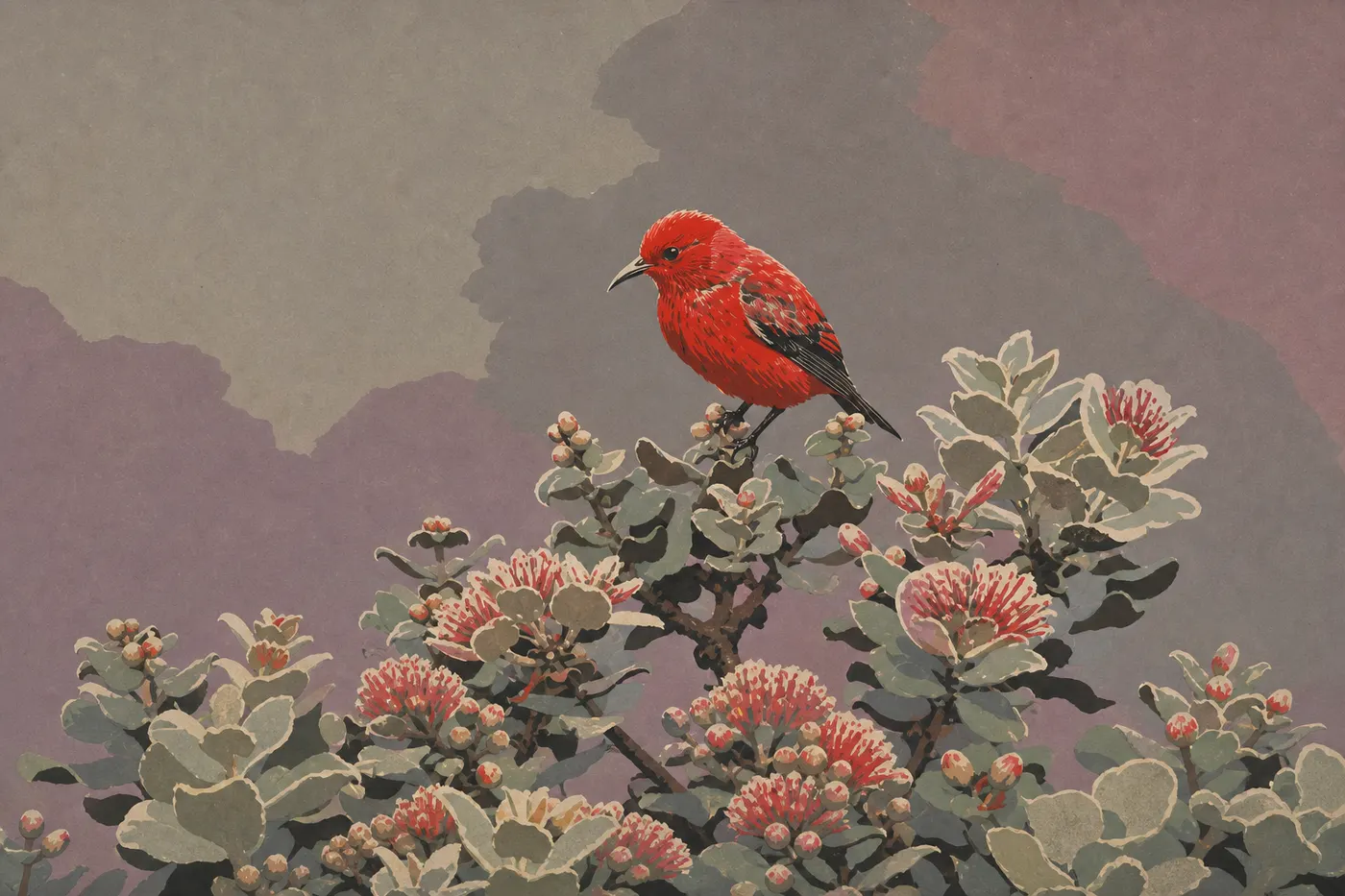
The ʻapapane (Himatione sanguinea) is the native songbird you're most likely to hear and see. Its crimson plumage and lively, repeated song give it away in ʻōhiʻa lehua forests. It feeds almost exclusively on the nectar of these red flowers, a defining feature of Hawaii's volcanic landscape.
Look for it at Kīpukapuaulu (also known as “Bird Park”). This ancient forest enclave was spared by lava because of its topography, and it has a notable density of native birds. The ʻamakihi (yellow-green), ʻelepaio (a small brown flycatcher), and ʻōmaʻo (the Hawaiian thrush) are regularly recorded there alongside the ʻapapane.
The pueo, the Day-Hunting Owl
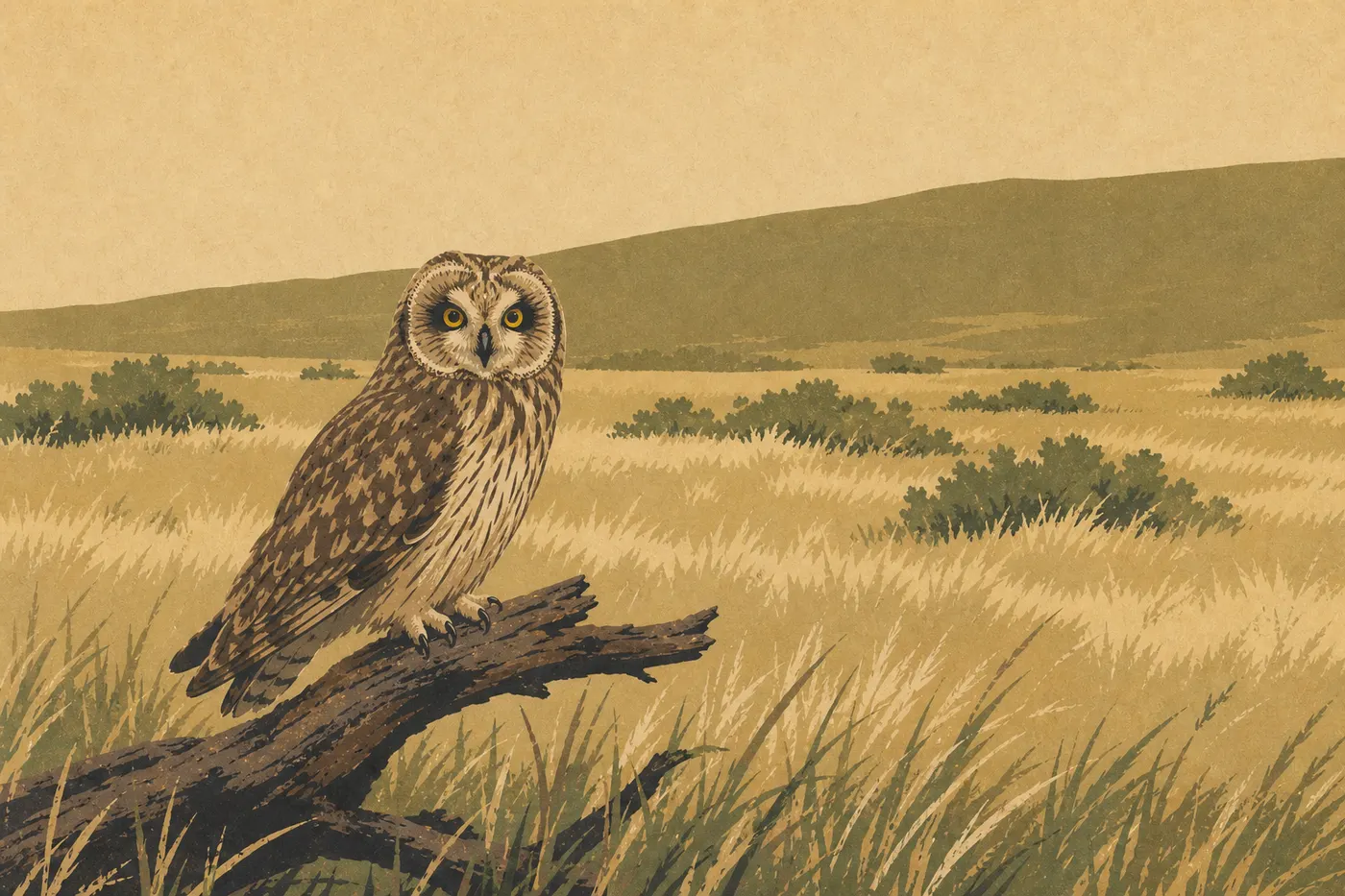
The pueo (Asio flammeus sandwichensis) is an endemic subspecies of the short-eared owl. Unlike most nocturnal raptors, it also hunts in daylight, giving you a better chance of seeing one. In Hawaiian culture, it is considered an aumakua, a family guardian spirit.
Look for it in open areas, around the crater rim, and on grassy slopes at dawn or late afternoon. Its low flight and irregular wingbeats make it easy to recognize.
The ʻīo, Hawaii's Only Endemic Hawk
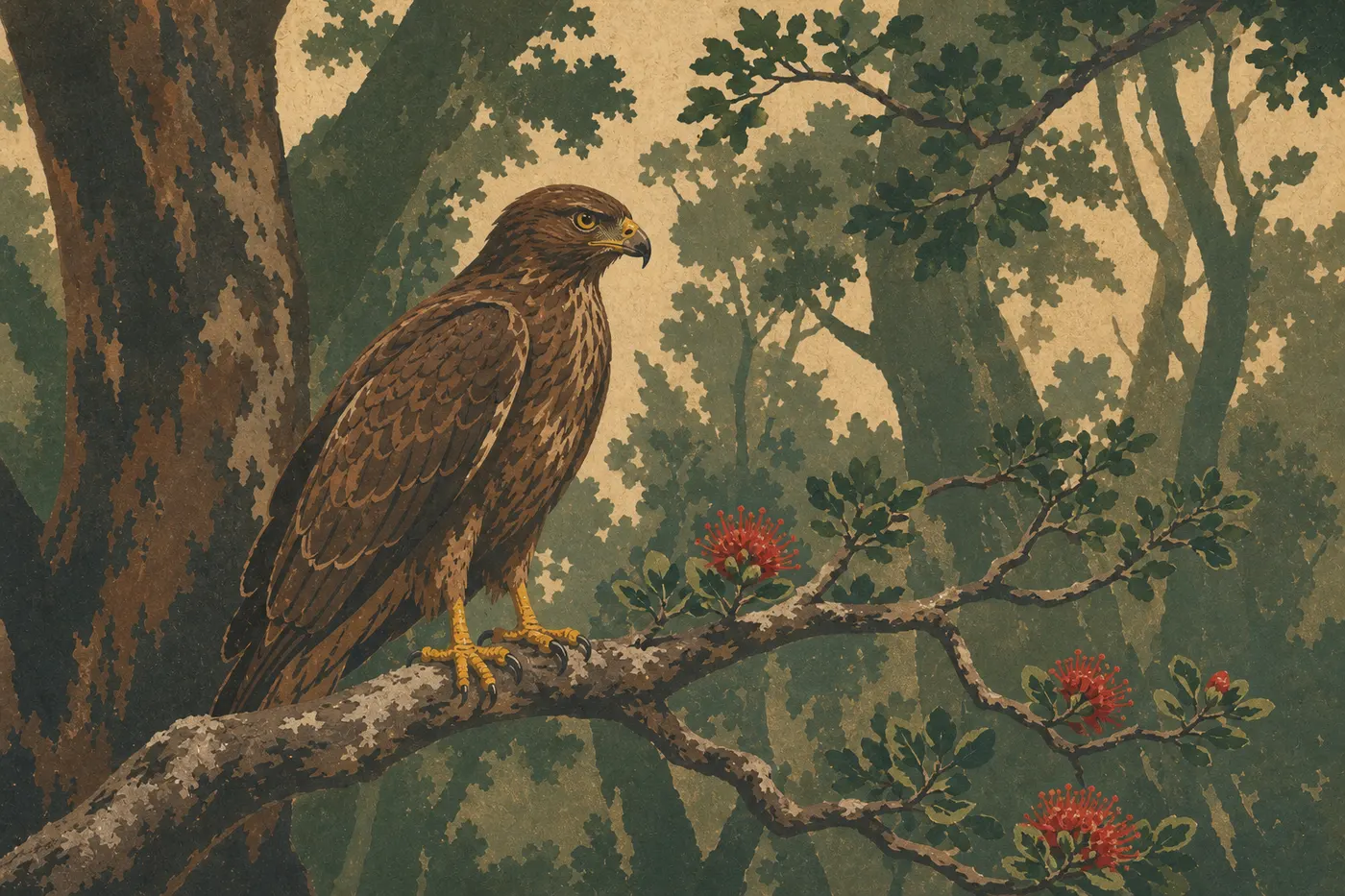
The ʻīo (Buteo solitarius) is the only raptor strictly endemic to Hawaii. It comes in two morphs, with either dark or light plumage, which can sometimes confuse inexperienced observers. Listed as threatened, it breeds mainly in the wet forests of the Kīlauea area.
You'll mostly see it soaring above the canopy in search of rats, small birds, or lizards. Its presence in a forested area is often announced by alarm calls from songbirds.
The ʻōpeʻapeʻa, the Archipelago's Only Native Land Mammal
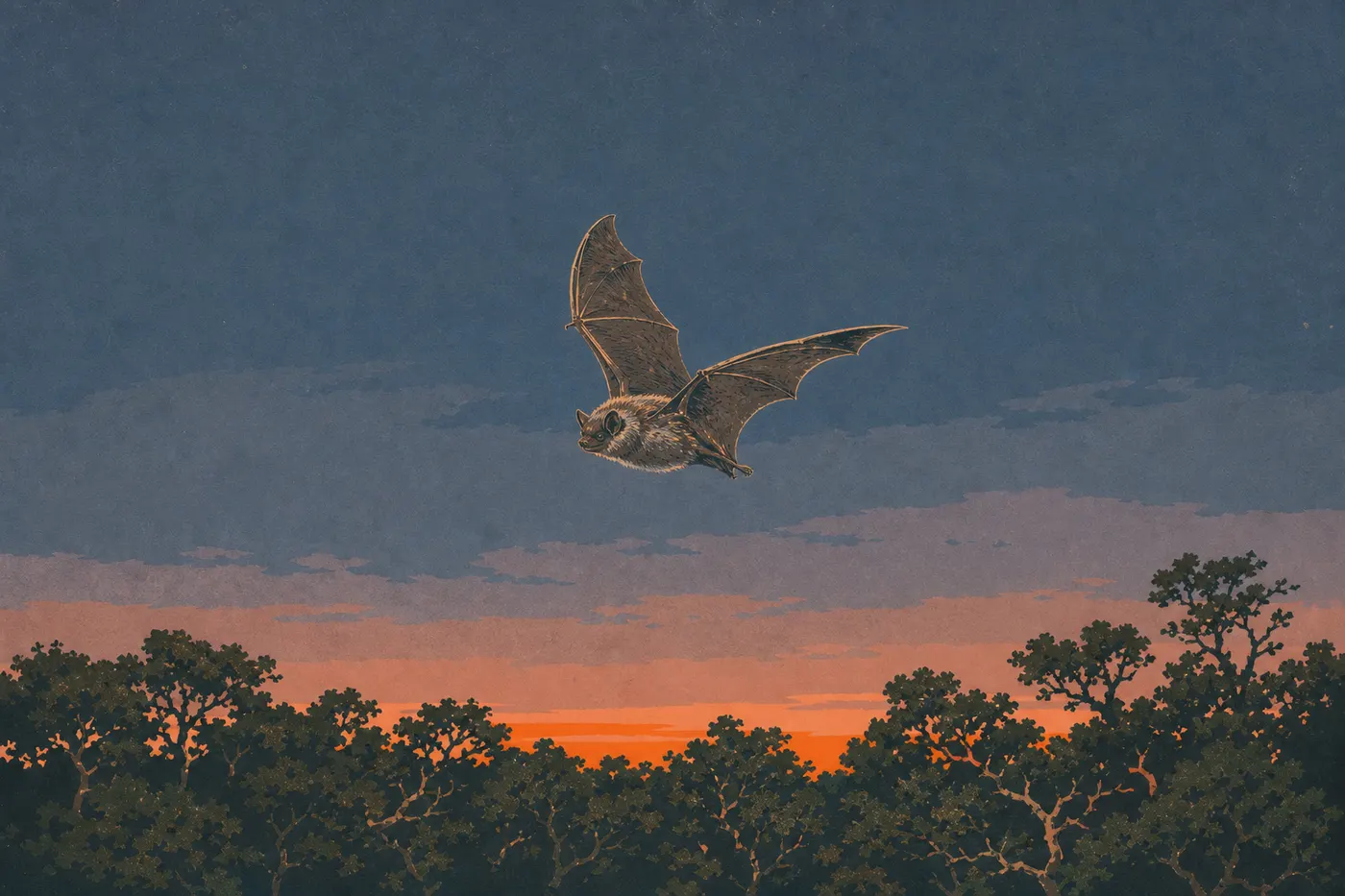
The ʻōpeʻapeʻa (Lasiurus semotus), the Hawaiian hoary bat, is the only native land mammal in the entire state of Hawaii. No other mammal, whether bear, deer, or rabbit, reached the islands on its own before humans arrived.
It hunts insects at dusk, often above the edges between forest and volcanic shrubland. If you're out after 6 p.m., look up. Its erratic flight, with a smaller silhouette than a nighttime swallow, becomes recognizable once you've seen it.
Where to See Wildlife at Hawaiʻi Volcanoes
Kīpukapuaulu (Bird Park) is the park's essential wildlife-viewing spot. This roughly 1.2-mile loop through intact native forest concentrates nearly all of the park's endemic songbirds. Arrive early in the morning, when bird activity peaks.
The Kīlauea Visitor Center and its surroundings are the best spots for nēnē, which are present nearly year-round. The nearby picnic areas are regular stopping places as well.
Crater Rim Drive, on the sections that are open, offers clear views that are good for spotting pueo and ʻīo in flight. Clear mornings after a rainy night are especially productive.
Chain of Craters Road crosses nearly barren landscapes of recent lava that don't offer much wildlife habitat, but the descent toward the coast sometimes gives you a chance to see green sea turtles (honu) on black-lava beaches. These turtles aren't “in” the park in a forest sense, but their resting areas lie within the protected boundary.
For access to these areas and distances from the entrance, see the Hawaiʻi Volcanoes hikes and the park map.
When to Watch Wildlife
Forest birds are active year-round, but mornings from 6 to 10 a.m. are still the ideal window. That's when birdsong peaks and the light is soft for photography.
Kīlauea's summit elevation, about 3,900 feet, affects species behavior. Cool, damp mornings often bring more movement in the canopy than midday, when heat and wind set in.
Look for pueo and ʻōpeʻapeʻa at dusk, between 5:30 and 7:30 p.m. depending on the season. For a closer look at planning around seasonal changes and daylight, the guide When to Visit Hawaiʻi Volcanoes offers month-by-month pointers.
Invasive Species: The Park's Real Threat
Hawaiʻi Volcanoes is also the setting for an invisible, ongoing battle against introduced species. Many visitors never notice it, but it explains why some areas are fenced off or reserved for ranger-led hikes.
The mongoose (Herpestes auropunctatus), brought in in 1883 to control rats in sugarcane plantations, spread across the island. It eats the eggs and chicks of ground-nesting birds, including the nēnē.
Feral pigs root up native forest soil, destroy ferns and endemic plants, and create stagnant pools where avian-malaria-carrying mosquitoes thrive. This bird disease, spread by mosquitoes, is one of the main causes of decline among Hawaiian forest birds.
Polynesian and black rats, which arrived with the first canoes and colonial ships, prey on tree nests.
The coqui (Eleutherodactylus coqui), a frog introduced from Puerto Rico, doesn't directly threaten birds, but it monopolizes some of the arthropods that songbirds feed on.
You'll probably hear coqui frogs at night around Volcano Village. Their repeated “ko-kee” call is certainly charming, but their impact on the local food web is significant. Don't encourage them.
How to Watch Wildlife Safely
NPS rules apply strictly, and for good reason.
Keep at least 20 feet from nēnē. The unafraid Hawaiian goose will readily approach if you feed it. Feeding nēnē is prohibited and harmful. Conditioned animals lose their instinct to flee and often die after being struck on the road or from chronic malnutrition.
Never approach feral pigs. A sow with piglets may charge. If you encounter one on a trail, stand still, speak calmly, and back away slowly.
Don't collect feathers or eggs. Federal law protects all native species, including their remains.
Stay on marked trails. Fragile vegetation in lava fields regenerates very slowly, and going off-trail tramples mosses and endemic ferns that may be decades old.
For other visitor rules and guidance related to volcanic terrain, the Hawaiʻi Volcanoes overview points you to all of the park's sections.
In Short: Which Species to Look For, and Where
You can find nēnē easily around the Kīlauea Visitor Center. Native forest birds, led by the ʻapapane, gather at Kīpukapuaulu early in the morning. Pueo and Hawaiian hoary bats emerge at dusk in open areas. Spotting an ʻīo above the crater area's canopy takes a little patience. Green sea turtles rest on the lava beaches at the bottom of Chain of Craters Road. For all of it, there's one simple strategy: arrive early, stay quiet, and keep your binoculars within reach.
Frequently Asked Questions
What animals live in Hawaii?
Native Hawaiian wildlife consists almost entirely of endemic birds and insects, plus one native land bat, the ʻōpeʻapeʻa. Green sea turtles (honu) and Hawaiian monk seals frequent the coasts. Most mammals found here, including pigs, mongooses, rats, and deer, are introduced species.
What animals are found specifically at Hawaiʻi Volcanoes?
Wildlife at Hawaiʻi Volcanoes consists mainly of native birds (nēnē, ʻapapane, pueo, ʻīo, ʻamakihi, and ʻelepaio) and the Hawaiian hoary bat. Introduced species, including pigs, mongooses, rats, and coqui frogs, are also present, but they're considered a threat to the ecosystem.
What invasive animals are found in Hawaii?
The main invasive animals in Hawaii are the mongoose, which preys on eggs and chicks; feral pigs, which destroy native vegetation; Polynesian and black rats; and the coqui frog, introduced from Puerto Rico. Together, they are the main cause of decline among endemic birds.
What animal lives in volcanoes?
No animal lives inside the active volcano itself. The solidified lava fields and forests around Kīlauea, however, support remarkable wildlife. Nēnē walk across recent lava flows, while forest birds inhabit kīpuka, islands of old vegetation spared by eruptions. Life returns very gradually to bare lava, beginning with lichens, then ferns, and then birds.