
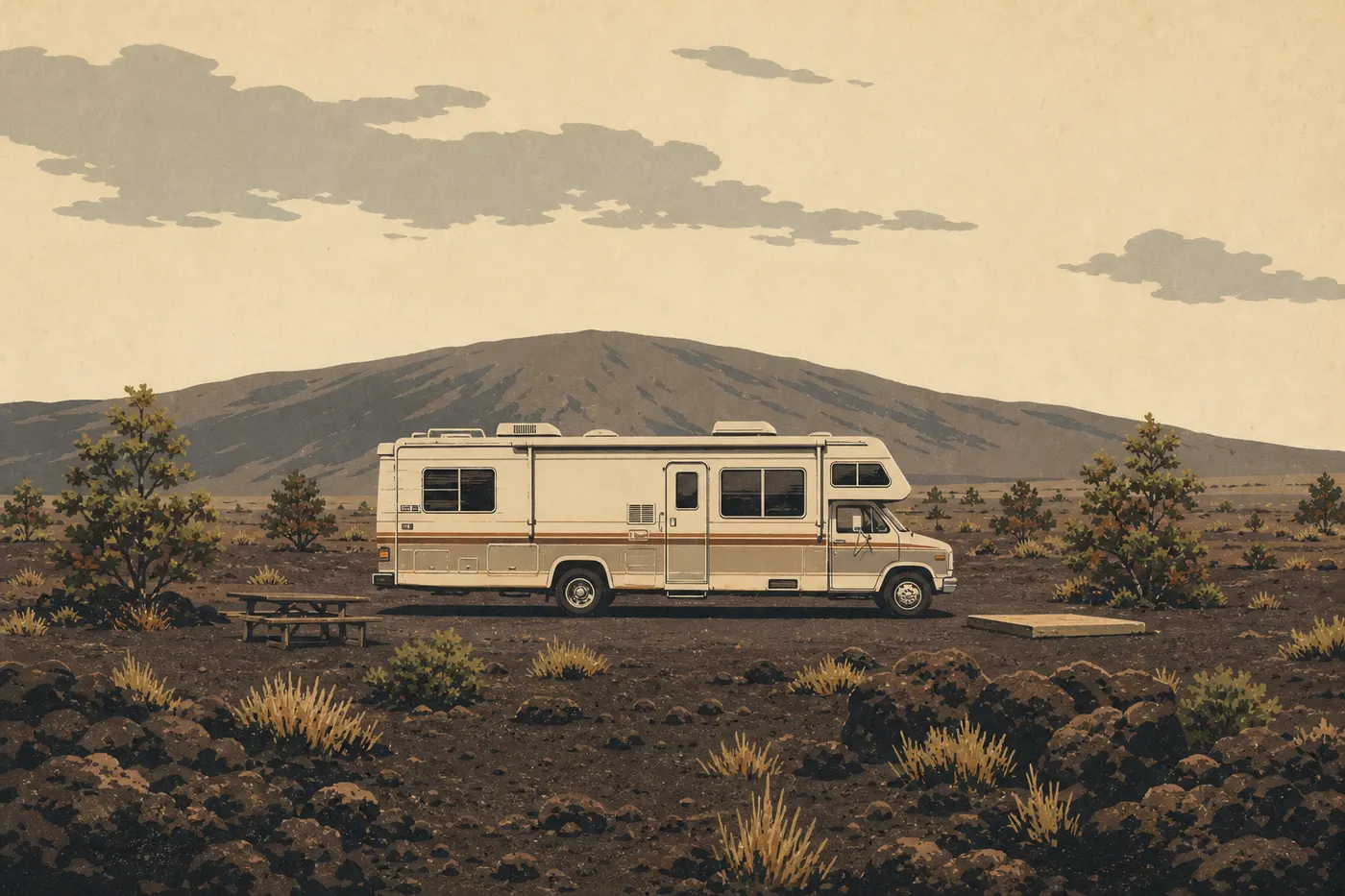
Hawaiʻi Volcanoes by RV: Campgrounds, Rules, and Tips
Yes, you can stay in an RV at Hawaiʻi Volcanoes National Park. The park has two official campgrounds open to RVs, but here's the main thing to remember: no site has electricity, pressurized water, or a built-in dump hookup. Hawaiʻi isn't Florida.
There's another island reality to keep in mind. You won't find BLM federal land for boondocking, a service area every 30 miles, or many RV rental options on the Big Island. This guide covers the logistics you need to plan your stay without surprises.
Can you drive and camp an RV at Hawaiʻi Volcanoes?
Yes, with no size restriction at the main entrance off Highway 11. The park is open 24 hours a day, 7 days a week, including holidays. Admission is $30 per private vehicle and is valid for seven consecutive days.
Only two campgrounds officially accommodate RVs: Nāmakanipaio and Kulanaokuaiki. Most overlooks and visitor-area parking lots are designed for standard cars. A 30- to 33-foot rig won't be able to maneuver everywhere, and some cliffside viewpoints are simply too narrow for turning around.
RV restrictions and roads to know
Chain of Craters Road: the descent to watch
This road drops about 3,900 feet from the high country to the coast over roughly 18.6 miles. The grades are sustained, and a few turns are tight. There is no official vehicle-length restriction on this stretch, but driving an RV longer than 26 feet with a full water tank calls for extra care on the downhill sections. At the bottom, strong coastal winds can destabilize a high-profile vehicle.
Hilina Pali Road: avoid it in an RV
This road runs from Kulanaokuaiki toward the coastal cliffs. It's narrow, rough in places, and turnaround options disappear quickly. Leave it to a lightweight 4WD vehicle. RVs and vans longer than 16 feet have no business on it.
Mauna Loa Road
The road to Mauna Loa Lookout, at about 6,600 feet, is in good shape all the way to the end-of-road parking area. Most standard RVs can drive it without trouble. Beyond the parking area, the climb continues on foot only.
Weather and elevation: an underestimated risk
The summit plateau around Kīlauea, at about 3,900 feet, can be covered in fog, rain, or strong winds at any time of year. Temperatures there run 13 to 14°F lower than along the coast. Check current NPS alerts before you drive, especially if you're taking a high-profile vehicle down Chain of Craters Road.
The park's official campgrounds
Nāmakanipaio Campground
The main campground is about 3.1 miles from the Kīlauea Visitor Center, at an elevation of 3,900 feet. The air is cool and often damp. At night, temperatures can easily fall to 46 to 54°F, even during Hawaiʻi's summer.
The sites accommodate standard-size RVs. There are no hookups, meaning no electricity, on-site water, or dump service. Flush toilets and drinking water are available. Covered picnic shelters give you a place to cook out of the frequent showers at this elevation.
Reservations are required through Recreation.gov. Check the current rate directly on the platform when you book. The campground is open year-round. Sites fill quickly during the busy season from June through August and around U.S. holidays.
Kulanaokuaiki Campground
This primitive campground sits in the park's desert zone along Hilina Pali Road, at a much lower elevation. The setting is dry and windy, with hardened lava stretching to the horizon and none of Nāmakanipaio's misty greenery.
Access is limited to short vehicles. Compact camper vans can make the drive, but large RVs can't. Facilities are minimal: pit toilets and no running water on site. This campground is a good fit for van travelers looking for solitude and an unfiltered volcanic landscape.
Dispersed camping and options outside the park
No mainland-style boondocking
Hawaiʻi has almost no BLM federal land open to dispersed camping. The idea of leaving the park and pulling onto a dirt road doesn't work on the island. Private roads, state land, and protected areas cover nearly all available ground.
County campgrounds and state parks
The area between Hilo and the park has a few legal options. Beaches and county parks, including Hawaiʻi County Parks, issue camping permits at modest rates. The Punaluʻu coast and several sites around Hilo are among the possibilities. You can get permits online through the county or the Hawaiʻi DLNR, the Division of Land and Natural Resources.
Our Big Island guide goes into these alternatives and their geographic context.
Dump stations, water, and services
No dump station in the park
There is no dump station inside Hawaiʻi Volcanoes. Handle your gray and black water before entering the park or after you leave.
Hilo: your logistical base
Hilo, 30 miles northeast on Highway 11, is the Big Island's most complete logistical base. You'll find RV-friendly dump stations, supermarkets, and large supplies of drinking water there. The practical rule is simple: fill your freshwater tank and empty your holding tanks in Hilo before heading to the park.
Kailua-Kona for travelers coming from the west
Kailua-Kona is 96 miles away via Highway 11, about a 2.5-hour drive. If you're arriving from that direction, stock up in town before heading south.
Which campground fits your travel style
Family with a standard RV, 20 to 26 feet. Nāmakanipaio is the clear choice, with easy access, running water, and a five-minute drive to Kīlauea's crater. Most park activities are easy to reach from here.
Camper van, looking for solitude. Kulanaokuaiki offers complete quiet and a hardened-lava setting that Nāmakanipaio can't match. Bring enough water for your entire stay.
Nighttime lava-lake viewing. Nāmakanipaio puts you less than 10 minutes by car from the Kīlauea overlooks. On one of our visits, we left the campground at 4:30 a.m. to see the orange glow before the first organized groups arrived from Hilo. It works.
To choose the right season based on weather and conditions, check our guide to the best times to visit Hawaiʻi Volcanoes.
Renting an RV to visit Hawaiʻi Volcanoes
Very limited options on the Big Island
This is the point mainland guides consistently miss: the Big Island doesn't have rental networks comparable to Las Vegas or Denver. A few local operators offer camper vans, including Sprinters and Transits, from Hilo or Kailua-Kona, but the fleet is small and you'll need to book several months ahead.
Peer-to-peer platforms such as RVshare and Outdoorsy sometimes list vehicles on the Big Island. That's often your best bet.
Shipping your own vehicle
You can technically ship your RV by ocean freight from the West Coast through Young Brothers or Matson. The cost and transit times are hard to justify for a stay of less than three weeks.
Our recommendation
For a first visit, a compact van or a rental car with lightweight camping gear will give you more flexibility than a large rig that's difficult to position in island parking lots. Our guide to lodging at Hawaiʻi Volcanoes covers all the options if you'd like to combine camping with traditional lodging.
Pets, budget, and reservations: what to know
Pets. They're allowed in the campgrounds and on paved areas, including roads and parking lots, as long as they're on a leash no longer than 6 feet. They're not allowed on trails or in protected natural areas. Hawaiʻi enforces particularly strict protections for its endemic ecosystem, and the rule is firm.
Budget. Admission is $30 per private vehicle and is valid for seven days. The America the Beautiful pass costs $80 a year, covers the entrance fee, and pays for itself after two or three national parks in a year. Check the current campsite rate on Recreation.gov. Our Fees and passes page explains entrance fees and available passes.
Reservations. Everything goes through Recreation.gov. For June through August and U.S. holidays, book at least three months ahead. Outside peak periods, cancellations sometimes open up sites on short notice.
In summary: our RV plan for Hawaiʻi Volcanoes
There are two official campgrounds, no hookups, and no dump station in the park. Choose Nāmakanipaio for standard RVs and families, and Kulanaokuaiki for short vans and volcanic solitude. Take care of water and dumping in Hilo before you enter. Forget mainland-style boondocking. It doesn't exist in Hawaiʻi. On-island rentals are possible but limited, so book early. Pack warm clothes, too. The Kīlauea plateau can drop to 46°F at night, even in the middle of Hawaiʻi's summer.
Frequently asked questions
Can you camp at Hawaiʻi Volcanoes National Park?
Yes. Hawaiʻi Volcanoes has two official campgrounds: Nāmakanipaio, with running water and basic facilities, and Kulanaokuaiki, a primitive campground without running water. Reservations are made through Recreation.gov.
Can you sleep in your vehicle at Hawaiʻi Volcanoes?
Sleeping in your vehicle is allowed only at a reserved site in an official park campground. You can't park overnight at an overlook or visitor-area parking lot.
Is dispersed camping legal in Hawaiʻi?
Camping without permission is illegal in Hawaiʻi. There is no BLM land available for dispersed camping as there is on the mainland. Camping permits are available through Hawaiʻi County and the DLNR for certain public parks and beaches outside the national park.
Can you drive to the volcano in an RV?
Yes. Several park roads lead to the edge of Kīlauea's crater, and Chain of Craters Road reaches the coast. Access to active areas on foot is regulated in real time based on current volcanic activity, so check NPS alerts before you leave.
Can you park an RV anywhere in the park?
No. RVs must use official campground sites overnight. Visitor-area parking lots are designed for standard vehicles, and larger RVs may have trouble parking and maneuvering at some stops.
How much does an RV campsite cost at Hawaiʻi Volcanoes?
The current rate is listed on Recreation.gov, where you can also make reservations. The $30 park entrance fee per vehicle, valid for seven consecutive days, is added to that cost.
What's the best time to visit Hawaiʻi Volcanoes by RV?
The weather at Kīlauea's summit varies year-round, with cool nights and possible rain in every season. April through June generally brings fewer crowds. Our When to visit page breaks down conditions month by month.