Congaree National Park: The Complete Visitor Guide
Congaree is the national park people forget to add to their itinerary, and that's a mistake. Tucked into South Carolina about 30 minutes southeast of Columbia, it protects the largest remaining stretch of old-growth bottomland hardwood forest in the southeastern United States. In other words, you'll find immense trees, some of the tallest in the eastern half of the continent, a canopy that rivals the great temperate forests, and a level of quiet that few parks still offer. People come here to walk along a boardwalk above the dark water, paddle beneath the cypress trees, and sometimes watch thousands of fireflies blink in unison.
The short answer: allow half a day for the essentials, including the Boardwalk and visitor center, or a full day if you're adding a canoe trip or longer hike. There is no entrance fee. The park stays open 24 hours a day, year-round. Water is the big factor here. River levels control everything, and a beautiful forest can turn into a flooded area overnight.
Congaree at a Glance: Where the Park Is and How to Get There
The park lies southeast of Columbia, the state capital, in the Congaree River floodplain. It isn't technically a swamp, although people love to describe it that way. It's a bottomland forest that floods periodically when the river spills over, feeding giant trees and exceptionally rich soil.
From Columbia, plan on about 30 minutes by car via Interstate 77 and SC Highway 48. There is no public transportation to the park, so you'll need a car.
The Harry Hampton Visitor Center is the starting point for every visit. It's open daily from 9 a.m. to 5 p.m. This is where you'll find maps, ranger advice, restrooms, and the famous "mosquito meter," a needle gauge that rates the day's mosquito activity from "All Clear" to "War Zone." Take it seriously. It's not a tourist gimmick.
Entrance Fees, Passes, and Reservations
Good news for your budget: Congaree National Park is free. There is no entrance fee and no timed entry reservation, unlike some parks in the West. You park, hike, and head back out.
Two activities are exceptions and require a reservation or registration. Camping at Longleaf Campground and Bluff Campground must be reserved ahead of time. The synchronous firefly event in late spring also uses a lottery in some years to limit attendance. If you're planning a road trip through several American parks, the annual America the Beautiful pass can still be worthwhile, even though you don't need it here. The National Park Fees & Passes page explains entrance fees and annual passes, while stamp collectors will find what they're looking for on our Passport & Stamps page.
Reservations, Permits, and Rules to Follow
What Requires a Reservation or Permit
For a standard day visit, you don't need to do anything in advance. Arrive, park, and hit the trail.
The exception is the synchronous firefly display in late May or early June. The NPS holds a lottery for access to the park during peak synchronization. Registration takes place on recreation.gov well in advance. If you're aiming for this window, plan for it when you start putting your trip together.
For camping at Longleaf Campground, a recreation.gov reservation is recommended during peak seasons. Backcountry camping does not require a reservation, but a free permit is mandatory. You can get one at the visitor center before setting out.
Rules to Follow
The usual national park rules apply. A few points specific to Congaree deserve emphasis:
- Road speeds: 25 mph. The access road passes through areas frequented by wildlife.
- Safe distances: Alligators live in the wetlands. Stay at least 50 feet away, and never approach one for a photo.
- Plants and wildlife: You may not pick up or take anything, including plants, mushrooms, dead wood, or fossils.
- Trash: There are no trash cans on the trails. Follow the "pack it in, pack it out" policy. Whatever you bring in goes back out with you.
- Fires: Allowed only in the designated fire rings at Longleaf Campground. Fires are prohibited everywhere else in the park.
- Drones: NPS authorization is required in advance.
Getting Around Congaree
Congaree isn't a drive-through park. There is no scenic road crossing it and no shuttle. You park at the visitor center, then continue on foot or on the water. That's exactly what makes the park so peaceful.
Two forms of travel shape a visit. On foot, the trail network spreads out from the Boardwalk. On the water, the Cedar Creek Canoe Trail is explored by canoe or kayak, either independently or on ranger-led trips that are free with reservations, depending on the season and water level. Conditions matter most. When floodwaters rise, some trails disappear beneath the water and canoeing takes center stage. Our guide getting around Congaree covers the options, rentals, and skill levels in detail.
How Much Time Do You Need to Visit Congaree?
Allow half a day for a first look. The Boardwalk Loop, an approximately 2.5-mile elevated boardwalk loop, takes one to two relaxed hours, including photo stops. Add the visitor center and its short film, and you've got a full morning.
To really get a feel for the park, plan on a full day. That gives you time for a longer hike on the dirt trails, such as Weston Lake, Oakridge, or River Trail, or a two- to four-hour canoe trip on Cedar Creek. Nature enthusiasts and campers can easily spend two days here, adding a nighttime outing to listen to the forest. We offer ready-made plans based on the time you have in our 1- to 3-day itineraries.
Plan your visit
What to See and Do in Congaree
The park is organized around an accessible core, the Boardwalk, with wilder areas opening up as you move farther from the pavement. Here's how to break down your visit.
Road trip journal · 3 areas
The Boardwalk and Visitor Center
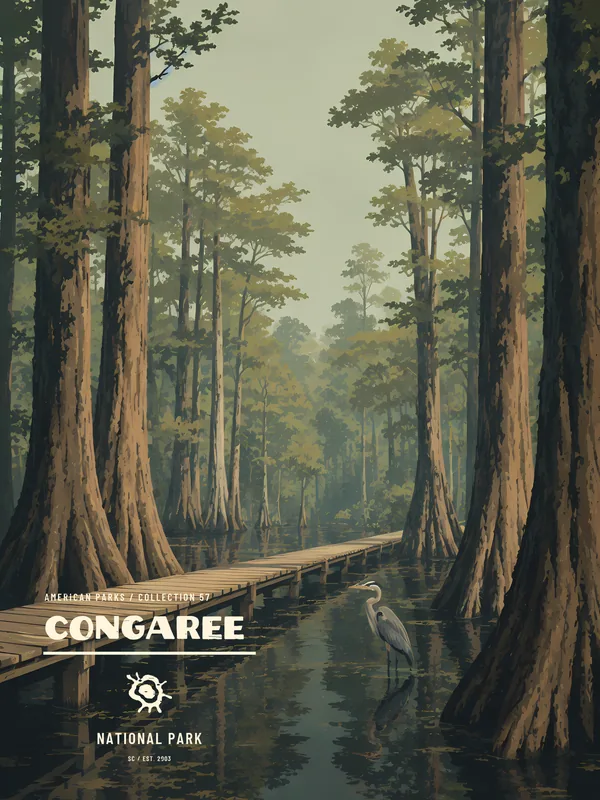
This is the entrance and the best overview of the park in a single walk. The partly elevated wooden boardwalk winds among bald cypress, tupelo, and giant oak trees above ground that is often saturated with water. Along the way, you'll see the famous "cypress knees," root growths that rise from the ground like wooden stalagmites. It's accessible, flat, and well marked, making it ideal for families or a first taste of the park.
Cedar Creek and Its Blackwater
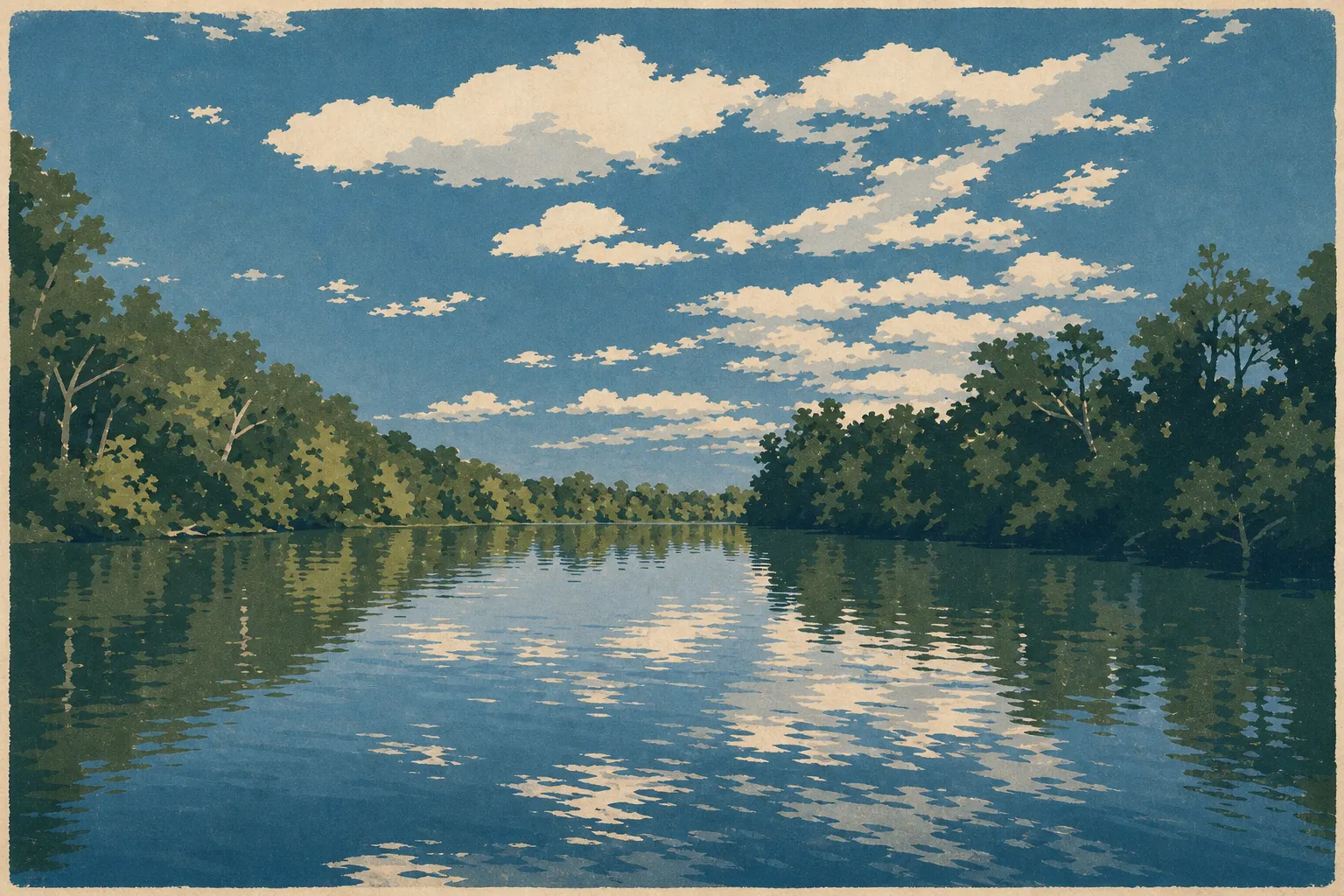
Cedar Creek is the park's aquatic backbone. Its tannin-stained, almost black water reflects the forest like a mirror. The marked canoe route passes through the finest stretches of old-growth forest, where you'll truly feel far from everything. This is the area to choose if you're looking for immersion and quiet.
Deep Forest and the Congaree River
As you head deeper along the dirt trails, you reach the least-visited areas and eventually the banks of the Congaree River itself. This is day-hiker and backcountry camper territory. Here, mud, roots, and water levels determine what's feasible. Always check with the visitor center before setting out.
Explore the park
Congaree's Best Hikes
The signature hike is the Boardwalk Loop, a must-do that's easy for everyone. To go farther, the Weston Lake Loop, about 4.3 miles, leads to a pretty body of water where you may spot turtles and otters, while the Oakridge Trail, roughly 6 miles, heads deep into old-growth forest. Stronger hikers can continue onto the River Trail, which is longer and more exposed to flooding.
One warning applies across the park. After rain or rising water, parts of these trails may be underwater, muddy, and difficult to follow. Trail markers can be hard to spot. Our dedicated Hiking Guide summarizes distances, elevation gain, which is limited but offset by the mud, and trail conditions by season.
The detailed guide The Best Hikes in Congaree: Trail Guide by Difficulty and Access Boardwalk Loop, Weston Lake, and Kingsnake Trail Read the guide →Wildlife and Plants to See
Congaree's plants are all about giants. Bald cypress, tupelo, oak, and enormous pine trees form one of the tallest broadleaf canopies in the temperate zone. Several trees in the park rank among the largest of their species.
Keep your eyes and ears open for wildlife. You may encounter white-tailed deer, river otters, turtles, raccoons, feral hogs, and a wide variety of birds, especially woodpeckers. Snakes are present, including some venomous species, so stay on the trails and watch where you put your hands. And yes, there are alligators, but they're elusive and limited to the wettest areas. The highlight is seasonal. On some nights in late spring, synchronous fireflies light up the forest with coordinated flashes, a rare phenomenon seen at only a few sites around the world. Our Wildlife page covers the species and the best viewing windows.
The detailed guide Congaree Wildlife: What You’ll See and Where River otters, black bears, synchronous fireflies, and prothonotary warblers Read the guide →When to Visit Congaree
In short, spring and fall offer the best balance, with mild temperatures and fewer mosquitoes. Fall also brings the colors of the hardwoods. Summer is hot, humid, and seriously buggy. Remember the "mosquito meter." Winter is quiet and often the best season for canoeing because water levels rise.
The real factor isn't the season so much as flooding. The forest floods several times a year, completely changing what you can do. Our When to Visit and Weather pages bring together seasonal calendars, firefly windows, and water conditions.
The detailed guide When to Visit Congaree: October and November Are Best The best time to visit Congaree is October-November, with mild weather and… Read the guide →Where to Stay in Congaree
There is no hotel or lodge inside the park. If you want to sleep beneath the trees, you have two camping options: Longleaf Campground, accessible by car and convenient for families, and Bluff Campground, a more rustic site set a little farther away. Reserve both in advance.
For a real bed, stay in Columbia, about 30 minutes away. It has most of the area's hotel options. RV travelers will find options nearby, since the park has no sites with hookups. We compare everything in detail on our Where to Stay, Hotels & Lodges, Camping, and RV Camping pages.
Stay in the park
Around Congaree: Things to Do Nearby
People rarely visit Congaree on its own. Its modest size makes it an ideal stop on a larger road trip. Nearby Columbia is worth a stop for its historic district, zoo, and restaurants. South Carolina then offers two natural directions: toward the coast and Charleston's beaches, or inland toward the Blue Ridge Mountains.
To build a coherent route, our Road Trips and Regions sections place Congaree in a multi-stop itinerary. If you're eating before or after your visit, keep one thing in mind: there is no restaurant in the park, so bring a picnic and water. Our Where to Eat page lists good options nearby.
Our Take: Is Congaree Worth the Trip?
Yes, as long as you know what you're coming for. Congaree has no geysers, spectacular canyon, or scenic road. It offers something else: old-growth forest, silence, blackwater, and outsized trees. During our visit, what stayed with us was the light filtering through the canopy above the Boardwalk, along with how few people we encountered in a national park.
Our advice is to make it a half-day to full-day breath of fresh air on a road trip through the Southeast rather than a stand-alone destination. Check water levels before you go, bring insect repellent, and you'll remember Congaree as a park unlike any other. For the finer details, keep the rules and safety advice explained earlier in this guide close at hand.
Frequently Asked Questions
How Much Time Do You Need to Visit Congaree?
Allow half a day for the essentials, including the Boardwalk and visitor center, and a full day if you want to add a longer hike or canoe trip on Cedar Creek. Campers are happy to stay for two days.
How Much Does It Cost to Enter Congaree?
Congaree has no entrance fee. Access to the park is completely free, with no entrance charge or timed entry ticket. Only camping and certain events, such as the synchronous fireflies, require a reservation or registration.
Are There Alligators in the Congaree River?
Yes, Congaree has alligators, but they're rare and elusive, limited to the park's wettest areas. You're much more likely to see deer, otters, turtles, and feral hogs along the Boardwalk.
Can You Visit Congaree by Car?
You can reach Congaree by car, the only way to get to the park, but you can't tour it from behind the wheel. There is no scenic road or shuttle. Everything happens on foot from the visitor center or by canoe on Cedar Creek.
When Is the Best Time to Visit Congaree?
The best times to visit Congaree are spring and fall, when temperatures are milder and mosquitoes are less active. Fall adds the colors of the hardwoods. Winter is good for canoeing because water levels rise. Our When to Visit page has the month-by-month details.
Is Congaree Worth Visiting?
Congaree is worth visiting if you're looking for old-growth forest, quiet, and giant trees rather than spectacular views. It's an ideal half-day to full-day stop on a road trip through the southeastern United States.
The American Parks shop
Bring Congaree home
Our park-inspired creations, made to order and shipped to your door.