
Congaree Wildlife: What You’ll See and Where
Congaree protects one of the largest old-growth bottomland forests in the eastern United States, covering just over 27,000 acres of floodplain in South Carolina. Giant bald cypresses, dark-water creeks, and constantly shifting wetlands create an amphibious environment with exceptionally diverse wildlife. The park’s five signature animals are the North American river otter, white-tailed deer, prothonotary warbler, pileated woodpecker, and black bear. They’re joined by the North American beaver, which is more common here than many visitors expect, synchronous fireflies in May and June, and more than 200 bird species recorded in the park.
Congaree’s Signature Animals
North American River Otter
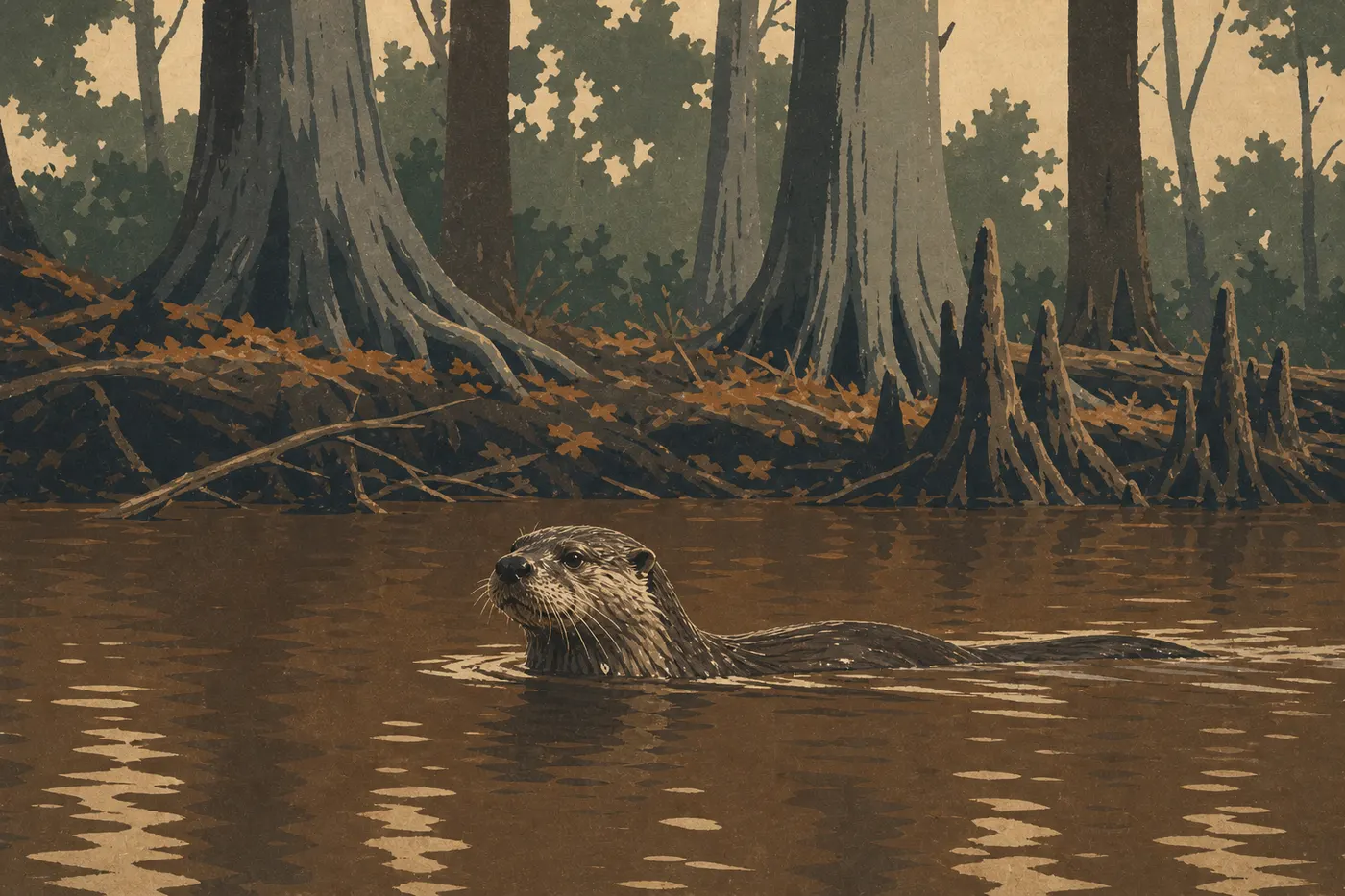
The North American river otter (Lontra canadensis) is Cedar Creek’s signature resident. It hunts fish and crayfish from the first light of day, diving and resurfacing with an ease that contrasts with its pudgy appearance at rest. Its glossy brown coat and long body make it easy to recognize from 65 feet away. Alone or in family groups, it sticks to calm stretches of the channel, where dead branches fall into the water. Paddling Cedar Creek is the best way to get close without disturbing it. The canoe routes and launch points in Congaree are detailed here.
White-Tailed Deer
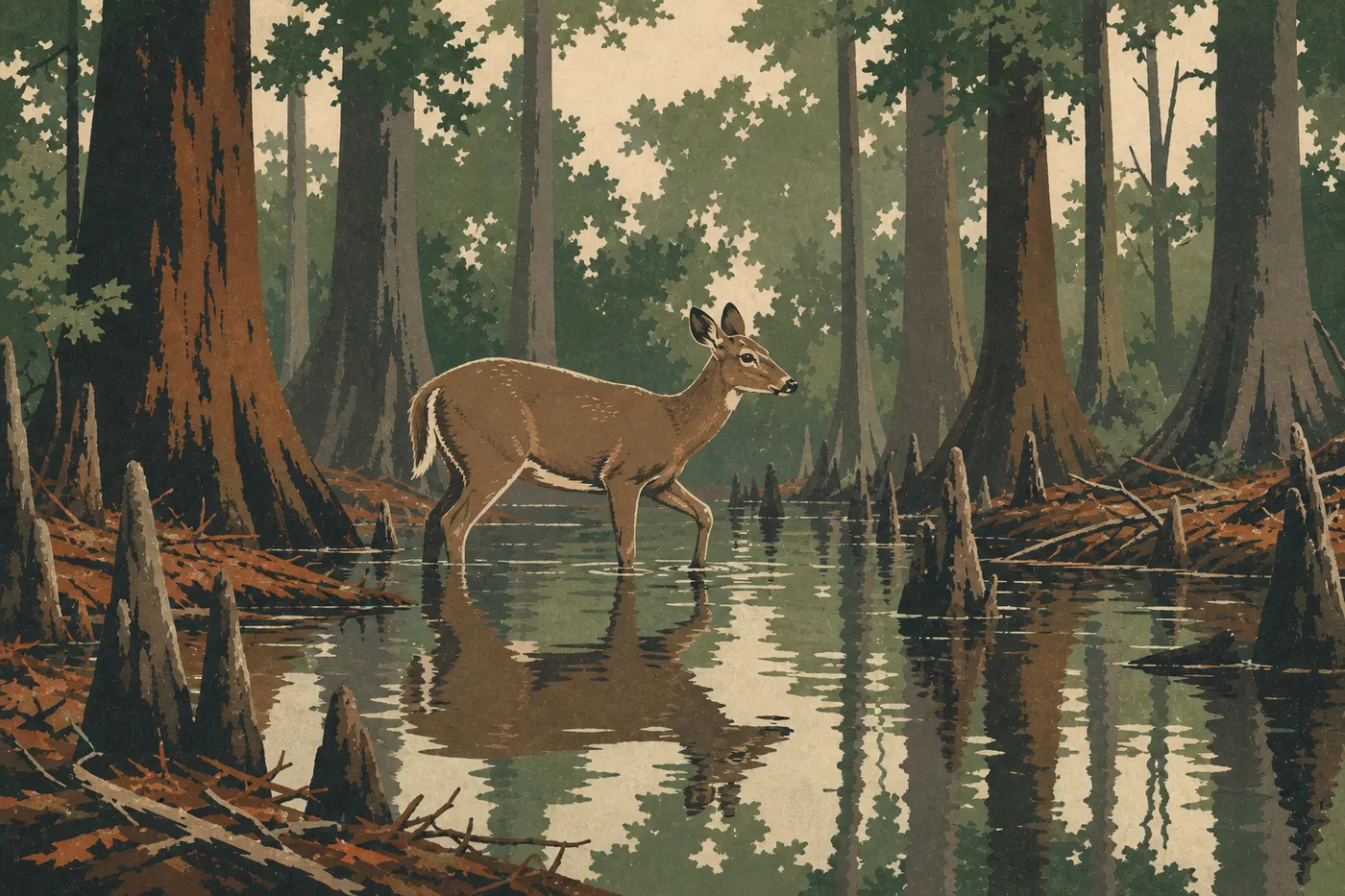
White-tailed deer (Odocoileus virginianus) are the park’s most frequently seen animals. They’re the ones you’ll encounter crossing the parking lot at dusk or glimpsing between two cypresses along the Boardwalk. They’re most active during the first and last hour of daylight. In spring, does give birth under cover of dense brush. If you come across a fawn lying still by itself, don’t touch it. Its mother is likely within a few dozen yards. In fall, bucks are vocal and easier to spot during the rut.
North American Beaver
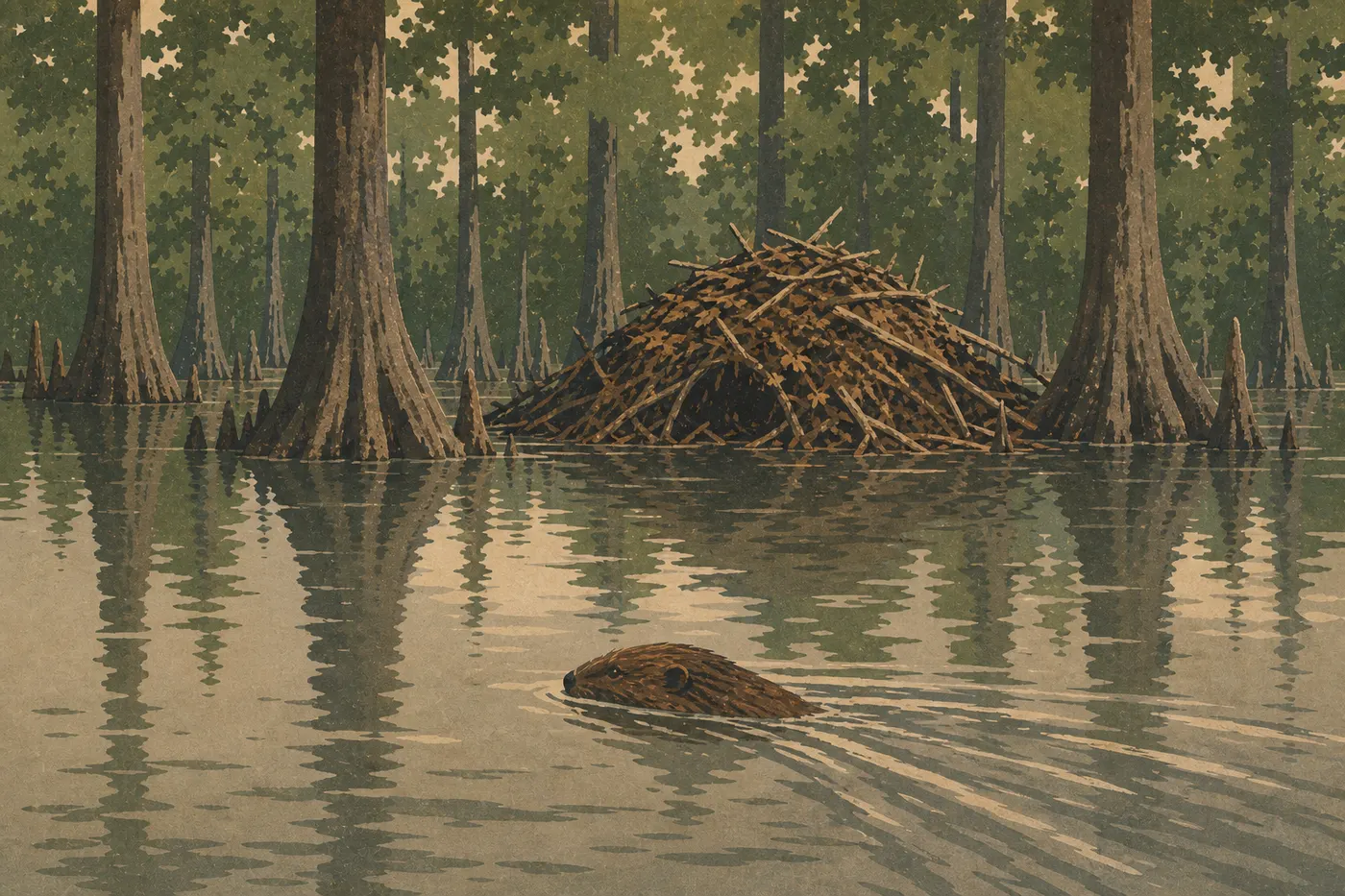
North American beavers (Castor canadensis) are well established in Congaree, which surprises many visitors. Their interwoven branch dams alter the course of secondary creeks and create small ponds that benefit a dozen additional species, from wood ducks to tree frogs. You’ll spot the signs before you spot the beaver: pencil-sized gnawed trunks at knee height, pale wood chips scattered along the bank, and clumps of floating vegetation at the entrance to its lodge. The animal itself comes out at dusk, rarely earlier.
Prothonotary Warbler
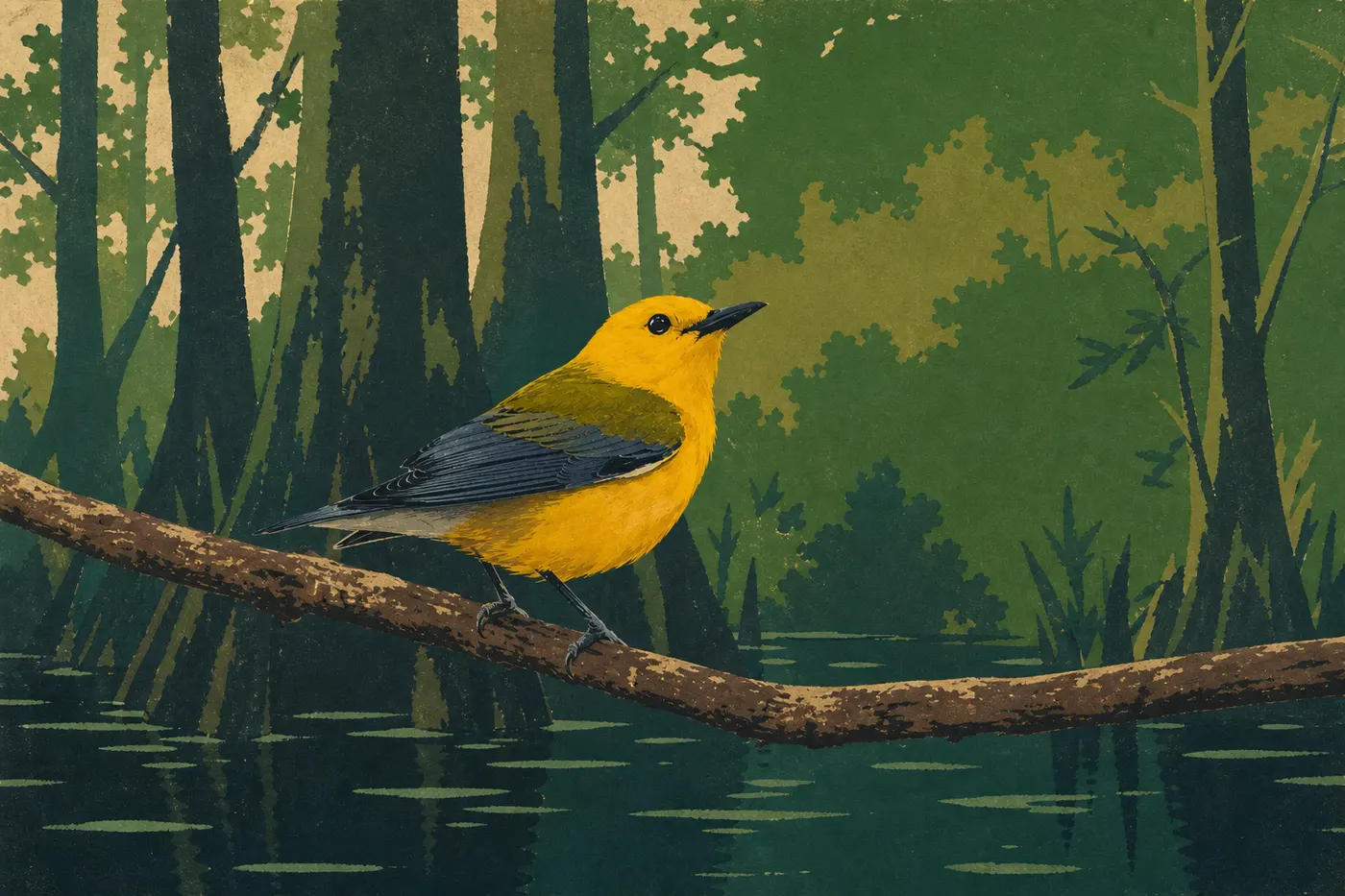
The prothonotary warbler (Protonotaria citrea) is Congaree’s standout songbird. This five-inch bird has bright yellow-orange plumage that even non-birders can pick out in the dim light of the bottomland forest. It nests in natural cavities in old dead trees, often less than 3 feet above the water, from April through July. Along the Boardwalk, its repetitive, metronomic song rises above the frogs’ calls. Congaree regularly appears on lists of the best bird migration sites in the eastern United States, and this species is the main reason why.
Pileated Woodpecker
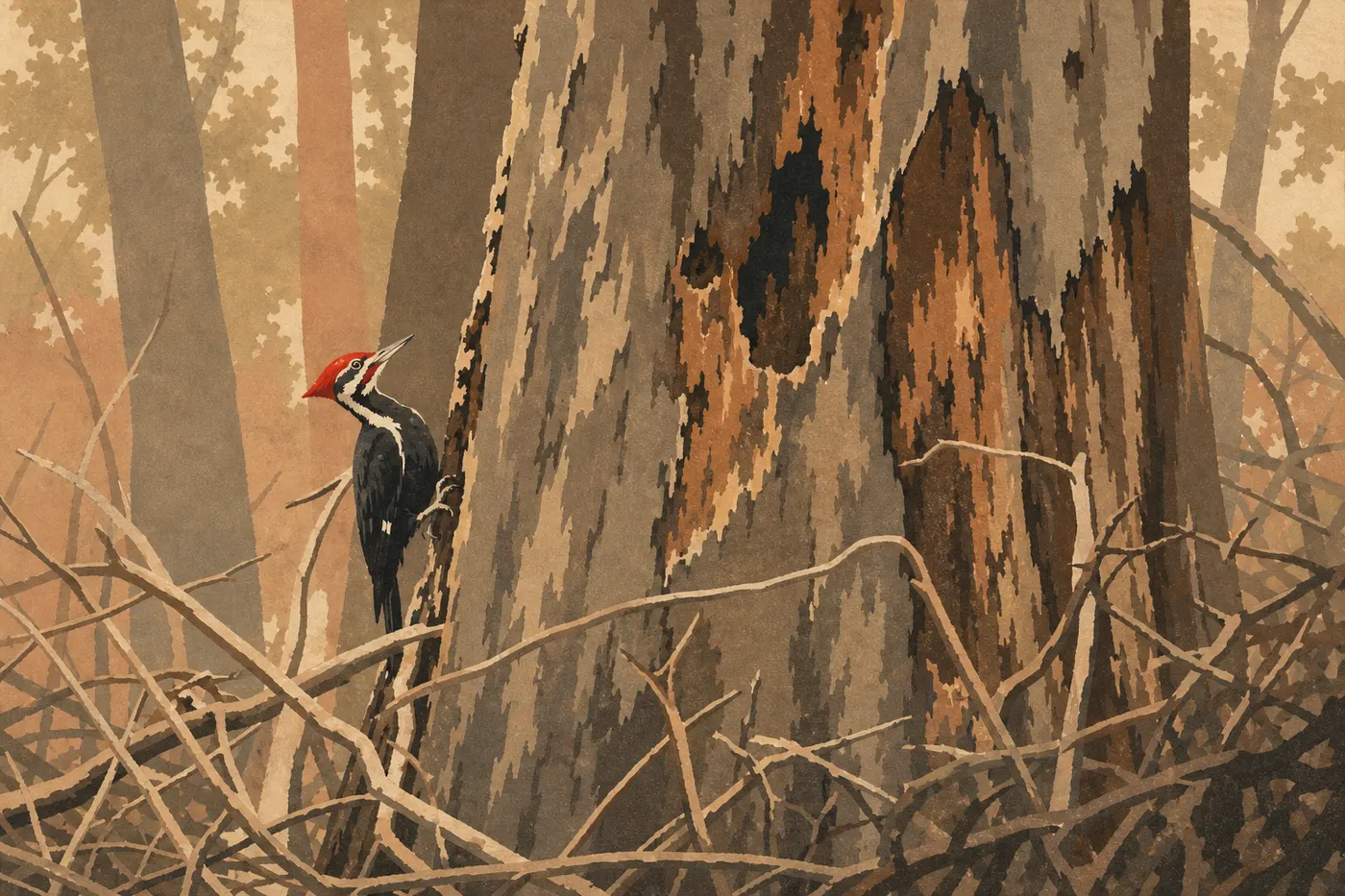
The pileated woodpecker (Dryocopus pileatus) is North America’s largest woodpecker, about the size of a crow, with a distinctive scarlet crest. Congaree’s old bald cypresses and standing dead tulip trees provide an ideal pantry. The bird drills large rectangular cavities as it searches for longhorn beetle larvae. Its powerful drumming carries for several hundred yards and sounds unlike any other woodpecker. Look up at the oldest, most deeply cracked trunks.
Synchronous Fireflies
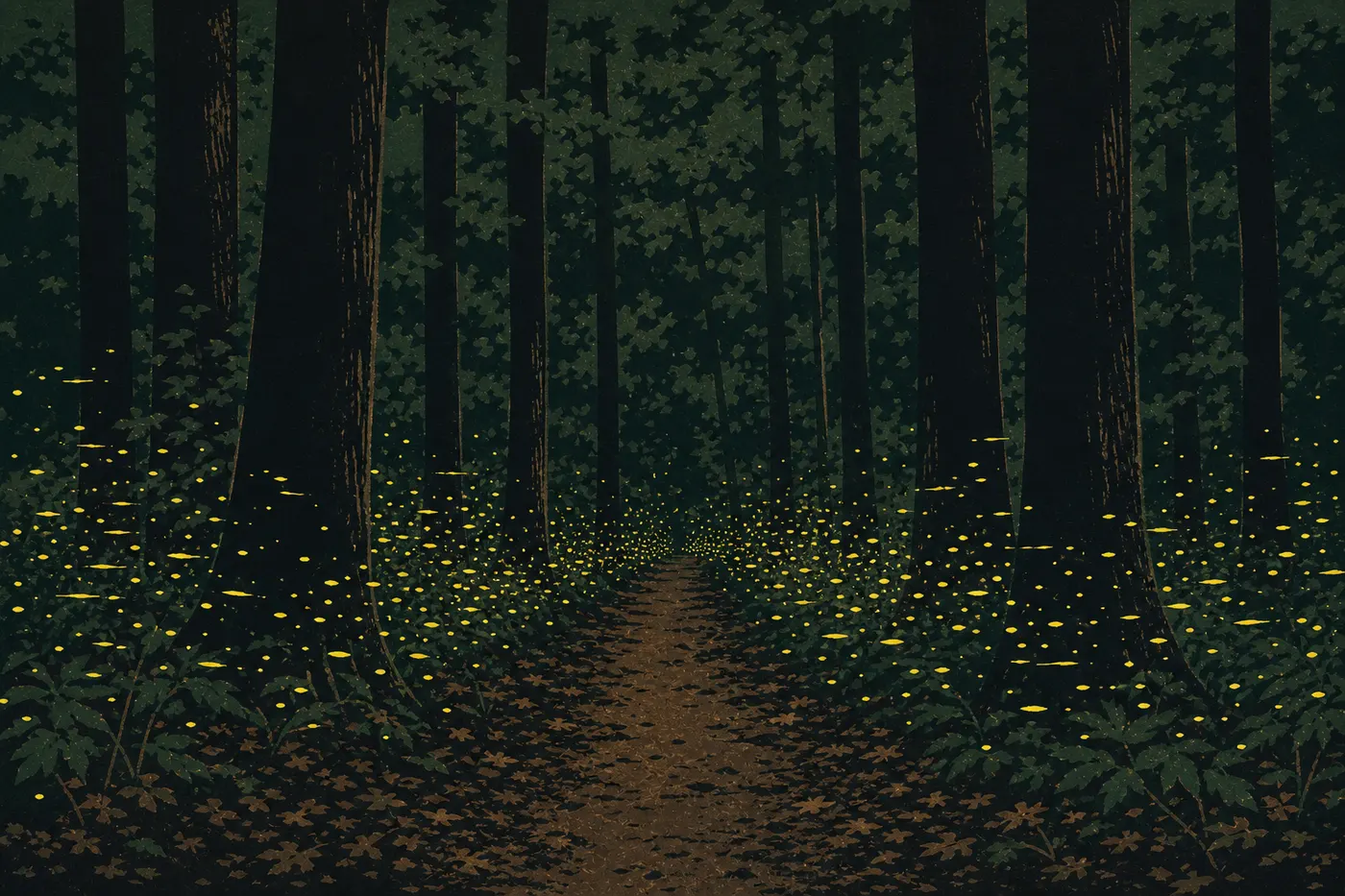
Congaree is one of the few places in the world where fireflies (Photinus carolinus) blink in unison, in perfectly synchronized bursts, for two to three weeks from late May to early June. After 9 p.m., in the forest’s complete darkness, the effect is spectacular. Thousands of green flashes turn on and off at the same rhythm across several hundred yards. The park organizes nighttime programs that require advance registration. The Congaree activities and events page provides dates and details.
Wild Turkey and Other Common Birds
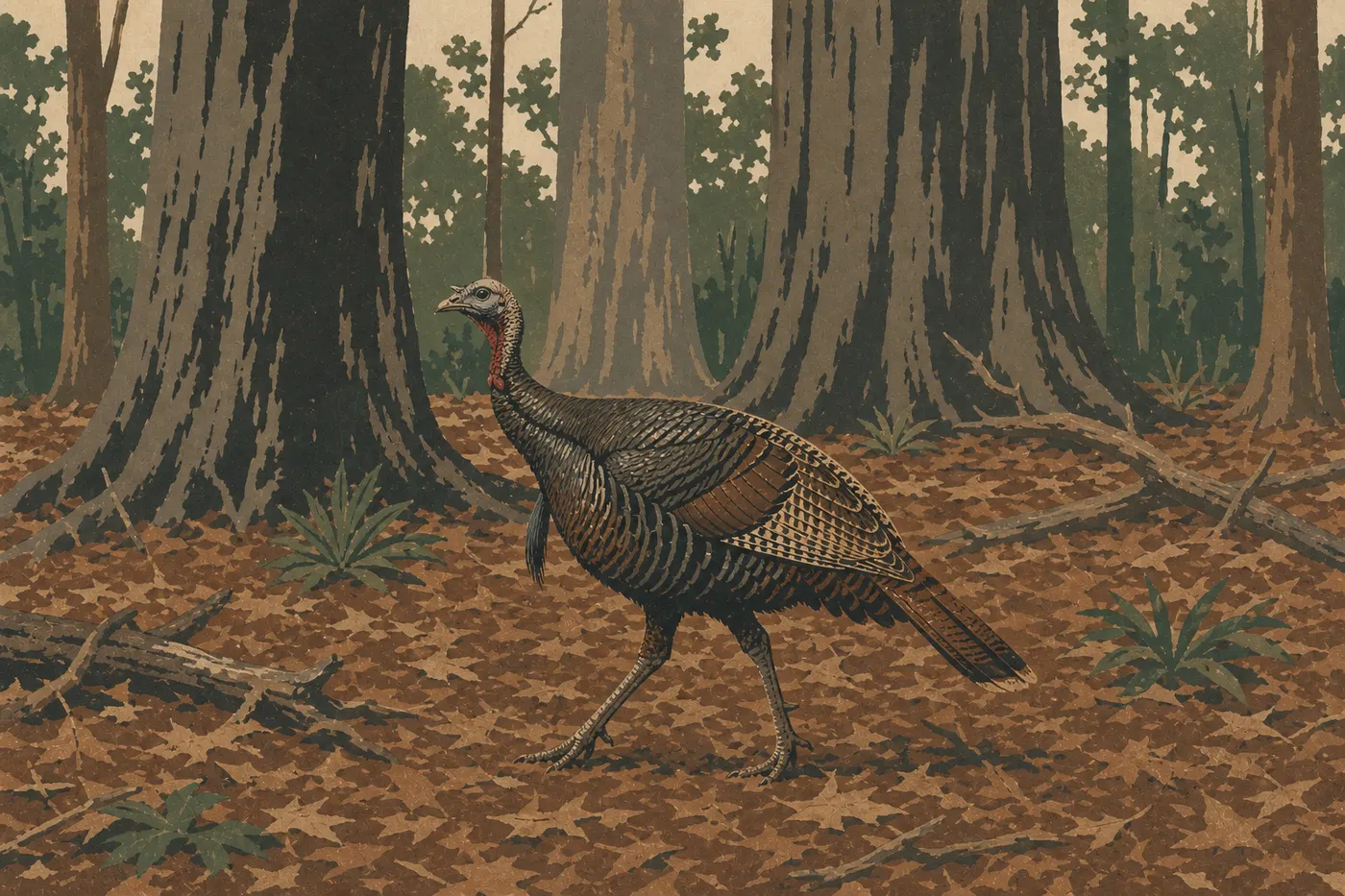
Wild turkeys (Meleagris gallopavo) are common on less-traveled roads, often in small groups scratching through the ground for acorns. Great blue herons (Ardea herodias), wood ducks (Aix sponsa), and belted kingfishers (Megaceryle alcyon) enliven the banks of Cedar Creek year-round. In winter, bald eagles (Haliaeetus leucocephalus) stop at Weston Lake during migration.
Where to See Wildlife in Congaree
The Boardwalk (2.7 miles on an elevated walkway, accessible to strollers and wheelchairs) is the logical starting point. It leads into the heart of the floodplain, through areas with the highest concentration of wildlife. Herons, otters, deer, and prothonotary warblers gather in the wetlands crossed by the walkway. The hiking guide covers trail variations and difficulty levels.
Paddling Cedar Creek (about 9 miles for the full crossing) is the most immersive experience. You glide between cypresses, brush past branches where snakes sun themselves, and sometimes pass otters within paddle’s reach. Nearby rental outfitters are listed in the activities guide.
The Weston Lake area, reached via the Weston Lake Loop, attracts migrating ducks in winter, ospreys in spring, and bald eagles during their November-to-February passage. The lake’s calm surface makes wildlife easier to spot.
Along Bluff Road, white-tailed deer come out of the woods at dusk to graze on the grassy shoulders. It’s one of the park’s most reliable spots for seeing them without much effort.
When to Watch Wildlife
Congaree wildlife follows two main rhythms. Mammals such as deer, otters, beavers, raccoons, and opossums are most active during the first and last hour of daylight. Activity drops noticeably in the middle of the day, especially in summer.
Synchronous fireflies follow their own calendar. They appear for two to three weeks from late May to early June, and only after 9 p.m. Outside that window, they’re absent or no longer synchronized.
Nocturnal raptors, including great horned owls and barred owls, begin hunting after dark year-round. The barred owl’s repetitive “who cooks for you” call is one of the park’s signature nighttime sounds.
In winter, sparse vegetation makes it easier to spot woodpeckers, raptors, and migrating ducks. Otters remain active year-round, regardless of the season. To choose the right window for your wildlife priorities, the best times to visit Congaree page breaks things down month by month.
Predators and Large Animals in Congaree
The black bear (Ursus americanus) is the park’s largest land mammal. Its presence is confirmed, but direct sightings remain rare. It prefers less-traveled areas and is mainly active at night and around dawn. In fall, it builds up reserves of acorns, berries, and insects before winter and appears a little more often in clearings. It isn’t naturally aggressive, but it remains unpredictable, especially a female with cubs.
The bobcat (Lynx rufus) hunts alone, mainly at night. About the size of a large house cat but considerably more muscular, it’s one of the hardest species to see because it’s so elusive. Round tracks with four toes and no visible claw marks in the mud along a bank often signal its recent passage.
The American alligator (Alligator mississippiensis) occurs in Congaree, at the northern edge of its natural range. Sightings are rare and localized around the Congaree River. Unlike Florida’s populations, Congaree’s alligators are few and generally secretive. Use caution near the water.
Venomous snakes pose the most concrete risk to anyone venturing off marked trails. The water moccasin (Agkistrodon piscivorus), also called a cottonmouth, can be recognized by the pearly white lining of its mouth, which it opens as a warning, and by its flat posture on the water with its head raised. The copperhead (Agkistrodon contortrix) has copper-colored crossbands on a beige background. The park’s other snakes, including ring-necked snakes and Nerodia water snakes, are harmless. One useful distinction is that water snakes swim with an undulating motion and their bodies submerged, while a cottonmouth floats at the surface with its head raised. If you’re unsure, keep your distance and don’t approach.
Watching Wildlife Safely
Minimum distance for all mammals: 100 feet, or about three car lengths. For a bear, double that distance, and never get between a female and her cubs.
Never feed wildlife. An animal that gets used to human food quickly loses its natural wariness and can become dangerous to visitors. It’s often euthanized as a result. Don’t leave any food scraps accessible, including in your parked car.
Snakes: wear sturdy, closed-toe shoes as soon as you leave the Boardwalk. Watch where you place your hands and feet. Never turn over a log or rock with your bare hands.
Flooding and displaced wildlife: after a flood, snakes and alligators may end up far from their usual habitat. Check Cedar Creek and the Congaree River water levels before entering the park. The Congaree practical guide explains what to do if you encounter an animal and covers basic emergency first aid.
In Brief: Must-See Species and Where to Find Them
| Species | Best spot | Best time |
|---|---|---|
| North American river otter | Cedar Creek (canoe or kayak) | Dawn |
| White-tailed deer | Boardwalk, Bluff Road | Dusk |
| North American beaver | Secondary creeks | Dusk |
| Prothonotary warbler | Boardwalk (wetlands) | April-July, morning |
| Pileated woodpecker | Old trunks, all trails | Daytime |
| Synchronous fireflies | Throughout the forest | May-June, after 9 p.m. |
| Black bear | Isolated areas | Fall, dusk |
Frequently Asked Questions
What wildlife and plants are found in Congaree National Park?
Congaree wildlife includes black bears, white-tailed deer, North American river otters, North American beavers, bobcats, American alligators, and more than 200 bird species, including prothonotary warblers and pileated woodpeckers. The plant life is dominated by bald cypresses and tulip trees that reach record heights for eastern U.S. forests, earning the park its nickname, the “Cathedral Forest.”
Are there beavers in Congaree National Park?
Yes. North American beavers are well established in Congaree. Their dams are visible on several secondary creeks in the park. The animals themselves are most often seen at dusk in less-traveled areas, usually near their structures.
Are pets allowed in Congaree?
Pets are allowed in Congaree on public trails, as long as they’re kept on a leash no longer than 6 feet. They’re prohibited at the Harry Hampton Visitor Center and in some primitive camping areas. Never leave them unattended.
What typical American animals can be found in Congaree?
Signature species of the eastern United States found in the park include black bears, white-tailed deer, raccoons, Virginia opossums, wild turkeys, ospreys, and bald eagles in winter. River otters and beavers, which have become scarce in many states, are well established here.