
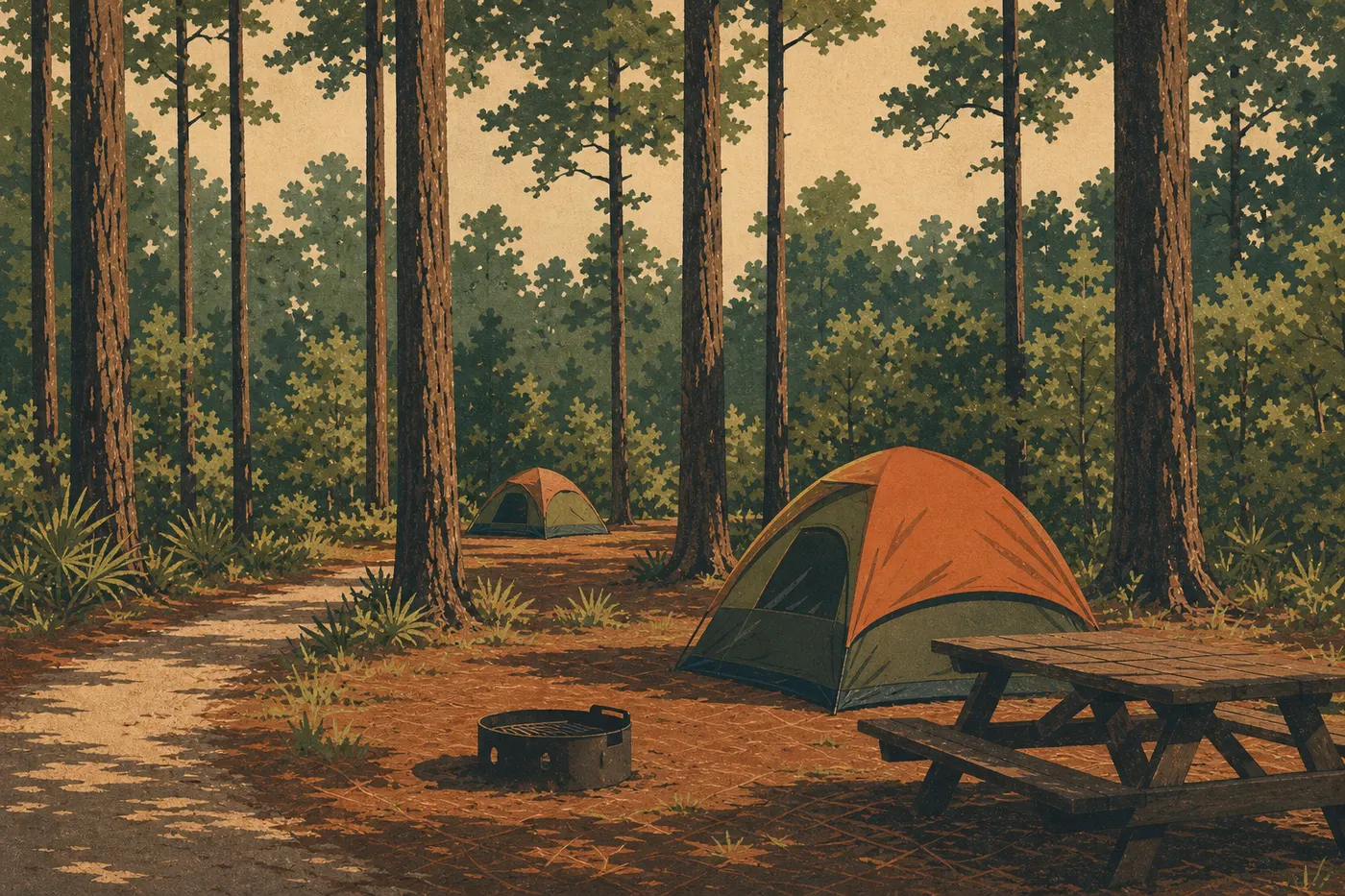
Camping at Congaree: 2 Campgrounds, Fees, and Recreation.gov Reservations
The park offers two official NPS-managed campgrounds, Longleaf Campground and Bluff Campground, with 20 sites total. All sites can be reserved through Recreation.gov. There are no electrical hookups in the park, so RVers without onboard power will need to stay outside the park. Backcountry camping is available with a free permit for visitors who want to venture deeper into the floodplain forest.
Campgrounds in the park (2)
- Campground Longleaf Campground see NPS · 14 sites Directions ↗
- Campground Bluff Campground see NPS · 6 sites Directions ↗
 Base map © OpenStreetMap · © CARTO
 Congaree campgrounds by the numbers
2 official campgrounds inside the park, 20 campsites in total, 20 of them reservable.
| Campground | Sites | Booking | Fee / night | Open | Amenities |
|---|---|---|---|---|---|
| Longleaf Campground | 14 (14 tent only, 4 group) | Reservations and first come | from $15 | Year round | toilets, cell service |
| Bluff Campground | 6 (6 tent only) | Reservations and first come | from $10 | Year round | toilets, cell service |
Source: National Park Service (NPS API), retrieved October 6, 2026. Fees and dates change: check the campground page before you go.
Can You Camp Inside Congaree?
Congaree is a compact national park set on a South Carolina floodplain. Camping here feels like a true change of scenery, with bald cypress trees overhead, a chorus of frogs, and Cedar Creek lapping nearby at night. The park has one hard-and-fast rule: no camping outside designated sites. Whether you bring a tent or a hammock, you must use a designated site or camp in the backcountry.
The key thing to know before booking is that Congaree is an active floodplain. Floodwaters can rise within hours, including overnight, with little or no warning. The NPS recommends checking Cedar Creek and Congaree River water levels before you leave and monitoring alerts during your stay. See Congaree weather and water levels for seasonal guidance.
Campgrounds Inside the Park
The park has two campgrounds, both open year-round: Longleaf Campground (14 sites, $15 per night) and Bluff Campground (6 sites, $10 per night). The 20 sites are split between reservable sites and first-come, first-served sites. Neither campground offers electrical hookups. The table above has details on the amenities at each campground.
Longleaf Campground
Longleaf is the park's larger campground, with 14 sites, including 4 group sites. Tents only, with no hookups. It's open year-round, and sites are continuously available for reservations, while some remain first come, first served. Reserve through Recreation.gov (campground 10190876).
Set along the forest edge a short distance from the Harry Hampton Visitor Center, Longleaf is an ideal starting point for the Boardwalk and the park's longer backcountry trails. A temporary closure is possible after a major flood.
The other campground, Bluff Campground, has 6 tent sites, all open year-round by reservation. It's smaller and more secluded than Longleaf, with a lower nightly fee of $10 and the same basic amenities. If you're looking for a more remote setting away from the heart of the park while keeping costs down, check availability on Recreation.gov first (campground 10191039).
RV vs. Tent Camping: Which Site Should You Choose?
The short answer is that RV travelers should plan to sleep outside the park.
Neither Longleaf nor Bluff Campground can accommodate large RVs. There are no electrical hookups, pressurized water at the sites, or dump station. Small camper vans and pickup trucks can technically park there, but they won't have any added amenities. Our RV camping guide near Congaree lists full-service options with dump stations, electricity, and Wi-Fi about 12 miles away.
Tent campers are in their element here, with flat ground, shade from mature trees, and a deep-forest atmosphere from the moment they wake up.
Camping Nearby: Private Campgrounds Outside the Park
When both campgrounds are full, which happens often in spring and fall, several private campgrounds in the Columbia area can fill the gap. The area around Hopkins and Gaston has campgrounds with full hookups, showers, and Wi-Fi, 15 to 30 minutes by car from the Visitor Center. For everything related to lodging outside the campgrounds, including lodges and motels, see our guide to lodging near Congaree.
Backcountry Camping (Permit Required)
Congaree allows backcountry camping at designated sites inside the park. You'll carry all your gear, leave the developed campgrounds behind, and spend the night in the floodplain forest. This option is for self-sufficient hikers who are comfortable navigating wet environments.
The permit is free, but it's required. Get one by registering at the Harry Hampton Visitor Center, which is open daily from 9 a.m. to 5 p.m., or by phone. When issuing the permit, the NPS will tell you which sites are available and explain the food-storage rules. For route details and site descriptions, see Congaree hikes.
How and When to Reserve a Campsite at Congaree
Reservations for Longleaf and Bluff Campground go through Recreation.gov. The booking window opens six months before your arrival date at 10 a.m. Eastern Time. Spring, from March through May, and fall, from September through November, are the busiest periods. If you're targeting those seasons, book as soon as the window opens.
Some sites remain first come, first served at both campgrounds, but there aren't many of them. There's no guarantee during the busiest seasons. To choose the best time based on weather and water levels, see the guide to the best times to visit Congaree.
How Much Does a Night of Camping at Congaree Cost?
Park entry is free; Congaree doesn't charge an entrance fee. A night at a campground costs $15 at Longleaf Campground, which has 14 sites, and $10 at Bluff Campground, which has 6 sites. Backcountry camping costs nothing beyond the free permit. For entrance fees and annual passes, the National Parks fees and passes page has the key information.
Safety and Best Practices
Flooding and Water Levels
Congaree is naturally prone to flooding. Cedar Creek can rise several feet within a few hours. Before setting up your tent, check water levels on the NPS website or call the Visitor Center. If a flood warning is issued overnight, follow park staff instructions immediately and move to higher ground without delay.
Wildlife: Snakes and Alligators
The park is home to venomous snakes, including water moccasins. The basic rule is simple: never touch a snake, even if it appears motionless or dead. Alligators frequent the wetlands, especially around Cedar Creek. Keep at least 33 feet away and never leave food unattended near the water. See the Congaree wildlife guide for a complete list of species to know about before you go.
Food Storage
Food-storage rules apply throughout the park. Keep food, scented items, and trash in your vehicle's trunk or in an approved hard-sided container. Never leave them in your tent or unattended on a picnic table.
Which Campground Should You Choose?
You're traveling with young children: Longleaf is the best choice. Its 14 sites, proximity to the Visitor Center, and boardwalk trail, which you can reach first thing in the morning, make it the most family-friendly campground.
You're traveling on a tight budget: Look at Bluff Campground first, at $10 per night. Its 6 sites are available for reservations year-round, and the setting is more secluded.
You're camping solo or as a couple and looking for solitude: Choose the backcountry. Tell someone your itinerary, bring a paper map because cell coverage is very limited in the park, and check water levels before you set out.
You're traveling by RV: Stay outside the park and visit for the day. Our RV camping page covers the best options in the area.
For all the logistics of your trip, the complete Congaree guide is the place to start.
Frequently Asked Questions
Can you camp inside Congaree?
Yes. The park offers two official campgrounds: Longleaf Campground, with 14 sites at $15 per night, and Bluff Campground, with 6 sites at $10 per night, for 20 sites total. Backcountry sites are also available with a free permit for self-sufficient hikers.
Which campground should you choose at Congaree?
Longleaf Campground, with 14 sites at $15 per night, is the most convenient for reaching the trails from the Visitor Center. Bluff Campground, with 6 sites at $10 per night, is cheaper and more secluded. For a full immersion in the floodplain forest, backcountry sites are the alternative, as long as you're prepared to carry everything.
When should you reserve a campsite at Congaree?
Reserve through Recreation.gov as soon as the six-month booking window opens, especially if you're aiming for spring or fall. Some of the 20 sites remain first come, first served at both campgrounds, but there's no guarantee during the busiest seasons.
How do you camp at Congaree?
Reserve through Recreation.gov for Longleaf Campground (campground 10190876) or Bluff Campground (campground 10191039), both of which are open year-round. For backcountry camping, get a free permit at the Harry Hampton Visitor Center before heading to the deep-forest sites.
How much does a night of camping at Congaree cost?
Park entry is free. Longleaf Campground charges $15 per night, and Bluff Campground charges $10 per night. Backcountry camping is free with a permit. For entrance fees and annual passes, see the National Parks fees and passes page.
Are there alligators at Congaree's campgrounds?
Alligators live in the park's wetlands, especially near Cedar Creek. Stay at least 33 feet away, never approach them, and never leave food unattended near the water.