
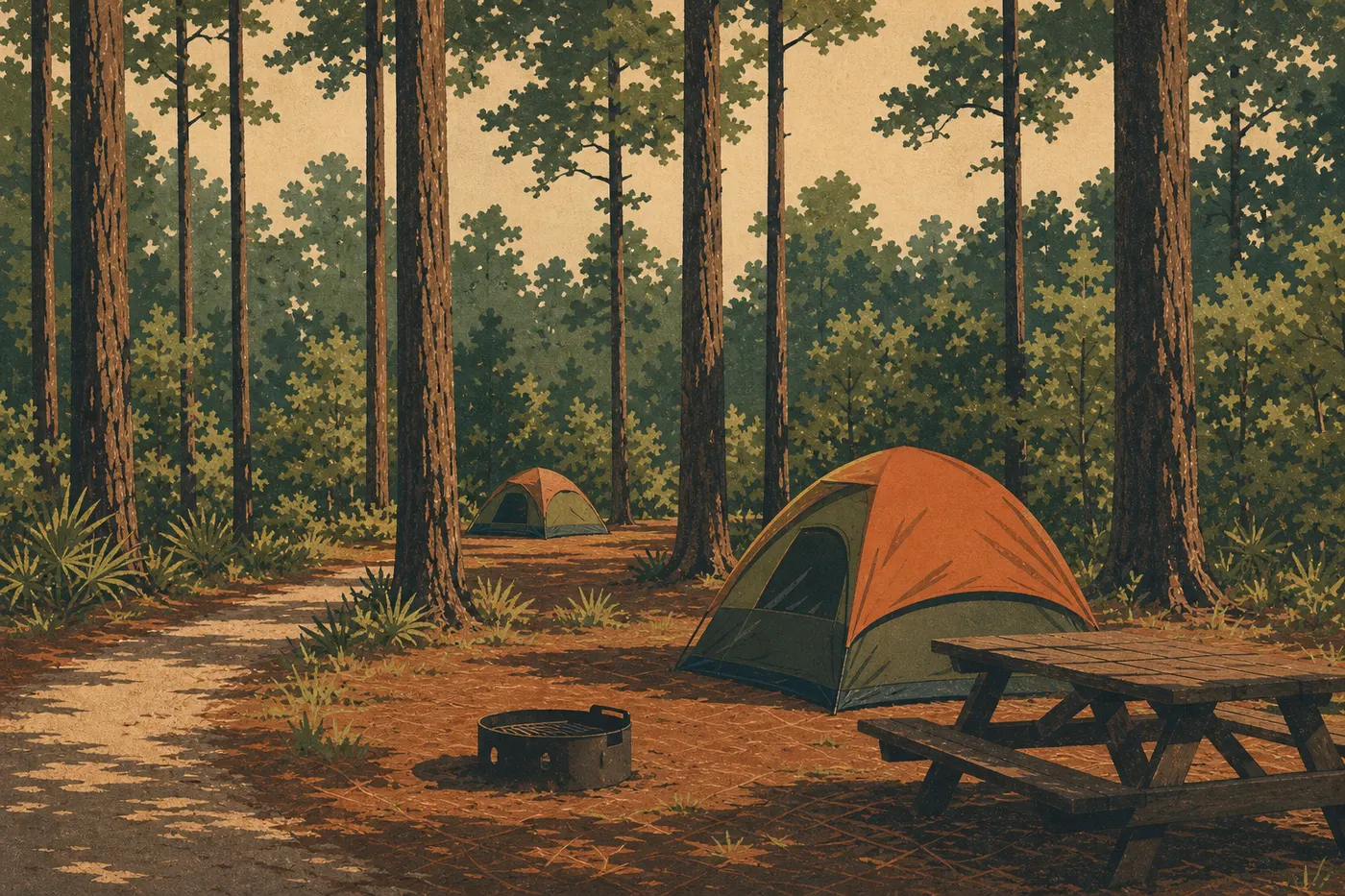
Where to Stay for Congaree National Park: Hotels and Lodges
Congaree has no lodge or hotel within the park. The practical answer is straightforward: Columbia, South Carolina's capital, lies about 19 miles away and offers every type of lodging at much gentler rates than the major parks in the West. If you want to stay as close to the forest as possible, you can also find a few options in Hopkins, the small community nearest the entrance. If you're comparing camping with a hotel or deciding between a night in the park and a stay in town, our Congaree lodging guide will help you choose. For an overview before you book, the complete Congaree guide is the place to start.
Park lodges and gateway towns (5)
- Gateway town Columbia entrance Main Entrance (Harry Hampton VC) - ~22 miles · hotels, supermarket, gas station Directions ↗
- Gateway town Cayce entrance Main Entrance (Harry Hampton VC) - ~19 miles · hotels, supermarket, gas station Directions ↗
- Gateway town Hopkins entrance Main Entrance (Harry Hampton VC) - ~9 miles · gas station, restaurants Directions ↗
- Gateway town Eastover entrance Main Entrance (Harry Hampton VC) - ~14 miles · gas station, restaurants Directions ↗
- Gateway town Gaston entrance Main Entrance (Harry Hampton VC) - ~24 miles · gas station, restaurants Directions ↗
 Base map © OpenStreetMap · © CARTO
 ⚠ Lodge & Gateway town data is undergoing editorial review.
Congaree Lodging Inside the Park: What You Need to Know
Unlike Yellowstone or Grand Canyon, Congaree National Park has no lodge, cabins, or hotel within its 36 square miles. The NPS manages campgrounds, detailed in the Congaree camping guide, but that's where lodging options end. The reason is geographic: Congaree is an old floodplain forest, subject to sudden flooding from Cedar Creek and the Congaree River. The NPS also recommends checking water levels before every visit, since they can rise without warning. You don't build a lodge in an area that could be underwater overnight.
In practice, this makes the choice easy. Settle in Columbia or the immediate area, then make day trips to the park.
Where to Stay Around Congaree: Gateway Towns
Columbia: The Main Base
Columbia is the most sensible choice for the vast majority of visitors. South Carolina's capital sits about 19 miles from the park entrance, a 25- to 30-minute drive via Interstate 77, Exit 5, then SC Highway 48 (Bluff Road) east. The hotel selection is broad: budget chains along the interstate for travelers watching their spending, independent hotels in the lively Vista district, and boutique properties in the historic downtown, some with views of the Congaree River.
Columbia is a college town, home to the University of South Carolina, with a real neighborhood feel. Some travelers spend half a day in town before or after the park, enjoying a good meal, the local music scene, or the Columbia Museum of Art. As for logistics, no public transportation connects Columbia with the park, so you'll need a car.
Here's a practical tip: avoid hotels on the north side of Columbia if the park is your only reason for being here. They add 20 unnecessary minutes to the drive. Choose neighborhoods south of downtown or properties directly along Bluff Road so you can leave at dawn without detouring through town.
Hopkins and the Area Closest to the Park
The community of Hopkins, about 6 miles from the main entrance, is the closest option to the park. You'll find short-term rentals, a few guest rooms, and one or two B&Bs. It's a good choice if you want to be on-site at dawn to watch wildlife or birds, or if you're coming specifically for the synchronous fireflies and would rather not drive at night after the show.
Options are limited and fill up fast. Online rental platforms are the best place to start looking within this radius. On our last visit in May, lodging within 9 miles of the park was fully booked several weeks ahead.
Gaston and the Small Towns Southwest of the Park
A few small communities, including Gaston and Swansea, lie about 12 miles southwest. They don't offer more options than Hopkins, but they can work if you're combining Congaree with a trip through inland South Carolina. Think of them as satellite alternatives, not substitutes for Columbia as a base.
How Many Nights Should You Plan for Congaree?
Congaree is a manageable park. Its main Boardwalk covers 2.7 miles and takes about two hours at an easy pace. One full day is enough to see the essentials of the giant cypress forest and swampy understory. Two days give you time to add a canoe trip on Cedar Creek, which we strongly recommend if you enjoy paddling, and a morning devoted to birds or deer.
The exception is a visit for the synchronous fireflies from late May to early June. Plan to arrive in the afternoon, walk the Boardwalk until sunset, then watch the nighttime display in the park. In that situation, one or two nights in Hopkins are clearly better than a late drive back to Columbia.
For road trippers, Congaree fits into a day between Savannah and Charlotte, or works as a stop on the way to the Outer Banks. The Congaree itinerary guide details these combinations and helps you decide how many nights to plan based on your schedule.
When to Book and What to Budget for Lodging
Seasons to Watch
Congaree has two distinct visitation peaks. The first, by far the busiest, is synchronous firefly season. The exact date varies each year with the temperature, but it usually falls between mid-May and early June. The NPS itself runs a pass system to limit access on certain evenings, concentrating thousands of visitors into a few weeks. Book your lodging as soon as the NPS makes its official announcement, usually posted on recreation.gov in April. Ideally, book two to three months ahead for Hopkins and four to six weeks ahead for Columbia.
The second peak is fall, from October through mid-November, when visitors come for fall colors and mild temperatures of 59 to 77°F. Weekends fill quickly, especially at Columbia's boutique properties.
Summer, from June through August, is the slow season. Heat and humidity are at their worst, and the risk of flooding is higher. Prices drop noticeably, making this the ideal window for tight budgets. South Carolina winters stay mild, with January temperatures of 46 to 59°F, and see few visitors. It's a good choice if you like solitude and empty trails. For more on seasonal patterns and month-by-month weather, the When to Visit Congaree guide has all the details.
Price Ranges in Columbia
Columbia is a mid-sized city without the pricing pressure of a major metro area or a heavily visited national park. Budget chains along the interstate generally cost under $100 per night on weekdays outside firefly season. Independent hotels in the Vista district and boutique properties run $150 to $250 depending on the season. Apartment-style or entire-home rentals within 9 miles of the park fall into similar ranges, with the added benefit of a kitchen for families or multi-day stays.
One thing that helps the overall budget is that admission to Congaree National Park is free. That keeps costs down compared with Western parks covered by the America the Beautiful pass.
Our Recommendation Based on Your Travel Style
One-day stop, regional visit. Base yourself in Columbia, in the Vista district or downtown. Leave before 9 a.m. to reach the Harry Hampton Visitor Center when it opens at 9 a.m. and walk the Boardwalk before the heat sets in. One night is enough.
Synchronous fireflies are the priority. Watch for the NPS's annual announcement in April and book right away in Hopkins or at a B&B within 9 miles. Staying nearby means you won't have to drive back along Bluff Road at night after the show. Trust us, you won't want to rush your way out.
Family stay. Columbia offers the easiest setup for families, with hotel pools, plenty of restaurants for picky kids, and a reasonable distance that lets you head back if someone gets tired earlier than expected. A family visit to the park fits easily into a half-day, thanks to the accessible Boardwalk.
Tight budget. Summer weekdays in Columbia, outside firefly season, offer the best rates. Combine your hotel stay with camping in the park if you have the gear. Some sites are free, and you can visit Congaree for very little.
Regional road trip. Our itinerary guide suggests routes that combine Congaree with nearby destinations. One night in Columbia followed by an early-morning departure is the most common pattern for this kind of trip.
Frequently Asked Questions
Where should I stay to visit Congaree?
Columbia, South Carolina, is the main place to stay for a visit to Congaree. It's about 19 miles away, or a 25- to 30-minute drive via Interstate 77 and SC Highway 48. For a closer option, Hopkins is about 6 miles away and has rentals and B&Bs.
What's the best town to stay in for visiting Congaree?
Columbia is the best town for a Congaree visit. It has the broadest selection of lodging, plenty of restaurants, and direct access to the park in 30 minutes.
Can I stay overnight in Congaree National Park?
You can spend the night in Congaree only by camping. There are no hotels, lodges, or cabins within the park. Our Camping page covers the sites and reservation details.
How much should I budget for lodging around Congaree?
Around Congaree, plan on under $100 per night for a budget chain in Columbia, or $150 to $250 for a boutique hotel. During firefly season, from May through early June, availability disappears quickly and rates rise.