

Congaree: Trails Still Waterlogged After the Flood, Tread Carefully
At Congaree, the water is receding slowly after the flood: several trails remain flooded and hard to follow. Here's what to know before you head out.
By David Sanchez,
If you're planning a trip to Congaree right now, know that the park is just coming off a flood event. The water is dropping, but slowly: several trails still hold wide stretches of standing water, and that's likely to last a few more days while the level finishes going down.
In practical terms, hiking here calls for extra caution. Three routes are flagged as especially affected: Boggy Gut, Oak Ridge, and Kingsnake. After flooding, the tread underfoot washes out, the usual markers vanish under water or mud, and these trails become much harder to follow. It's easy to lose the line of the path without even noticing.
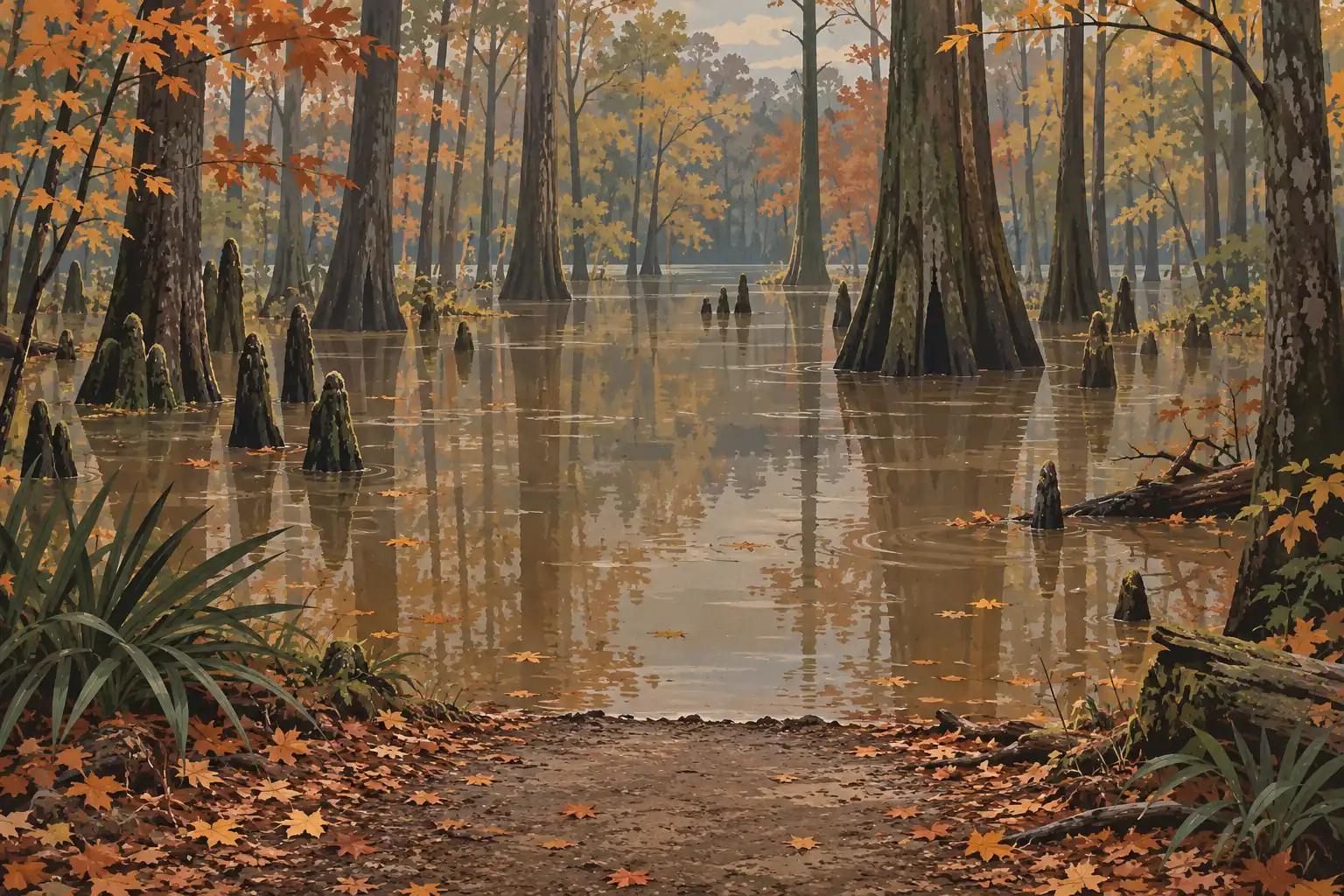
The other hazard is less obvious. A sheet of water sitting on the trail tells you nothing about its real depth: there's no way to judge standing water by eye before you step into it. What looks like a simple puddle can hide a much deeper dip. The common-sense rule is to never cross a flooded stretch when you can't see the bottom.
On our end, here's what we'd suggest. Wear shoes you don't mind soaking, start early so you've got full daylight, and build some slack into your schedule, because a waterlogged route always takes longer than you'd expect. If a trail feels too uncertain, it's better to turn back than to push through.
Most of all, check trail conditions right before you head out, because the situation shifts day by day as the water recedes. The park keeps a current conditions page updated, and that's your best move before you hit the road. And to put this visit in context, map out your stops, and pick your loops based on the weather, dig into the Congaree park guide: you'll find everything you need to build an itinerary that accounts for these seasonal surprises.