
Where to Stay in Congaree: In the Park, Nearby Towns, and Campgrounds
Congaree National Park is an outlier among America's national parks. It's free, relatively compact, and, most notably, it has no lodge. Staying here means either pitching a tent or booking a hotel in town. The good news is that the town in question is Columbia, South Carolina's capital, about 19 miles from the Visitor Center.
The short answer: For most visitors, Columbia is the natural home base. Plan on one or two nights, depending on your itinerary. One full day is enough for the main trails, but two nights give you time to add a nighttime firefly outing or a backcountry stay in the floodplain forest. If you want a more immersive experience, camping in the park is a practical and very accessible option.
Where to stay: towns, lodges and campgrounds (7)
- Gateway town Columbia entrance Main Entrance (Harry Hampton VC) - ~22 miles · hotels, supermarket, gas station Directions ↗
- Gateway town Cayce entrance Main Entrance (Harry Hampton VC) - ~19 miles · hotels, supermarket, gas station Directions ↗
- Gateway town Hopkins entrance Main Entrance (Harry Hampton VC) - ~9 miles · gas station, restaurants Directions ↗
- Gateway town Eastover entrance Main Entrance (Harry Hampton VC) - ~14 miles · gas station, restaurants Directions ↗
- Gateway town Gaston entrance Main Entrance (Harry Hampton VC) - ~24 miles · gas station, restaurants Directions ↗
- Campground Longleaf Campground see NPS · 14 sites Directions ↗
- Campground Bluff Campground see NPS · 6 sites Directions ↗
 Base map © OpenStreetMap · © CARTO
 ⚠ Gateway town & Lodge data is undergoing editorial review.
Staying in the Park or Outside It?
The decision is simpler here than at Yellowstone or Zion because Congaree has no lodge. You really have just two options.
You want total immersion: Longleaf Campground or backcountry camping puts you within a few minutes' walk of the Boardwalk Loop. You'll be in the forest at dawn, before the day-trip crowds arrive.
You're traveling with family or want more comfort: Columbia is about 19 miles from the Visitor Center, a 30- to 40-minute drive. The city has everything you need, including restaurants, supermarkets, and air-conditioned hotels. In July and August, when temperatures rise above 95°F and the humidity becomes exhausting, that comfort matters.
You're on a road trip with only one day here: Don't try to fit camping into the schedule, too. Leave your lodging early, explore during the day, and get back on the road in the evening.
Keep one thing in mind in every case. Congaree is a floodplain forest. Water levels in Cedar Creek and the Congaree River can rise quickly and without warning. Before dropping off your bags, check water levels on the NPS website and look for any temporary closures.
Staying in the Park: Congaree's Campgrounds
Congaree has no permanent lodging. If you want to spend the night inside the park, you'll need a tent. There are two options.
Longleaf Campground
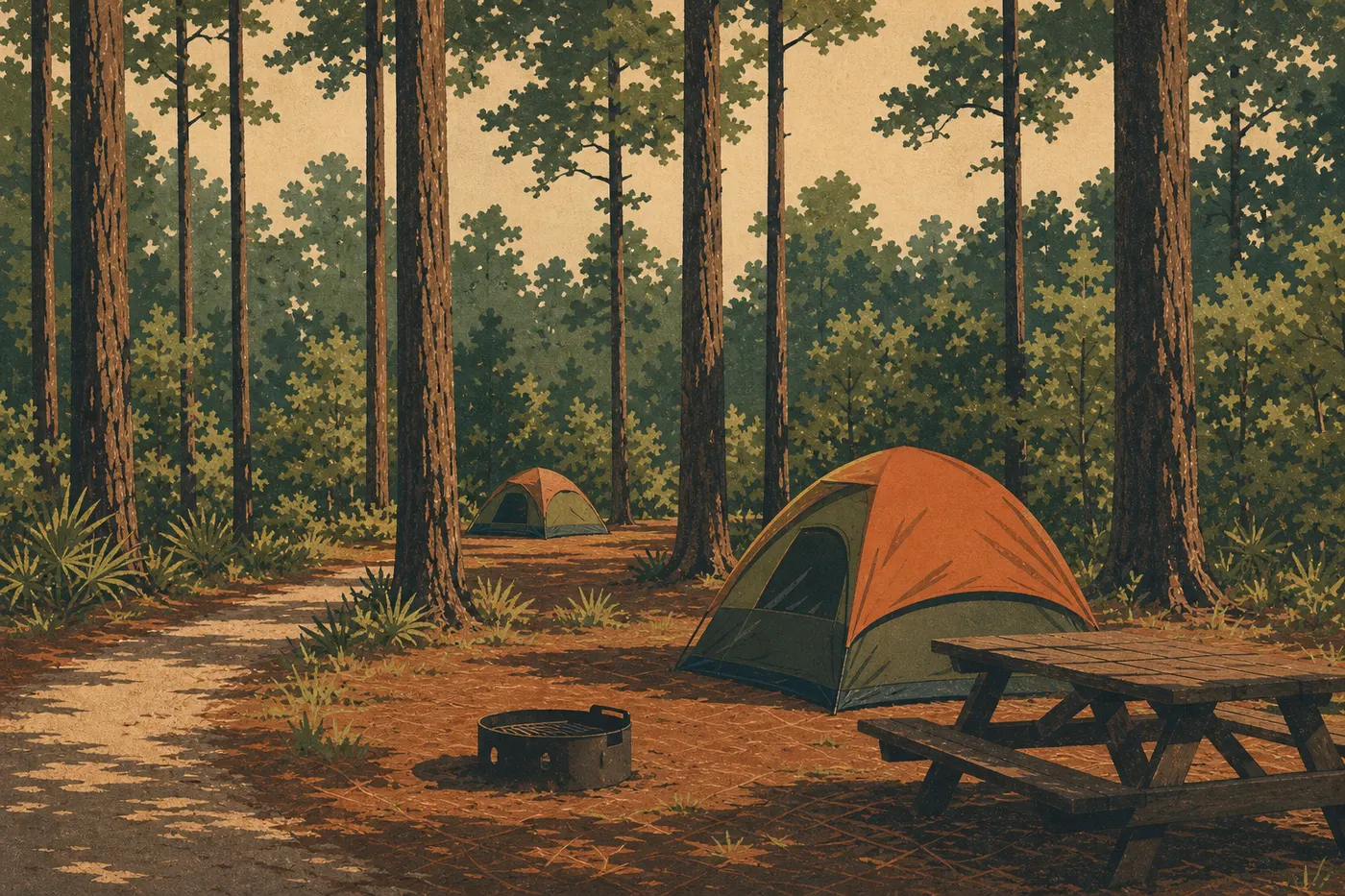
This is the park's only developed campground, just a few minutes' walk from the Harry Hampton Visitor Center. You can drive straight to it from the main entrance. Campsites have access to drinking water, and the restrooms are vault toilets. There is no electricity or hot water. This is camping, not glamping. The campground is open year-round, subject to closures caused by flooding.
Reservations are made through Recreation.gov. During the busy spring season and the firefly period in May and June, sites disappear within hours of the calendar opening. Availability is much better in fall and winter. The Congaree camping guide covers the practical details, available amenities, and rules you need to know.
Backcountry Camping
The park allows backcountry camping in designated areas accessible only by trail. Pick up a free permit at the Harry Hampton Visitor Center, which is open from 9 a.m. to 5 p.m. This is the option we recommend for hikers who want to spend the night in old-growth forest, away from the busiest trails.
Two precautions are essential. Check water levels before setting out. An area that's passable in the morning may be flooded by evening. Also, bring an effective mosquito repellent. Congaree has them in abundance, and they show no mercy.
Where to Stay Around Congaree: Gateway Towns
Columbia, South Carolina (the Main Base)
Columbia is South Carolina's capital and the closest city to the park, about 19 miles northwest of the Visitor Center. It's a lively college town, home to the University of South Carolina, with hotels at every price point: major budget chains, well-located mid-range hotels, and boutique hotels in the historic Five Points and Devine Street neighborhoods.
For Congaree visitors, the advantage is twofold. The drive to the park is quick and well marked. Follow SC Highway 48 east, then Bluff Road, and look for the brown "Congaree National Park" signs. The city also has everything you need before and after your visit. When we visited in May, we picked up supplies at a supermarket in the southern suburbs and reached the Visitor Center at 8:30 a.m., well fed and fully prepared for the mosquitoes.
The SC Highway 48 Corridor (East Columbia Suburbs)
Between Columbia and the park, several chain hotels line the city's eastern suburbs near Interstate 77, at Exit 5, then SC Highway 48, especially along Garners Ferry Road. They're functional options with little character, but rates are often lower than downtown and the morning drive to the park is a few minutes shorter. For an overnight stop between two road-trip legs, it's a practical choice.
Vacation Rentals Near the Park
Around Hopkins and along roads near the park, a handful of houses and bungalows are available through Airbnb or Vrbo. Some are less than 20 minutes from the Visitor Center. This can work well for groups or families that want their own space. Keep in mind that there is almost no commercial infrastructure right around the park. Be sure to shop in Columbia before settling in.
When to Book Your Congaree Lodging
The busy season centers on two periods: spring, from March through May, and fall, from October through November, when temperatures range from 59°F to 77°F and the forest is at its best.
The most competitive period is without question the synchronized firefly season, usually from mid-May to mid-June. Every year, the NPS holds a lottery for nighttime visits, and campgrounds and Columbia hotels fill up quickly. If that's your goal, book 3 to 6 months ahead.
In fall, booking 4 to 6 weeks ahead is enough in most cases. Summer is hot, humid, and mosquito-friendly. Visitor numbers drop, Columbia has plenty of rooms, but conditions in the forest are demanding.
The Congaree seasons guide covers spring flooding and the firefly calendar to help you fine-tune your plans.
Lodging Budget: How Much Does It Cost to Stay in Congaree?
| Option | Typical nightly rate |
|---|---|
| Longleaf Campground (campsite) | $15 to $25 |
| Backcountry camping (permit) | Free |
| Chain hotel (Columbia suburbs) | $80 to $130 |
| Mid-range hotel (downtown Columbia) | $120 to $200 |
| Boutique hotel or B&B (Columbia) | $150 to $250 |
| House rental (near the park) | $100 to $180 |
Since park admission is free, Congaree is one of the most budget-friendly national parks if you choose to camp.
Our Recommendation for Every Type of Traveler
First visit, 1 to 2 days: Stay in Columbia. The hotel selection is broad, the drive to the park is simple and quick, and you'll have all the city's amenities before heading out to explore the forest.
Family with kids: Columbia is still the best choice. Congaree's summer heat and humidity can be tough on young children, so having an air-conditioned hotel 35 minutes away is a useful safety net. Avoid camping in July and August with young kids.
Nature lovers on a tight budget: Longleaf Campground is the clear choice. Free admission, inexpensive camping, and you'll be in the park as soon as you wake up. Bring effective mosquito repellent and a lightweight, well-ventilated tent.
Hikers and wildlife photographers: Go backcountry camping with a free permit. Wake up in the floodplain forest, enjoy golden understory light, and have birds for neighbors. Check water levels the day before and pack light.
Group or extended family: Rent a house near the park and do your shopping in Columbia ahead of time. The space-to-price ratio is hard to beat for several people.
To build your itinerary day by day, see the Congaree itinerary. For the park as a whole, our complete Congaree guide is the place to start.
Frequently Asked Questions
Where should I stay to visit Congaree National Park?
Most travelers stay in Columbia, South Carolina, about 19 miles from the Visitor Center, because of its wide range of hotels. The other option is camping inside the park, at Longleaf Campground or in the backcountry with a free permit.
Is it better to stay in the park or outside it?
Staying in the park means camping. Congaree has no lodge or permanent lodging. If you're comfortable with rustic conditions and mosquitoes, sleeping in the forest is a memorable experience. For comfort or a family trip, a hotel in Columbia is a better fit.
What is the closest town to Congaree?
The closest town with a real selection of hotels is Columbia, South Carolina's capital, about 19 miles from the Visitor Center, or a 30- to 40-minute drive via SC Highway 48.
What is the best town to stay in for visiting Congaree?
Columbia is the best base for nearly all visitors. It has a varied selection of lodging, restaurants, supermarkets, and easy access to the park. Hotels along the SC Highway 48 corridor in eastern Columbia shorten the morning drive slightly.
How many days do I need to visit Congaree?
One full day is enough for the main loops. Two nights give you time to add a nighttime outing, with fireflies in season, or a backcountry hike. To plan your trip, our Itinerary & Length page answers this question in detail.
When should I book lodging for Congaree?
Outside firefly season, from mid-May to mid-June, booking 4 to 6 weeks ahead is enough in fall. For nights during firefly season, plan 3 to 6 months ahead for both camping and Columbia hotels.