
What to Do in Congaree: Must-See Sights and Activities
Congaree National Park hides 30 minutes from Columbia, South Carolina, and many travelers still don't know what they'll find there. Start with the Boardwalk Loop over the blackwater, paddle Cedar Creek among giant cypress trees, and look up at the champion trees, some of the tallest of their species in the United States. The park is free, open year-round, and works as either a full day or a relaxed two-day stay.
Congaree at a Glance: Areas, Access, and Getting Around
Congaree National Park covers just over 100 square miles in the Congaree River floodplain. It's the largest intact old-growth bottomland forest in the United States, a cathedral of bald cypress, tulip trees, oaks, and sweetgums that the Congaree River and Cedar Creek regularly flood.
The park isn't divided into distinct areas like Yellowstone or Grand Canyon. Still, visitors generally experience three clearly different parts of the park.
The visitor center and Boardwalk Loop area is the main entrance, just a few minutes on foot from the parking lot. The deep forest and backcountry trails have unmarked paths over natural ground, so wear waterproof shoes. Cedar Creek is the water corridor, accessible only by canoe or kayak.
The main entrance is on Old Bluff Road, about 8 miles southeast of Columbia. From Interstate 77, take Exit 5, SC Highway 48 East (Bluff Road), and follow the brown Congaree National Park signs for about 8 miles. You'll need a car or rental vehicle because no public transportation serves the park. Once you're there, get around on foot, by bike on the interior roads, or by paddle on the creek.
The Harry Hampton Visitor Center is open daily from 9 a.m. to 5 p.m. Rangers hand out maps, provide real-time water-level information, and lead free interpretive programs. Check flood levels before you leave. Cedar Creek and the Congaree River can rise quickly, sometimes without warning.
For driving directions, accessibility information, and parking options, see the Congaree access guide.
How Much Time Do You Need to Visit Congaree?
Half a day is enough for the Boardwalk Loop and a stop at the visitor center. A full day lets you add a longer trail or a sunrise wildlife outing. Two days, with a night of camping, give you time to canoe Cedar Creek and explore the quieter parts of the deep forest.
Congaree is small by national park standards. There are no remote areas that require several days of hiking. What makes a stay pleasantly longer is the deliberate pace: walk the boardwalk without watching the clock, wait for wildlife, and photograph cypress knees in the morning light.
The Congaree itinerary offers structured plans based on the length of your stay, with priorities for each half-day.
Congaree's Must-See Sights, Area by Area
The Central Area: Boardwalk Loop
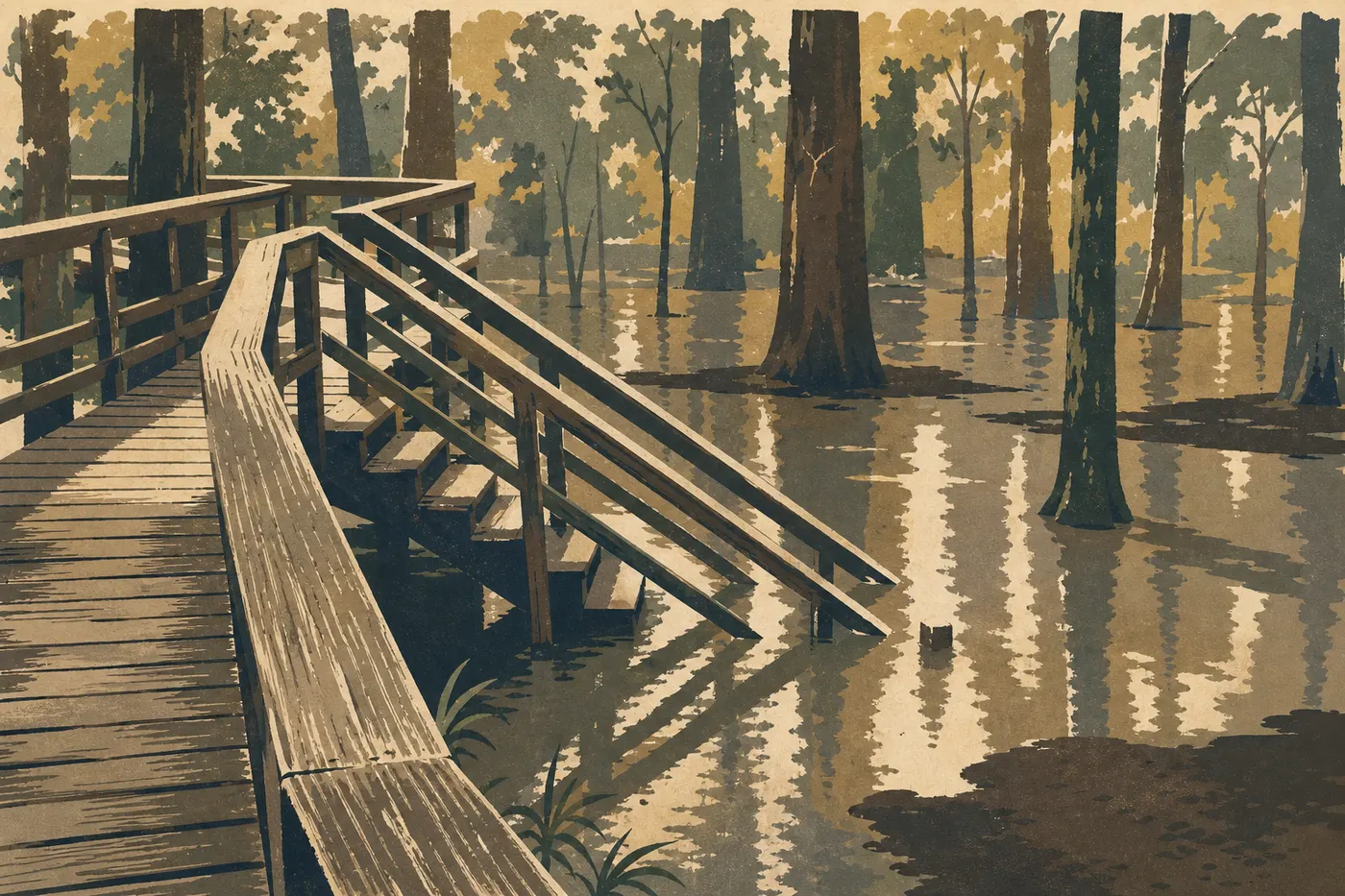
The Boardwalk Loop begins 650 feet from the visitor center. This 2.4-mile elevated wooden walkway crosses the flood-prone forest floor. It's the park's centerpiece and, for most visitors, the lasting image they'll take home: a boardwalk winding among cypress knees rising from blackwater beneath an impressive forest canopy.
The loop is mostly flat and takes 1.5 to 2 hours at an easy pace. Visitors with limited mobility can cover the accessible section and turn back without missing the main spectacle.
Slow down on the boardwalk where it crosses the water and look below your feet. Snapping turtles bask on floating logs, great blue herons hunt in the shallows, and when I visited in April, I counted six turtle species in a single hour. Bring good mosquito protection, especially from May through October.
The best time is dawn or late afternoon, when the light filters in from the side beneath the canopy and wildlife is most active.
Cedar Creek: The Water Corridor
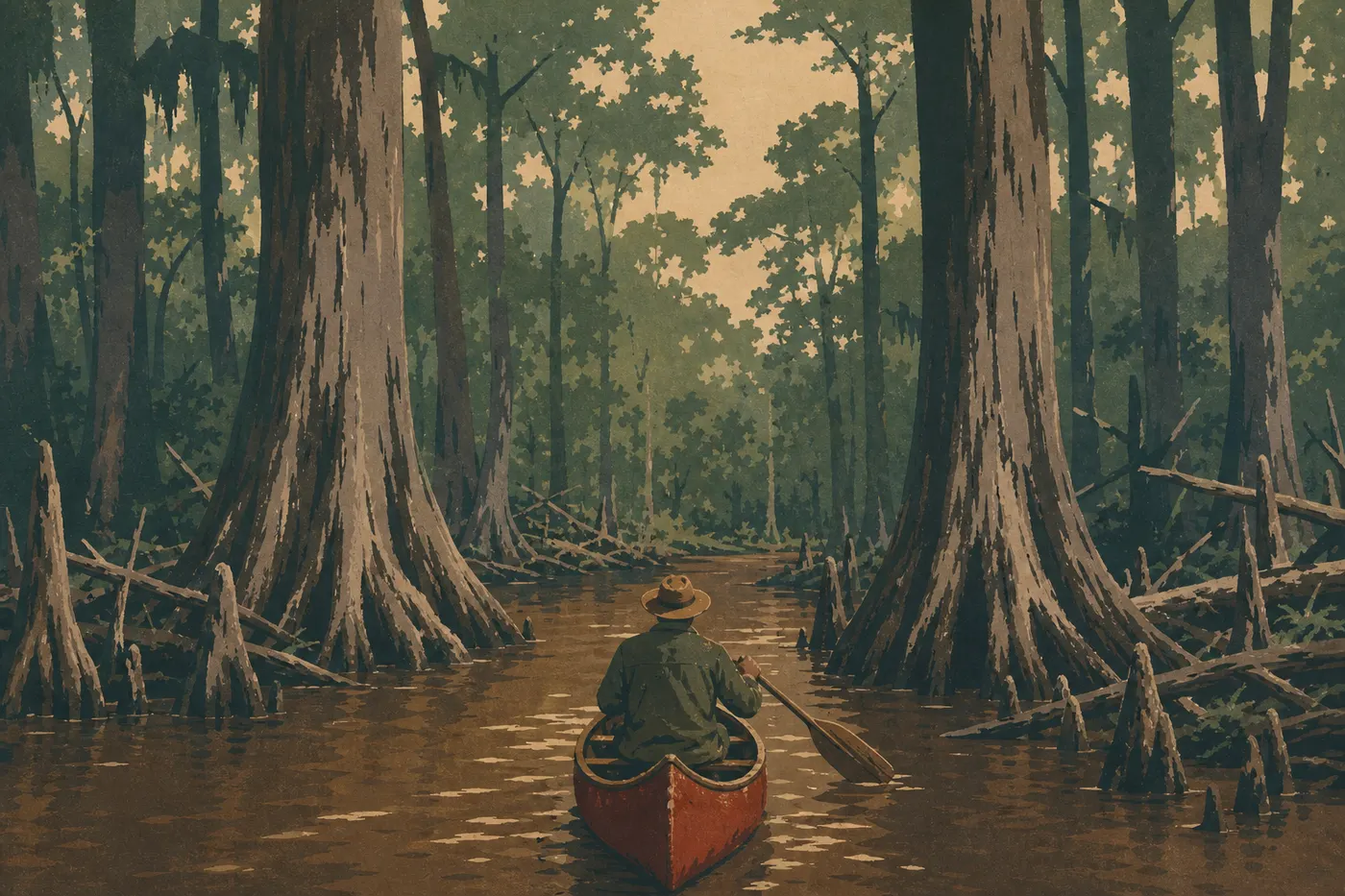
Cedar Creek is the park's canoe and kayak corridor, and one of the most distinctive experiences in the entire national park system. Paddle beneath leafy arches and past roots plunging into tea-colored, tannin-stained water, with only the calls of woodpeckers and barred owls breaking the silence.
There are two launch points. Cedar Creek Landing is inside the park, and a round trip from there takes two to three hours. Bannister Bridge Landing is upstream, outside the park. The route to the Congaree River is more demanding and takes a full day, along with a solid understanding of water levels.
Check three things before you paddle. Find out the flood levels from the visitor center or online, check the weather because summer thunderstorms form quickly, and confirm that equipment is available. The park doesn't rent canoes on-site, but outfitters operate in Columbia. On some weekends, a ranger leads a free guided canoe trip by reservation through the visitor center. It's the best introduction if you don't know the creek.
The Deep Forest and Champion Trees
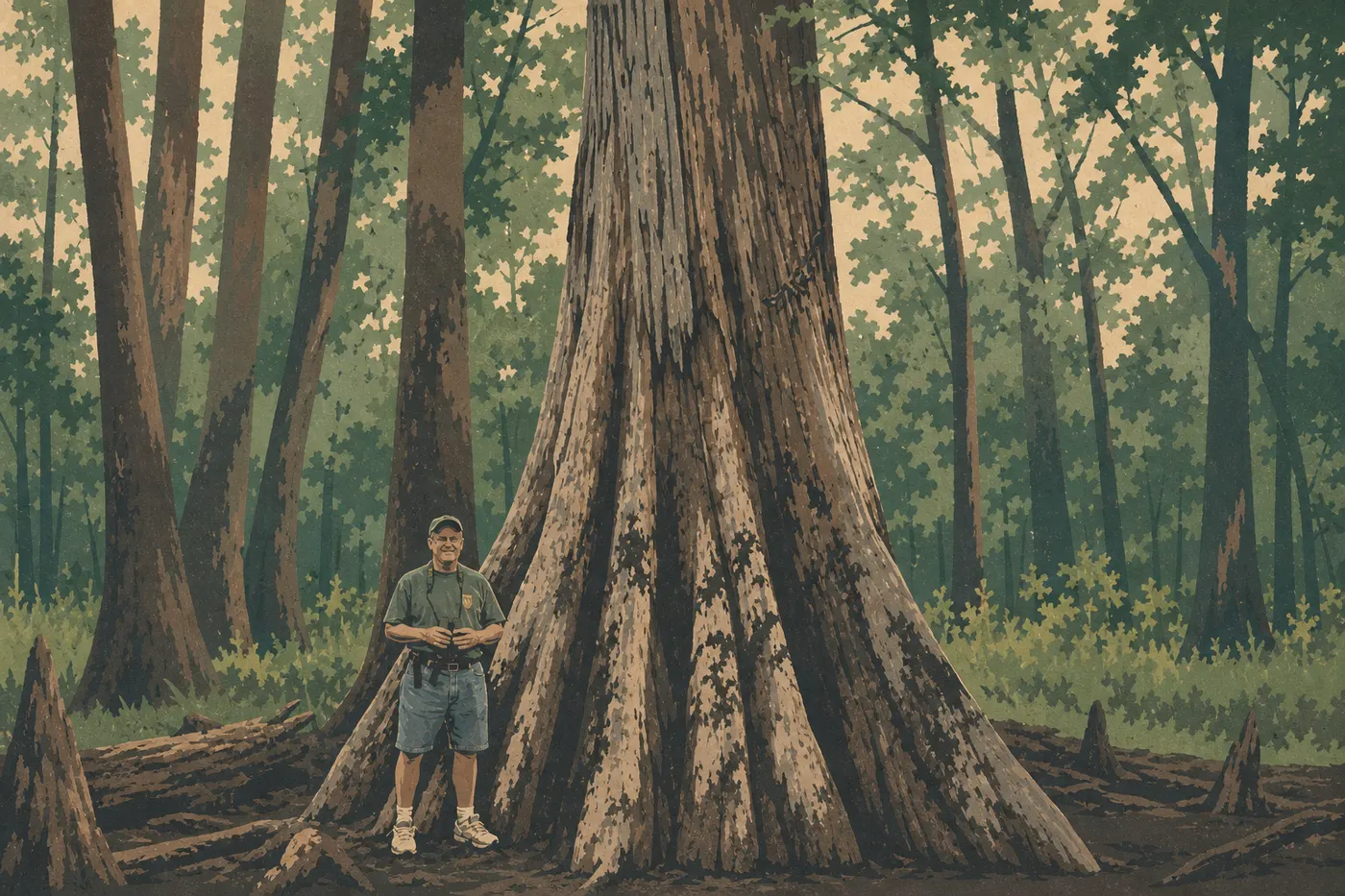
Congaree has an exceptional concentration of national champion trees. These are individual trees recorded as the largest of their species in the United States. The park is home to tulip trees, sweetgums, water tupelos, and laurel oaks, some with trunks rising more than 150 feet.
These giants line the interior trails rather than gathering in one place. The Weston Lake Loop, 4.3 miles and doable in 2.5 hours, follows a quiet pond frequented by otters and deer. The Oakridge Trail, 6.8 miles round-trip, reaches the park's least-visited areas. The River Trail, an 8.7-mile loop, reaches the Congaree River and offers a more open landscape.
Here's a practical tip. Bring lightweight gaiters or waterproof trail shoes. After rain or a recent flood, the forest floor is a mix of wet soil, decomposing leaves, and shallow puddles. It's not difficult, just wet. Let the visitor center know if you're heading out alone on the backcountry trails.
Congaree's Best Hikes
Congaree is a flat-forest park with little noticeable elevation gain. Its trails stand out for their length, wetness, and atmosphere rather than technical difficulty.
These are the trails to prioritize.
The Boardwalk Loop is 2.4 miles, flat, and made of boardwalk. It's the essential walk, accessible to everyone, with a start at the visitor center. The Weston Lake Loop is 4.3 miles over dirt and sometimes wet ground, with beautiful late-afternoon light and frequent otter sightings. The Oakridge Trail is 6.8 miles round-trip and ideal for champion trees and solitude, so bring appropriate footwear. The River Trail is an 8.7-mile loop for experienced hikers who want to reach the Congaree River.
For trail-by-trail descriptions, ground conditions, and GPS landmarks, see every Congaree trail in detail.
Other Activities for Every Type of Visitor
Wildlife Watching
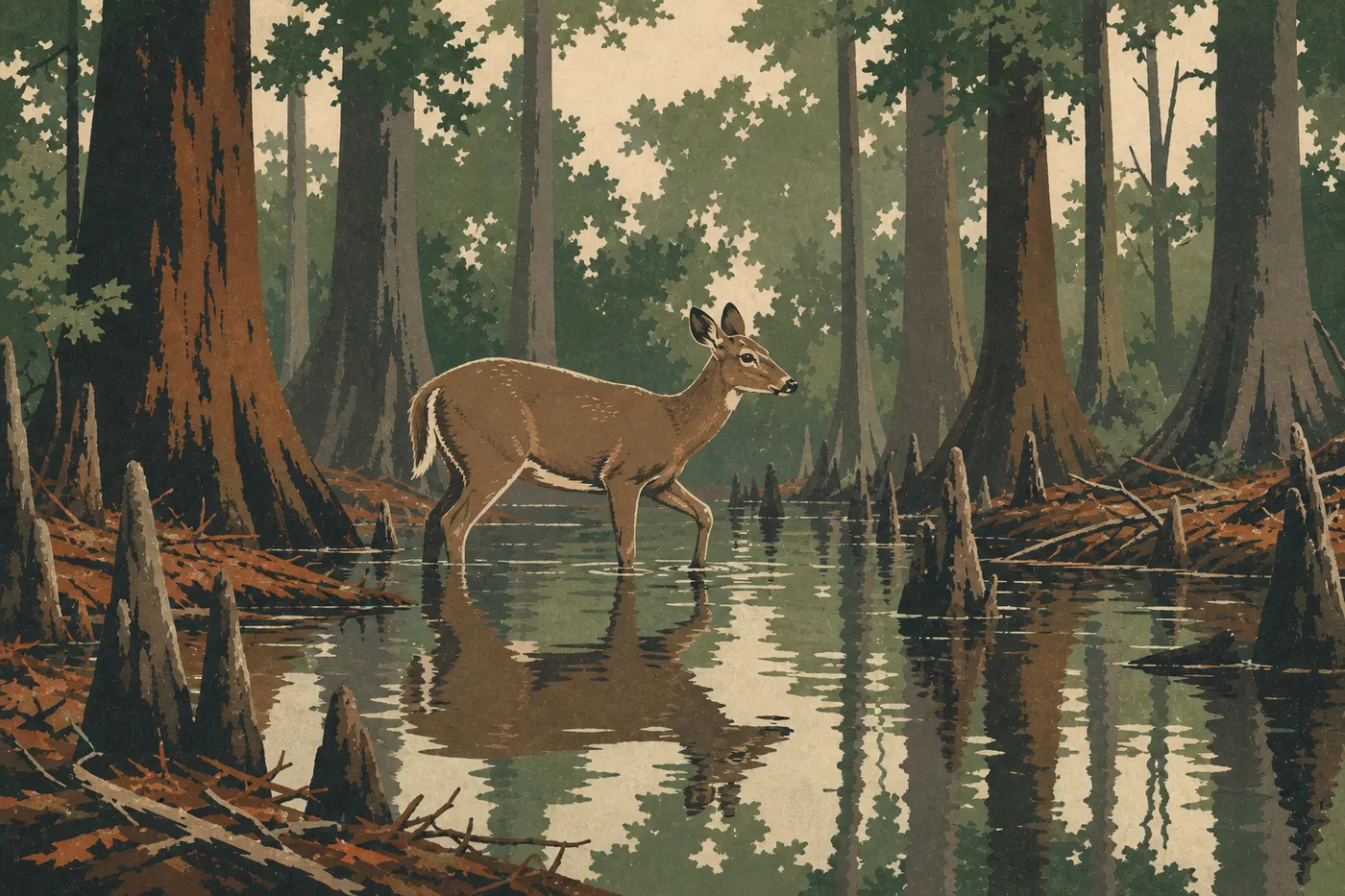
Congaree is an active migration corridor and year-round habitat for diverse wildlife. More than 200 species of breeding or migrating birds have been recorded here, including pileated woodpeckers, glossy ibises, peregrine falcons, and hundreds of waterfowl in flooded areas during winter.
Mammals are present but elusive. White-tailed deer are abundant and relatively unafraid at dusk. River otters frequent Cedar Creek and Weston Lake. Alligators live in the park, mainly in wetlands near the Congaree River and Cedar Creek, especially from spring through fall.
Keep at least 33 feet away from every alligator. Never feed wildlife, and don't approach an animal lying still if you haven't identified it. Water moccasins, also called cottonmouths, are venomous snakes that use the same water edges.
The best viewing windows are dawn and dusk. Bring binoculars and stay on marked trails.
Congaree wildlife by season explains which species to look for, where to find them, and what behaviors to know before entering the park.
Synchronous Fireflies (Seasonal Event)
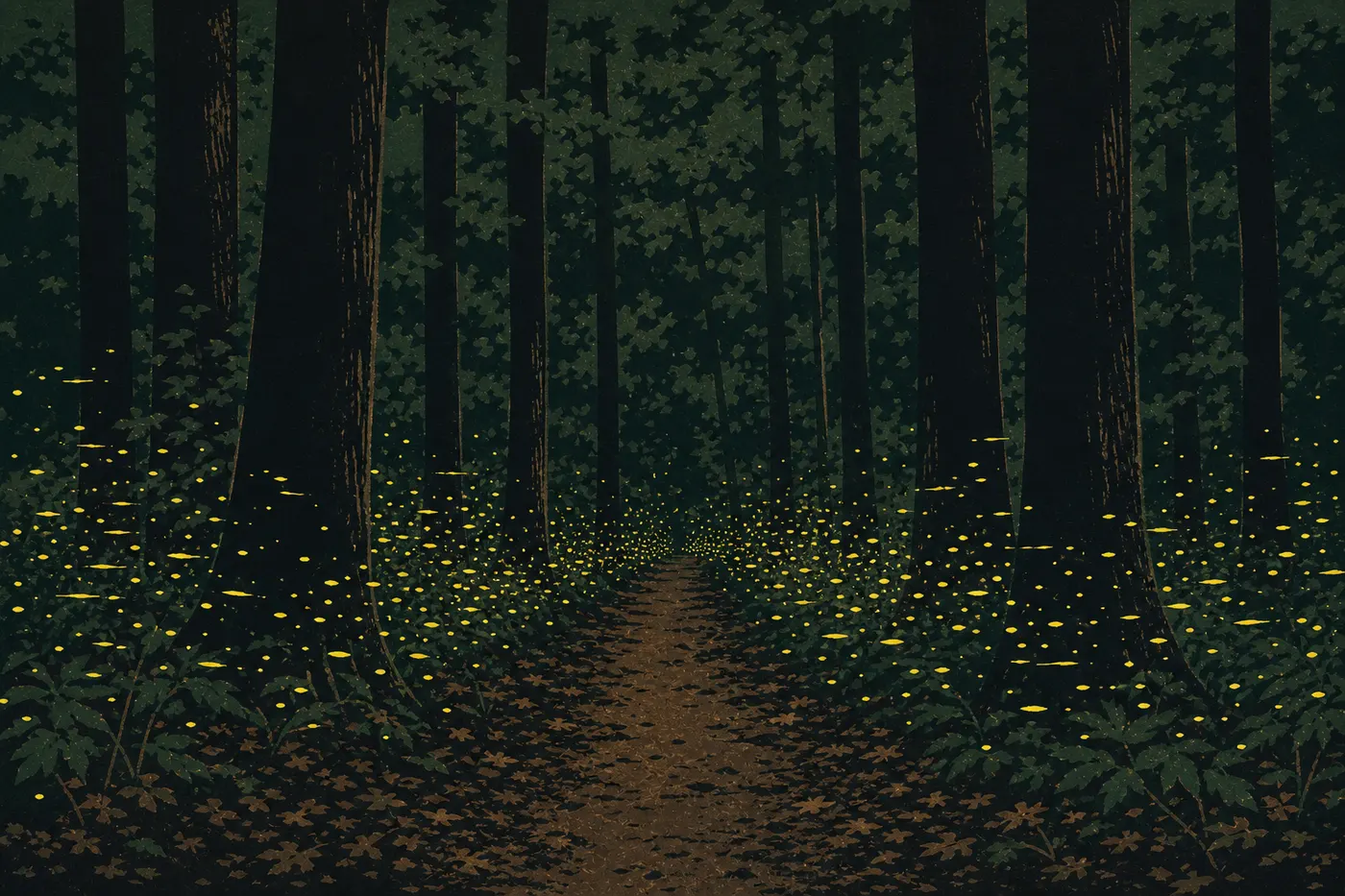
This phenomenon deserves its own paragraph. Every year in late May and early June, thousands of synchronous fireflies, Photinus carolinus, light up the forest at the same time. It's one of the few places in the United States where this spectacle can be seen with such intensity, along with Great Smoky Mountains National Park.
The park holds special evenings during the two- to three-week peak season. Reserve spots in advance through the NPS website. Check the reservation announcements in spring because sessions fill quickly. If you miss the official evenings, the forest remains active after sunset throughout the flight season.
Visiting with Kids
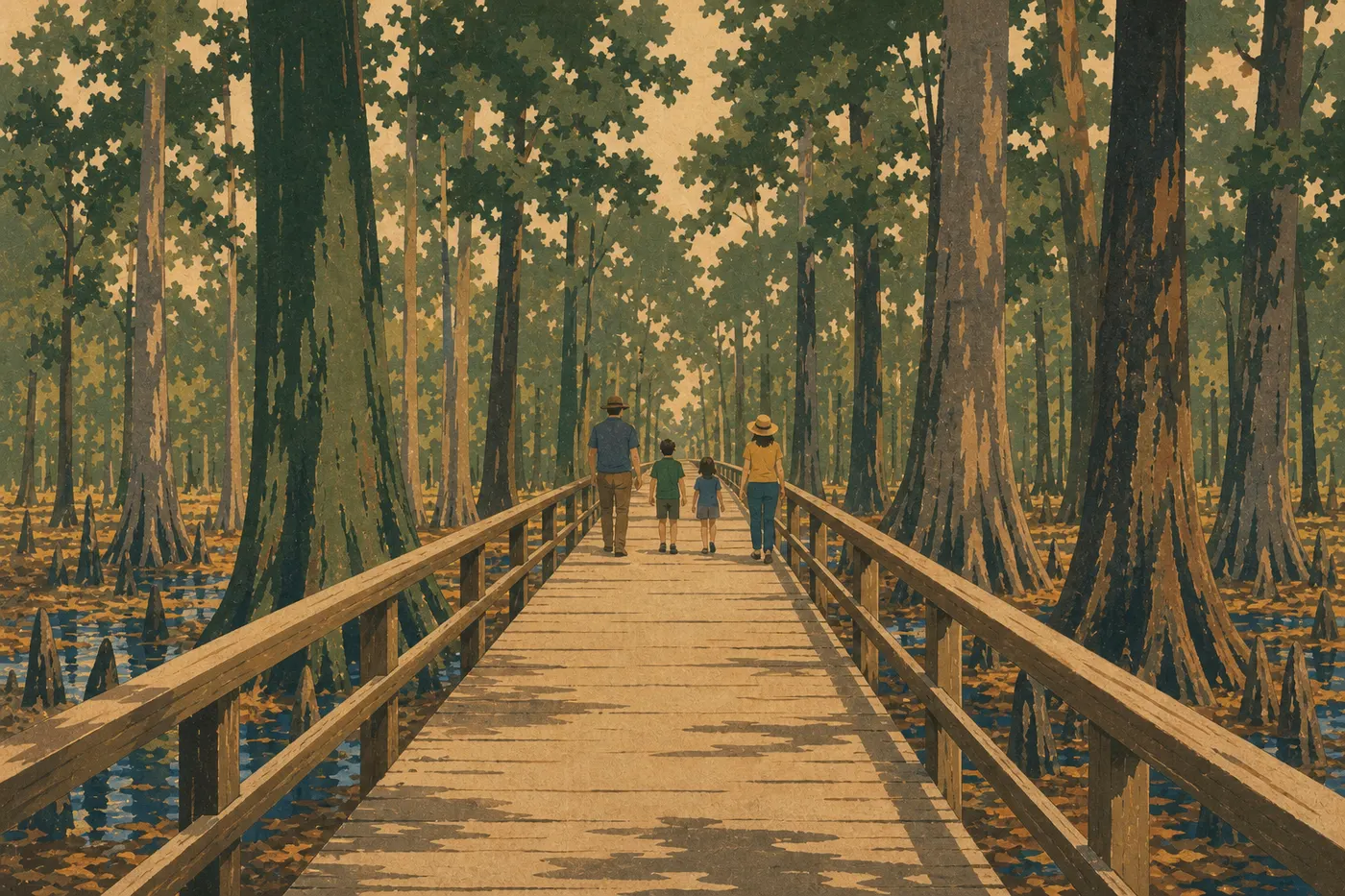
Congaree works well for families with young children. Strollers can use the Boardwalk Loop because the walkway is wide and has no slope for most of its length. Rangers offer Junior Ranger programs for several age groups at the visitor center.
Visible water, easy-to-spot reptiles, and monumental trees provide plenty of wonder for kids under 12. Bring plenty of water, closed-toe shoes, and mosquito protection, especially during the hot season.
Visiting Congaree with kids gathers age-appropriate activities and practical precautions for the season you choose.
Photography and Night Skies
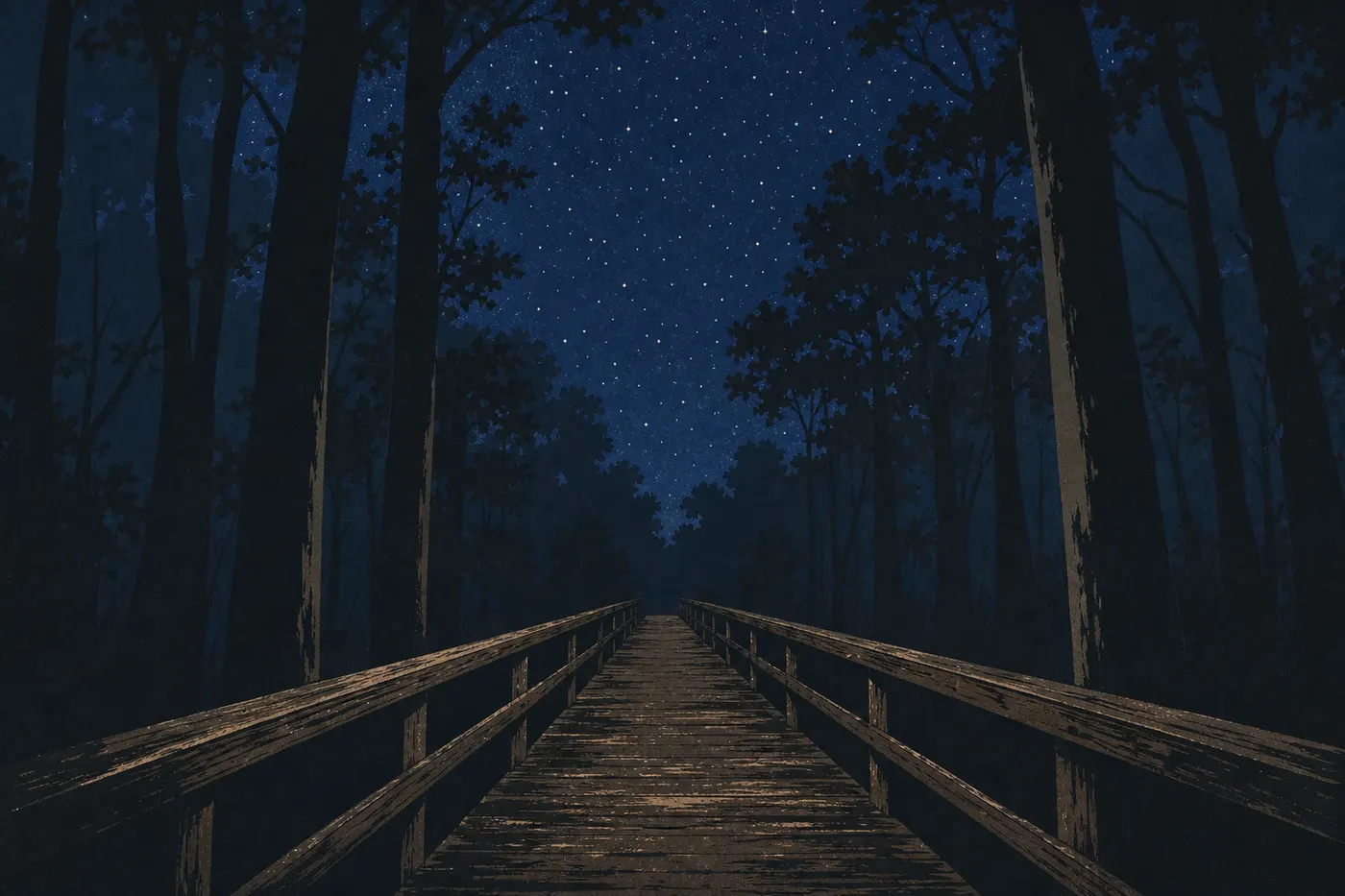
Congaree is recognized as a low-light-pollution area in South Carolina. Clear nights offer remarkable stargazing for the region, especially in fall, when the air is stable and the foliage is colorful.
During the day, filtered light beneath the forest canopy, cypress roots reflected in blackwater, and morning mist make the bottomland forest a rich photographic subject. Bring a tripod for long exposures and arrive at sunrise for the best conditions.
Fishing
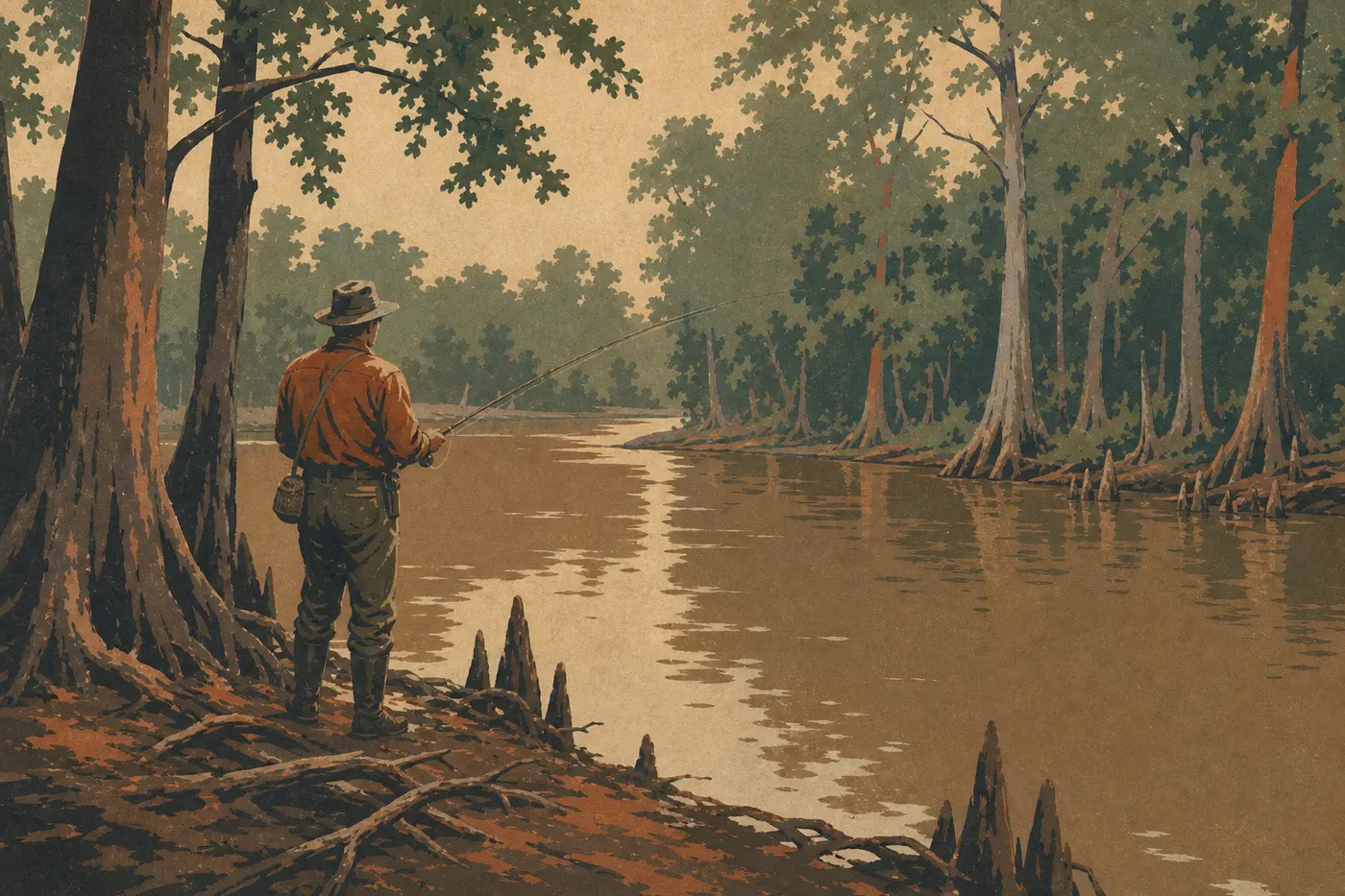
Fishing is allowed in park waterways, with a South Carolina state license required. Anglers mainly catch bream, striped bass, and perch in Cedar Creek and the Congaree River. Ask at the visitor center about permitted areas and the rules in effect during your visit.
What to Do Around Congaree
Congaree is relatively isolated from other national parks, but the surrounding region offers several ways to build a longer trip.
Columbia, 30 minutes north, is South Carolina's capital. It offers natural history and art museums, good dining, and a convenient base for the park. Canoe outfitters and the widest range of lodging options are located there.
To the northwest, Great Smoky Mountains National Park is about a 4.5-hour drive away. The two parks make sense on an East Coast road trip: bottomland forest in the south and Appalachian mountains in the north, with two radically different settings.
To the northeast, Shenandoah National Park, about 7 hours away, and the Blue Ridge Parkway complete a natural loop along the eastern edge of the Appalachians.
For a multi-park itinerary, the Region and Road Trip sections provide guidance based on the length of your stay.
For lodging in and around the park, see the Congaree lodging guide, which covers the park campground, Columbia motels, and RV options.
The Essentials: What to See First in Congaree
If you have only one day, build your visit around three things.
Start with the Boardwalk Loop, preferably early in the morning before the crowds and heat arrive. The light is better, wildlife is more active, and the blackwater on the forest floor takes on a distinctive color at dawn.
Next, get out on Cedar Creek, preferably by canoe. If you don't have your own gear, ask about the park's free guided trips or arrange a rental in Columbia the day before.
Finish with a backcountry trail, even a short one. The beginning of the Weston Lake Loop is enough to leave the developed area and enter the real deep forest, away from boardwalk noise.
Is Congaree worth the trip? Yes, especially for travelers who have had their fill of Western parks and want something different. There are no cliffs or geysers here, but there is a living, wet forest full of animal sounds, free to enter and still lightly visited. This is a park that rewards taking your time.
For an overview of the park from every angle, see the Congaree guide.
Frequently Asked Questions
How much time should you spend in Congaree?
Plan on half a day for the Boardwalk Loop and visitor center, a full day if you want to add a long trail or canoe trip, and two days if you want to camp and explore the deep forest. Since the park is compact, it doesn't require several days of intensive hiking.
Are there alligators in Congaree National Park?
Yes, Congaree does have alligators, mainly in wetlands near the Congaree River and Cedar Creek, especially from spring through fall. Stay at least 33 feet from any alligator you see, and never approach one lying still on the bank.
Is Congaree worth visiting?
Congaree is well worth visiting if you're looking for an old-growth bottomland forest away from the usual tourist routes. The park is free, less crowded than Western parks, and offers an authentic nature experience among elevated boardwalks, canoe routes through blackwater, and champion trees.
What is there to do and see in Congaree?
The main activities in Congaree are hiking the Boardwalk Loop, which is 2.4 miles and accessible to everyone, canoeing and kayaking on Cedar Creek, watching wildlife such as birds, reptiles, and mammals, attending nighttime synchronous firefly events in May and June, and hiking the deep forest trails on the Weston Lake Loop or Oakridge Trail.
Can you swim in Congaree?
Swimming isn't recommended in the park's waterways because of unpredictable currents during floods, submerged logs, alligators, and water moccasins, which are venomous snakes. Rangers strongly advise against swimming in Cedar Creek or the Congaree River.
What is the best season to visit Congaree?
Spring, from March through April, and fall, from October through November, offer the best conditions. Expect moderate temperatures, active wildlife, and fewer mosquitoes than in summer. May and June add the synchronous firefly spectacle. Summer is hot and humid, with heavy insect activity. For a month-by-month guide, see When to Visit Congaree.