
Wildlife at Chiricahua: What to See and Where to Find It
Chiricahua is a "sky island," a cool, forested mountain range rising above the dry lowlands of southeastern Arizona. The Rocky Mountains, the Sierra Madre, the Sonoran Desert and the Chihuahuan Desert all meet here, and that mosaic of habitats explains the park's variety of species.
Five species set the tone: the Coues deer, the white-nosed coati, the collared peccary, the acorn woodpecker and the Mexican jay. Coues deer are commonly reported along the scenic drive and at Silver Spur Meadow. To fit these sightings into a full day, see the Chiricahua guide.
The Signature Animals of Chiricahua
The Coues Deer
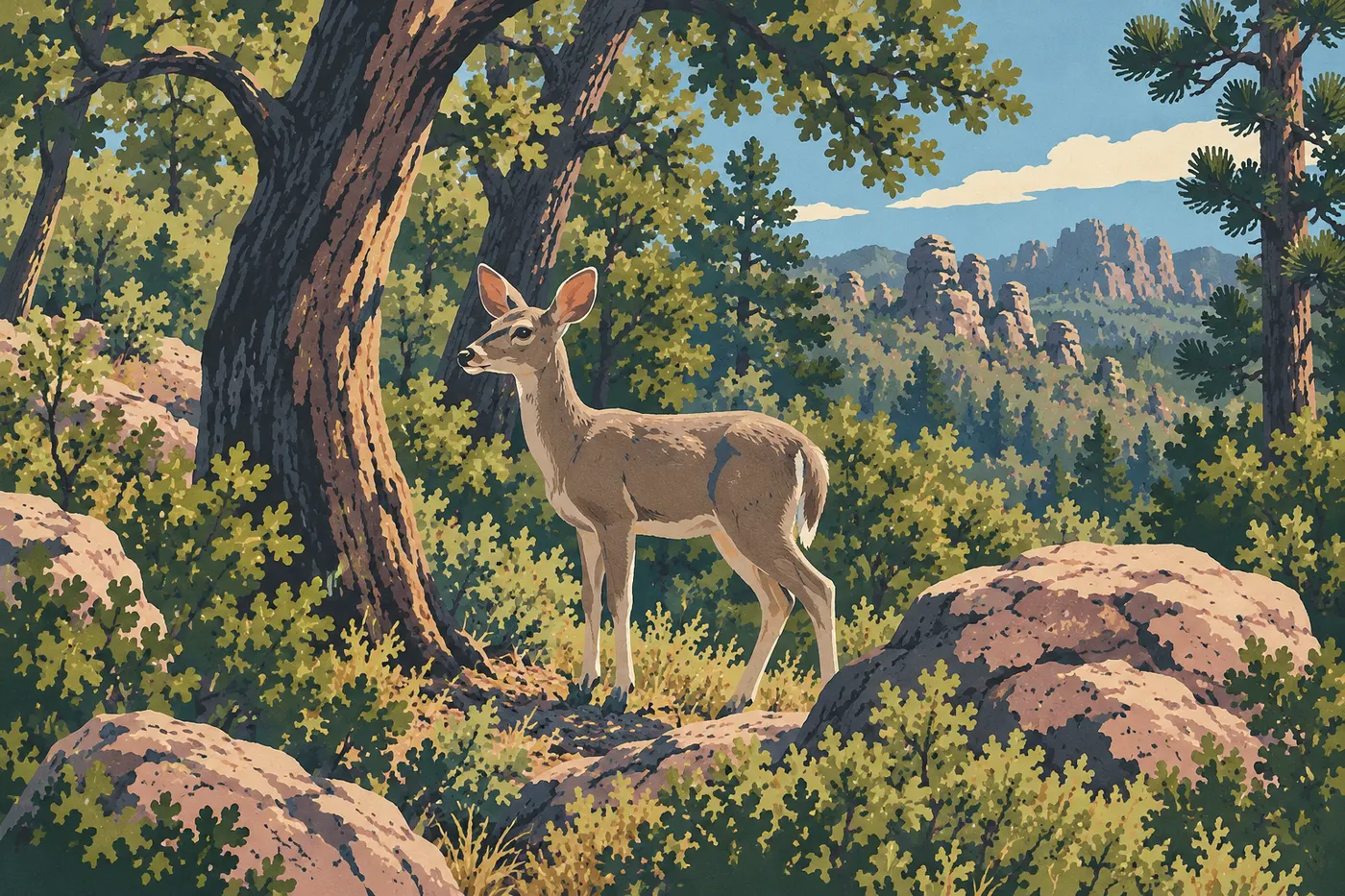
The Coues deer is a small regional form of the white-tailed deer, noticeably smaller than its eastern cousins. You can spot one by its tail, which it raises like a white flag when it bolts. The edges of the scenic drive and Silver Spur Meadow are its usual haunts.
It sometimes crosses the road without warning. Slow down, don't block the road for a photo, and let it pass. There's no set time to see one. You either run into a deer or you don't, depending on the day.
The White-Nosed Coati
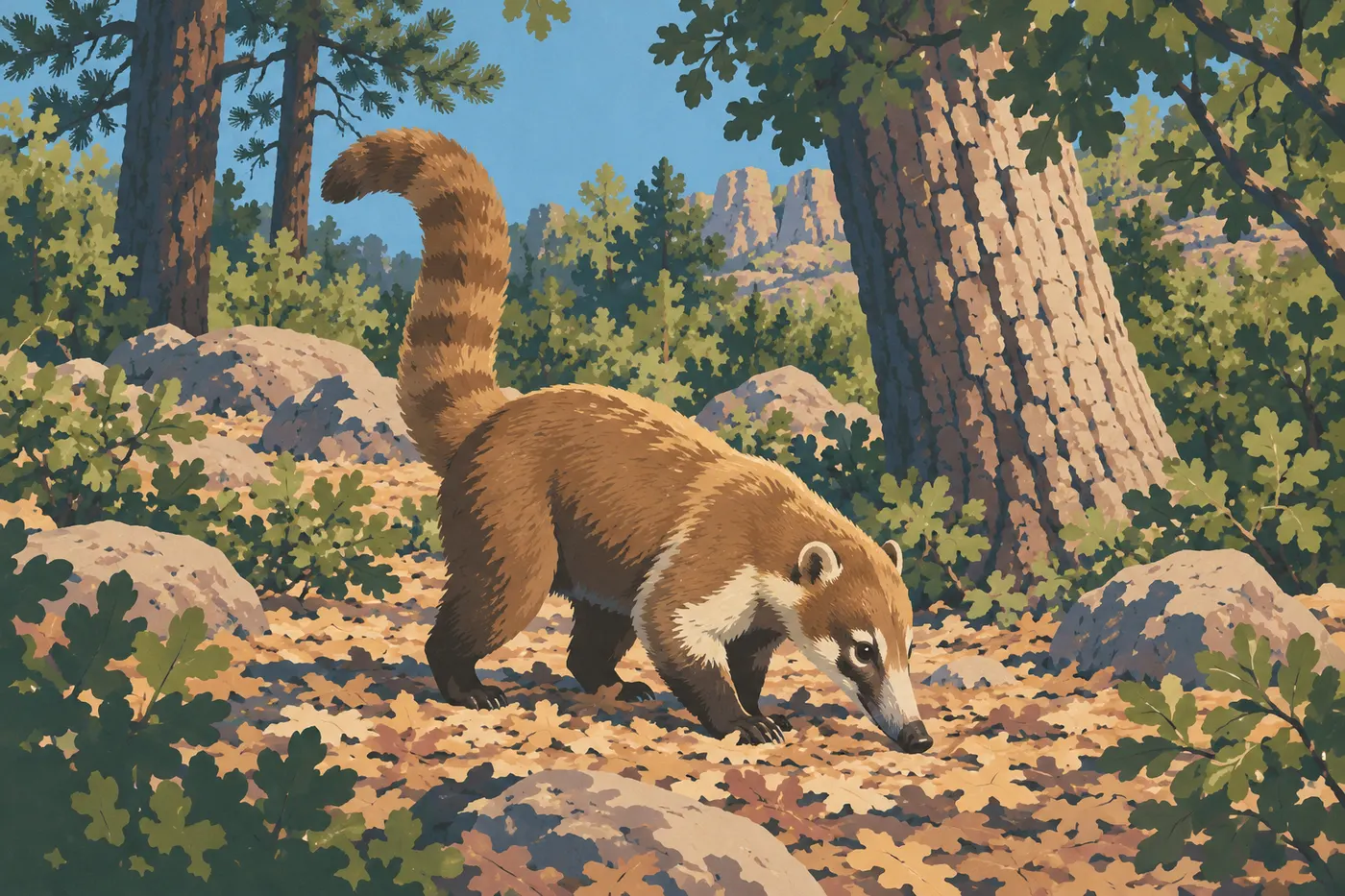
The white-nosed coati is a relative of the raccoon. It has a long, mobile snout and a long ringed tail that it often holds upright. Females and young live in groups, while adult males tend to be solitary.
Contrary to popular belief, it's active during the day. Groups have been reported at lower elevations, around Silver Spur Meadow and Bonita Canyon, in fall and winter. Take the chance if it comes, but don't count on it.
The Collared Peccary (Javelina)
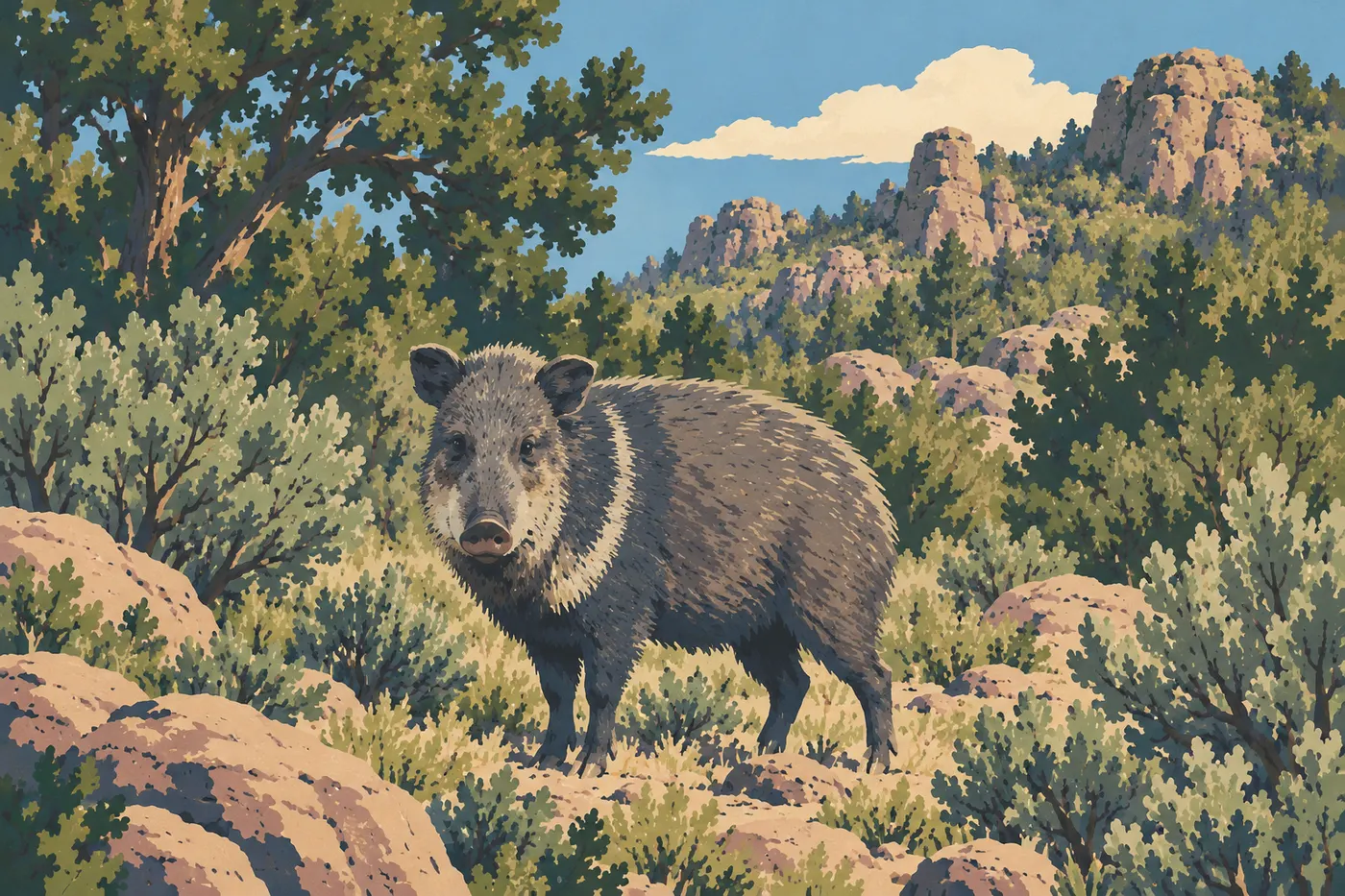
The collared peccary, or javelina, frequents the park's lower elevations. It looks like a small wild boar but belongs to a separate family, and a pale band around the neck gives it its name.
It's a social animal that travels in groups. Don't approach a herd, especially one with young. If you have a dog, keep it on a short leash and don't let it interact with the animals.
The Acorn Woodpecker and the White-Breasted Nuthatch
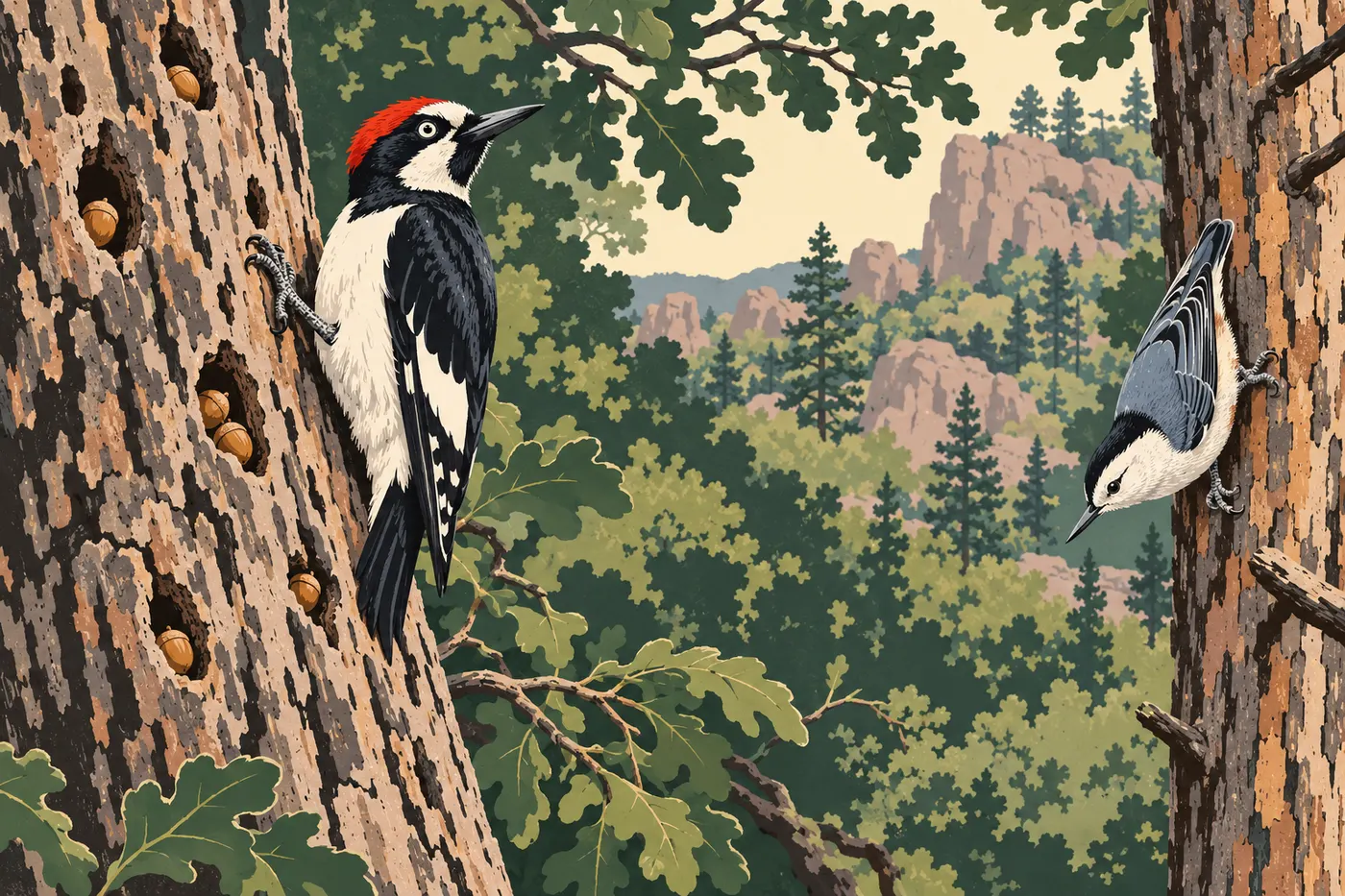
The acorn woodpecker wears a real clown mask in black, white and red, and it's easy to identify even if you're new to birding. It favors woodlands along streams, notably at Silver Spur Meadow and in the lower part of Rhyolite Canyon (Lower Rhyolite).
On the same trunks, look for the white-breasted nuthatch. It climbs down trees headfirst, which woodpeckers don't do, and it stays in the park year-round.
The Mexican Jay
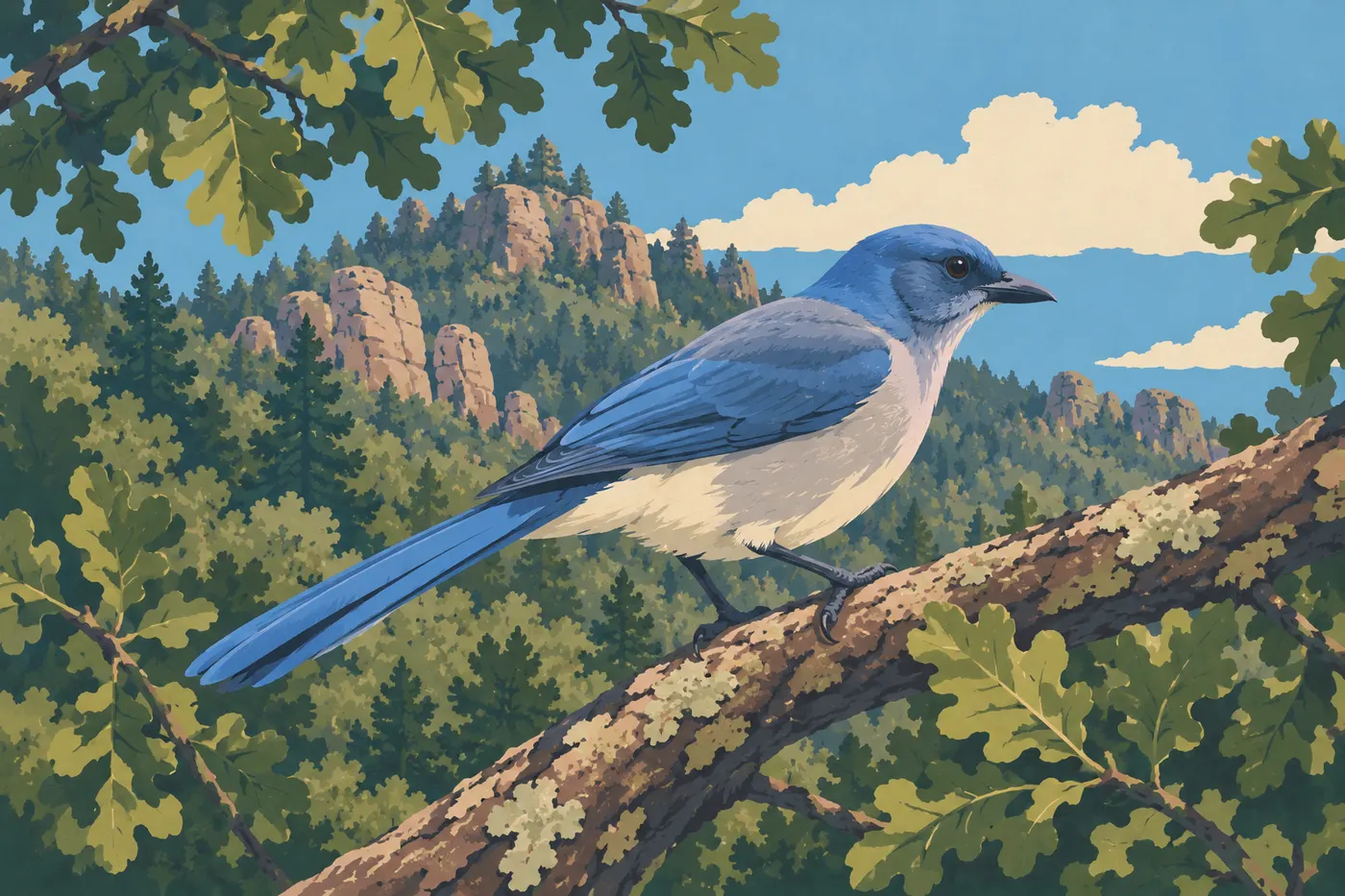
The Mexican jay, gray-blue and noisy, is a year-round resident. It lives in small flocks and quickly gets used to people, to the point of inspecting parking lots and picnic tables. That familiarity is a trap. Don't give it anything, not even a crumb.
The Canyon Wren
You'll hear the canyon wren well before you see it. Its song, a descending cascade of notes, echoes among the rhyolite boulders, but the bird is hard to pick out against the rocks. Listen, scan with binoculars, and don't leave the trail to chase it.
The Common Raven and the Turkey Vulture
Common ravens patrol around Massai Point and the rocky habitat at the top of the road. Turkey vultures are mostly here in summer, and they spend the night on the cliffs overlooking the Bonita Canyon amphitheater. Watch from the path, and don't approach nests or roosts.
Telling Similar Species Apart
Raven or turkey vulture? The raven is all black, with a wedge-shaped tail and a flapping flight broken up by glides. The vulture has a small, bare red head, holds its wings in a slight V, and rocks from side to side as it soars.
Peccary or wild boar? A dark group with a pale band around the neck is a herd of collared peccaries, not boars.
Bobcat or mountain lion? The bobcat has a short tail that looks cut off. The mountain lion has a long tail that hangs nearly to the ground.
Where to See Wildlife at Chiricahua
The park climbs to 7,310 feet at the top of Sugarloaf Mountain. That elevation creates a gradient of habitats. The terrain is more open near the entrance and more wooded around the visitor center, and conifers get more numerous as you climb. The transition is gradual, so don't expect the scenery to change at every bend.
Bonita Creek and Bonita Canyon make a good birding area. The streamside vegetation attracts songbirds and woodpeckers, and coatis pass through in the cold season.
Silver Spur Meadow is where to look for Coues deer and coatis among the mammals, and for acorn woodpeckers among the birds.
Lower Rhyolite is another area mentioned for woodpeckers.
Massai Point, at the end of the road, suits ravens and birds of rocky habitats. The view of the rock columns is a bonus.
The scenic drive is about 8 miles and is an out-and-back. Drive slowly, since that's where many deer show up. To choose a trail that works for wildlife watching, see the hike selection, and use the park map to place these areas.
One useful note. Chiricahua Peak and part of the high forest in the Chiricahua Mountains lie outside the park. The elegant trogon, famous among birders in the region, is associated with other canyons in the range, and the feeders at Portal and Cave Creek are outside the national park. There's no way to promise you'll see that trogon at Chiricahua, so don't build your visit around it.
When to Look
Jays, nuthatches, woodpeckers and ravens are here year-round. Other birds pass through during migration, while summer visitors such as turkey vultures and winter residents add to the mix. There's no single best month for every species.
For mammals, dawn and dusk are the best windows, especially for rabbits and gray fox. The coati is active by day, so there's no need to wait for it with a headlamp. Animals are especially active at night, so drive and walk carefully.
The trails remain accessible at night for stargazing, since the park has been recognized as an International Dark Sky Park since 2021. Bring a light so you can see where you're stepping.
The monsoon generally runs from June 15 to September 30, and thunderstorms can cut outings short. To pick your timing, see when to go to Chiricahua and the weather basics.
Bears, Mountain Lions and Bobcats Are Here, but Rarely Seen
Black bears, mountain lions and bobcats live in the Chiricahua Mountains. They aren't realistic sightings to aim for. Knowing they're around doesn't mean you'll see one, and an encounter is rare.
Jaguars and ocelots aren't animals to look for here. Older reports concern the range as a whole, not animals you can watch from the park's trails.
Watching Wildlife Safely
Bring binoculars. They're the best way to see animals up close without approaching. If an animal changes its behavior because of you (it stops eating, freezes, moves away), you're too close. Stay as far from wild animals as you can, since they can carry diseases such as rabies.
Don't feed anything. Not jays, not coatis, not deer. Don't set up a feeder or lure animals with food. At the campground, store food and trash in the containers provided, never on the table.
Keep kids close. The Chiricahua with kids guide explains how to plan a visit with little ones.
Keep your dog on a short leash. Dogs are prohibited on the upper-elevation trails, even if carried. They're allowed on leash on the Bonita Creek Loop and at Silver Spur Meadow, among other places, and you should keep them away from all wildlife.
If you see a bear or mountain lion. Don't run. Stay calm, make yourself look bigger, and back away slowly while keeping the animal in sight.
Rattlesnakes. Rattlesnakes are protected in the park and are most active from April to October. Watch where you put your hands and feet, especially around rocks. If you see one, back away slowly and don't touch it. If someone is bitten, call for help right away and don't try any improvised treatment. Cell service is spotty in the park, so plan your route accordingly.
Weather. Summer brings heat, thunderstorms and flash floods, and winter brings ice, so no season is free of risk. There's no water source at the Echo Canyon parking lot, so bring your own supply. To plan your day around these sightings, the park highlights give you the big picture.
Frequently Asked Questions
Where can you see Coues deer at Chiricahua?
Along the scenic drive and at Silver Spur Meadow, where they're commonly reported. Drive slowly, but no time of day guarantees a sighting.
Can you see coatis during the day at Chiricahua?
Yes, the coati is active by day. Groups have been reported at lower elevations, around Silver Spur Meadow and Bonita Canyon, in fall and winter, though there's no guarantee you'll run into one.
Can you see the elegant trogon at Chiricahua?
Don't count on it. This bird is associated with other canyons in the range, and the feeders at Portal and Cave Creek, which are often mentioned, are outside the park.
What should you do if you encounter a bear or mountain lion?
Don't run, and stay calm. Make yourself look bigger, then back away slowly while keeping the animal in sight.
Can you bring your dog wildlife watching?
Only in permitted areas and on a short leash, such as the Bonita Creek Loop, Silver Spur Meadow or the parking lots. The upper-elevation trails are off-limits to dogs, even if carried.