
Best Time to Visit Chiricahua: Weather by Season
We recommend spring (March through May) and October. Days are mild for hiking among the rhyolite columns, and nights stay cool. That's no guarantee, though. A gust of wind, an isolated storm or a freezing morning can show up at any time. Summer brings heat, then the monsoon, with thunderstorms and flash flood risk. Winter is possible, but freezing temperatures, snow and ice can hit the upper road.
Chiricahua is a "sky island" in southeastern Arizona, not a uniform desert. The elevation climbs from 5,125 feet at the entrance to 7,310 feet at Sugarloaf Mountain. The higher ground is cooler and windier than the lower park, and that matters as much as the month you pick.
A Few Climate Benchmarks for Choosing Your Dates
The National Park Service station near the visitor center (5,400 feet) provides rounded historical averages. The "highs" and "lows" below are averages of each day's highest and lowest temperatures for the month. They aren't guaranteed temperatures, and they're certainly not a forecast. They don't apply to the summit or to Tucson.
- January: average high of 55°F, average low of 30°F.
- April: average high of 72°F, average low of 39°F, with about 0.5 inch of rain for the month.
- July: average high of 90°F, average low of 61°F, with about 4 inches of rain (about 4.2 inches in August).
- October: average high of 75°F, average low of 46°F.
These averages can't tell you what the day you're there will be like. For the month-by-month detail, clothing and weather risks, see our Chiricahua weather guide.
Chiricahua Season by Season
Winter (December through February)
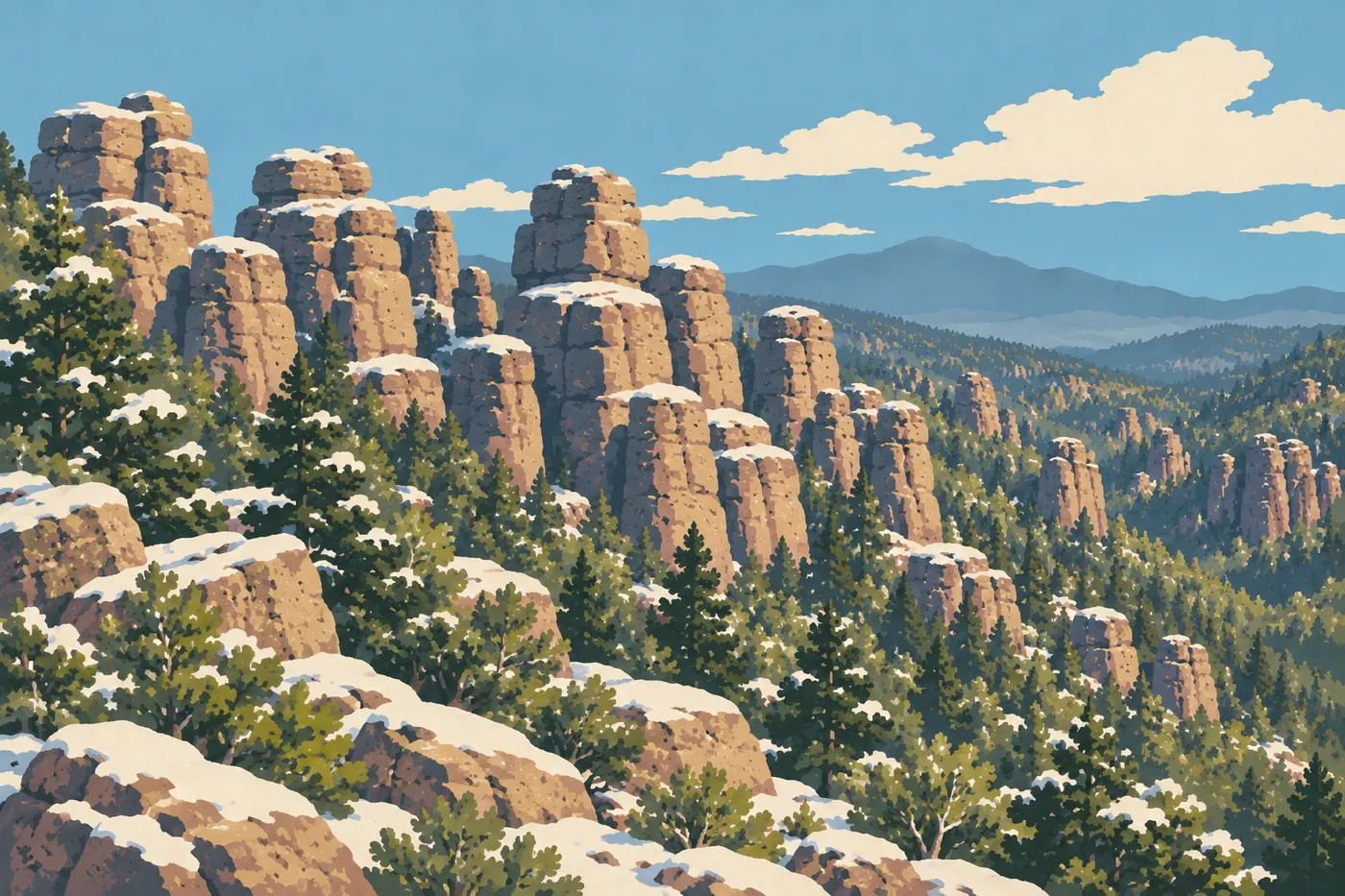
Average highs run around 55 to 59°F, and lows drop below freezing or come close. Winter weather can show up from November through April, and you should be most alert from January through March. Snow and ice can affect the upper road even when the main approach roads are clear.
No seasonal closure covers the whole park. Bad weather is what occasionally cuts off access. In the shade of the columns, ice makes rocky sections slippery, so in winter stick to short loops and turn around as soon as the ground starts to glaze over. Sleeping at the campground means gear rated for below-freezing nights, with no showers and no hookups.
Spring (March through May)
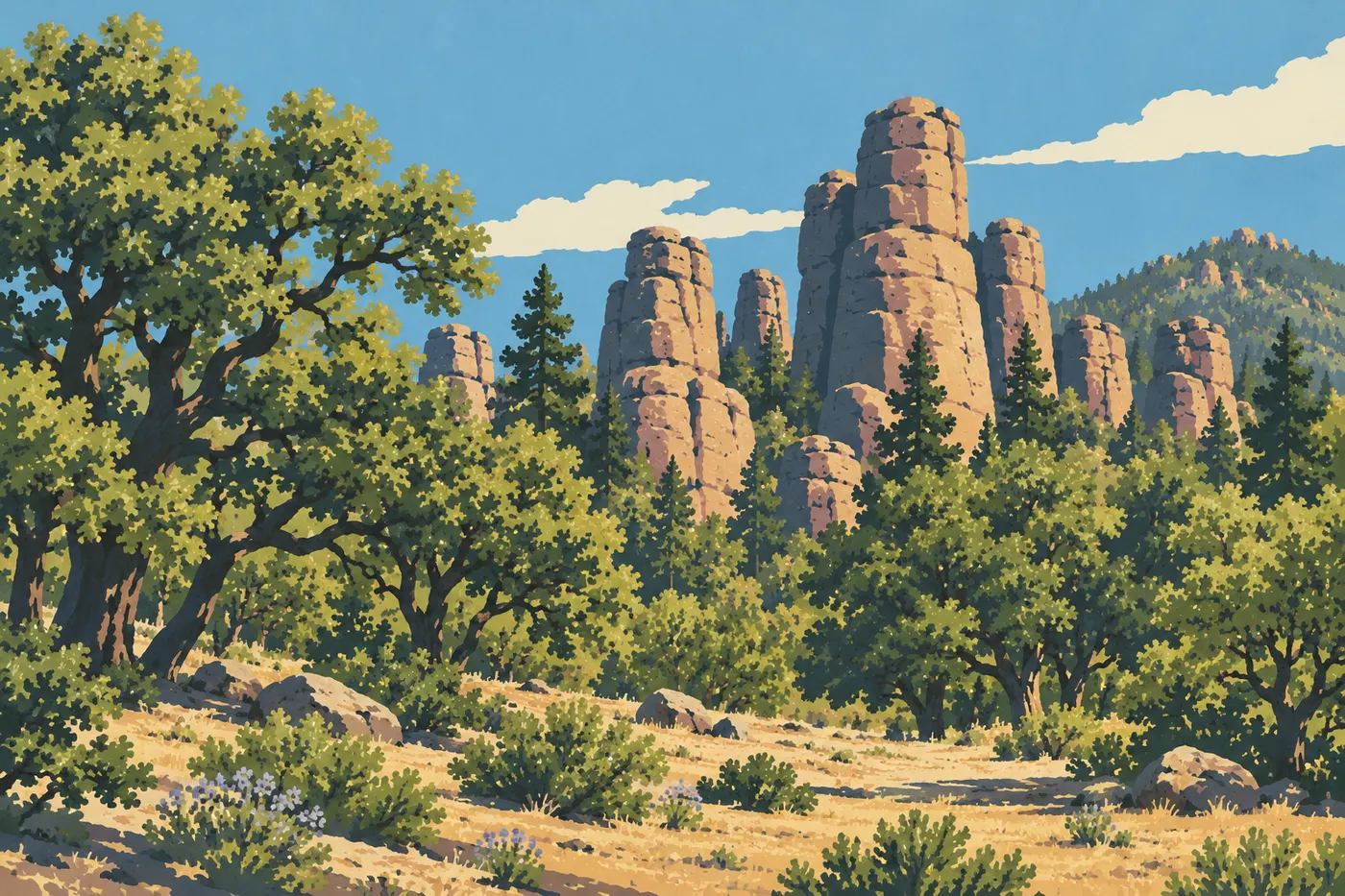
This is the season we recommend for hiking. Average highs climb from 64°F in March to 81°F in May, and rain is scarce. Nights stay cool, with a frost risk in March.
April is a good benchmark, with a 72°F average high and a 39°F average low. Even so, it promises neither dry roads nor a storm-free sky. In May the heat builds, and on the ridges water and sun protection already matter. The downside of spring is tighter parking, as explained below.
Summer (June through September)
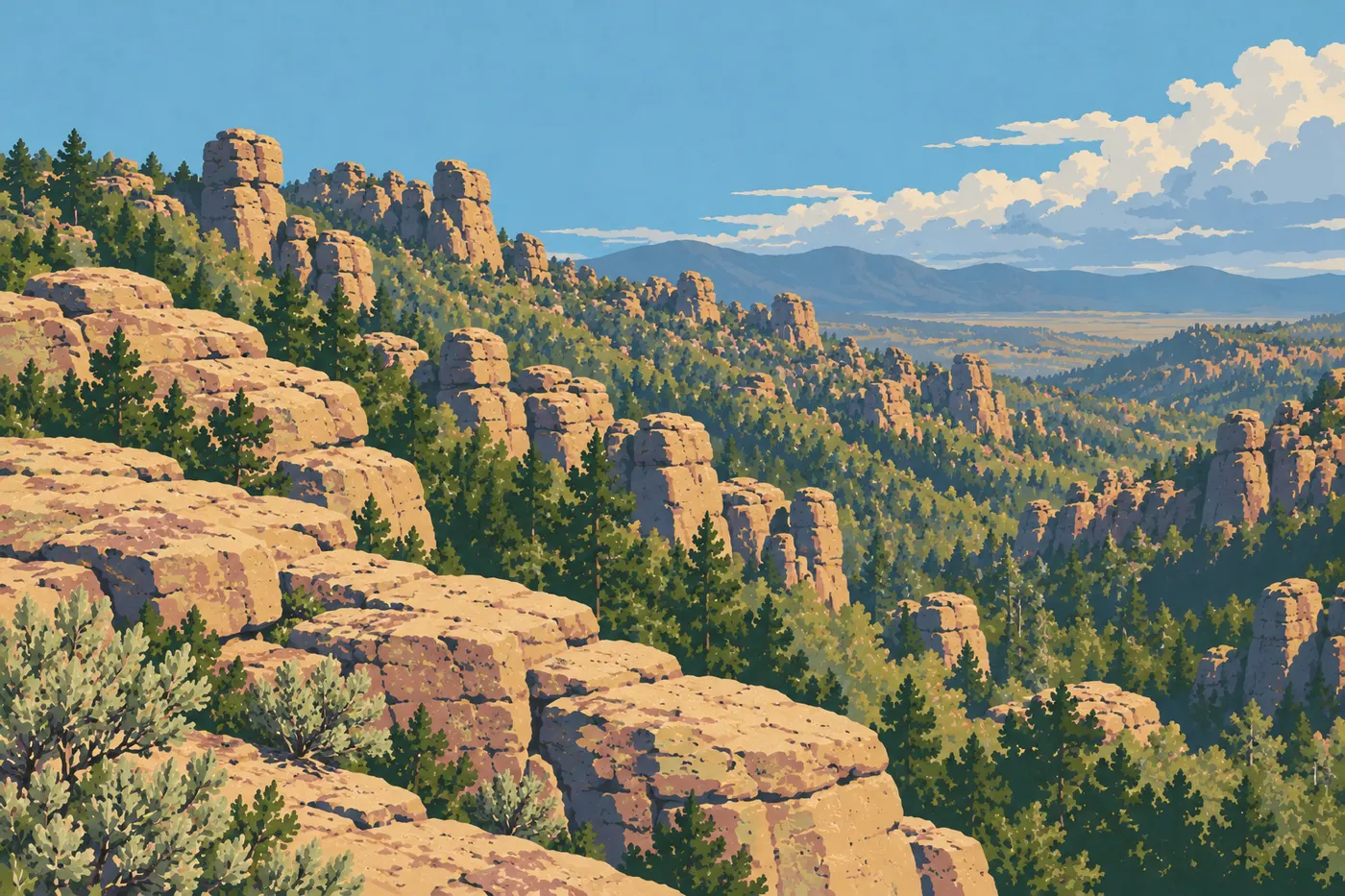
Elevation softens the summer without removing its risks. In June and July the average high reaches 90°F near the visitor center, and the sun beats down on the higher ground. Dehydration is a real threat, even when the air feels cooler than it does in the lowlands.
The official monsoon season runs from June 15 to September 30. Those dates frame a risk period, not the exact day the rains start or stop. The monsoon brings violent thunderstorms, lightning and flash floods. AZ-186 can flood temporarily, and so can some stretches of AZ-181. Never cross a road covered with water. Campsites may close because of flood risk.
In summer, start early, pick a reasonable distance and plan a fallback. A calm morning doesn't mean the afternoon will be storm-free. If storm clouds start building, leave Sugarloaf and Massai Point, both exposed to lightning.
Fall (October through November)
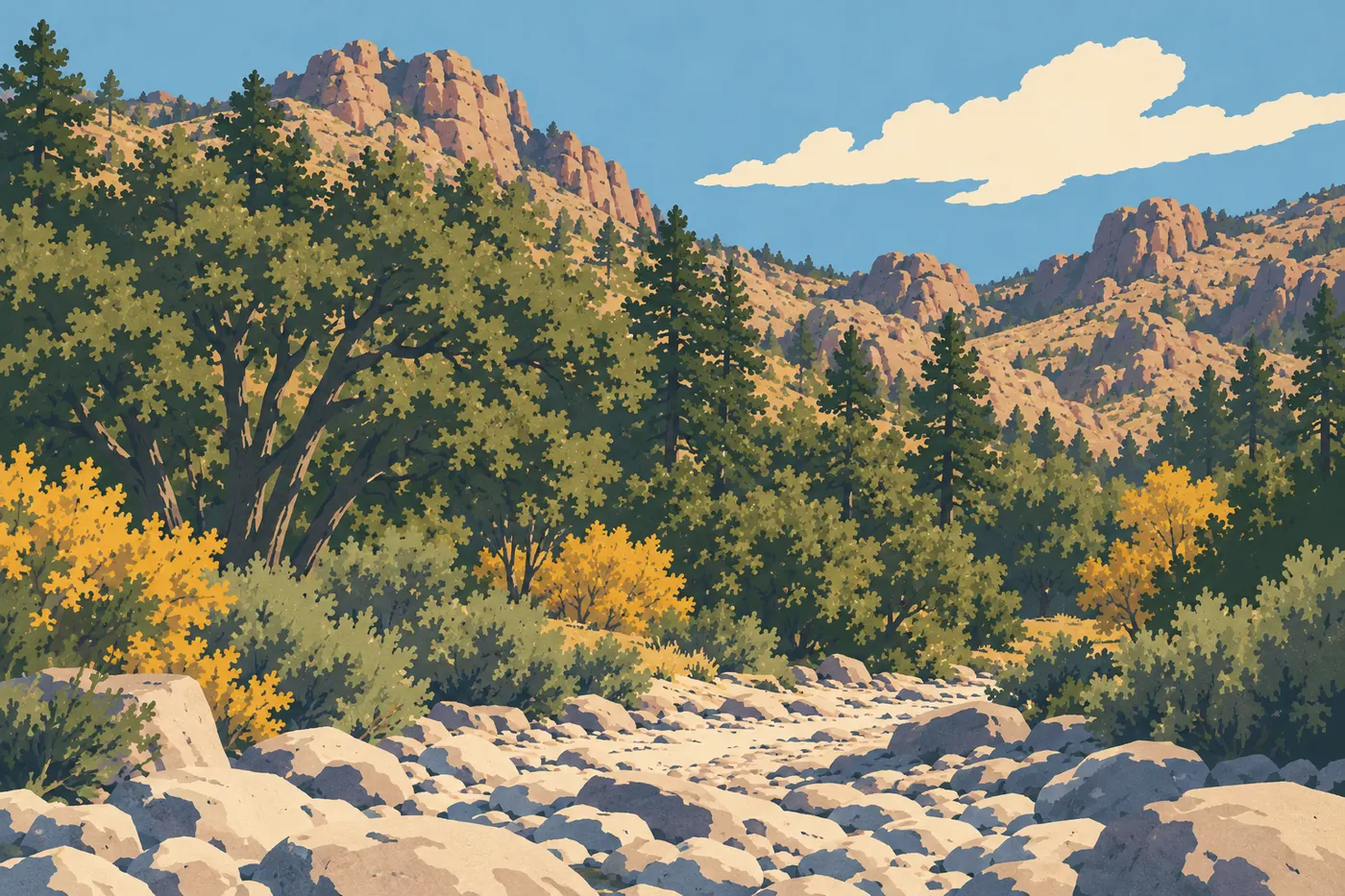
October is our second recommended window. With an average high of 75°F and an average low of 46°F, you can hike all day without the summer heat. It also falls outside the official monsoon season, which September doesn't. So September isn't a dry month. It's a fading summer, with storms still possible.
November drops to an average high of 64°F and an average low of 36°F. Days get shorter, and the first winter weather can appear. It's still a good month for hiking in dry conditions, as long as you stay flexible with your plans.
Parking and Weekends: Where the Real Friction Is
Parking is tighter in spring, especially from February through April. The Echo Canyon parking lot is the first to fill, and weekends and holidays make it worse.
So aim for a weekday, arrive early and keep a fallback in mind. Starting at Massai Point and the lower park gives a spot at Echo Canyon time to open up. If you only have the weekend, plan on a visit in two parts rather than a fixed time you have to hit. How the parking lots and the upper road work is covered on our page about getting around the park.
Only one road leads to the park, and it's a dead end. Beyond the campground, the upper road takes vehicles up to 24 feet, with no trailers. At the campground, the limit is 29 feet per vehicle or trailer, accessories included, depending on the campsite and the dip in the access road. That campground limit never applies to the upper road. For RVs, the page on RV camping at Chiricahua covers the specific cases.
Budget: Entry Is Free, the Night Costs Extra
Park entry is free, and no pass is needed. So the cost of a trip comes down to transportation, the rental car and where you sleep.
Bonita Canyon Campground has 23 sites, all reservable in advance. A standard site costs $25 per night, and the group site (site 26) costs $50. Campground reservations are separate from entry, and free admission doesn't get you a site. In spring and on weekends, book early. Full details are in our Chiricahua camping guide.
Willcox, about 45 minutes from the park by car, is a handy base if you'd rather have a room. To decide, compare lodging and flight prices for your actual dates, then make the call with our page on where to stay near Chiricahua.
Which Time of Year Fits Your Travel Style
Hikers. Aim for the cool windows with no ice or storms: April, May and October. In March, morning frost can delay your start. In summer, it's best to head out very early and shorten your route. Full routes are in our selection of Chiricahua hikes.
Families. Look for stable weather and some slack in your day. April and October suit that well, but spring weekends complicate parking. Our planning tips are on the page about visiting Chiricahua with kids.
Photographers. In spring and October, temperatures let you stay up high for a long time. Monsoon storm skies are spectacular, but you need to leave the high points at the first rumble of thunder.
Stargazers. Chiricahua is an International Dark Sky Park. The sky depends on cloud cover and the phase of the moon, not on any guaranteed season, so aim for a moonless night outside the monsoon and dress warmly. You can stay to watch, then head back without camping. To sleep on site, reserve a suitable campsite. Sleeping in a compatible vehicle is allowed at a reserved standard site, but not at the group site, which is reserved for tents.
Wildlife watchers. Animal activity changes with the season and the time of day. Our guide to Chiricahua wildlife helps you pick your time slots.
The Bottom Line
For a first visit, we put spring first and October right behind it, on a weekday if possible. Winter calls for flexibility around the cold, and summer only works with a very early start and an eye on the sky. To fit the length of your stay to your dates, lean on our visit itineraries. For the route from Willcox, see the guide to getting to Chiricahua. The big picture is in our Chiricahua guide.
Frequently Asked Questions
What is the best time to visit Chiricahua?
Spring (March through May) and October are the windows we recommend for hiking. Days are mild and nights are cool. No date guarantees a dry road or a storm-free sky.
Does the park close during the monsoon or in winter?
No fixed seasonal closure covers the whole park. That said, summer flash floods and winter snow and ice can occasionally cut off a road or close campsites. Check conditions before you go.
Does the monsoon really last until September 30?
The official monsoon season runs from June 15 to September 30. Those dates mark a risk period, not the exact start or end of the rains. September still falls within the storm window.
Do I need a reservation to enter the park?
No. Entry is free, and no pass is required. Reservations apply only to Bonita Canyon Campground (23 sites, $25 for a standard site, $50 for the group site).
Can you stargaze without camping?
Yes, you can stay to watch the night sky, then leave without camping. To sleep on site, reserve a campsite. In a tent, you can use a standard site or the group site. In a compatible vehicle, you can only use a reserved standard site.
How long do you need to visit Chiricahua?
Allow one day for a first visit that includes a real hike. Half a day is enough for the scenic drive, a viewpoint and a short walk. With two days, you can hike more and build in breaks. These are our planning benchmarks, not an official standard.