
Camping in American Samoa: No NPS Campgrounds, Homestays, and Ofu Camping
The National Park of American Samoa has no campground managed by the NPS within its boundaries. Official NPS API data confirms this as of September 10, 2026. There are no numbered sites, no NPS water spigots, and no way to book through recreation.gov. The overnight options covered in this guide, the homestay program and camping on Ofu, are either outside the park or run by organizations other than the NPS.
The short answer. There are no traditional campgrounds in the park. The option most closely tied to the NPS is the homestay program, where you stay with a Samoan family on Tutuila, Taʻu, or Ofu, coordinated through the park. Ofu has a primitive campground outside park boundaries. Park admission is free. You won't make a reservation through recreation.gov; everything goes through the visitor center in Pago Pago.
Campgrounds in the park (0)
 Base map © OpenStreetMap · © CARTO
 Can You Camp Inside the National Park of American Samoa?
No, not in the usual sense. The NPS doesn't operate a campground within the boundaries of the National Park of American Samoa. The official database lists no numbered sites, NPS restrooms, or camping infrastructure.
Instead, there's a park-coordinated homestay program and primitive camping on Ofu Island. Both are outside the park's boundaries or operated outside the NPS system. Wild camping in the park remains prohibited, as it is in every U.S. national park.
The Homestay Program: The Park's Signature Accommodation
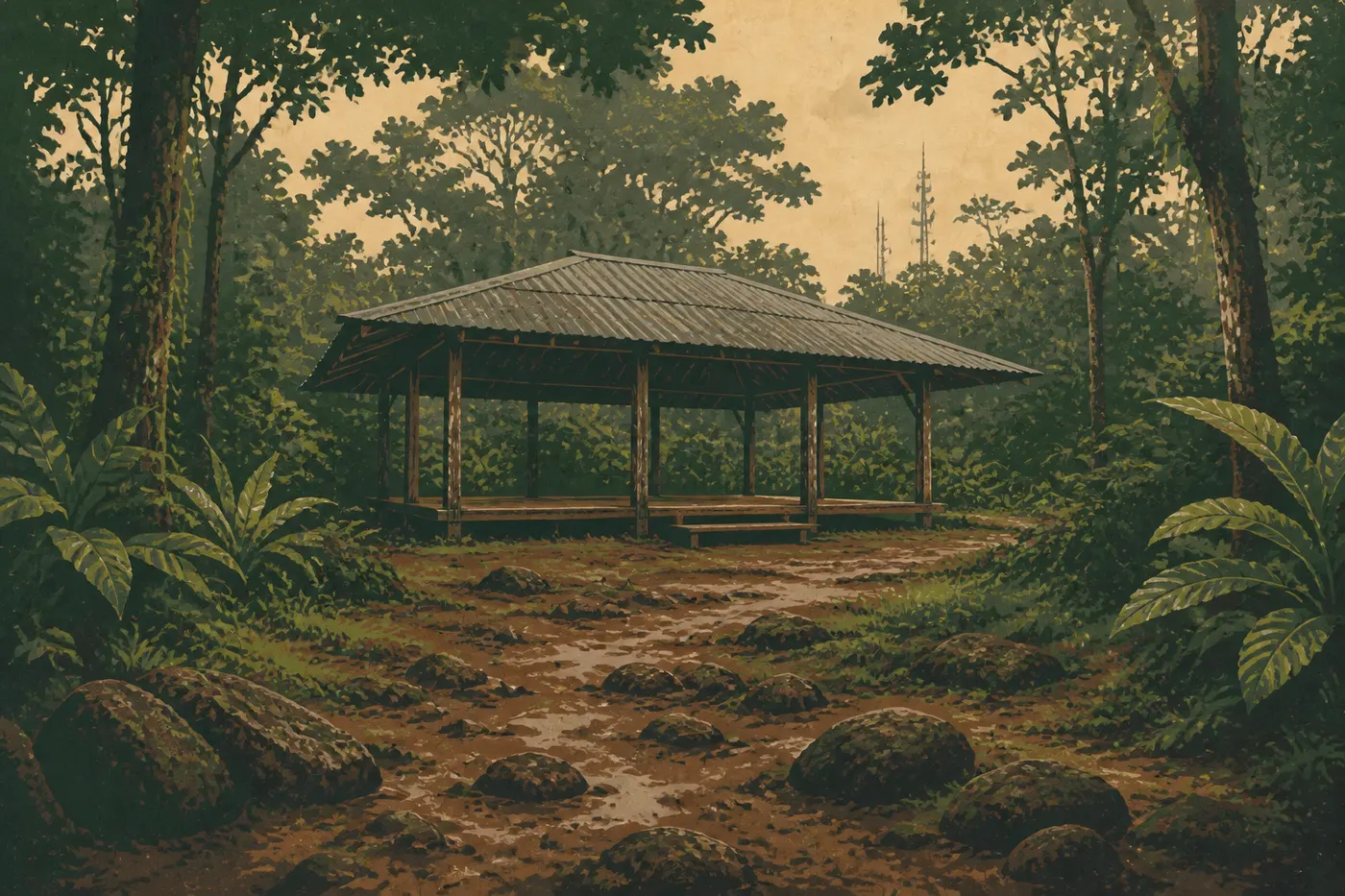
The park coordinates a program with families in villages near the park. You'll stay with a Samoan household, often in a fale, a traditional open-sided house, and follow the rhythm of village life. This isn't an NPS campground. Private families host visitors, with the park helping make the connection. To our knowledge, this is the only U.S. national park to include this kind of cultural immersion in its official visitor offering.
How to arrange it. The visitor center in Pago Pago, open Monday through Friday from 8 a.m. to 3 p.m., can connect you with participating families on Tutuila, Taʻu, and Ofu. Contact the park before you leave. Availability varies, and reaching Taʻu and Ofu requires an additional inter-island flight from Pago Pago.
What to expect. Conditions are basic: a simple mattress, no air conditioning, and a mosquito net that you'll need. Samoan hospitality is genuine, but hotel-style comfort isn't part of the deal. It's best to know that before you go.
Rates. Families set their own terms, whether for lodging only or lodging with meals. The NPS doesn't publish a central rate sheet. Ask about the price directly when you contact the park.
Camping on Ofu Island: Tents and a Coral Lagoon
A primitive camping area sits on Ofu Island along Ofu Beach, considered one of the most untouched beaches in the South Pacific. The site is outside park boundaries and isn't managed by the NPS. Sites are basic, with no running water, electricity, or permanent services. You'll need to be completely self-sufficient.
To reach Ofu, you'll need an inter-island flight from Pago Pago, with about 20 minutes in the air. Flights are infrequent, and weather cancellations are common during the wet season. Always bring more supplies than you think you'll need. There are no stores on the island.
This type of trip suits experienced travelers who are comfortable with the logistics of a remote setting and the uncertainty of tropical weather.
Wild Camping and Backcountry
American Samoa has no formal backcountry camping permit, and the park's trails are designed mostly for day hikes. Primitive camping on Ofu is the closest equivalent to backcountry camping here: remote, without services, and fully self-supported. The park's trails and access points are covered in the American Samoa hiking guide.
RVs: Not an Option Here
You can't bring an RV to American Samoa. You can get there only by air, with a long-haul flight from Honolulu followed by inter-island flights. There's no ferry from the mainland and no RV rental on the territory.
If you usually travel by van or RV, the closest alternative is to rent a car on Tutuila and use Pago Pago as your base, then stay in a homestay or camp with minimal gear on the other islands.
Staying Outside the Park: Guesthouses in Pago Pago
Pago Pago has a handful of hotels and guesthouses that work well as bases for exploring the park. Options are limited, and you'll usually book directly with the property, often by email. For all lodging options, see the American Samoa accommodations guide.
On Taʻu, the most remote island, options outside the homestay program are almost nonexistent. Here, a homestay isn't one choice among several. It's the only option.
How and When to Book Your American Samoa Trip
You can't book this park through recreation.gov. Here's what to do:
- Contact the visitor center before you leave. The NPS can connect you with host families and provide current conditions, including trail closures and seasonal weather concerns.
- Book your inter-island flights as early as possible. Flights to Ofu and Taʻu are limited, and weather cancellations are common during the wet season.
- Pack supplies for Ofu: purified water, enough food for the planned stay plus a two-day buffer, and a basic first-aid kit.
The park is open 24 hours a day, year-round. Admission is free. For the full logistics of flights, connections, and travel between islands, the American Samoa access guide brings together all the essential information.
To choose the right time to visit, the American Samoa seasons guide breaks down the months and the best weather windows.
Rates: How Much Does a Night of Camping Cost in American Samoa?
Park admission is free. There's no entrance fee, and you don't need an America the Beautiful pass.
- Camping on Ofu: The NPS doesn't charge a campsite fee because the site is outside the park and outside NPS management. Check current arrangements with the visitor center.
- Homestay: The host family sets the rate, depending on whether you choose lodging only or full board. There is no central rate sheet.
- The biggest expense: flights. The trip from Honolulu to Pago Pago, followed by inter-island flights to Ofu and Taʻu, will account for most of your trip budget.
The park overview has the key information you'll need to plan your trip.
Safety and Good Practices in the Field
Tropical Rain and Cyclones
American Samoa receives between 10 and 25 feet of rain a year, depending on elevation and exposure. During the wet season, from October through May, downpours can be intense and the risk of cyclones is real. Check official U.S. weather advisories before and during your trip. The American Samoa weather guide covers monthly averages and the calmer periods.
Mosquitoes, Wildlife, and Heat
There are no bears or dangerous snakes on the islands. You should still plan for the following:
- Mosquitoes: They're present year-round and may carry dengue. DEET repellent and a mosquito net are essential, especially if you're sleeping in an open-sided fale.
- Coral and sea urchins: Water shoes protect your feet while snorkeling and walking across reef flats.
- Heat and humidity: The heat index regularly tops 95°F during the wet season. Keep drinking water throughout your hikes.
Respecting Samoan Villages
The park passes through inhabited villages. Leave No Trace principles apply, along with local fa'asamoa customs, the traditional Samoan way of life. Always ask permission before crossing private property, avoid revealing clothing in village areas, and respect the timing of Sunday religious ceremonies.
Which Trip Is Right for You?
| Traveler profile | Recommended option |
|---|---|
| Cultural immersion, limited budget | Homestay on Tutuila or Taʻu |
| Wild nature, complete independence | Primitive camping on Ofu (outside the park and NPS management) |
| Basic comfort, a convenient base | Guesthouse in Pago Pago (see Where to Stay) |
| Families with children | Homestay (local guidance, no need to pitch a tent in unfamiliar terrain) |
Frequently Asked Questions
Can you camp inside the National Park of American Samoa?
No. The NPS operates no campground within the park's boundaries, according to official NPS API data collected on September 10, 2026. The available options, primitive camping on Ofu and the homestay program, are outside the park's boundaries or operated outside the NPS system. Wild camping in the park remains prohibited.
What is American Samoa?
American Samoa is an unincorporated U.S. territory in the South Pacific, between the equator and the Tropic of Capricorn, about 2,500 miles southwest of Honolulu. Its national park protects tropical rainforests, coral reefs, and living Samoan villages.
Why is American Samoa a national park?
Congress authorized the National Park of American Samoa in 1988 to protect a rare tropical ecosystem under U.S. management, including rainforest, coral reefs, and fa'asamoa cultural heritage. The park is managed through a partnership agreement between the U.S. government and the government of American Samoa.
What is the citizenship status of people in American Samoa?
People born in American Samoa are U.S. nationals, not U.S. citizens under the Constitution. They can travel with a U.S. passport and move to the mainland, but they don't vote in presidential elections unless they live in one of the 50 states.
How do you visit the National Park of American Samoa?
You reach Pago Pago by long-haul flight from Honolulu, which takes about 5.5 hours. The visitor center in the village of Pago Pago is open Monday through Friday from 8 a.m. to 3 p.m. Inter-island flights then connect Tutuila with Ofu and Taʻu.
What's the best season for camping in American Samoa?
The dry season, from June through September, brings less rain and almost no risk of cyclones. It's the recommended window for staying on Ofu or hiking in the park. The When to Visit American Samoa guide breaks down the seasons so you can fine-tune your plans.