
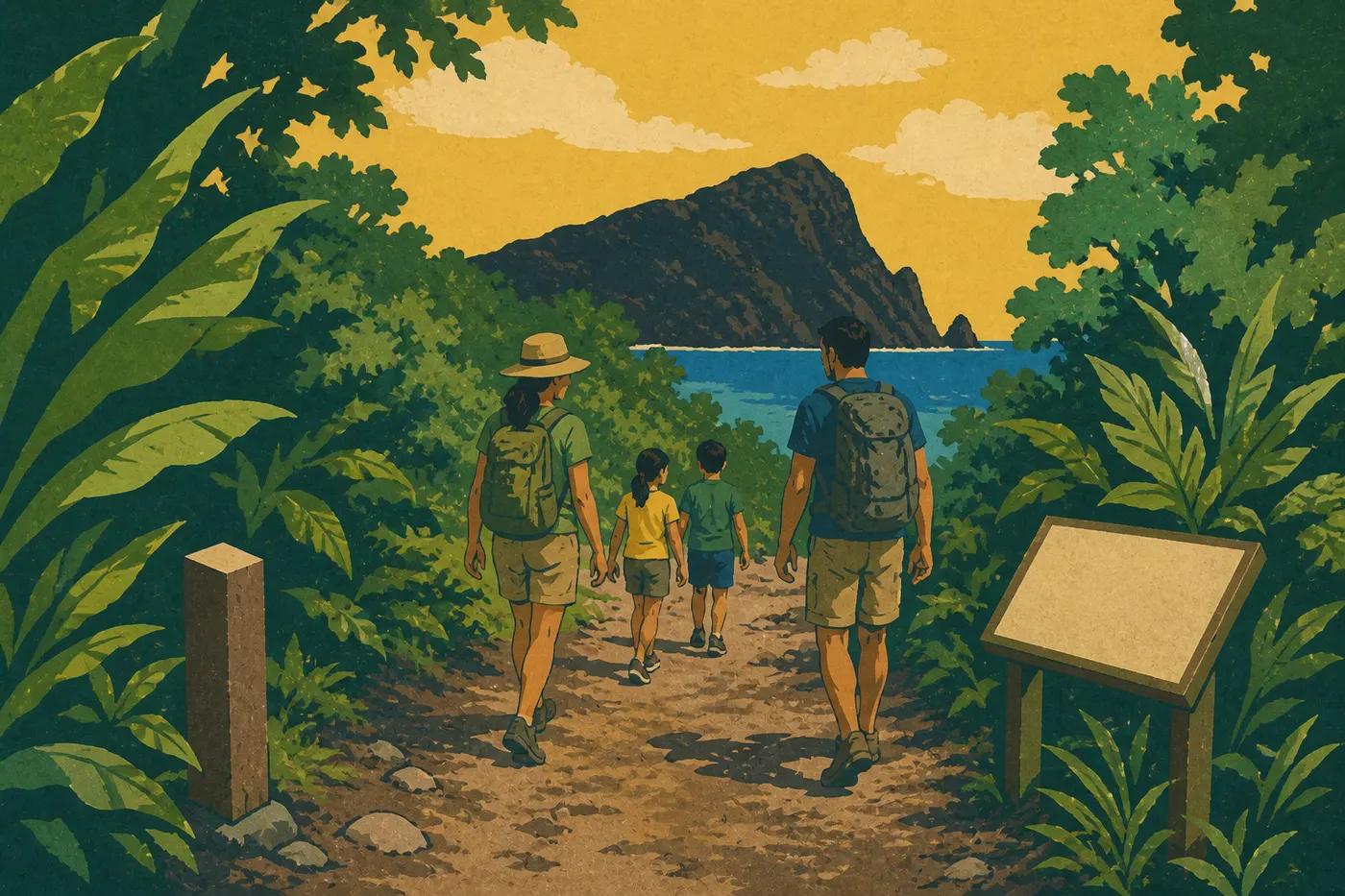
American Samoa with Kids: What to Do and How to Plan Your Trip
The National Park of American Samoa is one of the most unusual sites in the NPS system. It combines an American tropical rainforest in the heart of the South Pacific, some of the best-preserved coral reefs in the United States, giant fruit bats flying in broad daylight, and Polynesian villages whose residents live within the park itself. Is it a good fit for kids? Yes, with some preparation and the right expectations. The park works well for families whose children are at least 8 to 10 years old and can walk on uneven ground while handling tropical heat and humidity. With younger kids, the trip is still doable if you focus on the beach and cultural activities.
Why Visit American Samoa as a Family
What sets this park apart from every other American national park is how different the experience feels. You are in the Southern Hemisphere, about a dozen hours from Los Angeles, on American territory where Polynesian culture remains intact and alive. For kids who have visited mainland parks, this is a completely different kind of change of scenery.
Here are the practical family-friendly highlights:
- Ofu Beach has a crystal-clear lagoon with direct shore access for snorkeling, so you do not need a boat. The corals are healthy, marine life is varied, and conditions are calm.
- Pteropus samoensis, giant fruit bats with wingspans of about 3 feet, glide above the coconut palms in broad daylight. Kids notice them right away.
- Fa'a Samoa, traditional Samoan culture, is alive within the park itself. Villages own the land and lease it to the U.S. government. Kids see a connection between nature, culture, and land that you will not find anywhere else in the NPS system.
- Park access is free, with no reservation required, and the park is open 24/7 year-round.
This is not a park for a passive vacation. It is for families who want something deeply different and are willing to handle more logistics than a weekend in Zion.
Our complete guide to American Samoa covers the entire park and its three islands, giving you the basics before you start planning.
Is American Samoa Good for Kids? What Age Works Best
American Samoa works for families with kids, but there are a few important conditions. Tropical temperatures stay around 81 to 90°F year-round, humidity is constant, and the official trails are natural, often steep, and sometimes slippery. You will not find the all-conditions trail network common in mainland parks.
Our recommendation is ages 8 to 10 and up for getting the most out of the park, especially the rainforest hikes and independent snorkeling. Families with kids ages 5 to 7 can absolutely visit if they build the trip around Ofu Beach and cultural exchanges in the villages.
With infants or toddlers under 3, the trip is doable if you are comfortable with long travel days involving several connections, tropical heat, and a lack of dense tourist infrastructure. Most families choose to wait a few more years.
The park is not stroller-friendly. The trails are natural paths through tropical rainforest, with no pavement or special facilities.
When to Visit as a Family: The Easiest Season with Kids
June through September is the easiest time to visit with kids. Temperatures remain tropical, around 81 to 84°F on average, but humidity drops slightly and the risk of cyclones is much lower. Rain is possible year-round, but showers are shorter and more predictable during the dry season.
Avoid October through April with young children. This is the long wet season, when tropical storms are possible, rain can last for several days in a row, trails can turn waterlogged, and inter-island connections may be disrupted without notice.
August and September can work well if they fit your local school calendar, without landing in the heart of the rainy season. The American Samoa seasons guide details monthly rainfall and temperature averages so you can choose your dates carefully.
How Many Days to Plan for a Family Trip
Plan on at least 5 to 7 days on the islands for a balanced family visit. With less time, the travel time starts to outweigh the time you spend visiting, especially if you are coming from Europe.
A realistic split looks like this:
- 2 days on Tutuila, the main island, for Pago Pago, the visitor center, coastal trails, and villages
- 2 days on Ofu for the beach, snorkeling, and the park's natural centerpiece
- 1 buffer day for inter-island travel complications
Do not treat Ofu as a day trip. Flights from Tutuila use small aircraft and depend on weather conditions. Plan to spend at least one night there.
The American Samoa itinerary guide offers a day-by-day plan, with variations based on your children's ages.
What to Do in American Samoa with Kids: Our Picks
These are the activities that work well for families, without overselling them.
Snorkeling at Ofu. Ofu's lagoon is the park's must-do experience. You can enter directly from the beach, the water is calm, and the corals are in excellent condition. For kids ages 7 and up who know how to swim, it is an almost ideal introduction. Bring child-sized masks and snorkels because rentals are limited on the island.
Watching flying foxes. Samoa's giant fruit bats fly during the day and are easy to spot from the roads. Kids are guaranteed to be fascinated, and you can see them several times a day.
Visiting the visitor center in Pago Pago. It is open Monday through Friday from 8 a.m. to 3 p.m. and introduces visitors to the archipelago's geology, marine life, and Samoan culture. Make it an early stop to give the rest of your visit some context.
Cultural exchanges in the villages. The villages within the park, including Vatia, Fagasa, and Afono on Tutuila, Fitiuta and Faleasao on Taʻu, and Ofu, maintain their traditional practices. Kids can see crafts such as weaving and tapa making, hear Samoan, and understand what an American territory with a living Polynesian culture actually looks like. Explain a few rules before you go. Wear modest clothing in the villages, do not enter fale houses unless invited, and ask before taking photographs.
Taʻu's beaches and cliffs. The park's third island has stark volcanic landscapes and impressive cliffs. It is less visited than Ofu and gives kids who love nature a chance to explore somewhere largely undeveloped.
The American Samoa activities guide covers all of the park's activities, along with the practical details.
Easy Family Hikes (Short, Little Elevation Gain, Stroller-Friendly)
American Samoa is not a park with well-marked trails for every ability level. The official trails are few and take place in tropical conditions, which makes even short distances more physically demanding.
For families with kids ages 5 or 6 and up: the coastal areas around Pago Pago offer flat walks along the lagoon with little elevation gain. Shade is limited, so bring water and sun protection from the start.
For families with kids ages 10 and up: the Mount ʻAlava Trail on Tutuila crosses tropical rainforest from the village of Afono. The climb is strenuous, with several miles of climbing in humid conditions, but the primary forest along the way is worth the effort. Allow at least 4 hours round-trip. Shoes with aggressive tread are essential, and bring plenty of water.
No trail in the park is suitable for a stroller. Family activities are centered on the beach and the villages.
The American Samoa hiking guide describes the routes, elevation profiles, and seasonal conditions.
The Junior Ranger Program
The National Park of American Samoa offers a Junior Ranger booklet at the Pago Pago visitor center. The idea is the same as in other NPS parks. Kids complete a series of age-appropriate activities, including wildlife observation, questions about Samoan culture, drawing a park plant, and taking part in a short hike. They then receive their official NPS badge and Junior Ranger certificate.
For kids ages 6 to 12, it provides a concrete thread running through the whole trip. During one of our visits, an 8-year-old insisted on returning to the visitor center a second time to finish the last activity in the booklet before leaving. That kind of motivation is exactly what turns a walk into a memorable adventure.
You can download the booklet from the NPS website if you want to prepare before you leave.
Safety with Kids
This park has a few specific concerns to factor into your planning.
Heat and humidity. American Samoa combines tropical temperatures with constant humidity. Kids become dehydrated and overheated faster than adults. Schedule hikes in the morning, before 10 a.m., carry at least 1 liter of water per person for every hour of exertion, reapply SPF 50 sunscreen every two hours, and cover the backs of their necks.
Slippery terrain. The rainforest stays wet even during the dry season. Roots and moss-covered rocks are extremely slippery. Trail shoes with aggressive tread are essential on every trail, even the shortest ones.
Marine life. Ofu's lagoon is beautiful but contains stinging and prickly organisms, including seasonal jellyfish, sea urchins around the corals, and fire coral that burns on contact. Teach kids never to touch the corals, either with their hands or their fins. Water shoes make it easier to enter the water in rocky areas.
Inter-island travel. The small planes connecting Tutuila with Ofu and Taʻu have limited capacity and may be canceled or delayed without notice in bad weather. Always leave a one-day buffer before any international flight out of Pago Pago.
Medical facilities. The main hospital is in Pago Pago. Medical care on Ofu and Taʻu remains very limited. Bring a complete first-aid kit and two copies of your regular prescriptions.
Where to Stay with Kids (In or Around the Park)
American Samoa has a modest lodging scene compared with the big mainland parks. There is no NPS lodge and no large family resort.
On Tutuila: Pago Pago has almost all of the available lodging. Several small hotels and guesthouses accept families. Choices are limited, so book early, especially during school vacation periods.
On Ofu: there is one official lodging option, with very limited capacity. It fills up months in advance. If Ofu is part of your itinerary, make this your top booking priority as soon as your dates are set.
On Taʻu: options include homestays and simple guesthouses. This works best for families with independent kids who are comfortable with less standardized travel.
There is no official developed campground in the usual sense. Tent camping may technically be possible in some areas with advance permission, but nighttime heat and humidity make it difficult with young children.
The Where to Stay in American Samoa guide and our Hotels & Lodges page list the available options on each island, along with booking information.
Meals and Breaks with Kids
American Samoa does not have park cafeterias or food courts.
In Pago Pago: several small restaurants serve Samoan food along with a few international dishes, such as grilled fish, taro, rice, and chicken. Local food is generous and not very spicy, so kids usually adjust well. Supermarkets are also available for stocking up before you head to the other islands.
On Ofu: supplies are almost nonexistent. Bring provisions from Tutuila, including enough water for two days, snacks, and simple meals. There is no restaurant on the island.
On Taʻu: plan the same way and bring your own meals.
One practical tip is to buy fresh local fruit, such as papayas, bananas, and breadfruit, at Fagatogo Market before heading to the islands. It is inexpensive, excellent, and makes snack time easier once you are there.
Family Budget
Park access is free, with no entrance fee and no reservation required, including for children. The NPS does not charge an entrance fee in American Samoa.
Transportation is the main budget item. If you're flying from abroad, one option is to connect through Los Angeles or Honolulu before Pago Pago. For family travel, book at least six months ahead and compare fares across several date ranges. The differences can be significant.
Once you arrive, the cost of living is closer to U.S. standards than to those of typical tropical destinations. Lodging is affordable compared with the mainland United States, and local food is inexpensive.
The America the Beautiful pass, which covers all national parks for a year, does not save you money here because admission is already free. It becomes worthwhile only if you combine American Samoa with a fee-charging mainland park during the same year. Our Fees & Passes page explains entrance fees and pass options for your overall itinerary.
What to Combine with American Samoa When Traveling with Kids
American Samoa pairs naturally with other South Pacific stops, as long as you think through the flight logistics from the beginning.
Hawaii is the classic gateway from the U.S. mainland. Honolulu and Maui offer proven family activities, including snorkeling at Hanauma Bay, volcanism at Hawaiʻi Volcanoes National Park, and museums. They also give you a chance to decompress before or after the trip to Samoa.
The independent Samoan islands are a sovereign country separate from the U.S. territory and lie less than an hour's flight from Pago Pago. A two-Samoas itinerary works for families spending ten days or more in the region. Apia, the capital of independent Samoa, has more developed tourist infrastructure and more family-friendly options.
Our Road Trip guides cover the major themed routes for families who want to link several American national parks in one trip.
American Samoa with Kids: Is It Worth It?
American Samoa is unlike any other park in the NPS system. There are few visitors, no overtourism, an authentic and living Polynesian culture, some of the best-preserved coral reefs in the United States, and striking primary rainforest. For a family willing to accept a long journey and a lack of standardized comforts, it is an experience the kids will remember for a long time.
It is not the right choice if you want a park that is easy to reach, with well-marked trails for all conditions, a range of restaurants, and a lodge to book through recreation.gov. For that kind of trip, Zion, Great Smoky Mountains, or Grand Canyon will be a better fit.
But if your kids are 8 or older, you genuinely enjoy far-flung adventures, and you are willing to plan ahead, American Samoa offers something rare. It is an American national park almost no one knows about, and your kids will not soon forget it.
Frequently Asked Questions
Are the American Samoa islands a good destination for a family vacation?
American Samoa is a good family destination for kids ages 8 to 10 and up, and for parents who are comfortable with long travel and demanding logistics. Snorkeling at Ofu, giant fruit bats, and immersion in Polynesian culture make it a powerful experience for families looking for something outside the usual routes.
Is it safe to travel to American Samoa right now?
Traveling to American Samoa is safe. It is a U.S. territory with a level of safety comparable to the mainland United States. The usual tropical precautions still apply, including heat, UV exposure, and stinging marine life around the reefs. Avoid the wet season, from October through May, with young children because of the risk of tropical storms. Check NPS alerts before setting out on a hike or traveling to the outer islands.
Is a vacation in American Samoa expensive?
A vacation in American Samoa is not especially expensive once you arrive. The park is free and local living costs are reasonable. The real expense is airfare, which can account for most of a family budget depending on where you're traveling from. Book flights and lodging on Ofu several months ahead for the best options.
How old should kids be before visiting the National Park of American Samoa?
Kids ages 8 to 10 and up can get the most out of the hikes and snorkeling in the National Park of American Samoa. Kids ages 5 to 7 can visit if you focus the trip on the beach and cultural activities in the villages. With toddlers under 3, the trip is possible for experienced parents, but the heat and lack of advanced medical facilities outside Pago Pago require careful preparation.
How long does it take to visit the National Park of American Samoa with kids?
Plan on 5 to 7 days on the islands for a balanced visit that includes Tutuila and Ofu. With less time, the travel time starts to outweigh the time spent visiting, especially if you are coming from Europe. Our Itinerary & Length guide offers a day-by-day plan designed for families.