
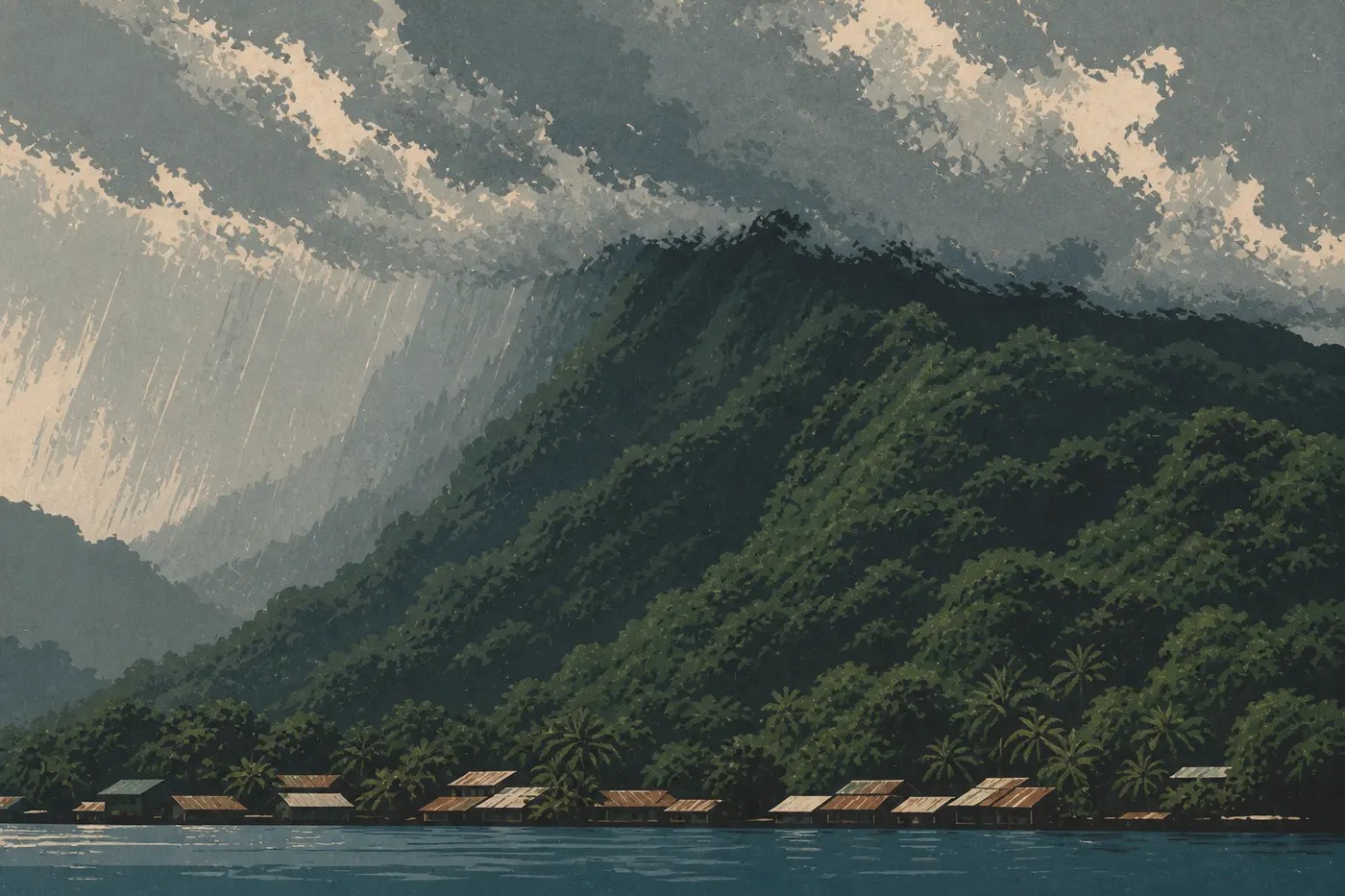
Weather in National Park of American Samoa: Forecasts, Climate, and Current Conditions
National Park of American Samoa is the only U.S. national park in the Southern Hemisphere, between the equator and the Tropic of Capricorn in the middle of the Pacific. Temperatures never really drop, and rain never quite stops. The short answer is that two seasons shape the year. The wet season runs from October through May, with heavy rain and a risk of cyclones. The dry season lasts from June through September, with shorter showers and much more favorable conditions for visiting. That's the window we recommend. Our complete guide to National Park of American Samoa covers everything you need to plan your trip.
Current readings are unavailable. See the seasonal averages farther down this page.
Open-Meteo readings · updating… · park time zone
14-Day Forecast
In a tropical climate, forecasts beyond seven days are less reliable than they are in temperate regions. Weather models struggle to predict the exact path of convective showers. Treat three- or four-day forecasts as reliable guidance. Beyond that, use them as a general trend.
Month-by-Month Climate in National Park of American Samoa
The figures below reflect climate normals for Pago Pago on Tutuila, the main island and the location of the visitor center. Temperatures change very little from month to month. Rainfall is what really makes the difference.
| Month | Low | High | Rainfall (in.) | Season |
|---|---|---|---|---|
| Jan. | 75°F | 86°F | 18 | Wet |
| Feb. | 75°F | 86°F | 17 | Wet |
| March | 75°F | 86°F | 16 | Wet |
| April | 75°F | 88°F | 13 | Wet |
| May | 75°F | 86°F | 11 | Wet |
| June | 73°F | 84°F | 8 | Dry |
| July | 73°F | 84°F | 7 | Dry |
| Aug. | 73°F | 84°F | 7 | Dry |
| Sept. | 73°F | 84°F | 9 | Dry |
| Oct. | 75°F | 86°F | 13 | Wet |
| Nov. | 75°F | 86°F | 15 | Wet |
| Dec. | 75°F | 86°F | 17 | Wet |
The annual temperature range is remarkably narrow. Only 2 to 4°F separate the coolest month from the warmest. Along the coast, low-lying areas of Tutuila receive an average of 125 inches of rain per year. The exposed ridges and summits of the interior mountains can get more than 299 inches.
Don't picture constant rain. Tropical showers are often brief and intense. You might get ten minutes of torrential rain, followed by sunshine. During the wet season, longer spells lasting several hours or sometimes an entire day are common. In the dry season, showers tend to be brief and predictable.
Does It Get Cold in American Samoa?
No, it doesn't get cold in American Samoa. The thermometer almost never drops below 72°F, even at night during the dry season. The total annual range is barely 5 to 7°F, making this one of the most stable climate systems in the entire national park system.
What can feel cool is the wind on Tutuila's ridges or during boat trips to the outlying islands, not the air temperature. On the water, a windbreaker makes all the difference.
On the other hand, don't underestimate the heat. With relative humidity regularly above 85%, 84°F can feel much hotter. Hiking is considerably more demanding than it is in a dry mountain environment, so plan to carry twice as much water as you would in a mainland park.
What to Wear by Season
During the dry season (June–September): Wear lightweight, breathable fabrics such as linen, technical cotton, and quick-drying synthetics. Bring a light windbreaker for boat trips and high-elevation hikes. Lightweight trail shoes or closed-toe sandals work well. Trails stay damp even outside the rainy season. Trekking poles help on muddy stretches of forest trail.
During the wet season (October–May): Bring reliable rain gear, such as a full-coverage poncho or Gore-Tex jacket, and keep it in your pack at all times. Pack several spare T-shirts. Soaked cotton becomes uncomfortable quickly in 85% humidity. For hikes, waterproof or quick-drying shoes are essential. Keep camera gear, your passport, and medications in dry bags, even inside your backpack.
Year-round: UV levels are high all year because of the park's position near the equator. SPF 50+ sunscreen, a hat, and sunglasses are essential. Bring effective insect repellent. Mosquitoes are active at dawn and dusk, especially along the forest edge.
Alerts and Conditions to Watch
Tropical cyclones: The South Pacific cyclone season runs from October through April, with a peak between December and March. The National Weather Service operates an office in Pago Pago that issues regular bulletins. Before setting out on an isolated trail such as Vatia, Afono, or Mount ʻAlava, or planning a trip to Taʻu or Ofu, check the forecast for the next 48 hours. A cyclone can form and intensify in less than 24 hours at these latitudes, so don't leave without checking.
Flash floods: Intense rain can cause sudden flooding in valleys and along coastal trails. If a stream is visibly running higher than it was when you started, turn around immediately. Never attempt to cross a flooded stream on foot, even if the water looks shallow. Tropical currents are deceptive.
Roads and land access: Landslides can temporarily block the roads connecting park villages such as Vatia, Fagasa, and Afono after heavy rain. Check with the Pago Pago visitor center before taking mountain roads after an intense rainstorm. The NPS may temporarily close areas for safety reasons or trail repairs.
Access to the outlying islands: Trips to Taʻu and Ofu-Olosega take place by air, usually by charter, or by sea. Local flights may be canceled or delayed without notice in bad weather. Always leave extra room in your schedule, especially during the wet season.
Frequently Asked Questions
Does it get cold in American Samoa?
No, it doesn't get cold in American Samoa. Temperatures stay between 72 and 88°F year-round. Any coolness comes from wind at higher elevations or on the water, not from the air temperature.
What's the climate like in Samoa?
American Samoa has a humid tropical climate, with high, steady temperatures and abundant rainfall year-round. Two seasons stand out. The dry season runs from June through September, while the wet season lasts from October through May and brings a higher risk of cyclones.
What are temperatures like in American Samoa?
Temperatures in American Samoa range from 73°F at night during the dry season to 88°F during the day in the wet season. The annual average is around 81 to 82°F, with a difference of no more than 5°F between the coolest and warmest months.
When is the rainy season in American Samoa?
The rainy season in American Samoa runs from October through May. It's also cyclone season in the South Pacific. The dry season, from June through September, is still rainy in absolute terms, but showers are less frequent and shorter, and cyclones are almost nonexistent.