
The Best Yosemite Hikes for Every Ability
Yosemite National Park has more than 500 miles of marked trails spread across several areas, with elevations ranging from 1,970 feet to more than 9,800 feet. If you only do one hike, make it the Mist Trail to Nevada Fall (7.4 miles round-trip, 1,900 feet of elevation gain). You get two major waterfalls, a steady climb with well-placed breaks, and valley views that make the effort worthwhile. For a shorter outing that still delivers a great panorama, Sentinel Dome (2.2 miles, 400 feet) offers 360-degree views of the granite domes without taking up a full day. If you're traveling with kids, the Lower Yosemite Fall loop (1 mile, nearly flat) works for kids as young as 3.
That said, Yosemite takes some advance planning. Summer parking fills up, Half Dome requires a cable permit, and you'll need to know how the shuttles work. Here's what you need to know before you hit the trail.
Planning Your Yosemite Hike
Permits and Entrance Fees
Day hiking is allowed on nearly all of the park's trails and is included with the entrance fee: $35 per vehicle, $30 for a motorcycle, or $20 per person entering on foot or by bicycle. An annual America the Beautiful pass costs $70 and pays for itself on your second visit.
Half Dome is the exception. The cables on the final section, which rises nearly 1,300 feet, require a separate permit issued through a lottery. Apply several months ahead on the official NPS website. Without the permit, the summit is off-limits during cable season, generally from mid-May to mid-October. Camping in the wilderness requires its own wilderness permit. The Yosemite guide covers all the rules and procedures.
Wildlife, Safety, and Essential Rules
Black bears roam every part of the park, including the busy areas of Yosemite Valley. Never leave food, drinks, or scented products unattended on a trail. Keep your backpack with you while hiking. The Yosemite wildlife guide explains what to do if you encounter one.
Falls on wet rocks cause more serious accidents at Yosemite than anything else. The Mist Trail gets covered in spray in spring and can be especially slippery. Wear hiking shoes with good traction, not sandals. Never climb the Half Dome cables when thunderstorms are in the forecast. Lightning regularly strikes the summit in summer.
Dogs: Pets aren't allowed on Yosemite's trails. They can accompany visitors on paved roads and in campgrounds while leashed, but that's it.
Water: Bring at least 2 liters per person for a half-day hike. Natural water sources are available, but you must filter or chemically treat the water. At Tuolumne Meadows, at 8,530 feet, allow time to acclimate if you're coming straight from the coast.
The Best Hikes, Area by Area
Yosemite Valley
This is where you'll find the park's iconic waterfalls and most of its hikers. The free shuttle serves all the valley trailheads from March through November.
Lower Yosemite Fall · 1 mile loop · nearly flat · 30 to 45 min · very easy · loop
The lower section of Yosemite Falls is accessible from the Lower Yosemite Fall shuttle stop. The trail is paved and stroller-friendly. No athleticism required. Just an impressive waterfall beneath the granite walls, accessible in all conditions.
Bridalveil Fall · 0.5 mile round-trip · 80 feet of elevation gain · 20 min · very easy · round-trip
Bridalveil Fall greets visitors as soon as they enter the valley. Spring flows are powerful enough to create a constant veil of spray. Bring a rain jacket from April through June if you want to get close.
Mirror Lake Loop · 5 miles loop · nearly flat · 2 hours · easy · loop
This shaded loop follows a seasonal bend in Tenaya Creek beneath Half Dome. The dome's reflection on the calm morning water is one of the park's most photographed scenes. Start at the Mirror Lake Junction shuttle stop, then walk 0.5 mile.
The Mist Trail (to Nevada Fall) · 7.4 miles round-trip · 1,900 feet of elevation gain · 4 to 6 hours · difficult · round-trip
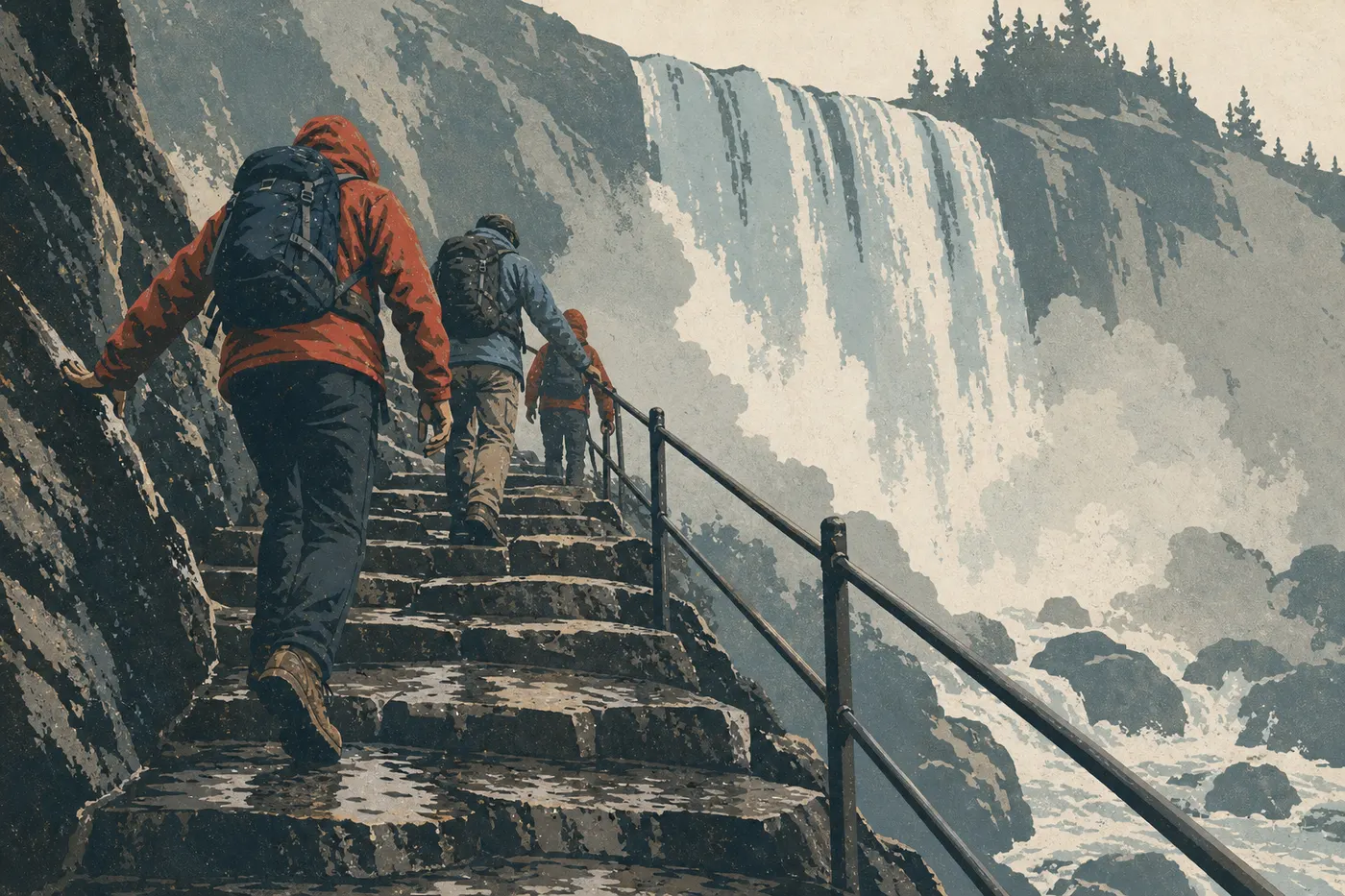
This is the park's signature hike. From Happy Isles, the trail follows the Merced River, then climbs toward Vernal Fall, which drops 310 feet through a curtain of spray in spring. Granite steps cut directly into the rock lead uphill. Farther on, Nevada Fall drops 595 feet and comes into view around a bend, with spectacular flow in May and June. To shorten the hike, turn around after Vernal Fall: 2.9 miles round-trip, 320 feet of elevation gain, and about 1.5 hours. For a change of scenery, return via the John Muir Trail and turn the outing into a 9-mile loop. Start at Happy Isles, which you can reach by shuttle.
Upper Yosemite Fall · 7.2 miles round-trip · 2,700 feet of elevation gain · 5 to 7 hours · difficult · round-trip
To see Yosemite Falls from the top rather than from below, you'll have to climb. The trail from the Yosemite Falls Trailhead zigzags steeply through the granite before reaching the edge of the upper waterfall, with sweeping views over the valley. May and June are the best time to go. The flow can be nearly gone by August.
Glacier Point and the South Area
Sentinel Dome · 2.2 miles round-trip · 400 feet of elevation gain · 1.5 hours · moderate · round-trip
This smooth granite dome offers one of the park's broadest 360-degree panoramas: Half Dome straight ahead, El Capitan, the valley, and the peaks of the Sierra Nevada. The effort is minimal for such a dramatic view. Start at the Taft Point/Sentinel Dome parking area on Glacier Point Road, which closes in winter.
Taft Point · 2.2 miles round-trip · 200 feet of elevation gain · 1.5 hours · moderate · round-trip
Use the same parking area as Sentinel Dome, but expect a completely different experience. Taft Point towers nearly 3,300 feet above the valley from an unguarded cliff edge. The view of El Capitan is direct and striking. Skip this hike if you aren't comfortable with heights. You can combine the two trails into a 4.7-mile outing from the same trailhead, which makes a great half-day hike.
Tuolumne Meadows and Tioga Road
You can reach this area only via Highway 120, or Tioga Road, which closes from November through late May or June depending on snowfall. Trailheads sit at 8,530 feet, so adjust your pace accordingly.
Cathedral Lakes · 7 miles round-trip · 1,000 feet of elevation gain · 3 to 5 hours · moderate · round-trip
The trail crosses alpine meadows and a conifer forest before reaching Lower Cathedral Lake, an exceptionally clear granite lake surrounded by jagged peaks. Cathedral Peak, at 10,920 feet, reflects in the water on calm mornings. Start at the Cathedral Lakes parking area on Tioga Road. It's generally accessible from July through mid-October.
Lembert Dome · 4 miles round-trip · 850 feet of elevation gain · 3 hours · moderate · round-trip
Climb a granite dome polished by glaciers, with no cables or special equipment. The top looks out over the meadows of Tuolumne Meadows and the surrounding mountains. Start at the Lembert Dome parking area, east of Tuolumne Meadows.
Hetch Hetchy
This is the least visited area of the park and is accessible nearly year-round. Keep in mind that everyone must leave the area by sunset because the road closes at night.
Wapama Falls · 4.8 miles round-trip · little elevation gain · 3 to 4 hours · easy to moderate · round-trip
Starting at the dam, the trail follows the O'Shaughnessy Reservoir before reaching two waterfalls, Tueeulala and Wapama, that plunge straight into the lake. In spring, Wapama Falls can flood the trail's footbridges. Check conditions on the NPS website before setting out. Start at the O'Shaughnessy Dam parking area.
Easy, Family-Friendly Hikes
Yosemite is often associated with big climbs, but the valley has several trails that work for even the youngest hikers.
Lower Yosemite Fall (1 mile, nearly flat) and Bridalveil Fall (0.5 mile) are the two essentials. They're short, dramatic, and accessible to strollers and toddlers. Mirror Lake Loop (5 miles, flat, shaded) works for kids who can handle two hours of walking. Views of Half Dome through the trees keep things interesting.
For an even gentler introduction, the first few miles of the Valley Floor follow flat trails along the Merced River, with Half Dome in the background. It's an easy one-hour outing with no serious physical commitment.
Yosemite with kids covers activities for every age in the park, beyond hiking.
Strenuous Hikes and Big Views
For hikers looking for elevation gain, distant views, and a physical challenge:
Upper Yosemite Fall (7.2 miles, 2,700 feet) takes a full day. Start before 8 a.m. to beat the heat and summer trail traffic.
The Mist Trail to Nevada Fall (7.4 miles, 1,900 feet) builds gradually. Two major stopping points let you turn around whenever fatigue sets in.
Half Dome · about 15.5 miles round-trip · 4,800 feet of elevation gain · 10 to 14 hours · very difficult · round-trip · cable permit required
This is the park's iconic climb. Start at Happy Isles and take the Mist Trail to Nevada Fall, then climb to Sub Dome. From there, metal cables take you up the final 1,300 feet to the summit at 8,840 feet. The view across the Sierra Nevada matches the effort. Bring at least 4 liters of water per person, work gloves for the cables, and plan to leave before dawn. Apply for the cable permit through the NPS online lottery. Check the official NPS website for all details, including lottery opening dates and required documents.
Sentinel Dome (2.2 miles, 400 feet) remains the best option for a sweeping panorama without a permit or a full day on the trail.
Access, Trailheads, and Parking
Parking in Yosemite Valley fills up from May through September by 9 a.m. The strategy that works is to arrive before 7 a.m., park at the Visitor Center or Curry Village, and use the free shuttles from there. They run roughly from March through November, from 7 a.m. to 10 p.m., and serve all the valley trailheads.
For areas outside the valley, including Glacier Point Road, Tioga Road, and Hetch Hetchy, you'll need a vehicle. No shuttle runs there. During the busy season, the NPS may require a vehicle reservation to enter some areas. Check the official website before your trip.
Getting to Yosemite from California's major cities and getting around the park each have their own dedicated guide.
When to Hike in Yosemite
The ideal window runs from May through October, with some variation by area.
The valley is open year-round. Waterfalls peak in May and June as the snow melts. July and August are hot and crowded. September and October are quieter, with remarkable light for photography.
Glacier Point Road and Tuolumne Meadows close from November through May or June, depending on snowfall. Tuolumne Meadows is generally accessible only from July through mid-October.
Hetch Hetchy is accessible nearly year-round, but summer temperatures there run higher than in the valley.
The best times to visit Yosemite are covered month by month. For current conditions, the Yosemite weather page is updated continuously.
Which Hike Fits Your Profile?
Beginner or family with kids: Lower Yosemite Fall, Bridalveil Fall, and Mirror Lake Loop. Less than 2 hours, nearly flat, and guaranteed scenery.
Intermediate, half-day: The Mist Trail to Vernal Fall (2.9 miles), Sentinel Dome, or Taft Point. Limited effort, big views.
Intermediate, full day: The Mist Trail to Nevada Fall as a loop via the John Muir Trail, Upper Yosemite Fall, or Cathedral Lakes from Tuolumne Meadows.
Experienced hiker, big day: Half Dome, which requires a cable permit through the NPS lottery. Another option is Upper Yosemite Fall followed by Mirror Lake for anyone looking for more mileage.
Quiet and high-elevation scenery: Tuolumne Meadows in July and August, Cathedral Lakes, or Lembert Dome. You'll find far fewer people than in the valley and dramatically different alpine landscapes.
Photography enthusiast: Hike the Mist Trail in May for the waterfalls at peak flow. For low evening light on the granite, choose Sentinel Dome or Taft Point in the late afternoon.
For activities beyond hiking, including climbing, wildlife viewing, and sequoia groves, Things to Do in Yosemite covers the park's full range of activities.
Frequently Asked Questions
What's the best hike in Yosemite?
The best Yosemite hike for a reasonably fit hiker is the Mist Trail to Nevada Fall (7.4 miles round-trip, 1,900 feet of elevation gain). It includes two major waterfalls, a gradual climb with stopping points, and an optional loop return via the John Muir Trail.
What's Yosemite's most famous hike?
Yosemite's most famous hike is Half Dome, about 15.5 miles round-trip with 4,800 feet of elevation gain and metal cables on the final section. It requires a separate lottery permit and serious preparation.
How long does it take to hike to Yosemite Falls?
Reaching the base of Lower Yosemite Fall takes 30 to 45 minutes round-trip for 1 mile. Reaching the top of Upper Yosemite Fall takes a full day: 5 to 7 hours for the 7.2-mile round trip and 2,700 feet of elevation gain.
Is hiking in Yosemite difficult?
Yosemite's hikes range from a paved 1-mile trail to Lower Yosemite Fall, which is stroller-friendly, to a 15.5-mile cable climb up Half Dome. Most valley trails are moderate to difficult, but easy options exist for every kind of hiker.
Do you need a permit to hike in Yosemite?
A permit is required only for the Half Dome cables, issued through a lottery, and for wilderness camping. All other day hikes are open to the public and included with the park entrance fee.
Can you hike with a dog in Yosemite?
Dogs aren't allowed on trails in Yosemite National Park. They're permitted only on paved roads, bike paths, and in campgrounds, and must be leashed. If you're traveling with a pet, plan to use a kennel outside the park.
Are there easy, family-friendly hikes in Yosemite?
Yes. Lower Yosemite Fall (1 mile, stroller-friendly), Bridalveil Fall (0.5 mile), and Mirror Lake Loop (5 miles, flat) are ideal for kids. Most Valley Floor trails work well for families with children who can walk.
How do you reach Yosemite's trailheads?
Free shuttles serve all the Yosemite Valley trailheads from March through November, roughly from 7 a.m. to 10 p.m. You'll need a vehicle for Glacier Point Road, Tioga Road, and Hetch Hetchy. During the busy season, the park may require access reservations. Check NPS conditions before you leave.
What's the best time to hike in Yosemite?
The best time to hike in Yosemite is May through October. Waterfalls are at their peak in May and June, while fall, from September through October, brings fewer visitors and better light. The When to Visit Yosemite guide explains conditions month by month.