
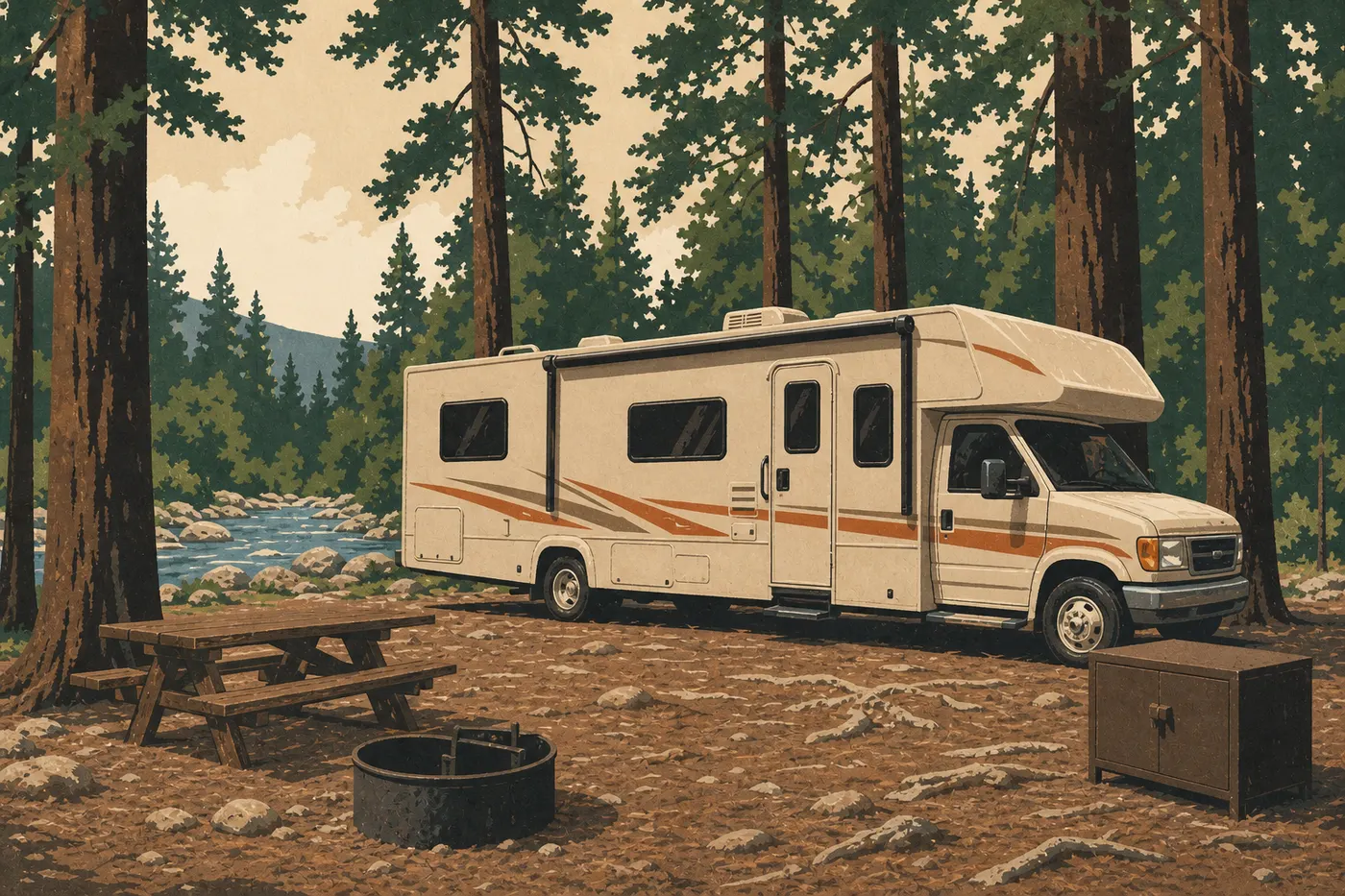
Yosemite by RV: Campgrounds, Rules, and Tips
Quick answer: yes, Yosemite is absolutely doable by RV. The number-one restriction to know before booking is that there are no electrical, water, or sewer hookups anywhere in the park. You'll rely entirely on your tanks and battery. The other must-do is booking ahead—five months in advance for campgrounds in the valley.
Can You Drive and Camp in an RV at Yosemite?
Yosemite covers about 1,200 square miles in the Sierra Nevada, at elevations ranging from 1,970 to 13,100 feet. The park is open 24 hours a day, 365 days a year. The main roads (Hwy 41, 140, and west Hwy 120) remain drivable year-round, making it a realistic destination even outside the summer season.
The entrance fee is $35 per private vehicle, valid for 7 days. An annual pass costs $70 and pays for itself after two visits (the National Parks Fees & Passes page explains entrance fees and annual passes).
RVs and trailers are allowed in most official campgrounds up to 35 feet long, and sometimes longer. Camp 4, in the valley, is the only major exception: it's reserved for people arriving on foot and has no vehicle sites.
RV Restrictions and Regulated Roads
Yosemite doesn't require a special permit for RVs, but several road sections call for extra caution.
Glacier Point Road: trailers aren't allowed on this road. Long RVs face serious difficulties there, so the usual advice is to leave your vehicle at Bridalveil Creek Campground and reach Glacier Point by shuttle or on foot.
Hetch Hetchy Road (in the northwest part of the park) is narrow and winding. It's not recommended for Class A motorhomes or vehicles longer than 23 to 26 feet. Hetch Hetchy is also closed to vehicles from sunset to sunrise, which rules out spending the night there.
Tioga Road (east Hwy 120, with a pass at about 9,940 feet) closes from November through late May or early June, depending on snowfall. If you're planning to cross to Lee Vining in the east, check the road conditions on the NPS website before you leave. Our Yosemite Access Guide has details on seasonal closures for each road.
Parking in the valley: visitor parking lots can't always accommodate long vehicles. The strategy that works is to park your RV at the campground and explore on foot or use the free, frequent Valley Shuttle from May through October.
Bears and food storage: Yosemite regulations require you to store all food and scented items in the bear-resistant lockers provided on-site (or in an approved container) as soon as you leave the vehicle, even for a short hike. The cabin alone isn't enough.
Official Park Campgrounds
Upper Pines Campground
Located in Yosemite Valley, this is the valley's only campground open year-round. It accepts RVs and trailers up to 35 feet. Its 238 sites can be reserved through recreation.gov; during peak season, they sell out within minutes of reservations opening five months ahead. The rate is about $36 per night. A dump station is available right nearby.
Lower Pines and North Pines Campgrounds
These two neighboring campgrounds are open during the warmer months (generally April through October) and accept vehicles up to 40 feet, the largest capacity in the valley. Their proximity to the shuttles and the Mirror Lake trail makes them convenient bases. Reservations are required through recreation.gov during the same five-month window. The rate is about $36 per night.
Camp 4
Camp 4 is a walk-in campground. No motorized vehicles are allowed at the sites. It's not an option for an RV stay.
Wawona Campground
In the southern part of the park, just a short distance from the giant sequoias of Mariposa Grove, Wawona accepts RVs up to 35 feet. It's open from April through October, depending on conditions. The rate is about $26 per night. The atmosphere is noticeably quieter than in the valley, and a natural beach along the Merced River is a few minutes away on foot. We spent one night there in July, and the difference in crowds compared with Upper Pines was striking.
Bridalveil Creek Campground
At an elevation of about 7,200 feet and accessed via Glacier Point Road, this campground is suitable only for vehicles without trailers and compact RVs, with a maximum length of about 25 feet. It's open from July through early September. Sites are first-come, first-served, with no reservations available. It's ideal for vans and small motorhomes.
Hodgdon Meadow and Crane Flat Campgrounds
Located along Big Oak Flat Road (west Hwy 120), these two campgrounds accept RVs up to 35 feet. Hodgdon Meadow is open year-round and operates partly on a first-come, first-served basis outside the peak season. Crane Flat opens from about June through mid-October. The rate is about $26 per night. They're a good option for avoiding the valley's crowds.
White Wolf Campground
Perched along Tioga Road, White Wolf accepts only vehicles under 27 feet. It's open from July through early September. Its quiet setting and deep-forest surroundings make up for the size restriction. The rate is about $18 per night.
Tuolumne Meadows Campground
At an elevation of 8,500 feet, Tuolumne Meadows is the park's largest campground, with about 300 sites. It accepts RVs up to 35 feet and has a seasonal dump station. It's open from mid-July through mid-September, depending on snowfall. It's an ideal base for high-country hikes. The rate is about $26 per night.
Dispersed Camping and Areas Around Yosemite (Boondocking)
Camping outside a designated campground is prohibited in the national park. Backcountry camping is allowed with a wilderness permit, but only for visitors traveling on foot.
Outside the park boundaries, legal boondocking options do exist. Stanislaus National Forest (northwest) and Sierra National Forest (south) allow dispersed camping along certain forest roads, provided you follow local rules—generally, no more than two nights in the same spot. East of Tioga Pass, BLM lands around Lee Vining and Mono Lake are a common alternative for road-trippers: the spots are free, and the Great Basin scenery more than makes up for the distance from the park. The Sierra Nevada section covers the practical details for these dispersed areas.
Dump Stations, Water, and Services
Yosemite has dump stations for black and gray water at several locations.
Inside the park:
- Upper Pines Campground (valley): dump station open seasonally
- Wawona Campground: dump station available
- Tuolumne Meadows: seasonal dump station, open when the campground is open
Near the park:
- El Portal (Arch Rock entrance, Hwy 140): RV services are available in town
- Lee Vining (east, beyond Tioga Pass): several service options in town
- Groveland (northwest, Hwy 120): services before the Big Oak Flat entrance
Practical tip: fill your fresh-water tank and empty your holding tanks before entering the park. Inside, water fill stations are located at campgrounds, not at visitor parking lots.
Which Campground Should You Choose for Your Travel Style?
Valley immersion and walkable access to the major cliffs: Upper Pines or Lower/North Pines. You trade crowds and very early booking for being within walking distance of everything.
Quiet and sequoias: Wawona. It's much less crowded than the valley and has a relaxing, family-friendly atmosphere.
High elevation and big mountain hikes: Tuolumne Meadows, from mid-July through mid-September, for reasonably sized RVs (under 35 feet).
Small vehicle and a forest setting: White Wolf or Bridalveil Creek, for their lighter crowds and dense vegetation.
If you're splitting your nights or traveling with a group using several types of vehicles, the Yosemite tent camping page also has the details.
Renting an RV to Visit Yosemite
San Francisco (about a 4-hour drive) and Los Angeles (about a 5- to 6-hour drive) are the two main rental hubs. Peer-to-peer rental platforms such as Outdoorsy and RVshare often offer more affordable rates than major companies, with a choice of vans, Class C motorhomes, and Class A motorhomes.
Three things to check before signing:
- The vehicle's total length, including a bike rack or rear rack, must stay under the limit for the campground you've chosen.
- Confirm with the rental company that the RV has an approved bear-resistant container for Yosemite, or plan to rent one at the visitor center when you arrive.
- Unlimited-mileage plans are rare for RVs, so map out your route before comparing offers.
Our Access and Transportation page gives driving times from the major cities and van or SUV alternatives if an RV seems oversized for a first trip.
RVs, Pets, Budget, and Reservations: What to Know
Pets: dogs and cats are allowed in campgrounds on a leash, with a maximum leash length of 6 feet. They're prohibited on almost all trails, on beaches, and inside buildings. Plan your days accordingly if you're traveling with a pet.
Site budget: expect to pay between $18 and $36 per night depending on the campground, plus the park entrance fee ($35 per vehicle, valid for 7 days). The America the Beautiful pass ($80 per year) covers admission to all U.S. federal recreation sites, making it worthwhile if your road trip includes several parks.
Reservation calendar: valley campgrounds open for reservations five months ahead on recreation.gov, every morning at 7 a.m. Pacific Time. Last-minute cancellations also release sites over time, so checking daily at the same hour can pay off. Outside the peak season (October through April), Hodgdon Meadow offers some sites on a first-come, first-served basis. Choosing the Right Season at Yosemite explains the advantages of each period.
In Summary: Our Yosemite RV Plan
Book Upper Pines or Lower Pines five months ahead for the valley. Add a night at Wawona or Tuolumne Meadows to break up the pace and change the scenery. Check your vehicle's total length before choosing a campground. Fill your water tank and empty your holding tanks at El Portal or Lee Vining, depending on your route. Store all food in a bear locker as soon as you leave the vehicle. And save Tioga Road for August: watching the sunset over Tuolumne Meadows from an RV is an experience that justifies the detour along Tioga Road by itself.
Frequently Asked Questions
Can you sleep in an RV at Yosemite?
Yes. You can sleep in an RV at Yosemite in the official campgrounds (Upper Pines, Lower Pines, North Pines, Wawona, Hodgdon Meadow, Crane Flat, White Wolf, Tuolumne Meadows, and Bridalveil Creek). No site has water, electrical, or sewer hookups.
Can you camp anywhere in Yosemite?
No. Camping outside designated campgrounds is prohibited in Yosemite National Park. Backcountry camping is allowed with a wilderness permit, but only on foot and without a vehicle.
What's the best Yosemite campground for an RV?
It depends on your travel style: Upper Pines or Lower Pines for proximity to the valley sights; Wawona for peace and sequoias; and Tuolumne Meadows for high-elevation hikes. All three accept RVs up to 35 feet.
Where can you park an RV in Yosemite?
RVs park in designated sites at official campgrounds. For day trips into the valley, parking areas for large vehicles are available near some attractions, but space is limited. The most reliable option is to leave your RV at the campground and use the park's free shuttles (Valley Shuttle), available from May through October.
{ "@context": "https://schema.org", "@type": "FAQPage", "mainEntity": [ { "@type": "Question", "name": "Can you sleep in an RV at Yosemite?", "acceptedAnswer": { "@type": "Answer", "text": "Yes. You can sleep in an RV at Yosemite in the park's official campgrounds (Upper Pines, Lower Pines, North Pines, Wawona, Hodgdon Meadow, Crane Flat, White Wolf, Tuolumne Meadows, and Bridalveil Creek). No site has electrical, water, or sewer hookups." } }, { "@type": "Question", "name": "Can you camp anywhere in Yosemite?", "acceptedAnswer": { "@type": "Answer", "text": "No. Camping outside designated campgrounds is prohibited in Yosemite National Park. Backcountry camping is allowed with a wilderness permit, but only on foot." } }, { "@type": "Question", "name": "What's the best Yosemite campground for an RV?", "acceptedAnswer": { "@type": "Answer", "text": "It depends on your travel style: Upper Pines or Lower Pines for Yosemite Valley; Wawona for peace and sequoias; and Tuolumne Meadows for high-elevation hikes. All three accept RVs up to 35 feet." } }, { "@type": "Question", "name": "Where can you park an RV in Yosemite?", "acceptedAnswer": { "@type": "Answer", "text": "RVs park in designated sites at official campgrounds. For day trips into the valley, leaving the RV at the campground and using the park's free shuttles (Valley Shuttle) is the most reliable option, from May through October." } } ] }