
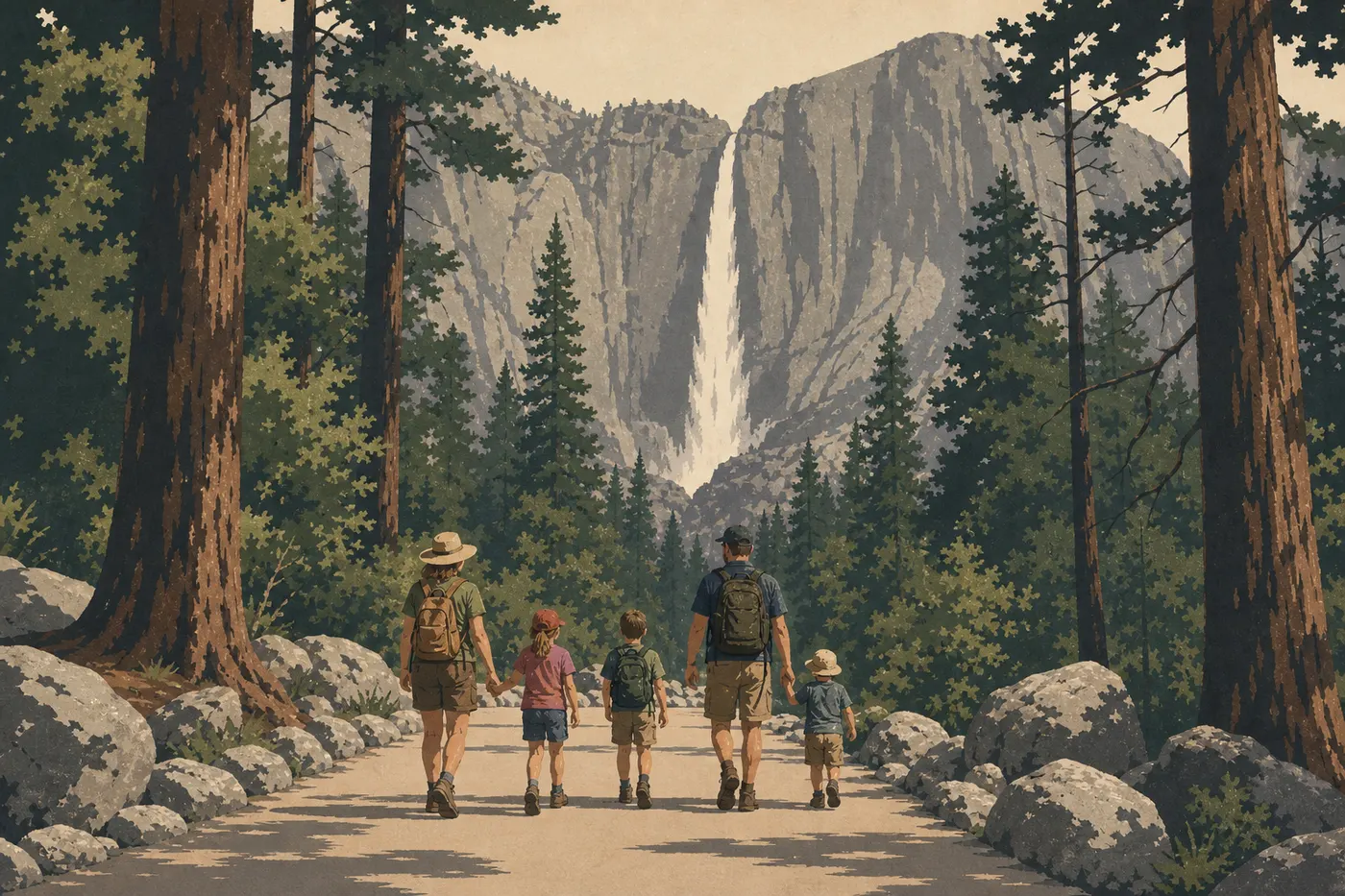
Yosemite with Kids: What to Do and How to Plan Your Visit
Yes, Yosemite is a great family destination. Kids as young as 4 or 5 can handle active walks, while younger children can ride in a carrier or all-terrain stroller on the valley's flat trails. The big sights, including El Capitan, Half Dome from the road, and the waterfalls, don't require any particular physical effort. The valley is compact, the shuttles are free, and the Junior Ranger program is one of the best designed in the NPS system. This guide focuses on what really works with kids and helps you plan your days without wearing yourselves out.
Why Visit Yosemite with Kids
Yosemite checks several boxes for kids: impressive waterfalls, giant sequoias you can stand beside, black bears to watch from a distance, and a valley framed by breathtaking granite cliffs. You don't need a long explanation to captivate an 8-year-old at Bridalveil Fall or beside a 300-foot sequoia in Mariposa Grove.
Parents will find the park well equipped, with free valley shuttles, an educational visitor center, developed picnic areas, and rangers out in the field. The main sights are close together, which cuts down on travel fatigue during already busy days.
One advantage people rarely mention is how quickly Yosemite Valley starts to make sense. You can understand the landscape in an hour, then spend the next two days exploring it in detail without ever feeling like you're missing something essential.
Is Yosemite Suitable for Kids? What Age Is Best?
Yosemite works for kids of all ages, with a few differences depending on the activity.
From birth, the valley, at about 4,000 feet, presents no particular acclimatization issue. Roadside viewpoints and parking-area overlooks such as Tunnel View and Valley View are just a few steps from the car.
Kids as young as 3 or 4 can handle the valley's short, flat trails if they're in good shape. Options include the Cook's Meadow Loop, about 1.2 miles, the Lower Yosemite Fall Trail, 1 mile round-trip, and sections of the Valley Floor. A child carrier opens up even more possibilities.
From ages 6 or 7, kids can manage 2.5- to 3.7-mile trails with little elevation gain, including Mirror Lake Loop and Mariposa Grove. The Junior Ranger program also becomes much more useful at this age.
Once they're 10 to 12, kids can take on moderate hikes such as Vernal Fall Footbridge, or ride the shuttle to Glacier Point and hike down, depending on their ability. Half Dome is still for experienced teens and fit adults, and it requires a permit.
Don't overlook the altitude. Tioga Road climbs to 10,000 to 13,000 feet. Kids shouldn't go straight from the coast to 10,000 feet without spending a night at an intermediate elevation first.
When to Visit as a Family (the Easiest Season with Kids)
The short answer is May and June or September.
July and August are the busiest months. Entrance lines, valley heat reaching 95°F, and full parking lots make these weeks exhausting with kids. If you have to travel during summer school vacation, arrive very early, before 8 a.m., and leave your campground or lodge at dawn.
May and June bring peak waterfall flows from snowmelt, mild valley temperatures of 59 to 77°F, and crowds that are still manageable during the week. Keep in mind that Tioga Road may remain closed until June, depending on snowpack.
September is our favorite month for a family visit: lighter crowds, beautiful light, and ideal hiking temperatures. The waterfalls are less powerful, but trail conditions more than make up for it.
From November through March, the valley is cold and sometimes snowy. Some kids love snow in Yosemite, and the winter scenery is striking. You'll need the right gear, including tire chains when conditions require them, and you'll have to accept that Tioga Road will be closed.
For a month-by-month breakdown, our Yosemite seasons guide and Yosemite weather page offer more context.
How Many Days Should You Plan for a Family Visit?
Plan on at least 3 full days for a satisfying family visit. With 2 days, you'll skim through the valley without really settling into it. With 4 or 5 days, you can take your time in Mariposa Grove and, if the season allows, make a trip onto Tioga Road.
A schedule that works well with kids starts with trails in the morning, a picnic lunch under the valley's pine trees, and a low-key afternoon activity such as the visitor center, Junior Ranger, or swimming at Mirror Lake in summer. Head back to your lodging before 6 p.m. Kids' energy crashes always come in the late afternoon, so plan for it.
Don't try to pack too many sights into one day. Less is more.
Our Yosemite itinerary guide offers several ready-made plans based on trip length and group makeup.
What to Do in Yosemite with Kids: Our Picks
Here are the must-see spots through a family lens, without trying to cover the entire park.
Tunnel View. It's the perfect introduction. You come out of the tunnel and face the entire valley, with El Capitan on the left, Half Dome in the distance, and Bridalveil Fall on the right. No physical effort, maximum impact. This is often when kids understand what Yosemite is.
Lower Yosemite Fall Trail. An easy 1-mile loop to the base of the lower waterfall. In May and June, the spray is generous and kids love getting soaked. Part of the surface is paved, and all-terrain strollers can manage it.
Mariposa Grove. The giant sequoia grove in the southern part of the park. Seeing a 2,000-year-old, 300-foot sequoia is a memory kids don't forget. A free shuttle serves the grove from the main parking area during the busy season.
Glacier Point. Depending on the season, you can reach it by car or shuttle. The overlook offers a dramatic view down into the valley, 3,200 feet below. Railings protect most edges, but keep an eye on kids near the low walls.
The Valley Floor by Bike. The full loop is about 13 miles, but you can choose shorter sections. On a rental bike, available at Yosemite Valley Lodge and Half Dome Village, this is one of the most popular family activities: flat, varied scenery, and no cars.
Our Yosemite activities guide covers all the park's main sights and activities.
Easy Family Hikes (Short, Little Elevation Gain, Stroller-Friendly)
The following trails work well for kids ages 5 and up. Depending on ground conditions, some can accommodate an all-terrain stroller.
Lower Yosemite Fall Trail (1 mile round-trip, almost no elevation gain): the easiest option and ideal for a first morning outing. Part of the surface is paved.
Cook's Meadow Loop (about 1.2 miles, flat): a quiet loop through the meadow with open views of Yosemite Falls and Royal Arches. It's perfect for the end of the day or a walk after lunch.
Mirror Lake Loop (3.1 miles, flat): the lake is seasonal and is often a meadow by late summer, but the setting among the rocks is beautiful. The surface is sandy and rocky, so kids should wear hiking shoes.
Mariposa Grove (0.6 to 3.1 miles depending on the section): the grove's trails are wide and well maintained. The main section to Grizzly Giant, one of the grove's oldest sequoias, is about 1.9 miles round-trip.
Vernal Fall Footbridge (2.2 miles round-trip, moderate elevation gain): the climb starts to feel tough after 0.6 miles. It's best for kids 8 and up who are in good shape. The view of the waterfall from the bridge is spectacular, and you can stop there without climbing higher.
Our Yosemite hiking guide provides the complete list, with difficulty levels, distances, and elevation profiles.
The Junior Ranger Program
This is one of the NPS system's best-designed programs, and Yosemite offers an expanded version. Kids get a free activity booklet at the Valley Visitor Center or one of the park's other visitor centers. They complete missions throughout their visit, including observations, quizzes, and drawings, then show the booklet to a ranger, who signs off on it and presents them with an official badge and a formal oath.
The program comes in several age levels, generally starting at age 3. Allow half a day to a full day to complete the activities at an easy pace.
What we especially like is how the booklet gets kids to look at the park differently, from animal tracks and rock types to the right way to behave around wildlife. It gives the visit structure and turns a walk into a mini-expedition. No child leaves the badge ceremony unmoved.
Safety with Kids
Yosemite has a few specific risks you should know about before you arrive.
Black bears. The park is home to American black bears, not grizzlies. Encounters are possible, especially at dawn and dusk near campgrounds and picnic areas. Never leave food visible in a vehicle. Fines are steep, and bears really do break windows. Use the bear boxes provided at campgrounds, and never approach or feed a bear. If you encounter one, don't run. Back away calmly while facing the animal.
Rivers and waterfalls. The Merced River runs strong even where the surface looks calm. Drownings happen every summer near the waterfalls. Keep kids away from slippery banks and rocky shorelines. Official swimming areas are marked on site. Stay out of the water everywhere else.
Cliff edges and overlooks. Glacier Point, Sentinel Dome, and some trail edges have parapets, but they can't make up for a moment of inattention. Set the distance rule with your kids before you leave, not once you're there.
Altitude. The valley sits at 4,000 feet, while Tioga Road climbs above 10,000 feet. Children can develop altitude sickness symptoms, including headaches, nausea, and unusual fatigue. Ascend gradually, stay well hydrated, and scale back your plans if symptoms appear.
Summer heat. In July and August, the valley regularly climbs above 95°F. Hats, high-SPF sunscreen, plenty of water, at least 0.5 liters per hour of exertion, and hikes finished before 10 a.m. are non-negotiable precautions.
Small wildlife. Marmots shamelessly steal backpacks at picnic spots, so don't leave yours unattended. The park's deer are not very wary, but you still shouldn't approach them despite their apparent tameness. Our Yosemite wildlife guide explains how to behave around the park's animals.
Where to Stay with Kids (In and Around the Park)
Staying in the park changes the experience. You can reach the sights at dawn before the crowds, watch the sunset on El Capitan from your campground, and sleep under the stars in a pine forest.
In the park: campgrounds, including Valley, Wawona, and Crane Flat, must be reserved several months ahead on recreation.gov, especially during the busy season. Yosemite Valley Lodge and The Ahwahnee are the two in-park lodging options with rooms. The latter is luxurious and priced accordingly, while the former is the no-frills family favorite.
Around the park: El Portal and Mariposa to the west, and Lee Vining to the east for Tioga access, offer more affordable options and better availability. Expect an additional 30 to 60 minutes of driving to the valley.
Our Where to Stay page covers every option by budget and type, while our Camping page shares booking tips for finding a spot during the busy season.
Meals and Breaks with Kids
You can buy food in the park, but options remain limited and prices are high. Here are a few useful reference points.
Yosemite Village has most of the options: Village Store for groceries, snacks, and pastries; Degnan's Kitchen for pizza and takeout sandwiches; and the Valley Lodge cafeteria. It's convenient for a quick break between sights.
The Village Store sells fresh food, cheese, crackers, and fruit, which gives you the basics for a decent picnic. We recommend stocking up when you arrive so you don't have to make extra trips during the day.
The picnic areas. Scattered throughout the valley, including Cathedral Beach, Sentinel Beach, and Valley View, they have tables and trash cans. Some provide direct access to the Merced River. This is where families spend the best hour of their lunch break.
The Wawona Hotel, on the south side near Mariposa Grove, has a restaurant with a more polished menu. It's a good choice for a relaxed family dinner.
Practical tip: pack a bag of calorie-dense snacks, such as dried fruit, bars, and crackers, before each day out. Kids always get hungry between sights. Our Where to Eat page lists options by area of the park.
Family Budget
Park admission costs $35 per vehicle and is valid for 7 days, with no limit on the number of occupants. Admission without a vehicle is $20 per person. At that price, the America the Beautiful pass, $80 for the calendar year, pays for itself after just two parks on the same trip. It covers Yosemite, Grand Canyon, Zion, and all federal parks and monuments. Children under 15 enter all national parks free.
The Junior Ranger program is completely free.
Park shuttles are free during the busy season, including the valley and Mariposa Grove shuttles, as well as Glacier Point service when seasonally available.
Bike rentals at Yosemite Valley Lodge and Half Dome Village are available by the hour or by the day. If you're staying several days with kids, include this in your budget.
Our Fees and Passes page explains national park entrance fees and passes.
Places to Combine with Yosemite When Traveling with Kids
Yosemite fits naturally into several family road trips in California.
Sequoia and Kings Canyon. About 3 hours southeast by car, the two parks make a logical pairing with Yosemite for a themed week. You'll find even more massive sequoias, including General Sherman, the living tree with the greatest volume in the world, estimated to be more than 2,000 years old, along with caves and far less crowded meadows.
Death Valley. Outside summer, when extreme July and August temperatures are dangerous, it's about a half-day's drive from Yosemite's east entrance. Sand dunes, salt flats, and science-fiction landscapes often leave kids stunned. Plan this stop for March or April, or October or November.
San Francisco. Less than 4 hours west via Hwy 140, it's ideal at the beginning or end of a road trip, with Alcatraz, the Golden Gate, cable cars, and Fisherman's Wharf sea lions. It's a city that works well for kids.
Lake Tahoe. About 3 hours north via Hwy 120 and Tioga Road, when open, it offers beaches, turquoise water, biking, and summer water activities. It's a relaxing stop after the intensity of Yosemite.
Our Regions guides and Road Trips section describe complete itineraries, with trip lengths and suggestions based on your group.
Yosemite with Kids: Is It Worth It?
Yes, without question. Yosemite brings together something that is often missing: an immediate visual impact for kids who aren't experienced hikers yet, easy logistics with shuttles, short trails, and on-site lodging, plus educational programming through Junior Ranger and readily available rangers. The visit becomes more than simple sightseeing.
The challenges are real: summer crowds, campground reservations that must be made months ahead, and a total cost that can quickly rise for a family. They're manageable if you plan early and choose the right season.
What the park gives you in return stays with kids for a long time. That's unusual enough to point out.
To plan everything from scratch, start with our Yosemite overview page.
Frequently Asked Questions
Is Yosemite suitable for kids and families?
Yosemite works very well for families. The main sights, including waterfalls, sequoias, and overlooks, are accessible without technical hiking. Free shuttles reduce travel fatigue, and the Junior Ranger program gives kids ages 3 to 12 a framework for the visit. The valley's flat trails can even accommodate all-terrain strollers.
Is Yosemite worth visiting as a family?
Yosemite is worth it for a family as long as you plan ahead. Reserve lodging months in advance, arrive early to avoid the crowds, and choose a suitable season. The visual impact is immediate and lasting for kids.
What's the best time to visit Yosemite with kids?
The best times for a family visit are May and June, when the waterfalls are flowing strongly and crowds are moderate, or September, when temperatures are ideal and crowds are lighter. July and August are still possible, but they're more demanding because of the heat, peak visitation, and often-full reservations. Our When to Visit page explains the advantages of each month.
What is there to do in Yosemite with kids?
With kids, we recommend Tunnel View, which overlooks the entire valley from the parking area; Lower Yosemite Fall Trail, where the waterfall is just 1 mile away; Mariposa Grove and its giant sequoias; Glacier Point, an overlook 3,200 feet above the valley; the Junior Ranger program; and bike rentals on the Valley Floor. Our What to Do page covers all the park's sights and activities.
How long does it take to visit Yosemite with a family?
Plan on 3 full days for a satisfying family visit. Two days let you cover the valley and Mariposa Grove at a reasonable pace. Four or five days open up Tioga Road, if it's open, and additional hikes. Our Itinerary and Trip Length guide offers plans based on trip length and group makeup.
Do kids get into Yosemite for free?
Yes. Children under 15 enter all U.S. national parks free, including Yosemite. Vehicle admission costs $35 regardless of how many adults are in the vehicle.